
AI大模型

Search documents
“十五五”智能矿山产业深度研究及趋势前景预判报告
Xin Lang Cai Jing· 2026-02-03 12:52
Group 1 - The core concept of the article emphasizes the dual drive of AI and policy in the development of the intelligent mining industry, which is projected to be a trillion-dollar market opportunity [1][2] - Intelligent mining is defined as a comprehensive system that integrates IoT, cloud computing, big data, AI, and smart equipment to achieve safe, efficient, green, and economical resource extraction [1][2] - The industry has been elevated to a national strategy since the 14th Five-Year Plan, with policies focusing on mandatory timelines and standards for intelligent construction, particularly in coal mining [2][5] Group 2 - The technological framework of intelligent mining features a "cloud-edge-end" collaboration, where sensors and smart equipment are deployed at the mining site for real-time data processing and decision-making [3][25] - Current technology is at a stage of "intermediate breakthroughs and dual-end development," with communication and data collection being relatively mature, while AI applications are still in exploratory phases [4][26] - The industry is driven by strong regulatory pressures, economic efficiency demands, technological advancements, and long-term structural changes in society [27][28][30][31] Group 3 - Future trends indicate that the integration of AI large models and digital twins will become central to mining operations, enhancing decision-making and operational efficiency [9][31] - The shift towards fully automated operations is expected to expand from localized applications to systemic implementations, with significant advancements in autonomous transportation and remote-controlled operations [10][32] - The industry is moving towards service-oriented and green transformations, with business models evolving from one-time product sales to ongoing service offerings [11][33][34] Group 4 - The barriers to entry in the intelligent mining sector include technological, financial, and regulatory challenges, which must be navigated for successful market participation [35][36] - The report provides a comprehensive analysis of the intelligent mining industry, including market size, supply-demand dynamics, and competitive landscape, highlighting key players and their strategies [38][39]

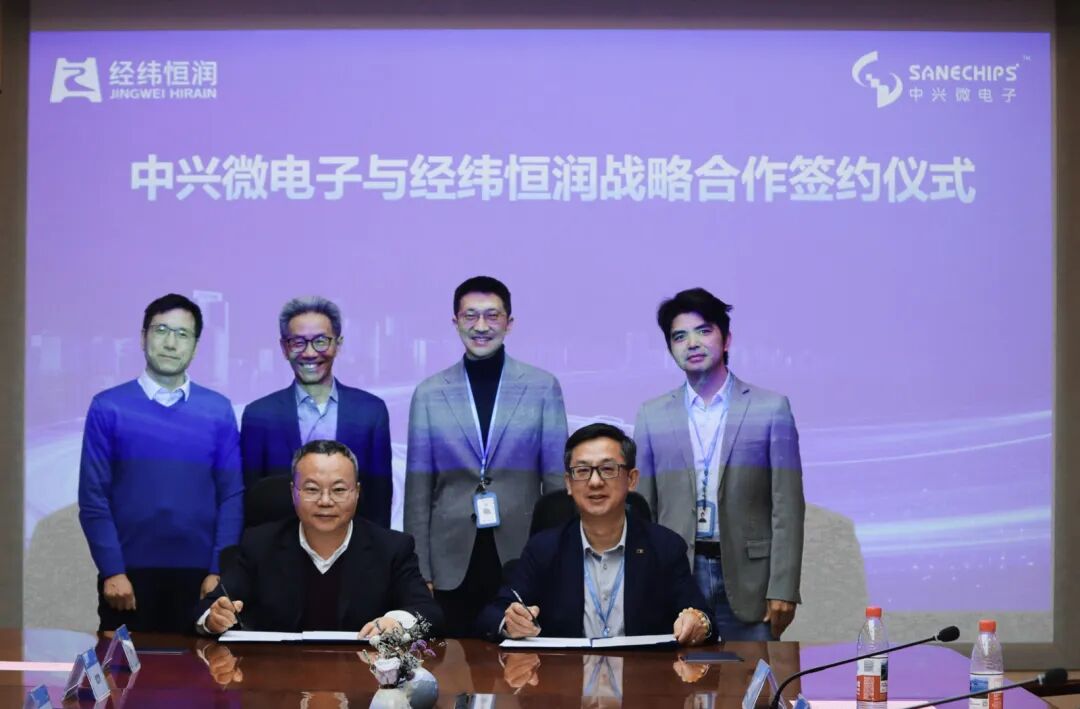
经纬恒润与中兴微电子签署战略合作
Xin Lang Cai Jing· 2026-02-03 12:52
Core Viewpoint - The strategic cooperation agreement between Jingwei Hirain and ZTE Microelectronics aims to develop integrated software and hardware solutions for smart vehicles, focusing on intelligent connectivity, autonomous driving, and smart cockpit technologies [2][5]. Group 1: Strategic Cooperation Details - The agreement was signed on February 2, with both companies collaborating on core solutions for smart vehicles [2][5]. - The partnership will leverage Jingwei Hirain's experience in automotive electronic systems and ZTE Microelectronics' expertise in automotive-grade "connectivity + computing" SoC chips [2][5]. - Key areas of collaboration include the development of domestic solutions for smart cockpit, autonomous driving, central computing platforms, and T-Box applications, as well as exploring AI large models for cockpit interaction and driving decision-making [2][5]. Group 2: Technological Integration and Future Plans - The companies plan to promote full-stack technological collaboration from underlying chips, operating systems, middleware to upper-layer applications, aiming to build an open technological ecosystem [2][5]. - Future efforts will focus on integrating resources in algorithm software, automotive-grade chips, domain controllers, and system integration to provide mass-producible smart vehicle solutions for domestic and international automakers [3][6]. - This cooperation supports the technological independence and ecosystem development of China's intelligent connected vehicle industry [3][6].


北水成交净买入9.52亿 科网及芯片股明显分化 内资抛售盈富基金超37亿港元
Zhi Tong Cai Jing· 2026-02-03 11:15
Core Viewpoint - The Hong Kong stock market experienced significant net buying and selling activities, with notable movements in major stocks such as Tencent, Alibaba, and China Mobile, reflecting investor sentiment and market dynamics [1][5][6]. Group 1: Net Buying and Selling Activities - Northbound trading recorded a net buying of HKD 9.52 billion, with the Shanghai Stock Connect contributing HKD 17.33 billion in net buying, while the Shenzhen Stock Connect saw a net selling of HKD 7.81 billion [1]. - Tencent (00700) led the net buying with HKD 22.02 billion, followed by Southbound Hang Seng Technology (03033) with HKD 6.69 billion, and China Mobile (00941) with HKD 4.07 billion [1][5]. - The most significant net selling was observed in the Yingfu Fund (02800) with HKD 25.58 billion, followed by Semiconductor Manufacturing International Corporation (00981) with HKD 8.06 billion, and Alibaba-W (09988) with HKD 5.87 billion [1][5]. Group 2: Stock Performance and Market Sentiment - The technology sector showed a clear divergence, with Tencent and Meituan-W (03690) experiencing net buying, while Alibaba-W faced substantial net selling due to market rumors regarding potential tax rate adjustments [5][6]. - China Mobile's net buying was supported by Morgan Stanley's analysis, suggesting that the company would be less impacted by potential VAT rate increases due to its higher profit margins [5]. - Xiaomi Group-W (01810) reported a net buying of HKD 3.29 billion, attributed to strong electric vehicle deliveries and ongoing investments in AI and robotics [6]. Group 3: Industry Trends and Future Outlook - The semiconductor industry is experiencing price increases, with domestic chip manufacturers announcing price hikes of up to 80%, indicating a continuing trend into the first half of 2026 [6]. - The overall market sentiment is influenced by external factors, including global risk asset movements, which have led to liquidity pressures and a decline in Asian stock markets [7].





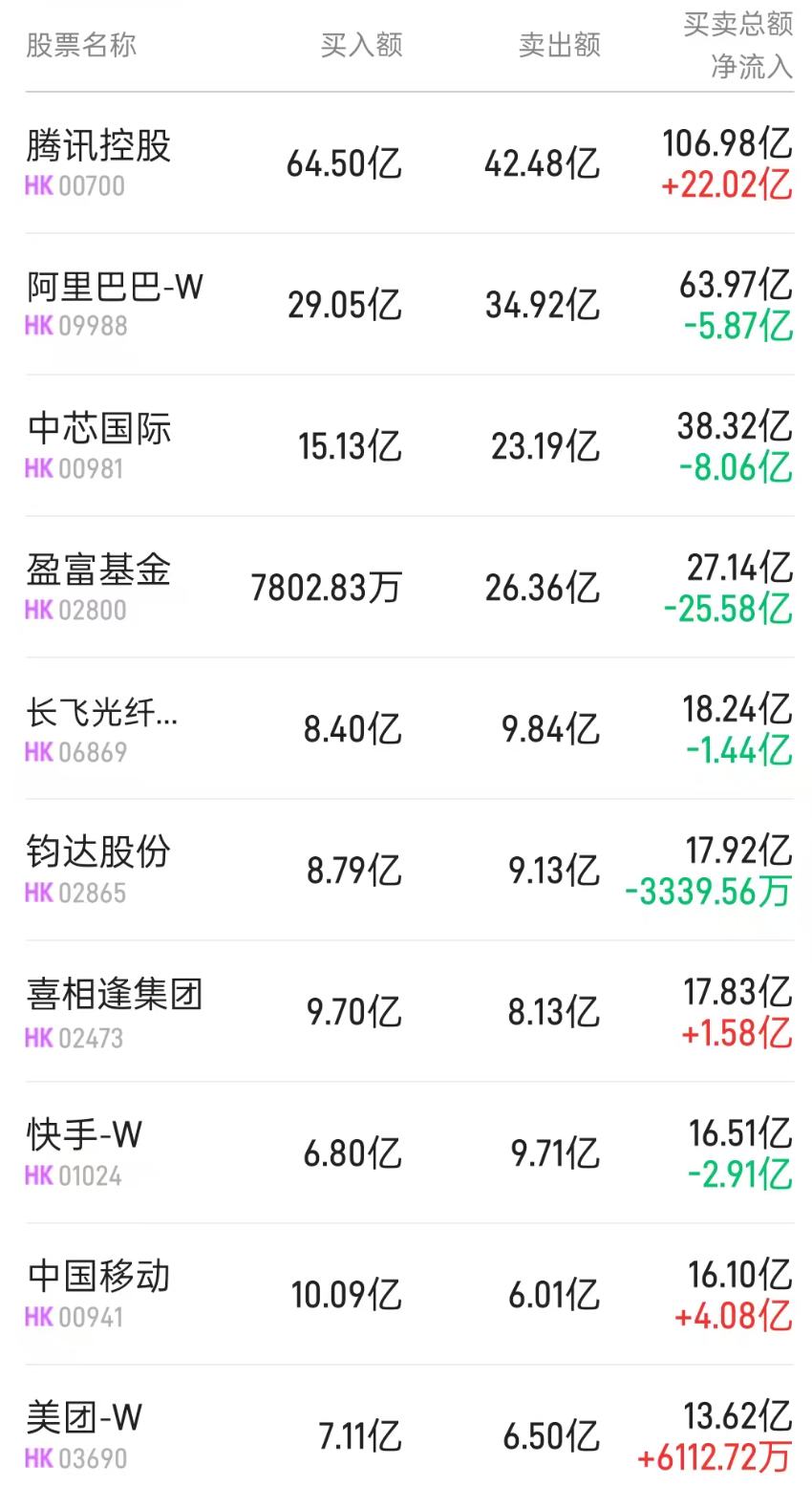
北水动向|北水成交净买入9.52亿 科网及芯片股明显分化 内资抛售盈富基金超37亿港元
Zhi Tong Cai Jing· 2026-02-03 10:04
Summary of Key Points Core Viewpoint - The Hong Kong stock market experienced significant net buying and selling activity, with notable movements in major stocks driven by market sentiment and external news. Group 1: Net Buying and Selling Activity - Northbound trading recorded a net buying of 9.52 billion HKD, with the Shanghai-Hong Kong Stock Connect contributing 17.33 billion HKD in net buying and the Shenzhen-Hong Kong Stock Connect showing a net selling of 7.81 billion HKD [1] - The most bought stocks included Tencent (00700), Southern Hang Seng Technology (03033), and China Mobile (00941), while the most sold stocks were the Tracker Fund of Hong Kong (02800), SMIC (00981), and Alibaba-W (09988) [1] Group 2: Individual Stock Performance - Tencent Holdings saw a net inflow of 22.02 billion HKD, with total trading volume of 106.98 billion HKD, while Alibaba-W had a net outflow of 5.87 billion HKD from a total of 63.97 billion HKD [2] - China Mobile recorded a net buying of 4.08 billion HKD, with a total trading volume of 16.10 billion HKD, indicating strong investor interest [3] - Xiaomi Group-W received a net inflow of 3.29 billion HKD, supported by strong electric vehicle delivery numbers and positive market sentiment [5] Group 3: Market Sentiment and External Factors - Market rumors regarding potential tax rate adjustments for the financial and internet sectors led to a decline in stock prices for companies like Tencent, although tax experts clarified that current VAT rates remain unchanged [4] - The semiconductor sector showed mixed results, with Hua Hong Semiconductor receiving a net inflow of 2.56 billion HKD, while SMIC faced a net outflow of 15.77 billion HKD amid rising prices in the chip industry [5] - The Tracker Fund of Hong Kong experienced a significant net outflow of 37.62 billion HKD, attributed to global risk-off sentiment and liquidity pressures in the market [6]
中科曙光scaleX万卡超集群进入国内重大工程应用阶段
3 6 Ke· 2026-02-03 08:23
36氪获悉,中科曙光scaleX万卡超集群已进入国内AI大模型及行业智能化重大工程的应用阶段,相关项 目将于近期上线试运行。 ...

华创证券:算力稀缺性凸显 AIDC产业或迈入结构性扩张新周期
智通财经网· 2026-02-03 07:59
Core Insights - The global AIDC demand continues to grow rapidly, with positive signals from cloud vendors regarding capital expenditure, business promotion, and pricing strategies. The price increase and expansion of AI spending are reshaping the AIDC industry logic, enhancing the return expectations of computing assets and elevating the industry's scale ceiling, transitioning AIDC from a heavy asset industry to a core infrastructure sector with high barriers and certainty [1][5]. Group 1: Market Trends - The global cloud computing market is expected to grow from approximately $1.29 trillion in 2025 to about $2.28 trillion by 2030, with a CAGR of around 12%. However, supply-side constraints are evident, as the prices of storage chips and CPUs are rising, leading to increased cloud service costs [1][2]. - NAND flash prices are predicted to rise by 33% to 38% in Q4 2025, with similar increases expected in Q1 of the same year. Additionally, Intel and AMD plan to raise server CPU prices by 10-15%. Energy costs are also rising, with U.S. electricity costs increasing by 6.7% year-on-year in December last year, cumulatively up by about 38% since 2020 [2]. Group 2: Competitive Landscape - The domestic AI model competition is accelerating the deployment of computing infrastructure, with companies like DeepSeek, Kimi, and Alibaba launching model upgrades that highlight the significant demand for training and inference computing power. The focus of competition has shifted from individual model performance to the overall capability of computing supply and system engineering efficiency [3]. - In the application layer, competition is intensifying, with Tencent's Yuanbao rapidly increasing its user base by integrating the DeepSeekR1 model and leveraging extensive marketing resources. This growth is expected to translate into high-frequency demand for backend intelligent computing centers and high-speed networks, further accelerating the deployment and upgrade of related technologies [4]. Group 3: Industry Outlook - The AIDC industry is likely entering a structurally expanding cycle with high barriers. Innovations such as liquid cooling and high-density power supply solutions are penetrating the market, addressing the technical challenges posed by the increase in power consumption per rack from traditional 5-15 kW to 200 kW. The domestic chip ecosystem is maturing, with Alibaba's "Zhenwu 810E" performance matching international mainstream products, facilitating the optimization of the domestic computing system [5]. - The AIDC market is expected to expand at a compound annual growth rate of 31.5%, with the core barriers of the industry shifting from capital investment to technology integration and operational efficiency. The price increases from cloud vendors and the expansion of AI spending are jointly reshaping the AIDC industry logic, benefiting leading companies with technological iteration capabilities and resource integration efficiency [5]. Group 4: Investment Recommendations - Suggested investment targets include: 1. Cloud Computing: Alibaba-W (09988), Cloudflare (NET.US), Shenxinfu (300454.SZ), Kingsoft Cloud (03896), New Intent Group (01688), and UCloud (688158.SH) [6]. 2. AIDC: Runze Technology (300442.SZ), Baoxin Software (600845.SH), Data Port (603881.SH), Guanghuan New Network (300383.SZ), Aofei Data (300738.SZ), and Yunsai Zhili (600602.SH) [6]. 3. Computing Power Services: Xiechuang Data (300857.SZ), Hongjing Technology (301396.SZ), Dawi Technology (600589.SH), Youfang Technology (688159.SH), Litong Electronics (603629.SH), Zhiwei Intelligent (001339.SZ), and Coreweave (CRWV.US) [6]. 4. CDN: Wangsu Technology (300017.SZ) [7]. 5. Chips: Haiguang Information (688041.SH), Cambrian-U (688256.SH), Muxi Shares-U (688802.SH), Tianshu Zhixin (09903), Moer Thread-U (688795.SH), and Longxin Zhongke (688047.SH) [7]. 6. Large Models: Minimax-WP (00100), Zhipu (02513), and iFlytek (002230.SZ) [7].
AI时代的红包大战来袭!这次,腾讯还能重演“珍珠港偷袭”吗?
Jin Rong Shi Bao· 2026-02-03 07:36
Core Viewpoint - The recent launch of Tencent's 1 billion yuan red envelope campaign has reignited competition among major internet companies, but the current market dynamics make it challenging for Tencent to replicate its past success in the mobile payment space [1][2]. Group 1: Market Dynamics - The competitive landscape has changed significantly since 2015, with no single company holding a dominant position in the AI model sector, unlike the mobile payment market at that time [2]. - Major players like Baidu and Alibaba are also participating in the red envelope battle, with Baidu offering 500 million yuan and integrating various AI features, indicating a more competitive environment [2][4]. Group 2: User Engagement Challenges - Tencent's social advantage has become a burden for the new red envelope initiative, as users must download a separate app and navigate more complex features, which may deter participation [3]. - The current red envelope strategy may attract new users but is unlikely to foster long-term loyalty, as the unique value proposition of Tencent's offering is not clearly defined compared to competitors that provide integrated AI solutions [4]. Group 3: Strategic Insights - The essence of the red envelope competition remains the same: to capture the "super entrance" of the internet, but the true winner will be the one that understands user needs and creates real value, rather than simply offering cash incentives [5]. - The focus should be on the perfect integration of technology and user scenarios, rather than just financial incentives, as user retention will ultimately depend on the ability to solve real-life problems [5].
1000万DAU达成,数据拆解年度爆款《超自然行动组》到底有多火?
3 6 Ke· 2026-02-03 00:35
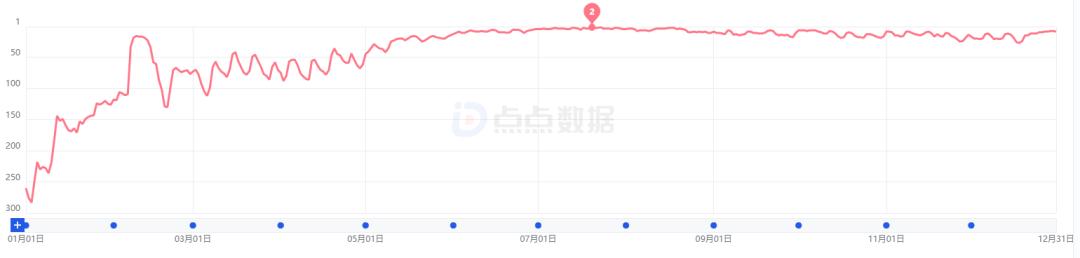
Core Insights - The game "Supernatural Action Group" has achieved a significant milestone with daily active users (DAU) surpassing 10 million, marking its transition from a hit product to a stable high-DAU game [1][17] - The game has successfully integrated AI features, becoming the first in its category to deeply incorporate AI gameplay, enhancing user engagement and retention [1][17] Group 1: Game Performance and Market Position - "Supernatural Action Group" was launched on January 23, 2025, and initially focused on user accumulation rather than aggressive ranking strategies, resulting in a stable market presence [2] - The game entered the iOS top 10 free charts by late June 2025 and maintained a strong position within the top 20, indicating solid download fundamentals [2] - By March 2025, the game made its debut on the revenue charts, reaching the top 10 by July 4, 2025, and achieving a stable high position thereafter [4][6] Group 2: User Engagement and Retention - The estimated total downloads for the iOS version of "Supernatural Action Group" in 2025 is approximately 13 million, with a significant portion coming from official channels [8] - User engagement is high, with an average monthly usage time of nearly 30 hours, showcasing strong user retention [8][9] - The game has established a robust user base with effective operational strategies, leading to a strong foundation for user retention and risk resilience [15] Group 3: Marketing and Social Media Impact - The game has generated approximately 7.76 million content pieces across social media platforms, with significant engagement spikes observed during promotional events [18][20] - The announcement of Zhao Lusi as the global brand ambassador led to a surge in social media activity, highlighting the effectiveness of strategic partnerships in enhancing brand visibility [22][26] - The game has maintained a dual strategy of leveraging user-generated content (UGC) and cross-industry collaborations to expand its user base and brand influence [26] Group 4: Future Outlook - The success of "Supernatural Action Group" is attributed to the company's long-term strategy and deep understanding of the younger generation's preferences [27][28] - As the gaming market approaches peak seasons, the game is well-positioned to capitalize on its active user base and ongoing content updates, indicating potential for further growth [28]

古越龙山:数字化战略是公司非常重要的一个战略布局
Zheng Quan Ri Bao Wang· 2026-02-02 13:47
Core Viewpoint - The company emphasizes its digital strategy as a crucial part of its business layout, continuously upgrading its digital management systems to enhance operational efficiency and decision-making [1] Group 1: Digital Strategy Implementation - The company has achieved digital control from front-end sales to back-end production and supply, integrating various business segments through a data middle platform for data sharing [1] - The data middle platform allows company leaders and the finance center to view and manage real-time data across different dimensions such as production, supply, sales, expenses, and products based on set permissions [1] - The integration of AI large models into the data middle platform enables managers to customize data retrieval and generate corresponding reports and analyses using natural language recognition technology [1] Group 2: Industry Recognition and Future Plans - The newly established yellow wine industrial park has been recognized as the first yellow wine enterprise to be included in the Ministry of Industry and Information Technology's 5G factory directory, showcasing intelligent brewing from grain to liquor [1] - The company plans to continue adhering to its digital strategy, keeping pace with technological advancements to provide robust support for business operations and scientific decision-making [1]

券商2月“金股”来了!主线行情有望继续扩散
Zhong Guo Zheng Quan Bao· 2026-02-02 12:21
Group 1 - Over 200 A-shares and H-shares have been included in the February "gold stock" list by brokers, with Alibaba-W, Tencent Holdings, Zijin Mining, and Zhongji Xuchuang being among the most frequently recommended stocks [1][2] - The electronic industry has the highest number of recommended stocks, with 35 stocks being favored by brokers, while sectors like basic chemicals and non-ferrous metals also have multiple stocks recommended [2] - In January, 66% of the 249 stocks recommended by brokers achieved positive returns, with Zhuoyi Information leading with a 98.94% increase [3][4] Group 2 - The market is expected to experience a period of volatility, with better performance anticipated after the Spring Festival, as policy catalysts are expected to emerge [5][6] - The "technology + resources" theme is likely to continue expanding, with a focus on sectors such as optical modules, storage, semiconductor equipment, and industrial metals [6] - Recent fluctuations in international gold prices are attributed to market sentiment and changes in the Federal Reserve's leadership, with expectations of a wide range of fluctuations in the short term [6]


