
绿色贸易

Search documents
应变求新壮大外贸新动能
Jing Ji Ri Bao· 2025-07-30 22:16
Core Insights - China's foreign trade has shown remarkable resilience and growth in the first half of the year, achieving record high scales and optimizing its structure despite complex environments such as trade frictions [1] - The number of trading partners with a trade scale exceeding 50 billion and the number of foreign trade enterprises with export performance have both increased, reflecting a spirit of innovation and determination among businesses [1] Group 1: Market Diversification - China's foreign trade is expanding into emerging markets, with significant growth in exports to ASEAN, Central Asia, and Africa, effectively mitigating risks from traditional markets [2] - The Belt and Road Initiative, Regional Comprehensive Economic Partnership (RCEP) members, and BRICS countries are becoming key markets for foreign trade enterprises [2] - Local governments and departments are encouraged to support enterprises in international exhibitions and trade negotiations, while also reducing the costs of going global [2] Group 2: Quality and Innovation - Chinese products are gaining global recognition for their innovation, with a focus on high-quality supply and value-added offerings [3] - Foreign trade enterprises are urged to adapt to international market demands by launching differentiated and customized products with high added value [3] - Brand building is essential for enhancing recognition and pricing power, creating new competitive advantages [3] Group 3: New Business Models - The rise of cross-border e-commerce is facilitating the direct reach of Chinese goods to global consumers, especially in response to tariff impacts [3] - There is a need for supportive policies to develop specialized cross-border e-commerce industrial zones and provide comprehensive services [3] - The global trade landscape is shifting towards digitalization and sustainability, necessitating increased support for new business models such as offshore trade and green trade [3] Group 4: Future Outlook - The positive performance of foreign trade in the first half of the year provides confidence for China to navigate external uncertainties [4] - The focus will be on adapting to new global conditions, fostering new growth drivers, and maintaining steady development in foreign trade [4]
绿色金融添新翼:绿色贸易与消费正式纳入支持范围
2 1 Shi Ji Jing Ji Bao Dao· 2025-07-15 13:49
Core Viewpoint - The release of the "Green Finance Support Project Directory (2025 Edition)" aims to unify standards for green financial products, enhancing efficiency and guiding financial resources towards green and low-carbon projects [1][2][3] Summary by Relevant Sections Green Finance Growth - As of May, China's green, inclusive, pension, and digital loans grew by 27.4%, 11.2%, 38%, and 9.5% year-on-year, respectively, all exceeding the growth rate of other loans [1] - Over 1 trillion yuan in green and technology-related bonds were issued in the first half of 2025 [1] New Categories in the Directory - The new directory introduces two major categories: green trade and green consumption, focusing on low-carbon sectors [2][3] - Green trade includes efficient energy equipment, advanced transportation equipment, and green agricultural products, while green consumption covers electric vehicles and energy-efficient appliances [2][3] Impact on Financial Institutions - The directory provides a clear framework for banks to identify and manage green credit projects, enhancing the classification of green assets and guiding the development of green financial products [6][7] - Financial institutions can use the directory to support green bonds and ESG investments, ensuring compliance and effective project selection [6][7] Support for High-Carbon Industries - The directory outlines pathways for high-carbon industries like steel and petrochemicals to transition through clean production and process optimization [10][11] - It emphasizes the importance of third-party services for technical consulting and carbon management to lower transformation costs [10][11] International Alignment - The directory aligns with international standards, enhancing the comparability of China's green finance initiatives with global practices [12][13] - It aims to improve the international influence of China's green finance by addressing long-standing discrepancies in project identification standards [11][12] Expansion of Project Types - The directory expands the number of supported projects significantly, with 271 items listed, reflecting the latest trends in China's green economy [9][11] - It removes 11 fossil fuel-related projects, reinforcing the focus on sustainable practices [9][11]
官方解读来了!复制推广77条“上海经验”,释放制度型开放红利
证券时报· 2025-07-04 13:34
Core Viewpoint - The promotion of institutional innovation measures from the Shanghai Free Trade Zone (FTZ) is a significant step towards enhancing reform and development through openness, as well as fostering cooperation and mutual benefits [1][7]. Group 1: Institutional Innovation and Trade - The Shanghai digital trade's vitality has been further enhanced through rule alignment, with imports and exports expected to reach $109.53 billion in 2024, a year-on-year increase of 4.9%, accounting for 30.1% of the national total [2]. - A total of 379 institutional innovation achievements from FTZs have been replicated and promoted at the national level, creating a favorable environment for shared reform dividends and inclusive open results [4]. - The Ministry of Commerce will support FTZs in proactively aligning with international high-standard economic and trade rules while ensuring risk management [2][9]. Group 2: Future Directions and Measures - The Ministry of Commerce emphasizes the need to closely track the evolution of international high-standard economic and trade rules and expand the scope of pilot projects, focusing on the development of service trade, green trade, and digital trade [5][10]. - There will be a push for more fields to establish negative lists for data exit and to introduce more facilitation measures to promote efficient, convenient, and secure cross-border data flow [2][10]. - The promotion of the "Shanghai experience" will be intensified, including the innovative application of digital currency and optimization of electronic payment services across the country [2][9]. Group 3: Implementation and Coordination - The Ministry of Commerce will work with relevant departments to support localities in advancing the replication and promotion of pilot measures that are urgently needed by enterprises and the public [4][5]. - Continuous tracking and evaluation of the effectiveness of the replicated measures will be conducted, with specific opinions and methods to be completed within a year if necessary [5]. - The approach will involve a phased implementation strategy, where measures are tested, replicated, and researched simultaneously to ensure a comprehensive rollout [9].

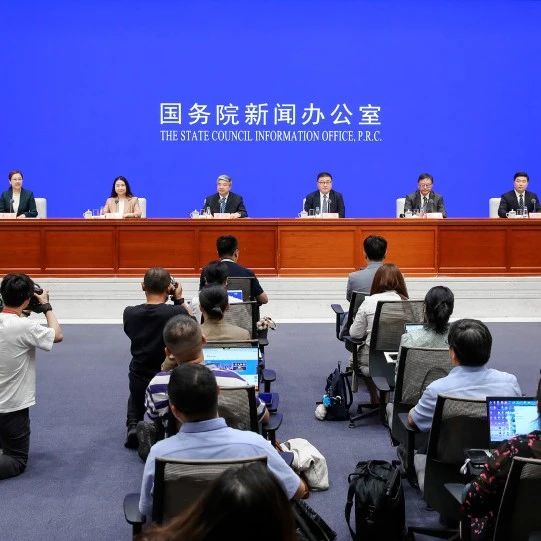
商务部:聚焦人工智能、科技金融等前沿领域开展制度创新
news flash· 2025-07-04 08:10
Group 1 - The Ministry of Commerce will promote the development of service trade, green trade, and digital trade through institutional innovation initiatives that support new business formats and models [1] - The Ministry supports free trade pilot zones in formulating negative lists for data export in more areas and launching more facilitation measures to promote efficient, convenient, and secure cross-border data flow [1] - Focus will be on institutional innovation in cutting-edge fields such as artificial intelligence and fintech to create high-quality development ecological models [1]
碳足迹背景数据库为什么重要?
Zhong Guo Huan Jing Bao· 2025-06-29 23:14
Core Viewpoint - The construction of a unified and standardized carbon footprint background database is crucial for the development of China's product carbon footprint management system and for enhancing international competitiveness in carbon data standards [1][4]. Group 1: Current Status of Carbon Footprint Background Database - China is placing significant emphasis on the establishment of carbon footprint background databases, as highlighted in the State Council's work plan for building a dual control system for carbon emissions [1]. - Despite some progress, the construction and application of carbon footprint background databases in China are still in the early stages, facing various misconceptions and bottlenecks [2][3]. Group 2: Challenges in Database Construction - There is a weak understanding of the database among market participants, leading to confusion between different types of databases and insufficient emphasis on real data quality control [2][3]. - The quality of data is inconsistent, with issues such as redundant and low-level construction, lack of unified standards, and transparency problems in existing databases [3]. - The promotion and application of carbon footprint background databases are inadequate, with limited recognition in international markets and a need for improved standards [3]. Group 3: Recommendations for Improvement - It is recommended to enhance planning and design for the national carbon footprint background database, ensuring a unified structure and avoiding redundant construction [4][5]. - Emphasis should be placed on research and development, fostering talent in carbon footprint data development, and utilizing digital technologies for better data accessibility and traceability [5][6]. - Expanding application scenarios through public awareness campaigns and competitions can help improve the market space for quality background databases [6][7]. Group 4: International Cooperation - Strengthening international collaboration is essential, including technical exchanges with global lifecycle data development organizations and promoting mutual recognition of carbon footprint data standards [7].
内地-香港绿色能源交流与对接活动圆满举办 | 航运界
Sou Hu Cai Jing· 2025-06-25 13:12
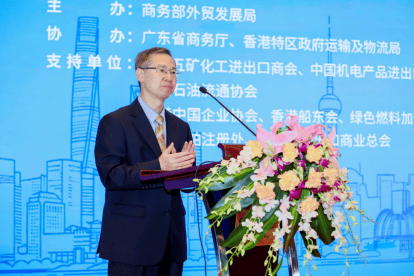
Core Viewpoint - The event aims to promote the transition of maritime activities in the Guangdong-Hong Kong-Macao Greater Bay Area towards a green, clean, and efficient path, emphasizing the importance of green energy development in addressing climate change [1][3][5]. Group 1: Event Overview - The event was held on June 25 in Shenzhen, gathering nearly a hundred enterprises from the maritime industry value chain from mainland China and Hong Kong [1]. - The event was hosted by the Deputy Director of the Foreign Trade Development Bureau of the Ministry of Commerce, Zeng Huacheng [1]. Group 2: Key Statements - The Deputy Director of the Foreign Trade Department, Chang Hui, highlighted the global consensus on promoting green energy development and the establishment of an efficient green marine fuel supply chain [3]. - Zhou Qiang, Deputy Director of the Economic Department of the Central Government Liaison Office in Hong Kong, emphasized that green development is a crucial direction for global trade, integrating low-carbon development into trade policies [5]. - Hong Kong's Secretary for Transport and Logistics, Chen Meibao, noted Hong Kong's significant role as a "super connector" in trade, logistics, and finance, with strong growth potential in emerging fields like green development [7]. Group 3: Collaborative Efforts - During the event, a memorandum of cooperation was signed between the Hong Kong Shipowners Association and Sinopec (Hong Kong) Co., Ltd., focusing on ship fuel supply and green fuel initiatives [11]. - The Hong Kong Transport and Logistics Bureau and the Petroleum Circulation Association expressed the desire to leverage Hong Kong's position as an international financial and trade center to facilitate trade and collaboration in the green maritime fuel sector [14]. Group 4: Regional Cooperation - Zhou Bin, Deputy Director of the Guangdong Provincial Department of Commerce, emphasized the importance of close cooperation between Guangdong and Hong Kong to maintain stable industrial and supply chains amid global economic challenges [9].
第九届南博会闭幕:国内外新老客商齐聚 外贸订单纷至沓来
Zheng Quan Ri Bao· 2025-06-24 16:31
Group 1: Event Overview - The 9th China-South Asia Expo concluded successfully, attracting 2,510 domestic and international exhibitors, a 14.7% increase compared to the previous year [1] - A total of 153 trade contracts were signed during the event, with foreign trade contract value reaching 8.479 billion yuan, and visitor attendance exceeding 500,000 [1] Group 2: Business Engagement - The expo showcased a vibrant market atmosphere with both returning and new exhibitors, facilitating active communication and negotiations [2] - Yunnan Bowen Technology Co., Ltd. participated for the first time, aiming to promote its coffee industry achievements on an international platform [2] - A trade contract worth approximately 25 million yuan was signed between Bangladeshi buyers and Yunnan Bingyu Kun International Trade Company, covering various sectors [3] Group 3: Technological Innovations - The expo highlighted advancements in green trade, digital trade, and service trade, attracting significant visitor interest [4] - Southern Power Grid showcased VR projects from Southeast Asia, demonstrating its international cooperation in the Mekong River region [4] - Companies like iFlytek presented AI technologies, including a multilingual AI translation screen, enhancing the visitor experience [4][5] Group 4: Health and Cultural Integration - AI-based traditional Chinese medicine diagnostic tools were introduced, achieving over 80% accuracy in health assessments [5] - The establishment of interactive experience zones aimed to promote traditional Chinese medicine culture and enhance public engagement [5]
日企在中国市场看到哪些新变化与机遇?中国日本商会最新白皮书这么说
Di Yi Cai Jing· 2025-06-18 06:52
本年度白皮书重点关注三大方面。在人员交流方面,白皮书提到,为构建良好的中日关系,顺畅的人员 交流是营造增进相互理解与信任环境的基础,其中促进对话则尤为关键。2024 年 11月,中国恢复了对 日本普通护照持有者的免签政策。白皮书表示,在华日企对此表示欢迎,同时期待中日之间的人员交流 能够更加活跃,推动免签政策常态化。 据新华社报道,2024年12月底,中日高级别人文交流磋商达成10项共识。共识涉及青少年交流、教育、 旅游、友城等多方面人文交流。外交部发言人毛宁在当时的记者会上表示,希望双方以此次会议为契 机,扩大双向往来,创新交流内涵,营造健康理性的民意环境,树立正确客观的相互认知,搭建起更多 民间友好交流的桥梁,助力中日关系健康稳定发展。 "中日交流对话将越发活跃,期待两国经济能迎来更进一步的发展。" 17日,中国日本商会发布《中国经济与日本企业2025年白皮书》(下称"白皮书")。白皮书深入分析了 中国经济的现状和发展趋势,以及日本企业在华的机遇与挑战。2010年起至今,白皮书已发行共16期。 本年度白皮书征集了8268家在华日资会员企业的意见,分为"中国经济与日本企业的现状""共同问题及 建议""各产业 ...

十年翻番,中国与南亚经贸往来发展势头良好
Xin Hua She· 2025-06-17 11:51
Group 1 - The core viewpoint of the articles highlights the growing trade relationship between China and South Asian countries, with a significant increase in trade volume and cooperation opportunities [1][4]. - The 9th China-South Asia Expo is set to take place from June 19 to 24 in Kunming, Yunnan, serving as an important platform for economic and trade exchanges [1][3]. - Trade volume between China and South Asian countries is projected to approach $200 billion in 2024, reflecting a doubling over the past decade with an average annual growth rate of approximately 6.3% [1][3]. Group 2 - The expo will feature over 1,400 enterprises from 54 countries and regions, including more than 120 Fortune 500 and industry-leading companies, marking a 36% increase from the previous edition [3]. - The event will focus on green trade, digital trade, and service trade, with significant participation from South Asian countries and RCEP members [3]. - The expo will also host nearly 40 specialized activities, including the 6th China-South Asia Cooperation Forum, aimed at facilitating connections between exhibitors and buyers [3].
魏建国:中国单边开放是世界近代史的奇迹一一在郑永年新作《论单边开放》国内首发式上讲话
Feng Huang Wang Cai Jing· 2025-06-10 09:41
Core Viewpoint - China's unilateral opening is a remarkable achievement in modern history, representing a creative breakthrough in the logic and rules of globalization [1][2]. Group 1: China's Unilateral Opening - China's unilateral opening breaks the traditional "reciprocal opening" principle of Western-led globalization, showcasing a proactive approach to lowering tariffs from an average of 15.3% to 7.4% since joining the WTO [1]. - By the end of 2023, China has attracted a total foreign investment of $3.3 trillion, with 660,000 foreign enterprises operating in the country, maintaining its position as the top destination for foreign investment among developing countries for 30 consecutive years [1]. Group 2: Historical Context and Strategic Decision - The decision for unilateral opening was made during a time of significant challenges, including a weak industrial base and low technological levels, reflecting the courage and wisdom of the Chinese government [2]. - This approach is not a passive response to external pressures but a strategic decision based on a deep understanding of international economic dynamics and domestic development needs [2]. Group 3: Continuation of Traditional Open Ideals - China's unilateral opening is an extension and elevation of its traditional open mindset, which has been evident throughout history, from the Silk Road to Zheng He's voyages [3]. - This modern unilateral opening embodies the spirit of openness and inclusivity, linking China's development closely with global progress and challenging traditional protectionist barriers [3]. Group 4: New Model for Global Governance - China's unilateral opening offers a new model for global governance by moving away from "zero-sum" thinking, demonstrating that market openness can lead to "incremental win-win" outcomes [4]. - Initiatives like the Belt and Road Initiative and RCEP reflect China's commitment to regional cooperation and participation in global governance, contributing to the UN's 2035 global development agenda [4]. Group 5: Future Directions of Unilateral Opening - Future developments in China's unilateral opening will transition from "factor flow" to "rule-leading," focusing on institutional openness and establishing standards in emerging fields like digital economy and green trade [5]. - The approach will evolve from "economic and trade openness" to "civilizational dialogue," enhancing cultural exchanges and soft power to counter narratives of "China threat" [5]. - China's unilateral opening will shift from merely adopting international rules to contributing Chinese solutions, promoting a more inclusive and equitable global governance framework [5]. Group 6: Conclusion - The essence of unilateral opening is rooted in self-confidence regarding its development path and a belief in human progress, aiming to attract more entrepreneurs, scholars, and media to engage in this significant topic [6].