船用燃料

Search documents
宝城期货资讯早班车-20260330
Bao Cheng Qi Huo· 2026-03-30 05:33
1. Report Industry Investment Rating No information provided in the given content. 2. Core Viewpoints of the Report - The global economic and political situation is complex, with the ongoing conflict between the US, Israel, and Iran having a significant impact on the energy market, leading to increased fuel costs in the shipping industry and potential disruptions to the supply chain [10][16]. - The Chinese economy shows a mixed picture, with some positive signs in industrial profits but also challenges in areas such as manufacturing PMI and consumer spending [2][19]. - The financial market is experiencing volatility, with bond ETFs becoming a safe - haven due to rising risk aversion, and the stock and bond markets being affected by energy price increases and inflation expectations [21][22]. 3. Summary by Directory Macro Data - GDP growth in Q4 2025 was 4.5% year - on - year, lower than the previous quarter and the same period last year [1]. - The manufacturing PMI in February 2026 was 49.0%, down from the previous month and the same period last year, indicating a contraction in the manufacturing sector [1]. - The non - manufacturing PMI in February 2026 was 49.5%, remaining the same as the previous month but lower than the same period last year [1]. - Social financing in February 2026 was 2385.5 billion yuan, slightly lower than the previous month but higher than the same period last year [1]. - M0, M1, and M2 growth rates in February 2026 were 14.1%, 5.9%, and 9.0% respectively, showing an upward trend compared to the previous month and the same period last year [1]. - New RMB loans in February 2026 were 900 billion yuan, higher than the previous month but lower than the same period last year [1]. - CPI in February 2026 was 1.3% year - on - year, up from the previous month and a significant improvement from the same period last year [1]. - PPI in February 2026 was - 0.9% year - on - year, an improvement from the previous month and the same period last year [1]. - Fixed - asset investment in the first two months of 2026 increased by 1.8% year - on - year, a significant improvement from the previous year [1]. - Retail sales of consumer goods in the first two months of 2026 increased by 2.8% year - on - year, lower than the previous year [1]. - Exports in February 2026 increased by 39.6% year - on - year, a significant improvement from the previous month and the same period last year [1]. - Imports in February 2026 increased by 13.8% year - on - year, also showing an upward trend [1]. Commodity Investment Comprehensive - From January to February, the total profit of industrial enterprises above designated size increased by 15.2% year - on - year, and the growth rate of operating income improved significantly [2]. - China's Ministry of Commerce launched two trade barrier investigations against the US in response to the latter's 301 investigations [2]. - From April 22, QFIIs and RQFIIs can trade 20 - rubber and international copper option contracts [3]. - On March 27, 31 domestic commodity varieties had positive basis, and 38 had negative basis [3]. - The conflict between the US, Israel, and Iran continues, with Iran increasing its attacks on the US and Israel, and the US claiming to control the Strait of Hormuz [3][4]. - The Fed Vice - Chair expects the US economy to expand at about 2% or slightly faster in 2026, with stable unemployment [4]. Metals - Since late March, international gold prices have experienced a "historic" shock, and after a sharp decline, there is a mixed reaction in the market [5]. - Since March, the domestic non - ferrous futures sector has shown a downward trend, especially copper futures, which have fallen by more than 8% this month [5]. - Two large aluminum plants in Bahrain and the UAE were attacked by Iran, which may impact the market [6][7]. Coal, Coke, Steel and Minerals - A new rare earth - niobate mineral, Xianhuaite - (La), was discovered in the Bayan Obo deposit, which is of great value for the study of the deposit's formation [8]. - Due to the obstruction of shipping in the Strait of Hormuz, some Asian countries are increasing coal production and use [9]. - Indonesia has no plan to levy windfall taxes on coal and nickel exports on April 1 [9]. - Bauxite shipments increased by 16% year - on - year, but experts are cautious about the market outlook [9]. Energy and Chemicals - The conflict between the US, Israel, and Iran has led to a significant increase in the fuel cost of the global shipping industry, and the industry is facing pressure but also has an opportunity for energy transformation [10]. - Russia will ban gasoline exports from April 1 to July 31 to stabilize prices and ensure domestic supply [10]. - India has imposed windfall taxes on diesel and aviation turbine fuel exports [10]. - Saudi Arabia's key oil pipeline is operating at full capacity, but the Red Sea may become a new conflict front [11]. - The US allows Cuba to receive a large - scale oil shipment from Russia, breaking the oil blockade [11]. Agricultural Products - On March 29, the national pig market showed a widespread upward trend, but the increase was regional and phased [12]. - In the third week of March, the average price of pigs in 30 monitored provinces decreased by 28% year - on - year, reaching a new low since June 2018 [13]. - The State Council's Food Safety Office and the State Administration for Market Regulation have taken measures to address food safety issues exposed by the "3.15" Gala [13]. - China will implement zero - tariff measures for all African diplomatic countries starting from May 1, 2026 [13]. Financial News Open Market - This week, 474.2 billion yuan of reverse repurchases will mature in the central bank's open market. Last week, the central bank conducted 474.2 billion yuan of reverse repurchase operations, achieving a net injection of 231.9 billion yuan. Additionally, 450 billion yuan of MLF matured last week, and the central bank conducted 500 billion yuan of MLF operations [14]. - On March 27, the central bank conducted 146.2 billion yuan of 7 - day reverse repurchase operations, with a net injection of 125.7 billion yuan [14]. Key News - The US - Israel - Iran conflict continues, with the US claiming to control the Strait of Hormuz and Iran increasing its counter - attacks [16]. - The US is preparing for a ground operation in Iran, and there are large - scale protests against the Trump administration in the US [17]. - This week, there are many important events in the global market, including economic data releases, policy changes, and corporate earnings announcements [18]. - The State Council emphasizes the development of the service industry and the construction of a hierarchical diagnosis and treatment system [19]. - From January to February, the profits of industrial enterprises above designated size increased significantly, especially in the non - ferrous, chemical, and semiconductor industries [19]. - The People's Bank of China requires the improvement of the financial risk prevention and resolution system [20]. - China's foreign exchange market shows strong resilience, and the RMB exchange rate remains stable [20]. - China and the EU agree to set up a trade and investment working group and continue dialogue on export control [20]. - China's Ministry of Commerce launches two trade barrier investigations against the US [21]. - Some banks in China have lowered deposit interest rates, and bond ETFs have become a safe - haven for investors [21]. - Energy price increases have led to stagflation expectations, hitting the stock, bond, and gold markets, and investors are flocking to cash [22]. - Some companies have bond - related events, such as default and regulatory measures [22]. - Some companies' credit ratings have changed [23]. Bond Market - The inter - bank bond market is slightly bullish, with most yields of major interest - rate bonds declining, but the 30 - year treasury bond futures contract closed down [24]. - The exchange - traded bond market has mixed performance, with some bonds rising and some falling [24]. - The convertible bond index rose, with some bonds having significant gains and losses [25]. - Most money market interest rates declined, and Shibor short - term varieties also decreased [25][26]. - The winning bid rate of the Import - Export Bank's 3 - year fixed - rate bond was 1.5045% [26]. - European bond yields rose, while US bond yields showed mixed trends [26][27]. Foreign Exchange Market - The on - shore RMB against the US dollar closed down, and the US dollar index rose, with non - US currencies showing mixed performance [28]. Research Report Highlights - Citic Securities suggests focusing on countries with resource, geographical, and manufacturing advantages, and recommends sticking to China's advantageous manufacturing industries [29][30]. - Citic Securities believes that the long - term demand for bank self - operated funds in exchange - traded corporate bonds and ABS products is unlikely to change fundamentally [30]. - Citic Securities expects the Strait of Hormuz's passing capacity to partially recover, which may drive up oil shipping prices and increase the profits of oil shipping companies in 2026 [30]. - Tianfeng Fixed - Income believes that there is no need to overly worry about large banks selling ultra - long - term bonds in March, and their buying power may increase in April [30]. - Xingzheng Fixed - Income believes that the credit bond curve showed a bull - steep trend in March, and the end - of - quarter adjustment may be a good investment opportunity [30]. Stock Market - The Shanghai Stock Exchange will deepen the comprehensive reform of capital market investment and financing, focusing on serving new - quality productivity, building a "long - term investment" ecosystem, and cultivating Chinese - characteristic financial culture [33]. Today's Reminders - On March 30, 263 bonds will be listed, 60 bonds will be issued, 113 bonds will be paid, and 653 bonds will have principal and interest repaid [31][32].
喀麦隆:克里比炼油厂投产时间提前至2026年下半年
Shang Wu Bu Wang Zhan· 2026-01-17 17:52
Core Viewpoint - The Cstar Petroleum project in Kribi, Cameroon, is set to commence partial operations in the second half of 2026, ahead of the original schedule of June 2028, with an initial production capacity of 10,000 barrels per day [2][3]. Group 1: Project Overview - The project, supported by the national oil company, Tradex, and Ariana Energy, aims to construct a refinery with a total capacity of 30,000 barrels per day, which will meet approximately 22% of the national diesel and gasoline demand upon full operation [2][3]. - The project officially started on July 17, 2025, and is expected to cost around 115 billion CFA francs (approximately $204.6 million) [3]. - The project site covers 250 hectares and includes a fuel storage terminal with an initial capacity of 250,000 cubic meters, expandable to 300,000 cubic meters [3]. Group 2: Financial Implications - The project is anticipated to reduce fuel imports by 30%, potentially saving nearly 400 billion CFA francs (about $710 million) annually, with expected export revenues of 141 billion CFA francs (approximately $250 million) primarily from marine fuel [3]. - The financing for the project is being arranged by BGFI Cameroon, which has been tasked with raising 120 billion CFA francs [3]. Group 3: Strategic Importance - This project is part of Cameroon’s "energy sovereignty" strategy, emphasizing the need for local fuel production since the closure of the Sonara oil company [3]. - Once fully operational, the integrated facility aims to meet nearly 70% of local market demand, including the addition of biofuel production capabilities [4].
【侠客岛】不装了,明抢
Xin Lang Cai Jing· 2026-01-10 06:06
Core Viewpoint - The article discusses the strategic implications of the U.S. potentially controlling Venezuela's vast oil resources, particularly heavy crude oil, which could reshape the global energy landscape and enhance U.S. energy independence and market power [1][12]. Group 1: U.S. Military Action and Oil Acquisition - The U.S. military's recent actions and Trump's announcement regarding the acquisition of 30 to 50 million barrels of "sanctioned high-quality oil" from Venezuela highlight the strategic interest in Venezuelan oil [1]. - The U.S. aims to sell this oil at market prices, with Trump stating he would personally oversee the funds generated from this transaction [1]. Group 2: Characteristics of Venezuelan Oil - Venezuela has proven oil reserves of 300 billion barrels, the largest in the world, primarily consisting of heavy, high-sulfur crude oil [6][11]. - Heavy crude oil presents unique challenges in extraction and refining but offers significant strategic value and profit potential due to its ability to produce high-demand products like diesel and asphalt [6][7]. Group 3: U.S. Refining Capacity and Market Dynamics - U.S. refining infrastructure is primarily designed for processing heavy crude oil, necessitating imports from other countries, with Canada being the main supplier [11]. - The U.S. government's interest in Venezuelan oil is partly driven by the desire to reduce reliance on Canadian imports and maintain a competitive edge in the refining sector [11]. Group 4: Challenges and Market Implications - The potential for U.S. companies to invest in and rebuild Venezuela's oil infrastructure faces significant challenges due to the country's deteriorated facilities and uncertain operating environment [12]. - If U.S. firms successfully control Venezuelan heavy crude production, it could disrupt global oil pricing and supply dynamics, although current market conditions may hinder immediate profitability [12].


特朗普不演了,委内瑞拉石油优先供给美国,不够就拿卖给中国的凑
Sou Hu Cai Jing· 2026-01-07 17:45
Group 1: Military Action and Oil Control - The U.S. military conducted an operation in Caracas, Venezuela, capturing Maduro and shifting focus to Venezuela's oil resources, which Trump described as a "total failure" [2] - Trump announced a deal for Venezuela's interim government to transfer 30 to 50 million barrels of sanctioned oil to the U.S., emphasizing that the proceeds would be controlled by him as President [2] - By December 2025, the U.S. had deployed a carrier strike group and nuclear submarines off Venezuela's coast, establishing a blockade and intercepting several Venezuelan oil tankers [2] Group 2: Oil Production and Economic Context - Venezuela holds approximately 300 billion barrels of proven oil reserves, accounting for 17% of the global total, yet its actual production is only about 1 million barrels per day, significantly lower than its potential [4] - The decline in production is attributed to long-term underinvestment, deteriorating infrastructure, and sanctions, with PDVSA's oil fields suffering from outdated drilling equipment and frequent power outages [4] Group 3: U.S. Refinery Needs and Strategic Interests - Heavy crude oil from Venezuela is particularly valuable to U.S. refineries, which are designed to process this type of oil, especially as relations with Canada have soured [6] - The Trump administration set clear conditions for cooperation, requiring Venezuela to prioritize oil sales to the U.S. and sever ties with China, Russia, Iran, and Cuba [6] Group 4: Challenges in Oil Trade and Production - There are contradictions in the execution of oil transactions, as initial deliveries to the U.S. may require reallocating oil previously destined for China, which has been Venezuela's largest oil buyer [8] - Oil companies are hesitant to invest due to political risks, infrastructure issues, and legal uncertainties, with estimates suggesting that increasing production by 500,000 barrels per day could require $10 billion and two years [8] Group 5: Infrastructure and Long-term Recovery - The infrastructure for oil production in Venezuela is severely outdated, with pipelines not updated for 50 years and a significant outflow of skilled oil engineers [10] - The recovery of Venezuela's oil production to previous levels could take over a decade and require substantial investment, estimated at $110 billion to restore production to 2.5 million barrels per day [10] Group 6: Impact on Global Oil Markets - Venezuela's oil exports to China have been significantly impacted, with a 40% month-on-month decline in December 2025, while exports to the U.S. have stabilized at about 150,000 barrels per day [10] - The potential reduction in Venezuelan oil supply could increase energy costs for China by 20% to 30%, as it may need to seek alternatives from the Middle East or Russia [10] Group 7: Political Reactions and Market Response - Several Latin American countries condemned the U.S. actions, with concerns that U.S. intervention could alter the political landscape in the region [13] - The oil market reacted mildly to the situation, with Brent crude prices only slightly declining, as Venezuela's production levels are too low to significantly impact global supply [13]


硬件破败、政局动荡、资本观望,特朗普“复兴”委石油业困难几重?
Sou Hu Cai Jing· 2026-01-04 11:56
Core Viewpoint - The U.S. President Trump announced the full implementation of an oil embargo against Venezuela, suggesting that with U.S. support, Venezuela's struggling oil industry could experience a "revival" and generate significant profits [1][3]. Group 1: Venezuela's Oil Industry Status - Venezuela claims to have over 300 billion barrels of oil reserves, the largest in the world, yet its actual production is only about 1 million barrels per day, representing roughly 1% of global output [4]. - The majority of Venezuela's oil is classified as "heavy crude," which is costly to extract and process, leading to a significant disparity between its reserves and production levels [4]. - The Venezuelan oil industry has been hindered by a lack of funding and expertise, with production levels far below the over 2 million barrels per day seen in the early 2010s [4]. Group 2: Challenges to Reviving the Oil Industry - Reviving Venezuela's oil sector will require substantial investment, with estimates suggesting that increasing production by 500,000 barrels per day could cost around $10 billion and take approximately two years [5]. - The complex political situation poses a significant challenge, as U.S. companies may need to assume quasi-government roles in rebuilding the industry, which could lead to complications [6]. - A comprehensive approach akin to a "Marshall Plan" may be necessary to effectively restart Venezuela's energy sector, rather than merely extracting oil [6]. Group 3: Market Reactions - Chevron is currently the only major Western oil company operating in Venezuela, accounting for about a quarter of the country's total production, with half of its output exported to the U.S. [7]. - Following the news of Maduro's arrest, Chevron initially expressed support for a peaceful transition but later revised its statement to a more neutral position, emphasizing compliance with laws and regulations [7]. - Despite the geopolitical developments, analysts believe that oil prices are unlikely to experience immediate significant fluctuations due to an oversupply in the global market [7].

原油日报:俄乌局势动荡推动油价反复-20251230
Hua Tai Qi Huo· 2025-12-30 05:17
Report Summary Investment Rating The report does not explicitly provide an industry investment rating. Core Viewpoints - The oil price is closely related to the situation in the Russia-Ukraine conflict. Although there were some positive developments in the meeting between Zelensky and Trump, it is unlikely that a breakthrough in the Russia-Ukraine peace talks will be achieved in the short term. In Q1 next year, oil prices still face significant downward pressure [2]. - The market generally expects China's SPR replenishment demand to be 500,000 barrels per day next year. If this fails to materialize, it means additional downward pressure on oil prices [2]. Section Summaries Market News and Important Data - On December 27, the Russian government extended the temporary export ban on gasoline to February 28, 2026, and the export ban on diesel, marine fuel, and other fuels to the same date, except for direct oil producers. The current supply and demand in the Russian oil product market are balanced, and inventory has recovered to a level higher than the same period last year [1]. - According to the EIA report, in the week of December 19, U.S. crude oil exports decreased by 1.048 million barrels per day to 3.616 million barrels per day, and domestic crude oil production decreased by 18,000 barrels to 13.825 million barrels per day [1]. - Venezuelan Vice President Delcy Rodriguez said that in response to the U.S. military deployment in the southern Caribbean, Venezuela has launched a large - scale logistical mobilization, and its crude oil shipments have been disrupted but not completely interrupted [1]. Investment Logic - The oil price is closely related to the Russia-Ukraine situation. The Russia-Ukraine peace talks are unlikely to make a breakthrough in the short term. Venezuelan crude oil shipments are affected but not halted, and its impact on oil prices is limited. In Q1 next year, oil prices face significant downward pressure. Failure to meet the expected 500,000 barrels per day of China's SPR replenishment demand will bring additional downward pressure on oil prices [2]. Strategy - The short - term trend of oil prices is weak and volatile, and a medium - term short - position allocation is recommended [3]. Risk - Downside risks include the achievement of a Russia-Ukraine peace agreement and macro black - swan events. Upside risks include tightened supply of sanctioned oil (from Russia, Iran, and Venezuela) and large - scale supply disruptions due to Middle East conflicts [3].
总投资711亿元!炼化一体化项目进入实质运营!
DT新材料· 2025-11-27 16:05
Core Viewpoint - The establishment of Fujian Zhong-A Refining and Chemical Co., Ltd. marks a significant milestone in Sino-Saudi energy cooperation, with a total investment of 71.1 billion RMB, indicating the project's transition into the operational phase [2][4]. Group 1: Company Overview - Fujian Zhong-A Refining and Chemical Co., Ltd. was officially registered on September 4, 2025, with a registered capital of 28.8 billion RMB. The ownership structure includes Fujian Refining holding 50%, Sinopec holding 25%, and Saudi Aramco's subsidiary holding 25% [6]. - The core operational project is the second phase of the Fujian Gulei integrated refining project, which is the largest single investment refining project by Sinopec and the largest industrial project in Fujian Province [6]. Group 2: Project Details - The Gulei refining phase II project plans to construct a refining capacity of 16 million tons per year, along with 1.5 million tons per year of ethylene and 2 million tons per year of paraxylene, supported by a 300,000-ton crude oil terminal [6]. - Upon completion, the project is expected to process 16 million tons of crude oil annually, producing 2.88 million tons of aviation fuel and marine fuel, as well as 12.7 million tons of polyolefins and other chemical products [6]. - The project aims to fill the raw material gap in Fujian's petrochemical industry and is projected to drive over 200 billion RMB in upstream and downstream investments, significantly boosting the Gulei petrochemical base's output value to over 300 billion RMB [6]. Group 3: Strategic Importance - The collaboration between Saudi Aramco and China has expanded to include partnerships with companies like Rongsheng Petrochemical and the establishment of HAPCO, reflecting a growing synergy in the energy sector [7]. - The increasing trade volume between China and Saudi Arabia, along with Saudi Arabia's public investment fund investing over 22 billion USD in China, highlights the strategic importance of energy cooperation as a core component of the Belt and Road Initiative and Saudi Vision 2030 [7].

损失38%的炼油产能,对俄罗斯意味着什么?
Sou Hu Cai Jing· 2025-10-01 12:54
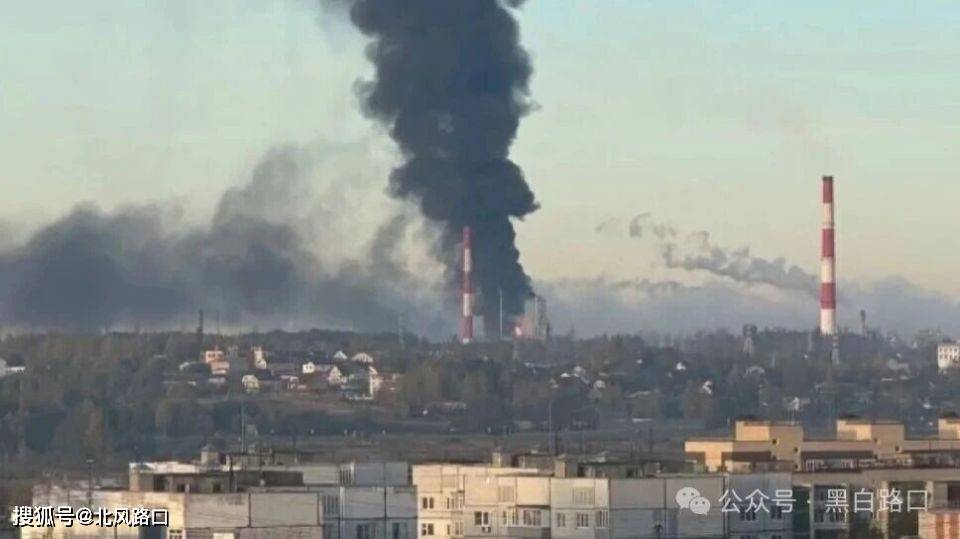
Group 1 - Ukraine's drone attack on the new Yaroslavl oil refinery in Russia has resulted in significant damage, with the facility's vacuum distillation unit affected and a long recovery time anticipated [2] - The refinery, located 700 kilometers from the Ukrainian border, has an annual refining capacity of 6.2 million tons, marking another loss for Russia's refining capabilities [2] - Russian authorities have attempted to downplay the incident, labeling it a "technical fire" during a "routine drill," but the reality remains that Ukraine has inflicted substantial damage on Russian infrastructure [2] Group 2 - Due to the loss of refining capacity, Russia is facing a domestic fuel shortage, leading to an extension of a temporary ban on gasoline exports and restrictions on other fuel types until December 31, 2025 [4] - Russia plans to import gasoline to address the escalating fuel crisis, with the Eurasian Economic Union eliminating import tariffs on gasoline, diesel, and aviation fuel [4] Group 3 - The ongoing fuel crisis is impacting not only the Russian economy and civilian life but also military operations on the front lines, highlighting Ukraine's strategic targeting of Russia's energy sector [5][11] - Reports indicate that Russia has lost 38% of its refining capacity, equating to a daily loss of 338,000 tons of crude oil, which is higher than previous estimates of 32%-35% [9] - The shutdown of major refineries since August has led to a 20% reduction in domestic gasoline supply, exacerbating the fuel crisis [9] Group 4 - Ukraine's systematic attacks on Russian oil and gas pipelines are crippling the country's energy economy, further undermining Russia's ability to sustain its military efforts [11] - The fuel crisis is expected to lead to increased inflation and economic pressure on Russia, with a significant impact on public sentiment and confidence [12] - The lack of fuel for military operations is severely limiting Russia's capabilities, with reports of soldiers resorting to horseback due to fuel shortages [15]
内地-香港绿色能源交流与对接活动圆满举办 | 航运界
Sou Hu Cai Jing· 2025-06-25 13:12
Core Viewpoint - The event aims to promote the transition of maritime activities in the Guangdong-Hong Kong-Macao Greater Bay Area towards a green, clean, and efficient path, emphasizing the importance of green energy development in addressing climate change [1][3][5]. Group 1: Event Overview - The event was held on June 25 in Shenzhen, gathering nearly a hundred enterprises from the maritime industry value chain from mainland China and Hong Kong [1]. - The event was hosted by the Deputy Director of the Foreign Trade Development Bureau of the Ministry of Commerce, Zeng Huacheng [1]. Group 2: Key Statements - The Deputy Director of the Foreign Trade Department, Chang Hui, highlighted the global consensus on promoting green energy development and the establishment of an efficient green marine fuel supply chain [3]. - Zhou Qiang, Deputy Director of the Economic Department of the Central Government Liaison Office in Hong Kong, emphasized that green development is a crucial direction for global trade, integrating low-carbon development into trade policies [5]. - Hong Kong's Secretary for Transport and Logistics, Chen Meibao, noted Hong Kong's significant role as a "super connector" in trade, logistics, and finance, with strong growth potential in emerging fields like green development [7]. Group 3: Collaborative Efforts - During the event, a memorandum of cooperation was signed between the Hong Kong Shipowners Association and Sinopec (Hong Kong) Co., Ltd., focusing on ship fuel supply and green fuel initiatives [11]. - The Hong Kong Transport and Logistics Bureau and the Petroleum Circulation Association expressed the desire to leverage Hong Kong's position as an international financial and trade center to facilitate trade and collaboration in the green maritime fuel sector [14]. Group 4: Regional Cooperation - Zhou Bin, Deputy Director of the Guangdong Provincial Department of Commerce, emphasized the importance of close cooperation between Guangdong and Hong Kong to maintain stable industrial and supply chains amid global economic challenges [9].