
绿色金融

Search documents
2025年内蒙古新增贷款超2000亿元
Sou Hu Cai Jing· 2026-01-28 09:41
人民银行内蒙古自治区分行表示,2026年将继续执行适度宽松的货币政策,优化金融资源配置,为自治 区经济高质量发展提供有力金融支持。 重点领域金融支持力度加大。2025年末,全区科技创新和技术改造贷款余额140.7亿元,较年初增加 117.7亿元,科技贷款企业达7278家,累计发行科技创新债券115亿元。绿色金融稳步推进,全年发放碳 减排贷款80.7亿元,带动碳减排量328.9万吨。普惠金融持续扩面,民营经济贷款余额8056.9亿元、中小 微企业贷款余额12675.3亿元,分别同比增长7.5%和6.9%。数字经济核心产业贷款余额453.9亿元,同比 增长32.8%。 外汇管理服务便利化水平进一步提升。2025年,全区银行代客涉外收付款总额408.4亿美元。跨国公司 本外币一体化资金池、贸易外汇收支便利化等政策落地实施,两家企业集团累计划转资金超85亿元,有 效降低企业跨境资金成本。 央广网呼和浩特1月28日消息(记者李春雪)中国人民银行内蒙古自治区分行1月28日发布数据显示, 2025年,全区金融运行保持总体平稳,信贷投放结构持续优化,融资成本明显下降,金融对实体经济支 持力度不断增强。 截至2025年末,全区 ...
划重点(成就篇②) | 2026年全国生态环境保护工作会议
Xin Lang Cai Jing· 2026-01-28 09:28
建立重大敏感事件"四快三准两稳一必须"的应急响应机制,全年共调度处置突发环境事件113起,现场 指导应对43起,均得到科学妥善处置。聚焦重点河流、重点领域、重点区域,织密补齐"一河(园、 路、库)一策一图"环境应急网络。组织开展"环境应急·2025"丹江口库区及上游地区突发环境事件应急 演练。联合应急管理部印发《关于建立健全突发生态环境事件应急联动工作机制的通知》。持续深入推 动生态环境系统安全生产治本攻坚三年行动。 生态环境治理能力持续提升 健全完善法律法规标准体系 1月14日至15日,生态环境部在京召开2026年全国生态环境保护工作会议,系统总结2025年和"十四 五"生态环境保护工作,深入分析面临的形势与挑战,研究谋划"十五五"工作,安排部署2026年重点任 务。生态环境部党组书记孙金龙出席会议并讲话,生态环境部部长黄润秋出席会议并作工作报告。为更 好地学习宣传贯彻会议精神,我们推出"划重点"系列,今日推出"成就篇"。 生态安全、核安全得到有效保障 加强生态保护修复监管 联合印发《重大生态破坏事件判定规程(试行)》,填补了长期以来判定标准的空白。组织开展"绿盾 2025"重要生态空间生态环境问题排查专项 ...
生态环境部:全国104个县纳入生态综合补偿重点区域
Sou Hu Cai Jing· 2026-01-28 09:06
Core Viewpoint - The Ministry of Ecology and Environment emphasizes the effectiveness of environmental economic policies and plans to enhance structural adjustments, cost reductions, financial integration, and the cultivation of internal momentum in the upcoming period [1][7]. Group 1: Environmental Economic Policies - Environmental economic policies are a new regulatory approach that uses economic means to adjust the environmental behavior of market entities, highlighting their increasing importance in modern environmental governance [2][3]. - The Ministry has implemented flexible regulatory policies such as tax adjustments, financial support, information disclosure, and credit evaluation to optimize environmental supervision and balance environmental, economic, and social responsibilities [2][3]. Group 2: Fiscal and Tax Support - The Ministry aims to strengthen fiscal and tax support, with the environmental protection tax collection amounting to nearly 120 billion yuan during the 14th Five-Year Plan period, and tax reductions for enterprises exceeding 80 billion yuan due to low emissions and waste management [4]. - The establishment of ecological compensation mechanisms has been initiated, with 104 counties included in key compensation areas and 33 cross-provincial ecological protection compensation mechanisms established [4]. Group 3: Financial Support and Trade Services - The Ministry is working to improve financial support for the construction of a beautiful China, promoting projects to guide social capital towards green and low-carbon sectors [5]. - A total of 276 products have been included in the bonded maintenance directory, facilitating nearly 240 bonded maintenance projects, which support high-quality development of new trade formats [5]. Group 4: Market Dynamics and Enterprise Self-Regulation - The release of a new version of the Environmental Protection Comprehensive Directory aims to help enterprises gain better market access, tax benefits, and financial support, serving as a guide for green and low-carbon development [5]. - The Ministry has deepened the reform of environmental information disclosure, with nearly 90,000 enterprises disclosing environmental information, enhancing the identification of compliant enterprises and supporting green finance and ESG ratings [6]. Group 5: Future Directions - The Ministry plans to further enhance fiscal and tax adjustment policies, optimize green tax systems, and improve ecological compensation mechanisms [7]. - Financial market support policies will be optimized, including the development of a classification directory for green finance projects and support for the green development of private and small enterprises [7]. - The Ministry will strengthen industry self-regulation policies, expanding and improving environmental information disclosure systems and establishing a new regulatory mechanism based on environmental credit [7].

聚焦创新实践:西安银行持续深耕绿色金融
Jing Ji Guan Cha Wang· 2026-01-28 03:45
2025年,西安银行(600928)在绿色金融领域实现多项创新突破:率先完成全省首笔碳票、林票质押贷 款授信,并成功发放汉中市首笔取水权质押贷款……一系列成果密集落地,持续为绿色产业发展注入金 融动能。 当前,经济社会绿色低碳转型已经成为发展的主旋律,陕西是"双碳"战略落地的重要阵地,西安市更是 引领区域新能源产业升级的核心引擎。西安银行作为扎根本土的上市城商行,始终将发展绿色金融作为 服务国家"双碳"目标、推动区域经济绿色转型的重要抓手。 在此基础上,2025年西安银行进一步深化绿色金融理念,推动相关实践向纵深发展,持续赋能区域绿色 低碳高质量发展。 推动绿色金融的创新实践 创新是绿色金融发展的重要引擎。2025年以来,西安银行一系列首发、首笔创新业务逐步落地,展现出 其在绿色金融领域的积极探索与扎实成效。 尤其是针对陕南地区绿色资源富集的禀赋,西安银行因地制宜,量身定制了专属的绿色金融服务方案。 2025年12月17日,由商洛市丹凤县委、县政府主办,丹凤县林业局承办的"商洛市首批林票、丹凤县首 张林业碳票颁发暨授信仪式"在丹凤县寺坪镇政府举办。西安银行商洛分行作为唯一受邀金融机构参 加,并成为全省首笔碳票 ...
科技赋能 温暖守护 阳光财险发布2025年度理赔服务报告
Jin Rong Jie Zi Xun· 2026-01-28 03:42
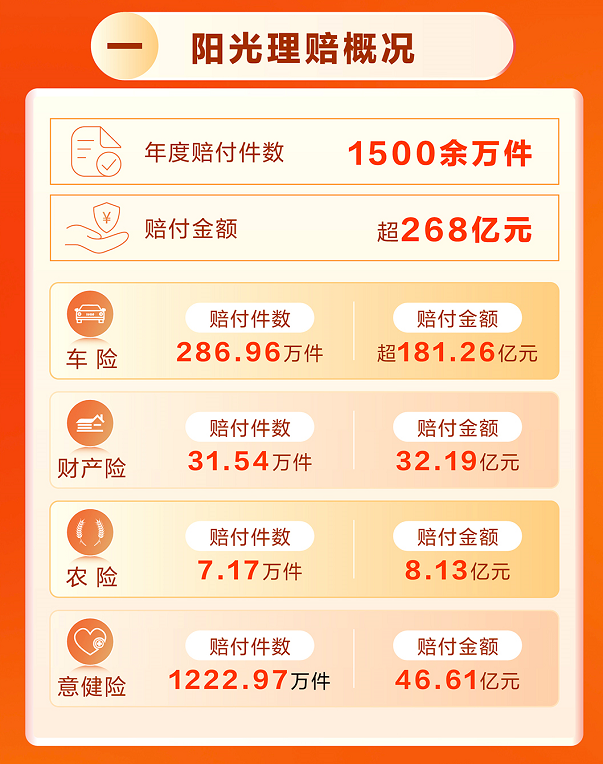
Core Insights - Sunshine Property & Casualty Insurance released its 2025 claims service annual report, indicating a total of over 15 million claims processed and payments exceeding 26.8 billion yuan [1] - The company actively supports national strategies, particularly the Belt and Road Initiative, by enhancing its insurance product offerings and providing solutions for key development areas [3] Claims Overview - In 2025, the company processed 2.8696 million auto insurance claims with payments of 18.126 billion yuan, 315,400 property insurance claims with payments of 3.219 billion yuan, 71,700 agricultural insurance claims with payments of 0.813 billion yuan, and 12.2297 million health insurance claims with payments of 4.661 billion yuan [1] - The company handled 5.6 million livestock insurance claims with payments exceeding 320 million yuan, 16,000 crop insurance claims with payments over 470 million yuan, and 160 forestry insurance claims with payments of over 19 million yuan [4] Green Finance Initiatives - Sunshine Property & Casualty Insurance is committed to green finance, processing 1,872 claims related to photovoltaic, hydropower, and wind power projects with payments of 629 million yuan, and servicing over 250,000 new energy vehicles with payments exceeding 1.3 billion yuan [4] Social Responsibility - The company processed over 2.55 million major illness claims for urban and rural residents, with payments exceeding 1.1 billion yuan, and addressed various needs of new citizens, including 13,000 construction worker accident claims and 580,000 student accident claims [5] - In response to natural disasters, the company paid over 110 million yuan for claims related to events such as the earthquake in Shigatse, Tibet, and severe weather events [5] Technological Advancements - To enhance customer service, the company invested in technology, launching the "AI Claims Assistant" to improve efficiency and customer experience, which has processed over 34,000 groups and answered over 260,000 inquiries since its launch [6] - The company achieved significant improvements in claims processing times, with online agricultural claims exceeding 20,000 and an average reduction in processing time by 3.02 days [6] Future Outlook - Sunshine Property & Casualty Insurance aims to continue its commitment to customer-centric values, further integrating technology to optimize service processes and enhance the claims experience [7]
兴业银行乌鲁木齐分行:精准对焦 推出“接地气”融资方案
Zhong Guo Jin Rong Xin Xi Wang· 2026-01-28 03:06
Group 1 - The core viewpoint of the news is the successful implementation of a 1.7 billion yuan syndicated loan led by Industrial Bank's Urumqi branch to support a chemical company's integrated project for resource clean and efficient utilization in Xinjiang [1][2] - The project has a total planned investment of over 3 billion yuan, utilizing advanced gasification technology based on local coal resources to create a clean and efficient coal conversion platform, producing multiple products such as synthetic ammonia, melamine, and compound fertilizers [1] - The project aims to explore carbon dioxide reduction pathways during production, highlighting its significant environmental benefits and industrial driving effects [1] Group 2 - The successful execution of the syndicated loan reflects the bank's commitment to green finance and its role in supporting the real economy, effectively dispersing financing risks and providing stable funding for key green projects [2] - The bank plans to deepen cooperation with various enterprises and extend its financial services, positioning itself as a "local financial main force" and "enterprise growth partner" to contribute to high-quality regional economic development and improved public welfare [2]

2026年中国新能源汽车融资租赁行业政策、产业链、市场规模、重点企业及趋势研判:新能源汽车产销持续高速增长,带动融资租赁市场规模跃升至千亿元[图]
Chan Ye Xin Xi Wang· 2026-01-28 01:25
Core Insights - The rapid growth of the new energy vehicle (NEV) financing leasing market is driven by policy support and technological advancements, making it a crucial financial solution to lower ownership barriers and mitigate technology iteration risks [1][6][7]. Group 1: Market Overview - The NEV financing leasing market in China is projected to grow from 449 million yuan in 2015 to 112.72 billion yuan in 2024, with a compound annual growth rate (CAGR) of 84.78% [1][7]. - By 2025, the market size is expected to reach approximately 165.58 billion yuan, indicating robust growth potential [1][7]. Group 2: Policy Support - The Chinese government has extended the NEV purchase tax exemption policy until 2025 and is exploring innovative models like battery-vehicle separation [1][4][7]. - Local governments are also providing targeted financing leasing subsidies to stimulate procurement and consumption [1][4][7]. Group 3: Technological Advancements - Continuous improvements in NEV technology and performance are enhancing user experience and increasing market acceptance, particularly among the younger generation [1][7]. - The Z generation shows a strong preference for environmentally friendly, intelligent, and connected NEVs, promoting the "rent-to-buy" consumption model [1][7]. Group 4: Industry Structure - The NEV financing leasing industry comprises various players, including traditional automotive finance companies, specialized leasing firms, and financial institutions [6][8]. - Major companies in the sector include SAIC General Motors Automotive Finance Co., Ltd., Volkswagen Financial Services (China) Co., Ltd., and Mercedes-Benz Automotive Finance Co., Ltd. [2][8][10]. Group 5: Industry Trends - Digital transformation in the NEV financing leasing sector is expected to evolve towards intelligent risk control and asset management based on big data [11]. - The integration of NEV financing leasing with green finance will create unique competitive advantages, allowing for lower-cost funding through green bonds and innovative financial products linked to carbon reduction [12]. - International expansion will focus on local operations and global asset circulation, particularly in emerging markets with rising electric vehicle penetration [13].


去年我国绿色贷款快速增长 贷款余额全年增加7.72万亿元
Ren Min Ri Bao· 2026-01-27 22:25
(文章来源:人民日报) 分用途看,基础设施绿色升级贷款、能源绿色低碳转型贷款、生态保护修复和利用贷款余额分别为 19.94万亿元、8.48万亿元和5.03万亿元,全年分别增加3.3万亿元、8173亿元和6461亿元。分行业看,电 力、热力、燃气及水生产和供应业绿色贷款余额8.98万亿元,全年增加9909亿元;交通运输、仓储和邮 政业绿色贷款余额8.26万亿元,全年增加1.25万亿元。 本报北京1月27日电 (记者吴秋余)中国人民银行发布的数据显示:截至2025年四季度末,我国本外币 绿色贷款余额44.77万亿元,同比增长20.2%,全年增加7.72万亿元。 ...
理财市场规模稳健扩张
Jing Ji Ri Bao· 2026-01-27 22:13
Core Insights - The report indicates that the number of investors holding wealth management products reached 143 million by the end of 2025, marking a 14.37% increase from the beginning of the year [1] - The total scale of the bank wealth management market was 33.29 trillion yuan, reflecting an 11.15% growth year-on-year, with 33,400 new wealth management products issued throughout the year, raising 76.33 trillion yuan [1] Group 1: Investor Growth and Composition - The number of individual investors increased by 17.69 million, while institutional investors grew by 310,000 [1] - Individual investors accounted for 98.64% of the total, with 141 million individuals, while institutional investors made up 1.36% with 1.94 million [5] - The majority of individual investors are classified as having a low-risk preference, with 33.54% being moderate-risk (level 2) investors [5][6] Group 2: Product Performance and Structure - Wealth management products generated a total return of 730.3 billion yuan in 2025, a 2.87% increase from the previous year, with banks contributing 113.2 billion yuan and wealth management companies 617.1 billion yuan [2] - The average yield of wealth management products was 1.98%, with fixed-income products dominating the market at 97.09% of the total scale [2][3] - The scale of fixed-income products was 32.32 trillion yuan, while mixed products accounted for 0.87 trillion yuan, and equity and commodity products were significantly smaller at 0.08 trillion yuan and 0.02 trillion yuan, respectively [2] Group 3: Risk Levels and Product Types - By the end of 2025, 95.73% of wealth management products were rated as level 2 (medium-low risk) or below, while only 0.24% were rated level 4 (medium-high risk) or above [3] - Open-ended wealth management products made up 79.87% of the total scale, amounting to 26.59 trillion yuan, while closed-end products accounted for 20.13% [3] - The average duration of newly issued closed-end products ranged from 322 to 489 days, with 70.87% of these products having a duration of over one year [4] Group 4: Support for the Real Economy - Wealth management funds supported approximately 21 trillion yuan in the real economy by investing in bonds, non-standardized debt assets, and equity assets [8] - Investments in bonds totaled 18.52 trillion yuan, with credit bonds making up 13.27 trillion yuan, representing 37.21% of total investment assets [8] - The report highlights the role of wealth management products in optimizing fund allocation and supporting various sectors, including green bonds and initiatives related to the Belt and Road [8][9]
新加坡经济增长超预期显韧性
Jing Ji Ri Bao· 2026-01-27 22:10
Economic Growth - Singapore's GDP growth for 2025 is projected at 4.8%, an increase of 0.4 percentage points from 4.4% in 2024, marking the strongest growth since 2021 [1] - The manufacturing sector is identified as the core engine of growth, with an annual output increase of 7.6% and a quarterly growth of 15% in Q4 [1] - The services sector is expected to grow by 4.1% in 2025, slightly lower than the 4.3% growth in 2024, with significant contributions from information and communication, finance, and professional services [2] Manufacturing Sector - The biopharmaceutical and electronics industries are highlighted as dual pillars of growth, benefiting from concentrated orders in tumor drugs and vaccines, as well as the AI development wave [1] - Integrated circuit exports are projected to increase by 32.1%, disk media products by 53.5%, and communication equipment by 81.4%, reflecting strong demand for high-end manufacturing driven by global AI infrastructure investments [1] Services Sector - The services sector shows a clear internal structural differentiation, with traditional consumer services like accommodation and food services growing only 3.2%, significantly lower than the previous year's 4.6% [2] - New emerging businesses such as digital trust and cross-border carbon credit management contributed over 300 million SGD to revenue, reinforcing Singapore's position as a leader in sustainable finance within ASEAN [2] Construction Sector - The construction industry is expected to grow by 4.2% in 2025, a significant decline from the 9.2% growth in 2024, yet still maintaining positive growth amid high interest rates and labor shortages [3] - The government has introduced a "Construction 4.0 Transformation Blueprint" to mandate the use of digital technologies in large projects, aiming to drive technological upgrades in the sector [3] Trade Performance - Non-oil domestic exports are projected to grow by 4.8%, aligning with GDP growth and significantly higher than the 0.2% growth in 2024 [4] - Electronic exports have maintained double-digit growth for four consecutive months, offsetting declines in other sectors such as petrochemicals and shipbuilding [4] Future Outlook - The Ministry of Trade and Industry forecasts a GDP growth range of 1% to 3% for 2026, reflecting a cautious approach amid external headwinds and internal transformation challenges [5] - The government plans to launch a new economic strategy review, focusing on enhancing supply chain resilience, deepening AI and advanced manufacturing integration, and expanding regional service trade networks [5]