
车路云一体化

Search documents
八部门印发《汽车行业稳增长工作方案(2025—2026年)》:推进智能网联汽车准入和上路通行试点 有条件批准L3级车型生产准入
Mei Ri Jing Ji Xin Wen· 2025-09-13 02:03
Core Viewpoint - The Ministry of Industry and Information Technology, along with eight other departments, has issued the "Automobile Industry Stabilization and Growth Work Plan (2025-2026)", focusing on promoting the industrial application of intelligent connected technologies [1] Group 1: Policy Initiatives - The plan emphasizes the development of intelligent connected vehicle applications through integrated "vehicle-road-cloud" pilot projects [1] - It aims to accelerate the construction of connected infrastructure and cloud control platforms [1] - The initiative encourages the adoption of high-performance communication modules such as V2X and 5G in new vehicles [1] Group 2: Technological Advancements - The plan promotes the large-scale application of the Beidou system and encourages various scenario applications in logistics, sanitation, and transportation services [1] - It supports the gradual expansion of cross-regional collaborative applications in key areas [1] Group 3: Regulatory Framework - The initiative includes advancing pilot projects for the access and road use of intelligent connected vehicles [1] - It proposes conditional approval for the production access of L3 level vehicles and aims to improve laws and regulations related to road traffic safety and insurance [1] Group 4: Business Model Innovation - The plan supports companies in the automotive, information communication, and transportation sectors to explore new business models linked by data [1] - It aims to accelerate the cultivation of diversified value chains [1]
2025服贸会|“北京方案展”亮相,绘制未来数字城市模样
Bei Jing Shang Bao· 2025-09-12 11:59
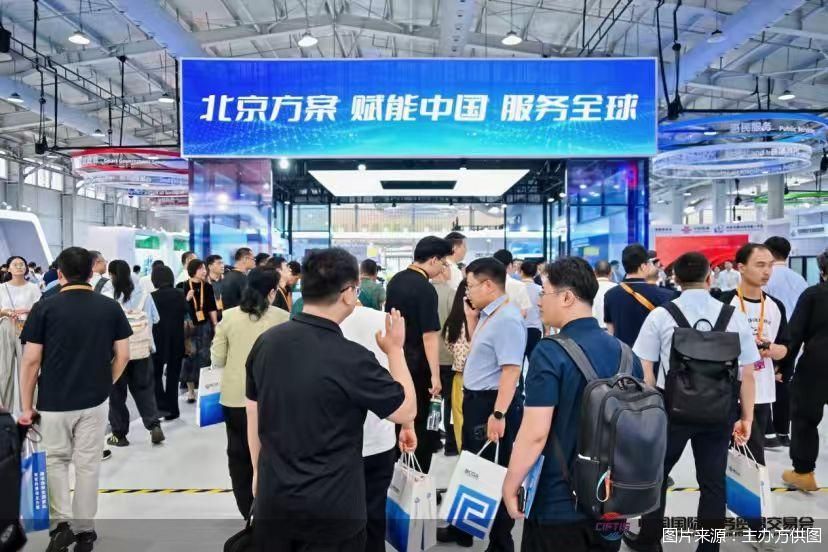
Group 1 - The 2025 China International Service Trade Fair was held in Beijing, showcasing the "Beijing Plan" as a highlight, promoting replicable and standardized digital service solutions to enhance urban governance and improve citizens' lives [1][7] - The "Beijing Plan" consists of a comprehensive urban-level service system, including a computing power base and a cloud platform, designed to enhance efficiency in various sectors such as government, industry, and healthcare [3][4] - The exhibition featured immersive experiences and dynamic demonstrations, allowing visitors to engage with the future of urban development powered by digital technology [1][3] Group 2 - The "Beijing Plan" includes a smart computing power base and a government cloud platform that facilitates data sharing and integration, significantly improving government service efficiency [3][4] - The "Three Jing" application system serves as a unified service entry point for smart city services, addressing the practical needs of smart governance, urban management, and public services [3][4] - The exhibition also highlighted innovative solutions such as the AI-driven administrative review model and the integrated cloud control platform for autonomous vehicles, showcasing advancements in urban management and safety [5][6] Group 3 - The Beijing digital economy enterprise overseas innovation service base aims to facilitate the international expansion of domestic digital companies, creating a hub for information exchange and collaboration [6][7] - The exhibition's outcomes will be continuously showcased at the overseas innovation service base, promoting the "Beijing Plan" and supporting digital enterprises in entering international markets [6][7] - Beijing aims to deepen digital technology innovation and application, contributing to the high-quality development of the global digital economy with its "Beijing wisdom" and "Beijing strength" [7]

研报掘金丨民生证券:维持四维图新“推荐”评级,智驾业务有望迎来全面升级
Ge Long Hui A P P· 2025-09-10 07:33
Core Viewpoint - Minsheng Securities report indicates that Siwei Tuxin plans to invest in Jianzhih Robot, which is expected to lead to a comprehensive upgrade in its intelligent driving business [1] Company Summary - Jianzhih is a large-scale software algorithm company focused on mid-to-high level intelligent driving, providing advanced driving products based on Horizon's platform [1] - Jianzhih Robot's PhiGo assisted driving system has secured multiple mass production orders from leading OEMs and Tier-1 suppliers, with high-speed assisted driving solutions set for mass production soon and urban assisted driving solutions expected to scale by 2026 [1] - Siwei Tuxin continues to deepen its efforts in the integrated field of intelligent networking and vehicle-road-cloud, benefiting from the accelerated penetration of automotive intelligence and the trend of domestic MCU chip production [1] - The company's automotive-grade MCU chip business under Jiefa Technology is rapidly expanding, with growth potential gradually being released [1] - Siwei Tuxin has achieved a full-stack technology layout in intelligent driving, intelligent cockpit, intelligent chip, and intelligent cloud, with its ecological advantages becoming increasingly prominent [1] - The investment in Jianzhih Robot is expected to accelerate the development of its intelligent driving business, further solidifying its industry position [1]

更聪明 更安全 更开放——从智博会看智能网联新能源汽车新趋势
Xin Hua Wang· 2025-09-06 11:12
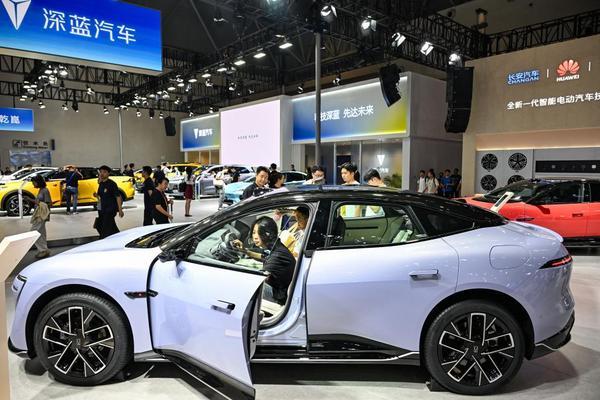
Core Insights - The automotive industry is rapidly evolving with the integration of AI technologies, enhanced safety measures, and cross-industry collaborations showcased at the 2025 World Intelligent Industry Expo in Chongqing [1][2][3] Group 1: AI Empowerment - AI large models are enabling smarter vehicle interactions, allowing cars to respond to user commands for adjusting settings like air conditioning and seat massage [2] - The introduction of multimodal large model technology is giving vehicles emotional perception capabilities, enabling real-time monitoring of driver emotions and automatic adjustments to the car's environment [2] - The penetration rate of L2 and above assisted driving functions in China's new energy passenger vehicles reached 82.6% in the first half of the year [2] Group 2: Safety Enhancements - New battery collision monitoring systems are being developed to provide precise damage assessment and warnings, addressing safety concerns related to battery fires and explosions [5] - The release of mandatory national standards for electric vehicle battery safety has upgraded safety requirements, with innovations from various automakers to enhance battery safety [5][6] - Privacy protection measures are being implemented in vehicles, including local processing of biometric data and user control over data sharing [6] Group 3: Open Ecosystem - The "Human-Car-Home" ecosystem is moving towards large-scale implementation, allowing users to control home devices from their vehicles [3] - The automotive industry is focusing on the deep integration of AI with terminal devices, particularly in smart cockpits [3] - The introduction of innovative technologies like transparent photovoltaic car bodies demonstrates the industry's commitment to breaking traditional barriers and fostering collaborative innovation [9] Group 4: Intelligent Transportation - The integration of smart traffic systems with autonomous vehicles is being piloted in 20 cities, enhancing traffic management and safety [10] - The future vision includes vehicles as integral components of smart cities, contributing to mobile computing and energy storage [10]

财经聚焦丨更聪明 更安全 更开放——从智博会看智能网联新能源汽车新趋势
Xin Hua Wang· 2025-09-06 10:53
Core Insights - The automotive industry is evolving with smarter, safer, and more open technologies showcased at the 2025 World Intelligent Industry Expo in Chongqing [1] Group 1: Smarter Technologies - AI large models are enhancing smart interactions in vehicles, allowing for personalized responses to user commands [3] - The integration of multimodal large model technology enables vehicles to develop "emotional perception" capabilities, adjusting settings based on the driver's emotional state [3] - The penetration rate of L2 and above assisted driving functions in new energy passenger vehicles in China reached 82.6% in the first half of the year [3] Group 2: Safety Enhancements - New battery collision monitoring systems provide real-time damage assessment, addressing safety concerns related to battery fires and explosions [7] - The introduction of mandatory national standards for electric vehicle battery safety has been implemented, enhancing safety requirements [7] - Various automakers are innovating battery technologies to prevent fires and improve safety, such as the "Golden Shield" battery technology from Changan [7][8] Group 3: Open Ecosystem - The development of a "new transparent photovoltaic body" technology allows vehicles to generate energy while driving, showcasing the integration of AI, materials, and energy technologies [9] - The automotive industry is shifting from a focus on individual technologies to a competitive landscape centered around ecosystem collaboration and collective strength [10] - The implementation of vehicle-road-cloud integration is being piloted in 20 cities, enhancing traffic management and safety through real-time data sharing [10][11]

财经聚焦|更聪明 更安全 更开放——从智博会看智能网联新能源汽车新趋势
Xin Hua She· 2025-09-06 10:51
Group 1: Smart Integration in Vehicles - The integration of AI large models into vehicles enhances intelligent interaction, allowing cars to respond to user needs more humanely, such as adjusting air conditioning and playing music based on voice commands [1] - The adoption of multi-modal large model technology enables vehicles to develop "emotional perception" capabilities, monitoring driver emotions and adjusting the environment accordingly [1] - The penetration rate of L2 and above assisted driving functions in China's new energy passenger vehicles reached 82.6% in the first half of the year [1] Group 2: Safety Enhancements - New battery collision monitoring systems provide precise damage assessment and warnings, enhancing battery safety [2] - The introduction of national standards for electric vehicle battery safety has been implemented, addressing concerns over battery fires and explosions [3] - Various automakers are innovating battery technologies to ensure safety, such as the ability to withstand punctures without igniting [3] Group 3: Open Ecosystem Development - The automotive industry is evolving through cross-industry collaboration, integrating AI, materials, and energy technologies to create innovative solutions like transparent photovoltaic car bodies that can generate energy while driving [5] - The development of a "car-road-cloud" integrated system is underway, with pilot projects in 20 cities to enhance traffic management and safety [6] - The automotive sector is shifting from a focus on individual technologies to a competitive landscape centered around ecosystem collaboration and collective strength [5][6]
“精确图”护航“聪明车”——北京市高级别自动驾驶示范区高精度地图应用见闻
Zhong Guo Zi Ran Zi Yuan Bao· 2025-09-05 04:43
Core Insights - The article highlights the advancements in high-precision mapping technology for autonomous vehicles in Beijing's Yizhuang area, emphasizing its critical role in enhancing the safety and efficiency of autonomous driving [1][10]. Group 1: High-Precision Mapping - High-precision maps serve as a primary resource for autonomous vehicles, providing centimeter-level accuracy and detailed information about road conditions, traffic signs, and environmental features [3][5]. - The development of a lightweight mapping standard has enabled the creation of a high-precision map covering 600 square kilometers in the demonstration area, addressing industry pain points related to production costs and update speeds [5][3]. Group 2: Cost and Update Challenges - The high costs associated with data collection, processing, and map production pose significant challenges for the high-precision mapping industry [5]. - The demonstration area is exploring a crowdsourced updating method that integrates data from vehicles, roads, and cloud systems to enhance map accuracy and reduce costs [5][6]. Group 3: Safety and Security Measures - The demonstration area prioritizes safety by upgrading the vehicle-road-cloud system and implementing secure data transmission protocols [8][9]. - A management model has been established to ensure the high-precision map data is manageable, controllable, traceable, and preventable, promoting compliance in the crowdsourced updating process [8][9]. Group 4: Industry Growth and Impact - The Yizhuang area has become a hub for over 20 unicorns and potential companies in the autonomous driving sector, with more than 1,100 autonomous vehicles and over 41 million kilometers of cumulative road testing [9][10]. - The integration of high-precision maps with autonomous driving technology is seen as a key factor in shaping the future of transportation, enhancing both safety and efficiency [10].
【行业深度】洞察2025:中国智慧交通行业竞争格局及排名情况(附项目竞争情况、企业排名、细分赛道、战略集群、波特五力模型)
Qian Zhan Wang· 2025-09-03 10:41
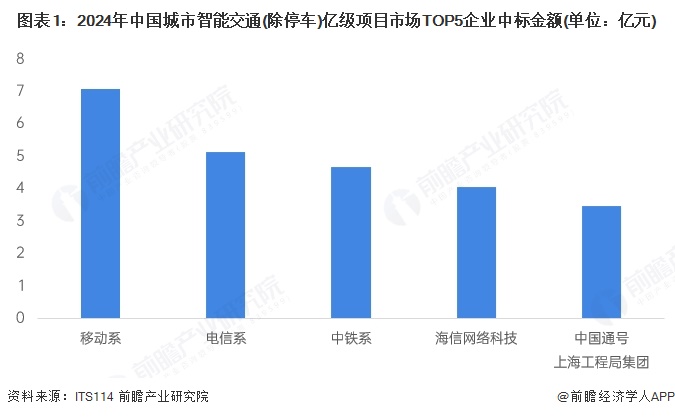
Core Viewpoint - The Chinese smart transportation industry is experiencing moderate market concentration, with leading companies like China Mobile and China Telecom dominating the market due to their advanced communication technologies and infrastructure resources [2][6]. Market Competition Analysis - In 2024, the top five companies in the urban smart transportation project bidding are China Mobile, China Telecom, China Railway, Hisense Network Technology, and China Communications Shanghai Engineering Bureau Group, collectively holding over 45% of the market share [1][2]. - The market is characterized by a layered competition where telecom operators lead infrastructure, state-owned enterprises focus on vertical markets, and tech companies emphasize technological breakthroughs [6][15]. - The CR3 (concentration ratio of the top three companies) stands at 31%, while the CR5 (concentration ratio of the top five companies) is 44%, indicating a significant presence of leading firms [6]. Innovation and Technology Ranking - The top five companies in the Chinese smart transportation technology innovation ranking for 2025 are Baidu Apollo, Huawei, Mogu Car Union, Zhongke Chuangda, and Jinzhi Technology, recognized for their comprehensive technology solutions and successful pilot projects [8][9]. - Companies like Baidu Apollo and Huawei leverage their full-stack technology and integrated solutions to maintain their leading positions in the market [8][10]. Segment Analysis - Smart transportation solution providers include Baidu Apollo and Huawei, which offer comprehensive solutions from perception to control, focusing on technology integration and scene implementation capabilities [10]. - Hardware product solution providers consist of component manufacturers like Bosch and Dahua Technology, which meet the demand for sensors and vehicle-mounted terminals [10]. - The competitive landscape also includes technology integrators such as Baidu Maps and Gaode Maps, which provide foundational data and technical support for smart transportation [10]. Strategic Cluster Analysis - Market leaders like Dahua Technology excel in revenue and profit margins by offering a range of smart transportation products and solutions [13]. - Companies such as Junsen Electronics and Yutong Bus are recognized as market drivers due to their scale advantages in automotive manufacturing and components [13]. Competitive Forces Summary - The competitive landscape of the smart transportation industry is characterized by high technical barriers for existing competitors, with significant pressure from potential entrants, particularly tech giants [15]. - The bargaining power of suppliers is moderate, while buyers, including government and automotive companies, exert strong pressure for cost-effectiveness and customization [15]. - The threat of substitutes is low, as smart transportation is a necessary upgrade area, making it difficult for existing technologies to be disrupted in the short term [15].
勤上股份发布2025年半年度业绩报告,战略转型成效显现
Quan Jing Wang· 2025-09-01 03:19
Core Viewpoint - The company has demonstrated strong financial performance in the first half of 2025, with a focus on expanding its market presence and advancing its strategic initiatives in low-carbon lighting and smart transportation solutions [1][2][3][4] Financial Performance - The company reported a revenue of 263 million yuan, representing an 18.8% year-on-year increase [1] - Gross margin improved to 17.22%, up by 4.21% year-on-year [1] - Net cash flow from operating activities reached 83 million yuan, a significant increase of 120.27% year-on-year [1] Strategic Initiatives - The company is focusing on three strategic directions: outdoor low-carbon lighting, digital control, and vehicle-road-cloud collaboration, providing integrated solutions for various smart applications [1][2] - Following a change in control in 2023, the company has been actively adjusting its strategy, enhancing its core business in semiconductor lighting, and successfully divesting non-core assets [2] Market Expansion - The company is consolidating its technical advantages in mature markets while actively exploring emerging markets in Southeast Asia, the Middle East, and Latin America [2] - A strategic partnership with Inspur Smart City was established to enhance the company's influence in the smart city ecosystem [2] Smart Transportation Focus - The company is strategically targeting the "vehicle-road-cloud integration" sector, recognizing the growth potential in smart transportation and low-carbon lighting industries [3] - The company has developed a comprehensive system centered around smart lamp posts, integrating various functionalities such as lighting, video surveillance, and environmental monitoring [3] Low-Carbon Development - The company is responding to national low-carbon development goals by leading a "carbon efficiency revolution" in the lighting industry [4] - The company has achieved a light efficiency of 200 lm/W and introduced a 2.0 version of energy-saving streetlight systems that can achieve approximately 30% secondary energy savings [4] - Future developments include a 3.0 version of integrated lighting solutions aimed at achieving "zero-carbon lighting" [4]

深圳首个L4级自动驾驶公交线在市中心开通运营
Zhong Guo Jing Ji Wang· 2025-08-28 07:57
Core Insights - The B888 autonomous bus line officially commenced operations in Shenzhen's Luohu District, providing free rides through an online reservation system, marking it as the first L4 autonomous bus line operating in a bustling city center in China [1] - This project is a significant milestone in Shenzhen's smart transportation development and serves as a practical example of the integration of Shenzhen and Hong Kong, enhancing the travel experience for residents of both cities [1] Group 1: Project Overview - The B888 line starts at Luohu Port and connects key landmarks and commercial complexes, including the International Trade Center and MixC, while also linking various consumer districts [2] - The project is a collaboration between the Luohu District government and Shenzhen Bus Group, utilizing three autonomous minibuses from WeRide, with a planned operation period of three years [1][2] Group 2: Technology and Design - The autonomous minibuses are designed to accommodate up to 8 passengers, featuring a minimalist design without traditional rearview mirrors or windshield wipers, and are equipped with advanced sensors for 360-degree environmental perception [2] - WeRide's proprietary autonomous driving algorithms enable the minibuses to navigate complex traffic scenarios safely and efficiently, enhancing passenger comfort and safety [2] Group 3: Future Developments - WeRide has successfully tested and operated its minibuses in nearly 30 cities worldwide, including major cities like Beijing and Singapore, and plans to continue expanding the application of autonomous driving technology in various urban settings [3] - The Shenzhen Transportation Bureau will support the project team in optimizing routes based on passenger flow and demand, exploring innovative operational models to ensure sustainable development of the project [3]