人机融合

Search documents
业界共议智能船舶“未来航道”
Zhong Guo Zheng Quan Bao· 2025-12-04 20:22
Core Viewpoint - The shipping industry is undergoing a significant transformation driven by artificial intelligence and autonomous navigation, with stakeholders expressing a proactive and open attitude towards these changes [1][7]. Industry Challenges - The development of intelligent ships is a complex system engineering challenge involving technology, standards, regulations, business models, and industrial ecology, presenting both challenges and historical opportunities for high-quality development [1][2]. - The global shipping industry faces multiple challenges, including supply chain restructuring, upgraded environmental regulations, and energy transition pressures, with digitalization and intelligence seen as key solutions [1][2]. Technical Challenges - The maritime environment is complex and variable, significantly affecting ship operations, which tests the limits of intelligent systems in perception, decision-making, and control stability [1][2]. - The shortage of crew members and communication difficulties during long-distance voyages highlight the importance of autonomous capabilities on ships [2]. Technological Innovations - The integration of artificial intelligence and machine vision is a focal point for the industry, with the development of intelligent safety systems aimed at enhancing navigation safety management through features like collision avoidance and shore-ship collaboration [2][3]. - The emergence of auxiliary docking systems is likened to having a "smart pilot" on board, making docking operations safer, more efficient, and precise [3]. Regulatory Framework - Current international maritime organization (IMO) documents indicate that existing rules do not adequately address issues related to Maritime Autonomous Surface Ships (MASS), necessitating the development of new guidelines [4]. - Non-mandatory MASS rules are expected to be finalized by 2026, with mandatory rules to be drafted by 2028 and implemented by 2032 [4]. Collaborative Efforts - International cooperation is essential to address the fragmentation of technical standards in intelligent shipping, requiring a cross-domain compatible technical framework [5]. - The restructuring of ship types and system architectures is anticipated under the new MASS regulations, which will enhance testing and validation systems [6]. Human-Machine Interaction - The ultimate goal of intelligent ships is not to create fully autonomous vessels but to redefine the roles of crew members, transitioning them from traditional operators to system managers and decision-makers [7]. - A balance must be struck between leveraging artificial intelligence capabilities and managing its limitations, ensuring that systems can seamlessly revert control to human operators when necessary [6][7].

能“跳舞”还会“焊接” 全国首台造船迷你机械臂亮相
Yang Shi Xin Wen· 2025-12-04 00:39
Core Insights - The 2025 China International Maritime Exhibition is taking place in Shanghai, showcasing the latest shipbuilding products and upgraded shipbuilding equipment, marking a significant event in the maritime industry [1] Group 1: Technological Advancements - A mini robotic arm, designed for shipbuilding welding, was demonstrated at the exhibition, highlighting its agile welding technology [1] - This robotic arm weighs less than 15 kilograms and is capable of performing welding tasks in hard-to-reach areas, aligning with current green construction requirements for low energy consumption [1] - The robotic arm has been widely adopted in domestic shipbuilding enterprises, enhancing efficiency and increasing product quality [1] Group 2: Industry Impact - The robotic arm addresses labor intensity issues in challenging environments, providing stable and reliable quality in welding operations [1] - Future developments in robotic arms are expected to focus on multimodal capabilities, fostering a user-friendly human-machine collaboration in production [1]
一座陶瓷智能工厂背后的“三化”变革丨品牌新事
吴晓波频道· 2025-11-14 00:29
Core Viewpoint - The article highlights the transformation of traditional manufacturing into smart factories, focusing on the case of a large intelligent tile factory in Dongguan, showcasing advancements in automation, efficiency, and sustainability in the ceramics industry [4][18]. Group 1: Smart Factory Features - The factory covers an area of 348 acres with a total building area of approximately 350,000 square meters, exceeding the size of the National Stadium "Bird's Nest" by 100,000 square meters [5]. - The workforce has been reduced from 120-150 workers per production line to about 35, achieving a labor reduction of 70-80% [6]. - The factory employs an integrated production line that automates the entire process from raw material to finished product, producing large high-end ceramic slabs [7]. Group 2: Automation and Technology - Automation is evident throughout the production process, with a central control room managing operations via precise electronic scales for raw material mixing and intelligent cloud control systems for temperature monitoring [8][10]. - The factory utilizes AI detection machines for quality control, which can identify surface defects and automatically sort products for packaging [10]. - Data collection points total approximately 20,000, allowing for comprehensive monitoring and optimization of production processes [15]. Group 3: Sustainability Initiatives - The factory operates during off-peak hours to take advantage of lower electricity rates, reducing operational costs significantly [12]. - It has implemented a biomass fuel system that lowers costs to one-third of natural gas prices, replacing 50% of natural gas usage [12]. - Rainwater collection systems can store about 3,000 tons of water for production use, achieving a 100% recycling rate [12]. Group 4: Performance Metrics - The factory has achieved a 20-30% increase in production while reducing labor costs by 70-80% [18]. - The quality of products has improved, with the firing rate of superior products increasing from 97.5% to 99.8% and flatness standards improving from 0.18 mm to 0.1 mm [18]. - The company has seen a doubling of per capita output compared to five years ago, with a product quality rate of 99.5% and an annual production capacity exceeding 200 million square meters [32]. Group 5: Future Outlook - The successful listing of the company on the Shenzhen Stock Exchange marks a new phase for the industry leader, positioning it as a benchmark for smart manufacturing practices [34]. - The company aims to leverage its intelligent manufacturing advantages to enhance product competitiveness and operational efficiency [37].


十年豪赌,马斯克或赢得万亿美元“工资条”
3 6 Ke· 2025-11-13 11:53
Core Points - Tesla CEO Elon Musk has been granted a $1 trillion compensation plan, which includes 423,743,904 shares of common stock, including restricted stock, following a shareholder vote that approved the plan [1][2] - If Musk succeeds in this plan, he could become the world's first trillionaire [2] Group 1: Compensation Plan Details - The compensation plan is structured as a "decade-long gamble" where Musk must lead Tesla to achieve 12 sets of goals over the next ten years [3] - The first main task is to increase Tesla's market capitalization from $1.5 trillion to $8.5 trillion, requiring the company to surpass several milestones along the way [3][5] - The second main task involves operational goals, including delivering 20 million vehicles, achieving 10 million subscriptions for Full Self-Driving (FSD), delivering 1 million humanoid robots, and deploying 1 million Robotaxi vehicles [3][5] Group 2: Operational Goals and Challenges - To meet the vehicle delivery goal, Tesla must maintain an average annual sales volume of over 1.2 million vehicles, with a projected delivery of approximately 1.789 million vehicles in 2024, marking a decline for the first time since its IPO [6] - The FSD subscription rate currently stands at only 12%, necessitating a significant increase to 50% to meet the subscription goal [7] - The ambitious operational targets align with Tesla's strategic shift towards AI, autonomous driving, and humanoid robots, with plans to produce the Optimus robot and CyberCab by 2026 [8][12] Group 3: Future Vision and Market Position - Musk envisions a future where Tesla becomes a leader in AI and robotics, with plans for mass production of humanoid robots and autonomous vehicles [12][15] - The company aims to address core challenges in chip supply and energy solutions to support its ambitious plans [15] - Despite skepticism regarding the feasibility of these goals, Musk remains optimistic about achieving them through significant effort and innovation [15][16] Group 4: Control and Influence - Musk emphasizes that his primary goal is to maintain significant voting power within Tesla, rather than pursuing financial gain [16][17] - He believes that having 25% voting control is sufficient to influence the company's direction without risking removal by shareholders [16][17] - Musk's reduced ownership stake in Tesla is largely due to his acquisition of Twitter, which led to the sale of approximately $22.9 billion worth of Tesla shares [16][17]


“十五五”规划建议点名,马斯克、奥特曼纷纷押注,脑机接口为什么火?
Sou Hu Cai Jing· 2025-11-10 09:09
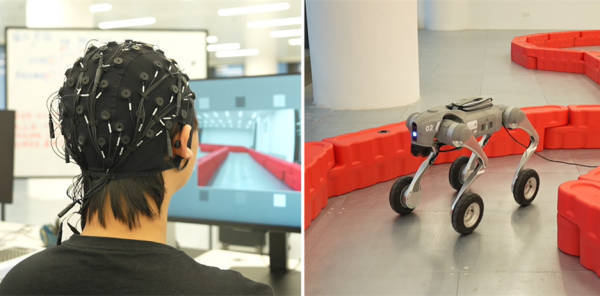
Core Insights - Brain-computer interfaces (BCIs) are emerging technologies that allow for direct communication between the brain and external devices, gaining significant attention from both domestic and international tech giants [1][2][4] - The development of BCIs is seen as a crucial step towards human-machine integration, with potential applications in gaming, communication, and rehabilitation [1][4][49] Industry Overview - The BCI industry is characterized by a mix of hardware and software companies, with a trend towards full-chain solutions, although specialization is expected to emerge as the industry matures [5][6][8] - Current BCI companies can be categorized based on their academic and technical backgrounds, influencing their focus areas such as materials, communication, or robotics [5][6] Technological Development - Understanding of the brain remains rudimentary, with ongoing efforts to decode brain signals and improve communication systems [4][19] - The BCI field is heavily reliant on high-quality data, particularly intracranial data, which is challenging to obtain but essential for training effective models [15][19][20] Data and Model Training - The success of BCI applications hinges on the volume, signal-to-noise ratio, and usability of the data collected [19][20] - The company aims to create a foundational algorithm that can empower various applications within the BCI ecosystem, similar to how OpenAI's models function in AI [11][14] Market Challenges - The lack of consumer-ready BCI products is attributed to the nascent stage of the industry and regulatory hurdles for invasive devices [48][49] - Non-invasive products have not yet achieved widespread acceptance due to performance limitations, necessitating improvements in functionality to increase market penetration [48][49] Future Prospects - The BCI industry is expected to see significant advancements in the next 3 to 5 years, with a growing number of practical applications becoming available to consumers [49][50] - China is positioned to accelerate its BCI development, leveraging its vast clinical resources and data advantages compared to Western counterparts [55][56]
“十五五”规划点名,科技巨头押注,脑机接口为啥火?
Guan Cha Zhe Wang· 2025-11-10 08:41
Core Insights - Brain-computer interfaces (BCIs) are emerging technologies that allow for direct communication between the brain and external devices, gaining significant attention from both domestic and international tech giants [1][3]. Industry Overview - The BCI industry is recognized in China's "14th Five-Year Plan" and is attracting investments from major players like Elon Musk and others [1]. - BCIs can be categorized into invasive, semi-invasive, and non-invasive types, each with its own advantages and disadvantages [30][31]. Current State of Research - Current understanding of the brain is still rudimentary, with researchers likening the process of decoding brain signals to deciphering ancient scripts [5][6]. - The development of BCIs is seen as a cyclical process where advancements in technology lead to better understanding of the brain, which in turn enhances BCI systems [6][7]. Company Positioning - Companies in the BCI space can be classified based on their focus on hardware, software, or a full-chain approach, with each having its own academic and technical roots [7][9]. - The company 岩思类脑 aims to develop core algorithms that serve as a foundational layer for the BCI industry, similar to how OpenAI operates in the AI space [10][11]. Data and Model Training - The company emphasizes the importance of large datasets for training AI models in the BCI field, noting that China has a significant advantage in data availability compared to other countries [14][22]. - High-quality data is crucial for effective model training, with a focus on signal-to-noise ratio and data diversity [18][19]. Technological Advancements - Recent advancements include the ability to decode speech from brain signals in patients with epilepsy, showcasing the potential for practical applications of BCIs [35][36]. - The company has also developed a non-invasive BCI application for gaming, demonstrating the technology's versatility and potential for consumer engagement [44][48]. Market Challenges - The BCI market faces challenges in product commercialization, particularly for invasive devices that require medical certification before they can be widely used [48][49]. - Non-invasive products have yet to achieve a level of functionality that encourages consumer adoption, necessitating improvements in usability [48][49]. Future Outlook - The BCI industry is expected to see significant growth in the next 3 to 5 years, with the potential for widespread consumer adoption of effective BCI devices [50]. - The competitive landscape is characterized by rapid advancements in technology and increasing investment, positioning BCIs as a critical area of focus in global tech competition [57][64].

马斯克将把言语皮层变成新接口,“脑控”离我们还有多远?
Jing Ji Guan Cha Wang· 2025-10-19 09:27
Core Insights - The rapid development of brain-computer interface (BCI) technology is transforming the concept of "brain control" from science fiction to reality, with significant advancements expected by 2025 [2] Group 1: BCI Technology Developments - BCI technology establishes a direct communication channel between the biological brain and intelligent machines, enabling the decoding of brain signals and control of external devices [3] - Neuralink, a company backed by Elon Musk, plans to implant devices in the speech cortex by Q4 2025 to decode silent "intent speech," with further developments aimed at restoring vision for the blind by 2026 and achieving multi-device implants by 2027 [3] - Synchron, another leading BCI company, successfully completed a minimally invasive BCI procedure for 10 patients by the end of 2024, allowing them to control smart devices through thought [3] Group 2: China's BCI Progress - China has made significant strides in BCI technology, becoming the second country globally to enter the clinical trial phase for invasive BCI technology, with a successful trial involving a patient who regained functionality after an accident [4] - The Chinese government has set ambitious goals for BCI technology, aiming for breakthroughs in key technologies by 2027 and the establishment of industry standards for BCI medical devices [4] Group 3: Global Competitive Landscape - The BCI technology sector is highly concentrated in the U.S., with a few companies like Neuralink and Synchron leading the market, while China is rapidly catching up despite a later start [5] - Other countries, including those in the EU, Japan, South Korea, and Australia, are also accelerating their efforts in BCI technology to secure a competitive edge in global brain science [5] Group 4: Ethical and Regulatory Considerations - The rapid advancement of BCI technology has raised ethical concerns regarding privacy, "brain control," and equitable access to technology, prompting discussions among various stakeholders [6] - Guidelines have been established in China to ensure that BCI research focuses on enhancing human capabilities while minimizing potential harm and respecting individual autonomy [7]

周鸿祎对AI的8个判断
混沌学园· 2025-09-29 11:58
Core Viewpoints - AI is not a miracle but a tool that must be integrated with specific business applications, evolving gradually rather than rapidly [4][5] - The real opportunity lies in vertical fields rather than general artificial intelligence, which is deemed unrealistic [5][6] - Human-machine integration is inevitable, and humans should adapt by enhancing their capabilities with technology [6][7] AI as a Tool - AI should be viewed as a system of tools that can be built progressively and must be combined with specific business needs [5] - The evolution of AI is similar to human brain development, relying on knowledge transfer, slow thinking, tools, and collaboration [5] Vertical Opportunities - AI startups should focus on niche markets, solving specific pain points to ensure stable delivery and payment willingness from small and medium enterprises [5][6] Human-Machine Integration - The concept of "if you can't beat them, join them" suggests that humans should enhance themselves with technology, such as nanobots, to coexist with machines [6][7] Revenue Models - Charging for AI services is essential for sustainability, as the costs associated with AI tokens are high and will increase with usage [7][8] - The free model that worked for software is not applicable to AI due to the high costs of token consumption [7] Differentiation in AI Development - Companies should avoid investing in general large models due to the high costs, emphasizing the importance of specialized models for different functions [8] Cultural Barriers to AI Adoption - The main barrier to AI adoption is not technology but cultural habits and user understanding, with many users struggling to interact effectively with AI [9] - Current AI products are criticized for being too technical and not user-friendly, failing to accommodate the communication styles of average users [9] AI and Energy Challenges - The pressing issue of energy scarcity could be addressed through AI, particularly in achieving breakthroughs in nuclear fusion [10] Preparedness for AI Impact - Concerns are raised about society's readiness for the employment disruptions caused by AI, emphasizing the need for interdisciplinary collaboration to address these challenges [10]

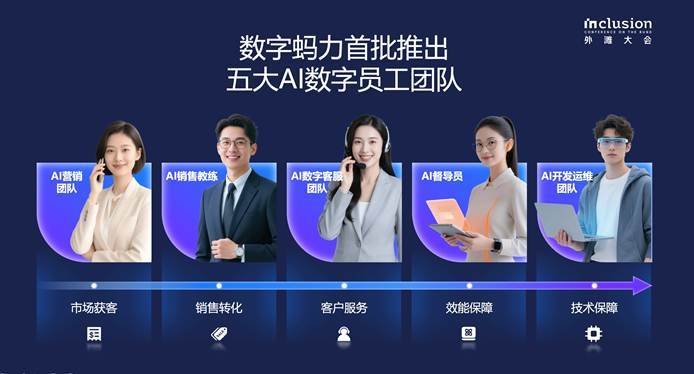
数字蚂力推出 “AI数字员工团队”:提升中小企业70%客服人效
Sou Hu Cai Jing· 2025-09-11 14:45
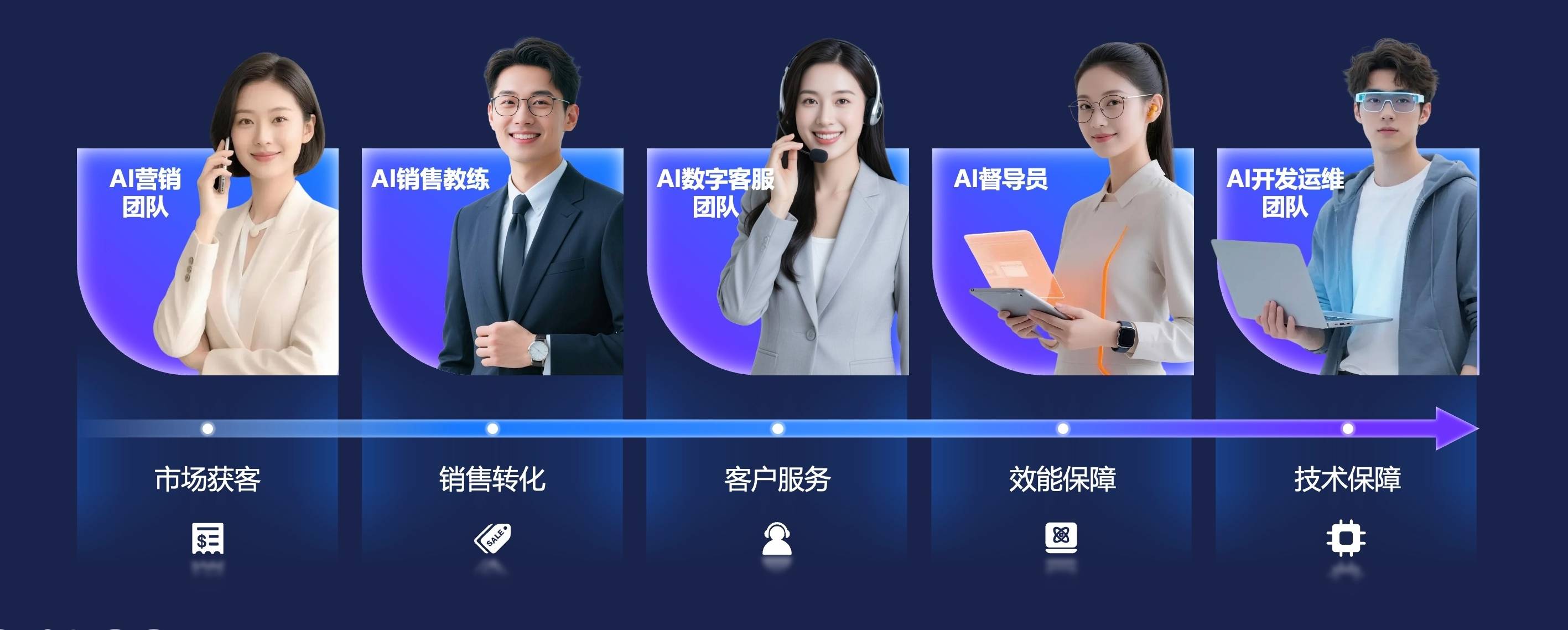
Core Insights - Ant Group's digital division, Digital Mali, announced a significant product upgrade by launching the first batch of expert-level "AI Digital Employee Teams" aimed at enhancing operational efficiency for SMEs [1][3] - The AI digital customer service team can improve employee efficiency by approximately 70%, reduce operational costs by 35%, and significantly increase business conversion rates, contributing to about 10% growth in GMV for e-commerce clients [3][4] Group 1: Product Features and Benefits - The AI Digital Employee Teams cover five core business areas: customer service, marketing, inspection, sales training, and R&D, integrating AI deeply into enterprise operations to provide quantifiable and certain business growth results [1][3] - The AI digital customer service team offers 24/7 support, turning every customer interaction into a growth opportunity, while the AI marketing team captures and converts business opportunities efficiently [3][5] - The AI sales coach enhances employee sales skills, the AI supervisor achieves 20 times the efficiency in inspections, and the AI development operations team can automate website creation [3][5] Group 2: Industry Challenges and Perspectives - The application of AI in the service industry faces significant "technology-business" gaps, with challenges in performance, cost, and collaboration hindering deeper integration into core business processes [4][5] - Ant Group's leadership emphasizes that deep human-machine integration can create new business and growth models, moving from superficial efficiency gains to profound productivity transformations [5] - Digital Mali's "human-machine fusion" model focuses on delivering not just complex AI functionalities but guaranteed business outcomes, ensuring maximum efficiency while leveraging expert networks for complex issues [5]
蚂蚁集团数字蚂力首批专家级“AI数字员工团队”亮相外滩大会
Huan Qiu Wang· 2025-09-11 10:29
Core Insights - Ant Group's digital division, Digital Mali, announced a significant product upgrade by launching the first batch of expert-level "AI digital employee teams" aimed at integrating AI deeply into enterprise operations to provide quantifiable and certain business growth results [1][3] Group 1: AI Digital Employee Teams - The AI digital customer service team can enhance employee efficiency by approximately 70% and reduce operational costs by 35%, leading to a significant increase in business conversion rates [1] - In e-commerce client practices, this model has resulted in about a 10% growth in Gross Merchandise Value (GMV) for businesses [1] - The five AI digital employee teams cover core business areas, including customer service, marketing, inspection, sales training, and development, each with clear roles and objectives [6] Group 2: Challenges in AI Application - The application of AI in the service industry faces a significant "technology-business" gap, with challenges primarily in performance, cost, and collaboration mechanisms [3] - AI models often struggle with hallucinations and logical errors, making it difficult to meet high-precision business requirements [3] - Companies are cautious about AI applications due to inadequate governance mechanisms and high reliability demands from business scenarios [3] Group 3: Human-Machine Collaboration - The "human-machine integration" model proposed by Digital Mali emphasizes that clients should purchase not just complex AI functions but guaranteed business results that include technology, expert experience, and operations [3][4] - This model aims to maximize efficiency by allowing AI to handle standardized tasks while human experts address complex or edge cases seamlessly [3] Group 4: Real-World Applications - The AI digital customer service team provides 24/7 customer support, turning every customer interaction into a growth opportunity [6] - The AI marketing team captures and converts business opportunities effectively, while the AI sales coach enhances employee sales skills [6] - The AI supervisor can achieve 20 times the efficiency in inspections, significantly improving store conversion rates compared to traditional methods [6][7]