债务压力

Search documents
国轩高科Q3净利暴增1434.42%,奇瑞IPO推升账面利润
Hua Er Jie Jian Wen· 2025-10-24 12:56
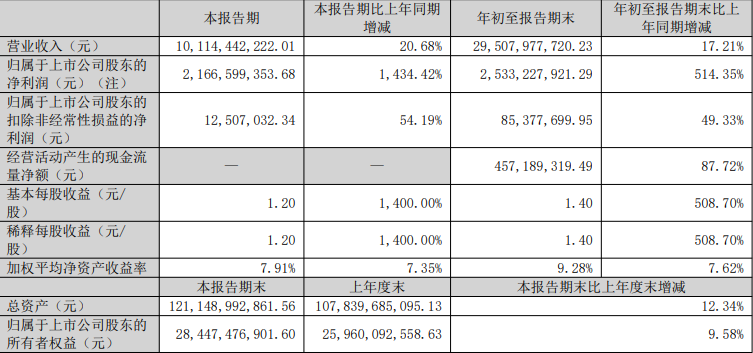
Core Viewpoint - Guoxuan High-Tech reported a significant increase in net profit for Q3, primarily driven by the fair value changes from its early investment in Chery Automobile's Hong Kong listing, resulting in a non-recurring gain of 2.154 billion yuan [1][3]. Financial Performance - Q3 revenue reached 10.114 billion yuan, a year-on-year increase of 20.68%, while total revenue for the first three quarters was 29.508 billion yuan, up 17.21% [2]. - The net profit attributable to shareholders for Q3 was 2.167 billion yuan, a staggering increase of 1434% year-on-year, largely due to the fair value changes from Chery's listing [1][2]. - The net profit for the first three quarters was 2.533 billion yuan, reflecting a 514.35% increase year-on-year [2]. - The net profit excluding non-recurring items for Q3 was only 12.51 million yuan, a 54% increase year-on-year, indicating reliance on non-recurring gains [1][3]. Inventory and Cash Flow - Inventory increased by 64.94% year-on-year to 11.746 billion yuan, suggesting a significant buildup in stock compared to revenue growth [3]. - Operating cash flow for the first three quarters was 457 million yuan, an 87.72% increase year-on-year, but still low relative to revenue [5]. - Cash flow from financing activities was 24.912 billion yuan, with a net cash inflow of 3.809 billion yuan after debt repayments [5]. Asset and Investment - The company has ongoing construction projects amounting to 21.04 billion yuan, a 42.16% increase from the beginning of the year, indicating continued investment in capacity expansion [3][4]. - Total assets at the end of the reporting period were approximately 121.149 billion yuan, a 12.34% increase from the previous year [2]. Debt and Financial Health - The company has a total interest-bearing debt exceeding 39 billion yuan, with a debt-to-asset ratio of 71.72%, indicating significant financial pressure [5]. - Financial expenses increased by 37.31% year-on-year, primarily due to rising interest costs [5].


调查显示长期美债收益率料居高不下 因通胀与债务压力削弱降息预期
Xin Hua Cai Jing· 2025-10-15 04:10
Core Viewpoint - A Reuters survey of 75 bond strategists indicates expectations for a decline in short-term U.S. Treasury yields due to anticipated Federal Reserve rate cuts, while long-term yields are expected to remain resilient due to persistent inflation, growing deficits, and concerns over Fed independence [1]. Group 1: Yield Predictions - The median forecast shows the current yield on the benchmark 10-year U.S. Treasury is approximately 4.0%, expected to fluctuate around 4.1% in three to six months, and rise to 4.17% in one year [1]. - Long-term yield increases may exacerbate the deteriorating fiscal situation of the U.S. government [1]. Group 2: Economic Context - Analysts suggest that with strong economic growth and inflation rates significantly above the Fed's 2% target, current monetary policy cannot be considered highly restrictive [1]. - There are warnings against premature and excessive easing of policies, as it could reignite inflationary pressures and lead to surging yields, especially as the labor market shows signs of weakening [1].
「限高」取消,王健林虚惊一场?
3 6 Ke· 2025-09-29 10:02
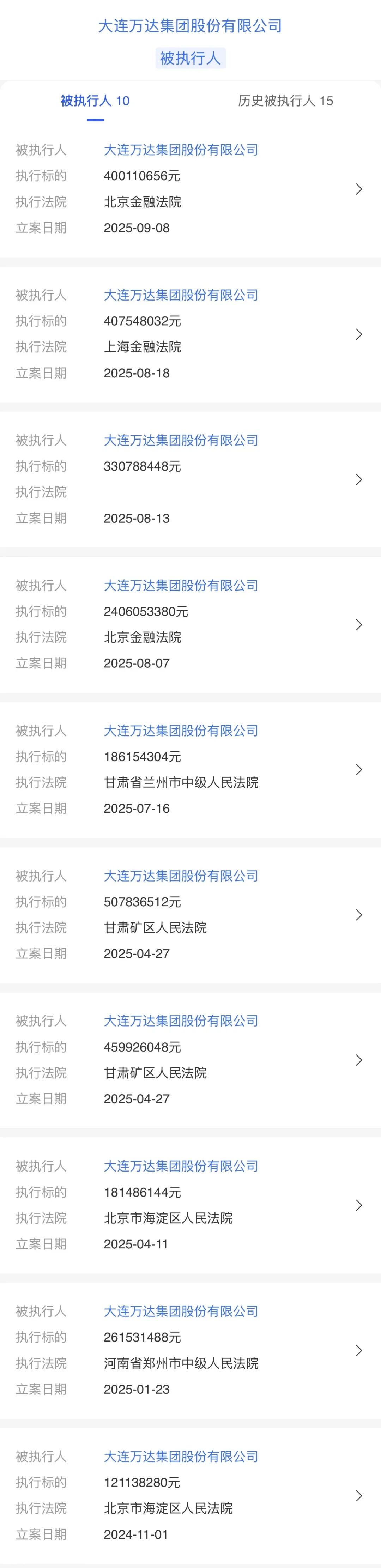
Group 1 - Wang Jianlin's consumption restriction was lifted after one day, allowing him to travel freely again [1] - Wanda Group was listed as a defendant by the Gansu Provincial Intermediate People's Court, with an execution target of approximately 186 million yuan [1] - Currently, Wanda Group has about 5.263 billion yuan in pending execution targets [1] Group 2 - To address debt pressure, Wanda Group has sold core assets of its remaining two listed companies [7] - In April 2023, Tongcheng Travel acquired 100% of Wanda Hotel Management for approximately 2.49 billion yuan, which accounted for about 90% of Wanda Hotel Development's total revenue in 2024 [7] - Wanda Cinema has also undergone multiple equity transfers and is now controlled by China Ruyi [7] Group 3 - Wanda has sold over 30 Wanda Plazas from 2023 to 2024, with 7 sold in the first five months of this year [8] - A consortium including Tencent and JD.com was approved to acquire 48 Wanda Plazas across 39 cities [8][9] - The sale of these assets indicates that Wanda is focusing on liquidating valuable properties to manage its debt [9] Group 4 - After introducing new investors, Wang Jianlin lost absolute control over Zhuhai Wanda Commercial Management [10] - Despite the influx of 60 billion yuan from new investors, Wanda's debt pressure remains significant [11] - As of September, Wanda Commercial Management had 15.116 billion yuan in cash but faced short-term borrowings of 3.89 billion yuan and long-term debts totaling 112.65 billion yuan [12]
精算 美国衰退的时间
Sou Hu Cai Jing· 2025-09-29 05:13
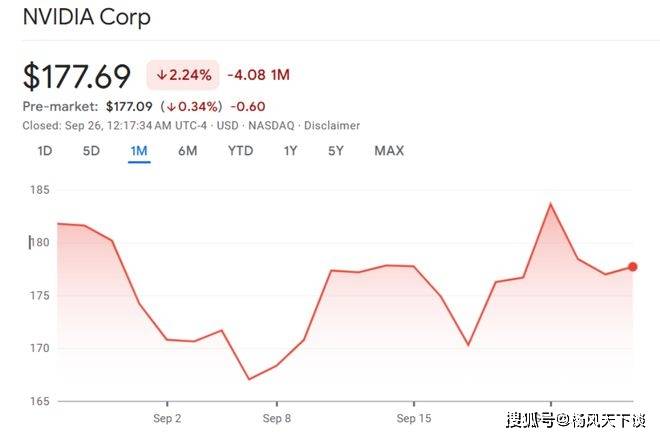
Group 1 - The article discusses the myth of the US stock market's resilience and the ongoing economic growth, questioning how long this can last [1][2] - It highlights the uncertainty in the US economic outlook due to the trade war initiated by the Trump administration, with calls for significant interest rate cuts by Treasury Secretary Mnuchin [2][3] - The Federal Reserve's recent rate cut of 25 basis points is deemed insufficient, with expectations for further cuts of 125 to 150 basis points by year-end [3][4] Group 2 - The article examines two main drivers of the US economy: the return of traditional manufacturing and the growth of the AI industry [5][6] - It suggests that while Trump's policies may temporarily slow down economic decline, the AI industry is currently in a bubble that could continue to inflate [7][8] - The performance of AI-related stocks, such as Nvidia and Oracle, indicates ongoing investor interest despite recent volatility [10][20][27] Group 3 - The article notes that the AI industry has played a crucial role in rescuing the US stock market from a bear market, with significant investments in AI infrastructure [29][30] - It emphasizes the importance of AI in sustaining economic growth, while also acknowledging the risks associated with the potential bubble [31][44] - The article discusses the influx of foreign investments into the US as part of Trump's strategy to revitalize manufacturing, with substantial commitments from countries like Japan and the EU [40][41] Group 4 - The article outlines both positive and negative factors affecting the US economy, including the ongoing AI investment and tariff revenues as positives, while rising debt and competition from China are seen as negatives [43][48] - It predicts that the AI bubble may last for another six months, but warns of potential stock market declines during this period [52][55] - The article concludes that while the Trump administration may navigate short-term challenges, long-term competition from China poses significant risks [56][59]
王健林被限制高消费,知情人士:万达下属项目公司经济纠纷导致
Sou Hu Cai Jing· 2025-09-28 10:05
Core Insights - Dalian Wanda Group and its legal representative Wang Jianlin have been restricted from high consumption due to economic disputes involving subsidiary project companies [2][4] - The total amount enforced against Dalian Wanda Group is approximately 1.86 billion yuan, with a consumption restriction order issued on September 26, 2023 [2][3] Legal Proceedings - On July 16, 2023, Dalian Wanda Group and its subsidiaries were subjected to forced execution of 186,154,304 yuan by the Gansu Provincial Intermediate People's Court [3] - The consumption restriction prohibits Wang Jianlin from taking first-class flights, first-class train seats, and staying in star-rated hotels [2][3] Financial Pressure - Following the failed IPO of Zhuhai Wanda Commercial Management, Wanda Group faces significant debt pressure despite raising 60 billion yuan from investors like TPG [4] - As of June 30, 2024, Wanda Commercial Management's interest-bearing liabilities reached 137.56 billion yuan, with 30.27 billion yuan due within one year, while cash on hand was only 11.6 billion yuan, resulting in a funding gap of approximately 18.6 billion yuan [4] Asset Sales - From 2023 to 2024, Wanda has sold over 30 Wanda Plaza locations, with a notable increase in asset divestiture in 2025, including the sale of 48 plazas in May alone, estimated to generate around 50 billion yuan [4][5] - The total number of sold plaza projects has reached at least 85, alongside the divestiture of Wanda Film and hotel management rights [5] Wealth Decline - Wang Jianlin and his son Wang Sicong, previously ranked among the top ten in the New Fortune 500 list, have seen their wealth significantly decline to 58.8 billion yuan due to the pledge of core company shares [5]
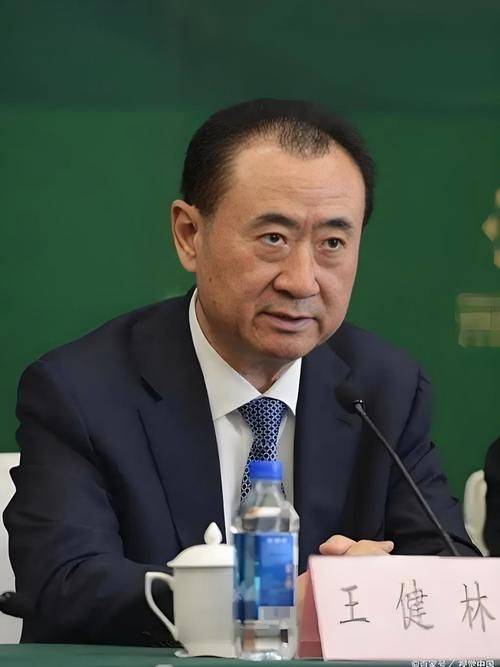
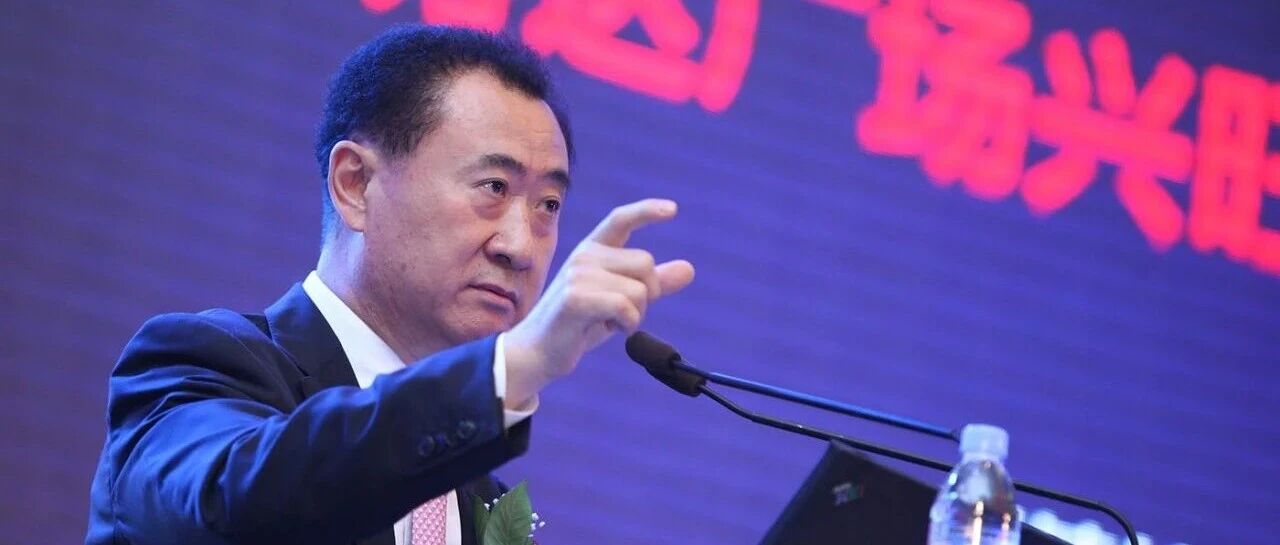
王健林及万达集团被限制高消费
21世纪经济报道· 2025-09-28 02:47
Core Viewpoint - Wanda Group is facing significant financial distress, with multiple legal actions leading to asset freezes and forced executions totaling over 5.2 billion yuan, indicating severe liquidity issues and potential restructuring needs [2][3][4]. Group 1: Legal and Financial Issues - Wanda Group and its legal representative Wang Jianlin have been restricted from high consumption due to ongoing legal cases [1]. - The company has been subjected to forced executions amounting to 186 million yuan in a recent case [2]. - The total amount of forced executions against Wanda Group has exceeded 5.2 billion yuan, with significant amounts executed since August 2025 [3]. Group 2: Asset Freezes - The scale of frozen shares for Wanda Group is increasing, with 1.979 billion yuan worth of shares in Wanda Commercial Management frozen by the Beijing Financial Court [4]. - In early September, shares worth 9.4 billion yuan in two subsidiaries were also frozen, with a three-year freeze period [4]. Group 3: Asset Disposal - To manage debt pressure, Wang Jianlin is intensifying asset disposals, including a significant transaction where 48 companies under Wanda Commercial Management are set to be acquired by a consortium led by Taiping, with participation from Tencent and others, potentially reaching 50 billion yuan [4]. - The 48 companies involved are primarily project companies for Wanda Plaza located in major cities, indicating a strategic move to liquidate core assets [4].
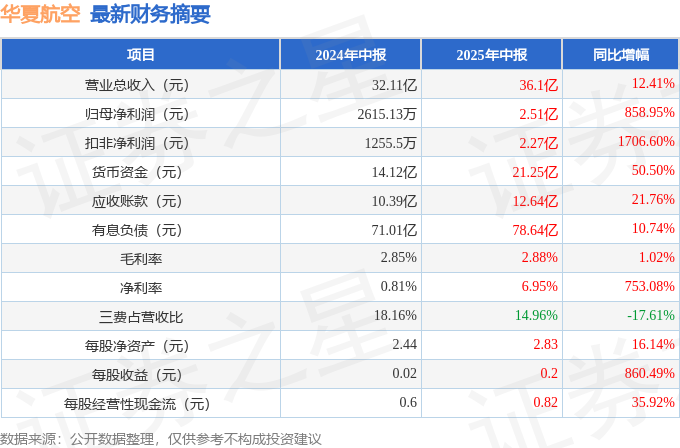
华夏航空2025年中报简析:营收净利润同比双双增长,短期债务压力上升
Zheng Quan Zhi Xing· 2025-08-30 23:23
Core Viewpoint - 华夏航空 reported strong financial performance for the first half of 2025, with significant increases in revenue and net profit compared to the previous year [1] Financial Performance - Total revenue for the first half of 2025 reached 3.61 billion yuan, a year-on-year increase of 12.41% [1] - Net profit attributable to shareholders was 251 million yuan, up 858.95% year-on-year [1] - In Q2 2025, total revenue was 1.836 billion yuan, reflecting a 15.07% increase year-on-year [1] - Q2 net profit attributable to shareholders was 169 million yuan, a staggering increase of 11283.67% year-on-year [1] - Gross margin improved to 2.88%, up 1.02% year-on-year, while net margin surged to 6.95%, an increase of 753.08% [1] - Total expenses (selling, administrative, and financial) amounted to 540 million yuan, accounting for 14.96% of revenue, down 17.61% year-on-year [1] Key Financial Ratios - Current ratio stood at 0.79, indicating increased short-term debt pressure [1] - Earnings per share (EPS) reached 0.20 yuan, a remarkable increase of 860.49% year-on-year [1] - Cash flow from operations per share was 0.82 yuan, up 35.92% year-on-year [1] - The company’s return on invested capital (ROIC) was 4.8% last year, indicating a relatively weak capital return [3] Debt and Cash Flow Analysis - The company’s cash and cash equivalents increased by 50.50% to 2.125 billion yuan [1] - Interest-bearing liabilities rose to 7.864 billion yuan, a 10.74% increase [1] - The ratio of cash to total assets was only 9.88%, and cash to current liabilities was 30.94%, suggesting potential liquidity concerns [3] Market Expectations - Analysts expect the company's performance for 2025 to reach 660 million yuan, with an average EPS forecast of 0.52 yuan [4] Fund Holdings - The largest fund holding in 华夏航空 is 中庚价值先锋股票, with 42.2532 million shares, indicating a reduction in holdings [5] - Other funds have maintained or adjusted their positions, reflecting varied investor sentiment towards the company [5]

山鹰国际战略引资超7亿,以核心资产“填窟窿”,巨额债务压顶难喘息
Zheng Quan Zhi Xing· 2025-08-05 08:52
Core Viewpoint - Company is implementing a significant strategic initiative to attract long-term investors and enhance its integrated paper packaging business, driven by the need to improve sustainability and core competitiveness [1] Group 1: Strategic Move - Company plans to establish a partnership with Xinsengli Bao Equity Investment Co., a subsidiary of Cinda Capital, to jointly invest 2.978 billion yuan in the establishment of Wuhu Shengying Enterprise Management Consulting Partnership [2] - The company will transfer part of its equity in subsidiaries, including 100% of Guangdong Shanying and 36.56% of Xiangheng Packaging, to raise over 7 billion yuan [2][3] - The funds raised will be used for production operations, research and development of new production capabilities, and upgrading existing production lines to further develop the integrated paper packaging business [3] Group 2: Financial Situation - As of March 31, 2025, Guangdong Shanying has total assets of 5.107 billion yuan and net assets of 2.191 billion yuan, while Xiangheng Packaging has total assets of 6.579 billion yuan and net assets of 2.199 billion yuan, together accounting for 21.65% and 29.05% of the company's total assets and equity, respectively [3] - In 2024, Guangdong Shanying achieved revenue of 3.019 billion yuan and net profit of 25.138 million yuan, while Xiangheng Packaging generated revenue of 7.173 billion yuan and net profit of 81.543 million yuan, together representing 34.87% of the company's total revenue [4] Group 3: Historical Context and Challenges - Company has faced significant challenges due to high debt levels and industry downturns, leading to a net profit loss in 2024 [1][5] - Since 2013, the company has pursued aggressive debt-fueled expansion, resulting in cumulative investment cash outflows of approximately 27.5 billion yuan from 2014 to September 2024 [6] - The company has been forced to frequently seek external financing, with direct financing totaling 26.9 billion yuan and bank loans amounting to 25.395 billion yuan over the past decade [7]

光智科技:2025年中报显示业绩显著改善但仍需关注现金流与债务状况
Zheng Quan Zhi Xing· 2025-07-30 22:19
Overall Performance - Company reported total revenue of 1.02 billion yuan, a year-on-year increase of 78.2% [1] - Net profit attributable to shareholders reached 23.9988 million yuan, up 167.77% year-on-year [1] - Deducted non-recurring profit, net profit was 11.7003 million yuan, an increase of 115.17% year-on-year [1] Profitability Analysis - Gross margin stood at 26.23%, an increase of 25.95 percentage points year-on-year [2] - Net profit margin was 3.96%, up 159.89 percentage points year-on-year [2] - Earnings per share increased to 0.17 yuan, reflecting a 167.77% rise year-on-year [2] Expense Control and Cash Flow - Operating expenses as a percentage of revenue decreased to 14.03%, down 39.67 percentage points year-on-year [3] - Net cash flow from operating activities increased by 126.48% to 0.3 yuan per share [3] - Accounts receivable accounted for 2325.51% of profit, indicating potential future cash flow issues [3] Asset and Liability Situation - Interest-bearing debt rose to 2.13 billion yuan, an increase of 8.38% year-on-year [4] - Interest-bearing asset-liability ratio reached 35.68% [4] - Cash and cash equivalents amounted to 61.6491 million yuan, only 4.24% of current liabilities, indicating repayment pressure [4] Main Business Composition - Revenue from infrared optical products was 902 million yuan, accounting for 88.41% of total revenue, with a gross margin of 28.42% [5] - Revenue from high-performance aluminum alloy materials and components was 118 million yuan, making up 11.59% of total revenue, with a gross margin of 9.54% [5] Industry Outlook and Development Opportunities - Company holds a strong competitive advantage in infrared optics and high-performance aluminum alloy materials [6] - It is the largest domestic supplier in the infrared optical materials sector and possesses multiple core technologies [6] - The continuous growth of the infrared optics and high-performance aluminum alloy materials market presents opportunities for market share expansion [6]

不打了,特普朗承认错了,但愿换取一个愿望,我方10个字进行回应
Sou Hu Cai Jing· 2025-07-22 04:07
Core Viewpoint - The unexpected shift in Trump's stance regarding high tariffs on China, acknowledging them as excessive and proposing significant reductions contingent on China's agreement to U.S. conditions, marks a pivotal moment in U.S.-China trade relations [1][5][9]. Economic Context - The U.S. federal debt is projected to exceed $36 trillion by 2025, with public debt accounting for approximately $29 trillion. The government faces an interest repayment of $1 trillion this year against an expected revenue of $5 trillion, leading to a tense fiscal situation [3]. - The U.S. trade deficit is expected to surpass $1.2 trillion by 2024, exacerbated by high tariffs that have increased import costs for consumers and businesses, resulting in a 1.4% reduction in market income [11][18]. Trade Relations and Tariff Adjustments - The tariff conflict escalated from an initial 10% tariff on China to as high as 145%, with retaliatory measures from both sides. A temporary agreement was reached in May, reducing U.S. tariffs to 30% and Chinese tariffs to 10% [7][13]. - Despite the agreement, Trump retains a portion of the original high tariffs and emphasizes the need for China to increase purchases of U.S. goods and address trade imbalances [11][18]. International Relations and Strategic Moves - Japan's refusal to halt the sale of U.S. Treasury bonds adds pressure on the U.S. financial situation, prompting Trump to seek a resolution with China [5][12]. - The U.S. military exercises in the Taiwan Strait, involving allies like Japan and Australia, are seen as a strategy to maintain pressure on China while negotiating trade terms [9][14]. Future Outlook - The ongoing U.S.-China trade negotiations are complicated by the U.S.'s significant debt burden and the need for economic stability. China's economic resilience and commitment to mutual benefit in trade negotiations position it favorably in the ongoing discussions [20].