可持续性

Search documents
Koppers (NYSE:KOP) FY Conference Transcript
2025-11-20 18:17
Koppers (NYSE: KOP) FY Conference Summary Company Overview - Koppers is a company that has demonstrated strong profitability and cash flow generation over the years, which has been utilized for acquisitions and debt pay down, aimed at creating shareholder value [38][39][40] Key Financial Metrics - Projected operating cash flow for 2025 is $135 million, with free cash flow expected to exceed $80 million this year [42][43] - In 2024, Koppers generated approximately $260 million of adjusted EBITDA from sales of $2.1 billion, with an adjusted EBITDA margin of 12.5% [46] - The adjusted EBITDA margin has improved to above 14% this year despite a decline in top-line revenue [46] Business Segments 1. **Railroad Products and Services (RUPS)** - Leading supplier of cross ties to Class 1 railroads in North America [43] - Significant competitive advantage due to the location of plants in relation to rail networks [47] 2. **Utility and Industrial Products** - Manufacturer of wooden utility poles, serving eight of the ten largest utilities in the U.S. [44] 3. **Performance Chemicals** - Produces wood preservation chemicals, with a patented technology called MicroPro, which is widely used in residential lumber [44] - This segment is the most profitable, generating over half of adjusted EBITDA with margins exceeding 20% [48] 4. **Carbon Materials and Chemicals (CM&C)** - Smallest business segment with revenue around $500 million last year [50] - Focused on maintaining this business primarily for supplying creosote to the railroad business [50] Market Dynamics - Approximately 75% of Koppers' business is connected to wood preservation, with a significant portion of sales generated in North America [50][51] - The utility pole market has a replacement demand of 2-3 million poles annually, while 18-20 million railroad cross ties are replaced each year [51][52] Strategic Initiatives - The "Catalyst" initiative aims to transform the company by improving cost efficiency and market positioning, targeting $40 million in benefits this year [53][54] - By 2028, Koppers aims for adjusted EBITDA margins exceeding 15% and to reduce leverage to below three times [54] Cost Management - Selling, General and Administrative (SGA) expenses have decreased by 14% compared to the previous year, contributing to improved cash flow [56] - Capital spending is projected to be $55 million in 2025, down from $120 million in 2023, allowing for increased share buybacks and debt reduction [59][60] Sustainability Focus - Koppers emphasizes the sustainability of its products, which are related to renewable resources and critical infrastructure [55] Shareholder Returns - The company has repurchased over $40 million of stock in 2024 and has a small but increasing dividend, currently at $0.08 per quarter [59][60] Conclusion - Koppers is positioned for growth with a focus on improving margins, managing costs, and enhancing shareholder value through strategic initiatives and efficient capital allocation [54][59]

对话国轩高科美洲业务总裁:欧盟电池新规倒逼产业升级电池技术创新重塑能源新格局
Xin Lang Cai Jing· 2025-11-18 01:38
专题:第30届联合国气候变化大会(COP30) 其次,从更积极的视角观察,电池护照等机制实际上能够催生出新的创新动能。李晨指出,这促使企业必须进一步做好碳足迹管理,以满足当地环保法规要求,从而推动技术向纵深发展。例如 最后,李晨强调,企业、政府及其他各方的协同合作,这些措施还能创造更多就业机会。他分析道,可以通过系统性培训,将传统行业的从业人员有序转移到新兴技术领域,从而提升整个行业的 提速全球化布局,深耕在地经济生态 李晨介绍,到2025年底,国轩高科整体产能将达到300吉瓦时,如何解决这300吉瓦时的绿色电力供应,是当前亟需解决的核心问题。他进一步透露,未来五年,公司计划将全球产能提升至约6 李晨还分享了针对不同市场的具体规划。他以巴西为例分析道,按照巴西全国汽车工业协会预测2025年全国汽车年产量约为280万辆,若将这些车辆全部转化为电动车,可以大大减降低全生命周 新浪声明:所有会议实录均为现场速记整理,未经演讲者审阅,新浪网登载此文出于传递更多信息之目的,并不意味着赞同其观点或证实其描述。 责任编辑:李思阳 文 | 新浪财经李欣然 发自巴西贝伦 《联合国气候变化框架公约》(UNFCCC)缔约方第30次 ...

美国纽约大学教授马文彦:未来各国的主权基金可能是中国企业最好的合作伙伴!各国都会去投资自己国家主权AI
Sou Hu Cai Jing· 2025-11-06 07:32
Group 1 - The 2025 Sustainable Global Leaders Conference Jiangsu Special Session and the Second United Nations Investors Conference will be held on November 6, 2025, in Wuxi, focusing on the theme "'Xiyi' Attracting Global Capital Empowering Modern Industries" [1] - Winston Ma, Executive Director of the International Sovereign Investment Fund Research Center, categorizes sovereign funds into three types: sovereign wealth funds, retirement pension funds, and central bank investment departments, emphasizing the importance of understanding investment styles when collaborating with sovereign investment funds [1][3] Group 2 - The intersection of sustainability can be viewed from three perspectives: 1. Impact as Technology, where technology itself influences society, such as investments in AI or digital infrastructure [3] 2. Impact and Technology, highlighting how technological advancements prompt capital investors to reconsider the relationship between their portfolios and sustainability [3] 3. Impact Through Technology, which involves internalizing technology within sovereign funds to measure and quantify impact during the investment process [3] - Ma notes that countries will increasingly use their sovereign funds to invest in their national AI initiatives, suggesting that sovereign funds may become the best partners for Chinese companies entering these markets [3]


米兰-科尔蒂纳冬奥会将向世界传递和平与团结的强烈讯号
Xin Hua She· 2025-10-30 01:02
Core Points - The 2026 Milan-Cortina Winter Olympics will convey a strong message of peace and unity to the world, marking a significant event in Olympic history [1][2] - This Winter Olympics will be the first guided by the Olympic Agenda reform, featuring the most gender-balanced participation in history and utilizing existing facilities while promoting sustainability [1] Group 1 - The event will take place in Italy, known for its natural beauty, culture, and warmth of its people, which will enhance the atmosphere of the Olympics [1] - Athletes and spectators are expected to be inspired by the passionate environment created by the Italian people during the games [1] - The Olympics serve as a symbol of peace and unity in a world filled with conflict, showcasing the best of humanity through mutual respect among athletes from diverse backgrounds [2] Group 2 - The Milan-Cortina Winter Olympics will reflect a new model of sustainability, tradition, and innovation working together [1] - The event is anticipated to write a new chapter in Olympic history, infused with Italy's unique spirit and enthusiasm [2]
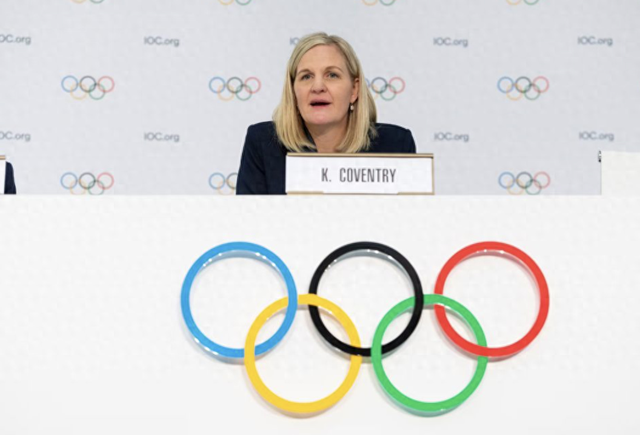
柯丝蒂·考文垂:米兰-科尔蒂纳冬奥会将向世界传递和平与团结的强烈讯号
Bei Jing Ri Bao Ke Hu Duan· 2025-10-29 14:53
Core Points - The Milan-Cortina Winter Olympics will open in 100 days, marking a significant event for the International Olympic Committee and Italy [1] - Italy's unique spirit, characterized by warmth and community, will energize the Winter Olympics, enhancing the experience for athletes and spectators alike [3] - The 2026 Winter Olympics will be the first guided by the Olympic Agenda reform, featuring gender balance, iconic venues, and sustainable practices [3] - The Olympics symbolize peace and unity, showcasing the best of humanity and shared values among diverse cultures [4] - Italy is set to write a new chapter in Olympic history, infused with its distinctive passion and spirit [4]
2025年APEC工商领导人峰会开幕
Yang Shi Xin Wen· 2025-10-29 00:55
Core Points - The 2025 APEC Business Leaders Summit opened in Gyeongju, South Korea on October 29 [1] - The theme of this summit is "Bridge, Business, Beyond," featuring 20 thematic meetings focused on regional economic integration, artificial intelligence and digital transformation, and sustainability [1] - Over 1,700 participants are expected to attend the summit [1] Industry Overview - APEC, established in 1989, currently has 21 members and is recognized as the highest-level and most influential economic cooperation mechanism in the Asia-Pacific region [1]
欧盟下令:2028 年所有设备用 USB-C!
半导体行业观察· 2025-10-19 02:27
Core Points - The European Union (EU) is implementing legislation to standardize USB-C power adapters and cables across various consumer electronics by 2028, aiming for interoperability and sustainability [2][4] - The new regulations will apply to external power supplies (EPS) with a maximum power of 240 watts, requiring at least one USB-C port and detachable cables [2][3] - Manufacturers must clearly label the rated power on the power supply, charging interface, and cables, ensuring the values reflect sustainable charging power [3] Group 1: Legislation Details - The EU's new legislation will encompass a wide range of devices, including gaming consoles, monitors, routers, and wireless chargers, promoting a common charging solution [2] - All EPS exceeding 10 watts must meet minimum energy efficiency standards, including efficiency requirements at 10% load and stricter average efficiency and no-load power consumption standards [3] - Wireless charging bases are also required to reduce standby power consumption and must have replaceable/reusable external structures to extend lifespan and reduce electronic waste [3] Group 2: Impact and Exemptions - The EU estimates that this measure will save approximately 1,070 terawatt-hours (TWh) of electricity annually by 2030, with around 400 million power devices sold each year [4] - Certain device categories are excluded from the new regulations, such as uninterruptible power supplies (UPS), medical devices, specific toys, electric scooters, and emergency lighting control devices [6] - The legislation does not prohibit manufacturers from including chargers or power adapters with their products, allowing companies like Apple and Google to continue bundling power supplies [3]

上海纽约大学创校常务副校长杰弗里·雷蒙:要向学生灌输一个思维,必须有独立思考能力,必须有国际化视野
Xin Lang Cai Jing· 2025-10-18 04:07
Core Insights - The 2025 Sustainable Global Leaders Conference is scheduled to take place from October 16 to 18 in Shanghai, focusing on sustainability and global leadership [1] - The event is co-hosted by the World Green Design Organization (WGDO) and Sina Group, with support from various organizations including the IFRS Foundation and the Shanghai Huangpu District Government [1] Group 1: Educational Initiatives - Jeffrey Lehman, the founding executive vice president of NYU Shanghai, emphasized the importance of external guidance for students, highlighting the need for real-world data exposure and experiences [3] - The university is collaborating with government agencies to develop sustainable building projects and green city planning, indicating a strong focus on practical applications of sustainability [3] - NYU Shanghai aims to instill independent thinking and a global perspective in students, preparing them to tackle global issues collaboratively [4] Group 2: Cultural Integration - The university promotes cultural diversity by arranging dormitory assignments that mix students from different countries, fostering collaborative learning [4] - Students are encouraged to work in groups with peers from various cultural backgrounds, which is essential for developing comprehensive solutions to sustainability challenges [4] - The educational approach prepares graduates to engage in a multicultural world, equipping them with the skills to address sustainability issues from multiple perspectives [4]

2026年全球家电行业展望报告:消费者需求洞察(英文版)-尼尔森IQ捷孚凯
Sou Hu Cai Jing· 2025-10-17 08:04
Core Insights - The global consumer technology and durable goods (T&D) market is showing signs of recovery, with sales reaching $403 billion in the first half of 2025, a year-over-year increase of 4.6%. The growth is primarily driven by China's trade-in policies, while excluding China, the global growth rate slows to 1.2% [1][18][25]. Market Overview - The global T&D market is projected to grow by 2% in 2025, with significant contributions from China, emerging Asia, Eastern Europe, and the Middle East & Africa, particularly in the home appliance sector [1][25]. - The average replacement cycle for major domestic appliances (MDA) is 8-12 years, with a peak replacement not expected until 2028, while small domestic appliances (SDA) have a shorter cycle of 5-6 years [1][62][65]. Consumer Behavior - In 2026, 60% of consumers prioritize value for money, with durability, high quality, and convenience being key factors in their purchasing decisions [2][89]. - The Gen X demographic (ages 45-60) is becoming the primary consumer group, emphasizing the importance of brand, durability, and energy efficiency in their purchases [70][72]. Regional Insights - The Asia-Pacific region, particularly China, is seeing growth driven by trade-in policies, while emerging Asia focuses on cost-effectiveness and developed Asia emphasizes high-end products [3][82]. - In North America, the market growth is moderate, with MDA sales reliant on replacement demand, while SDA sales are influenced by lifestyle changes [3][82]. Innovation and Trends - Product innovation is focusing on smart ecosystems, convenience, sustainability, and health benefits, with AI functionalities being integrated into various appliances [2][93][94]. - Retailers are encouraged to create a seamless omnichannel experience, particularly for the X generation, as online sales for small appliances exceed 50% [2][3]. Competitive Landscape - Chinese brands are expanding their market share internationally, leveraging competitive pricing and innovative products, particularly in the SDA sector [36][43]. - The evolving US tariffs are expected to impact pricing and competitiveness in the MDA sector, prompting brands to rethink their supply chains [47][51].

CNH to announce 2025 Q3 financial results on November 7
Globenewswire· 2025-10-15 10:30
Core Points - CNH will announce its financial results for Q3 2025 on November 7, 2025, with a live webcast starting at 11:30 a.m. ET [1] - A replay of the financial results conference call will be available for 12 months on the corporate website [1] Company Overview - CNH Industrial (NYSE: CNH) is a global leader in equipment, technology, and services, focusing on innovation, sustainability, and productivity [3] - The company offers a wide range of agricultural and construction products through its brands, including Case IH, New Holland, and others [3] - CNH has a workforce of over 35,000 employees, emphasizing a diverse and inclusive workplace [4]