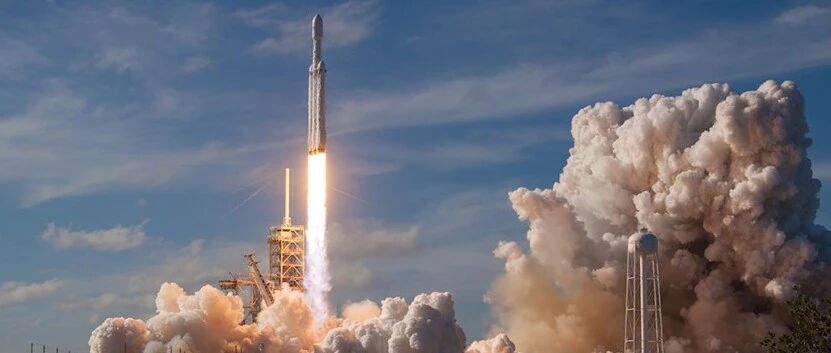
可重复使用火箭技术

Search documents
一天两枚火箭发射失利,中国航天科技集团、星河动力两家公司发文:具体原因正排查
Mei Ri Jing Ji Xin Wen· 2026-01-18 05:08
Core Viewpoint - The aerospace sector is experiencing volatile reactions in the capital market, highlighted by two recent rocket launch failures on January 17, 2024 [1]. Group 1: Long March 3B Rocket - The Long March 3B rocket launched the Shijian-32 satellite but experienced flight anomalies, resulting in mission failure. The specific cause is under further analysis [3][4]. - The Long March 3B is notable for being the first Chinese rocket model to exceed 100 launches, with a total of 115 launches, 110 successful, 3 failures, and 2 partial successes [10]. - This rocket is primarily used for launching heavy satellites into geosynchronous transfer orbits and is a key player in China's commercial launch services [8]. Group 2: Star River Dynamics - Star River Dynamics, established in 2018, is the first private company in China to achieve mass production and high-density launches of rockets. It focuses on solid and liquid rocket launch services [11]. - The company has raised over 5.3 billion yuan through multiple funding rounds, with a recent D-round financing of 2.4 billion yuan, achieving a post-investment valuation of 15-16 billion yuan [11]. - The company’s main product, the Gushenxing series of rockets, has successfully completed six sea launch missions, with the latest on January 16, 2024, marking a significant achievement in commercial space launches [12]. Group 3: Industry Trends and Challenges - The Chinese aerospace industry reached a record 92 launches in 2023, with a notable contribution from private companies, although the overall launch success rate still lags behind the Long March series [15]. - The industry faces challenges such as low total rocket supply, insufficient single-rocket capacity, and high launch costs, which are seen as bottlenecks in the development of the aerospace ecosystem [15]. - There is a growing expectation for private rocket companies to complement state-owned enterprises in meeting the high-frequency launch demands [15].


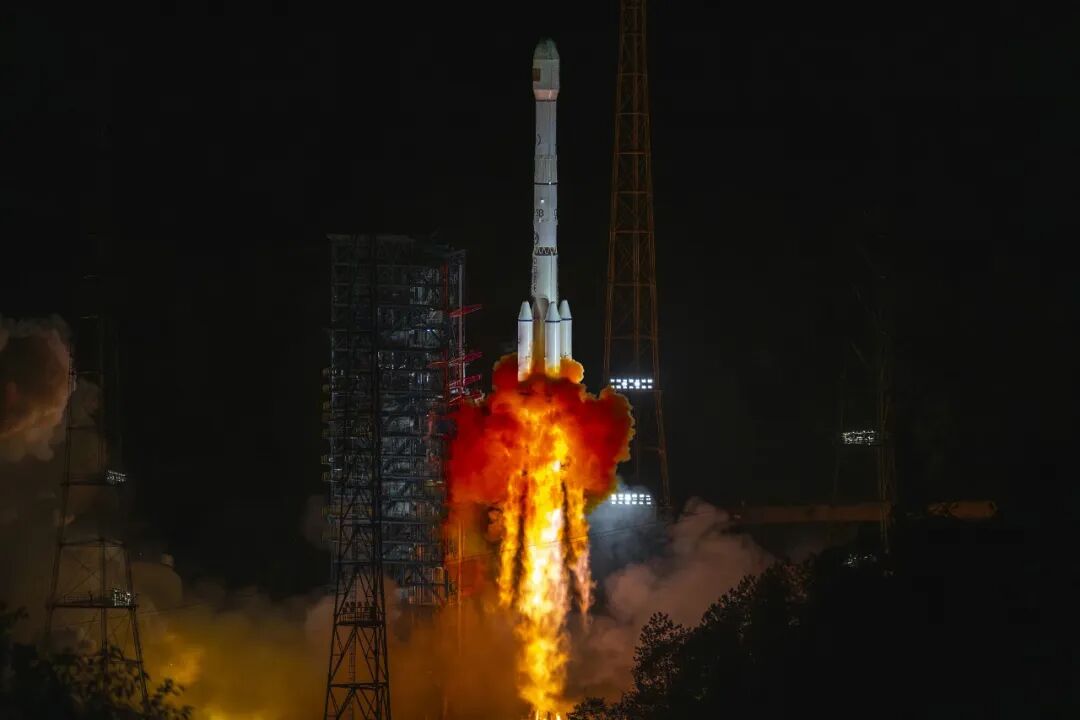
2026年商业航天“开门红”:从技术攻坚到商业闭环的奇点时刻
Zhong Guo Jing Ying Bao· 2026-01-17 11:00
Group 1 - The core viewpoint of the articles highlights the acceleration of China's private commercial space industry, transitioning from a technology validation phase to a stage of large-scale commercial deployment, driven by both national strategy and market forces [1][3][7] - The successful launch of the "Vesta-1" rocket by Beijing Xinghe Power Aerospace Technology Co., Ltd. marks the first private commercial space mission in 2026, with multiple private rocket companies announcing their annual launch plans [1][2] - The capital market is actively engaging with the commercial space sector, as evidenced by the updated IPO guidance status of Zhongke Aerospace, indicating a growing interest in the industry [2][3] Group 2 - The industry is moving from "self-driven exploration" to "systematic national guidance," with significant funding and support from the government addressing long-standing capital sourcing and exit issues [3][4] - The focus is shifting towards practical metrics such as launch costs, order visibility, and recovery validation data, reflecting a more cautious investment approach [3][4] - The urgency of strategic timelines is underscored by China's application to the International Telecommunication Union (ITU) for 203,000 satellites, emphasizing the need for timely satellite launches to secure frequency and orbital resources [3][4] Group 3 - The industry consensus indicates that the decisive moment for commercial space will depend on the formation of two critical "loops": a cost reduction loop through reusable rocket technology and a value realization loop in commercial operations [4][5] - The breakthrough in cost reduction is linked to the maturity of reusable rocket technology, with the need for comprehensive cost-cutting efforts across the supply chain [5][6] - The transition from being "tool providers" to "service operators" is essential for sustainable development in commercial space, requiring a robust downstream application market [5][6] Group 4 - The foundation for an application ecosystem is being established, with major telecom operators receiving licenses for satellite mobile communication, and the rise of low-altitude economies providing new opportunities for satellite internet [6][7] - The market has experienced speculative bubbles, highlighting the need for rational investment and differentiated, collaborative national policies to avoid redundancy and inefficiency [6][7] - The industry's evolution is characterized as a marathon rather than a sprint, with the realization of significant milestones requiring cumulative successes in satellite launches and applications [6][7]
2026年民营商业航天火箭发射首战告捷
Zheng Quan Ri Bao Zhi Sheng· 2026-01-16 16:40
Core Insights - The successful launch of the "Vesta-1" sea-launched rocket by Beijing Xinghe Power Aerospace Technology Co., Ltd. marks the first commercial space mission of 2026 in China, successfully placing four satellites into orbit [1] - The advancement in reusable rocket technology is expected to lead to more frequent and cost-effective launches, accelerating satellite constellation deployment [1][4] Group 1: Launch Achievements - The "Wanghai Tide" mission is the 21st successful launch for Xinghe Power and the 7th launch of the Vesta series for the "Tiankong Constellation" [2] - A total of 89 commercial satellites have been accurately delivered to their designated orbits through these launches [2] Group 2: Upcoming Launches and Innovations - Xinghe Power plans to execute the first flight of the Vesta-2 rocket, which is designed to efficiently launch small satellites weighing between 300 kg and 500 kg [2] - The company’s reusable rocket, Zhishen-1, is expected to have its maiden flight in the first half of 2026 [2] Group 3: Infrastructure and Technological Developments - The Long March 12B rocket successfully completed a static ignition test, aimed at meeting commercial launch demands for low-orbit satellite constellations [3] - Beijing Arrow Yuan Technology Co., Ltd. is developing a comprehensive industrial base for large liquid rockets, covering production, assembly, testing, recovery, and reuse [3] Group 4: Market Dynamics and Strategic Moves - The commercial space launch market in China is expected to be robust in 2026, with significant breakthroughs in reusable rocket technology anticipated to lower launch costs and accelerate satellite deployment [4] - China has submitted an application for an additional 203,000 satellites, indicating a strategic shift in satellite resource competition [4][5] Group 5: Industry Participation - Major telecommunications companies, including China Mobile and China Telecom, are actively involved in satellite constellation projects, with plans to launch thousands of satellites [5] - The three major telecom operators have already obtained licenses for satellite mobile communication services, enhancing their capabilities in emergency communication and remote area connectivity [5]
适者生存 中国商业火箭产业涉入“深水区”
Ke Ji Ri Bao· 2026-01-15 01:22
Core Insights - The Chinese commercial space industry is experiencing significant growth, with multiple technological paths and business models being explored, and reusable rockets entering a new phase of scale-up [1][2] - The industry has transitioned from a "technology validation phase" to a "scale-up phase" focused on frequency, delivery, and efficiency [2] - The competition is intensifying due to the strategic value of space resources, with companies needing to demonstrate clear profit paths and scalable revenue [2][4] Industry Development - As of December 2025, China has launched 65 commercial satellite constellation plans and applied for frequency and orbital resources for 203,000 satellites [3] - The demand for low-cost, high-frequency launches is pushing the commercial rocket industry into a critical growth phase, with a focus on engineering capabilities and supply chain resilience [1][3] Technological Challenges - The transition from technology validation to large-scale application is fraught with challenges, as evidenced by recent failures in rocket recovery attempts [6][7] - The industry is characterized by a low tolerance for error, particularly in critical recovery processes, where even minor deviations can lead to significant risks [6][7] Market Dynamics - The market is driven by a dual demand-supply dynamic, with a complete domestic industrial system on the supply side and a vast market on the demand side, particularly for low Earth orbit satellite internet [8] - However, key technologies for low-cost, high-reliability, and reusable rockets have yet to be fully validated for engineering applications [8][9] Competitive Landscape - The Chinese commercial rocket sector is exploring multiple technological paths, with companies like Blue Arrow Aerospace focusing on reusable rockets and solid-fuel options [10][11] - The industry is expected to evolve from a project-driven model to a platform-based space transportation service, with a significant shift in competitive focus anticipated by 2026 [12][13] Policy and Infrastructure - There is a need for a regulatory framework that supports frequent launches and efficient management of airspace and frequency applications [12] - The establishment of a standardized process for rocket recovery and maintenance is crucial for achieving large-scale production and operational efficiency [12]
从技术验证迈向量产交付 硬科技龙头企业开启“规模化元年”
Zhong Guo Zheng Quan Bao· 2026-01-13 22:16
Core Insights - The year 2026 is projected to be a pivotal year for emerging industries in China, particularly in the low-altitude economy and robotics sectors, as they transition from pilot testing to mass production and ecosystem development [1][2][7] Group 1: Robotics Industry - UBTECH aims to achieve an annual production capacity of 10,000 humanoid robots in 2026, following the delivery of over 500 units of its "Walker S2" model in 2025 [2] - The humanoid robot market in China is expected to reach a production scale of 100,000 to 200,000 units in 2026, driven by companies like Zhiyuan Robotics and strategic partnerships [2] - The application of robots is anticipated to expand from hazardous and monotonous jobs to broader industrial and commercial services, eventually reaching household use [5] Group 2: Low-altitude Economy - The low-altitude economy is expected to experience significant growth in 2026, with companies like XPeng Heitech planning to deliver their flying car, "Land Aircraft Carrier," in the same year [3] - The market penetration of industrial-grade drones is increasing, with companies like United Aircraft Group expecting to double their revenue as they achieve key milestones in product certification [3] - Cloud Saint Intelligent's products are projected to expand coverage in urban governance, potentially doubling their reach in 2026 [3] Group 3: Commercial Aerospace - A surge in IPO activities is anticipated in the commercial aerospace sector, driven by the demand for reusable medium to large rockets, with companies like Blue Arrow Aerospace and Star Glory actively pursuing public offerings [4] - The focus in commercial aerospace is on reducing costs through reusable rocket technology, while long-term success will depend on market applications [7] - The industry is facing challenges related to infrastructure and commercial viability, necessitating policy support and cross-departmental collaboration [7] Group 4: Market Competition - The emergence of a "scale year" in 2026 will intensify competition among emerging industries, with companies needing to focus on customer needs and continuous innovation to maintain their competitive edge [7] - The development of new infrastructure and unified management systems is crucial for the low-altitude economy and commercial aerospace sectors [7] - The overall environment for hard technology enterprises is improving, driven by policy guidance, technological breakthroughs, and market demand [7]

三年半烧光35亿 蓝箭航天冲击IPO
Nan Fang Du Shi Bao· 2026-01-10 23:11
Core Viewpoint - Blue Arrow Aerospace, often referred to as the "Chinese version of SpaceX," has officially submitted its IPO application to the Shanghai Stock Exchange, aiming to raise 7.5 billion yuan, marking a significant milestone in its ten-year journey since its establishment in 2015 [2] Company Overview - Blue Arrow Aerospace was founded in 2015 and has evolved from being perceived as a "scam" to a pioneer in China's commercial aerospace sector [2] - The company is led by Zhang Changwu, who has a financial background rather than a traditional aerospace one, which is unique in the industry [3][4] - Zhang holds 75.20% of the voting rights in the company through special voting arrangements, establishing strong control over Blue Arrow [4] Shareholder Structure - The company has attracted a diverse range of investors, including venture capital firms and state-owned funds, indicating a trend towards "state-owned" investment in the aerospace sector [5] - In 2024, state investment funds injected a total of 1.35 billion yuan into Blue Arrow, which is seen as a recognition of its technology path [4] Fundraising and Use of Proceeds - Blue Arrow plans to issue up to 500 million shares to raise 7.5 billion yuan, with 63% of the funds allocated to enhancing reusable rocket technology [6] - The next-generation rocket, Zhuque-3, is designed to compete directly with SpaceX's Falcon 9, focusing on large-scale liquid oxygen and methane reusable launch vehicles [6] Financial Performance - The company has reported significant losses, with a cumulative net loss of approximately 3.46 billion yuan over three and a half years, primarily due to high R&D expenditures [8] - In 2022, Blue Arrow's revenue was only 782,900 yuan, which increased to 36.43 million yuan in the first half of 2025 as commercial launches began [8] Industry Context and Future Outlook - The commercial aerospace industry is experiencing intense competition, with the ability to recover and reuse rocket stages becoming a critical technical benchmark [6] - Blue Arrow has been included in the core supplier list for the "China Star Network" and has secured a contract for launching 18 satellites, positioning itself favorably in the market [9] - The industry is expected to see a wave of IPOs and potential mergers, driven by the high valuation of companies like SpaceX and increasing market interest in the aerospace sector [10]
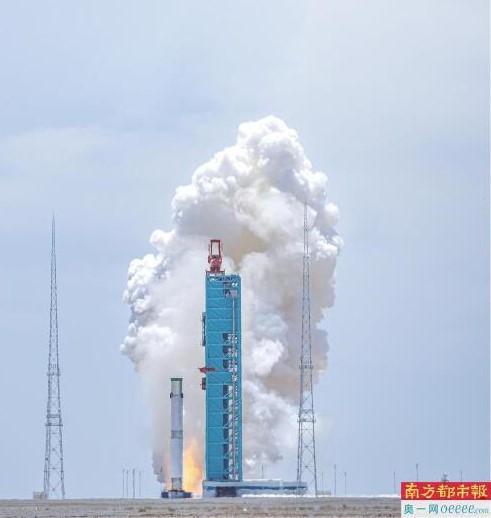
今天,A股又见4100点
Zhong Guo Zheng Quan Bao· 2026-01-09 02:49
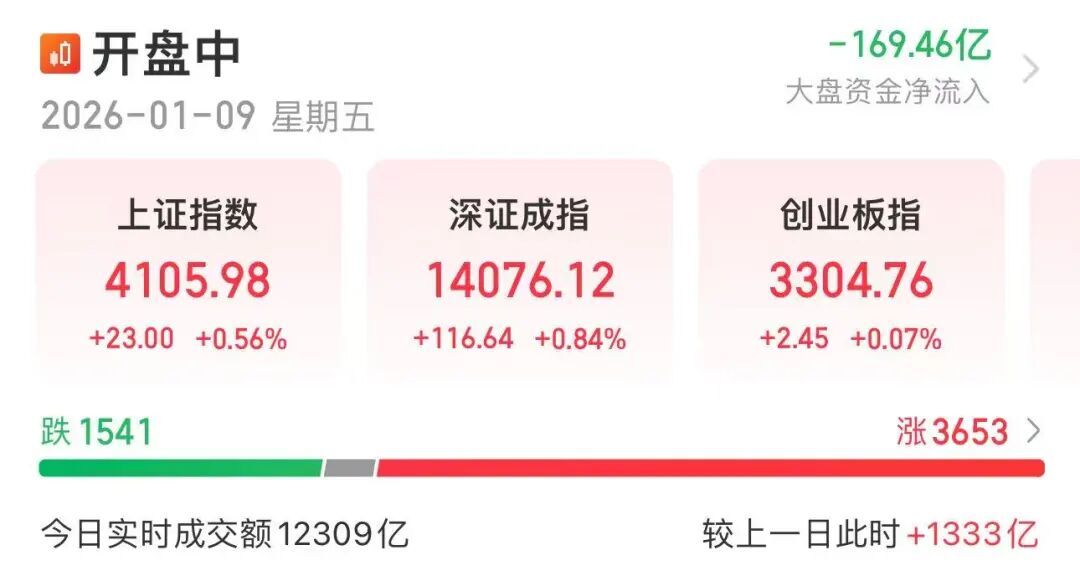
Group 1 - The Shanghai Composite Index has reached 4100 points for the first time since July 24, 2015, with a current increase of 0.56% to 4105.98 points [1] - The Shenzhen Component Index rose by 0.84%, while the ChiNext Index saw a slight increase of 0.07% [1] Group 2 - The AI application sector experienced significant gains, particularly in areas such as "AI + Doctor," Sora concept, and Zhipu AI, which led the market [3] - Beijing Zhipu Huazhang Technology Co., Ltd. was listed on the Hong Kong Stock Exchange on January 8, and another unicorn company, MiniMax, also debuted on the Hong Kong market [3] Group 3 - The commercial aerospace sector saw substantial growth, with stocks like Fujida and Shaoyang Hydraulic rising sharply [4] - A new offshore reusable rocket recovery base in Hangzhou has commenced construction, with a total investment of 5.2 billion yuan, expected to produce 25 rockets annually [4] - Guangzhou's government has issued a plan to accelerate the construction of a strong advanced manufacturing city, focusing on reusable rocket technology and establishing testing bases for large and medium-sized liquid rockets [4] Group 4 - The diversified financial sector also saw significant stock increases, with companies like Luxin Venture Capital and Yuexiu Capital performing well [5]
牛市早报|12月CPI今日公布,中国石化与中国航油实施重组
Xin Lang Cai Jing· 2026-01-09 00:16
Market Overview - As of January 8, the Shanghai Composite Index fell by 0.07% to 4082.98 points, while the STAR 50 Index rose by 0.82% to 1455.17 points. The Shenzhen Component Index decreased by 0.51% to 13959.48 points, and the ChiNext Index dropped by 0.82% to 3302.31 points [1] - In the U.S. stock market, the Dow Jones Industrial Average increased by 270.03 points, closing at 49266.11 points, a rise of 0.55%. The S&P 500 Index rose by 0.53 points to 6921.46 points, a change of 0.01%, while the Nasdaq Composite Index fell by 104.26 points to 23480.02 points, a decline of 0.44% [1] Oil Prices - International oil prices saw a significant increase on January 8. The price of light crude oil futures for February delivery rose by $1.77 to $57.76 per barrel, marking a 3.16% increase. The March delivery of Brent crude oil futures increased by $2.03 to $61.99 per barrel, a rise of 3.39% [1] Industry Developments - The Ministry of Industry and Information Technology, along with other regulatory bodies, held a meeting to discuss the regulation of the power and energy storage battery industry. The meeting highlighted the rapid development of the industry and the need to address irrational competition and overcapacity risks. Measures will include strengthening market supervision, enhancing product quality checks, and promoting industry self-regulation [2] - A meeting focused on the development and implementation of the "Mobile Power Safety Technical Specifications" was held, emphasizing the need for standardization to prevent safety incidents related to mobile power sources. This initiative is seen as crucial for ensuring public safety and promoting high-quality industry development [3] - The State Administration for Market Regulation has reportedly conducted discussions with major companies in the photovoltaic industry regarding monopoly risks and has issued corrective measures to ensure fair competition and prevent price collusion [4] - China Petroleum & Chemical Corporation and China Aviation Oil Group have received approval for a merger, which aims to leverage their integrated refining and aviation fuel supply advantages to reduce costs [5] Company News - Vanke Enterprise Co., Ltd. announced that its executive vice president, Yu Liang, will resign due to retirement age, effective January 8, 2026 [6] - Wens Foodstuff Group Co., Ltd. projected a net profit of 5 billion to 5.5 billion yuan for 2025, representing a year-on-year decline of 40.73% to 46.12% [6] - Semiconductor equipment manufacturer Zhongwei Semiconductor Equipment (Shanghai) Co., Ltd. announced plans for a share reduction by its major shareholder, which may involve up to 12.52 million shares, or 2% of the total share capital [7]

广州:推动黄埔星河动力火箭总装基地尽快落地
Mei Ri Jing Ji Xin Wen· 2026-01-08 09:27
每经AI快讯,1月8日,广州市人民政府办公厅印发广州市加快建设先进制造业强市规划(2024—2035 年)。规划指出,聚焦攻关可重复使用火箭技术,依托从化商业火箭液体动力系统试验中心及总装测试 产业化基地,为中大型液体火箭研制提供坚实基础,未来将面向全国科研院所、企业和高校等开放共 享。推动南沙中科宇航液体火箭总装测试基地建设和黄埔星河动力火箭总装基地尽快落地,研发大推 力、可复用液体火箭,打造低成本、高密度的航天发射能力。 ...
发射7次、失败2次,三年半累亏近35亿元,蓝箭航天比SpaceX差在哪?
36氪· 2026-01-06 00:33
Core Viewpoint - Blue Arrow Aerospace, the first commercial aerospace company in China, has recently completed the launch of its Zhuque-3 rocket and is now seeking to raise 7.5 billion yuan through an IPO on the Sci-Tech Innovation Board, aiming for a market valuation of 75 billion yuan [5][6]. Company Overview - Blue Arrow Aerospace was established in 2015 and focuses on the research, development, and production of liquid oxygen-methane engines and launch vehicles, specifically the Zhuque series rockets [8]. - The company has conducted seven launches since the end of 2022, achieving five successful missions [6][8]. Financial Performance - Over the past three and a half years, Blue Arrow Aerospace has generated total revenue of approximately 45.44 million yuan, while incurring cumulative losses of nearly 3.5 billion yuan [12][16]. - The revenue from rocket launch services has significantly increased, contributing nearly 98% of the total revenue in the first half of 2025, primarily from the successful launch of six satellites [14]. Market Position and Competition - Blue Arrow Aerospace aims to compete with SpaceX, particularly in the reusable rocket sector, and has made significant technological advancements, including achieving a successful orbit insertion with the Zhuque-3 rocket [10][11]. - The company has been recognized as a core supplier for major satellite launch projects, indicating a strong market position [19]. Future Prospects - The company plans to use the funds raised from the IPO to enhance its reusable rocket production capacity and technology [11]. - Blue Arrow Aerospace is optimistic about future commercial opportunities, particularly in meeting the demands of large satellite constellations and cargo spacecraft launches [18][19]. Industry Context - The commercial aerospace sector in China is experiencing a wave of IPOs, supported by government policies encouraging private investment in satellite technology [21][22]. - Despite the growth potential, the industry faces challenges in terms of technology and cost competitiveness compared to established players like SpaceX, which has a significant lead in reusable rocket technology and cost efficiency [25][26].