
大模型商业化

Search documents
全球大模型第一股登场!智谱港股敲钟,资本与技术的双向奔赴
Sou Hu Cai Jing· 2026-01-02 11:06
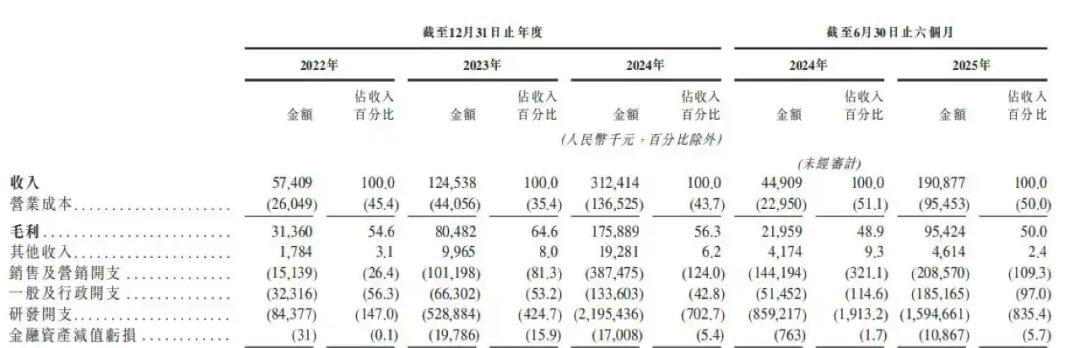
Core Viewpoint - The launch of Zhipu's IPO marks a significant step for the AI large model industry, transitioning from heavy R&D investments to capital market engagement [1] Group 1: IPO Details - Zhipu officially started its Hong Kong IPO process on December 30, aiming to become the "first global large model stock" [1] - The subscription period will last until January 5, 2026, with trading set to begin on January 8 under the stock code "2513" [3] - The company plans to issue over 37 million H-shares at a price of HKD 116.2 per share, aiming to raise approximately HKD 4.3 billion, with an expected market capitalization exceeding HKD 51.1 billion [3] Group 2: Investor Confidence - A notable aspect is the strong backing from cornerstone investors, with 11 institutions committing to subscribe for HKD 2.98 billion, accounting for nearly 70% of the total offering [5] - This indicates a significant level of confidence from both international and domestic long-term capital in Zhipu [5] Group 3: Industry Context - Zhipu initially aimed for an A-share listing but shifted to Hong Kong due to delays in regulatory feedback from the China Securities Regulatory Commission [6] - The Hong Kong market appears to be more accommodating for unprofitable tech companies, with faster review processes, making it a more suitable choice [8] Group 4: Industry Dynamics - The IPO highlights the current state of differentiation within the large model industry, with some players exiting the foundational model competition to focus on vertical applications [10] - Zhipu primarily targets enterprise clients in sectors like finance, internet, and healthcare, while competitors like MiniMax focus on individual users [10] Group 5: Financial Performance - Zhipu reported revenues of less than CNY 200 million in the first half of the year, with losses exceeding CNY 2.3 billion, primarily due to R&D costs nearing CNY 1.6 billion [13] - This reflects a common trend in the large model industry, where even leading companies face ongoing financial challenges [12] Group 6: Technological Foundation - Zhipu's technological foundation is built around its GLM framework, with continuous iterations since its first proprietary pre-trained model was released in 2021 [15] - The company has launched multiple versions of its models, achieving significant milestones in the open-source community and expanding its offerings to include multimodal models [17] Group 7: Business Model and Challenges - Zhipu has adopted a MaaS (Model as a Service) business model since 2021, packaging its model capabilities into services that support both local and cloud deployments [19] - Despite having a solid technological base and a clear commercialization path, Zhipu faces challenges due to increasing competition and the difficulty of scaling its enterprise-level services [19] Group 8: Future Outlook - The funds raised from the IPO will address immediate financial needs, but the real test will be converting technological advantages into sustainable profitability [21] - The IPO serves as an important exploration for the large model industry, assessing how much capital markets are willing to invest in long-term AI initiatives [21]


智谱冲击“大模型第一股”,IPO补血求生!要跳出“高级外包”的陷阱,摆脱大厂围剿
Sou Hu Cai Jing· 2025-12-30 07:46
Core Viewpoint - The company Zhipu has officially launched its IPO, aiming to become the "first stock of global large models," marking a significant milestone for both itself and the domestic large model industry, transitioning from "money-burning R&D" to "capital market validation" [2][3]. Industry Overview - The IPO of Zhipu signifies the beginning of a "淘汰赛" (elimination round) in the domestic large model industry, with increasing competition expected as more players enter the capital market by 2026 [3]. - The AI sector has seen a significant decline in financing, with a 31.2% year-on-year drop in Q1 2025, leading to a situation where IPOs become a crucial funding channel for companies like Zhipu [9]. Financial Performance - Zhipu's revenue is projected to grow from 57.4 million yuan in 2022 to 312.4 million yuan in 2024, reflecting a compound annual growth rate (CAGR) of 130% [3][5]. - However, adjusted net losses are expected to increase from 97 million yuan in 2022 to 2.466 billion yuan in 2024, indicating a 25-fold increase in losses over three years [5]. - In the first half of 2025, Zhipu reported a net loss of 1.752 billion yuan, nearly matching the total loss for 2024 [5]. R&D Investment - Zhipu's cumulative R&D investment reached 4.4 billion yuan from 2022 to the first half of 2025, with 2.195 billion yuan spent in 2024 alone [5][9]. - A significant portion of R&D costs, approximately 70%, is attributed to computing power expenses, which amounted to 1.553 billion yuan in 2024 [5]. Business Model and Market Position - The majority of Zhipu's revenue (84.8% in the first half of 2025) comes from localized deployments for B-end clients, while cloud services account for only 15.2% [6]. - Despite having a strong technical foundation, Zhipu's business efficiency is low, with an average daily revenue per employee of only 1,189 yuan, significantly lower than competitors [6][10]. - Zhipu holds a mere 6.6% market share in the domestic general large model market, which is limited when compared to major players like Baidu, Alibaba, and Tencent [6][10]. Competitive Landscape - The competitive environment has shifted from a focus on talent to a "算力军备竞赛" (computing power arms race), with major companies planning substantial investments in AI infrastructure [9][10]. - Major players like Baidu and Tencent are expected to spend between 30 billion to 100 billion yuan on AI in 2025, dwarfing Zhipu's total R&D investment [9]. Future Challenges - Post-IPO, Zhipu will face increased scrutiny and competition, with quarterly performance comparisons becoming a norm [11]. - The company must quickly find a profitable business model to avoid being integrated by larger firms, similar to trends seen in the food delivery and ride-hailing industries [13][14].

英伟达急了?或被谷歌TPU逼到墙角,黄仁勋不惜代价也要“收编”Groq
华尔街见闻· 2025-12-26 03:56
据华尔街见闻此前文章, 英伟达近日与Groq达成了一项非独家的技术许可协议。 按照披露,英伟达将把Groq的AI推理技术整合进未来产品体系中,而Groq创始人兼首席执行官Jonathan Ross、总裁Sunny Madra以及部分核心工程人员将加 入英伟达。Groq公司本身仍保持独立运营,其云业务Groq Cloud也将继续对外提供服务。 然而,如果只把它理解为普通的技术合作,显然过于表面。技术可以授权,但一家芯片公司的创始人和核心架构团队,很少作为"附带条款"整体迁移。 英伟达真正看中的,从来不是Groq的收入规模,而是它背后的架构思想。 而这套思想,与谷歌TPU高度同源。 业内普遍认为, 随着AI竞争重心从训练转向推理,GPU长期建立的统治优势开始出现松动,TPU在效率与成本结构上的优势正逐步显现,并有望成为谷歌云 未来十年的关键护城河 ,这一背景下,黄仁勋第一次显露出被逼到墙角的焦虑。 可以肯定的是,一旦英伟达借助这次技术引入在推理架构上追近甚至抹平与谷歌TPU的差距,原本在谷歌与OpenAI/英伟达阵营之间不断扩大的技术与生态裂 口,很可能会迅速收敛,竞争格局也将重新回到拉锯状态。 AI叙事正在从训 ...



VC的钱“烧不起”了,智谱、MiniMax等大模型独角兽 IPO进程加速
Sou Hu Cai Jing· 2025-12-24 10:44
Core Insights - The Chinese AI large model sector is shifting from macro-scale narratives to real operational profitability pressures by 2025 [2][4] - Key players like Zhipu AI and MiniMax are pursuing IPOs in Hong Kong to secure funding amid challenging financing environments [4][7] - The industry is transitioning from a focus on technical competition to profitability and value realization [9][12] Group 1: IPO and Financing - Zhipu AI submitted its IPO application on December 19, 2025, aiming to raise approximately $300 million, with plans to list in early 2026 [4] - MiniMax passed its IPO hearing on December 21, 2025, intending to raise $600-700 million, with a valuation around $4 billion [4] - The decision to pursue IPOs is driven by the unsustainable VC financing model, the urgency of capital market opportunities, and the need to maximize capital market benefits [4][5][12] Group 2: Financial Performance and Challenges - Zhipu AI's revenue for 2024 is projected at approximately 312 million yuan, while MiniMax expects around $30.5 million [11] - Despite revenue growth, both companies face significant losses due to high R&D and computing costs, with Zhipu AI's cumulative losses exceeding 6.2 billion yuan [12][15] - MiniMax reported an adjusted loss of $186 million for the first nine months of 2025, indicating a growing financial strain [14][15] Group 3: Market Dynamics and Comparisons - The Chinese large model market reached 29.4 billion yuan in 2024, expected to exceed 70 billion yuan by 2026, with a notable increase in multimodal models [16] - Chinese companies lag behind U.S. counterparts in revenue, with Zhipu AI and MiniMax's enterprise clients significantly fewer than those of OpenAI and Anthropic [22][26] - The Chinese market benefits from a large user base and government support, which may lead to reduced computing costs and substantial growth potential [29]

智谱、MiniMax争夺“大模型第一股”:高增长之下各有难题
3 6 Ke· 2025-12-23 12:44
Core Insights - The AI large model industry is at a critical juncture for capital value realization, with Beijing Zhiyu Huazhang Technology Co., Ltd. (Zhiyu) and Shanghai Xiyu Technology Co., Ltd. (MiniMax) both filing for IPOs on the Hong Kong Stock Exchange within 48 hours of each other [1][2][6] Company Paths - Zhiyu focuses on B-end and G-end services, while MiniMax is centered on C-end subscriptions, indicating a divergence in their development strategies [3][7] - The competition between these two companies serves as a test of the feasibility of their respective business paths as the industry transitions from technical exploration to commercialization [4] Financial Performance - Zhiyu's revenue projections show a compound annual growth rate (CAGR) of over 130%, with revenues expected to grow from 57.4 million RMB in 2022 to 3.12 billion RMB in 2024 [8][10] - MiniMax's revenue is projected to increase from 3.5 million USD in 2023 to 30.5 million USD in 2024, reflecting a staggering growth rate of 782% [12][14] Profitability Challenges - Both companies are experiencing significant losses despite revenue growth, with Zhiyu's adjusted net losses projected to reach 2.466 billion RMB in 2024 and MiniMax's net losses expected to be 465 million USD [18][19] - The losses are primarily attributed to high R&D and infrastructure investments, with Zhiyu's cumulative R&D expenditure reaching approximately 4.4 billion RMB [18][20] Market Positioning - Zhiyu's business model emphasizes a high barrier to entry with its foundational model technology, while MiniMax's strategy focuses on rapid commercialization through a multi-modal product approach [25][28] - The capital market's response to these companies will reflect a preference for either long-term technological autonomy or quick commercial potential [28][31] Competitive Landscape - The competition for the title of "AI large model first stock" is intensifying, with both companies having secured substantial funding and high valuations, indicating strong investor interest [27] - The market remains fragmented, with Zhiyu holding a 6.6% market share among independent general-purpose model developers in China [25] Future Considerations - The sustainability of their business models will be crucial for both companies post-IPO, as they navigate the challenges of maintaining growth while managing losses [31][32]
顶尖技术+标准产品+创新模式+可靠服务,打造大模型商业落地中国范式 | 卓世科技@MEET2026
量子位· 2025-12-16 00:56
Core Viewpoints - The commercialization of large models has entered a new stage, shifting from competition in model capabilities to industry implementation, scenario empowerment, and sustainable monetization [7] - The core of industrial-grade AI is not a single technological breakthrough but a self-circulating loop formed by the interaction of models, terminals, and data [7] Group 1: Industry Context and Evolution - The focus of technological evolution has shifted from scale expansion to a fundamental question: how can intelligence continuously generate value in the physical world [2] - The next competition in large models will not be about the models themselves but about the self-driven loop formed by models, terminals, data, and business flows [3] - The cloud is no longer the only stage for intelligence; terminals have become the entry point for perceiving the physical world, and data feedback continuously nourishes the model [4] Group 2: Company Background and Development - The company has been developing for seven to eight years, founded by core technical team members from major firms like Baidu, Alibaba, and Huawei, focusing on large model algorithms, industry models, and intelligent applications [12] - The company has established various R&D centers nationwide and is recognized as a key small giant enterprise in the national specialized and innovative sector [12] Group 3: Commercialization Strategy - A successful large model system must possess three essential components: self-research technology, standardized product capabilities, and innovative business models [13][21] - The value of AI in industries is transitioning from efficiency tools to becoming the AI brain of enterprises, reconstructing business processes and decision-making systems [13] Group 4: Application Cases - The company has served nearly 100 quality enterprises across various sectors, including enterprise services, industrial manufacturing, healthcare, media, and education [24] - In enterprise services, automation of workflows and intelligent office assistants have been successfully implemented, significantly improving efficiency [25][26] - In industrial manufacturing, large models are integrated with visual and automation capabilities to optimize production processes, leading to substantial energy savings [29] - In healthcare, the company collaborates with community hospitals to provide services that integrate common diseases and medications into a large model for enhanced diagnostic support [31] Group 5: Future Directions and Deployment - The company is exploring various deployment options, including private, public, and hybrid cloud solutions, ensuring tight integration with hardware for optimal performance [35] - The focus is on creating a comprehensive service system that includes 24/7 online support and pre-sales performance testing to enhance customer satisfaction [36]

AI产业跟踪:MiniMax-M2发布,登顶开源模型,持续关注大模型商业化落地进展
Changjiang Securities· 2025-11-09 14:32
Investment Rating - The report maintains a "Positive" investment rating for the software and services industry [8]. Core Insights - On October 27, Xiyu Technology officially open-sourced and launched MiniMax M2, a model with a total parameter count of 230 billion, specifically designed for agent and code applications. The complete weights of M2 are fully open-sourced under the MIT license and are available globally for a limited time free of charge. The MiniMax Agent has also launched a domestic version and upgraded its overseas version [2][5]. - The launch of M2 opens new possibilities for open-source models in intelligent execution and enterprise applications, with the potential for accelerated commercialization of large models. The report emphasizes the importance of cost reduction effects of the models and continues to favor the domestic AI industry chain, recommending shovel stocks and major players with significant positioning advantages [2][10]. Summary by Sections Event Description - The report details the launch of MiniMax M2, which features a MoE architecture and is tailored for agent and code applications. The model's complete weights are open-sourced and available for free globally for a limited time. Additionally, the MiniMax Agent has launched a domestic version and upgraded its overseas version [5]. Event Commentary - MiniMax M2 has demonstrated exceptional performance in various benchmarks, including a SWE-bench Verified score of 69.4, placing it among the top models for real programming tasks. The model also achieved a score of 61 in the Artificial Analysis test, ranking fifth overall and first among open-source models. In terms of tool usage, it scored 77.2 in the τ²-Bench test, leading among domestic models [10]. - The model's architecture focuses on executable agent tasks, ensuring that every reasoning step has complete context visibility. The interleaved thinking format allows the model to plan and verify operations across multiple dialogues, which is crucial for agent reasoning [10]. - M2's pricing is competitive, with input costs around $0.3 per MToken and output costs approximately $1.20 per MToken, significantly lower than competitors. The model also offers a TPS (tokens per second) output of around 100, which is rapidly improving [10]. - The market response to M2 has been enthusiastic, with it ranking first on OpenRouter and HuggingFace trend charts. The model has surpassed 50 billion daily token consumption, indicating strong market interest and potential for commercial application [10].
AI产业跟踪:Cursor升级至2.0版本并推出首款自研编程模型,Agent商业化落地有望加速
Changjiang Securities· 2025-11-06 11:05
Investment Rating - The report maintains a "Positive" investment rating for the industry [8]. Core Insights - On October 30, the AI programming platform Cursor announced the upgrade to version 2.0 and launched its first self-developed programming model, Composer, designed for low-latency coding, capable of completing most interactive tasks within 30 seconds [2][5]. - The report suggests that Cursor is transitioning from an AI programming tool to an AI development platform, with the commercialization of large models expected to accelerate [2][10]. - The report emphasizes the importance of cost reduction in token consumption as a core factor affecting the current market [2][10]. Summary by Sections Event Description - Cursor's upgrade to version 2.0 includes 15 major feature enhancements, focusing on a new interface for parallel collaboration among multiple agents [5]. Event Commentary - The Composer model balances performance and speed, completing most tasks in under 30 seconds and achieving output speeds exceeding 200 tokens per second, which is four times faster than comparable intelligent models [10]. - The model utilizes a mixture of experts (MoE) architecture and low-precision training to enhance efficiency and reduce inference costs, potentially accelerating product expansion [10]. - The new system allows for up to 8 agents to run in parallel, enhancing team collaboration and overall performance, with cloud agent reliability reaching 99.9% [10]. - The report highlights the need for further balance between cost and precision in the multi-agent model due to token consumption and management complexity [10].
金盘科技,数据中心业务爆发式增长
2 1 Shi Ji Jing Ji Bao Dao· 2025-10-31 08:33
Core Viewpoint - The demand for power equipment, particularly transformers, is increasing due to the growth in overseas markets and rising prices of key raw materials like copper [1] Financial Performance - In the first three quarters of the year, the company's revenue reached 5.194 billion, a year-on-year increase of 8.25% [1] - The net profit attributable to shareholders was 486 million, up 20.27% year-on-year, while the net profit after deducting non-recurring items was 456 million, an increase of 19.05% [1] - The third quarter revenue was 2.040 billion, reflecting an 8.38% year-on-year growth, with a net profit of 221 million, up 21.71% [1] - As of the end of the third quarter, total assets amounted to 10.233 billion, a 6.42% increase from the end of the previous year [1] Profitability and Cash Flow - The company's gross margin improved to 26.08%, an increase of 1.87 percentage points year-on-year, while the net profit margin rose to 9.29%, up 0.94 percentage points [1] - Operating cash flow turned positive, achieving a net cash flow of 178 million, a significant improvement from a loss of 87.157 million in the same period last year [1] Business Segments - The renewable energy sector, particularly wind power, saw a revenue increase of 71.21%, while the power generation and supply business grew by 35.10% [2] - The data center segment experienced explosive growth, with revenue reaching 974 million, a staggering increase of 337.47%, accounting for 18.75% of total revenue [2] Market Trends - The global demand for AI data center construction is expected to drive significant growth, with projections indicating an increase in installed capacity from 7 GW in 2024 to 59 GW by 2028, representing a CAGR of 73% [3] - The commercialization of large models like ChatGPT is expected to further accelerate the demand for computing power, propelling the AIDC sector into a high-growth phase [3] Future Developments - The company plans to issue convertible bonds totaling 1.672 billion for projects related to data center power modules and energy-efficient power equipment [3] - The company has completed the design and production of a prototype solid-state transformer (SST) for a future high-voltage direct current (HVDC) power supply architecture, with testing and certification expected to be completed by Q4 2025 [4]

AI产业跟踪:openAI发布Atlas浏览器,AI应用商业化落地有望加速
Changjiang Securities· 2025-10-23 15:28
Investment Rating - The report maintains a "Positive" investment rating for the industry [6]. Core Insights - OpenAI has launched its first browser, ChatGPT Atlas, which integrates ChatGPT and is currently available for macOS users. The browser features three core capabilities: Chat Anywhere, Browser Memory, and Agent Mode. This launch is expected to accelerate the commercialization of AI applications [2][4]. - The AI browser market is becoming competitive, with Google Chrome holding over 60% market share and integrating Gemini AI, while Microsoft Edge and other competitors struggle to gain significant traction. OpenAI's advantages include a large user base and a unique product paradigm that connects answers to actions [8][8]. - The report emphasizes the importance of user experience differentiation in attracting users, alongside the potential for accelerated commercialization of large models, with a focus on metrics such as MAU, DAU, and ARPU [8]. Summary by Sections Event Description - OpenAI's ChatGPT Atlas browser has been released, currently available for macOS users, with plans for Windows, iOS, and Android users to follow. The Agent Mode is in preview for Plus, Pro, and Business users [4]. Event Commentary - The integration of AI into the browsing experience is expected to reshape traditional browsing habits. The browser's homepage features a ChatGPT interface instead of a traditional search box, and it offers personalized task suggestions based on browsing history. The report highlights the potential for OpenAI to create a commercial ecosystem through its browser [8][8].