存量竞争

Search documents
泡泡玛特跨界做手机?回应:系与荣耀联名,将推首款潮玩手机
Nan Fang Du Shi Bao· 2026-01-13 09:43
Group 1 - The core point of the article is that Pop Mart is collaborating with a well-known smartphone brand, Honor, to launch a co-branded "trendy toy phone" featuring its IP "Molly," rather than developing its own smartphone [2][3] - The collaboration will involve deep co-creation in product definition, with the phone based on Honor's mid-range 500 series, which has a starting price of 2,699 yuan [2] - The co-branded phone will include full-chain customization from ID design to packaging, and will come with a gift box featuring a Molly figurine and a custom phone case [2] Group 2 - Pop Mart's latest financial data shows a revenue growth of 245%-250% year-on-year for Q3 2025, with overseas market growth reaching 365%-370% [3] - Despite strong financial performance, Pop Mart faces challenges in the secondary market, where some new blind boxes have seen price drops, indicating a compression of premium space [3] - The collaboration with Honor is seen as a potential strategy for Pop Mart to find a second growth curve beyond blind boxes, with the success of this partnership to be evaluated after the product launch on January 19 [3]


观车 · 论势 || “车不好卖”:存量竞争下如何换挡升级
Zhong Guo Qi Che Bao Wang· 2026-01-13 07:26
Core Insights - The automotive industry in China is transitioning from a growth phase to a period of stock competition and structural clearing, making it increasingly difficult to sell cars in 2025 [1] - Leading companies like BYD and Geely are thriving through price competition and extensive product offerings, while many joint venture fuel vehicle companies and fringe new players are struggling to meet sales targets [1] Group 1: Profitability Challenges - The industry is trapped in a price war, particularly in the under 200,000 yuan segment, leading to a continuous compression of profit margins [2] - The automotive industry's profit margin was 4.4% from January to November 2025, significantly lower than the average profit margin of 6% for downstream industrial enterprises [2] Group 2: Capacity Utilization Issues - Structural overcapacity is a prominent issue, with capacity utilization rates for vehicle manufacturing and parts remaining below 75%, indicating a need for industry consolidation [2] - In 2025, the capacity utilization rate showed a gradual recovery but remained low, with major joint venture companies like SAIC-GM and Dongfeng Honda operating at only 40% to 60% capacity [2] Group 3: Transition Risks - The risk of asset depreciation due to technological shifts is significant, as production lines for fuel vehicles struggle to convert to new energy capacities [2] - Over half of automotive dealers reported losses in the first half of last year, exacerbating operational pressures on companies [2] Group 4: Strategic Upgrades - Companies must move away from low-price competition and focus on building core competencies in technology, resources, and market presence [3] - Technological innovation is crucial, with over 50% of new energy vehicles replacing fuel vehicles, highlighting the need for advancements in battery systems and intelligent driving technologies [3] Group 5: Global Expansion - Globalization is essential for growth, as traditional vehicle exports are no longer sufficient; companies must adopt a global 2.0 model that integrates capacity and supply chain collaboration [4] - BYD's overseas sales exceeded 1 million units in 2025, demonstrating the importance of international markets as a source of growth in a saturated domestic market [4] Group 6: Market Restructuring - The deepening of stock competition will lead to a fundamental restructuring of the automotive market, with a concentration of market players and a shift from price competition to value competition [4] - The next 3 to 5 years will see dynamic adjustments in fuel vehicle capacity, with some being shut down or restructured, while leading new energy companies will dominate the market [4] Group 7: Industry Transformation - The sales performance in 2025 reflects not only market competition but also signals the need for industry transformation, emphasizing the importance of focusing on technological innovation, resource integration, and global strategies [5]

2026年车圈这三大趋势“藏不住”
Huan Qiu Wang· 2026-01-07 07:28
Core Insights - The automotive industry in China is transitioning from "scale expansion" to "quality enhancement," indicating a shift in focus towards technological transparency and user trust as key competitive factors [1][3][4] Group 1: Technological Transparency - Companies are moving away from abstract innovation slogans to concrete technological commitments and public demonstrations, with firms like FAW aiming to become technology companies and SAIC focusing on electrification and intelligence [1] - The concept of "technological transparency" is becoming a competitive threshold, where companies must publicly verify their core component performance and manufacturing standards to build market trust [1] Group 2: Smart Technology as a Necessity - Smart technology is no longer an optional enhancement but a survival requirement for automotive companies, as evidenced by leaders like Li Shufu and Yin Tongyue emphasizing the importance of emotional and intelligent vehicles [2] - The automotive value proposition is shifting from mere transportation to mobile intelligent terminals, with AI-driven smart cabins and high-level autonomous driving becoming essential for competitive advantage [2] Group 3: Trust in a Saturated Market - The Chinese automotive market has transitioned to a saturation phase, with a 52.7% penetration rate for new energy vehicles by 2025, shifting the focus from acquiring new customers to retaining existing ones [3] - Building user trust is now a core asset for companies, requiring substantial investments in product quality, service experience, and commitment fulfillment to navigate market cycles effectively [3] Group 4: Consumer and Industry Benefits - The industry's transformation will yield tangible consumer benefits through technological transparency, smart upgrades, and service optimization [4] - This competition around technology, intelligence, and trust will enhance the resilience and security of the supply chain, contributing to the establishment of a modern automotive industry with international competitiveness [4]
2026年车圈这三大趋势藏不住
Zhong Guo Qi Che Bao Wang· 2026-01-06 08:02
Core Insights - The automotive industry in China is transitioning from "scale expansion" to "quality enhancement," indicating a shift in focus towards technological transparency and user trust as key competitive factors [1][3][4] Group 1: Technological Transparency - Companies are moving away from abstract innovation slogans to concrete technological commitments and public demonstrations, with firms like FAW aiming to become technology companies and SAIC focusing on electrification and intelligence [1] - The concept of "technological transparency" is becoming a competitive threshold, where companies must publicly verify their core component performance and manufacturing standards to build market trust [1] Group 2: Smart Technology as a Necessity - Smart technology is no longer an optional enhancement but a critical requirement for survival in the industry, as evidenced by leaders like Li Shufu and Yin Tongyue emphasizing the importance of emotional and intelligent vehicles [2] - The automotive value proposition is shifting from mere transportation to mobile intelligent terminals, with AI and advanced driving capabilities becoming essential for competitive advantage [2] Group 3: Trust as a Core Asset - The Chinese automotive market has transitioned to a stock competition phase, with a 52.7% penetration rate for new energy vehicles by 2025, shifting the focus from acquiring new customers to retaining existing ones [3] - Building user trust is now a fundamental asset for companies, requiring substantial investment in product quality, service experience, and commitment fulfillment [3] Group 4: Industry Implications - The ongoing competition around technology, intelligence, and trust is expected to enhance the resilience and security of the supply chain, fostering a modern automotive industry with international competitiveness [4][5] - As companies deepen their focus on core technologies and optimize user experiences, the Chinese automotive industry is poised to occupy a higher position in the global value chain, contributing significantly to the nation's automotive ambitions [5]
聚焦一线网点生存战,2026快递行业六大趋势前瞻
3 6 Ke· 2026-01-05 12:39
Core Insights - The logistics industry is entering a phase of stock competition, with growth rates slowing to single digits due to various factors such as weak e-commerce growth and regulatory pressures [2][4] - The rise of instant retail is reshaping consumer behavior and threatening traditional logistics business models, with significant growth expected in the sector [15][18] - The integration of AI technology is revolutionizing operational efficiency in the logistics sector, enhancing service quality and operational management [9][11] Group 1: Industry Trends - Trend 1: The industry is shifting towards stock competition, leading to intensified price competition and a need for companies to innovate and improve service quality [4] - Trend 2: The challenge of increasing delivery fees persists due to ongoing price wars and a lack of motivation for fee increases among logistics providers [5][7] - Trend 3: AI is being embedded across all logistics processes, significantly improving efficiency and reducing complaint rates [9][10] Group 2: Market Dynamics - Trend 4: The elimination of underperforming logistics points is accelerating due to increased competition and regulatory pressures, with a focus on cost reduction and service improvement [12][14] - Trend 5: Instant retail is rapidly growing, with major platforms achieving significant daily order volumes, posing a threat to traditional logistics operations [15][17] - Trend 6: Chinese logistics companies are expanding internationally, driven by domestic competition and global opportunities, although they face challenges such as high operational costs and cultural differences [19][21]

京东推出「检修分离」服务,教消费者“拒绝”维修工?
3 6 Ke· 2025-12-31 09:38
Core Viewpoint - The article discusses JD's innovative "repair separation" model in the home appliance repair industry, aiming to enhance transparency and consumer trust while challenging traditional repair practices [3][10][31]. Group 1: JD's New Model - JD has introduced a "repair separation" model that separates the diagnosis and repair processes, allowing consumers to confirm repairs before they are made [4][5]. - The model includes three main components: online consultations for simple troubleshooting, transparent diagnostics with clear pricing, and a "pay after verification" system [6][7][8]. - This approach aims to eliminate unnecessary repair costs and empower consumers with information, shifting the power dynamics in the repair industry [8][10]. Group 2: Market Context and Competition - The home appliance market is transitioning to a phase of "stock competition," where after-sales service becomes crucial for customer retention and loyalty [9][10]. - JD's strategy leverages its established trust in the market to extend its service capabilities, positioning itself as a leader in after-sales service [10][11]. - Competitors like Tmall, Pinduoduo, and Douyin face challenges in adapting to JD's model due to their different operational structures and market strategies [14][18][24]. Group 3: Implications for the Industry - JD's initiative is expected to set a new standard for home appliance repair services, influencing consumer expectations and industry practices [28][30]. - The shift towards transparency in service pricing and quality may lead to a significant reshaping of the competitive landscape, pressuring traditional players to adapt or risk obsolescence [30][31]. - The article suggests that JD's actions could catalyze a broader transformation in the home appliance repair market, pushing for modernization and improved service standards [31][32].


大厂“抢人”战,从涨薪开始
投中网· 2025-12-30 07:58
Core Viewpoint - The recent salary increase wave among major companies, including ByteDance, JD.com, BYD, and CATL, reflects a strategic shift in the competitive landscape, moving from cost-cutting to talent acquisition in response to market pressures and the AI talent war [5][7][24]. Group 1: Salary Increases and Company Strategies - JD.com announced that 92% of its employees will receive full or excess year-end bonuses, with total bonus investment increasing by over 70% year-on-year [5][7]. - ByteDance plans to increase its bonus investment by 35% and salary adjustment budget by 1.5 times, raising both the lower and upper limits of salary packages [18][21]. - BYD and CATL have also implemented salary increases for their large workforce, indicating a broader trend in the automotive sector [5][7]. Group 2: Historical Context and Market Dynamics - The current salary increase trend is reminiscent of the rapid expansion period in the Chinese internet industry around 2015, where companies aggressively raised salaries to attract talent [9][14]. - In contrast to previous years, where year-end bonuses were significantly higher, the current environment has seen a decline in bonus amounts, reflecting the changing dynamics of the internet industry [16][17]. - The competitive pressure among major companies has intensified, with JD.com reporting a 54.7% year-on-year decline in net profit despite record revenue, highlighting the challenges faced by these firms [17]. Group 3: Talent Acquisition in the AI Era - The competition for top talent in AI and related fields has escalated, with companies like ByteDance and Xiaomi actively recruiting skilled professionals, sometimes offering double salaries [24][26]. - The shift towards AI technology is prompting companies to invest heavily in talent acquisition as a strategic move to secure their future in a rapidly evolving market [26][27]. - Major firms are not only focusing on high-end technical talent but also on stabilizing their large base of frontline employees, recognizing their importance in maintaining operational efficiency [28][29].



字节京东比亚迪等大厂逆势涨薪,AI时代抢人大战开启
Sou Hu Cai Jing· 2025-12-30 01:33
Core Insights - Major companies in the tech and automotive sectors, including ByteDance, JD.com, BYD, and CATL, have announced salary increases and bonuses for employees, indicating a shift in compensation strategies despite a challenging economic environment [2][9][14] - The current wave of salary increases is seen as a strategic move to attract and retain talent in a competitive market, particularly in the context of the AI talent war [21][22] Group 1: Salary Increases and Bonuses - JD.com reported that 92% of its employees received full or excess year-end bonuses, with total bonus investment increasing by over 70% year-on-year [2] - ByteDance announced a 35% increase in bonus investment and a 1.5 times increase in salary adjustment budget, raising both the lower and upper limits of salary packages [2][15] - BYD and CATL also implemented salary increases for a large number of grassroots employees, reflecting a broader trend across major companies [2][9] Group 2: Competitive Landscape - The tech industry is experiencing a shift from rapid expansion to a focus on talent acquisition, with companies competing for top talent amid a tightening labor market [22][24] - Companies like Tencent and Alibaba have also initiated salary increases and new incentive structures to attract and retain skilled employees, indicating a strategic pivot from cost-cutting measures [9][18] - The competition for AI talent has intensified, with reports of companies offering significantly higher salaries to attract skilled professionals from competitors [21][22] Group 3: Structural Changes in Compensation - Companies are restructuring their compensation frameworks to better align with performance, moving away from traditional hierarchical salary structures that may have led to inefficiencies [18][19] - Alibaba has replaced its long-standing "P series" job level system with a new grading system to provide clearer pathways for advancement and better reward high-performing employees [18] - ByteDance has expanded its job level system to address talent inflation and create more opportunities for salary increases [19] Group 4: Future Investments - The current salary increase trend is viewed as a strategic investment in the future, with companies shifting focus from cost-cutting to talent acquisition and retention [22][24] - Major firms are committing substantial resources to AI and technology infrastructure, with Alibaba planning to invest over 380 billion yuan in cloud and AI hardware over the next three years [25] - The emphasis on both high-end technical talent and the stability of grassroots employees highlights the dual focus on innovation and operational efficiency in the AI era [26][28]

“人均VIP”的 2025年,平台正在争着让用户“爽到”
Sou Hu Cai Jing· 2025-12-26 01:09
Core Insights - The competition among major platforms in the food delivery sector has reached unprecedented levels, with each investing billions in subsidies to attract and retain users [1] - The focus has shifted from acquiring new users to retaining existing ones, as businesses realize that "whoever has the users wins" [2][3] - The internet has entered a phase of stock competition, where user retention strategies are crucial for long-term success [3][4] User Acquisition and Retention Strategies - Platforms are increasingly focused on creating loyalty programs and enhancing user experiences to keep customers engaged [2][3] - The rise of "潮汐用户" (tide users) indicates that many consumers switch between platforms based on promotions, highlighting the need for platforms to build stronger loyalty [9][11] - The cost of acquiring new users has escalated, making it essential for platforms to focus on retaining existing customers [4][7] Membership Programs and User Engagement - High-end membership services are becoming a focal point for platforms, with offerings like Taobao's 88VIP and iQIYI's star diamond membership providing enhanced benefits [12][14] - The trend of "人均VIP" (per capita VIP) suggests that consumers are willing to pay for premium services, driving platforms to enhance their membership offerings [12][18] - Platforms are also introducing lower-cost membership options to attract price-sensitive consumers, ensuring a broader user base [20][24] Evolving Consumer Behavior - Consumers are becoming more rational in their spending, leading to a decline in loyalty among long-time users [11][27] - The shift towards a "value for money" mindset means that platforms must demonstrate tangible benefits to retain users [41] - The competition is now about transforming users from "flying guests" to "permanent players," emphasizing the importance of user engagement and satisfaction [41]

年末茅台消费“烟火气”激活 飞天茅台与非标品多线迎春
Sou Hu Cai Jing· 2025-12-24 11:35
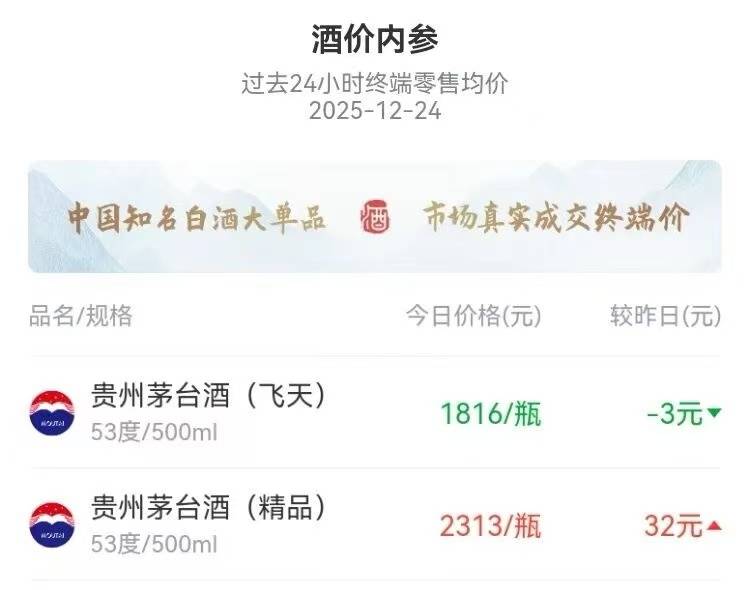
Core Viewpoint - The consumption market is experiencing a significant increase in activity as the year-end approaches, driven by festive gatherings and early corporate purchases, particularly in the high-end liquor segment, with notable price increases for Moutai products [1] Group 1: Market Dynamics - The demand for high-end liquor, particularly Moutai, is rising due to the festive season, with price increases observed for various products, including a single-day increase of over 200 yuan for the 15-year Moutai [1] - The average transaction price for Feitian Moutai reached 1816 yuan per bottle, indicating a clear increase in sales activity [2] - Regional price variations show that Feitian Moutai is priced at 1745 yuan in Guangxi, 1700 yuan in Jiangxi, and 1710 yuan in Hubei, with higher prices in the Greater Bay Area, reflecting strong local consumption [5] Group 2: Consumer Behavior and Trends - There is a noticeable shift in consumer demographics, with distributors targeting new sectors such as pharmaceuticals and technology to expand their customer base [7] - The industry is seeing a stable performance from Moutai during its adjustment period, reinforcing the long-term growth logic of the liquor market [7] - Analysts believe that Moutai's consistent supply and structural optimization of non-standard products will help stabilize consumption and alleviate inventory pressures for distributors [7]