
定投策略

Search documents
炒股这么容易,为什么还这么多亏钱的
集思录· 2025-06-10 14:03
Core Viewpoint - The article discusses the challenges and misconceptions surrounding stock trading, emphasizing that while it may seem easy during certain market conditions, the inherent uncertainty and risks can lead to significant losses for investors. Group 1: Market Behavior - Investors who engaged in systematic investment during market highs (e.g., index at 6000 points) generally made profits, while those who did so during lows (e.g., index at 2600 points) often faced losses, highlighting the cyclical nature of market performance [2]. - The perception of ease in stock trading often correlates with the effectiveness of a strategy during a specific period, but market conditions can change, rendering previously successful strategies ineffective [2][4]. Group 2: Investment Strategies - The article mentions the importance of discipline and the ability to adapt strategies to changing market conditions, suggesting that successful investors find a suitable niche for themselves [3]. - A long-term investment approach, such as dollar-cost averaging in blue-chip stocks, is discussed, but it is noted that many investors have faced prolonged periods of stagnation with these investments [4][6]. - The experience of an investor who transitioned from individual stock picking to convertible bonds illustrates the complexity and evolving nature of investment strategies, emphasizing the need for continuous learning and adaptation [7]. Group 3: Investor Psychology - Many new investors, initially successful, may become overconfident and fail to recognize the market's unpredictability, leading to significant losses [2][9]. - The analogy of stock trading to a battlefield underscores the necessity for investors to possess survival skills and adaptability in a competitive environment [10].


三分认怂、三分计划、三分坚持
雪球· 2025-06-07 03:48
Core Viewpoint - The article emphasizes the importance of understanding investment psychology, setting realistic expectations, and maintaining a disciplined approach to investing, encapsulated in the "three-thirds" framework: three parts humility, three parts planning, and three parts persistence [26]. Group 1: Understanding Investment Psychology - Investors often face a knowledge gap in finance, leading to impulsive decisions driven by market emotions, which can result in significant losses [5][6]. - Acknowledging one's limitations and setting modest return expectations is crucial for sustainable investing, focusing on wealth preservation and inflation-beating growth rather than quick riches [7][8]. Group 2: Setting Realistic Return Expectations - Long-term average returns for various asset classes are outlined: stocks yield 8%-10%, bonds yield 3%-5%, and commodities/gold yield around 5%-6% [8]. - A diversified portfolio can achieve a composite return of 6%-8%, while a well-informed investor might target 10%-15% returns through index investing and global perspectives [8][9]. Group 3: Risk Management and Asset Allocation - Understanding potential drawdowns is essential, with stocks facing maximum drawdowns of 70%-80%, while bonds and commodities have lower but significant risks [10]. - A diversified asset allocation strategy, including stocks, bonds, and commodities, can mitigate risks and enhance stability [11]. Group 4: Building a Robust Investment Plan - A comprehensive investment framework should consider asset classes, market distribution, and timing to manage human emotions like greed and fear [12][13]. - Diversification across asset types, markets, and time can reduce correlation and overall portfolio volatility, leading to more stable returns [15][16][17]. Group 5: Importance of Persistence - Successful investing requires not just a sound strategy but also the discipline to adhere to it over time, especially during market fluctuations [21]. - Maintaining a focus on safety margins, long-term engagement, and sticking to profit-taking goals is vital for achieving investment success [22][23][24]. Group 6: Conclusion - The "three-thirds" framework serves as a foundational guideline for investors, emphasizing humility, planning, and persistence, with a final note on the role of luck in investment success [26][27].

帮主郑重:关税风暴+俄乌战火,黄金避险魅力再度爆发!
Sou Hu Cai Jing· 2025-06-02 09:49
Group 1 - The core viewpoint is that the recent surge in gold prices is driven by geopolitical tensions, trade disputes, and a weakening US dollar, making gold an attractive safe-haven asset [3][4][5] - Trump's decision to double tariffs on imported steel and aluminum from 25% to 50% has raised concerns about potential job losses and supply chain disruptions, particularly affecting Canada and the EU, which are major suppliers [3] - The ongoing conflict between Russia and Ukraine has escalated, with significant military actions from both sides, contributing to market uncertainty and further driving investors towards gold [3][4] Group 2 - The US dollar index has recently fallen below 99, which typically boosts gold prices as they have an inverse relationship [3] - Central banks globally are increasing their gold purchases, with last month's net buying reaching a new high, providing strong support for gold prices [3] - The long-term outlook for gold remains positive due to increasing global economic uncertainty, trade tensions, and geopolitical risks, reinforcing its role as a hedge against inflation and market volatility [4][5]
运筹帷幄之中,决胜千里之外,六大ETF策略你怎么选?
Xin Lang Cai Jing· 2025-05-28 07:54
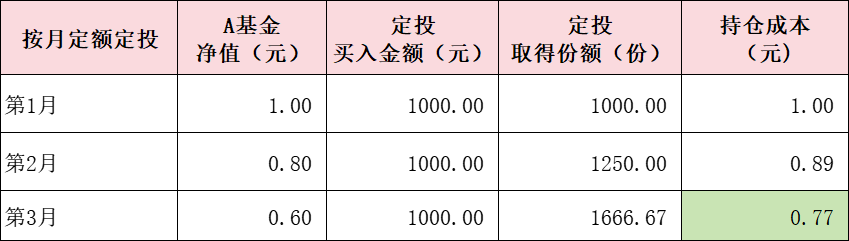
Core Insights - The article emphasizes the importance of strategic planning in both warfare and investment, highlighting that a well-thought-out strategy is crucial for success in volatile markets [1] - It introduces six common ETF investment strategies, aiming to help investors find suitable approaches for their investment goals [1] Long-term Strategies - **Dollar-Cost Averaging (DCA)**: This strategy involves investing a fixed amount at regular intervals, which helps to lower the average cost per share over time, especially during market downturns [1][3] - **Grid Trading Strategy**: This method utilizes market price fluctuations by setting predefined buy and sell price points, allowing investors to buy low and sell high [4][6] - **Pyramid Strategy**: This involves adjusting investment amounts based on price movements, buying more when prices are low and less when prices are high, requiring accurate market judgment [10][11] Short-term Strategies - **Core-Satellite Strategy**: This approach divides investments into a core position, typically in broad market ETFs, and satellite positions in sector-specific ETFs to capture excess returns [11] - **Swing Trading Strategy**: This strategy focuses on capitalizing on short-term market fluctuations, suitable for experienced investors who can quickly adapt to market changes [12] - **Sector Rotation Strategy**: This involves switching investments between different sectors based on market signals, aiming to maximize returns while minimizing systemic risks [13] Conclusion - The article concludes that there are various ETF investment strategies, and no single strategy is superior. Investors should analyze their goals, risk tolerance, and market conditions to develop a flexible investment approach [13]
海富通基金成钧:灵活运用指数基金 理性做好资产配置
Zheng Quan Ri Bao Wang· 2025-05-18 12:02
Group 1 - The seventh "5 15-5 19 Small Investor Protection Publicity Week" event was held from May 15 to 19 in Beijing, Shanghai, and Shenzhen, focusing on promoting investment knowledge and advocating rational, value, and long-term investment principles [1] - The event featured discussions led by chief analysts from brokerage firms, public interest lawyers, and representatives from listed companies to enhance investors' risk awareness and self-protection capabilities [1] Group 2 - Dr. Cheng Jun from Hai Fu Tong Fund Management highlighted the growing popularity of ETFs as transparent and flexible investment tools, emphasizing the importance of scientific strategies to enhance ETF investment outcomes [2] - Common ETF investment strategies include allocation strategies such as constant stock-bond ratio models and risk parity models, as well as trading strategies that focus on market sentiment and short-term volatility [2][3] - The dollar-cost averaging strategy is noted as a simple and widely used method, which helps investors average their investment costs and reduce the impact of market volatility [2][3] Group 3 - The dollar-cost averaging strategy involves investing a fixed amount at regular intervals, which can lead to significant excess returns compared to buy-and-hold strategies [3] - Dr. Cheng suggested that a good exit point for profits could be when the holding return reaches a target, such as 30%, allowing for a cycle of continued investment [3] - The ETF grid trading strategy is suitable for investors with limited time to monitor fund fluctuations, allowing automated buy and sell operations based on pre-set parameters [3][4] Group 4 - The ETF arbitrage strategy capitalizes on price differences between the primary and secondary markets, leveraging the unique dual trading mechanism of ETFs [4] - In April, the total scale of the ETF market in China surpassed 4 trillion yuan, indicating a growing recognition of index investment tools among investors [4] - Factors such as favorable policies, reduced ETF fees, and increased institutional investment have contributed to the rising popularity of ETFs, which offer low costs, risk diversification, transparency, and trading flexibility [4]


当基金亏损成为常态:放任不管的代价与人性博弈
Sou Hu Cai Jing· 2025-05-16 08:49
Core Insights - The article discusses the challenges faced by retail investors in the current financial market, particularly regarding the impact of fund losses on their investments and psychological well-being [2][3][4] Group 1: Fund Performance and Investor Behavior - Many retail investors are experiencing significant losses in their funds, leading to a "lying flat" mentality, which masks a deeper financial erosion [2] - A hypothetical investment of 100,000 yuan in a stock fund that loses 30% would leave the investor with only 70,000 yuan, while management fees continue to accrue [2] - Investors face a dilemma when considering redemption, as they incur fees of 0.5%-1.5%, and delaying redemption can lead to even greater losses [2][3] Group 2: Opportunity Costs and Market Timing - Being trapped in underperforming funds results in missed opportunities, such as the potential gains from AI-related ETFs that surged over 40% while traditional energy funds fell by 15% [3] - Historical data shows that 80% of stock market gains occur within just 20% of trading days, emphasizing the risk of missing out during market rebounds [3] - Behavioral finance indicates that when losses exceed 20%, a significant portion of investors may adopt a "ostrich mentality," avoiding market information and delaying decision-making [3] Group 3: Credit Impact and Legal Rights - Continuous losses can negatively affect investors' credit records, impacting their ability to secure loans or credit [3][4] - Investors have the right to take action against fund managers for negligence, as evidenced by a case where a quant fund was penalized for improper trading practices [4] - Strategies such as dollar-cost averaging and rebalancing can help mitigate risks during market fluctuations, allowing investors to navigate through volatile periods [4]
一生中回报率最高的10件事!跟着做超越99%的同龄人!
天天基金网· 2025-05-10 01:08
Core Insights - The article emphasizes the importance of time management and personal development strategies to achieve significant growth and success in life [10][12]. Time Management - Establish a personal time ledger to track every 30 minutes of time spent [1]. - Utilize commuting or waiting times for knowledge reinforcement through techniques like the Feynman technique [7]. Personal Development Strategies - Implement micro-habit strategies, such as engaging in 30 minutes of high-intensity exercise daily and eliminating sugary drinks [2]. - Schedule monthly meetings with individuals who are ten times more successful, preparing three specific questions for discussion [3]. Financial Management - Enforce a savings strategy by allocating 20% of income for investment in index funds through a systematic investment plan [5]. Emotional Management - Create a negative emotion transformation checklist to manage feelings like anxiety, anger, and sadness effectively [6]. Decision-Making - Develop a decision-making model to evaluate the long-term impacts of choices, considering effects in 10 minutes, 10 months, and 10 years [8]. Growth Mindset - Focus on activities that may be painful now but will lead to ease in the future, avoiding immediate comforts that may result in future difficulties [11]. - The concept of improving by 1% daily can lead to a 37-fold increase over a year, highlighting the importance of consistent, incremental progress [12].

“3·15”专栏丨大话策略之创业板指定投
申万宏源证券上海北京西路营业部· 2025-03-11 01:56
Core Viewpoint - The article emphasizes the importance of systematic investment strategies, particularly in mature markets, as a means for individual pension allocation, highlighting their long-term and stable characteristics [1] Group 1: Investment Strategy - Systematic investment strategies are crucial for creating a stable source of medium to long-term capital in the capital markets [1] - The Shenzhen Stock Exchange focuses on "long money and long investment," utilizing ETF products to promote systematic investment strategies [1] Group 2: Investor Engagement - The initiative includes a series of investor service activities called "Big Talk Strategy of Systematic Investment," aimed at showcasing the advantages and applicable market environments of systematic investment [1] - The first case study launched is centered around the systematic investment strategy for the ChiNext ETF, which aims to illustrate the benefits of systematic investment to investors [1] Group 3: Future Developments - Future plans include launching systematic investment strategies for combinations like "ChiNext 50 ETF + Hong Kong Stock Connect Internet ETF," targeting different investment styles [1] - The goal is to transform ETF systematic investment from a "niche strategy" into a "mainstream tool," enhancing investor experience and providing effective strategy tools [1]

螺丝钉个人养老金定投实盘来啦(精品课程)
银行螺丝钉· 2025-03-06 13:50
文 | 银行螺丝钉 (转载请注明出处) 2024年12月,个人养老金账户可投资品种中,首次纳入了指数基金。 有朋友问,个人养老金账户里可以投资的指数基金具体有哪些, 都有啥特点,该如何选择搭配呢? 螺丝钉是如何投资养老指数基金的? 针对大家的这些疑问,螺丝钉也通过直播课,进行了讲解。 长按识别下面二维码,添加 @课程小助手 微信,回复「 0225 」即可观看直播回放。 (提示:回复后可以耐心等待几秒哦~) 个人养老金,属于养老第三支柱 之前给大家介绍过,养老有 三大支柱(点击查看详情)。 个人养老金账户,就属于第三支柱。 是在社保养老金(第一支柱,国家补贴养老)、企业年金(第二支柱,企业补贴养老)之外,自己为自己做养老储备。 2022年,国家出台了个人养老金制度。 每人自愿开设一个「个人养老金账户」。 每年最多可以往这个账户里,存入12000元。平时不能随意支取,通常是退休后取用,相当于一个超长封闭期的养老投资计划。 投入个人养老金账户中的钱, 可以在做个税缴纳的时候,从应纳税所得额中扣除。 等到退休后取用的时候再缴税,但税率比较低,为3%。 一般来说,个税税率≥10%的朋友,参与会更划算。 就目前来说,个人 ...