投机

Search documents
聪明的人,不炒股、不买币,只做这件事 quietly 发财
Sou Hu Cai Jing· 2025-10-06 01:49
Core Insights - The article emphasizes that true wealth accumulation comes from patience and strategic investment rather than impulsive trading or speculation [1][5][6] Investment Strategy - Successful investors focus on stable assets, diversifying their investments, and holding them long-term to benefit from interest and dividends [3][5] - The concept of compound interest is highlighted as a powerful tool that, while not leading to instant wealth, can significantly change one's financial situation over a decade [3][6] Market Behavior - The article contrasts the behavior of those chasing quick profits in volatile markets with those who adopt a steady and disciplined approach to wealth building [1][5] - It suggests that while others may experience anxiety and fluctuations in their investments, a calm and consistent strategy leads to true financial freedom [5][6]


比特币为什么会涨得如此疯狂?有以下4个因素
Sou Hu Cai Jing· 2025-10-02 22:52
Core Viewpoint - The surge in Bitcoin prices can be attributed to four main factors: the expansion of its belief community, gaps in the traditional financial world, speculation, and the abundance of money in the market. Group 1: Expansion of Belief Community - The belief in Bitcoin as a digital utopia has grown from a small group to a larger community, leading to increased demand for the fixed supply of 21 million Bitcoins, similar to limited collectibles like art and rare items [1]. Group 2: Gaps in Traditional Financial World - Bitcoin's rise reflects the needs of individuals seeking alternatives outside the regulated financial system, as evidenced by its use in various contexts, including crime dramas where it replaced traditional forms of currency [5]. Group 3: Speculation - Speculation remains a constant theme in Bitcoin's history, with the allure of quick wealth driving irrational behavior, reminiscent of past financial bubbles where the consequences were often ignored until it was too late [5]. Group 4: Abundance of Money - The overall rise in asset prices, including Bitcoin, is linked to monetary expansion, with central banks, led by the Federal Reserve, increasing liquidity, making speculation in assets more appealing [6].
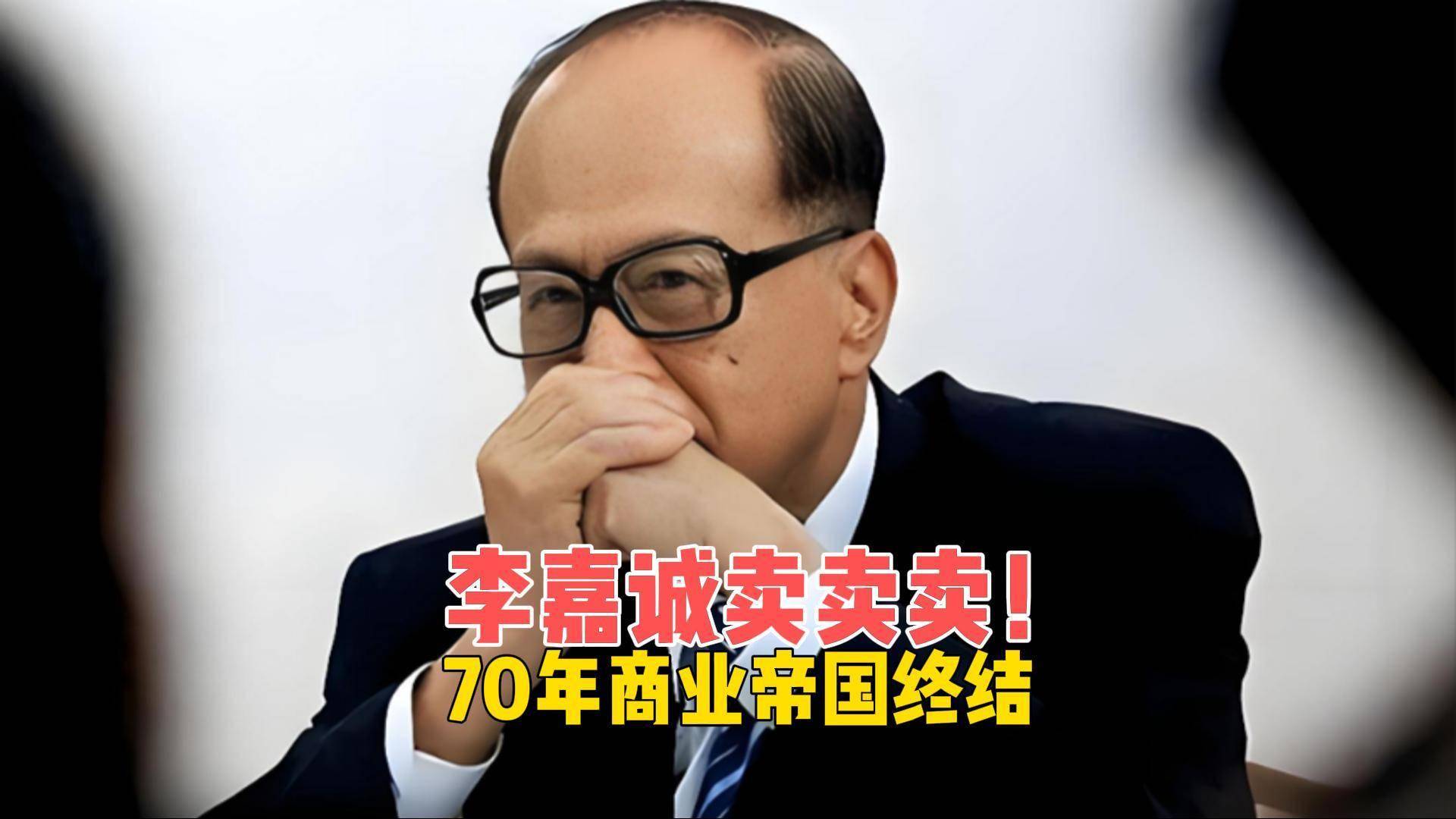
李嘉诚卖卖卖,李氏70年的商业帝国,正在走向崩塌?
Sou Hu Cai Jing· 2025-08-04 06:52
Core Viewpoint - The article discusses the decline of Li Ka-shing's business empire, highlighting significant asset sales and a shift in political and economic dynamics in Hong Kong and mainland China [2][4][10]. Group 1: Asset Sales - Li Ka-shing's son, Li Zeju, was excluded from the Hong Kong Chief Executive's advisory group, indicating a political shift away from the Li family [2]. - Li Ka-shing has begun aggressively selling assets, including a 30% discount sale of the Beijing Yucui Garden, a luxury project held for 23 years, and 400 properties in the Greater Bay Area at an average of 40% off [2][4]. - In Hong Kong, even Li Ka-shing's former wedding home is listed for sale at 5 billion HKD, showcasing a broader trend of asset liquidation [4]. Group 2: Historical Context and Business Strategy - Historically, Li Ka-shing's success stemmed from strategic relationships with authorities, allowing him to acquire land at low prices during British rule in Hong Kong [4][8]. - His acquisition of Hutchison Whampoa in 1979 at a significantly reduced price exemplifies his opportunistic investment style, leveraging favorable financing conditions [6]. - Li Ka-shing's strategy included land hoarding and waiting for price appreciation, but recent changes in the Chinese market have undermined this approach [8]. Group 3: Changing Economic Landscape - The article suggests that the decline of Li Ka-shing's empire reflects a broader transformation in Hong Kong's economic structure, moving away from a pyramid model dominated by a few tycoons [11]. - The new advisory group members represent a shift towards technology and innovation, indicating a future focus on new industries rather than traditional capital [13]. - The changing attitudes towards Li Ka-shing and his business practices signal a significant shift in the economic landscape of Hong Kong, emphasizing the need for adaptation to new realities [10][11].
3.2万字|潘兴广场比尔·阿克曼最有价值的一场对话,深谈价值投资、核心战役以及如何从人生谷底“爬坑”……
聪明投资者· 2025-07-17 06:33
Core Insights - The article discusses the journey of Bill Ackman, highlighting his significant losses and subsequent recovery in the investment world, particularly through his hedge fund, Pershing Square Capital Management [1][2][4]. Group 1: Investment Philosophy - Ackman emphasizes the importance of understanding the difference between "price" and "value," stating that the stock market serves to provide prices that investors can choose to accept or ignore [8][9][10]. - The essence of investing is to build a model that predicts the cash flows a company can generate over its lifecycle, which is more complex for stocks compared to bonds [17][22][23]. Group 2: Performance Metrics - Since its inception in 2004, Pershing Square has achieved a cumulative return of over 22 times, with an annualized return of approximately 15.9%, significantly outperforming the S&P 500 index [4]. - In the past five years, the fund has delivered a cumulative return of about 130%, with an annualized return of around 22.8% [4]. Group 3: Notable Strategies and Actions - Ackman is known for his activist investment strategies, including high-profile battles such as the one with Herbalife, which is described as one of the most dramatic confrontations in financial history [4][5]. - Recently, Ackman has aimed to transform Howard Hughes Corporation into a "mini Berkshire Hathaway," viewing this initiative as a pivotal point in his career [5].
投资、投机,结局大不同!股市疯狂之时,我们应如何对待?
券商中国· 2025-07-12 23:24
Core Viewpoint - The article discusses the contrasting investment styles of two prominent figures, Buffett and C. T. Wang, highlighting the long-term benefits of value investing versus the short-term gains of aggressive trading strategies [1][4]. Group 1: Investment Strategies - C. T. Wang focused on popular companies and price momentum, with an annual turnover rate of 100%, leading to significant short-term gains but ultimately resulting in substantial losses for investors [3][4]. - Buffett's investment approach emphasized understanding business valuations and maintaining a long-term perspective, achieving a cumulative return of 1403.5% from 1956 to 1968, compared to the Dow Jones' 9.1% [4][5]. Group 2: Performance Comparison - In 1962, during a market downturn, Wang invested an additional $28 million, resulting in a 68% increase in his fund by year-end, showcasing his ability to capitalize on market volatility [3]. - Conversely, Buffett closed his partnership in 1969 to preserve gains, avoiding a subsequent five-year market decline, demonstrating a commitment to risk management and investor protection [4][6]. Group 3: Investment Philosophy - Wang's strategy was likened to a "trial marriage" approach, indicating a lack of commitment to long-term investments, which ultimately harmed his investors [3]. - Buffett maintained a philosophy of "no investment without understanding," emphasizing the importance of knowledge and safety margins in investment decisions, which led to sustainable growth for his investors [6][7].
X @Yuyue
Yuyue· 2025-07-09 21:04
Investment Strategy & Risk Management - The industry emphasizes the importance of wealth preservation over aggressive investment strategies, especially in volatile markets like cryptocurrency [1] - The industry highlights the need for controlled position sizing to achieve returns exceeding traditional income sources [1] - The industry suggests diversifying into stable and low-volatility assets to mitigate risk [1] Future Trends & Skill Development - The industry anticipates a shift towards a gig economy and individual entrepreneurship, where individuals become building blocks in a larger system [1] - The industry stresses the importance of developing skills that complement AI to maintain a competitive edge [1] - The industry suggests broadening market experience and deepening expertise in specific areas to enhance earning potential [1]
钱少不是“赌博”的理由
Zheng Quan Shi Bao Wang· 2025-06-28 07:15
Group 1 - The core argument is that investing with a small amount of money through gambling or speculation is fundamentally flawed and lacks statistical probability of success [3][4][6] - Gambling-style investing places the principal at high risk for low probability events, leading to potential total loss rather than guaranteed gains [3][4] - Successful long-term investors rarely achieve wealth through gambling; instead, they rely on consistent, value-based investment strategies [4][5] Group 2 - The psychological aspect of believing in speculation over value investing can lead to a dangerous cycle where initial success reinforces poor investment habits [4][5] - If an investor experiences significant gains through speculation, they are less likely to revert to value investing, further entrenching their speculative behavior [5][6] - The notion that having limited funds justifies gambling is misleading; value investing should be pursued regardless of current financial status [6]
ipo加股指期货期权是什么意思?
Sou Hu Cai Jing· 2025-06-20 06:22
Group 1 - The core concept of stock index futures and options is that they are essential derivative tools for equity markets, complementing each other to form a complete risk management system [3][4] - Stock index futures allow investors to short the market and provide a hedging tool, with a T+0 trading system enabling same-day buy and sell transactions [4][5] - Stock index options grant investors the right, but not the obligation, to buy or sell a stock index at a predetermined price, offering lower risk and higher potential returns compared to stock options [5][8] Group 2 - "IPO plus stock index futures options" is not a standard financial term but can be understood as the relationship between IPOs and stock index futures options, where IPOs are crucial for companies transitioning to public status [7][9] - Stock index futures are typically cash-settled, while stock index options can be settled either in cash or through physical delivery, depending on the contract design [8] - Both IPOs and stock index futures options can influence market sentiment and pricing, with stock index futures options providing risk management tools for companies post-IPO [9]

金价崩了,后续如何操作?先确定买黄金是为投机还是投资
Sou Hu Cai Jing· 2025-05-15 10:11
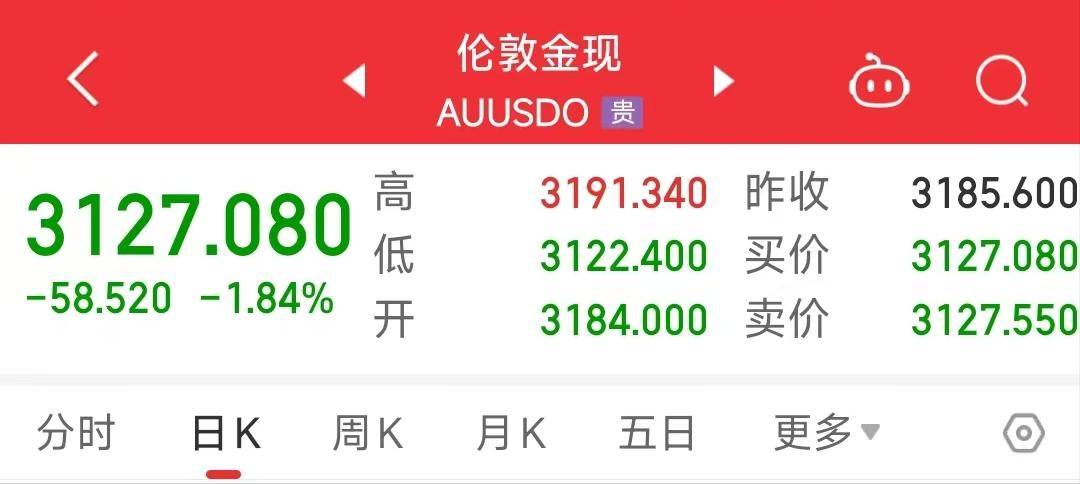
Core Viewpoint - Recent volatility in international gold prices has raised significant market concerns, with prices dropping sharply, indicating potential further declines [1][3] Price Movement - On May 14, the London spot gold price fell by 2.1% to $3186 per ounce, continuing to decline on May 15, with expectations of breaking below the $3100 mark [1] - From May 7 to May 14, the cumulative decline in international gold prices reached 6.72%, prompting deep reflections within the precious metals market [3] Market Dynamics - Historical data shows that gold typically maintains an annual volatility of around 15%, contrasting sharply with the stock market's daily fluctuations of around 10% [4] - The recent adjustment in gold prices is linked to structural changes in the market environment, including a stabilization of geopolitical conflicts and a shift in macroeconomic policies [9] Geopolitical and Economic Factors - Gold prices are significantly correlated with geopolitical risks and economic uncertainties, with recent global events such as trade tensions and military conflicts driving up demand for gold as a safe-haven asset [6][7] - The recent easing of tensions in conflicts like the Russia-Ukraine situation and the India-Pakistan border has reduced the demand for gold, as the attractiveness of dollar assets has increased [9] Investment Strategy - Investors are advised to adopt a long-term asset allocation strategy for gold, distinguishing its role from risk assets like stocks, focusing on its inflation-hedging and crisis-mitigation properties [11] - The speculative nature of recent investments in gold, driven by short-term price movements, poses risks, as true value in gold investment is realized over a longer horizon of three to ten years [11] Long-term Outlook - Despite short-term pressures on gold prices, fundamental factors supporting a long-term bullish outlook remain intact, including ongoing geopolitical fragmentation and uncertainties in U.S. trade policies [13][15] - The potential for a shift in the monetary policy cycle, with the nearing end of the Federal Reserve's rate hike period, could provide significant support for gold prices in the future [13]
5月红!中国资产大爆发!节后,A股重启牛市了
Sou Hu Cai Jing· 2025-05-02 16:34
Group 1 - The Hong Kong stock market experienced significant gains, with the Hang Seng Index rising by 1.74% and the Hang Seng Tech Index increasing by 3.08% [1] - Chinese assets are witnessing a substantial surge, particularly in the Hang Seng Tech Index and Hang Seng Healthcare Index, indicating a broader market recovery [3] - The A-share market is perceived to lag behind Hong Kong stocks, especially in sectors like technology, which are predominantly represented in the Hong Kong market [3] Group 2 - A-share market is expected to restart a bull market after a seven-month consolidation, with a belief that the market will rise significantly, particularly in the second half of the year [5] - The market is currently at a pivotal point, with a potential for a rally if key sectors such as liquor, securities, and real estate see significant gains [5] - There is an expectation that funds will return to the equity market, prioritizing Hong Kong stocks before A-shares catch up [5] Group 3 - The sentiment in the market is heavily influenced by emotions, with smaller investors often engaging in speculative behavior, which can lead to poor decision-making [7] - Investors are advised to maintain patience and focus on long-term strategies rather than reacting impulsively to market fluctuations [7]