抗衰老

Search documents
二〇二五年度十大营养热词发布
Ren Min Ri Bao Hai Wai Ban· 2026-01-08 22:55
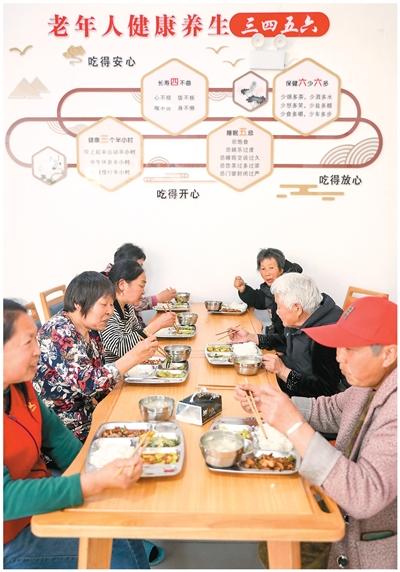
Group 1: Nutrition Trends and Innovations - Sichuan Province is accelerating the construction of rural elderly canteens to provide lunch services for local seniors [2] - In Guizhou Province, students are enjoying free nutritious meals as part of a local initiative [4] - Fujian Province's abalone processing companies are integrating traditional culinary techniques with modern food processing to create various export products [6] Group 2: Pre-prepared Meals - Pre-prepared meals are defined as factory-processed, pre-packaged finished or semi-finished dishes, which should not be labeled as inherently good or bad [9] - Consumer concerns about pre-prepared meals include poor ingredient quality, use of additives, unsatisfactory taste, and low nutritional value, which can be addressed through scientific processes and strict management [10] - Consumers are advised to pay attention to ingredient lists and nutritional labels, particularly sodium and fat content, when selecting pre-prepared meals [10] Group 3: Health and Dietary Trends - Anti-inflammatory diets focus on selecting foods that lower chronic inflammation levels, emphasizing fresh plant-based foods and healthy fats while reducing processed foods [11] - Anti-aging strategies are shifting towards proactive health management across all life stages, emphasizing balanced nutrition to delay functional decline and reduce chronic disease risks [12] - Smart canteens utilize information technology to enhance food safety, nutrition management, and operational efficiency, aligning with industry digital transformation trends [13] Group 4: Gut Health - Gut microbiota plays a crucial role in health, with imbalances linked to various diseases; dietary choices significantly influence gut health [15][16] - A diet rich in dietary fiber and polyphenols supports beneficial gut bacteria, while avoiding processed foods and excessive sugars is essential for maintaining gut health [16] Group 5: Sleep Health - Poor sleep quality is linked to increased inflammation and various health risks, with a significant portion of the population experiencing sleep disorders [17] - Certain foods can aid sleep, while lifestyle changes such as regular sleep patterns and stress management are crucial for improving sleep quality [17] Group 6: Healthy Aging - Healthy aging strategies focus on extending healthy life expectancy and reducing the time spent with illness, emphasizing nutritional interventions [19][20] - The development of senior meal services and smart nutrition technologies is advancing to improve the quality of life for the elderly [20] Group 7: Weight Management - Public interest in scientific weight management is increasing, with a focus on maintaining a healthy weight through balanced diets and regular physical activity [21] Group 8: Immune Health - Understanding of immunity is evolving towards maintaining immune homeostasis, with nutrition playing a vital role in supporting immune function [22]

研究了10000名消费者,我们为2026写下30条新消费暴利的秘密
3 6 Ke· 2026-01-06 03:15
Core Insights - The Chinese consumer market in 2026 will be driven by five core consumer groups, shifting from "cost-performance" and "emotional value" to "quality-price ratio" and "holistic self-consumption" [1] - Consumers will prioritize rationality and quality, expecting brands to be both functional and emotionally resonant [1] Group 1: Generation Z (Ages 18-27) - Consumption for Generation Z is a means of self-expression and social identity, where purchases serve as "social currency" to enter specific circles [3][5] - They are willing to spend significantly on items that symbolize their identity, such as limited edition sneakers or local cultural products, reflecting their values and community [5][6] - The rise of "identity consumption" indicates that purchases are more about expressing beliefs and belonging than fulfilling needs [6] - The "谷子经济" (Guzi Economy) represents a mature emotional currency system, with a market size projected to reach 200 billion, driven by fandom and collectibles [9] - Young consumers are increasingly skeptical of influencer marketing, preferring authentic and relatable brand interactions [10][11] - The trend of "micro-luxury" consumption allows young consumers to find joy in small, affordable indulgences, enhancing their daily lives [12] - There is a growing demand for time-saving solutions, with consumers willing to pay for convenience in their daily routines [13][15][17] - The second-hand market is thriving, combining environmental consciousness with unique personal style, as consumers seek vintage items for both quality and social status [18][19] - Digital ownership, such as collecting unplayed games or apps, provides a sense of security and potential [20] - Aesthetic preferences are shifting towards simplicity and authenticity, rejecting excessive packaging and marketing [21][23][24] - Young consumers are exploring less commercialized areas for authentic experiences, seeking a contrast to urban life [25][26] Group 2: Small Town Middle-Aged Consumers - This demographic is characterized by stable income, property ownership, and a strong sense of local pride, making them a foundational consumer group [30] - Their purchasing decisions heavily rely on recommendations from friends and family, emphasizing trust over advertising [30] - Leisure activities define their consumption patterns, focusing on local experiences and community engagement [31][32] - Social currency is significant, with purchases serving to enhance their social image within their communities [33] Group 3: Millennials - There is a polarization in spending habits, with consumers seeking high value in everyday items while indulging in premium products for self-care and family [40][42] - Service consumption is on the rise, as consumers prefer to pay for convenience and quality outcomes rather than doing tasks themselves [43][44] - The "healing economy" is emerging, with consumers regularly engaging in emotional wellness activities, indicating a shift towards prioritizing mental health [46] - Anti-aging products are becoming more sophisticated, with consumers investing in comprehensive health management systems [47] - Membership-based shopping models are gaining traction, as consumers value curated selections that save time and ensure quality [49] - The revival of physical media, such as books and vinyl records, reflects a desire for tangible experiences and meaningful consumption [50] Group 4: New Middle-Class Women - The concept of "self-pleasure" is evolving into a comprehensive investment in personal growth, encompassing various aspects of life [51][52] - Women are increasingly investing in education, fitness, mental health, and skincare, seeking holistic self-improvement [52] - Brands must shift from merely meeting needs to providing integrated solutions that empower consumers [52]

研究了10000名消费者,我们为2026写下30条新消费暴利的秘密 |「万字长文」
新消费智库· 2026-01-05 13:23
Group 1 - The core consumption logic in China is shifting from "cost-performance" and "emotional value" to "quality-price ratio" and "comprehensive self-satisfaction" as consumers become more rational and discerning in their purchases [2][3] - The Z generation (ages 18-27) views consumption as a means of expressing identity and belonging, prioritizing "identity consumption" over mere "need consumption" [4][6][10] - The "谷子经济" (Guzi Economy) is emerging as a significant market, driven by emotional value and the willingness of consumers, especially the Z generation, to pay for intangible assets like fandom and community [10][11] Group 2 - The Z generation is increasingly skeptical of influencer marketing, with only 11% trusting recommendations from online personalities, preferring authentic and relatable brand interactions [12][13] - The trend of "micro-luxury" consumption is rising, where consumers seek small indulgences that provide immediate happiness and a sense of control over their lives [12][13] - The demand for convenience is leading to a rise in "extreme time-saving" solutions, with consumers willing to pay for products that simplify their daily routines [15][16] Group 3 - The second-hand market is gaining traction as consumers seek unique, high-quality items while also valuing sustainability, with platforms for vintage and second-hand goods becoming social hubs [16][17] - Digital assets are being accumulated for their potential future value, with consumers finding satisfaction in owning a vast array of digital content, even if unused [18][19] - A trend towards "aesthetic minimalism" is emerging, with consumers favoring simpler, less polished designs that emphasize authenticity over excessive packaging [20][23] Group 4 - The younger generation is increasingly seeking authentic experiences, often traveling to less commercialized areas to escape urban monotony and engage with local cultures [24][25] - The Z generation is characterized by "precise ambiguity," using specific labels to express their multifaceted identities, which brands must understand and respect [26][27] - The "小镇中年" (Small Town Middle-Aged) demographic is becoming a stable consumer base, relying heavily on community recommendations and valuing local pride [30][32] Group 5 - The "leisure economy" is thriving, with consumers prioritizing leisure activities that enhance their quality of life, such as local dining and short trips [33][34] - Social currency is becoming a key driver of consumption, where purchases are made not just for personal use but also to enhance social standing within local communities [35][36] - The preference for trusted national brands is evident, with consumers favoring mid-range products that offer reliability and value for money [36][37] Group 6 - The rise of service consumption reflects a shift towards valuing time and convenience, with consumers willing to pay for services that simplify their lives [46][47] - The "healing economy" is emerging as a significant market, with consumers regularly engaging in emotional wellness activities to cope with modern stressors [48][50] - Anti-aging products are evolving into a more systematic and scientific approach, with consumers investing in comprehensive anti-aging solutions [51][52] Group 7 - Membership-based shopping models are gaining popularity, as consumers seek curated selections that save time and ensure quality [52][54] - The revival of physical media, such as books and vinyl records, highlights a desire for tangible experiences and the ritualistic aspects of consumption [57][58] - The "new middle-class women" are redefining self-satisfaction, investing in holistic self-improvement across various aspects of life [61][62]

2025年抗衰老领域十大科研进展
生物世界· 2025-12-31 04:34
Core Viewpoint - The article discusses the advancements in anti-aging research, highlighting a shift from basic science to clinical applications, with significant breakthroughs expected by 2025 that could lead to interventions in the aging process and extended healthspan [1]. Group 1: Breakthroughs in Anti-Aging Research - The research from Washington University reveals the role of meningeal lymphatics in regulating synaptic physiology, showing that restoring lymphatic function in aged mice can reverse memory deficits [3][4]. - A study published in Nature identifies the loss of the Y chromosome as a potential new target in anti-aging and cancer research, linking it to cancer progression and immune response deterioration in males [6]. - Research from the Chinese Academy of Sciences demonstrates that the metabolite betaine can mimic exercise effects, providing a new strategy for systemic anti-aging interventions [10]. Group 2: Mechanisms of Aging and Longevity - A study from Harvard Medical School indicates that lithium deficiency is linked to cognitive decline and Alzheimer's disease, with lithium supplementation reversing memory loss in mice [13]. - Research from Altos Labs introduces the concept of "mesenchymal drift," where cells lose their identity with age, and suggests that partial reprogramming can reverse this process [16]. - A study from Baylor College of Medicine reveals how lysosomal changes in parents can promote longevity in offspring through epigenetic mechanisms [19]. Group 3: DNA Repair and Aging - Research from Tongji University highlights a mutation in the cGAS protein in naked mole-rats that enhances DNA repair and extends lifespan, suggesting new strategies for human longevity [21]. - A study on bowhead whales identifies a cold-inducible protein that aids in DNA repair, contributing to their long lifespan and low cancer risk [24][26]. Group 4: Dietary and Reproductive Factors in Longevity - Research from Westlake University shows that protein restriction can reprogram the proteomic landscape in aging mice, offering insights into dietary interventions for longevity [28]. - A large-scale study from Otago University finds that sterilization and contraception can significantly extend lifespan across vertebrates, suggesting that energy allocation away from reproduction may enhance longevity [31][32]. Group 5: Immunity and Aging - A study from Zhang Feng's team demonstrates that mRNA technology can temporarily enhance liver function to produce immune factors, reversing immune aging in mice and improving responses to vaccines and cancer treatments [36].

2025年中国NMN行业研究报告
艾瑞咨询· 2025-12-26 00:05
Core Viewpoint - NMN (β-Nicotinamide Mononucleotide) is gaining attention in the global health industry for its potential in anti-aging, DNA repair, and metabolic regulation, with significant advancements in regulatory approval and market potential expected by 2025 [1][2]. Industry Development - The NMN industry has evolved from laboratory research to commercial applications, with major markets like the US, Japan, Canada, and Australia recognizing its legal status through various regulatory pathways [1][2]. - China is currently the largest producer of NMN raw materials, with leading companies building competitive barriers through technological innovation and industry chain layout [2]. NMN Definition and Function - NMN is a direct precursor of NAD+ (Nicotinamide Adenine Dinucleotide), crucial for delaying aging and enhancing physiological functions [3][4]. - Supplementing NMN can quickly elevate NAD+ levels in the body, playing a vital role in anti-aging, cardiovascular health, and metabolic improvement [4][6]. Synthesis Pathways - NMN supplementation shows significant advantages in NAD+ synthesis pathways compared to other precursors, with no known adverse reactions and the highest conversion efficiency [6][7]. Natural Sources and Supplementation - Natural food sources of NMN are limited, making NMN supplements, which can provide up to 300 times the dietary intake, more effective for achieving beneficial doses [8]. Synthesis Technology - The NMN synthesis process has shifted from chemical methods to fully enzymatic methods, focusing on high purity, safety, and environmental sustainability [10][11]. - Leading companies are innovating in full enzymatic synthesis and patenting technologies to create competitive advantages [12]. Market Trends and Applications - NMN is primarily used in health supplements and cosmetics, with potential expansion into pet nutrition, medical health, and agricultural technology [24][28]. - The NMN market in China is expected to exceed 3 billion yuan by 2025, driven by regulatory changes and new applications [28]. Sales Channels - NMN products are mainly sold through cross-border e-commerce and private channels, with cross-border platforms accounting for 60%-70% of market share [35]. Certification and Compliance - The "blue hat" certification for health supplements in China represents the highest standard for NMN products, with strict approval processes impacting market dynamics [37]. Future Prospects - The NMN industry is poised for growth, with increasing demand driven by an aging population and younger consumers seeking anti-aging solutions [19][21]. - Technological advancements in synthesis, quality control, and delivery methods are expected to enhance market growth and product efficacy [21][22]. Challenges - The NMN industry faces challenges such as regulatory hurdles, market education, and the need for scientific validation to support claims [61][63].



香港中文大学重磅发现:GLP-1不只是减肥药,它可能正在“系统性逆转衰老”
GLP1减重宝典· 2025-12-19 04:15
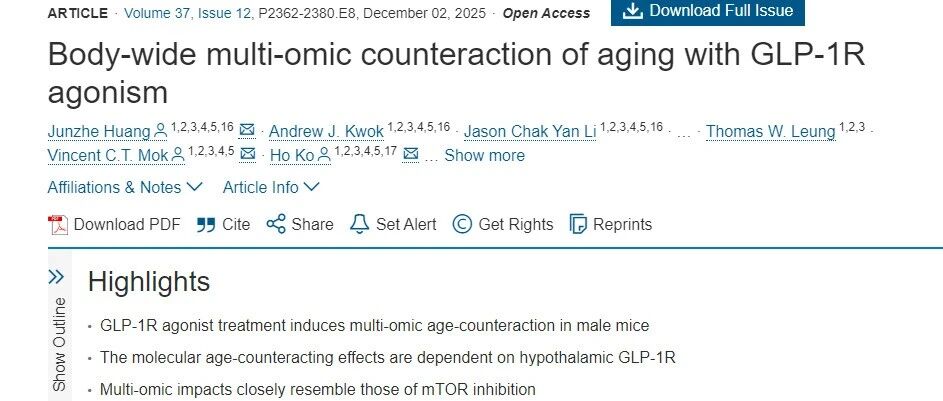
Core Viewpoint - The recent research indicates that GLP-1 receptor agonists have potential beyond weight management and metabolic improvement, showing systemic anti-aging effects at the molecular level in aged mice, which could redefine the long-term value and boundaries of GLP-1 drugs [4][5]. Group 1: Research Findings - Long-term, low-dose GLP-1 receptor agonist intervention in aged mice resulted in significant changes in gene expression related to aging, reversal of DNA methylation abnormalities, and a trend towards normalization of metabolic disorders [5]. - The observed anti-aging effects were not solely due to reduced appetite or weight loss, suggesting an independent biological mechanism at play [5]. - The changes were primarily noted in high-energy, aging-prone tissues such as the hypothalamus, cortex, hippocampus, heart, skeletal muscle, adipose tissue, and immune cells, indicating a closer biological state to younger individuals [5][8]. Group 2: Mechanism Insights - The hypothalamus plays a crucial role in mediating the systemic anti-aging effects of GLP-1, indicating a central regulatory axis that influences aging processes throughout the body [8]. - The action trajectory of GLP-1 at the multi-omics level shows similarities to mTOR inhibition, suggesting that GLP-1's health benefits may arise from overlapping underlying pathways, positioning it as a potential platform for health intervention beyond single disease treatment [8]. Group 3: Industry Implications - The indications for GLP-1 drugs are expanding from obesity and diabetes to include cardiovascular, neurodegenerative diseases, and "healthy aging," significantly extending the lifecycle of the patient population [9]. - The valuation logic for companies involved in GLP-1 production may fundamentally change, as these drugs could become central to anti-aging and long-term health management, rather than just weight management tools [9]. - The ongoing research highlights the potential for GLP-1 to influence not just metabolic health but also broader aspects of aging, reshaping the pharmaceutical industry's view on the "intervention potential of aging" [9].
这两种药物组合,让老年雄性小鼠恢复青春,延长寿命70%
生物世界· 2025-12-15 01:05
Core Insights - The article discusses a study from the University of California, Berkeley, published in the journal Aging, which explores the potential of a combined therapy using oxytocin (OT) and an ALK5 inhibitor (A5i) to extend lifespan and improve health in aging male mice, highlighting sex-specific responses to aging interventions [2][4][6] Group 1: Study Findings - The combined treatment of OT and A5i significantly extended the lifespan of aging male mice by 73% compared to untreated controls, with a median lifespan increase of 14% and notable improvements in agility, endurance, and memory [4] - Treated male mice exhibited a nearly two-thirds lower risk of death at any given time compared to the untreated group [4] - The therapy restored a younger pattern of circulating blood proteins, with long-term benefits in overall protein balance observed only in male mice after four months of treatment [6] Group 2: Gender-Specific Responses - Female mice did not show significant improvements in lifespan or health metrics, although middle-aged females experienced enhanced fertility [6] - The study emphasizes the substantial impact of sex-specific biology on the effectiveness of aging interventions, establishing a useful model for understanding the mechanisms of different therapies across genders [6] Group 3: Future Implications - Oxytocin has already received FDA approval, while the ALK5 inhibitor is currently undergoing clinical trials, suggesting a potential pathway for this combined therapy to be applicable to humans in the future [6] - The significant improvements observed in frail elderly male mice raise hopes for enhancing health and longevity in the elderly population [6]

AI自主发现长寿药物:中国学者开发AI智能体平台,从海量数据中挖掘出数百种抗衰老干预措施
生物世界· 2025-11-30 04:21
Core Insights - The article discusses a groundbreaking study that utilizes AI to discover aging interventions from extensive molecular data, highlighting the potential of AI in revolutionizing aging research [4][26][28]. Group 1: Research Development - The study introduces the ClockBase Agent, an AI platform that integrates over 40 aging clock models to analyze millions of molecular profiles from humans and mice, identifying over 500 interventions that significantly reduce biological age [4][10][15]. - The research team analyzed 43,602 intervention-control comparisons, revealing that 5,756 (13.2%) interventions exhibited significant age-regulating effects [15][18]. Group 2: Methodology - The ClockBase Agent employs a multi-agent system that functions like professional bioinformaticians, automatically parsing experimental data, generating hypotheses, and producing scientific reports [12][13]. - The system consists of three core agents: Coding Agent for data processing, Reviewer Agent for evaluating interventions, and Report Agent for integrating findings into readable reports [13]. Group 3: Key Findings - The study confirmed the biological relevance of aging clocks, with interventions concentrated in aging-related pathways such as cellular senescence and longevity regulation [18]. - Experimental validation of the compound Ouabain demonstrated its ability to delay aging in elderly mice, improve heart function, and reduce neuroinflammation [19][22][24]. Group 4: Implications and Future Outlook - The ClockBase Agent signifies a paradigm shift in aging research from hypothesis-driven to data-driven approaches, showcasing how AI can extract new knowledge from existing data [26][28]. - The platform is publicly available, allowing researchers to query the effects of various interventions, thus democratizing longevity medicine [26][28].

Cell子刊:GLP-1类药物,发挥全身性抗衰老作用
生物世界· 2025-11-22 04:05
Core Insights - The article discusses the complex process of aging and the importance of finding effective strategies to combat age-related changes, which could improve overall health and extend healthy lifespan [2] - Various promising strategies have been identified, including mTOR inhibitors, senolytics, NAD enhancers, taurine supplements, intermittent fasting, caloric restriction, and cellular reprogramming [2] - An ideal anti-aging method should involve drug-based approaches, have good safety profiles, be applicable to various age-related diseases, and exhibit potential synergistic effects with other treatment targets [2] Summary by Sections - The need for practical methods to combat aging and related degenerative diseases is emphasized, highlighting the role of GLP-1 (glucagon-like peptide-1) and its receptor (GLP-1R) in insulin release and metabolic regulation [5] - GLP-1 receptor agonists (GLP-1RAs) have shown significant efficacy in treating diabetes and obesity, with additional benefits in cardiovascular health, cognitive decline, and certain cancers [6] - Recent research indicates that GLP-1RAs can induce broad anti-aging effects in aged male mice, with significant improvements observed after 30 weeks of treatment starting at 11 months of age [6][10] - The study found that the anti-aging effects of GLP-1RAs are dependent on GLP-1R in the hypothalamus, suggesting a brain-body axis regulating aging [7][10] - The multi-omic effects of GLP-1RA treatment were found to be significantly similar to those of mTOR inhibitors, indicating a potential new avenue for anti-aging therapies [7][10]

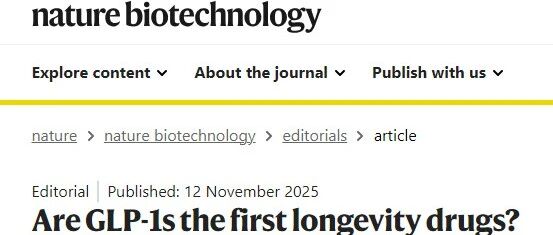
司美格鲁肽等GLP-1减肥神药,会是人类首个“长寿药”吗?
GLP1减重宝典· 2025-11-20 14:44
Core Viewpoint - The emergence of a new era in disease prevention is highlighted, with GLP-1 receptor agonists (GLP-1s) potentially becoming the first longevity drugs due to their efficacy in treating obesity and type 2 diabetes, as well as their benefits in mitigating age-related chronic diseases [3][4][12]. Group 1: GLP-1s and Longevity - GLP-1s show promise not only in treating obesity and diabetes but also in preventing various age-related diseases, marking a shift towards preventive medicine [4][12]. - Clinical trial data indicates that GLP-1s significantly improve cardiovascular outcomes and reduce all-cause mortality in high-risk populations, with some benefits attributed to anti-inflammatory mechanisms rather than weight loss alone [12][13]. Group 2: Aging Mechanisms and Drug Development - Aging is identified as a major risk factor for late-life diseases, and targeting aging mechanisms could theoretically prevent multiple diseases simultaneously [6][9]. - Research has categorized aging markers into 14 distinct categories, which include genetic, epigenetic, and cellular factors, forming a complex network that is challenging to measure [6][9]. Group 3: Current Status and Future Directions - No anti-aging drugs have been approved yet, although some existing medications may meet the criteria if properly tested. The FDA does not recognize aging as a disease, complicating the regulatory landscape for anti-aging interventions [10][12]. - Ongoing trials are exploring the effects of GLP-1s on diseases beyond obesity and diabetes, including Alzheimer's disease, with promising early results [13][14]. Group 4: Challenges and Considerations - The exploration of GLP-1s for longevity will involve various factors such as disease indicators, formulations, and individual patient responses, with a focus on minimizing side effects [14][16]. - The success of longevity drugs will likely depend on their long-term safety, efficacy, affordability, and the ability to be used in precision medicine approaches [14][16]. Group 5: Broader Research and Development - Pharmaceutical companies are investigating various strategies beyond GLP-1s, including targeting inflammation and other pathways associated with aging, which may have broad implications for healthspan [16][17]. - The TAME trial proposes a more efficient method of assessing multiple chronic diseases as composite outcomes, which could facilitate the approval of anti-aging drugs [17].