本土化战略

Search documents
宝马增长之问:传统溢价之后,中国研发接棒?
3 6 Ke· 2026-01-19 13:34
Core Insights - BMW's performance in China for 2025 reflects a defensive strategy amid increasing competition from domestic high-end brands and changing consumer demands for smart electric vehicles [1][2][3] Group 1: Market Performance - BMW delivered over 625,000 BMW and MINI vehicles in China over the past year, maintaining its position as the largest single market globally [1] - The BMW 3 Series has been the best-selling model in its segment for 15 consecutive months, with high-end variants accounting for over half of its sales, indicating strong brand premium [2] - The BMW M brand saw a year-on-year sales increase of 27.9%, surpassing 10,000 units for the first time, while MINI's sales grew over 25% through the launch of over 10 special edition models [2] Group 2: Challenges and Strategic Adjustments - Despite solid performance, BMW anticipates a decline in deliveries in 2025 compared to 2024, reflecting structural challenges in the luxury car market where electric vehicle penetration exceeds 40% [2] - In response to market pressures, BMW adjusted prices for 31 models in early 2026, with some reductions exceeding 10% to 20%, aiming to balance market share and brand value [2][3] Group 3: Future Product Strategy - BMW plans to launch approximately 20 new products in China in 2026, with the long-wheelbase BMW iX3 being a key highlight, representing a significant step in their product strategy [3][4] - The iX3 will feature groundbreaking technologies, including the BMW iDrive system and advanced AI capabilities, aiming to redefine luxury driving experiences in the Chinese market [4] Group 4: Localization and Innovation - BMW is accelerating its localization strategy, with 70% of the new operating system's code for the iX3 developed in China, reflecting a shift from merely being a sales market to a key R&D hub [5] - The establishment of the largest R&D network outside Germany, with over 3,000 local engineers, underscores BMW's commitment to innovation in the Chinese market [5][6] - Collaborations with local tech companies like Momenta, Huawei, and Alibaba aim to enhance smart driving systems and in-car experiences, while battery supply partnerships with CATL and EVE Energy highlight the focus on local sourcing [5][6]
VF威富集团拓展在华品牌组合:Smartwool全国首店于北京来福士盛大启幕
Sou Hu Wang· 2026-01-16 04:15
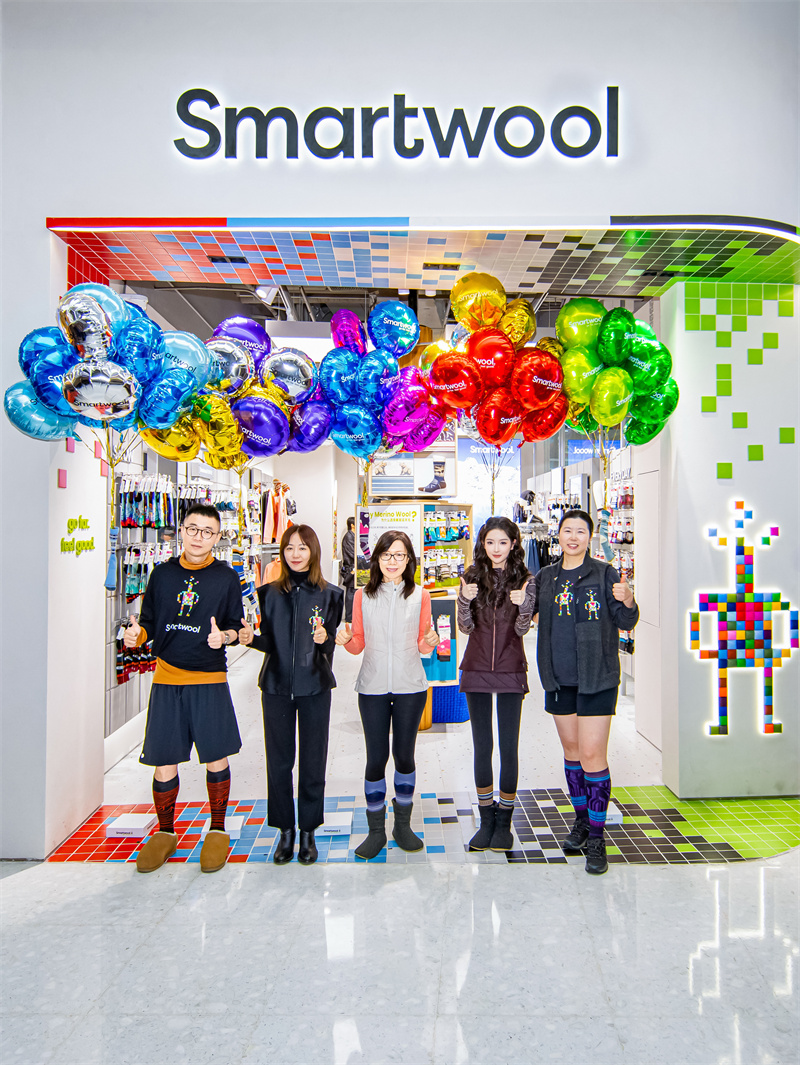
Group 1 - Smartwool, a functional outdoor brand under VF Corporation, has officially opened its first store in Beijing, aiming to meet the diverse needs of Chinese consumers [1][3] - The opening of the Smartwool store is part of VF Corporation's strategy to adapt to consumer trends and enhance retail and service experiences in the Chinese market [3][8] - Smartwool has been committed to using fine Merino wool combined with exclusive blending technology since its establishment in 1994, creating lightweight and comfortable fabrics [3][10] Group 2 - Smartwool offers a comprehensive range of outdoor products, including apparel and specialized socks for various outdoor activities such as trail running, hiking, and skiing [4][10] - The brand aims to cater to both seasoned outdoor enthusiasts and urban explorers, providing equipment that meets individual needs for outdoor adventures [4][10] - The store opening marks a new phase in VF Corporation's development in China and is a key initiative in its localization strategy [8] Group 3 - VF Corporation, founded in 1899, operates a portfolio of leading outdoor, sports, and lifestyle brands, generating nearly $10 billion in annual sales and employing over 30,000 people [9] - The company emphasizes five core values: Trust and Integrity, Consumer First, Embrace the Now, Growth Mindset, and Win Together, focusing on innovation and adapting to changing consumer demands [9] - Smartwool's philosophy of "行远,知优" (Go far, know excellence) reflects its commitment to sustainable practices and a vibrant outdoor lifestyle [10]


当大众公布2025年全球销量,丰田六年蝉联全球销冠稳了
Xin Lang Cai Jing· 2026-01-15 08:20
Group 1 - Toyota has secured its position as the global automotive sales champion for the sixth consecutive year, with sales exceeding 10.32 million units in the first 11 months of 2025, while Volkswagen's sales were 8.98 million units, a decline of 0.5% year-on-year [1] - In North America, Toyota achieved its fourth-highest sales record, reaching 2.51 million units in 2025, a year-on-year increase of 8.0%. The luxury brand Lexus also saw a record sales of 345,000 units, up 7.1% [1] - In China, Toyota's localization strategy has entered a new phase, integrating R&D resources from its joint ventures and empowering local engineers with full decision-making authority to better meet consumer demands [1] Group 2 - Supported by hybrid technology, Toyota's sales in China experienced growth for the first time in four years, with both joint ventures, FAW Toyota and GAC Toyota, reporting positive sales growth [2] - In Australia, despite fierce competition from Chinese automakers, Toyota maintained its leadership with sales of 239,000 units, capturing 19.8% of the market share for the 23rd consecutive year [2] - Toyota's President, Akio Toyoda, emphasized that 2026 will be a year of consolidation for sustainable growth, focusing on enhancing profitability to support future endeavors [2] Group 3 - The core philosophy of providing high-quality products at competitive prices is seen as the driving force behind Toyota's continuous growth and resilience in the automotive industry [3] - Both President Akio Toyoda and Chairman Akio Toyoda agree that this philosophy is fundamental to Toyota's establishment and will be crucial for its stability in challenging times [3]

中国年销292万辆!大众汽车2025年销量公布
Xin Lang Cai Jing· 2026-01-14 14:03
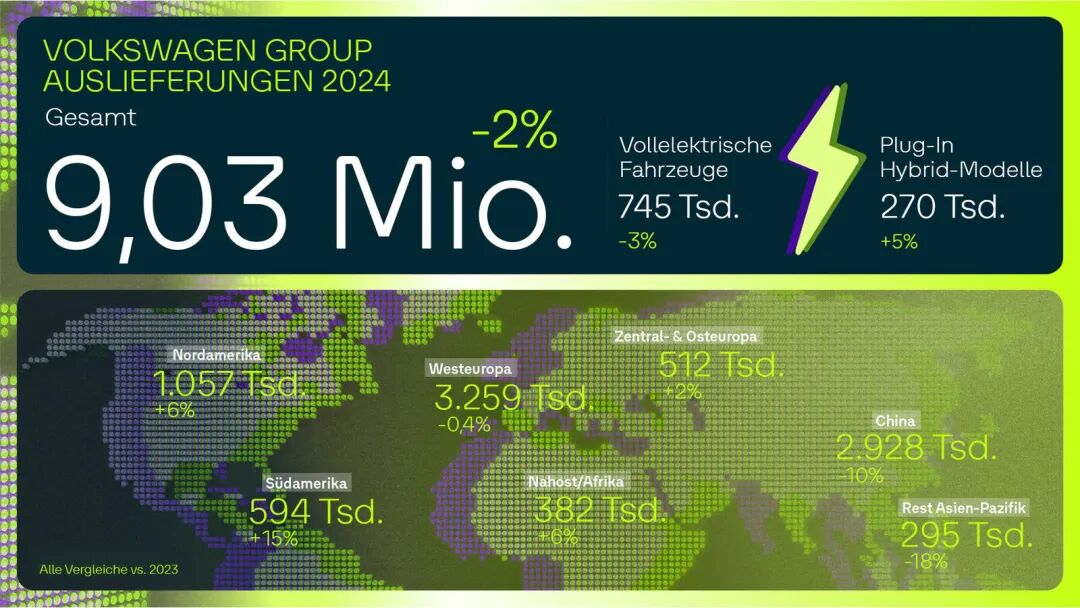
Core Insights - Volkswagen Group reported a total sales volume of 9.0274 million units for 2025, a decrease of 2.3% year-on-year, with Q4 sales at 2.503 million units, down 0.8% [1][9] - The sales of pure electric vehicles for 2025 reached 744,800 units, reflecting a 3.4% decline year-on-year, with Q4 sales at 238,200 units, down 0.5% [1][9] Brand Performance - Volkswagen brand passenger car sales for the year totaled 4.7969 million units, down 1.4%, while Q4 sales increased by 0.3% to 1.4002 million units [3][11] - Škoda saw an annual sales increase of 6.9% to 926,600 units, with Q4 sales up 13.7% to 255,300 units [3][11] - Audi's annual sales fell by 11.8% to 1.6712 million units, although Q4 sales rose by 14.3% to 435,600 units [3][11] - Bentley's sales dropped by 21.5% to 10,600 units for the year, with Q4 sales at 3,300 units, down 7.0% [3][11] - Porsche's annual sales decreased by 3.0% to 310,700 units, while Q4 sales increased by 9.3% to 84,700 units [3][11] Regional Sales Analysis - In Western Europe, annual sales were 3.2586 million units, down 0.4%, while Central and Eastern Europe saw a 1.7% increase to 512,000 units [5][13] - North America and South America reported annual sales of 1.057 million and 594,300 units, respectively, with increases of 6.4% and 14.7% [5][13] - Sales in China fell by 9.5% to 2.9281 million units, marking a significant decline as it remains the largest single market for Volkswagen [5][13] Competitive Landscape - The rise of domestic Chinese brands such as BYD, Chery, and Geely has intensified competition, particularly in the electric vehicle sector, where these brands leverage cost advantages and advanced technology [6][14] - Volkswagen is implementing a localization strategy in China, planning to launch over 11 new models starting in 2026, with a goal of expanding its electric vehicle lineup to approximately 30 models by 2027 and 50 by 2030 [6][14] New Product Developments - Ahead of the 2025 Shanghai Auto Show, Volkswagen unveiled three concept cars, including the ID.ERA9X, which is set to be the company's first range-extended vehicle, and the ID.AURA and ID.EVO, both slated for production in 2026 [8][16]
聚焦十五五,探索增长新路径:仪器信息网2026年品牌合作伙伴正式揭晓
仪器信息网· 2026-01-11 09:02
Core Insights - The scientific instrument industry is experiencing rapid growth driven by localization efforts from multinational companies and technological breakthroughs from domestic firms, with significant market opportunities emerging from national policies [1][2] Multinational Companies' Strategies - Multinational companies are deepening localization and transitioning high-end production lines to China, with notable examples including Shimadzu and Hitachi, which have achieved significant milestones in local production [5][6] - In 2025, Shimadzu celebrated its 150th anniversary and delivered its 10,000th domestic liquid chromatography instrument, while also acquiring a European electron microscope manufacturer for $678 million [5] - Agilent's revenue reached $6.95 billion in fiscal year 2025, marking a 6.7% increase, with its Shanghai manufacturing center recognized as a "lighthouse factory" by the World Economic Forum [7] Domestic Companies' Growth - Domestic companies are leveraging technological advancements and capital support to grow rapidly, with state-owned enterprises and new brands actively entering the market [2][12] - Shanghai Instrument Group and Beijing Instrument Group are examples of state-owned enterprises that are enhancing their capabilities and contributing to the domestic scientific instrument sector [12][13] Brand Partnerships and Market Dynamics - The industry is seeing an increase in brand partnerships, with 30 leading companies selected annually to enhance their brand power and industry leadership through collaboration with Instrument Information Network [3][34] - Companies like Four Seasons Instruments and Juneng Technology are emerging as key players, achieving significant market share and revenue growth through innovative products and strategic partnerships [17][18] Emerging Brands and Innovations - New brands such as Dunning Bio and Jiezhou Tongchuang are entering the market, focusing on high-quality products and innovative solutions to capture market attention [25][26] - The industry is witnessing a trend of companies investing heavily in R&D, with some allocating nearly 20% of their revenue to innovation, exemplified by Baode and Tianrui Instruments [23][24] Market Outlook - The scientific instrument industry is poised for continued growth, driven by domestic substitution trends and increasing competition among both multinational and local players [20][21] - The focus on high-end, intelligent development is expected to accelerate, with significant investments in technology and infrastructure to support this transition [1][2]

百年德国仪器公司发布全新中文名
仪器信息网· 2026-01-09 10:08
Core Viewpoint - The article highlights the rebranding of Elementar China as part of its localization strategy to enhance its market presence and drive high-quality development in China [1][2][3]. Group 1: Company Rebranding - Elementar China has officially changed its name from "艾力蒙塔贸易(上海)有限公司" to "艾力蒙塔分析仪器(上海)有限公司" to reflect its commitment to localization and strategic upgrade [2][3]. - The rebranding signifies a new phase for the company, marking the initiation of a comprehensive localization strategy aimed at sustainable growth in the competitive Chinese market [2][3]. Group 2: Company Background - Elementar is a global leader in high-performance organic and inorganic element analysis, with over 120 years of expertise since its establishment in 1897 [6][7]. - The company focuses on continuous innovation and customized solutions, offering a range of products including organic element analyzers, TOC analyzers, and isotope ratio mass spectrometers, serving clients across various scientific fields [6][7].

“二〇二六年,布达佩斯会更安静、更干净”
Ren Min Wang· 2026-01-08 23:08
Core Viewpoint - BYD's electric buses and trucks factory in Hungary is producing its first batch of electric buses for Budapest, contributing to a cleaner and quieter public transport system by 2026 [1] Group 1: Production and Technology - The factory in Komárom, Hungary, is producing 82 electric buses for Budapest's public transport system, utilizing the B12 model, which features an integrated battery and chassis design for enhanced safety and efficiency [2] - Compared to traditional diesel buses, the electric buses have a simpler structure, higher power transmission efficiency, and lower operational costs [2] - The factory has significantly reduced delivery and logistics times for neighboring countries, enhancing operational efficiency [2] Group 2: Employment and Local Impact - The factory has created job opportunities and trained a skilled workforce, contributing to local economic development [3] - The establishment of the factory marks BYD's first electric vehicle assembly plant in Europe, supporting the company's localization strategy and expanding its market reach across the continent [3] Group 3: Customization and Market Demand - BYD offers personalized designs for different markets, with buses tailored to specific customer requirements in various European countries [4] - The company has gained a competitive edge due to its proprietary technologies in battery, motor, and control systems, ensuring cost control and reliability [5] Group 4: Sustainability and Collaboration - Approximately 30% of the components used in the electric buses produced in Hungary are sourced from European suppliers, with plans to increase this to 50% in the future [6] - The factory is implementing measures to reduce carbon emissions, including solar panels and energy-efficient lighting systems [6] Group 5: Future Expansion - A new intelligent production facility is under construction, expected to be operational by the second half of 2026, with an anticipated annual production capacity of over 1,200 buses [7] - Chinese manufacturers, including BYD, have captured over 20% of the European electric bus market, significantly contributing to the growth of zero-emission public transport [7]

比亚迪匈牙利工厂为当地生产首批电动公交车 公交运营商表示—— “二〇二六年,布达佩斯会更安静、更干净”
Ren Min Ri Bao· 2026-01-08 22:39
Core Viewpoint - BYD has established a significant presence in the European electric bus market, with over 5,000 electric buses operating across 26 countries and more than 160 cities, contributing to sustainable public transport solutions by reducing CO2 emissions by over 690,000 tons since 2013 [1]. Group 1: Local Production and Market Penetration - BYD's electric bus and truck factory in Komárom, Hungary, produces the B12 model, which features an integrated battery and chassis design, enhancing safety and efficiency compared to traditional diesel buses [2][5]. - The factory has significantly reduced delivery and logistics times, allowing for direct deliveries to neighboring countries like Slovakia, thus saving on long-distance transportation costs [4]. - The factory is a key part of BYD's localization strategy in Europe, with plans to increase the proportion of locally sourced components to 50% in the future [8]. Group 2: Product Features and Customer Satisfaction - The B12 electric buses are equipped with modern amenities such as USB charging ports and have received positive feedback from drivers for their stability and ease of handling [4][7]. - BYD's competitive edge lies in its proprietary technologies in battery, motor, and control systems, which contribute to cost control and reliability [6]. - The buses are designed with environmental considerations, including an electric braking system to minimize brake dust pollution and energy recovery systems to enhance efficiency [6]. Group 3: Commitment to Sustainability - BYD is committed to reducing carbon emissions in its production processes, utilizing solar panels for energy and transitioning to electric vehicles for internal logistics [8][9]. - The Hungarian government recognizes the factory's role in revitalizing the local automotive industry by producing modern, zero-emission buses [8]. Group 4: Future Developments - A new intelligent production facility is under construction, expected to be operational by the second half of 2026, with an anticipated annual output of over 1,200 buses [9]. - The European electric bus market is experiencing rapid growth, with Chinese manufacturers like BYD capturing over 20% of the market share, driven by their diverse product offerings and competitive pricing [9].
中国车企深入巴西腹地
Cai Jing Wang· 2026-01-06 13:38
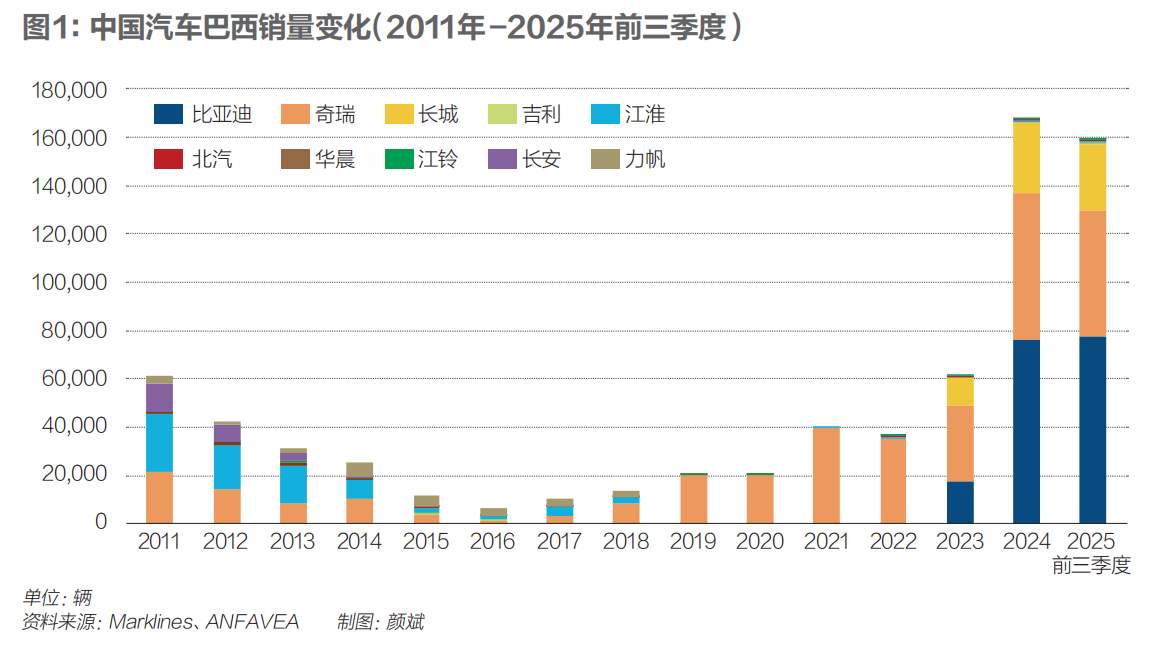
Core Insights - Chinese automotive brands are rapidly establishing a foothold in the Brazilian market, with nearly 40% representation at the São Paulo International Motor Show, showcasing a significant shift in market dynamics [1][3] - The success of Chinese companies in Brazil hinges on their ability to localize supply chains and enhance after-sales services, addressing past shortcomings [1][4] Group 1: Market Presence and Strategy - The São Paulo International Motor Show marked a collective appearance of Chinese brands, with notable participation from companies like BYD, Great Wall, and Chery, indicating a strong market presence [1][2] - Chinese brands are adopting high pricing strategies, with BYD's Tang L model priced at 399,900 reais (approximately 530,000 RMB), reflecting a shift towards the premium segment [1] - The overall market share of Chinese automotive companies in Brazil has surpassed 10%, establishing them as emerging players in the local automotive industry [3] Group 2: Historical Context and Evolution - The journey of Chinese automotive companies in Brazil can be divided into distinct phases: the initial wave from 2009 to 2014, a rebuilding phase from 2015 to 2020, and a resurgence starting in 2021 [7] - The first wave (2009-2014) was characterized by low-cost strategies and heavy marketing, but faced challenges due to a lack of localization and subsequent government policies that increased import taxes on non-localized vehicles [8][11] - The second phase saw companies like Chery pivoting to local partnerships, which helped improve brand perception and sales, with CAOA Chery achieving a 122% sales increase by 2018 [12] Group 3: Technological and Market Adaptation - The current wave (2021 onwards) is marked by significant capital investment and a focus on local production, with companies like Great Wall acquiring existing factories to establish a manufacturing base [13] - Chinese companies are leveraging advanced technologies in electric and hybrid vehicles, with BYD and Great Wall forming a duopoly in the Brazilian new energy vehicle market [14][20] - The adaptation to local market conditions includes developing vehicles that cater to Brazil's unique energy structure, particularly the prevalence of ethanol as a fuel source [27][28] Group 4: Challenges and Opportunities - The Brazilian automotive market presents challenges such as a highly unequal income distribution and specific consumer preferences for smaller vehicles due to parking constraints [23][24] - Chinese brands are addressing these challenges by offering compact, technologically advanced vehicles that appeal to middle-class consumers, moving away from the low-cost strategy of the past [25] - The Brazilian government's "MOVER" plan aims to stimulate local investment in high-efficiency vehicles, providing a framework for Chinese companies to align their strategies with national goals [29][32] Group 5: Future Outlook - The success of Chinese automotive companies in Brazil will depend on their ability to integrate technology transfer, deepen local market engagement, and enhance supply chain capabilities [33] - The potential for Chinese brands to act as a catalyst for innovation in the Brazilian automotive sector is recognized by the government, which seeks to leverage their presence for broader industrial upgrades [19][32]

连续三年正增长 2025年一汽丰田销售805518辆
Xin Lang Cai Jing· 2026-01-04 06:38
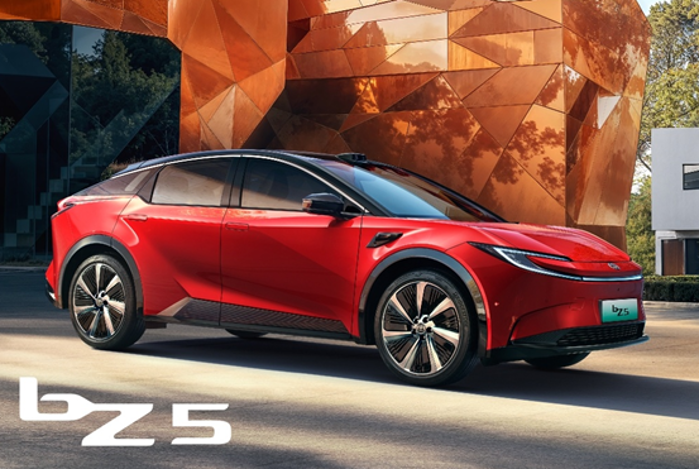
Core Insights - In 2025, FAW Toyota achieved significant growth, selling 805,518 vehicles, marking three consecutive years of positive growth as a mainstream joint venture brand [1] - The company introduced substantial customer incentives at the beginning of 2026, including tax subsidies and trade-in bonuses for various models [1][14] - FAW Toyota's strategic focus on product innovation and technology advancement is evident through the launch of the new bZ5 electric vehicle and the updated RAV4, which are positioned as key drivers for brand elevation [2][4] Sales Performance - FAW Toyota's sales of high-end models based on the TNGA-K platform reached 487,426 units, a 12% increase year-on-year, accounting for 61% of total sales [1] - The intelligent electric hybrid models sold 380,100 units, reflecting a 14% year-on-year growth and representing 47% of total sales [1] - Notable models such as the Crown Land Cruiser and RAV4 saw sales increases of 14% and 6% respectively, while the Avalon experienced a remarkable 39% growth [1] Product Strategy - The new bZ5 is positioned as a flagship model under Toyota's localization strategy, developed by a Chinese team, and aims to set new industry standards for safety and quality [4] - The sixth-generation RAV4 has undergone comprehensive upgrades in design, intelligence, power, and safety, featuring advanced technology and multiple powertrain options [6] - FAW Toyota's product matrix includes a range of models such as the new Crown Land Cruiser and new Grevia, enhancing its presence across various market segments [8] Technological Advancements - The launch of the "IT'S TiME 3.0" technology brand signifies a comprehensive evolution in FAW Toyota's smart technology, focusing on intelligent driving and smart cockpit advancements [9][10] - The Toyota Pilot intelligent driving assistance system and the new INP navigation driving assistance system are key components of the company's technological strategy [12] - FAW Toyota's extensive experience in hybrid technology supports its leadership in efficiency and reliability, with a strong focus on providing versatile power solutions [12] Customer Engagement - FAW Toyota has introduced a "car age appreciation subsidy" program, which increases the subsidy amount annually, reflecting a commitment to long-term customer value [13] - The company emphasizes transforming its long-termism philosophy into tangible customer benefits, enhancing the ownership experience [13] - The "Unlock New Year Gifts" campaign aims to reward both new and existing customers, reinforcing customer loyalty [14] Organizational Changes - In 2025, FAW Toyota's sales company relocated from Beijing to Tianjin, marking a strategic move to enhance operational efficiency and integration of production, sales, and research [15][17] - This relocation aims to create a "zero-distance" collaboration environment, allowing for rapid market response and product strategy adjustments [17] - The integration of teams is expected to boost innovation and adaptability in the face of market changes, positioning FAW Toyota as a competitive player in the electric vehicle era [17][18]