
绿色革命

Search documents
钞票垒成造船厂!全球订单潮水般涌向中国,美国急得跺脚却无可奈何!
Sou Hu Cai Jing· 2025-08-14 06:35
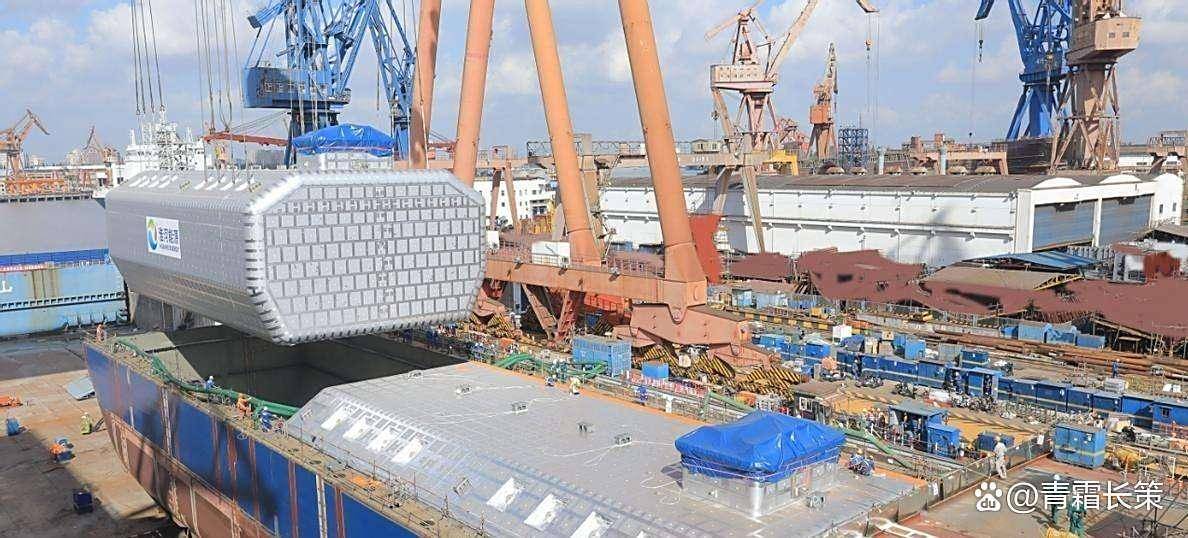
Group 1 - Analysts note that Norwegian shipowners have once again placed LNG carrier orders with Chinese shipyards, indicating a clear market preference that reflects industrial trends rather than mere competition [1][3] - The U.S. shipbuilding industry is struggling, with a Pentagon report highlighting China's remarkable military conversion capabilities, allowing civilian ship production lines to be quickly adapted for military supply vessels [3][5] - The U.S. Congress's proposal to impose tariffs on Chinese-made ships appears ironic given the current state of the international shipping market, with U.S. flag vessels dwindling to fewer than 100 while China boasts over 5,000 large cargo ships [5][7] Group 2 - In 2023, Chinese shipyards captured nearly 80% of the global new shipbuilding contracts, with a record order of 36 large LNG carriers from Qatar, causing concern among Western media [7][8] - China's shipbuilding industry has seen a remarkable 84% increase in export revenue within a year, surpassing 170 billion RMB, driven by significant foreign investments and competitive pricing that can reduce construction costs by 30% to 50% compared to traditional shipbuilding nations [7][8] - The efficient collaboration among various sectors in China, from steel production to advanced navigation systems, has led to an impressive shipbuilding timeline of just 18 months from steel cutting to sea trials, contrasting sharply with the lengthy delays often seen in U.S. military ship repairs [8]


和茧丝绸:以创新为引擎 让丝绸科技点亮品质生活
Jing Ji Wang· 2025-08-11 03:11
Core Viewpoint - The integration of traditional silk-making techniques with modern technology is driving innovation in the silk industry, exemplified by Jiangsu Hejie Silk Technology Co., Ltd.'s development of advanced products like antibacterial silk quilts and multifunctional travel silk quilts [1][2]. Group 1: Innovation and Product Development - Hejie Silk, founded in 2009, has transformed from a trading company to a high-tech enterprise with over 30 patents and a projected annual output value of nearly 20 million yuan in 2024 [2]. - The multifunctional travel silk quilt, awarded in the 2023 China Characteristic Tourism Commodity Competition, features a lightweight design of only 900 grams and enhanced practicality with a snap design, meeting modern consumer demands for health and comfort [2]. - The company is developing smart temperature-regulating silk quilts that maintain a temperature range of 20-32°C and can monitor health data such as heart rate and breathing [2]. Group 2: Research and Development - Continuous growth in R&D investment and collaboration with the Chinese Academy of Agricultural Sciences has enabled Hejie Silk to undertake national projects, enhancing the transformation of technological achievements [3]. Group 3: Cultural Integration - Hejie Silk aims to elevate silk from a mere consumer product to a cultural medium, showcasing designs that reflect the rich history of silk culture in Zhenjiang, such as silk books and fans that replicate ancient bronze patterns [4]. - The development of an AI customization platform allows users to create unique designs for silk products, enhancing cultural engagement and product personalization [4]. Group 4: Sustainability Practices - Hejie Silk is breaking the stereotype of the textile industry as high-energy-consuming by implementing a clear green chain from raw materials to production, including organic mulberry cultivation and low-temperature silk reeling processes that reduce energy consumption by 30% [5]. - The company plans to develop lightweight bio-based fabrics and promote zero-waste production, aiming for traceable carbon footprints for their silk products [5].
苏泊尔的ESG之路:从责任践行到品牌价值跃迁
Zhong Guo Zhi Liang Xin Wen Wang· 2025-08-07 05:46
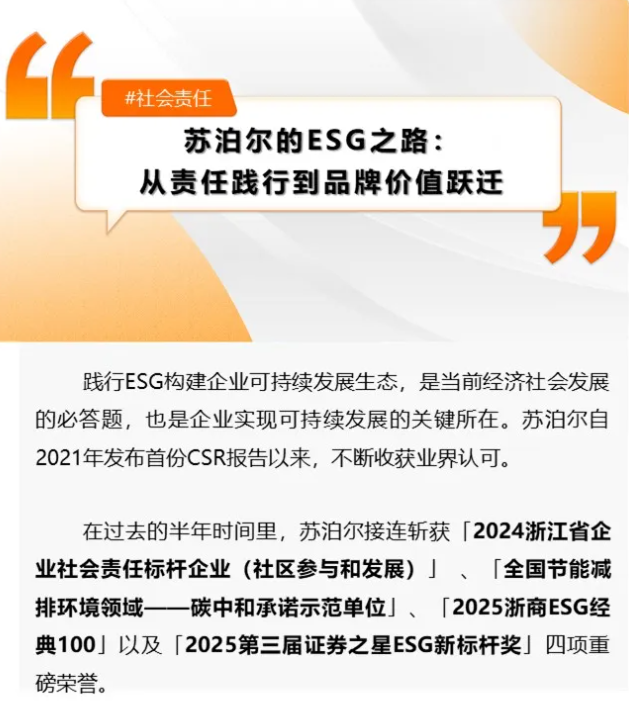
Core Viewpoint - The company, Supor, is actively implementing sustainable development practices and has received multiple awards for its commitment to ESG (Environmental, Social, and Governance) principles, showcasing its efforts in reducing carbon emissions and promoting social responsibility [1][4][6]. Group 1: Sustainable Development Initiatives - Supor has optimized packaging design to reduce carbon emissions throughout the year [1] - The company has implemented water recycling practices in its workshops, leading to a significant and continuous decrease in monthly water usage [1] - Supor's sustainable development projects have been recognized as benchmarks for ESG practices within its industrial system [1][4] Group 2: Awards and Recognition - In the past six months, Supor has received four significant honors, including "2024 Zhejiang Province Corporate Social Responsibility Benchmark Enterprise" and "National Energy Conservation and Emission Reduction Carbon Neutral Commitment Demonstration Unit" [4] - The company has been acknowledged for its contributions to ESG, reflecting its commitment to environmental, social, and governance dimensions [6] Group 3: Innovation and R&D - Supor's infrared rice cooker project was listed among the top 10 in patent industrialization in Hangzhou, highlighting its innovative technology [7] - The company plans to invest 470 million yuan in R&D in 2024, employing over 1,400 R&D personnel across multiple bases [7] - Supor has developed a robust patent matrix supporting 21 product categories, including rice cookers and pressure cookers [7] Group 4: Environmental Impact - The company has introduced dry dust removal equipment and paint sludge separators at its Hangzhou base, expected to save 5,000 tons of water annually [9] - The Yuhuan base has a distributed photovoltaic matrix generating 5.69 million kWh of electricity annually, with an 87% consumption rate [9] - Supor plans to procure 18,503 tons of recycled aluminum and 13,007 tons of recycled steel in 2024, significantly reducing carbon emissions [9] Group 5: Packaging Innovations - Supor is implementing a packaging revolution using honeycomb cardboard, achieving a 99% plastic-free rate in foreign trade packaging [10] - The company adheres to the 3R principles (Reduce, Reuse, Recycle) in its packaging materials, utilizing FSC-certified materials and eco-friendly inks [10] - Various strategies have been employed to optimize packaging, including reducing material usage and integrating electronic instructions [10] Group 6: Social Responsibility and Education - Supor's "Future Life Home" project has been implemented in 52 schools, promoting educational equity and community engagement [12] - The company has donated to 30 schools, benefiting over 30,000 students and teachers across 12 provinces [12] - Supor organizes annual volunteer weeks, encouraging employee participation in community service [12] Group 7: Commitment to Quality and Innovation - Supor integrates ESG principles into its core operations, emphasizing quality and innovation as part of its brand identity [15] - The company's sustainable practices extend from production lines to the broader industrial ecosystem, reinforcing its commitment to enhancing the quality of life for families in China [15]

辉煌60载 魅力新西藏丨沙海变林海——西藏隆子县跨越半个世纪的治沙奇迹
Xin Hua Wang· 2025-07-26 11:07
Core Viewpoint - The article highlights the remarkable transformation of Longzi County in Tibet from a barren sandy area to a thriving ecological zone through the efforts of local residents over the past half-century, particularly focusing on the successful cultivation of seabuckthorn trees as a means of combating desertification [1][4]. Group 1: Historical Context and Initiatives - Longzi County, located at an average altitude of over 3,800 meters, was once a barren salt-alkali riverbed with nearly eight months of dust storms each year [1]. - The turning point occurred in 1964 when the local leader, Langzong, learned about tree planting as a method to combat desertification during a visit to Shanxi, leading to the trial planting of seabuckthorn and other tree species [4]. Group 2: Community Involvement and Economic Impact - The community, including people of all ages, actively participated in the tree planting initiative, with seabuckthorn being the most successful due to its drought resistance and strong root system [4]. - The cultivation of seabuckthorn has significantly improved agricultural productivity, with the average yield of black barley increasing from over 300 jin to 650 jin per mu, resulting in an annual production of over 14,000 tons [4]. - The development of the seabuckthorn industry has also stimulated the local economy, leading to increased job opportunities and a projected per capita disposable income of 22,106 yuan for rural residents in 2024, reflecting a growth of 7.7% [4]. Group 3: Environmental and Social Benefits - The once sparse seabuckthorn trees have now expanded to cover 82,000 acres, creating a green barrier that has reduced wind and sand, improved arable land, and enhanced the quality of life for local residents [6]. - The establishment of ecological parks and recreational areas within the seabuckthorn forest has fostered a sense of community and environmental stewardship among the residents [6][7].

从“种子革命”到“舌尖革命”,鲁花用一粒花生重塑餐桌健康
Qi Lu Wan Bao· 2025-07-23 14:00
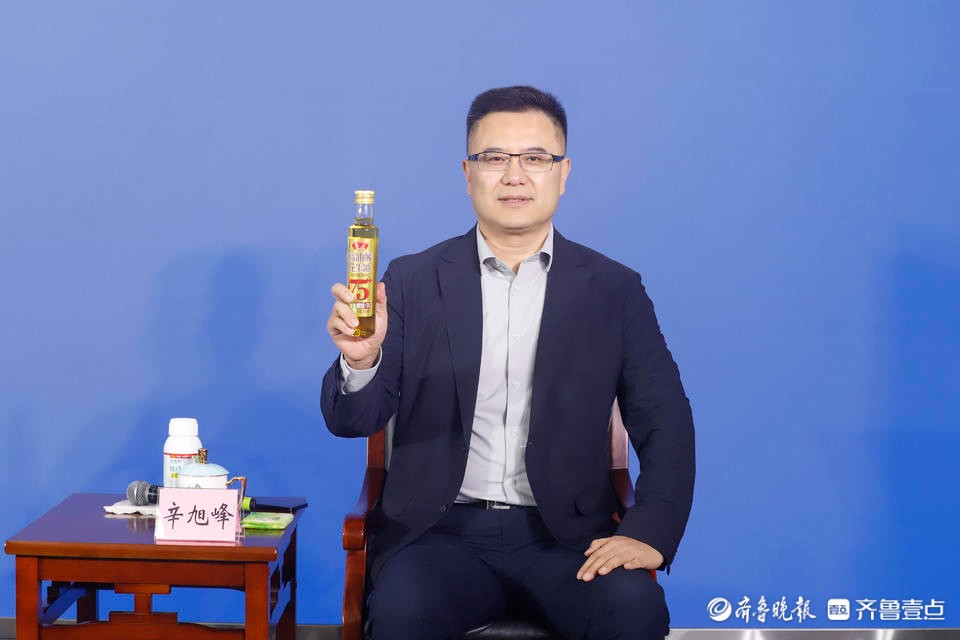
Core Viewpoint - The article highlights the efforts of Lu Hua Group in developing high oleic peanuts to produce healthier cooking oil, emphasizing the importance of seed quality in the food industry [1][3]. Group 1: Seed Development and Innovation - Lu Hua Group has collaborated with the Chinese Academy of Sciences to develop high-yield, high-oil, and high-oleic peanut varieties over eight years, marking the sixth generation of peanut seed improvement in China [3]. - The introduction of high oleic peanut oil in 2017, utilizing Lu Hua's unique 5S physical pressing technology, resulted in an oleic acid content exceeding 75%, recognized for its heart health benefits [3][4]. Group 2: Health and Safety Measures - The 5S pressing technology has eliminated harmful aflatoxins from peanut oil, fulfilling the company's commitment to ensuring consumers do not consume unhealthy oil [4]. - Lu Hua has established a comprehensive quality assurance system from seed to oil, creating a robust supply chain that prioritizes health and safety [4]. Group 3: Economic Impact on Farmers - Lu Hua supports farmers by providing high-quality seeds for free and purchasing the produce at 20%-30% above market prices, resulting in additional earnings of 600 to 800 yuan per acre for farmers [4]. - This initiative not only secures a supply of quality raw materials but also promotes rural industrial upgrades, fostering a positive cycle of quality and profitability [4]. Group 4: Sustainable Practices - In 2024, Lu Hua plans to introduce a patented technology that converts peanut cake into water-soluble fertilizer, enhancing crop yields by 10%-20% and improving soil health [5]. - The company aims to create a green cycle within the entire peanut industry, from seed to fertilizer, contributing to sustainable agriculture [5]. Group 5: Brand Philosophy and Market Position - Lu Hua emphasizes the importance of consumer reputation over awards, positioning itself as a leader in health-conscious cooking oil and sustainable agricultural practices [5]. - The brand has become synonymous with quality and health in millions of households across China, reflecting its commitment to meeting consumer needs and driving industry upgrades [5].
电亮中国:绿能输送一鸣惊人——从绿电交易规模位居全国第一看内蒙古新能源产业发展使命
Nei Meng Gu Ri Bao· 2025-07-22 09:31
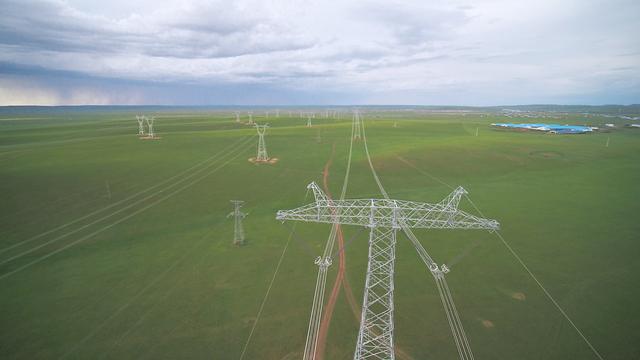
Core Viewpoint - The Inner Mongolia Xilin Gol League has developed a significant high-voltage direct current (HVDC) project, the Ximeng-Taiyuan line, which plays a crucial role in transmitting clean energy across multiple provinces in China, contributing to environmental sustainability and economic development [1][3][5]. Group 1: Project Overview - The Ximeng-Taiyuan HVDC project spans 1,620 kilometers and has a daily electricity transmission capacity exceeding 100 million kilowatt-hours [3]. - As of July 19, the project has delivered over 1,935 billion kilowatt-hours of electricity, saving 6.192 million tons of standard coal and reducing carbon dioxide emissions by 16.3 million tons [5]. - Inner Mongolia has established eight HVDC transmission channels over the past decade, facilitating the delivery of clean energy to regions such as Shandong, Tianjin, and Shanxi [11]. Group 2: Renewable Energy Development - Inner Mongolia produced over 2,000 billion kilowatt-hours of green electricity last year and initiated cross-province green electricity trading, leading the nation with a trading volume of 762 billion kilowatt-hours [6]. - The region's green electricity trading market has seen significant growth, with 1.94 billion kilowatt-hours traded in a single day in 2025, doubling the total green electricity traded in 2024 [8][15]. - The Inner Mongolia power trading platform has established a direct line with the National Energy Administration, facilitating the issuance of renewable energy certificates, with over 240 million certificates issued in 2024 [16]. Group 3: Environmental Impact - The HVDC project has maintained a continuous growth in electricity delivery for seven years, with 2024's delivery reaching 1,706 billion kilowatt-hours, significantly contributing to the energy security and economic development of Northeast, North, and East China [13]. - Cumulatively, the HVDC project has delivered over 7,400 billion kilowatt-hours, equivalent to the annual electricity consumption of 270 million households, resulting in the conversion of over 2.4 billion tons of standard coal and a reduction of approximately 700 million tons of carbon dioxide emissions [14]. Group 4: Future Prospects - The national "14th Five-Year Plan" outlines the implementation of additional HVDC projects in Inner Mongolia, aiming to enhance the overall electricity delivery capacity of the region [15]. - The Inner Mongolia power trading market is expected to continue expanding, with a focus on increasing the frequency of green electricity transactions and enhancing market participation [8][16]. - The transition from coal to electricity and the shift towards renewable energy sources are positioned as key strategies for Inner Mongolia's economic development and environmental sustainability [19].

清华大学报告:中国经济上半年企稳 关注就业、房地产等五大风险因素
Sou Hu Cai Jing· 2025-07-02 15:18
Economic Overview - The report from Tsinghua University's ACCEPT indicates signs of stabilization in China's economy in the first half of 2025, highlighted by a nominal GDP growth rate of 4.6%, an increase from the second half of the previous year [2] - Industrial upgrades are progressing, with the growth of value-added in equipment manufacturing and high-tech manufacturing outpacing the overall level of industrial enterprises [2] - There is a recovery in consumption, with the year-on-year growth rate of total retail sales of consumer goods accelerating compared to the previous month [2] Risks and Challenges - Employment pressure remains significant, with a declining proportion of employed individuals aged 16-59 over the past 15 years and increasing youth unemployment [2] - The real estate market is struggling, with low sales and high inventory levels, leading to a continuous decline in development investment [2] - There are downward pressures on the GDP deflator index, CPI, and PPI, indicating potential economic challenges [2] - Many industries are experiencing internal competition, with large accounts receivable and extended collection periods, alongside a noticeable decline in profit margins in the manufacturing sector over the past five years [2] - Increasing international instability poses additional risks to the economy [2] Policy Recommendations - The report suggests that local governments may increase taxes and non-tax revenues to alleviate fiscal pressure, which could dampen corporate enthusiasm [3] - It emphasizes the need to shift from traditional public finance to modern public finance, focusing on long-term fiscal balance and providing high-quality government bonds to support financial markets [3] - The report advocates for a systematic enhancement of policy tools to address the challenges in the real estate sector, particularly in the context of local government reliance on development [4] Real Estate Sector Insights - The real estate market shows signs of partial recovery, especially in first-tier cities, following the "three-year guarantee of delivery" policy, although second-hand housing prices continue to decline [4] - There is a need to activate non-residential real estate through mechanisms like REITs to stimulate market recovery [4] - The report highlights the importance of addressing the challenges in the stock housing market and suggests a shift towards a storage mechanism for affordable housing supply [5] Economic Growth Drivers - The report identifies three key areas to activate economic growth: establishing a social security cross-regional flow mechanism, innovating old community reconstruction models, and developing a long-term rental market for rural housing [5] - It emphasizes the necessity of enhancing domestic demand and consumer confidence to stabilize economic growth [6] - The report also notes that the potential for significant disruptive events impacting China is limited, with domestic growth and stability being crucial for navigating international challenges [6]

魏建国:以东方居韵,铸全球新篇—中国家居出海挑战与布局
Feng Huang Wang Cai Jing· 2025-06-14 13:15
Core Insights - The Chinese home furnishing industry is transitioning from being a "manufacturer" in the global supply chain to a "definer" and "leader" at the top of the value chain, facing significant challenges such as trade protectionism, rising costs, intensified competition, and lack of brand awareness [3][4]. Group 1: Breakthrough Battle - The "breakthrough battle" has commenced, emphasizing the necessity for a green revolution in the industry [4]. - China has become the world's largest furniture producer and exporter, with over 10.43 million home furnishing enterprises nationwide, and Guangdong alone has 1.045 million, contributing to 40% of the national output [4]. - In 2024, China's home furnishing and accessories export value is projected to reach 483 billion RMB, a 7% year-on-year increase, while the global home furnishing market value exceeded 500 billion USD in 2023, with China's furniture production accounting for over 35% of the global total [4]. Group 2: Environmental Compliance - The industry must confront increasingly stringent environmental regulations from Europe and the U.S., including the EU's Carbon Border Adjustment Mechanism (CBAM) and anti-dumping investigations [5]. - Chinese home furnishing enterprises are shifting towards using natural materials and increasing investments in environmentally friendly and biodegradable materials, transforming compliance into a core competitive advantage [5]. - In 2024, there were no incidents of Chinese home furnishings being returned due to non-compliance with global standards, establishing a benchmark for sustainable home furnishing [5]. Group 3: Brand Strategy - Chinese home furnishing companies are moving away from a "one-size-fits-all" approach, focusing on niche markets such as smart home products, health sleep solutions, outdoor leisure, and designer brands [6]. - By leveraging clear strategies and precise positioning, companies are building unique brand images and narratives, utilizing social media and collaborations with KOLs and KOCs for effective content marketing [6]. - There is a concerted effort to promote traditional Chinese furniture and craftsmanship, creating integrated online and offline brand communities to cultivate loyal customer bases in Western markets [6]. Group 4: Digital Transformation - Digitalization is being positioned as a core strategy across the entire value chain of design, manufacturing, and marketing services in the home furnishing industry [7]. - The industry boasts the most complete supply chain cluster globally, with a large pool of engineers and craftsmen, aiming to become the definers of global home furnishing consumption trends [7]. - The goal is to cultivate 5-10 globally influential home furnishing brands within the next five years, increasing the market share in the mid to high-end segments to over 35% and steadily raising the share of global home furnishing trade to over 40% [7].

沙漠“粉红防线”何以动人心弦?
Ren Min Ri Bao· 2025-06-11 05:40
Core Viewpoint - The emergence of roses in the Taklamakan Desert symbolizes resilience and the ongoing efforts of local people in combating desertification, showcasing a blend of ecological, economic, and aesthetic benefits [1][2][3] Group 1: Environmental Efforts - The roses were planted during the successful completion of the "lock edge" project, highlighting the commitment to ecological restoration in a harsh environment with an average annual rainfall of less than 50mm and evaporation exceeding 3000mm [1] - The cultivation of drought-resistant rose varieties, which can root up to 3 meters deep, plays a crucial role in stabilizing sand dunes and preventing soil erosion [2] Group 2: Economic and Social Impact - The development of a rose processing industry aims to promote sustainable agriculture and increase income for local communities, indicating a strategic approach to economic development alongside environmental restoration [2] - The ongoing efforts in desert reclamation reflect a spirit of perseverance and innovation, as local communities continue to explore and implement effective solutions against desertification [2][3] Group 3: Future Prospects - The initiative to cultivate rice in the desert represents a broader "green revolution," emphasizing the potential for agricultural development in previously unproductive areas [3] - The narrative of transforming the "death sea" into a landscape of green miracles suggests a hopeful outlook for future ecological and agricultural advancements in the region [3]
从经济数据看消费新势能
Xiao Fei Ri Bao Wang· 2025-05-27 02:52
Group 1 - In April, China's economy demonstrated stable growth under pressure, with retail sales of consumer goods increasing by 5.1% year-on-year, indicating a continuous release of consumption potential [1] - Investment in the consumer goods manufacturing sector grew by 13.4% from January to April, reflecting a significant transformation in the supply system [1] - High-tech manufacturing investment rose by 9.7% in the first four months, with the smart consumer equipment manufacturing sector's value-added increasing by 10% [1] Group 2 - Service retail sales grew in tandem with total retail sales, indicating a paradigm shift in consumption patterns, with experiential and scenario-based consumption reshaping demand [2] - The multiplier effect of service consumption is significant, with every additional 1 yuan in service consumption generating 0.6 yuan in related industry value, making it a key support for employment and income growth [2] - The dynamic balance of supply and demand is crucial for economic resilience, with technological iterations in consumer goods manufacturing providing the material basis for demand upgrades [2]