
美国经济滞胀

Search documents
美联储若过晚降息将会产生哪些后果?
Zheng Quan Ri Bao· 2025-08-03 16:15
Core Viewpoint - The Federal Reserve's decision to maintain interest rates in July reflects internal divisions and external pressures, raising concerns about potential impacts on financial markets, government debt, and economic stability [1][4]. Financial Market Risks - Delayed interest rate cuts by the Federal Reserve could exacerbate risks in the U.S. financial markets, as high rates increase corporate financing costs and compress profit margins, leading to investor concerns about corporate earnings and economic growth [1][2]. - Following the Fed's decision to keep rates unchanged, market expectations for a September rate cut dropped below 50%, indicating a shift in investor sentiment [1]. Government Debt Pressure - The ongoing high-interest environment could increase the U.S. government's debt burden, as rising interest rates lead to higher debt servicing costs, particularly in light of recent fiscal policies that may further inflate the deficit [3]. Economic Stagnation Risks - The Fed's delay in rate cuts may heighten the risk of "stagflation" in the U.S. economy, with recent employment data indicating a significant slowdown in job growth, which could lead to a potential recession if conditions do not improve [4]. - The labor market is showing signs of deterioration, with July's non-farm payrolls adding only 73,000 jobs, well below the expected 110,000, reflecting increased corporate caution [4].
巨富金业:地缘缓和与降息预期博弈,黄金震荡待PCE定方向
Sou Hu Cai Jing· 2025-06-27 06:53
Group 1 - The core viewpoint of the article highlights the dual influence of easing geopolitical tensions and rising expectations for interest rate cuts on gold prices [3][4][11] - Geopolitical risks in the Middle East have temporarily eased, leading to a significant reduction in gold's safe-haven demand, particularly after the ceasefire agreement between Israel and Iran [3][11] - The market is currently experiencing a cautious outlook on the economy, reflected in the slight decline of the 10-year U.S. Treasury yield to around 4.3% [1][4] Group 2 - The probability of a 25 basis point rate cut by the Federal Reserve in September has risen to 74.9%, driven by weak U.S. economic data, including a contraction in Q1 GDP [4][10] - The U.S. dollar index has fallen to a three-year low, theoretically supporting gold prices; however, concerns over "stagflation" are diminishing this positive effect [5][11] - The upcoming release of the U.S. core PCE price index is expected to be a key catalyst for breaking the current price range of gold, with a higher-than-expected reading potentially reinforcing the Fed's stance on maintaining high rates [10][11] Group 3 - The technical analysis indicates a fluctuating pattern for gold prices, oscillating between $3,300 and $3,340, with market sentiment remaining cautious [7][11] - The market is closely monitoring the core PCE data, initial jobless claims, and Q1 GDP final data, as these indicators could influence gold's safe-haven demand and price movements [10][11]

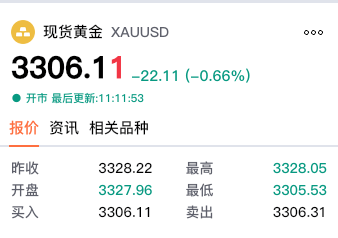
公司债ETF(511030)近9日“吸金”31.25亿元,最新份额创近3月新高,机构解读6月FOMC例会
Sou Hu Cai Jing· 2025-06-19 02:01
Group 1: Company Bond ETF (511030) - As of June 19, 2025, the Company Bond ETF (511030) increased by 0.01%, with the latest price at 106.03 yuan [1] - Over the past three months, the Company Bond ETF has accumulated a rise of 1.01% [1] - The latest scale of the Company Bond ETF reached 18.681 billion yuan, marking a new high since its inception [1] - The latest share count for the Company Bond ETF is 17.6 million shares, also a new high in three months [1] - The ETF has seen continuous net inflows over the past nine days, with a maximum single-day net inflow of 1.538 billion yuan, totaling 3.125 billion yuan in net inflows [1] - Leveraged funds have been actively buying into the Company Bond ETF, with a maximum single-day net purchase of 8.4424 million yuan [1] Group 2: National Bond ETF (511020) - As of June 19, 2025, the National Bond ETF (511020) rose by 0.03%, achieving five consecutive increases, with the latest price at 117.64 yuan [3] - The National Bond ETF has accumulated a rise of 1.80% over the past three months [3] - The latest scale of the National Bond ETF is 1.433 billion yuan [3] Group 3: National Development Bond ETF (159651) - As of June 19, 2025, the National Development Bond ETF (159651) is in a state of indecision, with the latest price at 106.19 yuan [5] - Over the past year, the National Development Bond ETF has accumulated a rise of 2.00% [5] - The latest scale of the National Development Bond ETF is 1.052 billion yuan [5] Group 4: FOMC Economic Forecast - The FOMC has downgraded the U.S. GDP growth forecast for Q4 2025 from 1.7% to 1.4% and raised the unemployment rate forecast from 4.4% to 4.5% [6] - The PCE inflation forecast has been increased from 2.7% to 3.0%, and the core PCE from 2.8% to 3.1% [6] - Despite the changes in economic forecasts, the FOMC's median policy rate expectations for Q4 2025 remain unchanged [6] Group 5: FOMC Press Conference Insights - Powell expressed confidence in the economy and patience regarding inflation, stating that maintaining the current policy is the best strategy [7] - The market slightly adjusted its expectations for rate cuts in 2025 following the press conference, with a more hawkish signal leading to an increase in the dollar index and U.S. Treasury yields [7] - The upcoming changes in the Federal Reserve's leadership may influence future rate cut expectations [7] Group 6: Bond ETF Product Overview - The three main members of the Bond ETF family managed by Ping An Fund include the Company Bond ETF (511030), National Development Bond ETF (159651), and National Bond ETF (511020) [8] - These products encompass government bonds, policy bank bonds, and credit bonds, covering various durations to assist investors in navigating the bond market cycle [8]
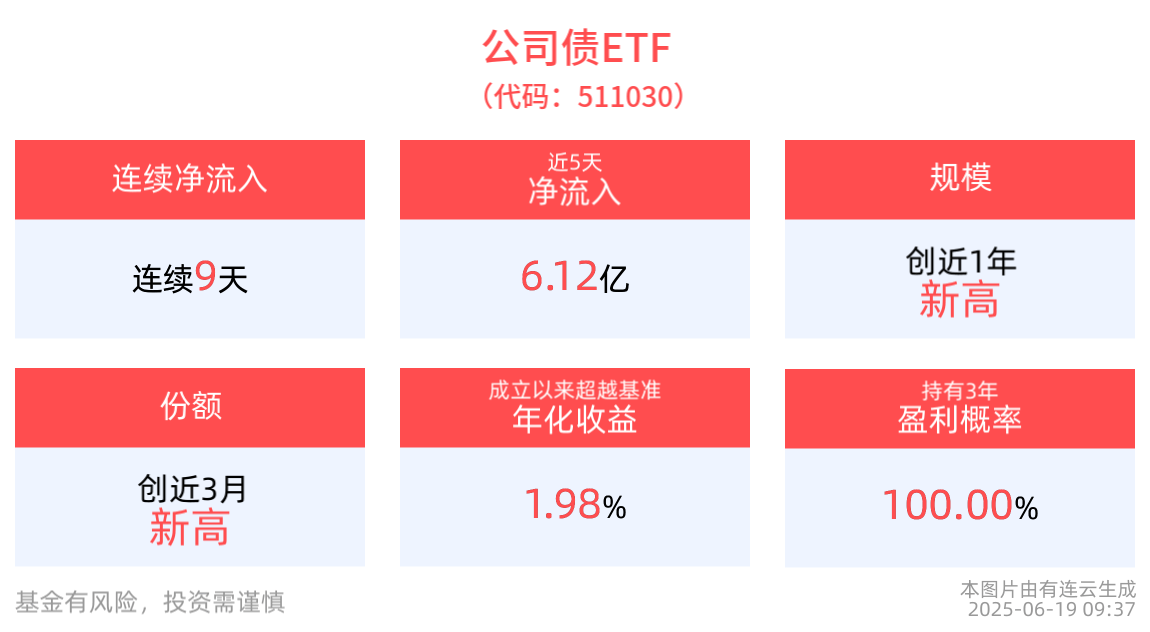
金价后市能否再破高位?
第一财经· 2025-06-02 15:05
Core Viewpoint - The article discusses the volatility of gold prices around the $3,300 per ounce mark, driven by U.S. tariff policies and economic conditions, highlighting the ongoing tug-of-war between bullish and bearish market sentiments [1][2]. Group 1: Market Dynamics - On June 2, gold prices broke through the $3,300 resistance level, with COMEX gold futures reaching a high of $3,384 per ounce, marking a daily increase of over 2%, the largest single-day gain in nearly three weeks [1]. - The recent surge in gold prices is attributed to President Trump's announcement of increasing tariffs on imported steel from 25% to 50%, which has led to a rebound in gold as a safe-haven asset [1]. - Gold has experienced significant price fluctuations at the $3,300 level this year, previously hitting a historical high of $3,509 in April before dropping to $3,245 due to profit-taking and easing geopolitical tensions [1]. Group 2: Technical Analysis - The $3,300 level has been a focal point for market participants, with recent price movements indicating a struggle between bulls and bears [2]. - The volatility in gold prices is exacerbated by the fluctuating tariff policies of the Trump administration and the market's expectations regarding potential interest rate cuts by the Federal Reserve [2]. Group 3: Fund Flows and Economic Indicators - Recent data from the CFTC shows an increase in non-commercial net long positions in COMEX gold futures by 10,203 contracts, bringing the total to 174,184 contracts, which represents 39.8% of total positions [3]. - The total open interest decreased by 10,462 contracts or 2.34%, with 294 total traders in the market [3]. - Economic indicators reveal challenges for the U.S. economy, including a rise in initial jobless claims and a significant decline in corporate profits, which fell by $118.1 billion in Q1 2025, the largest drop since Q4 2020 [3]. Group 4: Long-term Outlook - The long-term outlook suggests that the Federal Reserve's interest rate cut cycle is still in play, with expectations of three rate cuts within the year, which could benefit gold prices [4].

关税摇摆、多头回归,金价后市能否再破高位?
Di Yi Cai Jing· 2025-06-02 09:22
Group 1 - The core viewpoint of the articles highlights the volatility of gold prices around the $3300 per ounce mark, driven by fluctuating tariff policies and economic conditions [1][2] - Gold prices recently surged, with a peak of $3384 per ounce, marking a significant daily increase of over 2%, attributed to President Trump's announcement of increased tariffs on steel imports [1][2] - The gold market has experienced a "roller coaster" effect this year, with prices previously reaching a historical high of $3509 per ounce before dropping to $3245 due to profit-taking and easing geopolitical tensions [1] Group 2 - The technical analysis indicates that $3300 is a critical battleground for bulls and bears, with the market reacting to the U.S. government's inconsistent tariff policies and heightened expectations for Federal Reserve interest rate cuts [2] - Recent data from the CFTC shows an increase in non-commercial net long positions in COMEX gold futures, indicating a return of bullish sentiment, with net long positions rising by 10,203 contracts to 174,184 contracts [3] - The U.S. economy faces significant challenges, as evidenced by rising unemployment claims and a notable decline in corporate profits, which fell by $118.1 billion in Q1 2025, the largest drop since Q4 2020 [3] Group 3 - The long-term outlook suggests that the Federal Reserve's interest rate cut cycle is ongoing, with expectations for three rate cuts within the year, which could benefit gold prices [4]
STARTRADER星迈:5月27日美元指数走势分析
Sou Hu Cai Jing· 2025-05-27 07:18
Group 1 - The US dollar index experienced a V-shaped rebound, currently at 99.03, slightly up by 0.05% from the previous trading day, with a trading range of 98.5-99.2 [1] - Federal Reserve officials are signaling a cautious stance on interest rate cuts, with Atlanta Fed President Bostic stating that the potential for rate cuts this year may be limited to 25 basis points, contrasting sharply with market expectations of a 50 basis point cut [3] - Concerns about stagflation in the US economy are growing, and if the upcoming non-farm payroll data shows signs of a deteriorating job market, the dollar's safe-haven appeal may be impacted [3] Group 2 - The upcoming durable goods orders data for April is a key focus, with expectations of a significant decline to -7.9%, down from a previous growth of 9.2%, primarily due to a sharp drop in Boeing orders [4] - If the actual durable goods orders data is significantly weaker than expected, it may heighten concerns about the weakness in the US manufacturing sector, further diminishing the dollar's attractiveness [4] - Conversely, a rebound in the durable goods orders data could alleviate market worries regarding the negative impacts of tariffs, providing temporary support for the dollar [4]
美联储,给了特朗普一颗大大的“定心丸”,但前提是......
凤凰网财经· 2025-05-22 22:39
Market Performance - The U.S. stock market showed mixed results, with the Dow Jones remaining flat, the Nasdaq rising by 0.28%, and the S&P 500 declining by 0.04% [1] - Major tech stocks mostly increased, with Tesla up nearly 2%, Google rising over 1%, and other tech giants like Microsoft, Nvidia, Amazon, and Meta showing less than 1% gains [1] - Cryptocurrency and computer hardware sectors performed well, with Quantum rising over 11% and Coinbase up 5% [1] Economic Indicators - U.S. economic activity showed signs of recovery in May, with Markit manufacturing and services PMI exceeding expectations, although inflationary pressures resurfaced [1] - Following the economic data release, the stock market initially rebounded, but the S&P and Dow later turned negative despite a strong performance from large tech stocks [1] Legislative Developments - The U.S. House of Representatives narrowly passed Trump's tax reform bill, which is expected to significantly reduce taxes and increase federal debt, potentially adding approximately $2.7 trillion to the budget deficit over ten years [2] - The bill faces opposition from Democrats and some Republicans, who argue it disproportionately benefits the wealthiest 1% at the expense of healthcare for millions [2] Bond Market Dynamics - Concerns over the tax reform's impact on fiscal health led to a sell-off in U.S. Treasuries, with the 30-year bond yield reaching 5.149%, the highest since October 2023 [3] - The steepening of the yield curve between 5-30 year bonds expanded to 100 basis points, indicating investor anxiety about long-term fiscal sustainability [3] Emerging Market Outlook - Amidst turmoil in the U.S. bond market, there is a renewed focus on emerging markets, with many U.S. investors having only a 3%-5% allocation to these markets compared to 10.5% in the MSCI global index [4] - Analysts suggest that global investors are seeking diversification and long-term returns outside of U.S. equities, with emerging markets becoming a focal point [4] Federal Reserve Insights - Jamie Dimon, CEO of JPMorgan, warned of significant risks to the U.S. economy, including geopolitical tensions and fiscal deficits, suggesting a potential for stagflation [4] - Federal Reserve Governor Waller indicated that the Fed would not purchase bonds in primary auctions and hinted at possible rate cuts in late 2025 if tariff impacts stabilize [4][5]

摩根大通CEO戴蒙:不会排除美国经济陷入滞胀的可能性。
news flash· 2025-05-19 15:50
Group 1 - The CEO of JPMorgan Chase, Jamie Dimon, indicated that the possibility of the U.S. economy entering a stagflation scenario cannot be ruled out [1]
美联储5月议息会议点评:两难境地下,美联储择机降息难度提升
Huachuang Securities· 2025-05-08 12:33
1. Report Industry Investment Rating No relevant content provided. 2. Core View of the Report The Fed continued to pause rate cuts for the third time, maintaining the federal funds rate target range at 4.25%-4.5%. The difficulty of the Fed's timing rate cuts has increased. The Fed's "wait-and-see" stance continues, and it reaffirms that there is no need to rush into action. If the economic downward pressure increases significantly and the risk of inflation rebound is realized simultaneously, the current expectation of three rate cuts within the year may be revised [1][23]. 3. Summary by Related Catalogs 3.1 Interest Rate Decision and Market Reaction - The Fed continued to pause rate cuts for the third time, keeping the federal funds rate target range at 4.25%-4.5%, and the reserve balance rate and discount rate remained at 4.4% and 4.5% respectively. After the rate decision was announced, the 10-year U.S. Treasury yield briefly rose from 4.26% to 4.29%, the three major U.S. stock indexes first declined and then rose, and the U.S. dollar index rose. After the press conference began, the 10-year U.S. Treasury yield fell to around 4.28%, with little overall change, the U.S. stocks fluctuated in the red, the U.S. dollar index continued to strengthen, COMEX gold fell, and crude oil fluctuated in a narrow range [1][3]. 3.2 Interest Rate Statement - The main adjustments in the interest rate statement revolve around the description of the economic outlook, including three points: adding "although the fluctuations in net exports have affected the relevant data" at the beginning, but emphasizing the judgment that "U.S. economic activity continues to expand steadily"; pointing out that "the uncertainty of the economic outlook has further increased"; and clearly stating that the risks of high unemployment and high inflation have both risen [1][5]. 3.3 Economic Situation - The economic outlook faces high uncertainty, but there is no conclusive evidence at the data level. Powell said at the press conference that the economy remains resilient, but the outlook is still highly uncertain. If high tariffs are maintained, the negative impact on the economy will gradually emerge, which is not yet reflected in the data. In the first quarter of 2025, the U.S. GDP's quarter-on-quarter annualized rate declined by 0.3%, with net exports and government consumption and investment dragging down GDP by 4.83 and 0.25 percentage points respectively. Since the beginning of the year, the University of Michigan consumer expectation index has dropped sharply, reaching a low of 47.30 as of March 2025, reflecting concerns about trade policies [1][8]. 3.4 Labor Market - The overall state of the employment market is stable, but attention should be paid to the risk of rising unemployment. In April, the number of new non-farm payrolls in the United States was 177,000. The service industry is still the main contributor to the employment market, but the number of new jobs in industries such as retail, leisure, and hospitality that are more sensitive to economic elasticity has slowed down significantly compared to March, and the number of new jobs in the federal government has declined for the third consecutive month. The unemployment rate remained stable at 4.0%-4.2%, and the month-on-month growth rate of hourly wages slowed down [16]. 3.5 Inflation - The impact of tariffs on inflation remains uncertain, and inflation expectation indicators continue to rise. Powell said at the press conference that the impact of tariffs on inflation may be short-term or long-term, and the Fed's responsibility is to maintain the stability of long-term inflation expectations. In March, the U.S. CPI data was lower than expected across the board. Considering that the impact of the "reciprocal tariff" policy has not yet been reflected in the March data, its guidance for interest rate decisions is relatively limited. Recently, the University of Michigan inflation expectation index has continued to rise, increasing the difficulty of decision-making in a stagflation environment [17].
美股低开,七巨头集体下跌!美国一季度GDP负增长,美联储陷入“三难”
21世纪经济报道· 2025-04-30 14:28
Economic Overview - The latest data shows that the U.S. GDP contracted by 0.3% in Q1 2025, leading to a decline in U.S. stock markets, with the Nasdaq and S&P 500 dropping approximately 2% and the Dow Jones falling over 1% [1][10] - Consumer confidence in the U.S. has dropped for the fifth consecutive month, reaching its lowest level since the COVID-19 pandemic, with 32.1% of consumers expecting job losses in the next six months, a level close to that seen during the 2009 financial crisis [8][9] Stock Market Reaction - Major U.S. tech stocks experienced significant declines, with Apple down 1.72%, Microsoft down 1.99%, and Tesla down 6.22% [2][3] - European stock markets also saw collective declines, with the UK FTSE 100, France's CAC 40, and Germany's DAX all reporting losses [5][6] Commodity Market Trends - Gold prices fell below $3,280 per ounce before rebounding, while crude oil futures and copper prices also experienced declines [6][7] - The current market volatility has led to a significant percentage of consumers (48.5%) expecting stock prices to decline in the next 12 months, the highest level since October 2011 [9] Inflation and Economic Challenges - The probability of a "hard landing" for the U.S. economy has increased from 35% to 50%, with expectations of mild stagflation characterized by declining growth and persistent core inflation [11][12] - Key factors contributing to this economic outlook include unresolved supply-side shocks, sticky wage growth leading to potential second-round inflation pressures, and a projected federal budget deficit exceeding 6% of GDP in 2025 [12][13] Federal Reserve's Dilemma - The Federal Reserve faces a "trilemma" involving conflicts between anti-inflation measures and growth stabilization, financial stability and policy independence, as well as domestic needs versus external capital flows [12][13] - A potential unconventional strategy may involve nominal interest rate reductions while maintaining high real interest rates, alongside targeted liquidity tools to navigate the complex macroeconomic landscape [13]