
通胀水平

Search documents
美联储理事米兰:不认为当前或未来的通胀水平很高。
Sou Hu Cai Jing· 2025-11-20 23:47
Core Viewpoint - The Federal Reserve Governor, Michelle Bowman, does not believe that the current or future inflation levels are high [1] Group 1 - The statement reflects a perspective that may influence monetary policy decisions moving forward [1] - The comments suggest a potential for continued economic stability without immediate concerns regarding inflation [1]
美联储10月会议纪要显示官员对12月降息预期有分歧
Sou Hu Cai Jing· 2025-11-20 14:08
Core Viewpoint - The Federal Reserve's October monetary policy meeting minutes indicate significant disagreement among officials regarding a potential interest rate cut in December, influenced by moderate economic expansion and a cooling labor market [1] Group 1: Economic Conditions - The U.S. economy is experiencing moderate expansion, with the labor market gradually cooling but not showing signs of severe deterioration [1] - Some Federal Reserve officials believe that current inflation levels are close to the Fed's target when excluding tariff impacts [1] Group 2: Inflation Perspectives - A majority of officials argue that overall inflation remains persistently above the target level, with little indication of a timely and sustainable return to the 2% target [1] - The debate over the impact of tariffs on inflation reflects differing views among Federal Reserve officials [1] Group 3: Future Monetary Policy - Federal Reserve Chairman Jerome Powell indicated that a decision to further cut interest rates in December is not guaranteed [1] - The federal government "shutdown" has resulted in the absence of key economic data, which may also contribute to delaying any interest rate cuts [1]
突发巨震,超17万人爆仓!美联储,传来大消息
Zheng Quan Shi Bao· 2025-11-15 09:52
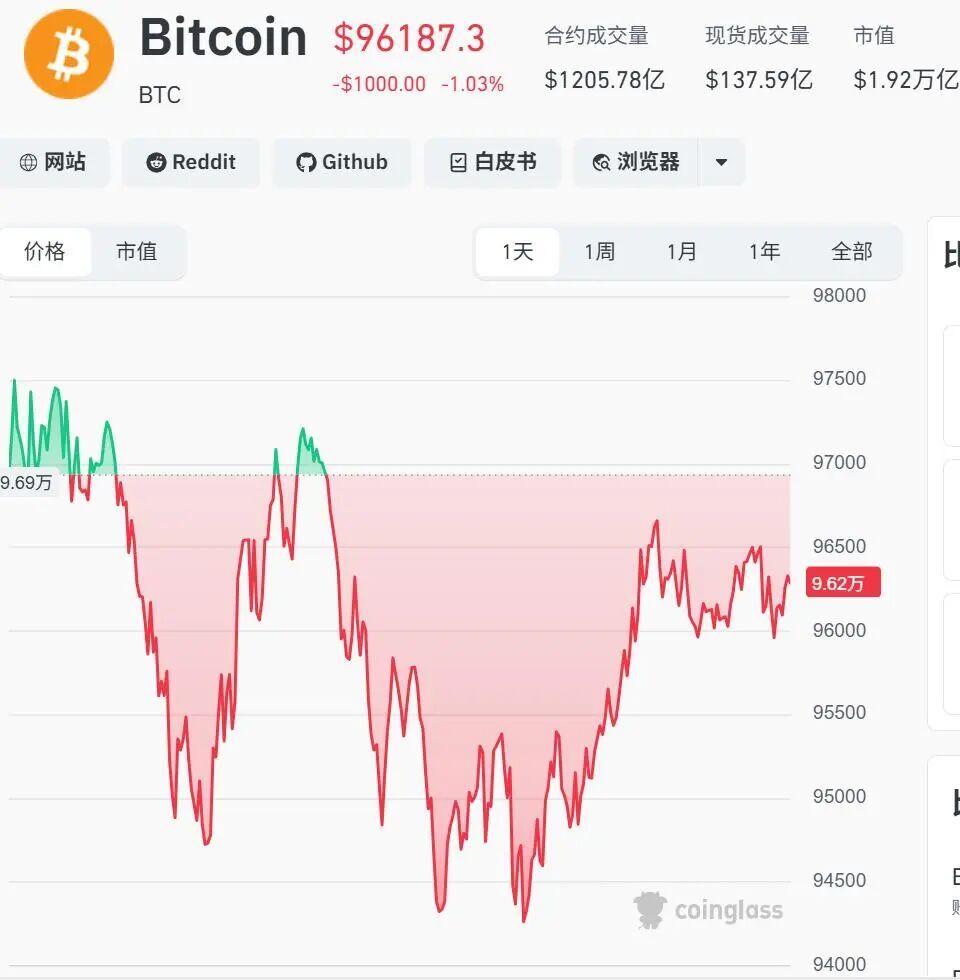
Group 1 - Bitcoin experienced a significant drop, falling below $94,300 on November 15, with a current price of $96,187, reflecting a decline of over 1% [1][3] - Over the past 24 hours, more than 170,000 traders faced liquidation in the cryptocurrency market [3] - Total liquidations reached approximately $677 million within 24 hours, with $203 million in the last 12 hours alone [4] Group 2 - The Federal Reserve's potential interest rate cut in December is now uncertain due to incomplete economic data resulting from the recent government shutdown [4][5] - Dallas Fed President Logan indicated that she does not support a rate cut unless there is clear evidence of a faster decline in inflation, which is currently on the rise [4][5] - Chicago Fed President Goolsbee expressed caution regarding further rate cuts due to the lack of economic data caused by the government shutdown [5]

核心CPI连涨6个月 服务价格的回升发出什么信号
Hua Xia Shi Bao· 2025-11-15 01:20
Core Insights - The inflation level in October has drawn market attention, with the core CPI rising for six consecutive months, showing a year-on-year increase of 1.2% [1] - The October CPI increased by 0.2% year-on-year and month-on-month, primarily driven by the core CPI [1] - The core CPI, which excludes volatile food and energy prices, reflects long-term price trends and is crucial for assessing current economic conditions and future inflation [1] CPI Components - In October, six out of seven major price categories in the core CPI increased year-on-year, with notable rises in other goods and services (12.8%), personal care (1.9%), and clothing (1.7%) [1] - Healthcare, education, and housing prices rose by 1.4%, 0.9%, and 0.1% respectively, while transportation and communication prices decreased by 1.5% [1] - Month-on-month, other goods and services surged by 3.8%, contributing significantly to the core CPI increase [1] Other Goods and Services - Other goods and services, which include jewelry, watches, and funeral services, accounted for 3.0% of per capita consumption expenditure in the first three quarters of 2025, with a growth rate of 10.3% [2] - The price of gold jewelry and platinum increased by 50.3% and 46.1% year-on-year, respectively, indicating a strong correlation between gold prices and the CPI [2] Service Prices - Service prices have been gradually increasing since March, with a 0.8% rise in October, marking a 0.2 percentage point increase from the previous month [3] - The service sector's value added reached 592,955 billion yuan in the first three quarters, growing by 5.4% year-on-year and contributing 60.7% to national economic growth [3] Factors Influencing Service Prices - The growth in service demand and prices is attributed to the application of new technologies and the digital transformation of traditional services, which increases operational costs [4] - Demographic factors, such as an aging population and a decrease in young labor force, are leading to increased demand for healthcare, education, and high-quality services, driving up prices [5] - Despite economic pressures, there remains potential for further growth in service demand, indicating that the current price increase trend is still in its early stages [5]
10月CPI、PPI均环比上涨
Ge Lin Qi Huo· 2025-11-10 08:25
Report Industry Investment Rating - No relevant information provided Core View of the Report - In October 2025, China's CPI and core CPI both rose 0.2% month-on-month, and PPI rose 0.1% month-on-month, indicating a mild recovery in the inflation level. Due to base effects, the year-on-year CPI data for November is expected to show a significant rebound, while the year-on-year PPI data will remain roughly flat. China's economic activity continues to be in a mild state [5][16][17] Summary According to Relevant Catalogs CPI Analysis Year-on-Year Data - In October, the national consumer price index (CPI) rose 0.2% year-on-year, against a market expectation of a 0.1% decline and a previous decline of 0.3%. From January to October, the average national consumer price decreased 0.1% compared with the same period of the previous year [2][6] - Food prices in October decreased 2.9% year-on-year, with the previous decrease being 4.4%, showing a significant narrowing of the year-on-year decline. Non-food prices rose 0.9% year-on-year, compared with a 0.7% increase in September [2][6] - Core CPI rose 1.2% year-on-year in October, compared with a 1.0% increase in September, and its year-on-year increase has been expanding for the past six months [2][6] - Consumer goods prices decreased 0.2% year-on-year in October, compared with a 0.8% decrease in September. Service prices rose 0.8% year-on-year, compared with a 0.6% increase in September [2][6] Month-on-Month Data - In October, CPI rose 0.2% month-on-month, compared with a 0.1% increase in the previous period. Food prices rose 0.3% month-on-month, rising for three consecutive months, with the previous increase being 0.7%. Non-food prices rose 0.2% month-on-month, compared with a 0.1% decrease in the previous period [3][7] - Consumer goods prices rose 0.2% month-on-month in October, compared with a 0.3% increase in the previous period. Affected by the National Day and Mid-Autumn Festival, service prices rose 0.2% month-on-month in October, compared with a 0.3% decrease in September [3][7] - Core CPI rose 0.2% month-on-month in October, compared with a flat level in September [3][7] Influencing Factors - The rapid rise of the agricultural product wholesale price 200 index in October this year promoted the month-on-month increase of CPI in October. The increase in agricultural product prices in November compared with the same period last year will help drive the year-on-year increase of CPI in November [9] - Domestic refined oil prices were reduced twice in October. The energy price in November is likely to have a downward impact on the month-on-month CPI [9] PPI Analysis Year-on-Year Data - In October, the national industrial producer price index (PPI) decreased 2.1% year-on-year, against a market expectation of a 2.3% decrease and a previous decrease of 2.3%. From January to October, the average PPI decreased 2.7% compared with the same period of the previous year [3][10] - Production material prices decreased 2.4% year-on-year in October, affecting the overall level of industrial producer prices to decrease by about 1.77 percentage points. Among them, mining industry prices decreased 7.8% year-on-year, raw material industry prices decreased 2.5% year-on-year, and processing industry prices decreased 1.9% year-on-year [10] - The year-on-year decline in ex-factory prices was relatively large in industries such as coal mining and washing, oil and gas extraction, chemical fiber manufacturing, etc. The year-on-year increase in ex-factory prices was relatively large in industries such as non-ferrous metal ore mining and dressing, non-ferrous metal smelting and rolling processing [10] Month-on-Month Data - In October, PPI rose 0.1% month-on-month, the first month-on-month positive growth this year, compared with a flat level in the previous period. Production material prices rose 0.1% month-on-month, compared with a flat level in the previous period [3][11] - The month-on-month increase in prices was relatively large in industries such as non-ferrous metal ore mining and dressing, non-ferrous metal smelting and rolling processing, coal mining and washing, etc. The month-on-month decline in prices was relatively large in industries such as oil and gas extraction, ferrous metal smelting and rolling processing, chemical fiber manufacturing, etc. [4][12] - In October, the month-on-month change in consumer goods prices was flat, compared with a 0.2% decrease in the previous period. Among them, food prices decreased 0.1% month-on-month, clothing prices decreased 0.1% month-on-month, general daily necessities prices rose 0.7% month-on-month, and durable consumer goods prices decreased 0.3% month-on-month [13] PMI and Service Industry Index - In October, China's manufacturing purchasing managers' index (PMI) was 49.0%, remaining below the boom-bust line for the seventh consecutive month, compared with 49.8% in the previous period. The new order index in October was 48.8%, compared with 49.7% in the previous period, indicating a decline in manufacturing market demand [5][16][17] - In October, the service industry business activity index was 50.2%, compared with 50.1% in the previous month. The service industry sales price index was 47.7%, compared with 47.2% in the previous period. The service industry new order index was 46.0%, compared with 46.7% in the previous period [5][17]
高市早苗:是否调整销售税率需考虑工资和通胀水平
Di Yi Cai Jing· 2025-11-10 02:14
Core Insights - Japanese Prime Minister Fumio Kishida indicated that adjusting the sales tax rate requires time, and any decision will take into account future wage and inflation levels [1] Group 1 - The adjustment of the sales tax rate is under consideration but is not imminent [1] - Future economic indicators such as wages and inflation will play a crucial role in determining the timing of any tax changes [1]
股指黄金周度报告-20251107
Xin Ji Yuan Qi Huo· 2025-11-07 11:16
Report Industry Investment Rating - Not provided Core Viewpoints of the Report - In October 2025, China's import growth rate declined and exports turned negative year-on-year, indicating that the foundation of China's economic recovery is not solid, domestic demand remains weak, and external demand is under increasing downward pressure. The export will face downward pressure in the future. The stock index should be cautiously viewed for short - term rebounds and the risk of a new decline should be watched out for. Gold may be under short - term pressure and has a risk of deep adjustment in the medium - long term [40]. Summary by Relevant Catalogs 1. Macroeconomic Data - In October 2025, China's imports increased by 1% year - on - year, with the growth rate dropping by 6.4 percentage points from the previous month, and exports decreased by 1.1% year - on - year, the first negative growth since March, reflecting weakening domestic demand and increasing downward pressure on external demand [3][4]. 2. Stock Index Fundamental Data - From January to September 2025, the profits of industrial enterprises above a designated size turned positive year - on - year, and the growth rate of finished product inventories rebounded. However, after removing the impact of the low base effect in the previous year, corporate profitability remained weak, and enterprises were still in the stage of active inventory reduction [16]. - The margin trading balance in the Shanghai and Shenzhen stock markets rose slightly to 24725.92 billion yuan. The central bank conducted 495.8 billion yuan of 7 - day reverse repurchase operations this week, achieving a net withdrawal of 1572.2 billion yuan [18]. 3. Gold Fundamental Data - Many Fed officials made hawkish remarks, believing that the US economy is still robust, the inflation risk has not been eliminated, and caution is needed regarding future interest rate cuts. The yield of the 10 - year US Treasury bond has returned above the 4% mark [28]. - The warehouse receipts and inventory of Shanghai gold futures are slowing down, and the inventory of New York COMEX gold is continuously decreasing, reflecting a cooling of the market's bullish sentiment [39]. 4. Strategy Recommendations - Short - term: Due to the marginal weakening of domestic economic data, the stock index should be cautiously viewed for short - term rebounds. Fed officials' hawkish remarks have further dampened the market's expectation of another interest rate cut in December, and gold may continue to adjust after a short - term rebound [40]. - Medium - long term: The valuation of the stock index will still be dragged down by the decline in corporate profit growth at the molecular end, and the support at the denominator end mainly comes from the recovery of risk appetite. Gold has a risk of deep adjustment due to factors such as the cooling of the expectation of another Fed interest rate cut in December [40].
股指黄金周度报告-20251031
Xin Ji Yuan Qi Huo· 2025-10-31 12:20
1. Report Industry Investment Rating - No relevant information provided 2. Core Viewpoints of the Report - In the short - term, after the meeting between Chinese and US leaders and repeated digestion of domestic policy benefits, the stock index should be cautious about callback risks; the Fed's interest rate decision is hawkish, and the market's expectation of a December interest rate cut has decreased. Gold may continue to adjust after a short - term rebound [29]. - In the medium - to long - term, the valuation of the stock index is mainly dragged down by the decline in corporate profit growth at the molecular end, while the support at the denominator end mainly comes from the recovery of risk appetite. The stock index maintains a wide - range oscillation in the medium term; concerns about the uncertainty of US tariff policies have subsided, and gold may face a deep adjustment due to factors such as the easing of the geopolitical situation in the Middle East and the downward adjustment of the Fed's December interest rate cut expectation [29][30] 3. Summaries According to Relevant Catalogs 3.1 Macroeconomic Data - In October this year, the official manufacturing PMI dropped to 49, a decrease of 0.8 percentage points from the previous month, and it has been in the contraction range for 7 consecutive months. Industrial production has slowed down significantly, demand has declined again, external demand pressure has increased, and the business climate of small and medium - sized enterprises has weakened [2] 3.2 Stock Index Fundamental Data 3.2.1 Enterprise Profit - From January to September this year, the profits of industrial enterprises above a designated size increased by 3.2% year - on - year, rebounding for two consecutive months. However, there is a differentiation in business performance among different industries. The profits of high - end and equipment manufacturing industries maintain rapid growth, while the operating pressure on downstream enterprises remains high [11] 3.2.2 Capital Situation - The margin trading balance in the Shanghai and Shenzhen stock markets has risen to 2473.27 billion yuan. The central bank conducted 2068 billion yuan of 7 - day reverse repurchase operations and 900 billion yuan of one - year MLF operations this week, achieving a net injection of 1400.8 billion yuan [15] 3.3 Gold Fundamental Data 3.3.1 Risk - free Rate: Holding Cost and Inflation Level - The Fed cut interest rates by 25 basis points as expected at its October meeting, but the divergence among participants on future interest rate policies has increased. They believe that the lack of economic data may lead to a delay in interest rate cuts, and the 10 - year US Treasury yield has returned above the 4% mark [21] 3.3.2 US Consumer Confidence Index and Employment Situation - No specific data provided 3.3.3 Gold Inventory Situation - The warehouse receipts and inventory of Shanghai gold futures have slowed down, but the inventory of COMEX gold in New York has continued to decline, indicating a decrease in the risk of a short squeeze [28] 3.4 Strategy Recommendations - Short - term: After the end of the meeting between Chinese and US leaders and repeated digestion of domestic policy benefits, pay attention to the callback risk of the stock index in the short - term; the Fed's interest rate decision is hawkish, and the market's expectation of a December interest rate cut has decreased. Gold may continue to adjust after a short - term rebound [29] - Medium - to long - term: The valuation of the stock index is mainly dragged down by the decline in corporate profit growth at the molecular end, while the support at the denominator end mainly comes from the recovery of risk appetite. The stock index maintains a wide - range oscillation in the medium term; concerns about the uncertainty of US tariff policies have subsided, and gold may face a deep adjustment due to factors such as the easing of the geopolitical situation in the Middle East and the downward adjustment of the Fed's December interest rate cut expectation [29][30]
资产配置快评:2025年第47期:Riders on the Charts:每周大类资产配置图表精粹-20251029
Huachuang Securities· 2025-10-29 07:02
Economic Overview - Eurozone's fiscal deficit as a percentage of GDP for Germany, France, and Italy was 2.2% in H1 2025, down from 2.5% in Q4 2024, indicating a "tight fiscal & loose monetary" environment[4] - U.S. core CPI in September 2025 was 3%, below the expected 3.1%, showing a decrease in inflationary pressure[7] - U.S. durable goods consumption expenditure increased by $20 billion, from $5.56 trillion to $5.68 trillion, despite new tariffs[10] Market Valuation - The effective exchange rate index for the euro was at a historical high of 130 as of October 24, 2025, indicating overvaluation of euro assets[13] - The 10-year government bond yield spread between Italy and Germany fell to 79 basis points, and between Greece and Germany to 66 basis points, both at 15-year lows, reflecting low risk premiums in Southern European bonds[13] Commodity Insights - Gold prices reached a historical high of $4,336.4, exceeding the 200-day moving average by 32.5%, suggesting potential for a price correction[16] - The copper-to-gold price ratio fell to 2.7, indicating a divergence with the offshore RMB exchange rate, which rose to 7.1[27] Investment Metrics - The equity risk premium (ERP) for the CSI 300 index was 4.2%, significantly below the 16-year average, suggesting room for valuation increases[18] - The total return ratio of domestic stocks to bonds was 28.8, above the past 16-year average, indicating enhanced attractiveness of equities over fixed income[29]

早盘直击|今日行情关注
申万宏源证券上海北京西路营业部· 2025-10-17 03:08
Group 1 - The domestic macroeconomic data is gradually being disclosed, indicating a mixed market sentiment with inflation levels stabilizing due to the rebound in commodity prices, although the transmission to downstream sectors remains incomplete [1] - The market is currently in a phase of oscillation and consolidation, with the Shanghai Composite Index experiencing a horizontal adjustment since late August, showing strong support above previous high points [2] - The trading volume in the two markets has significantly shrunk, with a focus on value sectors such as coal and finance, while large-cap blue-chip stocks are yielding excess returns [1] Group 2 - The market is characterized by a divergence in performance among different indices, suggesting a rapid rotation and the presence of differing opinions among investors, indicating a need for patience in waiting for opportunities [2]
