
AI超级入口

Search documents
累计107亿,2026春晚成AI修罗场,大厂聚首贴身对垒
3 6 Ke· 2026-01-29 12:48
Core Insights - The 2026 Spring Festival Gala has become a significant platform for major tech companies to showcase their capabilities in AI and marketing strategies [1][10]. Group 1: Major Company Initiatives - Baidu announced a 5 billion yuan cash red envelope initiative for the Spring Festival, while Tencent launched a 10 billion yuan cash red envelope campaign, aiming to replicate the success of previous years [2][11]. - ByteDance secured exclusive AI cloud partnership with CCTV for the Spring Festival Gala, marking its third collaboration with the event [3][10]. - Alibaba introduced its flagship AI model Qwen3-Max-Thinking, which is reported to be a significant advancement in China's AI capabilities [2][10]. Group 2: Historical Context and Trends - Since 2015, major internet companies have distributed approximately 10.7 billion yuan in cash red envelopes during the Spring Festival, highlighting the event's importance for brand visibility [5][7]. - The Spring Festival Gala has evolved from a traditional entertainment event to a strategic battleground for tech companies to engage with consumers and enhance brand influence [6][7]. Group 3: AI Competition and Market Dynamics - The competition for "AI super entry" among major players like Baidu, Tencent, Alibaba, and ByteDance is intensifying, with each company striving to establish a dominant position in the AI landscape [10][13]. - Goldman Sachs predicts that 2026 will be a pivotal year for internet giants, as they increase investments in consumer-facing AI technologies [13][15]. - The introduction of AI functionalities by various companies during the Spring Festival will serve as a test of their technical capabilities and user engagement strategies [11][12].




VIP机会日报资源板块再度领涨 栏目解读贵金属、油气、稀土等方向 多家焦点公司收获涨停
Xin Lang Cai Jing· 2026-01-29 09:20
转自:智通财经 注:智通财经VIP为内容资讯产品,并非投资建议。以下内容仅为资讯价值展示非对相关公 司的推荐建议,非未来走势预测。投资有风险,入市需谨慎。 市场热点一 油气 消息面上,NYMEX原油期货主力合约日内突破64美元大关,现涨1.8%。 《九点特供》:盘前必读的特供早报。 1月26日08:17《九点特供》 解读海外映射,指出国际油价涨近3%,在解读海外局势后,并梳理了涨价 的逻辑,提及国内焦点公司洲际油气,截至1月29日收盘,其4日收获3次涨停。 洲际油气(600759) < 01-29 15:43:38 沪 融 5.69 所属行业:石油石化 +4.80% > > 查看所属板块 > 油气设服 天然气 +0.52 +10.06% +1.74% 最相关 +0.97% 成交量 5.48 最 高 5.69 856万手 今 开 昨 收 5.17 最 低 5.12 成交额 46.4亿 换手率 20.65% 总市值 236亿 ▲ 213.13 市盈动 热股 财联社热股榜TOP13 > 分时 五日 日K 周K 月K 分钟▼ [0] MA5 前复权 5.69 5.69 1月26日08:17《九点特供》解读海外 指出国 ...




腾讯10亿现金押注元宝,能否复制微信红包神话?
Sou Hu Cai Jing· 2026-01-28 07:31
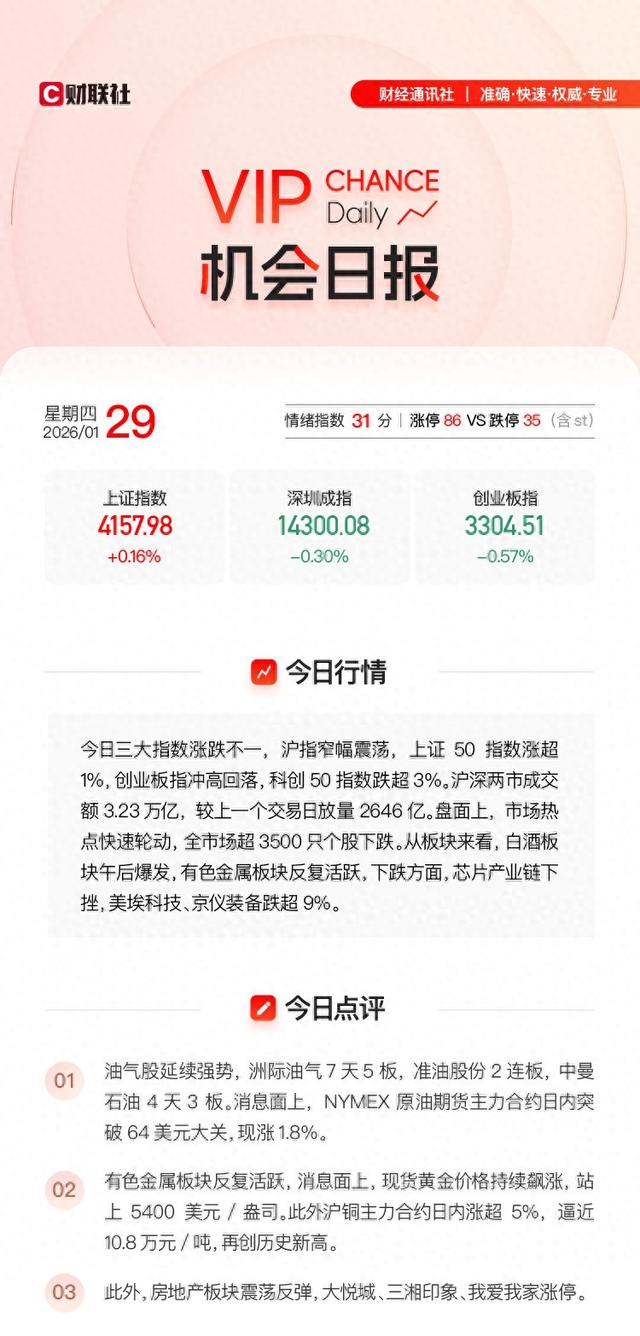
Core Viewpoint - Tencent is launching a new Spring Festival red envelope activity through its AI application Yuanbao, offering up to 1 billion yuan in cash to users, aiming to replicate the success of the WeChat red envelope phenomenon from 2015 [1][2][5] Group 1: Yuanbao's Red Envelope Strategy - The 1 billion yuan cash red envelope initiative is expected to positively impact user growth and engagement for Yuanbao, although replicating the past success of WeChat's red envelope remains uncertain [5] - The original WeChat red envelope's success was closely tied to the cultural significance of the Spring Festival, which included elements of surprise and gamification, aspects that Yuanbao may lack [5][10] - Yuanbao is introducing a new feature called "Yuanbao Club," which aims to enhance social interaction within the app, reflecting Tencent's strategy to leverage social elements to boost Yuanbao's appeal [7][12] Group 2: Competitive Landscape in AI - The AI application market is becoming increasingly competitive, with other major players like Baidu and ByteDance also launching significant cash red envelope campaigns to attract users [16][18] - Baidu has announced a 500 million yuan red envelope initiative, while ByteDance is investing heavily in its AI offerings, indicating a fierce battle for user acquisition in the AI sector [16][18] - Tencent's Yuanbao is currently lagging behind competitors in terms of user engagement, with a significant gap in monthly active users compared to leading AI applications [18][21] Group 3: Investment and Resource Allocation - Since 2025, Tencent has heavily invested in Yuanbao, with cumulative spending nearing 6 billion yuan by July 2025, and it continues to integrate Yuanbao into its extensive ecosystem of applications [22][25] - Despite substantial investment and resource allocation, Yuanbao has not achieved the rapid growth seen by competitors, raising questions about its product differentiation and market strategy [26][30] - The product's reliance on DeepSeek for its AI capabilities has led to a lack of brand independence, which may hinder user loyalty and retention [28][29]
互联网大厂打响春节流量“争夺战”
Zheng Quan Ri Bao Zhi Sheng· 2026-01-26 16:49
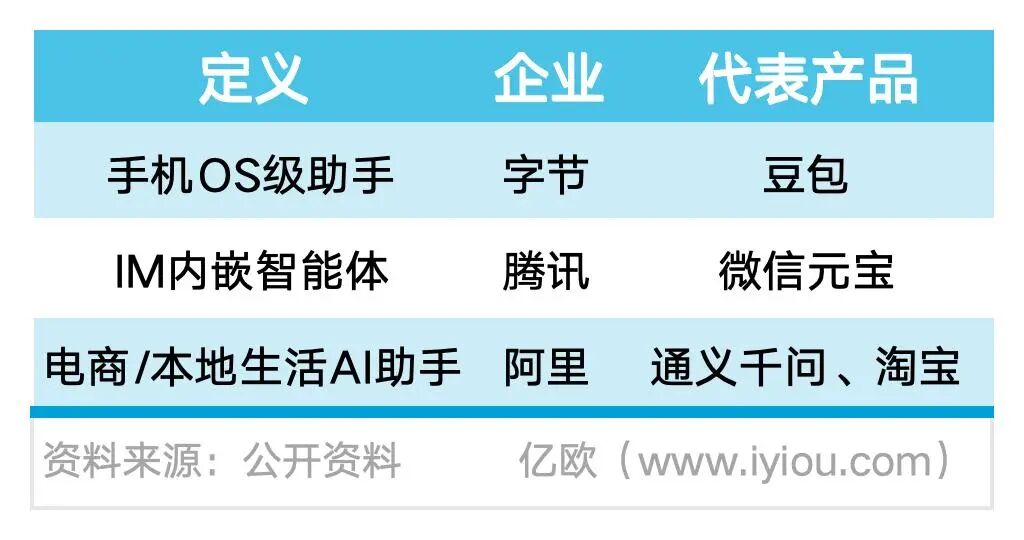
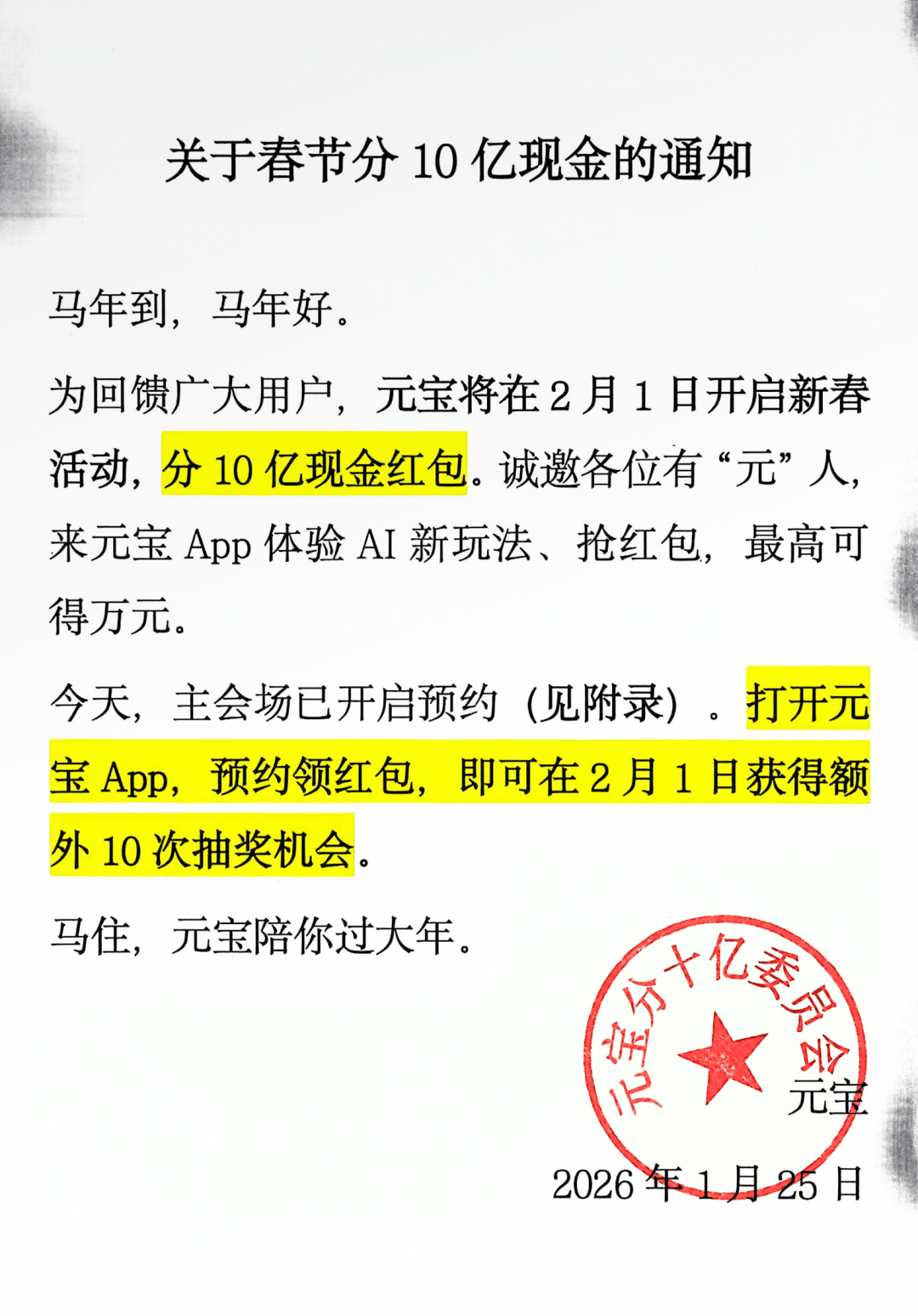
Core Viewpoint - The Chinese internet giants are leveraging the Spring Festival as a prime opportunity to attract users and traffic through cash red envelope activities, particularly focusing on AI applications to enhance user engagement and downloads [1][2]. Group 1: Cash Red Envelope Activities - Baidu announced a cash red envelope activity through its Wenxin Assistant, offering a total of 500 million yuan in cash red envelopes from January 26 to March 12, with individual envelopes reaching up to 10,000 yuan [1]. - Tencent's AI platform Yuanbao will launch a new Spring Festival activity on February 1, distributing 1 billion yuan in cash red envelopes, with individual users also eligible for up to 10,000 yuan [1]. - These activities are expected to significantly increase the download and daily active user numbers for C-end AI applications, intensifying competition among internet giants for AI market entry [1]. Group 2: Strategic Insights - The Spring Festival serves as a social bonding occasion, and the substantial cash red envelopes can quickly break down barriers, facilitating large-scale downloads and initial usage of AI applications, akin to WeChat Pay's success during the Spring Festival in 2015 [2][3]. - Historical examples of successful Spring Festival marketing campaigns include WeChat's 10.1 billion red envelope transactions in 2015 and Alipay's "Five Blessings" game in 2016, demonstrating the effectiveness of such strategies [2]. - The competition for user engagement during the Spring Festival is critical for companies to establish long-term dominance in the AI ecosystem, with a focus on capital-intensive short-term investments to secure entry points into the AI market [2]. Group 3: User Engagement Factors - User retention is influenced by three key dimensions: addressing real user pain points, continuous optimization of product experience through user data feedback, and seamless integration into existing social and work ecosystems to lower usage barriers [3]. - The report by QuestMobile indicates that the top five AI native apps by weekly active users include Doubao, DeepSeek, Yuanbao, Ant Aifu, and Alibaba Qianwen, highlighting the competitive landscape for user acquisition [3]. - Open-source securities research suggests that domestic large model vendors are enhancing user and revenue scales through frequent model upgrades and overseas expansion, with the Spring Festival activities expected to amplify user growth and commercialization opportunities [3]. Group 4: AI Super Entrance Concept - The essence of the "AI super entrance" is to serve as a centralized channel for users to access services, integrating various functions to become the primary gateway to resources or ecosystems [4]. - Mastering the super traffic entrance is crucial for making AI a default choice in users' daily lives, thereby establishing ecological dominance [4].
AI超级入口“三国杀”格局显现:百度文心、豆包、千问各有千秋
3 6 Ke· 2026-01-23 03:04
Core Insights - The core viewpoint of the articles is that the competition in the domestic AI application market has solidified into a "three-way battle" among Baidu's Wenxin, ByteDance's Doubao, and Alibaba's Qianwen, each serving as a "super entrance" for consumer AI applications [1][2][3] Group 1: Market Positioning - Baidu's Wenxin has surpassed 200 million monthly active users (MAU), while ByteDance's Doubao reached 172 million MAU and Alibaba's Qianwen exceeded 100 million MAU, indicating a strong competitive landscape [1] - The shift in focus from technical metrics of AI models to their comprehensive application capabilities is expected to dominate discussions from 2025 onwards, with a growing emphasis on practical usability [1][2] Group 2: Competitive Advantages - Doubao benefits from the vast traffic and content ecosystem of ByteDance's platforms like Douyin and Toutiao, allowing it to quickly accumulate a large user base [2] - Qianwen leverages Alibaba Cloud's technological foundation and is closely integrated with Alibaba's e-commerce services, aiming for a seamless transition from conversation to transaction [2][3] - Wenxin's strength lies in its rich application ecosystem, integrating with Baidu's core services such as search, cloud storage, and maps, enhancing its search capabilities in the AI era [3][5] Group 3: Ecosystem Development - Wenxin emphasizes an open ecosystem by allowing third-party applications to connect through its Model Context Protocol (MCP), enabling it to offer a wide range of services from various sectors [3][6] - The integration of services through AI assistants is seen as a way to enhance user experience, providing detailed information and options that traditional apps may not offer [5][6] Group 4: Future Outlook - The competition among the three AI super entrances will depend on advancements in foundational models, tighter integration with existing super apps, and the development of a robust third-party application ecosystem [7] - The long-term vision for AI applications is to act as an "operating system" that seamlessly coordinates information and services, although current capabilities are still in early stages [6][7]

AI进入生态对决,大厂们的明牌与暗战
3 6 Ke· 2026-01-22 04:59
Core Insights - The article discusses the competitive landscape among major tech companies in the AI sector, particularly focusing on Alibaba, ByteDance, and Tencent as they prepare for the upcoming Spring Festival and the AI application race [1][3][12] Group 1: AI Competitive Landscape - Alibaba has launched the Qianwen App, achieving over 100 million daily active users within two months, and has integrated it with its ecosystem, enhancing its AI capabilities [2][3] - ByteDance's Doubao has also surpassed 100 million daily active users and is expanding into various smart devices, indicating a strong push in AI hardware and software integration [4][8] - Tencent is taking a more cautious approach, focusing on internal restructuring and gradual development of its AI capabilities, with recent organizational changes and the introduction of new AI models [6][10] Group 2: Strategic Approaches - Alibaba's strategy involves rapid deployment and integration of AI across its business lines, aiming to enhance user experience and operational efficiency [7][12] - ByteDance leverages its existing user base and ecosystem to minimize costs and maximize the impact of its AI applications, positioning itself as a major player in the AI hardware market [8][9] - Tencent's strategy appears to be more conservative, focusing on building a robust AI infrastructure and integrating AI into its existing services, particularly within the WeChat ecosystem [11][12] Group 3: Market Dynamics and Future Outlook - The competition for AI market share is intensifying, with all players needing to ensure user engagement and retention rather than just focusing on user acquisition [12] - The article suggests that the upcoming Spring Festival may serve as a pivotal moment for these companies to showcase their AI advancements and marketing strategies [2][5]
“AI入口大战”--字节已成“倒逼之势”,阿里腾讯“输不起”
华尔街见闻· 2026-01-21 10:37
Core Viewpoint - ByteDance is aggressively expanding in both AI cloud infrastructure and consumer applications, creating significant pressure on Alibaba and Tencent to increase investments by 2026 to defend their core markets [1][2]. Group 1: AI Cloud Market Dynamics - ByteDance's Volcano Engine has rapidly become the second-largest AI infrastructure provider in China, achieving a market share of 13% in AI cloud services by mid-2025, trailing only Alibaba's 23% [1][3]. - ByteDance is leveraging its first-mover advantage in AI to disrupt the long-standing dominance of Alibaba, Tencent, and Huawei in the cloud market [2][3]. - The company's strategy includes expanding its sales team and utilizing aggressive pricing to weaken competitors, focusing on selling AI products based on its extensive database and computing infrastructure [3][4]. Group 2: Consumer Application Impact - The shift in user behavior towards AI as a primary interface poses a risk of marginalizing traditional apps, as users may prefer to interact with AI first rather than using search engines [2][5]. - ByteDance's control over user engagement time is a critical advantage, as it can influence user actions during idle moments, positioning its AI applications favorably [6][7]. Group 3: Strategic Implications for Competitors - Goldman Sachs identifies 2026 as a pivotal year for Chinese internet giants, emphasizing the need for Alibaba and Tencent to significantly increase their capital and operational expenditures in AI to maintain their market positions [2][8]. - The competition is not merely about technology but also about who can establish a "default entry point" for users, which will redefine traffic distribution and advertising budgets [8][9]. Group 4: Investment Logic Transformation - The investment landscape is expected to shift from valuing "visions" to focusing on profitability growth and new narratives by 2026, with an emphasis on "alpha" returns rather than mere valuation expansion [9][10]. - Investors are advised to prioritize metrics related to "entry success rates" and the progress of transaction closures over emotional responses to models [10][11]. Group 5: The Nature of the AI Super Entry Battle - The AI super entry battle does not require all players to succeed; it only needs one dominant entry point, with others potentially becoming secondary features [12].

“AI入口大战”--字节已成“倒逼之势”,阿里腾讯“输不起”
Hua Er Jie Jian Wen· 2026-01-21 04:56
Core Insights - The competition among Chinese internet giants in AI is evolving from a focus on model parameters to a critical battle for "default entry points" that could determine their survival [1][2] - ByteDance's aggressive pricing strategy and vast traffic ecosystem have positioned it as a significant threat to Alibaba and Tencent, compelling them to increase investments by 2026 to protect their core markets [1][2] Group 1: Market Position and Financials - ByteDance's Volcano Engine has rapidly become the second-largest AI infrastructure provider in China, achieving a market share of 13% in AI cloud services by mid-2025, trailing only Alibaba's 23% [1][3] - In 2025, ByteDance's profit is projected to reach $50 billion, surpassing Tencent's $36 billion and Alibaba's $15 billion, providing a solid foundation for aggressive expansion in the AI sector [2][4] Group 2: User Behavior and Market Dynamics - The shift in user behavior towards AI as a primary entry point poses a significant risk to traditional apps, as users may prefer to consult AI first, leading to potential marginalization of existing applications [1][5][6] - The competition is not merely about technology but also about redefining user habits, with the potential for AI to reduce the frequency of searches and increase engagement with content and transactions [6][7] Group 3: Strategic Implications for Major Players - Goldman Sachs identifies 2026 as a pivotal year where the focus will shift from model competition to securing default entry points, which will redefine traffic distribution and the internet profit pool [2][7][8] - Major players like Alibaba and Tencent are expected to undergo significant strategic shifts, with Tencent leveraging its WeChat ecosystem and Alibaba focusing on its app capabilities to maintain market dominance [7][8] Group 4: Investment Considerations - The investment logic is set to change fundamentally by 2026, with a focus on profitability growth and new narratives rather than mere valuation expansion [8][9] - Investors are advised to prioritize "entry success rates" over "model sentiment" and to monitor key performance indicators related to system-level cooperation and transaction closure progress [8][9]
低吸时机到,南向资金连续10日买入腾讯、连续7日买入阿里!港股互联网ETF(513770)溢价翻红,14亿资金涌入
Xin Lang Cai Jing· 2026-01-21 02:10
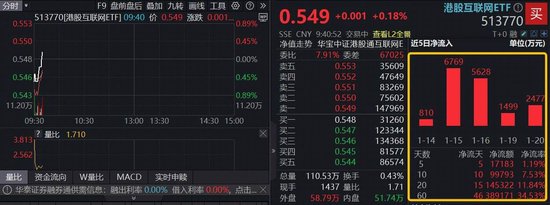
Core Viewpoint - The Hong Kong stock market is experiencing fluctuations due to tariff concerns, but there are positive movements in key stocks like Alibaba, Tencent, and Kuaishou, indicating a resilient market sentiment [1][8]. Group 1: Market Performance - The Hong Kong Internet ETF (513770) opened lower but managed to rise by 0.18%, with a real-time premium rate of nearly 0.5%, reflecting positive buying sentiment [1][8]. - Over the past 20 days, the Hong Kong Internet ETF has seen a net inflow of 1.453 billion yuan [1][8]. - Southbound funds recorded a net purchase of 3.663 billion HKD, with Tencent receiving a net buy of 663 million HKD for ten consecutive days, and Alibaba seeing net purchases for seven consecutive days [8][9]. Group 2: Strategic Insights - Goldman Sachs reports that 2026 will be a pivotal year for leading Chinese internet companies, focusing on AI investments aimed at consumers and competition around "AI super entry points" [3][9]. - Companies like Alibaba are working to solidify their leading positions in e-commerce, while Tencent is accelerating AI functionalities in WeChat [3][9]. - The competitive landscape in sectors like food delivery is becoming more rational, leading to improved unit economics [3][9]. Group 3: ETF and Fund Details - The Hong Kong Internet ETF (513770) tracks the CSI Hong Kong Internet Index, with Alibaba being the largest weight at 14.71%, and the top ten stocks accounting for nearly 77% of the ETF [3][10]. - As of January 20, the fund size reached a historical high of 14.182 billion yuan, with an average daily trading volume exceeding 600 million yuan since 2025 [10]. - The Hong Kong Large Cap 30 ETF (520560) is recommended for those looking to reduce volatility while investing in technology and dividend stocks [10].
记者体验不如预期 “AI办事闭环”利在厂商?
Mei Ri Shang Bao· 2026-01-20 23:23
Core Insights - The competition for AI "super entry" is intensifying among major tech companies like Alibaba, ByteDance, and Tencent, focusing on user engagement and service integration [1][2][3] - The effectiveness of AI applications in consumer markets remains uncertain, as companies strive to shift user habits and achieve widespread adoption [1][2] Group 1: Company Strategies - Alibaba's Qianwen App aims to create an "AI service closed loop" by integrating various services such as food delivery, flight bookings, and hotel reservations, addressing the challenge of converting technical advantages into user engagement [2] - ByteDance's Doubao has surpassed 100 million daily active users, leveraging its content and traffic distribution strengths to seamlessly integrate ordering and local services [2] - Tencent has incorporated "Yuanbao" into its WeChat ecosystem, enhancing its AI entry point by utilizing its vast user base [2] Group 2: Market Dynamics - The competition for AI "super entry" is not exclusive to tech giants; pure AI model companies like Zhiyu have also entered the market, offering services like ordering and ticket booking through third-party ecosystems [2] - The strength of AI entry points and the fluidity of service integration depend on the overall strength of a company's supply chain and ecosystem [3] - Industry experts predict that 2026 will mark the beginning of the "general AI entry year," as AI transitions from a technology validation phase to a commercial application phase [3]