L3自动驾驶

Search documents
华为靳玉志:乾崑智驾已合作28款车型搭载量突破100万辆,L3将在2027年规模放量
Xin Lang Ke Ji· 2025-09-28 13:00
Core Insights - Huawei's intelligent driving solution, QianKun, has become a trusted brand among users, achieving significant milestones in assisted driving and parking capabilities [2][3] - The automotive industry is transitioning towards an era of embodied intelligence, characterized by three waves: electrification, intelligence, and automation [3] Group 1: QianKun Achievements - QianKun has accumulated a total assisted driving mileage of 5 billion kilometers and has performed parking assistance 280 million times, preventing 2.71 million potential collisions [2] - The average monthly assisted driving mileage per user is 727 kilometers, with over 50% of urban driving time and an average of more than 36 smart parking instances per month [2] - The QianKun system is now installed in over 1 million vehicles, with 28 cooperative models across various brands, including AITO, Deep Blue, and Audi [2] Group 2: Industry Trends - The first wave of the automotive industry is electrification (2015-2022), which significantly reduces travel costs by replacing fuel with electricity [3] - The second wave is the intelligence wave (2022-2027), where algorithms will replace drivers, enhancing safety and user experience while reducing accident risks [3] - The third wave, starting in 2027, will focus on automation, redefining safety and experience standards, and improving transportation efficiency [3] Group 3: Technological Development Path - By 2025, Huawei aims to launch the ADS 4 system, targeting L3 technology for commercial solutions, with capabilities for L3 pilot commercial use on highways and L4 testing in urban areas [3] - In 2026, the goal is to achieve large-scale commercial use of L3 on highways and pilot commercial use of L4 in urban settings, subject to regulatory approval [3] - By 2027, L3 is expected to scale up, and L4 will enter commercial stages, paving the way for the emergence of Robotaxi and logistics solutions [3]

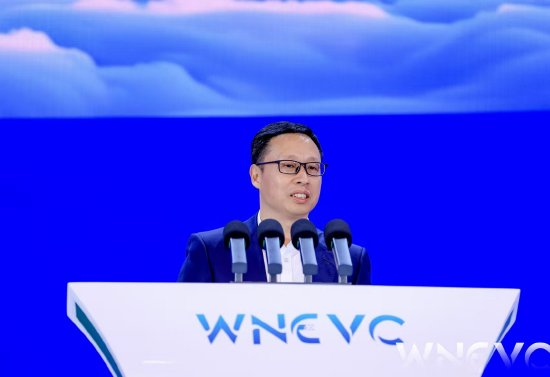
华为靳玉志:汽车产业正进行“三波浪潮”变革,并加速迈向具身智能
Xin Lang Cai Jing· 2025-09-28 09:37
Core Viewpoint - The automotive industry is undergoing a transformation characterized by three waves: electrification, intelligence, and automation, leading towards embodied intelligence in vehicles [1] Group 1: Transformation Waves - The first wave (2015-2022) focuses on electrification, where electric power replaces fuel, significantly reducing travel costs [1] - The second wave (2022-2027) emphasizes intelligence, with algorithms replacing drivers, greatly enhancing safety and user experience [1] - The third wave, starting in 2027, will be centered on automation, where algorithms will redefine safety and experience standards, significantly improving travel and societal efficiency [1] Group 2: Industry Collaboration and Projections - The company QianKun Intelligent Driving has partnered with several automakers, including Seres, JAC, BAIC, SAIC, GAC, Changan, and Dongfeng, to launch 28 vehicle models [1] - The deployment of QianKun Intelligent Driving has surpassed 1 million units, indicating strong market acceptance and growth potential [1] - With the accelerated adoption of NCA in highways and urban areas, Level 3 automation is expected to scale significantly by 2027 [1]
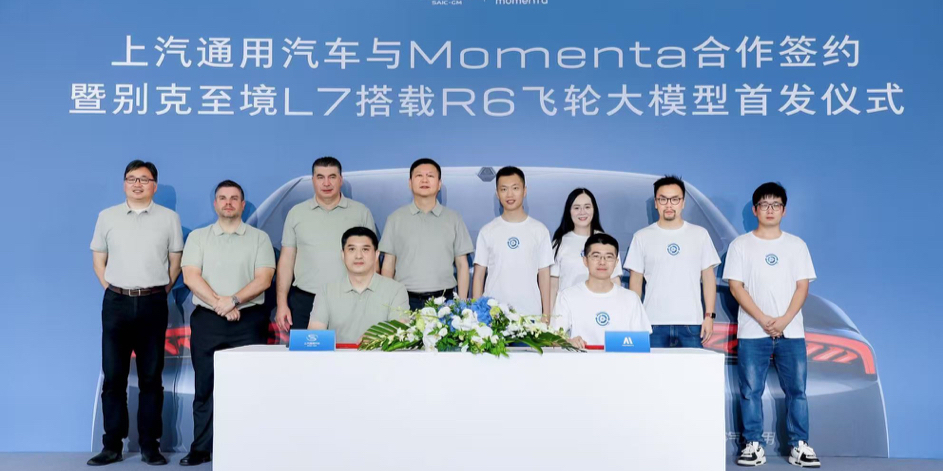
上汽通用与Momenta官宣合作 本土智驾辅助系统全面上车
Jing Ji Guan Cha Wang· 2025-08-20 16:28
Core Viewpoint - SAIC-GM has signed a strategic cooperation agreement with Momenta to deepen collaboration in the field of assisted driving, marking a significant step in adopting local technology solutions for intelligent driving in their vehicles [3][4] Group 1: Partnership Details - The first model to feature Momenta's R6 Flywheel model will be the Buick high-end electric sub-brand "Zhijing" L7, which will showcase advanced assisted driving capabilities [3][4] - Momenta has become a prominent player in the domestic intelligent driving supply market, with partnerships extending to various brands including Toyota and Honda, but SAIC-GM's investment in Momenta gives it a unique position [3][4] Group 2: Technology Overview - The R6 Flywheel model is based on 3 billion kilometers of real-world driving data and utilizes 70 million data points through reinforcement learning, aiming to surpass human driving capabilities [4][5] - The intelligent driving system in the Zhijing L7 includes a comprehensive sensor suite with 12 ultrasonic radars, 12 cameras, 3 millimeter-wave radars, and 1 lidar, designed with high redundancy for enhanced safety and performance [7][8] Group 3: Development History - SAIC-GM's development of intelligent driving systems has evolved through three stages, starting with the introduction of Super Cruise in North America, leading to the development of a second-generation system for the Buick GL8 [6] - The collaboration with Momenta represents an advancement in SAIC-GM's capabilities in intelligent driving, integrating Momenta's expertise in perception and algorithm models with SAIC-GM's experience in vehicle control [6]

X @外汇交易员
外汇交易员· 2025-07-23 07:21
Regulatory Landscape & Safety Concerns - The Ministry of Public Security's Traffic Management Bureau states that current "intelligent driving" systems on the market have not achieved "autonomous driving", and drivers are ultimately responsible [1] - "Hands-off, eyes-off" driving poses serious road safety risks and potential legal consequences, including civil compensation, administrative penalties, and criminal liability [1] - Public security agencies will further strengthen regulatory management in conjunction with relevant departments [1] Industry Perspective & Development - Huawei believes its intelligent driving is ready for L3 autonomous driving and calls for national regulations to allow users to sleep while using intelligent driving [1] - Huawei's 余承东 admitted to looking at his phone while using the intelligent driving system, resulting in a fine and deduction of 3 points [1]
鸿蒙智行“第三标”落地“五界”协同发力加速覆盖市场
Zheng Quan Ri Bao· 2025-07-09 16:00
Core Viewpoint - Huawei's HarmonyOS Intelligent Driving ecosystem is expanding, with the recent launch of the new "Xiangjie" car logo, indicating a deeper collaboration with BAIC Blue Valley and a clearer strategic direction for the HarmonyOS Intelligent Driving initiative [1][2]. Group 1: Company Developments - The "Xiangjie" brand, co-created by Huawei and BAIC Blue Valley, targets the administrative sedan market priced above 300,000 yuan [2]. - BAIC Blue Valley has committed 5.532 billion yuan for the development of the "Xiangjie" model, with 700 million yuan allocated from raised funds for three upgraded vehicle products [2]. - The "Xiangjie S9" model achieved sales of 4,154 units in June, leading the sales of new energy sedans priced above 300,000 yuan [3]. Group 2: Strategic Positioning - The HarmonyOS Intelligent Driving ecosystem consists of five brands, including "Xiangjie," which fills a gap in the administrative sedan market, differentiating itself from other models like "Wenjie" and "Zun Jie" [3][4]. - The five brands cover a market range from 100,000 to 1 million yuan, creating a closed loop of high-end (Zun Jie/Xiangjie), mid-range (Wen Jie/Zhi Jie), and entry-level (Shang Jie) vehicles [4]. - Huawei's automotive business has established a clear division of labor with traditional automakers, focusing on R&D, intelligent driving, and marketing, while manufacturers handle production [4].

华为发布L3商用方案后,嬴彻、智加们的日子还好不好过?
雷峰网· 2025-05-29 08:14
Core Viewpoint - The entry of major players like Huawei has intensified competition in the dull trunk logistics autonomous heavy truck industry [1] Group 1: Company Developments - Manbang Group is increasing its management control over autonomous driving company Zhijia Technology, which is expected to remain in a net loss state throughout 2024, prompting further investment from Manbang [2] - Zhijia Technology, established in 2016, completed the industry's first fully unmanned driving operation test from warehouse to warehouse by the end of 2024 [2] - Zhijia Technology received the first operational license for autonomous freight vehicles in China in November 2018 and completed a global first demonstration operation on the S17 smart highway by the end of 2023 [2] Group 2: Market Challenges - The trunk logistics sector has faced significant challenges, with companies like TuSimple and Qianhua Technology encountering failures, leading to a shift in focus for some firms [5] - The "1+N" convoy model in trunk logistics requires a stable cargo supply system to reduce empty load rates and logistics costs, highlighting operational inefficiencies [5] Group 3: Future Prospects - Yingche Technology is reportedly considering an IPO in 2025, with significant backing from major investors and clients, which could position it as a leading autonomous driving technology company in the U.S. market [6] - NineSight, another player in the autonomous logistics space, is preparing for a Hong Kong IPO with an estimated valuation of $1.5 billion, showcasing a profitable business model [7] Group 4: Competitive Landscape - The entry of Huawei with its L3 commercial solution for highways poses a significant threat to existing autonomous driving companies in trunk logistics, as it directly addresses the high-speed scenario [10] - Companies like Manbang and Didi are adopting a defensive strategy in the face of potential full automation in freight logistics, emphasizing the need for strategic reserves to manage supply and demand dynamics [9]

L3真伪辨
Zhong Guo Qi Che Bao Wang· 2025-05-14 01:29
Group 1 - The core viewpoint is that the L3 autonomous driving technology is being commercialized by multiple companies, with expectations for 2025 to be a significant year for its adoption [2][3][4] - Companies like GAC Group and Chery are making strides in L3 technology, with GAC set to launch its first L3 passenger vehicle in Q4 of this year [3][4] - There is a growing concern among consumers regarding the effectiveness and reliability of L2 and L3 systems, especially after incidents like the Xiaomi SU7 accident [2][6] Group 2 - The L3 technology requires advanced capabilities such as "all-weather perception" and decision redundancy, with a computing power exceeding 200 TOPS [7] - Current regulations in China do not allow L3 vehicles to operate freely on public roads, with specific conditions set for their use [6][7] - The ethical implications of L3 driving, particularly in accident scenarios, are under discussion, with a need for clear definitions of responsibility between manufacturers and drivers [9][10] Group 3 - The competition in the L3 space is intensifying as more manufacturers enter the market, indicating a shift from L2 to L3 technologies [3][4] - Industry experts emphasize the importance of adhering to regulatory standards to avoid misleading claims about L3 capabilities [6][7] - The development of L3 technology is seen as a critical factor in reshaping the automotive industry's value chain and business models [4][9]


港股概念追踪|2025年是L3自动驾驶开启的元年 智驾相关产业链发展进入快车道(附概念股)
智通财经网· 2025-04-29 06:03
Core Insights - Huawei officially launched HUAWEI ADS 4 and the first commercial L3 solution at the QianKun Intelligent Technology Conference, predicting that L3 commercial capabilities will be available by 2025 [1] - The penetration rate of L2 and above functions in the Chinese market is expected to reach 62% by 2025, with significant growth in urban and highway NOA [1] - The L2 and above auxiliary driving function installation rate for new energy passenger cars reached 66.3% in early 2025, indicating a trend towards lower-priced market penetration [2] Group 1: Industry Trends - The L3 autonomous driving technology is anticipated to transition from concept to reality by 2025, with an expected installation of nearly 4 million urban intelligent driving aids [1] - Canalys forecasts that urban NOA growth will surpass highway NOA by 2027-2028, reshaping the SoC competitive landscape [1] - Companies like Chery, GAC, and Zeekr are disclosing timelines for mass production of L3 autonomous vehicles, indicating a shift towards higher-level intelligent driving [2] Group 2: Key Players and Developments - Horizon Robotics (09660.HK) launched an urban auxiliary driving system, with analysts optimistic about its potential to become a key player in urban intelligent driving [3] - Zhixing Technology (01274.HK) announced the launch of its iDC 500 integrated controller, marking a significant achievement in high-level intelligent driving solutions [3] - Black Sesame Intelligence (02533.HK) is focusing on enhancing its autonomous driving chip and solutions, targeting both new energy and traditional fuel vehicle markets [3] Group 3: Company Announcements - Youjia Innovation (02431) secured contracts to provide mid-to-high-end intelligent driving domain control products for major automotive brands, including Volkswagen and Audi [4] - XPeng Motors (09868) plans to achieve L3 intelligent driving capabilities in China by the end of 2025, with its self-developed AI driving chip set to launch in Q2 2023 [4] - GAC Aion and Didi Autonomous Driving are collaborating on an L4 autonomous vehicle, which is expected to be mass-produced by the end of this year [4] Group 4: Market Positioning - RoboSense (02498) has achieved significant milestones in the global automotive lidar market, leading in market share for passenger car lidar and ADAS lidar sales [5]
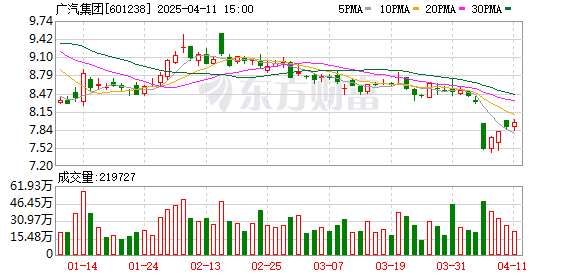
广汽:确定了,首款L3级别车型年内开售!这个体系首次公开
Nan Fang Du Shi Bao· 2025-04-14 00:54
Core Insights - GAC Group announced the launch of its first L3 autonomous driving vehicle in Q4 2023, emphasizing safety with the introduction of the "GAC Starling Safety Guardian System" [2][3] - The GAC Starling Safety Guardian System includes a comprehensive safety development framework, all-domain safety technologies, and continuous safety assurance [3][4] - GAC unveiled a matrix of 12 automotive-grade safety chips and initiated a collaborative plan for the automotive chip application ecosystem [5] Group 1: Autonomous Driving and Safety - GAC Group is one of the first seven companies in China to receive approval for L3 autonomous driving road trials, addressing user concerns about safety [3] - The safety development framework includes a collision safety standard that exceeds existing international standards, with over 60 testing conditions, which is 3-4 times the industry standard [3][4] - The L3 autonomous driving system has a failure trigger rate controlled within 1 in 1 billion hours, surpassing aviation safety levels by 1000 times [4] Group 2: Technology and Product Launch - GAC launched the Haobo HL, a new flagship model priced between 269,800 and 319,800 yuan, with a 10,000 yuan reduction from the pre-sale price [2][5] - The Haobo HL features a length of 5,126 mm, width of 1,990 mm, height of 1,750 mm, and a wheelbase of 3,088 mm, positioning it as a large six-seat pure electric vehicle [5][6] - The vehicle offers both pure electric and range-extended versions, with the pure electric version having a maximum range of 750 km and the range-extended version achieving a total range of 1,200 km [6] Group 3: Market Position and Challenges - Despite the advanced features, the Haobo brand's market presence is currently low, with average monthly sales not exceeding 1,000 units in the first three months of the year [6] - The decision to enter the market with a higher-priced model poses significant challenges, especially in a competitive environment where cost-effectiveness is a key factor [6]