
智能驾驶

Search documents
宝马2026年中国战略:三大品牌推约20款新车,另有马年特别版
Jing Ji Guan Cha Wang· 2026-02-06 13:52
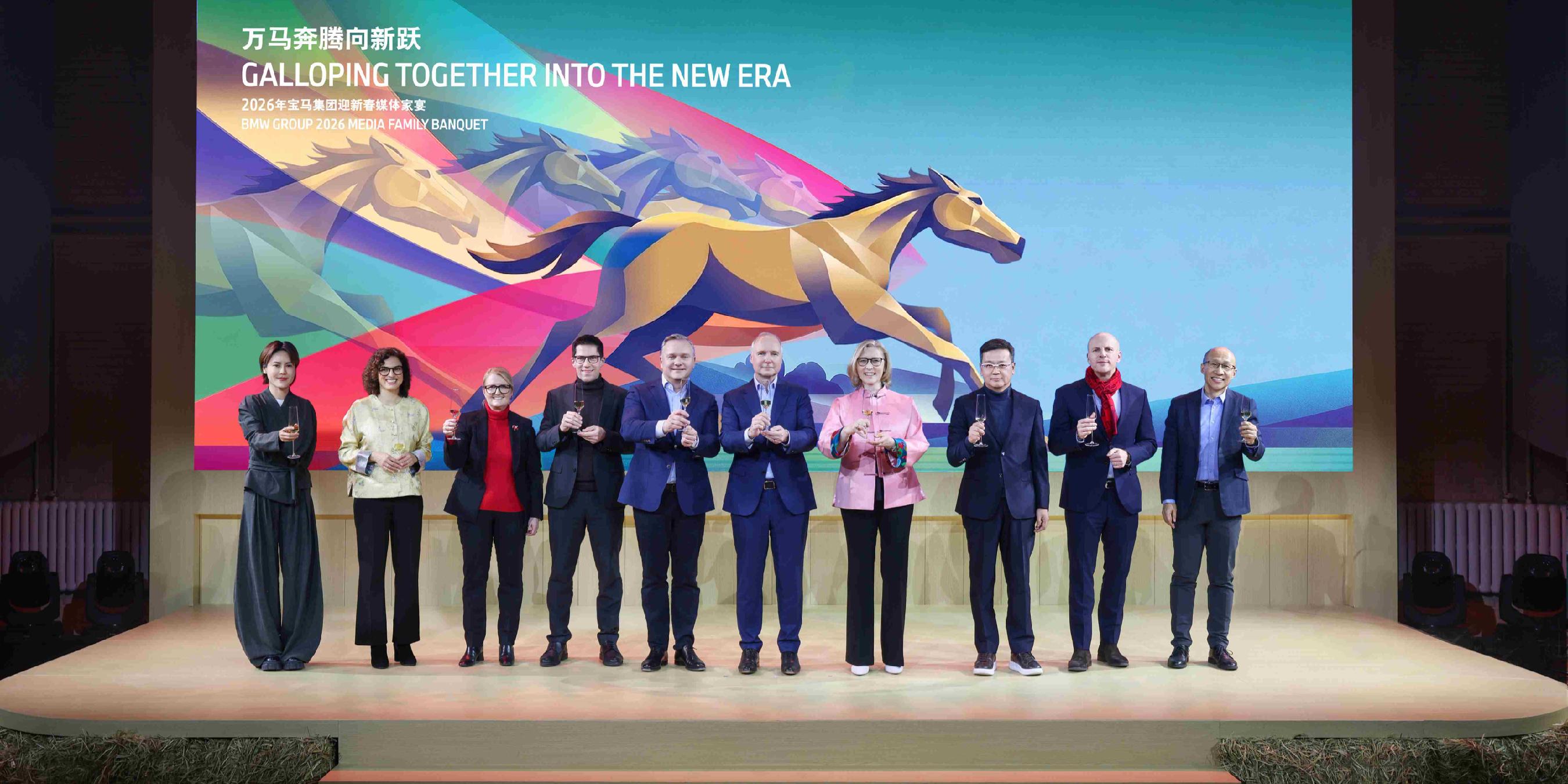
Core Insights - BMW Group has announced its strategic plan for the Chinese market in 2026, emphasizing a significant product launch year with approximately 20 new models across its BMW, MINI, and BMW Motorrad brands to cater to consumer demands for driving pleasure and personalization [2] Group 1: Product Launches and Innovations - The new generation BMW iX3 long-wheelbase version will debut at the Beijing Auto Show this year and is set to launch in the second half of the year, designed specifically for the Chinese market with local consumer needs integrated [2] - The new generation BMW iX3 will feature advanced technologies including BMW's next-generation electric drive technology, "Heart of Joy" driving control system, and panoramic iDrive, along with deep integration of HUAWEI HiCar and a smart driving system developed in collaboration with Momenta [2][4] - In addition to the iX3, BMW plans to upgrade several mid-size to large models in 2026, including special editions for the Year of the Horse for models like the BMW 3 Series, X3, 5 Series, and X5 [3] Group 2: Market Performance and Localization - In 2025, BMW delivered approximately 2.464 million vehicles globally, with China remaining its largest single market, delivering over 625,000 BMW and MINI vehicles, supported by strong sales of core models [4] - BMW has established the largest R&D system outside Germany in China, with significant investments in innovation bases and software companies, and has deployed its AI platform "GAIA" at scale in the country [4] - The company has invested over 116 billion yuan in its Shenyang production base, which has begun trial production of the new generation BMW iX3, and plans to launch a sixth-generation battery project this year [4] Group 3: Leadership Changes - Christian Ach, the current head of the German market, will become the President and CEO of BMW Group Greater China starting April 1, 2026, marking a strategic move to deepen BMW's commitment to the Chinese market [5]

德赛西威(002920) - 2026年2月5日投资者关系活动记录表
2026-02-06 10:14
Group 1: Market Positioning - The company leverages unique advantages to create products that are superior to competitors, maintaining a leading position in the market [2][3] - The diverse and tiered product matrix, along with flexible cooperation models, covers a vast majority of customer needs, supporting the company's market leadership [3] Group 2: Quality Management - The company has integrated 14 advanced international management systems, including IATF16949 and ISO26262, forming a comprehensive digital management system from R&D to customer service [4] - It is the first enterprise to receive the "National Quality Award" and has won various quality awards, demonstrating its commitment to high-quality product delivery [4] - The company operates a leading laboratory with dual recognition (CNAS and A2LA), covering extensive testing capabilities in electrical, mechanical, environmental reliability, EMC, and failure analysis [4] Group 3: Robotics Domain Control - The company has established strategic partnerships with several renowned robotics firms and launched the AI Cube, an AI computing terminal for robotics [5] - The AI Cube aims for "zero defects" and enhances the durability and reliability of key robotic components, improving their intelligence in complex environments [5] - The company provides technical services for rapid model adaptation, optimization, and computational acceleration, aiding clients in enhancing large model inference speed [5]
600家!深圳,又一里程碑
Shang Hai Zheng Quan Bao· 2026-02-06 08:38
Core Insights - Shenzhen has officially surpassed 600 listed companies with the recent IPOs of Zhuozheng Medical and Dazhu CNC on February 6, marking a significant milestone in the city's financial landscape [1] Group 1: Market Performance - Zhuozheng Medical's stock closed at 80.8 HKD per share, up 34.89%, while Dazhu CNC's stock closed at 113 HKD per share, up 17.95% on their first trading day [1] - The total market capitalization of Shenzhen's listed companies exceeds 19 trillion CNY, with domestic companies accounting for 12.59 trillion CNY, maintaining the second position among major cities in China [3] Group 2: Company Growth and Innovation - The emergence of star enterprises has driven the growth and quality of Shenzhen's listed companies, with notable examples including Beixin Life, Dapu Micro, and Huike Co., which have achieved significant milestones in their respective sectors [3] - Shenzhen's listed companies reported a cumulative operating revenue of 5.2 trillion CNY and a net profit of 457.8 billion CNY for the first three quarters of 2025, reflecting year-on-year growth of 7.36% and 3.98% respectively, with manufacturing contributing 99.87% to revenue [3] Group 3: Technological Advancements - Approximately 80% of newly listed companies in Shenzhen are from the Sci-Tech Innovation Board and the Growth Enterprise Market, indicating a strong focus on hard technology [5] - Shenzhen's strategic emerging industries have a research and development intensity of 7%, with BYD leading with over 54 billion CNY in R&D investment, and a significant number of companies exceeding 10% in R&D intensity [5] Group 4: Industry Expansion - Shenzhen has seen a continuous expansion of its overseas listing landscape, with 38 new companies listed abroad in the past three years, raising a total of 29.57 billion HKD in initial public offerings [3] - The city is actively promoting the development of frontier industries, with companies like UBTECH and Huichuan Technology making strides in robotics and automation, contributing to the transformation of traditional manufacturing into smart production [6]
深蓝汽车全系车型参与牙克石冬测,检验零下30度激光雷达性能
Qi Lu Wan Bao· 2026-02-06 04:39
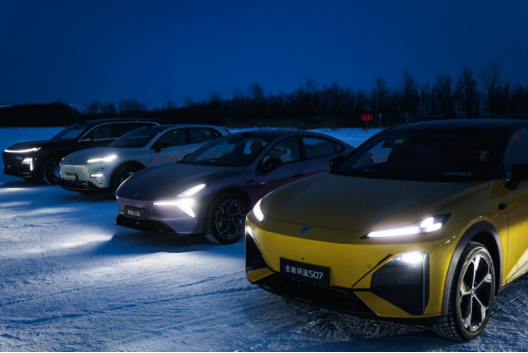
Core Insights - Deep Blue Automotive conducted winter testing in extreme cold conditions in Inner Mongolia, with temperatures reaching -30°C, to evaluate the performance of six vehicle models: S09, S07, S05, L07, L06, and G318 [1] Group 1: Vehicle Performance and Technology - The winter test focused on core scenarios such as complex road handling and safety in extreme environments, with the L06 model showcasing excellent stability through Ferrari-like magnetorheological suspension [3] - The S07 model utilized Dynamic Torque Distribution (DMC) technology to ensure safe driving on icy roads [3] - The S05 model introduced a world-first micro-core high-frequency pulse heating technology, raising battery temperature by 20°C to enhance power output and reduce charging time [5] Group 2: Intelligent Driving Capabilities - The S09 model is equipped with Huawei's Qian Kun ADS 4, enabling precise front vehicle dynamic recognition and navigation assistance, while the L06 features the self-developed DEEPAL AD Max with full-scenario intelligent driving capabilities [6] - Both models demonstrate Deep Blue's technical strength in intelligent driving and its ability to integrate top global resources with in-house development [6] Group 3: Winter Performance and Charging Solutions - The entire range of Deep Blue vehicles addresses winter challenges such as slow charging and reduced range, with the S09 offering a pure electric range of 310 km and a comprehensive range of 1210 km, along with 5C ultra-fast charging that allows 30%-80% charge in just 10 minutes [6] - The L06 and S07 long-range versions utilize end-pulse charging technology and heat pump air conditioning to maximize winter range stability while keeping the cabin warm [6] - Other models like S05, L07, and G318 are equipped with 3C ultra-fast charging technology, ensuring charging from 30%-80% in under 15 minutes, providing reliable energy replenishment for long winter trips [6] Group 4: Company Positioning and Industry Response - Deep Blue Automotive's chairman, Deng Chenghao, addressed industry skepticism regarding winter testing, emphasizing the importance of real performance validation in extreme low-temperature conditions [7] - He highlighted that the testing of vehicle stability, power performance, and safety must be verified through extreme scenarios to ensure user confidence [7]
再度大跌!白银跌超20%,比特币跌破6.5万美元;美伊周五将在阿曼举行核谈判;海南岛内居民可享进境商品“零关税”丨每经早参
Mei Ri Jing Ji Xin Wen· 2026-02-05 23:10
Market Overview - The three major U.S. stock indices closed lower on February 5, with the Dow Jones down 1.2%, the Nasdaq down 1.59%, and the S&P 500 down 1.23%. Notable tech stocks like AMD and Qualcomm fell over 8%, while Microsoft dropped nearly 5% [2][5] - International oil prices also saw a decline, with WTI crude oil down 2.89% at $63.26 per barrel, and Brent crude down 2.85% at $67.48 per barrel [6] - Gold prices fell significantly, with spot gold down 4.11% at $4766.2 per ounce, and COMEX gold futures down 3.37% at $4787.3 per ounce. Silver prices also dropped, with spot silver down 20.05% at $70.91 per ounce [6][12] Company News - NIO (蔚来) announced it expects to record its first quarterly adjusted operating profit between approximately RMB 700 million (about $100 million) and RMB 1.2 billion (about $172 million) in Q4 2025 [18] - Meituan (美团) announced the acquisition of Dingdong Fresh for an initial price of $717 million (approximately RMB 50 billion), aiming to enhance its fresh food delivery capabilities [20] - Ideal Auto (理想汽车) is preparing to launch the new Ideal L9, which is positioned as a "robotic vehicle" and aims to integrate advanced technology [22] - Infineon Technologies announced a price increase for certain products effective April 1, 2026, due to ongoing supply constraints and rising costs [24] - China Unicom (中国联通) has received approval to begin commercial trials for its Beidou short message service, marking a significant step in satellite communication integration [25] Regulatory and Policy Updates - The Chinese government has implemented a "zero tariff" policy for imported goods for residents of Hainan Free Trade Port, allowing purchases up to RMB 10,000 per year [3][11] - The Shanghai Futures Exchange has adjusted the price fluctuation limits and margin requirements for gold and silver futures contracts, effective from February 9 [12][13]






比亚迪2月5日全情报分析报告:「2025比亚迪新能源汽车表现亮眼」对股价有积极影响
3 6 Ke· 2026-02-05 14:41
Core Viewpoint - BYD's strong performance in the electric vehicle market is highlighted by its leading sales figures and technological advancements, which are expected to positively influence investor confidence and stock prices [1][6][7]. Sales Performance - BYD ranked first in vehicle sales with 4.602 million units, showcasing its dominant position in the Chinese electric vehicle market [1][6]. - The company achieved 100% target fulfillment alongside four other automakers, indicating robust operational performance [1]. Technological Advantages - BYD's core technologies, such as the blade battery, enhance its product offerings and competitive edge in the market [6][7]. - The company's vertical integration strategy allows it to capture full profits from its components, despite facing heavy asset pressures [12]. Product Matrix - BYD's diverse product matrix covers high, medium, and low-end markets, catering to various consumer needs and increasing market share [6][7]. - The modular platform with over 90% parts commonality supports cost efficiency and scalability [12]. International Expansion - BYD's overseas sales surpassed 1 million units for the first time, reflecting its capability for global market expansion and potential revenue growth [7]. - The company is accelerating the establishment of its own shipping fleet and overseas factories to enhance international production capacity [12]. Smart Driving Technology - BYD is advancing its smart driving technology in collaboration with companies like Changan and Leap Motor, positioning itself favorably in the future automotive technology landscape [7]. Market Sentiment - The overall sentiment regarding BYD is significantly positive, with 70.5% of the 46,641 online discussions being favorable [2][4]. - The primary platform for this sentiment is Toutiao, which accounted for 11.05% of the total discussions [4]. Analyst Perspectives - Analysts maintain a positive outlook on BYD, citing its strong sales and international growth potential, despite some adjustments in revenue and profit forecasts [12]. - The company is expected to benefit from cost control and positive performance in its external supply business [12].


比亚迪2月5日全情报分析报告:「2025比亚迪新能源汽车表现亮眼」对股价有积极影响
36氪· 2026-02-05 14:10
Core Viewpoint - BYD has demonstrated significant leadership in the Chinese electric vehicle market, achieving a sales volume of 4.602 million units in 2025, which positions it at the top of the industry rankings [6][10]. Sales Performance - BYD's stock price increased by 1.09% to 90.11, with a trading volume of 258,400 hands and a turnover rate of 1.02% [5][6]. - The company experienced a 3-day decline of 1.93% and a 5-day decline of 4.50%, with a total market capitalization of 821.6 billion [6][10]. Market Sentiment - As of February 5, the total online sentiment regarding BYD was 46,641 pieces of information, with 32,868 positive mentions (70.5%), 479 negative mentions (1.0%), and 13,294 neutral mentions (28.5%), indicating a strong positive sentiment [7][10]. Competitive Advantages - BYD's leadership in sales is attributed to its comprehensive industry chain layout and technological advantages, including the blade battery technology, which enhances its product offerings [10][11]. - The diverse product matrix covers high, medium, and low-end markets, catering to various consumer needs and increasing market share [10][11]. International Expansion - BYD's overseas sales surpassed 1 million units for the first time, reflecting its capability for global market expansion and contributing positively to its revenue [10][11]. Technological Development - The company is advancing in smart driving technology, collaborating with partners like Changan and Leap Motor, which positions BYD favorably in future automotive technology competition [10][11]. Long-term Outlook - The combination of sales leadership, technological innovation, global market expansion, and smart driving technology development is expected to support BYD's stock price and long-term growth [11].

蔚来重磅公告!股价美股盘前直线拉升,李斌:希望未来3至5年实现年均40%至50%增长
Mei Ri Jing Ji Xin Wen· 2026-02-05 10:56
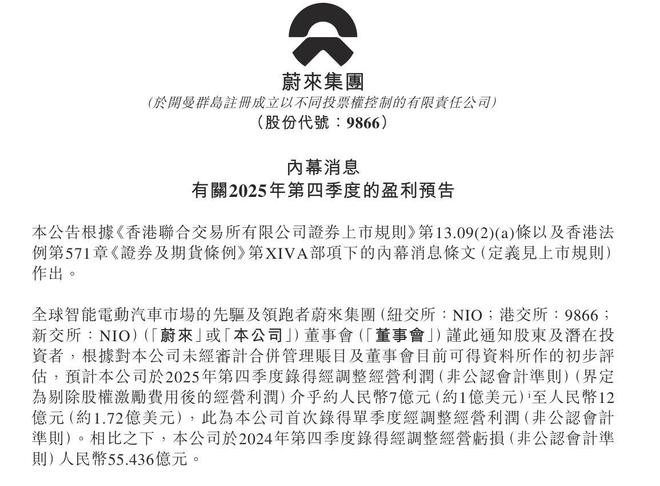
Core Viewpoint - NIO Group is expected to report its first quarterly adjusted operating profit in Q4 2025, with estimates ranging from 700 million to 1.2 billion yuan, a significant improvement from a loss of 5.5436 billion yuan in the same quarter last year [1]. Group 1: Financial Performance - NIO anticipates a continuous increase in sales for Q4 2025, contributing to the expected profitability [1]. - The favorable product mix is expected to enhance the automotive gross margin [1]. - Ongoing cost reduction and efficiency improvement measures are being implemented by the company [1]. Group 2: Market Reaction - NIO's stock price rose over 10% in pre-market trading following the profit forecast announcement [3]. Group 3: Delivery and Growth - In January 2026, NIO delivered 27,182 new vehicles, marking a year-on-year increase of 96.1%, with total deliveries reaching 1,024,774 vehicles to date [4]. - CEO Li Bin expressed confidence in achieving the Q4 2025 profit target, citing the delivery of 40,000 new ES8 vehicles in the previous quarter, each with stable gross margins [5]. Group 4: Strategic Focus - Li Bin outlined three key priorities for the year: ensuring the timely and high-quality delivery of three new models, increasing investment in intelligent driving capabilities, and aiming to release three significant autonomous driving versions to regain industry leadership [5]. - The company plans to systematically implement AI across all business processes, enhancing efficiency from R&D to finance and human resources [6].
奇瑞汽车:深耕出海,多品牌协同拓展增长边界-20260206
Soochow Securities· 2026-02-05 10:24
Investment Rating - The report assigns a "Buy" rating for Chery Automobile (09973.HK) for the first time [1]. Core Viewpoints - Chery Automobile is transitioning towards globalization and intelligence, with a clear brand matrix consisting of five brands: Chery, Jetour, Exeed, iCAR, and Zhijie, covering various market segments and energy types [8][38]. - The company is experiencing significant revenue growth driven by its electric vehicle (EV) offerings and expanding export markets, with a projected total revenue of 329.4 billion yuan in 2026, reflecting an 8.64% year-on-year growth [1][17]. - Chery's net profit is expected to reach 21.08 billion yuan in 2026, with a strong growth trajectory, particularly in the EV segment [1][17]. Summary by Relevant Sections 1. Basic Information - Chery Automobile was established in 1997 and has evolved from a domestic manufacturer to a global technology-driven automotive enterprise, focusing on core technologies and quality improvement [13][14]. - The company has a clear ownership structure involving state capital, strategic investors, and management, ensuring operational independence [14]. 2. Existing Brand System - Chery's five brands cater to diverse consumer needs, with Chery focusing on mainstream markets, Jetour on family-oriented SUVs, Exeed on high-end users, iCAR on younger demographics, and Zhijie on smart electric vehicles [38][39]. 3. Export Strategy - Chery has a well-established export strategy, initially targeting developing markets and gradually expanding to key markets like Russia and Europe, with a focus on local assembly to adapt to market conditions [55][60]. 4. Technological Foundation - The company is enhancing its platform-based vehicle manufacturing capabilities and pursuing a dual strategy of self-research and collaboration with leading technology partners [8][34]. 5. Profit Forecast and Investment Advice - The report forecasts Chery's net profit to be 18.41 billion yuan in 2025, 21.08 billion yuan in 2026, and 25.38 billion yuan in 2027, suggesting a favorable investment outlook based on strong growth in the EV sector and stable export performance [1][17].
奇瑞汽车(09973):深耕出海,多品牌协同拓展增长边界
Soochow Securities· 2026-02-05 09:38
Investment Rating - The report assigns a "Buy" rating for Chery Automobile (09973.HK) for the first time [1]. Core Insights - Chery Automobile is transitioning towards globalization and intelligence, with a focus on multiple brands to meet diverse market demands. The company has established a clear equity structure involving state-owned assets, strategic investors, and management, which enhances operational efficiency and strategic alignment [8][13]. - The financial outlook is positive, with significant revenue growth driven by the expansion of new energy vehicles and increasing overseas sales. The report forecasts a substantial increase in net profit from 11.95 billion yuan in 2023 to 25.38 billion yuan by 2027 [1][17]. - Chery's brand strategy includes five distinct brands: Chery, Jetour, Exeed, iCAR, and Zhijie, each targeting different market segments and customer needs [38][39]. Summary by Sections 1. Basic Information - Chery Automobile was founded in 1997 and has evolved from a local manufacturer to a global technology-driven automotive enterprise. The company has a clear equity structure that balances state ownership, strategic investments, and management control [13][14]. - The company has seen rapid revenue growth from 2022 to 2024, primarily due to the increasing contribution of new energy vehicles and sustained overseas revenue growth [17][18]. 2. Existing Brand System - Chery's main brand targets the mainstream market with a focus on high cost-performance and diverse powertrain options. Jetour emphasizes family travel and off-road capabilities, while Exeed targets high-end users. iCAR is aimed at younger consumers with a focus on personalization, and Zhijie leverages collaboration with Huawei for smart experiences [38][39]. 3. Export Strategy - Chery has a well-established export strategy that began in developing markets and is now expanding into key markets like Russia and Europe. The company has adapted its product offerings and distribution channels to suit local market conditions [55][60]. - The Tiggo series is central to Chery's product strategy, with a focus on multiple brands and energy types to cater to different regional markets [65]. 4. Technological Foundation - Chery is enhancing its platform-based manufacturing capabilities and pursuing a dual-track strategy of self-research and collaboration with leading technology partners. The company aims to consolidate its R&D efforts to improve efficiency and innovation [8][34]. 5. Profit Forecast and Investment Advice - The report projects Chery's net profit to reach 18.41 billion yuan in 2025, with a corresponding P/E ratio indicating a favorable valuation compared to peers. The strong momentum in new energy development and solid export positioning justify a higher valuation for the company [1][17].