
社会融资规模

Search documents
瑞达期货国债期货日报-20251112
Rui Da Qi Huo· 2025-11-12 08:58
1. Report Industry Investment Rating - Not provided in the content 2. Core View of the Report - On Wednesday, the yields of treasury bond cash bonds were weak in the short - term and strong in the medium - long term. The yields of 2 - 7Y bonds decreased by about 0.15 - 0.40bp, and the yields of 10Y and 30Y bonds decreased by about 0.30 and 0.75bp to 1.80% and 2.15% respectively. Treasury bond futures strengthened collectively, with the TS, TF, T, and TL main contracts rising by 0.01%, 0.03%, 0.02%, and 0.09% respectively. The weighted average rate of DR007 fell back to around 1.49%. The central bank had a net investment of 20 billion yuan in the open - market treasury bond trading in October. Domestically, in October, the year - on - year CPI turned from a decline to an increase, the core CPI continued to rise, and the decline of PPI narrowed for the third consecutive month. The official manufacturing PMI decreased by 0.8% to 49%, the non - manufacturing PMI returned to the expansion range, and the comprehensive PMI index was above the critical point, indicating stable overall production and business activities. Overseas, the US labor market cooled significantly, with a total decrease of 45,000 in ADP employment in the four weeks up to October 25th, increasing the risk of employment decline. Some Fed officials were worried about the current inflation risk, and there was still uncertainty about the Fed's interest rate cut in December. Strategically, the central bank's treasury bond trading operations in October were prudent, but the bond - buying operations still sent a loose signal to the market. In the future, the continuous recovery of the economic fundamentals and the implementation of the loose fiscal policy still need a low - interest - rate environment. The market generally expects the central bank to mainly purchase medium - and short - term treasury bonds. In the short term, short - term interest rates are expected to continue to decline and may drive long - term interest rates down. However, it is necessary to be vigilant against the potential suppression of long - term interest rates by the recovery of risk appetite. It is recommended to try to go long with a light position during adjustments [2] 3. Summary According to Relevant Catalogs 3.1 Futures Disk - T main contract closing price was 108.520, up 0.02%; trading volume was 55,607, an increase of 3,414. TF main contract closing price was 105.970, up 0.03%; trading volume was 40,159, a decrease of 8,173. TS main contract closing price was 102.472, up 0.01%; trading volume was 20,087, a decrease of 8,335. TL main contract closing price was 116.450, up 0.09%; trading volume was 87,575, an increase of 14,105 [2] 3.2 Futures Spreads - TL2512 - 2603 spread was 0.25, up 0.00; T12 - TL12 spread was - 7.93, down 0.11. T2512 - 2603 spread was 0.23, down 0.01; TF12 - T12 spread was - 2.55, down 0.01. TF2512 - 2603 spread was 0.03, down 0.01; TS12 - T12 spread was - 6.05, down 0.04. TS2512 - 2603 spread was 0.05, down 0.00; TS12 - TF12 spread was - 3.50, down 0.03 [2] 3.3 Futures Positions (Lots) - T main contract open interest was 221,517, T top 20 short positions were 258,268, down 4,032; T top 20 long positions were 289,384, up 2,893; T top 20 net short positions were 21,384, up 421. TF main contract open interest was 131,209, down 578; TF top 20 long positions were 131,595, down 73; TF top 20 short positions were 152,985, up 2,052; TF top 20 net short positions were 21,390, up 2,125. TS main contract open interest was 64,193, down 1,509; TS top 20 long positions were 67,227, down 230; TS top 20 short positions were 77,892, down 481; TS top 20 net short positions were 10,665, down 251. TL main contract open interest was 122,816, down 2,848; TL top 20 long positions were 134,404, down 1,327; TL top 20 short positions were 155,668, down 312; TL top 20 net short positions were 21,264, up 1,015 [2] 3.4 Top Two CTD (Clean Prices) - 220017.IB (4y) was 106.5906, up 0.0305; 250018.IB (4y) was 99.0955, up 0.0257. 250003.IB (4y) was 99.6143, up 0.0040; 240020.IB (4y) was 100.8844, up 0.0076. 220016.IB (1.7y) was 101.8937, up 0.0012; 250012.IB (2y) was 100.0485, up 0.0038. 210005.IB (17y) was 131.4275, up 0.1137; 210014.IB (18y) was 127.725, up 0.1134 [2] 3.5 Active Treasury Bonds - 1 - year yield was 1.4000%, up 0.50bp; 3 - year yield was 1.4350%, down 0.25bp. 5 - year yield was 1.5720%, down 0.80bp; 7 - year yield was 1.6950%, down 0.35bp. 10 - year yield was 1.8040%, down 0.10bp [2] 3.6 Short - term Interest Rates - Overnight silver pledge rate was 1.4279%, up 2.79bp; Shibor overnight rate was 1.4150%, down 9.30bp. 7 - day silver pledge rate was 1.5100%, unchanged; Shibor 7 - day rate was 1.4740%, down 2.70bp. 14 - day silver pledge rate was 1.5550%, up 10.50bp; Shibor 14 - day rate was 1.5000%, down 1.80bp [2] 3.7 LPR Interest Rates - 1 - year LPR was 3.00%, unchanged; 5 - year LPR was 3.5%, unchanged [2] 3.8 Open - market Operations - The issuance scale was 195.5 billion yuan, the maturity scale was 65.5 billion yuan, and the interest rate was 1.4% for 7 days. Another issuance scale was 130 billion yuan [2] 3.9 Industry News - The central bank's third - quarter monetary policy implementation report stated that it would implement a moderately loose monetary policy, keep social financing conditions relatively loose, and improve the monetary policy framework. It was pointed out that social financing scale and money supply were more comprehensive and reasonable than bank loans for observing financial aggregates. The US announced a one - year suspension of the implementation of the export control penetration rule from November 10, 2025, to November 9, 2026. The US Senate passed the Continuing Appropriations and Extension Act, taking a key step to end the government shutdown [2] 3.10 Key Points of Attention - The US October unadjusted CPI annual rate on November 13 and the US October PPI on November 14 are to be determined [3]
怎么理解三季度货币政策执行报告?
Nan Hua Qi Huo· 2025-11-12 06:41
Group 1: Main Views - The content that needs attention in the main body of this monetary policy report is relatively limited, and the report emphasizes internal certainty and focuses more on domestic demand. The probability of an increase in the aggregate policy has increased [1]. - The column content is the focus of this report. Columns 1, 2, and 4 are logically related, aiming to stabilize market sentiment and reduce asset price fluctuations. Multiple perspectives for observing interest - rate comparisons are proposed, continuing the central bank's work direction in recent years [1]. - The stability of the net interest margin (banking system) is a prerequisite for the monetary policy to intensify and benefit the real economy, and the stability of liabilities needs to be considered. After the capital market expectations stabilize, there may be a new round of aggregate policy intensification accompanied by further adjustments to the deposit rates of large - scale banks, and interest rate cuts may occur [2]. - As the spread between the policy rate and the money market stabilizes and the interest - rate corridor compresses, the interest - rate market will gradually find its "anchor" [2]. Group 2: More Positive Tone Macroeconomic Outlook - The summary of the overseas situation in the third - quarter monetary policy report is weaker than that in the second - quarter report. The report points out that "global economic growth momentum is insufficient" in the third quarter, mainly due to the decline in GDP growth rates in the eurozone and the UK, and the decline in exports in the Asia - Pacific region despite the improvement in Japan's GDP. Geopolitical conflicts are emphasized as a potential risk to the stability of the political and financial system [3]. - Domestically, there are some structural improvements in investment, but the overall economic data has shown a weakening trend since the third quarter. The third - quarter report has a marginal change in the description of the aggregate policy, indicating that the foundation for the domestic economic recovery needs to be strengthened [3][4]. Next - Stage Monetary Policy Main Ideas - The monetary policy will continue to maintain a moderately loose environment, with almost no new content in this part. The description of the monetary policy in the third - quarter report has been reduced by a paragraph compared with previous reports, possibly because there is little change in the current monetary policy tone and implementation, and the aggregate policy may be announced after the year - end important meeting [4]. Group 3: Column In - Depth Reading Column 1: Scientific View of Aggregate Financial Indicators - Social financing scale and money supply are more comprehensive and reasonable than bank loans for observing financial aggregates. This column aims to manage expectations, urging the market to look at total financing data and smooth the impact of data on the market [10][11]. - The emphasis on aggregate financial data is reasonable because the economic growth engine has shifted. Advanced manufacturing and other industries are mainly supported by government financing, so focusing only on credit data may lead to a more pessimistic view of the economy [11]. - If credit improves significantly and continuously in the future, it may mean a transformation of the economic engine from structural industries to overall demand recovery. However, the growth of new social financing this year mainly relies on government bond financing, and the comparative advantage will disappear in 2026 [12]. Column 2: The Relationship between Base Money and Money - This column explains the difference between high - powered money and broad money and points out that the expansion of broad money mainly depends on the credit expansion of banks. It supplements Column 1 by emphasizing the importance of aggregate financial data such as money supply [16][17]. Column 4: Maintaining a Reasonable Interest - Rate Comparison Relationship - The column focuses on several aspects of interest - rate comparisons, including the linkage between policy rates and other rates, deposit and loan rates, the comparison effect of bank assets, term spreads, and credit risk [20]. - The stability of the net interest margin is a key factor for policy space. The trend of deposit - rate adjustment continues, and the actions of large - scale banks need to be monitored. Future deposit - rate adjustment analysis should consider the performance of the capital market [21]. - The central bank pays close attention to the shape of the treasury bond yield curve. When the term spread deviates significantly from the central level, the monetary policy may use structural means to guide market correction [22]. - Since the Lujiazui Forum in June 2024, the central bank has taken measures to strengthen the importance of policy rates and the smoothness of the interest - rate transmission mechanism. The spread between the policy rate and the market rate is becoming more stable, and the interest - rate market is gradually finding its "anchor" [22].
央行释放新信号 :申万期货早间评论-20251112
申银万国期货研究· 2025-11-12 01:04
Core Viewpoint - The central bank of China has released new signals regarding monetary policy, emphasizing the need to strengthen the foundation for economic recovery and to implement a moderately loose monetary policy while enhancing the monetary policy framework [1][6]. Group 1: Monetary Policy and Economic Outlook - The central bank's report indicates that the domestic economic recovery requires further support and consolidation [1]. - The report highlights the importance of maintaining relatively loose social financing conditions and improving the execution and transmission of monetary policy [6]. - The central bank aims to deepen financial reforms and enhance high-level opening-up to build a robust monetary policy system [1][6]. Group 2: Commodity Market Insights - In the oil market, SC futures rose by 2.11% due to concerns over winter fuel supply amid sanctions on Russia, while Saudi Arabia has lowered its official selling price for December [2][10]. - The dual焦 (coking coal and coke) market showed narrow fluctuations, with demand weakening as steel mill profitability dropped below 40% [2][18]. - The European container shipping index (EC) fell by 1.87%, driven by Maersk's price adjustments, indicating weaker-than-expected pricing momentum for the peak season [3][23]. Group 3: Industry News - In October, China's new energy vehicle sales exceeded 50% of total vehicle sales for the first time, reaching 51.6%, with significant year-on-year growth [7]. - The U.S. announced a suspension of export control rules for a year, which may impact related companies and their operations [5]. Group 4: Financial Market Performance - The U.S. stock market showed mixed results, with the S&P 500 index increasing by 0.21% [8][9]. - The 10-year government bond yield fell to 1.804%, reflecting a cautious market environment amid ongoing economic uncertainties [9]. Group 5: Agricultural and Commodity Trends - The soybean meal market is expected to remain weak due to a lack of supply adjustments, while the corn market shows slight upward movement [19][20]. - The cotton market is experiencing a range-bound trend as new crop supplies increase, but demand is weakening [22]. Group 6: Shipping and Logistics - The shipping market is facing pressure with an oversupply of capacity expected in the coming months, limiting the potential for price increases [3][23].


货政报告解读|保持社会融资条件相对宽松(申万宏观·赵伟团队)
赵伟宏观探索· 2025-11-12 00:40
Economic Analysis - The report emphasizes the increasing external instability and uncertainty, highlighting severe challenges to the international economic and trade order [2][20] - The global economic growth momentum has been adjusted from "weak" to "insufficient," indicating heightened concerns about the global economic outlook [2][20] - Domestically, while risks and challenges remain, there is a focus on reinforcing the foundation for economic recovery, with a call to maintain strategic determination and confidence [2][20] Policy Framework - The monetary policy stance has shifted from "implementing detailed moderate easing" to "implementing effective moderate easing," focusing on the effectiveness of policies [3][21] - The report introduces the use of various tools to maintain relatively loose social financing conditions, emphasizing coordination with fiscal policy [3][21] - Structural monetary policy tools will be effectively implemented to support key areas such as technological innovation and small and micro enterprises [3][7] Exchange Rate and Risk Management - The report reiterates the importance of maintaining exchange rate flexibility and enhancing expectation guidance [3][22] - The omission of previous warnings about preventing fund circularity suggests that related risks may have been controlled to some extent [3][22] Financial Indicators - The analysis of financial total indicators indicates that the growth of social financing and money supply is generally aligned with nominal economic growth, with a slight lag in loan growth being reasonable [4][8] - The report discusses the long-term impacts of financial market development and structural changes on monetary total and financial regulation [4][8] Digital Economy Support - The report outlines plans for the next phase of financial support for the digital economy, including the development of a financial technology plan for the 15th Five-Year Plan period [4][23] Interest Rate Relationships - The report highlights the importance of maintaining reasonable interest rate relationships across various dimensions, including central bank policy rates and market rates [4][23]

央行:保持社会融资条件相对宽松;兰州银行副行长刘靖辞任 | 金融早参
Sou Hu Cai Jing· 2025-11-11 23:24
Group 1: Monetary Policy and Financial Regulation - The People's Bank of China emphasizes maintaining a reasonable growth in financial totals and utilizing various tools to keep social financing conditions relatively loose, focusing on social financing scale and money supply as more comprehensive indicators compared to bank loans [1] - The Financial Regulatory Bureau stresses the importance of preventing and resolving financial risks in key areas while enhancing overall financial regulation, aiming for high-quality development in the financial sector [2] Group 2: Policy Financial Tools and Investment - The National Development and Reform Commission reports that the 500 billion yuan new policy financial tool funds have been fully allocated, effectively supporting private investment projects in key areas and promoting the implementation of these projects [3] - In October, the asset management trust market saw a 12.86% month-on-month growth in the scale of standard trust products, despite a decrease in the number of products, indicating a shift towards standard trust business amid tightening regulations on non-standard products [4] Group 3: Corporate Changes - Lanzhou Bank announced the resignation of its director and vice president Liu Jing due to work adjustments, with plans for Liu to take a position in a controlling subsidiary of the bank [5]

央行发布三季度货币政策执行报告:实施好适度宽松货币政策 保持社会融资条件相对宽松
Shang Hai Zheng Quan Bao· 2025-11-11 16:57
根据经济金融形势的变化,做好逆周期和跨周期调节,持续营造适宜的货币金融环境;综合运用多种货 币政策工具,保持流动性充裕;引导银行稳固信贷支持力度,保持金融总量合理增长,使社会融资规 模、货币供应量增长同经济增长和价格总水平预期目标相匹配 ◎记者 张琼斯 11月11日,中国人民银行发布2025年第三季度中国货币政策执行报告,释放未来货币政策新信号。报告 还以专栏文章形式提出,科学看待金融总量指标,观察金融总量要更多看社会融资规模、货币供应量指 标;保持合理的利率比价关系,尤其是关注央行政策利率和市场利率、不同类型资产收益率等重要的利 率比价关系等。 报告称,国内经济回升向好基础仍需加力巩固。下阶段,央行将进一步深化金融改革和高水平对外开 放,加快建设金融强国,完善中央银行制度,构建科学稳健的货币政策体系和覆盖全面的宏观审慎管理 体系,畅通货币政策传导机制。 关于下一阶段的货币政策主要思路,报告明确,平衡好短期与长期、稳增长与防风险、内部均衡与外部 均衡、支持实体经济与保持银行体系自身健康性的关系,强化宏观政策取向一致性,做好逆周期和跨周 期调节,提升宏观经济治理效能,持续稳增长、稳就业、稳预期。 多年来,我国金 ...
央行重磅报告!专家解读
中国基金报· 2025-11-11 15:36
Core Viewpoint - The People's Bank of China (PBOC) has implemented a moderately accommodative monetary policy to support economic recovery and stabilize financial markets, with a GDP growth of 5.2% year-on-year in the first three quarters of 2025 [2][4]. Group 1: Monetary Policy Implementation - The PBOC has maintained ample liquidity and utilized various monetary policy tools to create a conducive environment for economic recovery and financial stability [2][4]. - The report emphasizes the importance of coordinating macroeconomic policies to achieve a synergistic effect in supporting growth and structural adjustments [4]. - The PBOC's future monetary policy will focus on maintaining reasonable growth in financial aggregates, enhancing the guiding role of monetary credit policies, and balancing internal and external factors [2][4]. Group 2: Financial Aggregates and Credit Structure - The report highlights the need to observe financial aggregates through social financing scale and money supply, rather than solely focusing on loans [5][6]. - With the development of direct financing, companies are increasingly opting for bond issuance over loans, indicating a shift in financing preferences [6]. - The growth rate of social financing remains above 8%, reflecting the effectiveness of "wide credit" policies [6]. Group 3: Quality of Financial Development - The transition to high-quality development necessitates a shift from extensive credit expansion to enhancing the quality and efficiency of credit assets [7][8]. - The current balance of RMB loans has reached 270 trillion yuan, with a social financing scale of 437 trillion yuan, indicating a natural decline in financial aggregate growth due to larger bases [10]. Group 4: Monetary Creation and Derivation - The process of monetary creation and derivation is complex and influenced by various factors, including the roles of central banks, commercial banks, and the real economy [12]. - The report notes that loan issuance is not the only means of monetary derivation, as banks can also create deposits through purchasing other financial assets [12]. Group 5: Interest Rate Relationships - Maintaining reasonable interest rate relationships is crucial for effective monetary policy transmission and reducing arbitrage opportunities [14]. - The report discusses the importance of policy coordination to strengthen interest rate policy execution and ensure a balanced interest rate environment [14]. Group 6: Asset Allocation and Market Dynamics - The report addresses the phenomenon of deposit growth slowing down as funds are reallocated to the stock market, although this is more about redistribution among different entities rather than a net decrease in deposits [16]. - Investors are likely to shift their savings into other assets when deposit rates decline, indicating a dynamic adjustment in asset allocation [16].
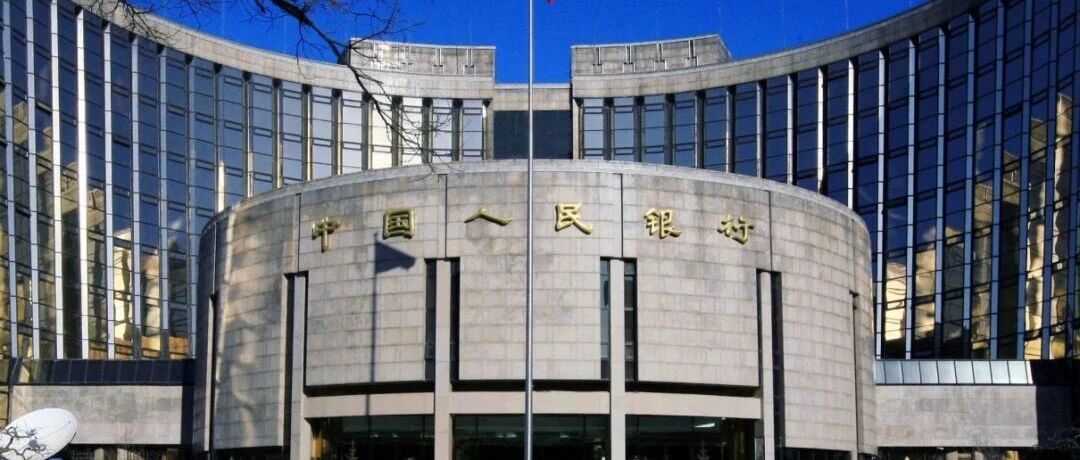
刚刚 央行发布2025年第三季度中国货币政策执行报告!
Zheng Quan Ri Bao· 2025-11-11 14:56
Core Viewpoint - The People's Bank of China (PBOC) is committed to implementing a moderately accommodative monetary policy to support economic recovery and maintain financial market stability [1][2]. Group 1: Monetary Policy Implementation - The PBOC plans to deepen financial reforms and enhance high-level opening-up, aiming to build a robust financial system and improve the monetary policy framework [1][2]. - The report emphasizes maintaining ample liquidity and ensuring that social financing and money supply growth align with economic growth and price level expectations [2][5]. - The PBOC will utilize various monetary policy tools to support key areas such as technological innovation, consumption, small and micro enterprises, and stabilizing foreign trade [2][5]. Group 2: Price Level and Economic Indicators - The report indicates an improvement in price levels, with the Consumer Price Index (CPI) showing a year-on-year decline of 0.1% in the first three quarters, consistent with earlier periods [3]. - The core CPI, excluding food and energy, has been rising since the Spring Festival, reaching a 1% increase in September, with a year-on-year rise of 0.6% for the first three quarters [3]. - The Producer Price Index (PPI) has remained stable, with a narrowing decline in the third quarter compared to the second quarter [3]. Group 3: Financial Metrics and Trends - The report highlights a gradual shift away from focusing solely on quantitative targets, advocating for a more comprehensive view of financial metrics such as social financing scale and money supply [4][5]. - As of now, the total balance of RMB loans has reached 270 trillion yuan, while the social financing scale stands at 437 trillion yuan, indicating a natural decline in financial growth rates as the economy transitions to high-quality development [4][5]. - The growth of social financing and money supply is expected to align with nominal economic growth rates, reflecting changes in the financial supply-side structure [4].
央行发布,关于货币政策!解读来了
Zhong Guo Zheng Quan Bao· 2025-11-11 12:09
Core Viewpoint - The People's Bank of China emphasizes the implementation of a moderately accommodative monetary policy to maintain relatively loose social financing conditions and improve the monetary policy framework [1][2][3] Group 1: Monetary Policy Implementation - The report advocates for a balanced approach between short-term and long-term goals, as well as between supporting economic growth and managing risks [2][3] - It highlights the importance of using various monetary policy tools to ensure ample liquidity and stabilize credit support from banks [2][3][7] - The central bank aims to align financial growth with economic growth and price level expectations, focusing on the social financing scale [3][7] Group 2: Interest Rate Management - Maintaining a reasonable interest rate relationship is crucial for macroeconomic balance and resource allocation [4][5] - The report discusses the significance of the relationship between central bank policy rates and market rates, as well as between different types of asset yields [5][6] Group 3: Financial Sector Support - The report emphasizes the need to leverage monetary and credit policies to support key national strategies and address weak areas in economic development [7][8] - As of September, the balance of structural monetary policy tools supporting these initiatives was 3.9 trillion yuan, with loan growth in related sectors exceeding 10% [7] Group 4: Macro-Prudential Policy Tools - The report calls for a comprehensive macro-prudential management system to monitor and mitigate systemic financial risks [8] - It suggests expanding the coverage of macro-prudential policies and enhancing the regulatory framework for systemically important financial institutions [8]
央行报告释放关键信号:保持金融总量合理增长
Di Yi Cai Jing· 2025-11-11 11:54
Group 1: Monetary Policy Insights - The People's Bank of China (PBOC) emphasizes five core strategies for monetary policy, including maintaining reasonable growth in financial totals and implementing moderately loose monetary policies [1][2] - The PBOC aims to balance short-term and long-term goals, support the real economy while ensuring the health of the banking system, and enhance macroeconomic governance effectiveness [2][4] - The report indicates that the total social financing scale has become increasingly important as a measure of economic and financial interaction effectiveness [4][5] Group 2: Economic Growth and Structural Changes - China's GDP grew by 5.2% year-on-year in the first three quarters, showcasing resilience and vitality in economic operations [2] - The shift from high-speed growth to high-quality development is acknowledged, with a focus on optimizing the structure of financing and reducing reliance on traditional credit sectors [5][6] - The net financing of government bonds is projected to reach 11 trillion yuan in 2024, with expectations to exceed 12 trillion yuan this year [3] Group 3: Financial Support and Structural Policies - The PBOC's structural monetary policy tools have a balance close to 4 trillion yuan, aimed at supporting key national strategies and addressing weak areas in the economy [6][7] - Loans in sectors related to the "Five Major Articles" have seen growth rates exceeding 10%, with specific sectors like the pension industry experiencing nearly 60% growth [6] - The PBOC plans to enhance financial support for technology innovation and green finance, including developing carbon accounting rules for financial institutions [7]