
战略自主

Search documents
外交部介绍王毅访欧情况:中欧建交50年之际加强战略合作正当时
news flash· 2025-07-07 07:27
金十数据7月7日讯,外交部发言人毛宁主持例行记者会。外交部发言人毛宁表示,王毅外长强调,当前 国际形势变乱交织,中德、中法作为世界主要大国,理应加强战略沟通协作,共同践行多边主义,反对 单边霸凌,抵制阵营对抗,为世界注入更多的确定性和可预测性。双方要落实好元首共识,增进理解互 信,保持开放合作,加强人文交流,妥处矛盾分歧,推动中德、中法关系持续稳定发展。今年是中欧建 交50周年。当前形势下,中欧加强战略合作正当其时。中方乐见法德作为欧盟核心大国,带动欧盟实现 战略自主,树立客观、理性、正确的对华认知,妥善处理中欧经贸分歧,共同促进中欧关系向前发展。 (澎湃) 外交部介绍王毅访欧情况:中欧建交50年之际加强战略合作正当时 ...
2国交锋升级,白兰地和钢铁全中招!欧盟诬陷援俄,中方果断还击
Sou Hu Cai Jing· 2025-07-06 01:29
Group 1 - The recent tensions in China-EU relations are primarily due to issues surrounding rare earths and trade policies, highlighting a discrepancy between the EU's proclaimed "strategic autonomy" and its actions [1][3] - China has imposed anti-dumping duties of 27.7% to 34.9% on imported brandy from the EU for five years, signaling a response to the EU's stance on tariffs and accusations regarding China's support for Russia [3][5] - The EU's previous statements about the impracticality of decoupling from China contrast sharply with its current criticisms of China's export controls, indicating a shift in strategy influenced by its relationship with the US [3][6] Group 2 - German Foreign Minister Annalena Baerbock criticized China's export controls on key materials, claiming they harm Sino-German trade relations and China's image as a reliable partner [5][6] - China's position emphasizes a commitment to peace and non-provision of lethal weapons, countering accusations of military support to Russia, which reflects a strategic concern about potential shifts in US focus post-conflict [6][7] - The EU's aggressive stance towards China may backfire, as evidenced by China's previous imposition of anti-dumping duties on EU steel products, suggesting that continued provocations could undermine the EU's strategic interests [7]

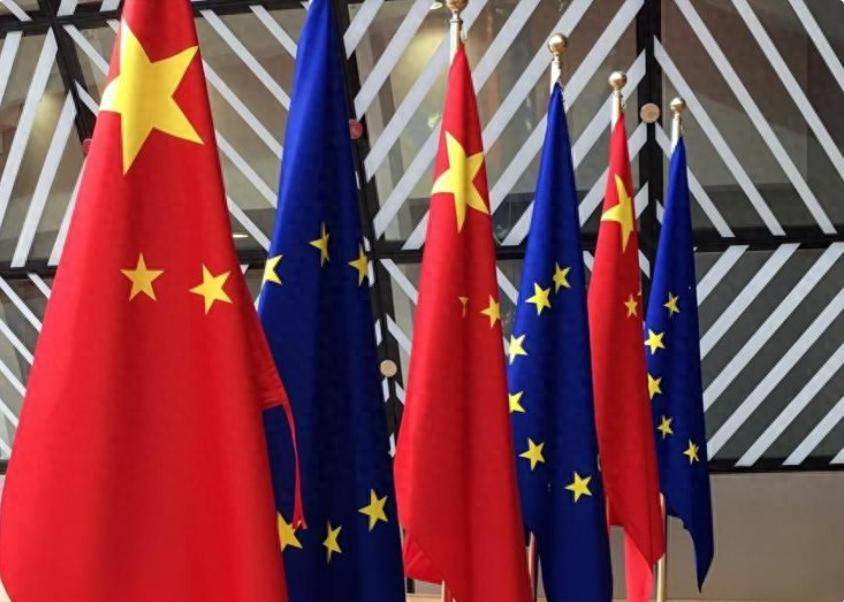
稀土首战告捷!王毅连访欧洲3国送出警告,中方反制已锁定30国!
Sou Hu Cai Jing· 2025-07-04 19:17
Core Viewpoint - The article discusses the evolving global trade dynamics, particularly focusing on the tensions between the U.S. and China, and the implications for the EU as it navigates its economic relationship with both powers [1]. Group 1: U.S.-China Trade Relations - The U.S. is attempting to isolate China through global supply chains, despite a temporary "truce" in tariffs [3][5]. - The U.S. has relaxed some export restrictions on China and is urging China to accelerate rare earth exports, indicating a strategic maneuver to contain China economically [3][5]. - The U.S. has issued a "last ultimatum" to the EU regarding tariffs, threatening punitive tariffs of up to 50% on EU goods if an agreement is not reached by July 9 [5][6]. Group 2: China's Diplomatic Response - Chinese Foreign Minister Wang Yi's visit to Europe aims to restart high-level strategic dialogues and strengthen cooperation with Germany and France [5][9]. - Wang Yi warns the EU against "selling out" to the U.S. in tariff negotiations, emphasizing that the challenges Europe faces do not stem from China [9][10]. - China has implemented new anti-dumping duties on stainless steel products from the EU and other countries, signaling a strong response to perceived aggression from the U.S. and its allies [10][11]. Group 3: EU's Position and Challenges - The EU's economic relationship with China is significant, especially in the automotive and high-tech sectors, but U.S. pressure is forcing the EU to adopt a tougher stance on exports to China [9][10]. - Wang Yi highlights the dangers of misinterpreting historical and cultural differences as reasons for confrontation, urging the EU to avoid repeating past mistakes [9][11]. - The EU faces a critical decision regarding its trade strategy: aligning with the U.S. or maintaining a cooperative stance with China to uphold a multilateral trade system [11].
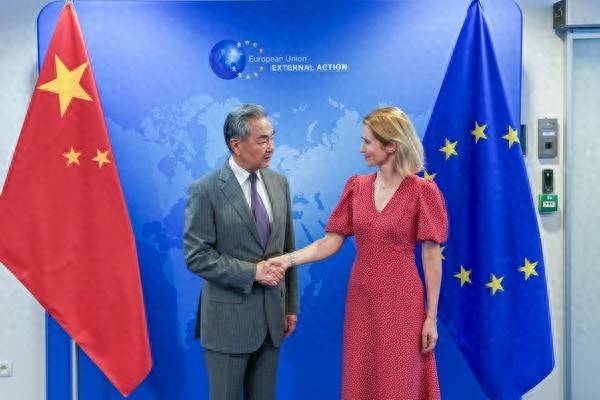
中国断供稀土!欧盟对华不满,最难熬的德企:还不如中国一个省
Sou Hu Cai Jing· 2025-07-04 15:35
Group 1 - The core issue of the article revolves around the escalating tensions between the EU and China regarding rare earth exports, highlighting the EU's demands for China to lift export controls or face the cancellation of high-level meetings [3][15]. - Rare earth elements, while seemingly ordinary, are crucial for high-tech industries, making the EU's reliance on China a significant concern [5][7]. - European companies, particularly those dependent on rare earths, are facing unprecedented challenges due to supply instability, leading to production disruptions and potential job losses [21][19]. Group 2 - The EU's attempts to pressure China through ultimatums have not yielded results, as China has responded with strict measures to protect its rare earth technology and impose anti-dumping duties on EU products [17][19]. - The internal discord within the EU regarding the rare earth crisis has been exposed, with member states prioritizing their own interests over collective action [23][25]. - Despite the EU's investment of €1.7 billion in the Critical Raw Materials Act to reduce dependence on China, projections indicate that by 2030, the EU's self-sufficiency in rare earths will only reach 15%, far from meeting its industrial needs [27][29]. Group 3 - China's strategic management of rare earth resources includes a comprehensive tracking system to monitor the entire supply chain, ensuring that rare earths are not misused [37][39]. - China employs a differentiated supply strategy, providing favorable access to companies that have not participated in sanctions against it, while restricting supply to those that have [41][43]. - The global landscape shows that while many countries are attempting to reduce their reliance on Chinese rare earths, their efforts have largely been unsuccessful due to various limitations [55][60].
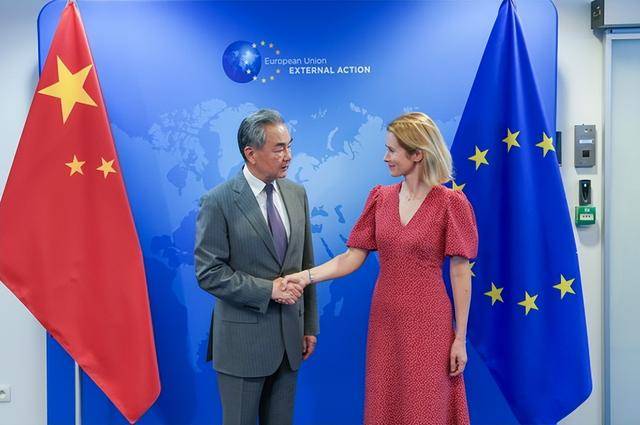
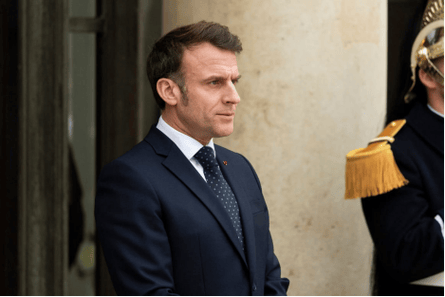
最终对决将开启,马克龙向美国放狠话,王毅将访欧,这是要变天了?
Sou Hu Cai Jing· 2025-07-02 06:34
Group 1 - The trade war between the US and the EU has intensified, with French President Macron criticizing certain countries' tariff policies as tools of coercion, specifically targeting the US [1][3] - Macron's proposal for a "zero tariffs for zero tariffs" strategy has become a central countermeasure for Europe, warning that if the US maintains a 10% baseline tariff, Europe will implement equivalent retaliatory measures [3][4] - The EU's trade deficit with the US has expanded to $158 billion in 2024, with significant imbalances in aerospace and digital services [3] Group 2 - The European Commission is preparing to impose tariffs on $95 billion worth of US goods, while also implementing restrictions in digital tax and public procurement [3][4] - The actual impact of tariffs is evident in Europe, with a report indicating an 18% decrease in EU steel capacity utilization and a €2.3 billion reduction in automotive exports [4] - If the trade war escalates, GDP growth in the US and EU could decline by 0.8% and 1.2%, respectively, prompting European companies to make defensive adjustments [4] Group 3 - China's Foreign Minister Wang Yi's visit to Europe is significant, coinciding with the 50th anniversary of China-EU diplomatic relations and the first strategic communication after the EU Commission's reshuffle [6][9] - The visit aims to provide a platform for direct communication and lay the political groundwork for the upcoming China-EU leaders' meeting [6] - The EU is experiencing a strategic dilemma, trying to maintain economic sovereignty while not fully aligning with either the US or China [6][9] Group 4 - The trade war's ripple effects are impacting global supply chains, with the UN warning that the most vulnerable economies are suffering the most from US tariff policies [7] - Wang Yi's visit offers Europe a strategic opportunity, aligning China's open and cooperative approach with the EU's goal of strategic autonomy [7][9] - Despite existing tensions, both sides have reached a consensus to restart negotiations on price commitments, indicating a potential for cooperation [7][9]
国金地缘政治周观察:当前美国和各个国家贸易谈判进展
SINOLINK SECURITIES· 2025-06-30 13:46
2025 年 06 月 30 日 国际关系动态报告 国际关系研究报告 证券研究报告 国金政策与战略组 分析师:杨佳妮(执业 S1130524040002) yangjiani@gjzq.com.cn 联系人:商景皓 shangjinghao@gjzq.com.cn 国金地缘政治周观察|当前美国和各个国家贸易谈判进展 核心观点 地缘动向复盘:本周聚焦美国贸易谈判。美欧谈判方面,6 月 25 日北约峰会在荷兰海牙落幕,6 月 26 日欧盟在比 利时布鲁塞尔举行峰会,对美贸易谈判是峰会焦点之一。中美方面,6 月 27 日,中美贸易博弈迎来重大转折。卢特 尼克称美国已经与中国签署协议,中国商务部也表示双方进一步确认了框架细节。 国金观点周观察: (1)整体来看,美方对达成协议的急切程度高于其谈判对手,我们做出判断的原因主要基于三点:一是 7 月 9 日 谈判截止日即将到来,目前美国与主要国家的谈判仍无实质性进展。二是特朗普目前面临着经济与政治的压力,关 税问题若迟迟得不到解决,这将限制特朗普对其他问题的解决。三是 7 月 4 日为美国"独立日",特朗普计划在此特 殊日期前后宣布一批政治成果,以达到政治宣传的效果。特朗 ...
三连喊话无回应,欧盟稀土断供危机逼近!中方这步棋让G7气氛凝固
Sou Hu Cai Jing· 2025-06-29 18:02
Group 1 - The EU's recent diplomatic actions against China, including pressure tactics at the G7 summit, have been ineffective and ridiculed internationally [1][3] - The EU's accusations against China regarding rare earth policies are undermined by its own dependency on Chinese supplies, which control 90% of global rare earth permanent magnet materials [3][4] - The EU's strategic dilemma is highlighted by its contradictory approach of applying pressure while simultaneously seeking concessions from China [4][9] Group 2 - NATO Secretary General's comments linking Taiwan issues with Russia have been criticized as illogical and indicative of a divided European stance [6][9] - China's response to the EU's pressure has been strategic and measured, focusing on diplomatic engagement rather than public confrontation [7][10] - The EU's reliance on the US for strategic direction has led to a loss of autonomy, making it difficult for the EU to act independently in international affairs [9][12] Group 3 - China's proposed solutions emphasize mutual respect, partnership, and multilateralism, addressing the EU's cognitive dissonance in its foreign policy [10][12] - The ongoing struggle within the EU regarding its identity in a multipolar world raises questions about its future role, whether as a US ally or an independent entity [12]
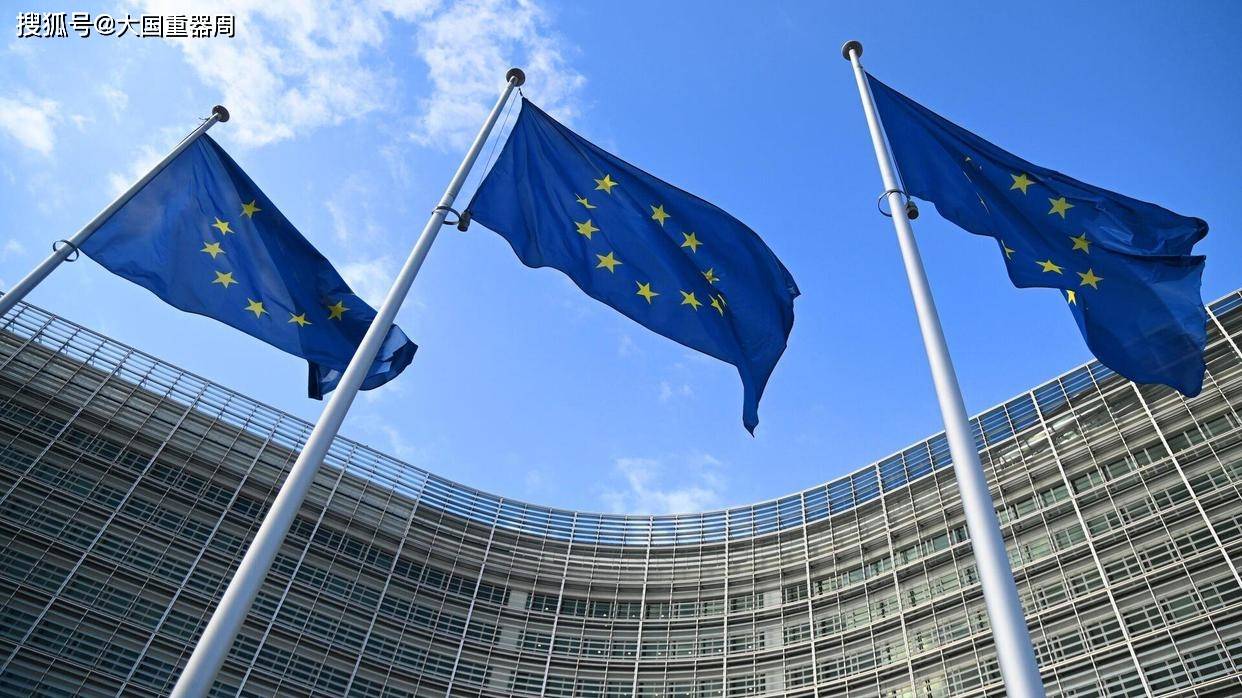
三连喊话无回应,欧盟稀土断供危机逼近!中国这步棋让G7气氛凝固
Sou Hu Cai Jing· 2025-06-29 04:20
Group 1 - The EU's internal attitude towards China is undergoing a complex evolution, reflecting a desire for independence while struggling with dependence on the US [2] - The upcoming visit of China's Foreign Minister to key EU countries aims to gauge the EU's stance and reveal the disillusionment with Trump's policies [4] - NATO Secretary General Jens Stoltenberg's relationship with Trump exemplifies the EU's contradictory dependence on the US, highlighting a blind allegiance among certain European factions [6] Group 2 - EU's concerns over China's rare earth exports are evident, with the EU Ambassador pleading for understanding of European companies' fears regarding supply shortages [6] - The EU's expectation for China to relax rare earth controls reflects a deep-seated sense of superiority and distrust towards China [8] - China's call for mutual respect and partnership with the EU serves as a warning against the EU's continuous challenges to China's red lines [8][9] Group 3 - The EU's strategic autonomy remains fragile, as evidenced by the actions of leaders like von der Leyen and Stoltenberg, who attempt to balance relations between China and the US [9] - The EU's strategy of trying to appease the US at the expense of China is unlikely to succeed, as China views this approach as unviable [9]
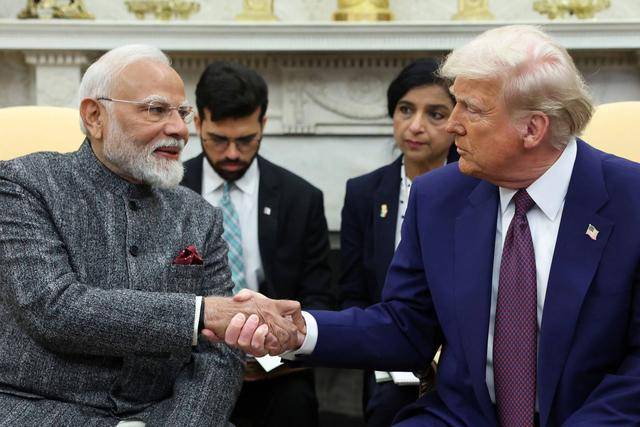
把印度当成“韭菜”割?美国真实嘴脸暴露,莫迪忍无可忍
Sou Hu Cai Jing· 2025-06-11 14:22
Core Viewpoint - The article discusses the shifting dynamics of US-India relations, highlighting the contradictions in US policies and India's strategic responses amidst rising tensions and tariffs imposed by the US on Indian goods. Group 1: US-India Relations - The relationship between the US and India has fluctuated significantly over the past two decades, with varying degrees of cooperation and tension under different administrations [3] - Trump's administration has shifted focus from democratic values to defense contracts and anti-China alliances, leading to a breakdown in strategic trust between the two nations [3][5] - The imposition of tariffs by the US, while simultaneously offering aid to Pakistan, has angered India and raised questions about the reliability of the US as an ally [1][3] Group 2: India's Strategic Maneuvers - India is leveraging its position by seeking technology exchanges in sectors like semiconductors and renewable energy, while also accelerating free trade agreements with the EU to mitigate risks [5] - The Indian government is focusing on domestic manufacturing, particularly in the wake of reduced tariffs, to strengthen its economic independence [5] - India's military procurement decisions, such as signing submarine deals with France instead of the US, signal a desire for strategic autonomy and a balanced approach in international relations [5][7] Group 3: Broader Implications - The article suggests that the current US-India tensions reveal the underlying truth of Western alliances: they are driven by interests rather than enduring friendships [7] - As India continues to navigate its foreign policy, it may increasingly diversify its partnerships, potentially aligning more with Russia, the Middle East, and even China, while managing its relationship with the US [7] - The evolving dynamics may ultimately lead India to reduce its dependency on Western powers, a shift that could reshape regional geopolitics in the coming decade [7]
这位德国企业家的遭遇,不能再上演了
Sou Hu Cai Jing· 2025-06-11 02:31
Core Viewpoint - The article discusses the challenges faced by a German entrepreneur, Yecker, in hiring engineers from China due to visa issues, which may be influenced by political factors, potentially hindering economic opportunities in Germany [1][2]. Group 1: Economic Implications - Yecker's attempt to hire four Chinese engineers is seen as a missed opportunity for Germany to develop a renewable energy company that could contribute to tax revenue and job creation [1]. - The current economic situation in Germany, coupled with the government's focus on economic development, makes the inability to hire these engineers particularly regrettable [1]. Group 2: Political Context - The visa issues may stem from bureaucratic inefficiencies or the rise of far-right sentiments and anti-immigrant attitudes in Germany [2]. - There is speculation that the German authorities may be setting obstacles in visa applications to align with the "de-risking" narrative regarding China, although this remains unproven [2]. Group 3: EU-China Relations - Despite recent positive statements from the EU and its member states about improving relations with China, practical issues like visa applications have not seen significant improvement [2]. - The article emphasizes the need for the EU to translate positive rhetoric into concrete actions to facilitate exchanges with China [2]. Group 4: Strategic Autonomy - The article highlights the growing recognition in Europe of the importance of strategic autonomy, especially in light of external pressures such as the ongoing Russia-Ukraine conflict and U.S. economic influence [3]. - There is a call for the EU to adopt a more pragmatic approach towards China, moving away from politicizing economic and cultural exchanges [3][4]. Group 5: Cooperation Potential - The article notes that China views Europe as a key partner and supports European integration, emphasizing mutual benefits in trade and cooperation [3][4]. - The economic relationship between China and Europe is significant, with their combined economic output exceeding one-third of the global total and trade accounting for over a quarter of global trade [4].