智能化转型

Search documents
每股定价30.75港元,奇瑞终圆上市梦!开盘股价涨超10%,成年内港股最大规模车企IPO
Mei Ri Jing Ji Xin Wen· 2025-09-25 02:16
Core Viewpoint - Chery Automobile has successfully completed its IPO on the Hong Kong Stock Exchange, raising HKD 9.14 billion, marking the largest IPO for a car company in the Hong Kong market this year [1][5]. Company Overview - Chery issued approximately 297 million H-shares, with 10% allocated for public sale in Hong Kong and 90% for international sale, including a 15% over-allotment option [5]. - The company plans to allocate 35% of the net proceeds for research and development of various passenger car models, 25% for next-generation vehicles and advanced technology, 20% for expanding overseas markets, and 10% each for enhancing production facilities and general corporate purposes [5]. Financial Performance - Chery's projected global sales for 2024 are over 2.295 million units, representing a year-on-year growth of 49.4% [6]. - The average selling price of Chery's passenger cars is expected to increase by 33.5% in 2024 compared to 2022, with domestic and international price growth rates of 37.0% and 19.4%, respectively [6]. - Chery's revenue and net profit have shown consistent growth, with revenues of CNY 926.18 billion, CNY 1,632.05 billion, CNY 2,698.97 billion, and CNY 682.23 billion for the years 2022, 2023, 2024, and Q1 2025, respectively [6]. Market Position and Strategy - Chery is focusing on enhancing its capabilities in the fields of new energy and intelligent vehicles, which require significant funding for development [8]. - The revenue share from Chery's new energy vehicles is gradually increasing, with projections showing a rise from 4.9% in 2023 to 21.9% in 2024 [8]. - The company has undergone structural adjustments, including the introduction of a new organizational framework to better align with strategic goals [11]. Investment and Partnerships - Chery has attracted 13 cornerstone investors, raising approximately USD 587 million (around HKD 4.573 billion), which includes various types of investment entities [10]. - The partnership with Huawei aims to invest over CNY 10 billion to establish a dedicated R&D team, enhancing Chery's technological capabilities [13]. Historical Context - Chery's journey to IPO has spanned 21 years, with various attempts and strategic shifts, including a significant restructuring in 2019 to facilitate its public offering [14][16]. - The current market conditions for electric vehicles are favorable, providing a timely opportunity for Chery to secure funding and enhance its market position [16].

广汽与华为携手官宣“启境”,共拓高端智能出行新未来
Zhong Guo Xin Wen Wang· 2025-09-25 01:01
Core Insights - The collaboration between Huawei and GAC Group is gaining significant attention in the industry as they launch the new "Qijing" brand, aiming to reshape the high-end automotive market [3][9] - This partnership signifies a deep integration of capabilities, moving beyond traditional cooperation models to a more synergistic approach that combines Huawei's technology with GAC's manufacturing expertise [5][8] Group 1: Strategic Collaboration - The launch of the "Qijing" brand was witnessed by top executives from both companies, indicating a strong commitment to this strategic partnership [3] - High-level interactions between GAC's and Huawei's leadership have intensified discussions about their collaboration, leading to the rapid development of the new brand [5] - The partnership is characterized by a "chemical-level integration" that encompasses product development, marketing strategies, and ecosystem services, rather than a simple division of roles [5][9] Group 2: Technological and Manufacturing Strengths - Huawei has invested over 20 billion in R&D over the past decade, with a team of over 8,000 dedicated to developing smart automotive solutions, establishing a strong technological foundation [8] - GAC Group boasts 28 years of experience in vehicle development and manufacturing, having built a reputation for quality with popular models like the Highlander and Accord, which has earned the trust of 28 million car owners [9] - The collaboration aims to leverage GAC's manufacturing prowess and Huawei's smart technology to create a competitive edge in the intelligent electric vehicle market, potentially redefining market dynamics [9]


博实股份:目前电石智能工厂在积极推广拓展中,未来值得期待
Zheng Quan Ri Bao Zhi Sheng· 2025-09-22 13:12
Core Insights - The company announced the successful implementation of two intelligent calcium carbide factory projects in 2024, with a significant event scheduled for April 24, 2025, in Wuhai, focusing on digital transformation and practical applications in the calcium carbide industry [1] - The event will gather industry leaders, experts, and representatives to explore new paths for digital and intelligent transformation in the calcium carbide sector, contributing to green and sustainable development [1] - The intelligent factory showcased during the event demonstrated efficient and precise operations, highlighting the transformative impact of digital technology on calcium carbide production [1] - The company's overall solution for intelligent calcium carbide production received positive feedback from attendees, indicating potential for attracting more clients to embrace digital transformation and sustainable practices [1] - The promotion and expansion of intelligent calcium carbide factories are actively underway, suggesting promising future developments in the industry [1]

华为坤灵:为中小企业智能化铺平「最后一公里」
36氪· 2025-09-21 11:10
Core Viewpoint - The article emphasizes that the intelligent transformation of small and medium-sized enterprises (SMEs) is crucial for the realization of an intelligent world, marking the "last mile" in this transition [2][28]. Group 1: Current Trends and Challenges - AI has evolved from a tool for efficiency to a core component of production, service, and management systems, reshaping business models and work processes [4]. - SMEs, which account for over 58 million in China and contribute 60% of GDP, face significant barriers to adopting AI due to lack of awareness, talent shortages, and fragmented solutions [7][11]. - The disparity in AI adoption between large enterprises and SMEs is stark, with over 70% of large companies integrating AI into their operations compared to less than 25% of SMEs attempting to do so [7]. Group 2: Huawei's Initiatives - Huawei aims to bridge the "last mile" by introducing the "4+10+N" intelligent solution for SMEs, which includes four core scenarios (office, commerce, education, healthcare) and ten one-stop solutions [5][16]. - The "Hundred & Thousand Plan" is designed to develop 100 diamond partners and 10,000 elite engineering firms to enhance the distribution system and accelerate AI adoption among SMEs [5][21]. Group 3: Product Offerings and Innovations - Huawei's "4+10+N" plan includes innovative products like "Live Streaming Treasure," which addresses connectivity issues for live commerce, and "Anti-Sneak AP," which enhances security in hotels [17][18]. - The integration of various functionalities into single devices allows SMEs to implement comprehensive solutions without the complexity of piecemeal approaches [19]. Group 4: Impact on the Industry - The shift from product-centric to solution-centric distribution models redefines the roles of distributors and engineering firms, enabling them to deliver tailored solutions to SMEs [25]. - The comprehensive, one-stop solutions provided by Huawei allow SMEs to bypass complex technology selections, facilitating quicker adoption of AI and enhancing operational efficiency [27]. Group 5: Future Outlook - Huawei's vision is to democratize AI and make it accessible to all SMEs, which is essential for the broader adoption of intelligent technologies across the economy [27][28].
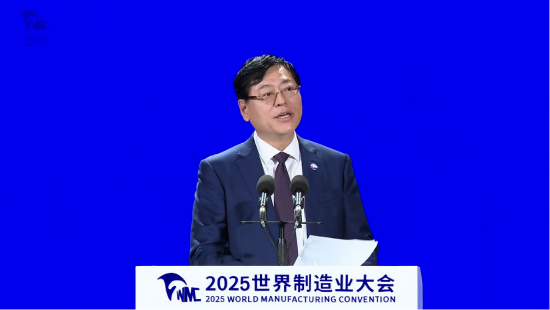
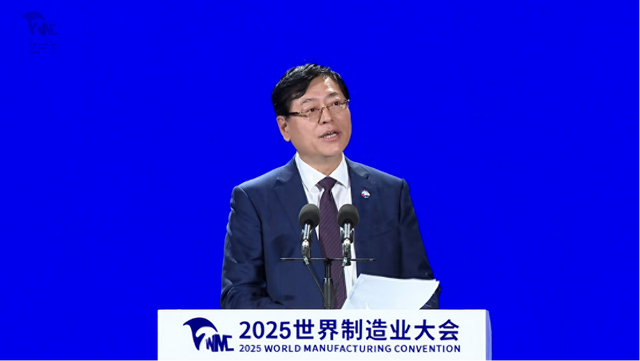
杨元庆:宏观环境挑战多重,联想合肥制造基地逆势增长
Guan Cha Zhe Wang· 2025-09-21 10:16
Core Viewpoint - The 2025 World Manufacturing Conference opened in Hefei, highlighting the role of artificial intelligence (AI) in reshaping the manufacturing industry and showcasing Lenovo's innovative practices and growth driven by AI [1][3]. Group 1: AI and Manufacturing - AI has significantly accelerated its application across various industries, with manufacturing being a core battlefield for the "AI+" initiative in China [3]. - Anhui province has made strides in industrial development, implementing the "AI+" action plan and establishing a modern industrial system to promote intelligent transformation in manufacturing [3]. Group 2: Lenovo's Manufacturing Base - Lenovo's manufacturing base in Hefei, established in 2011, has become a global hub for manufacturing, achieving an industrial output value of 105.7 billion yuan last year [3]. - The Hefei base is recognized as one of the largest R&D and manufacturing centers for intelligent computing devices, maintaining leadership in personal computers and expanding into servers and motherboards [3][6]. Group 3: Performance Metrics - In the first half of this year, Lenovo's Hefei manufacturing base experienced a year-on-year industrial output growth of 27% and a 38% increase in exports [4]. - The base has consistently maintained an industrial output and revenue exceeding 100 billion yuan for five consecutive years, contributing an average of 14 billion yuan in industrial output annually and creating nearly 100,000 jobs [3][4]. Group 4: AI-Driven Innovations - Lenovo has pioneered AI PCs in China and has launched AI smartphones and tablets, with AI PCs now accounting for over 30% of Lenovo's total PC shipments, leading the global Windows AI PC market [6]. - The company aims to create a "super intelligent entity" that integrates across devices and ecosystems, enhancing user experience through data learning and self-evolution [6]. Group 5: Supply Chain Efficiency - Lenovo's intelligent transformation has led to a 28% reduction in supply chain order delivery time, a 25% improvement in accuracy, and a 20% decrease in manufacturing and logistics costs [7]. - The Hefei and Monterrey factories have been recognized as "lighthouse factories" by the World Economic Forum for their advanced manufacturing practices [7]. Group 6: Future Vision - The company emphasizes the importance of collaboration to create a smarter, more efficient, and greener industrial future, believing that the high-quality development of manufacturing is crucial for China's economic growth [7].

我国首款双座电动直升机在沈首飞成功;Neuralink将为失语者植入脑机接口设备丨智能制造日报
创业邦· 2025-09-21 05:18
Group 1 - The core viewpoint of the article highlights Lenovo's successful transformation through intelligent manufacturing, resulting in a 28% reduction in supply chain order delivery time, a 25% increase in accuracy, and a 20% decrease in manufacturing and logistics costs, leading to a more balanced supply and demand [2] - Lenovo's factories in Hefei and Monterrey have been recognized as "lighthouse factories" by the World Economic Forum and have improved their ranking to eighth in Gartner's global supply chain top 25 [2] Group 2 - China's first dual-seat electric helicopter, RX1H, successfully completed its maiden flight, indicating that the country has reached an internationally advanced level in electric helicopter design and propulsion systems [2] - In Guangdong, the production of robots and drones has maintained double-digit growth, with industrial robots, service robots, and civilian drones increasing by 32.1%, 17.3%, and 54.7% respectively from January to August [4]
从制造到智造,两家德企在江苏的扎根之路|活力中国调研行
Sou Hu Cai Jing· 2025-09-21 04:17
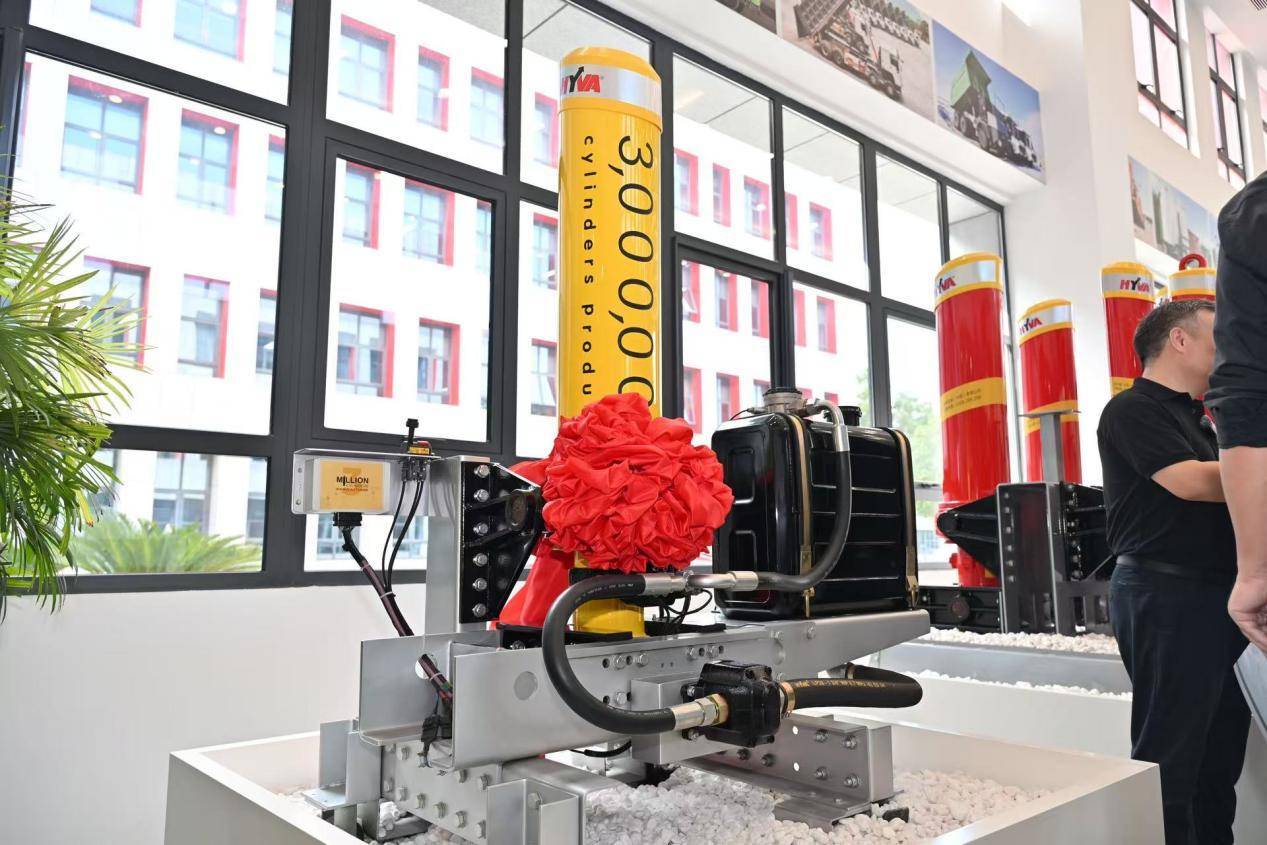
Core Insights - Jiangsu province has attracted significant foreign investment, with actual foreign capital utilization reaching $11.54 billion in the first half of the year, accounting for 19.5% of the national total, maintaining its position as the top province in China for foreign investment [1] Group 1: Company Profiles - Hawe Hydraulics (China) Co., Ltd. has been operating in Jiangsu since 2004 and has become the largest supplier of hydraulic systems for dump trucks in China, achieving cumulative sales exceeding 20 billion yuan over 20 years [2][4] - Bosch and Siemens Home Appliances (BSH) has transformed from a manufacturing base to a global R&D hub in Nanjing, establishing the largest comprehensive R&D center for BSH globally, with over 700 engineers [6][8] Group 2: Business Strategies and Innovations - Hawe focuses on a specialized hydraulic business, achieving a global market share of 40% for its hydraulic cylinders, and is investing 100 to 200 million yuan in smart workshop upgrades to enhance production efficiency [4][5] - BSH's R&D center in Nanjing is set to become a global R&D center, supported by a vast local talent pool and favorable government policies, which have been crucial for its innovation and market expansion [8][9] Group 3: Local Government Support - The local government in Jiangsu, particularly in Yangzhou and Nanjing, plays a vital role in attracting and retaining foreign investment by providing a conducive business environment and actively supporting companies in their operational needs [5][9] - The Nanjing Economic and Technological Development Zone has a proactive approach to assist enterprises, ensuring that all departments are responsive to business needs, which has fostered a strong relationship with foreign companies [9]
华为提出行业智能化「三步走」路径,为产业AI落地破题
3 6 Ke· 2025-09-20 13:50
Core Insights - The article discusses how Huawei is addressing the challenge of implementing AI in business to create real commercial value, emphasizing the need for a structured approach to AI integration in various industries [2][5][12]. Group 1: Huawei's Approach to AI Implementation - Huawei has developed a "three-step" path for enterprises to transform their operations through AI, which includes assessing high-value scenarios, calibrating models with vertical industry data, and scaling AI agents to reshape key business processes [8][9]. - The company has released nine industry-specific solutions covering sectors such as government, education, healthcare, finance, and manufacturing, establishing a replicable standard for industry transformation [4][5]. Group 2: Key Findings on Intelligent Transformation - Five critical findings were shared regarding intelligent transformation: the importance of scenario selection, the necessity of high-quality domain data for model capability, the rapid scaling of AI agents, the emergence of human-machine collaboration as a new organizational paradigm, and the need for systematic governance and risk management [5][6][12]. - The emphasis on scenario selection highlights that technology must serve the essence of business rather than merely adding superficial enhancements [6][12]. Group 3: AI as a Growth Engine - AI is positioned as a key engine for business growth, integral to the entire value chain from research and development to production and service [12][16]. - Huawei's AI capabilities have been validated through extensive applications in its own operations, providing valuable industry know-how and a comprehensive end-to-end solution from foundational computing to industry applications [13][15]. Group 4: Role of Partnerships - Huawei's extensive partner ecosystem, comprising over 6,300 Kunpeng partners and 2,700 Ascend partners, plays a crucial role in translating generic AI technologies into customized solutions that address specific industry needs [15][16]. - The collaboration with partners is essential for bridging the gap between technology and business value, ensuring that AI solutions are effectively tailored to meet the unique challenges of different sectors [15].

华为提出行业智能化「三步走」路径,为产业AI落地破题
36氪· 2025-09-20 13:34
Core Viewpoint - The article discusses how Huawei aims to help enterprises effectively implement AI as a core driver of business innovation through a structured approach, addressing the gap between technology supply and business value [3][8]. Group 1: Huawei's AI Implementation Strategy - Huawei has developed a "three-step" approach to guide enterprises in their AI transformation: assessing high-value scenarios, calibrating models with vertical industry data, and scaling AI agents to reshape key business processes [13][15]. - The company emphasizes the importance of selecting the right business scenarios for AI integration, as the value of AI lies in its deep integration with core production processes [9][10]. - Huawei's experience has led to the creation of nine industry-specific solutions across sectors such as government, education, healthcare, finance, and manufacturing, establishing a replicable industry standard [5][6]. Group 2: Key Findings on Intelligent Transformation - Five critical insights were shared regarding intelligent transformation: the significance of scenario selection, the quality of domain-specific data, the rapid scaling of AI agents, the emergence of human-machine collaboration, and the necessity of systematic governance and risk management [9][10]. - The article highlights that generic models are insufficient for industry-specific applications; enterprises must leverage high-quality data to train and fine-tune models for competitive differentiation [9][10]. Group 3: Huawei's Competitive Advantage - Huawei's extensive experience in digital transformation and its comprehensive end-to-end solutions in AI, from foundational computing to industry applications, position it as a preferred partner for enterprises [21][22]. - The company has established a robust ecosystem with over 6,300 partners, enabling it to translate generic AI technologies into customized solutions that address specific industry needs [24][25]. - Huawei's approach focuses on creating a sustainable ecosystem that fosters innovation and collaboration, ensuring that AI technologies benefit both industries and society as a whole [25][26].

杨元庆:端侧AI激发新需求,联想AI PC出货量占比已超30%
Xin Lang Ke Ji· 2025-09-20 06:51
Group 1 - The core viewpoint is that the rapid development of edge AI is driving new demand, as highlighted by Lenovo's Chairman and CEO Yang Yuanqing at the 2025 World Manufacturing Conference [1] - Lenovo has been a pioneer in the domestic market by launching AI PCs, AI smartphones, and AI tablets since May of last year, with AI PCs now accounting for over 30% of the company's total PC shipments [1] Group 2 - Lenovo's vision revolves around "one body, multiple ends," which refers to a super-intelligent entity that spans across devices and ecosystems, enabling personalized data generation and storage through various intelligent terminal devices [3] - The company emphasizes that AI empowerment for enterprises goes beyond deploying mechanical arms and robots on production lines; it focuses on leveraging enterprise data and knowledge to optimize internal processes and enhance operational decision-making [3] - As a result of its intelligent transformation, Lenovo has achieved a 28% reduction in supply chain order delivery time, a 25% improvement in accuracy, and a 20% decrease in manufacturing and logistics costs, leading to better balance between supply and demand [3]