绿色经济

Search documents
商务部:中国与东盟首次对绿色经济、新能源、清洁能源、可持续金融、绿色技能等作出明确定义
Mei Ri Jing Ji Xin Wen· 2025-10-28 02:53
Core Viewpoint - The upgrade of the China-ASEAN Free Trade Area 3.0 version emphasizes a comprehensive cooperation framework in the green economy sector, aiming to promote mutual development between the environment and trade [1] Group 1: Green Economy Initiatives - The agreement establishes clear definitions for green economy, new energy, clean energy, sustainable finance, and green skills [1] - Both parties commit to not using environmental standards as a disguised form of trade protectionism, aiming to eliminate trade barriers related to environmental products and services [1] Group 2: Priority Cooperation Areas - Eight priority cooperation areas have been identified: green trade, green investment, circular economy, sustainable finance, green technology, green standards, sustainable energy, and digital-green collaborative development [1] - These areas will encompass the entire chain from research and development, financing, production, consumption, to recycling, providing significant support for building a green economic engine in the region and achieving high-quality development [1]
商务部国际司负责人解读中国—东盟自贸区3.0版升级议定书
Bei Jing Ri Bao Ke Hu Duan· 2025-10-28 02:37
Group 1 - The signing of the China-ASEAN Free Trade Area 3.0 upgrade protocol is a significant achievement marking the commitment to multilateralism and free trade amidst global economic challenges [2][3] - The protocol aims to deepen regional economic integration by expanding cooperation into emerging fields such as digital economy, green economy, and supply chain connectivity [3][6] - The protocol supports the construction of a China-ASEAN community of shared future, enhancing economic cooperation and promoting a resilient regional supply chain system [3][4] Group 2 - The China-ASEAN Free Trade Area has evolved through multiple phases since its inception in 2002, with the 3.0 version negotiations officially starting in November 2022 [4][5] - The trade volume between China and ASEAN reached $982.3 billion in 2024, a 17-fold increase since the establishment of the free trade area [4] - The protocol includes nine major areas of upgrade, incorporating both traditional trade facilitation and new emerging sectors [8][9] Group 3 - The protocol introduces new fields such as digital economy, green economy, and consumer protection, reflecting a commitment to leading international rule-making [7][8] - It establishes a comprehensive framework for cooperation in the digital economy, including measures for data flow, cybersecurity, and digital infrastructure [8][9] - The green economy section outlines commitments to sustainable practices and the elimination of trade barriers related to environmental standards [9][10] Group 4 - The protocol enhances customs procedures and trade facilitation through digital technologies, aiming to streamline processes and reduce costs for businesses [11][12] - It establishes a competitive and consumer protection framework, enhancing rights for consumers and ensuring fair competition among businesses [12][13] - The protocol includes measures to support small and medium enterprises, promoting their participation in international trade and enhancing their competitiveness [13][14]
商务部:中国-东盟自贸合作向更深层次迈进
Xin Jing Bao· 2025-10-28 02:13
Core Points - The signing of the China-ASEAN Free Trade Area 3.0 upgrade agreement took place on October 28 in Kuala Lumpur, Malaysia, with both parties committing to expedite domestic approval processes for implementation [1] - The 3.0 upgrade agreement covers nine major areas, adding five new sectors: digital economy, green economy, supply chain connectivity, competition and consumer protection, and support for small and medium-sized enterprises [1] - The agreement aims to enhance fair competition, protect consumer rights, support the development of small and medium-sized enterprises, and improve compliance capabilities of underdeveloped countries, promoting inclusive regional economic development [1] Industry Context - The China-ASEAN Free Trade Area is the first free trade area established through negotiations between both parties, initiated in 2002, with the 1.0 version completed in 2010 and the 2.0 version fully implemented in 2019 [2] - Negotiations for the 3.0 version began in 2022 and were completed in May of this year, indicating a continuous evolution of trade relations between China and ASEAN [2]
葛红亮:东盟以合作韧性引领区域未来
Sou Hu Cai Jing· 2025-10-27 23:15
Group 1 - The 47th ASEAN Summit and related meetings were held in Kuala Lumpur, Malaysia, focusing on the formal signing of the China-ASEAN Free Trade Area 3.0 upgrade protocol, amidst the backdrop of the U.S. government's "reciprocal tariffs" proposal [1][4] - ASEAN countries are significantly impacted by "reciprocal tariffs," yet they demonstrate unprecedented strategic autonomy and confidence, aiming to shape regional resilience and inclusive development while maintaining a multilateral economic order [1][2] Group 2 - The world is experiencing a significant transformation in the economic landscape, characterized by the end of traditional globalization, the rise of regionalization, and the emergence of new economic sectors influenced by technological revolutions [2][3] - ASEAN countries are positioned as crucial hubs in global economic cooperation, benefiting from their unique geographical advantages, which have attracted international capital and positioned nations like Vietnam and Malaysia as emerging production and trade centers [3][4] - ASEAN is enhancing its regional resilience and inclusivity through initiatives like the Regional Comprehensive Economic Partnership (RCEP) and the completion of the China-ASEAN Free Trade Area 3.0 upgrade protocol, addressing external challenges such as "reciprocal tariffs" and "de-globalization" [4]
北京全力推动四季度160项重点项目开工
Xin Jing Bao· 2025-10-27 11:23
Economic Overview - Beijing's GDP reached 3.8 trillion yuan in the first three quarters of 2025, with a year-on-year growth of 5.6% [1] - The city plans to implement six major special actions in the fourth quarter to promote sustained economic development across various sectors [1] Investment and Infrastructure - The municipal government will allocate 74 billion yuan in fixed asset investment by the end of October 2025 [2] - A total of 155 local government special bond projects have been issued, amounting to 108.2 billion yuan [2] - The city aims to initiate 160 key projects in the fourth quarter, focusing on urban renewal and quality land supply near transit areas [2] Industry Development - Beijing will introduce new reform measures in technology transfer and talent incentives, particularly in the Zhongguancun area [3] - The city is focusing on stabilizing production in key sectors such as new energy vehicles and pharmaceuticals, while promoting digital and green economy initiatives [3][7] - The number of enterprises with technology innovation centers has reached 1,475, with over 1,000 recognized as "little giant" enterprises [6][7] Consumer Trends - The total retail sales in Beijing reached 980.31 billion yuan in the first three quarters, reflecting a 5.1% decline year-on-year [8] - Service consumption accounted for 59.8% of total consumption, marking the highest level in five years, indicating a shift towards service-oriented spending [8] - The city is leveraging digital technologies to enhance personalized consumption experiences, particularly in education, culture, and entertainment sectors [8] Social Development - Significant progress has been made in social welfare initiatives, including the establishment of new elderly care centers and the expansion of educational facilities [4][5] - The city plans to enhance employment support and improve living standards through various community services and infrastructure projects [5]
文远知行受邀出席中国·新加坡工商界座谈会,展示自动驾驶出海新成果
Ge Long Hui· 2025-10-27 08:19
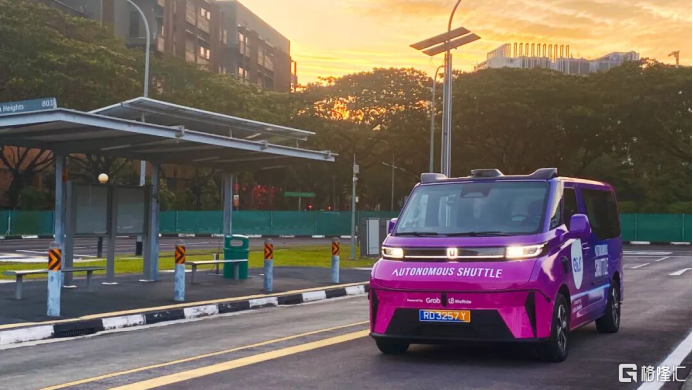
Core Insights - The China-Singapore Business Forum held on October 26 highlighted the deepening economic cooperation between China and Singapore, with a focus on innovation and sustainable development [1] - WeRide, a leading autonomous driving technology company, presented its achievements in Singapore, showcasing the internationalization of Chinese autonomous driving technology [1][3] Company Developments - WeRide established its regional headquarters in Singapore in 2022, viewing it as a strategic hub for Southeast Asia, supported by various Singaporean government agencies [1] - Significant milestones achieved by WeRide in Singapore include the regular operation of its autonomous minibuses and plans for fully driverless operation by July 2025, marking it as Southeast Asia's first driverless vehicle service [1][4] - The company secured an investment commitment from Grab in August 2025 to launch the first consumer-facing autonomous ride service, Ai.R [1] - WeRide's autonomous sanitation vehicles are now in regular operation in key areas such as Marina Bay [1] Industry Context - The developments by WeRide reflect a broader trend of collaboration between China and Singapore in the fields of smart transportation and innovation [3] - Singapore's Deputy Prime Minister emphasized the strong foundation of bilateral relations and the commitment to expand trade and investment, particularly in emerging sectors like digital and green economies [3]


高层保持密切往来,合作迎来重要契机,中国新加坡达成多份合作文件
Huan Qiu Shi Bao· 2025-10-26 22:33
Core Points - The visit of Chinese Premier Li Qiang to Singapore marks the first official visit by a Chinese Premier in seven years, emphasizing the strengthening of bilateral relations between China and Singapore [1] - Both countries aim to enhance cooperation in various sectors including digital economy, green economy, artificial intelligence, new energy, and biomedicine, while also expanding third-party cooperation [1][2] - The signing of multiple memorandums of understanding during the visit indicates a commitment to deepen collaboration in maritime sectors and establish a national-level green digital shipping corridor [2] Group 1: Bilateral Cooperation - China and Singapore are committed to maintaining a positive growth momentum in bilateral trade and investment, with a focus on key projects like the Suzhou Industrial Park and Tianjin Eco-City [1] - The two nations have agreed to further develop maritime cooperation and establish a green digital shipping corridor to enhance maritime connectivity and support sustainable transformation in the global maritime industry [2] - The new training program for ASEAN officials reflects a strategic partnership aimed at addressing regional challenges and enhancing long-term development potential [2] Group 2: Political and Economic Context - The visit signals a strengthening of strategic mutual trust between China and Singapore amidst a complex international landscape, showcasing mutual support and trust [3] - The evolving economic cooperation is shifting from traditional investment to innovation and technology-driven collaboration, particularly in emerging fields such as digital economy and green development [3] - The current geopolitical dynamics and trade environment present both challenges and opportunities for ASEAN countries, with Singapore's understanding of international order providing a foundation for enhanced strategic communication with China [3]
李强同新加坡总理会谈
Yang Shi Wang· 2025-10-26 12:06
Core Points - The meeting between Chinese Premier Li Qiang and Singaporean Minister of Finance Lawrence Wong emphasized the strategic direction for the development of China-Singapore relations, following a previous meeting between President Xi Jinping and the Singaporean Prime Minister in June [1] - China expressed its willingness to enhance cooperation in various fields, including digital economy, green economy, artificial intelligence, new energy, and biomedicine, while also focusing on key projects like the Suzhou Industrial Park and Tianjin Eco-City [1] - Singapore reaffirmed its commitment to the One China principle and expressed support for Xi Jinping's global development initiatives, emphasizing the importance of maintaining free trade and multilateralism [2] Cooperation Initiatives - Both countries signed multiple cooperation documents in areas such as digital economy, green development, and information communication, indicating a commitment to practical collaboration [3]
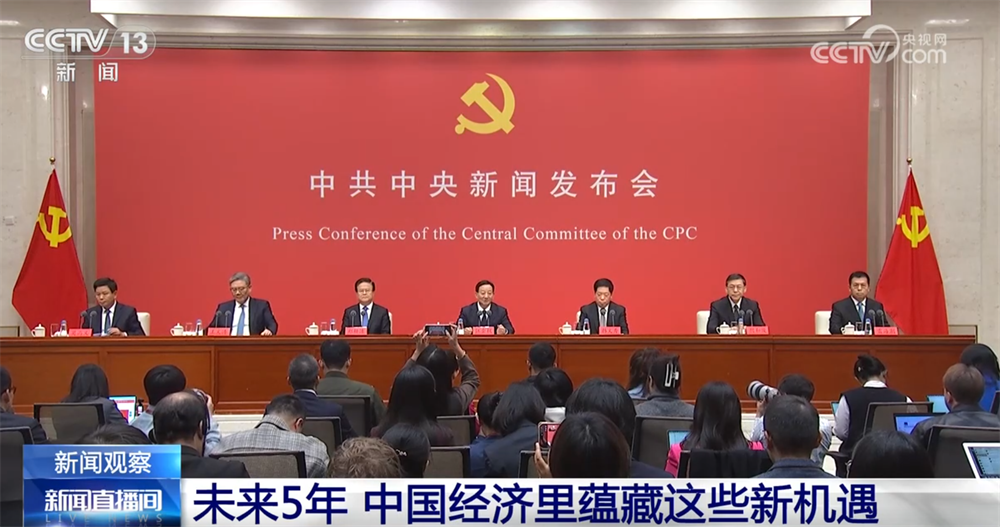
未来五年 中国经济里蕴藏这些新机遇
Yang Shi Xin Wen· 2025-10-24 11:15
Core Insights - The news conference highlighted new opportunities for China's economy over the next five years, focusing on strategic emerging industries and their potential market sizes [1][3]. Group 1: Emerging Industries - The development of strategic emerging industries such as new energy, new materials, aerospace, and low-altitude economy is expected to create several trillion-yuan markets [3]. - Future industries like quantum technology, biomanufacturing, hydrogen energy, nuclear fusion, brain-computer interfaces, embodied intelligence, and sixth-generation mobile communication are identified as new growth points [3][5]. Group 2: Blue and Green Economy - The "blue economy" and "green economy" are also recognized as new growth areas, with China's marine economy exceeding 10 trillion yuan and the green low-carbon industry reaching approximately 11 trillion yuan [7]. - There is significant potential for growth in the green low-carbon sector, with expectations of doubling in size over the next five years [7]. Group 3: Traditional Industries - Optimizing and enhancing traditional industries is projected to create around 10 trillion yuan in new market space over the next five years, leading to new technologies, products, and job opportunities [9]. Group 4: Investment Opportunities - The next five years will emphasize the integration of investments in physical assets and human capital, presenting numerous new opportunities [11]. - An estimated investment demand exceeding 5 trillion yuan is anticipated for the construction and renovation of underground pipelines, with over 700,000 kilometers planned [11]. - China's total economic output is expected to reach approximately 140 trillion yuan this year, marking a historical high [11].

未来5年蕴藏哪些新机遇?透过数个“新增长点”看中国经济值得期待
Yang Shi Wang· 2025-10-24 09:58
Core Insights - The upcoming five years in China are expected to unveil new economic growth opportunities, particularly in emerging industries and technologies [1][3]. Group 1: Emerging Industries - The development of strategic emerging industries such as new energy, new materials, aerospace, and low-altitude economy is anticipated to create several trillion-yuan markets [3]. - Future industries like quantum technology, biomanufacturing, hydrogen energy, nuclear fusion, brain-computer interfaces, embodied intelligence, and sixth-generation mobile communication are identified as new growth points [3][5]. Group 2: Blue and Green Economies - The "blue economy" and "green economy" are highlighted as new growth areas, with China's marine economy exceeding 10 trillion yuan and the scale of green low-carbon industries reaching approximately 11 trillion yuan [5]. - There is significant potential for growth in green low-carbon industries, which could double or even exceed current levels in the next five years [5]. Group 3: Traditional Industries - Optimizing and enhancing traditional industries is projected to generate around 10 trillion yuan in new market space over the next five years, leading to new technologies, products, and job opportunities [7]. Group 4: Investment Opportunities - The next five years will focus on integrating investments in physical assets and human capital, presenting numerous new opportunities [9]. - The plan includes the construction and renovation of over 700,000 kilometers of underground pipelines, with an additional investment demand exceeding 5 trillion yuan [9]. Group 5: Economic Outlook - China's economic total is expected to reach approximately 140 trillion yuan this year, marking a new historical high and indicating a positive outlook for the economy [11].