
量子技术

Search documents
王毅:中德应共同做多边主义的倡导者、自由贸易的捍卫者、开放发展的贡献者
Xin Hua Wang· 2025-07-03 22:40
Group 1 - The core viewpoint emphasizes the importance of mutual respect, seeking common ground while reserving differences, and win-win cooperation to advance the comprehensive strategic partnership between China and Germany [1][2] - The bilateral trade between China and Germany has exceeded $200 billion for nine consecutive years, with trade with China supporting 1 million jobs in Germany and over 5,000 German companies investing in China [2] - Both countries agree to enhance cooperation in cutting-edge fields such as green transformation, artificial intelligence, and quantum technology, which presents new development opportunities for German and European enterprises as China accelerates its modernization [2][3] Group 2 - The dialogue between the two nations is characterized as comprehensive, pragmatic, candid, and constructive, enhancing mutual understanding and expanding consensus [1] - China welcomes the German government's reaffirmation of the one-China policy and expects Germany to support China's efforts for complete unification, emphasizing the need to oppose "Taiwan independence" actions [2] - The commitment to multilateralism is highlighted, with a call for both countries to strengthen coordination and deepen cooperation in the face of complex international situations [3]
“美国占一半,中国分四成,欧洲...”
Guan Cha Zhe Wang· 2025-07-03 03:25
Core Viewpoint - Europe is at risk of falling behind in the quantum technology race, similar to its experience in artificial intelligence, as it struggles to convert research into market opportunities and attract significant investment compared to the US and China [1][2][4]. Investment Landscape - The EU has only attracted 5% of global private quantum technology funding, while the US and China have secured over 50% and 40% respectively [1]. - The EU has committed €11 billion to quantum technology, but there is a need for better resource integration to enhance impact [5]. Commercialization Challenges - Europe leads in scientific publications in quantum technology but ranks third in patent applications, trailing behind the US and China [1]. - Companies in Europe face difficulties in scaling due to a lack of sufficient support and venture capital [4][5]. Strategic Initiatives - The EU's strategy includes launching two major challenges between 2025 and 2027, focusing on quantum computing and quantum navigation systems [7]. - The EU plans to support innovation-oriented procurement to help companies commercialize technology, although specific implementation details are lacking [7]. Regulatory Environment - There is a debate on whether Europe will allow the quantum industry to develop freely, given the sensitivity of quantum technology related to national security [2]. - Industry leaders caution against premature regulation, referencing the EU's previous regulatory approach to artificial intelligence as a potential misstep [7].

数字经济周报(202506第3期):政策与实践共振,数字货币加速落地-20250630
Yin He Zheng Quan· 2025-06-30 08:44
核心观点 本周焦点:政策与实践共振,数字货币加速落地。 0 近期,央行数字货币、稳定币等数字货币领域重要事件频发,市场关注度提升。 一是美国《GENIUS法案》顺利通过参议院审议,该法案是数字资产行业首次 获得联邦层面的法律规范,为稳定币市场发展与规范带来新的契机与挑战,或 将对国际货币秩序、美元资产体系具有潜在重构效应。二是中国提出设立数字 人民币国际运营中心,进一步推动数字人民币的国际化运营与金融市场业务 发展。三是国泰君安国际证券交易牌照升级为可提供虚拟资产交易服务,成为 首家获批加密货币交易的中资券商。 随着数字货币再次成为市场焦点,应理解央行数字货币、稳定币和比特币虽均 为数字货币的重要组成部分,但存在本质上的不同。货币属性方面,央行数字 货币是法币的数字化,稳定币是挂钩货币的代币,比特币只是资产而非货币。 市场规模方面,在国际市场中比特币的市值占据主导,稳定币的交易量占据主 导。价格稳定性方面,稳定币如 USDT、USDC 等币值基本稳定,而比特币涨 跌极易受到全球货币政策、重大行业事件冲击、通胀预期等因素影响。 2025年6月 30 日 分析师 数字经济周报(202506 第 3 期) 政策与实 ...
遵循创新规律培育耐心资本
Jing Ji Ri Bao· 2025-06-28 21:56
Core Viewpoint - The recent Lujiazui Forum emphasized the importance of "technological innovation," "industrial innovation," "financial services," and "funding support" as key elements for enhancing national strength and fostering innovation-driven development [1][2]. Group 1: Innovation and Funding - Innovation is crucial for improving comprehensive national strength and has become a focal point for global competition, with advancements in AI, biotechnology, and quantum technology [1]. - A multi-layered technology financial service system has been established in China, including bank credit, bond markets, and stock markets, to support innovation [2]. - The introduction of a "technology board" in the bond market and the establishment of a growth layer in the Sci-Tech Innovation Board are part of efforts to create a funding mechanism that aligns with innovation's inherent rules [2]. Group 2: Roles of Financial Support - Financial support must act as a "patience runner" for innovation, requiring long-term stable capital rather than short-term funding [2][3]. - A conducive environment for innovation should be created, including a tolerance for failure and mechanisms to encourage investment despite risks [3]. - A comprehensive funding support system is necessary throughout the innovation lifecycle, from early-stage venture capital to later-stage bank credit and capital market support [3]. Group 3: Building a Positive Cycle - A well-adapted funding system that resonates with the rhythm of innovation can create a virtuous cycle among technology, industry, and finance, aiding economic stability and growth [3].
彭森:改革与发展,是中国应对外部冲击关键之策
Zhong Guo Xin Wen Wang· 2025-06-28 08:41
Core Viewpoint - The article emphasizes China's approach to stabilizing its economy amidst global economic uncertainties through reform and development strategies [1]. Group 1: Economic Response to External Challenges - Since April, the U.S. has implemented "reciprocal tariffs," disrupting global supply chains and challenging multilateral trade orders [2]. - China's foreign trade dependence on the U.S. has decreased from over 20% to around 12%, indicating a strategic reduction in reliance on a single market [2]. - In Q1, China's GDP grew by 5.4%, surpassing last year's growth rate and this year's target of 5% [2]. Group 2: Reform and Policy Initiatives - China has introduced various macroeconomic policies to stimulate economic activity and enhance competitiveness, including the "Promotion Law of Private Economy," which establishes the legal status of the private sector [3]. - New measures aimed at creating a unified national market and market-oriented resource allocation have been implemented to provide systemic support for economic stability [3]. Group 3: Manufacturing Transformation and High-Quality Development - The perception of "Made in China" is evolving, with a shift towards high-end and high-tech manufacturing, as evidenced by a Deutsche Bank report [4]. - China's manufacturing scale is approximately double that of the U.S. and four times that of Japan and Germany, with significant improvements in quality and structure [4]. - Key sectors such as high-speed rail, shipbuilding, and industrial robotics have seen substantial domestic production, with over 50% of global orders in these areas [4]. Group 4: Future Directions for Manufacturing - External pressures may accelerate China's efforts to enhance its industrial structure and upgrade its manufacturing capabilities [5][6]. - Future manufacturing strategies will focus on upgrading traditional industries, advancing strategic emerging industries, and fostering innovation in AI, quantum technology, and life sciences [6].
98场专题论坛、260个议题!第27届科协年会将在京举办
Nan Fang Du Shi Bao· 2025-06-26 05:26
Group 1 - The 27th China Association for Science and Technology (CAST) Annual Conference will be held from July 1 to July 31 in Beijing, focusing on "Tracing Technological Frontiers to Support Innovative Development" [1][2] - The conference will feature one main forum, 98 specialized forums, and four parallel forums, with the main forum scheduled for July 6 at the China Science and Technology Hall [1][2] - This year's conference emphasizes "innovating systems and mechanisms," involving nearly 70 national societies and strategic scientific forces to address major technological fields outlined in the national "14th Five-Year Plan" [1][2] Group 2 - The main forum will invite five vice presidents of CAST and national society leaders to present keynote speeches on topics such as quantum technology, biomanufacturing, deep-sea technology, artificial intelligence, and agriculture [2] - The 98 specialized forums will cover ten fields, including basic sciences and life health, with 53 national societies responsible for organizing them, ensuring high academic quality [2] - The conference will also introduce a mechanism for summarizing innovative achievements, publishing major scientific issues and engineering challenges for 2025, and selecting the top 100 influential papers from 2152 submissions [2]

第二十七届中国科协年会将举办98场论坛
Ke Ji Ri Bao· 2025-06-26 03:37
从7月1日开始,全国学会将围绕数理化基础科学、生命健康(含医学)、地球科学(含深地深海)、生 态环境、制造科技、信息科技、先进材料、资源能源、农业科技(含食品)、空天科技等10个领域陆续 举办98场专题论坛。4场平行论坛包括2025中国科技期刊发展论坛、中国科技创新发展环境论坛、港澳 科技界服务国家科技创新座谈会、中国科协主席与青年科技人才见面会。 今年年会还将举办中国科协年会历史沿革展、中国科技会堂专家报告展、科技发展成就展等。此外,中 国科技会堂咖啡厅等区域将开展开放式学术交流与科技场景体验活动。(记者代小佩) 科技日报北京6月25日电 记者25日从中国科协举办的新闻发布会上获悉,第二十七届中国科协年会将于 7月1日—31日在北京举办,主题为"示踪科技前沿 助力创新发展"。此次年会由1场主论坛、98场专题论 坛以及4场平行论坛组成,并设置信息发布、宣传与科普、展览展示与场景体验等板块。 中国科协科学技术创新部副部长杨书宣介绍,本届年会主论坛拟于7月6日在中国科技会堂举行,届时将 邀请潘建伟、谭天伟、李家彪、戴琼海、万建民等五位中国科协副主席、全国学会负责人,围绕量子技 术、生物制造(生物医药)、深海科技、 ...
找准方向拓宽产业创新路径
Jing Ji Ri Bao· 2025-06-25 22:28
Core Viewpoint - The Central Economic Work Conference emphasizes the integration of technological innovation and industrial innovation, highlighting their interdependent relationship and the need for a demand-driven approach to industrial innovation [1][2]. Group 1: Industrial Innovation Definition and Direction - Industrial innovation refers to the entire process of promoting the transformation of the industrial system towards intensive, intelligent, and ecological innovation through core technology innovation, resource allocation, and industrial model reform [1]. - The development direction of industrial innovation should focus on traditional industry upgrades and the emergence of strategic new industries, with a particular emphasis on cutting-edge fields such as general artificial intelligence, quantum technology, and low-altitude economy [2]. Group 2: Application Scenarios and Their Importance - Industrial innovation is driven by application scenarios, creating a closed loop of "demand orientation—technology penetration—value transformation" [3]. - The expansion of application scenarios enhances the efficiency and quality of existing applications, facilitating the transition from abstract technology to market value [3]. Group 3: Fusion Development - The process of industrial innovation is closely linked with technological breakthroughs, necessitating a seamless integration of innovation chains and industrial chains [4]. - Supporting enterprises in addressing common technological issues and enhancing the relevance and effectiveness of technological innovation is crucial for driving industrial upgrades [4]. Group 4: Innovation Ecosystem and Policy Framework - Building a collaborative and symbiotic innovation ecosystem is essential for activating industrial innovation, as seen in Shenzhen's diverse innovation ecosystem involving leading enterprises and research institutions [5]. - A comprehensive policy framework is necessary to support industrial innovation, including top-level design, targeted policies for different industries, and mechanisms for policy evaluation and adjustment [6].
一个峰会,三种命运:懂王愤然离席,欧洲拥抱中国,日本孤立无援
Sou Hu Cai Jing· 2025-06-21 18:52
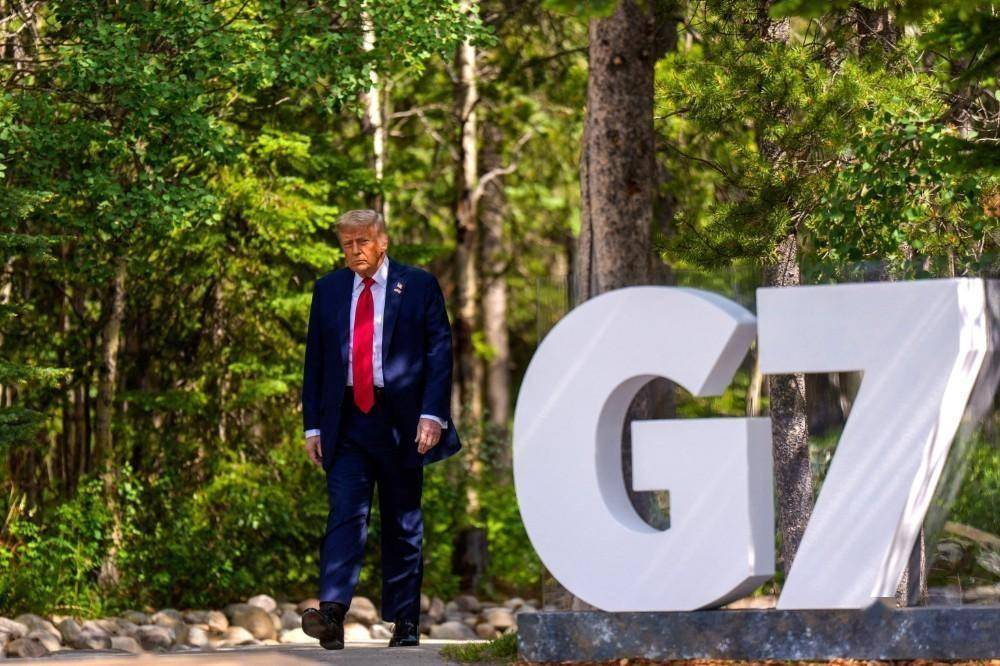
Group 1: Geopolitical Tensions and Trade Dynamics - The G7 summit ended abruptly with President Trump's departure, highlighting tensions over trade and diplomatic relations, particularly regarding tariffs and the Middle East crisis [1][3] - Trump's refusal to sign documents that included "Israel restraint" and his anger over EU's rejection of car tariff threats indicate a shift towards unilateralism in U.S. foreign policy [3] - The withdrawal of 300 regional affairs experts from the White House has created decision-making blind spots, impacting the U.S.'s understanding of European legislative changes and trade strategies [3] Group 2: European Industrial Response - European companies are adapting to geopolitical shifts, with significant investments in China, such as Trumpf's laser machine tool factory in Suzhou and Schneider Electric's R&D center in Shenzhen [6] - Airbus received a new order for 100 aircraft at its Tianjin assembly line, and Volkswagen's factory in Anhui commenced production six months ahead of schedule, reflecting resilience in European manufacturing [6] - Norway's Equinor signed a 24-year LNG supply contract with China General Nuclear Power, indicating a strategic pivot towards energy partnerships [6] Group 3: Japan's Economic Challenges - Japan faces severe economic challenges, with semiconductor equipment exports to China plummeting by 34% and a high dependency of 38% on U.S. automotive exports [8] - A report from Nomura Securities reveals that Japan's resilience to tariff impacts is only one-third that of Germany, highlighting vulnerabilities in its trade structure [8] Group 4: Shifts in Global Trade and Currency - The G7's struggles are contrasted by emerging trends, such as Saudi Arabia signing its first LNG order settled in RMB and Indonesia finalizing nickel processing agreements with Russia [10] - Data indicates a shift in trade dynamics, with China-ASEAN trade surpassing that with the EU, and Mexico becoming the largest source of imports for the U.S., replacing China [11] - The global central bank's reserve of RMB has increased to 3.5%, while the euro has surpassed the dollar in cross-border payments, indicating a potential currency revolution [11]
证券公司ETF(516730)盘中拉升翻红,机构:证券行业转型有望带来新的业务增长点
Xin Lang Cai Jing· 2025-06-20 02:41
Group 1 - The core viewpoint of the articles indicates that the securities industry is experiencing a positive trend, with the China Securities Company 30 Index showing a 0.30% increase and a 28.86% rise over the past year, reflecting a favorable market environment for brokerage and investment banking businesses [1][2] - Non-bank financial institutions currently have a low average valuation, providing a safety margin and a balanced approach to investment opportunities [1] - The transition of the Chinese capital market from "financing function optimization" to "innovation ecosystem construction" is highlighted, with the upcoming 2.0 version of the Sci-Tech Innovation Board expected to reshape the valuation system for technology companies [1] Group 2 - The China Securities Company 30 Index is composed of top-performing securities firms based on business ranking, market capitalization, revenue, and profitability, with the top ten stocks accounting for 67.69% of the index [2] - The securities company ETF closely tracks the China Securities Company 30 Index, providing investors with a means to invest in a diversified portfolio of leading securities firms [2]