创新驱动

Search documents
外媒关注中央经济工作会议:中国着眼未来,多举措优化经济发展
Zhong Guo Xin Wen Wang· 2025-12-15 02:42
法新社指出,中央经济工作会议备受外界关注,人们可以从中了解中国未来经济政策走向。报道称,此 次会议确定了2026年中国经济工作要抓好的八项重点任务,其中,"坚持内需主导,建设强大国内市 场"居于首位。 法新社还关注到,中国的出口持续蓬勃发展。国际货币基金组织(IMF)12月10日预计2025年中国经济增 速将达5%,较10月发布的《世界经济展望报告》上调0.2个百分点。 阿塞拜疆国家新闻社指出中国此次中央经济工作会议分析了当前经济形势,并对2026年经济工作进行了 部署。报道称,会议指出,必须充分挖掘经济潜能,必须坚持政策支持和改革创新并举,必须做到 既"放得活"又"管得好",必须坚持投资于物和投资于人紧密结合,必须以苦练内功来应对外部挑战。 新加坡亚洲新闻台(CNA)报道称,中国此次中央经济工作会议上,"坚持创新驱动,加紧培育壮大新动 能"被列为2026年经济工作的一大重点任务。 外媒关注中央经济工作会议:中国着眼未来,多举措优化经济发展 中新网12月15日电 中央经济工作会议12月10日至11日在北京举行,国际媒体持续关注。多家外媒指 出,此次会议意义重大,明确了2026年中国经济工作政策取向,相信中国将 ...
中央经济工作会议召开 创金合信基金魏凤春:政策延续扩张 存量增量并重
Xin Lang Cai Jing· 2025-12-15 02:06
Core Viewpoint - The Central Economic Work Conference held on December 10-11 in Beijing emphasizes the continuation of proactive fiscal policies and moderately loose monetary policies for the upcoming year, signaling a focus on economic recovery and stability amid external uncertainties [1][6]. Fiscal Policy - The fiscal policy is expected to maintain a relatively stable total expenditure while optimizing the structure and revitalizing existing resources, utilizing special bonds and policy financing to support key areas [2][8]. - Consumption vouchers and tax incentives will be employed to stimulate resident consumption [2][8]. Monetary Policy - Interest rate cuts may still be necessary to ensure reasonable price recovery and change the persistent low inflation expectations, while also lowering financing costs for the real economy [2][8]. - The monetary policy will focus on stabilizing the exchange rate and adjusting financial regulations to restore the transmission from loose monetary policy to credit expansion [2][8]. Domestic Demand - The conference prioritizes "expanding domestic demand" as a key task, viewing it as a strategic necessity to counterbalance external uncertainties and enhance internal circulation [3][9]. - The core of expanding domestic demand lies in consumption rather than investment, requiring collaboration among enterprises, government, and residents to create a robust domestic market [3][9]. Innovation and New Growth Drivers - Future new growth drivers will focus on digital economy, artificial intelligence, advanced manufacturing, and renewable energy, among others [4][9]. - The capital market is expected to support innovation through pricing, financing, and mergers and acquisitions, facilitating the integration of technological achievements into the industry [4][9]. Reform for High-Quality Development - Key areas for reform include the implementation of the Private Economy Promotion Law, the establishment of a unified national market, and financial market reforms to enhance direct financing [5][10]. - Effective markets require a proactive government that clearly defines boundaries to prevent overreach and ensure high-quality development [5][10]. Risk Management - The approach to risk management should avoid piecemeal solutions and instead focus on comprehensive debt restructuring to create space for credit expansion [6][10]. - Strengthening accountability and recovery mechanisms in risk management is essential to balance growth and risk prevention [6][10]. International Cooperation - Areas for deepened cooperation include digital trade, green economy, and high-end manufacturing, presenting various investment opportunities [7][11]. - Investment opportunities are identified in cross-border e-commerce, renewable energy, and infrastructure projects along the Belt and Road Initiative [7][11]. Capital Market Opportunities - The development of county-level economies, green transformation, and long-term care insurance systems are expected to open up capital market opportunities in infrastructure, renewable energy, and healthcare services [8][12]. - Specific investment opportunities include supply chain services, smart logistics, and green building technologies [8][12].
2025年第212期:晨会纪要-20251215
Guohai Securities· 2025-12-15 02:00
Group 1: Fixed Income and Macro Insights - The report discusses the rapid rise in Japanese government bond yields since early 2024, attributed to the end of negative interest rates and the abandonment of the Yield Curve Control (YCC) policy, alongside concerns over long-term debt sustainability and structural demand shrinkage [3][4] - The Central Economic Work Conference highlighted the need for a more proactive fiscal policy, maintaining a fiscal deficit around 4% for 2025, which is higher than previous years, indicating a focus on constructive fiscal expansion [5][8][9] - The report emphasizes the importance of expanding domestic demand as a key driver for economic growth, with consumer spending contributing significantly to GDP growth [13][14][15] Group 2: Industry and Sector Analysis - The chemical industry is entering a favorable phase, driven by global supply dynamics and increasing demand for AI technologies, with specific companies identified as key players in various segments such as gas turbines and refrigerants [30][31] - The report outlines the ongoing transformation in the real estate sector, focusing on controlling supply, reducing inventory, and improving the quality of housing, with a significant emphasis on affordable housing initiatives [20][21][27] - The robotics sector is experiencing accelerated financing and innovation, with several companies completing significant funding rounds to enhance R&D and commercialize advanced robotic solutions [41][42][44]





国际人士瞩目中央经济工作会议为世界注入确定性
Xin Hua She· 2025-12-15 00:28
原标题:新起点、新动能、新机遇——国际人士瞩目中央经济工作会议为世界注入确定性 岁暮天寒,暖意东来。 中央经济工作会议日前在北京闭幕,世界再次聚焦中国经济巨轮的前行方向。海外人士认为,此次会议不仅着眼"十五五"开局为中国经济把脉 定向,也为世界经济提供稳定预期、创新动能和机遇清单。在充满不确定的世界,国际社会瞩望中国继续担当全球经济增长的重要引擎,为世 界注入强大确定性。 新起点:为新的征程布局谋篇 从年初深度求索(DeepSeek)横空出世引发全球人工智能热潮,到年末国际机构密集上调中国经济增速预期,中国经济经历了充满挑战又顽 强奋进的2025年。站在新的起点上,中国经济即将开启新篇章。 "2025年是中国'十四五'规划收官之年,2026年是'十五五'规划开局之年,这次中央经济工作会议承担着承前启后、锚定航向的重任。"马来西 亚智库区域策略研究所署理主席陈家兴说。 这次中央经济工作会议总结了2025年经济工作,指出"经济社会发展主要目标将顺利完成""'十四五'即将圆满收官,第二个百年奋斗目标新征程 实现良好开局"。 这次会议指出,中国经济顶压前行、向新向优发展,现代化产业体系建设持续推进,改革开放迈出新步伐 ...

【基础化工】政策蓝图绘就,化工结构性机会浮现——基础化工行业周报(20251208-20251214)(赵乃迪/蔡嘉豪/周家诺)
光大证券研究· 2025-12-14 23:03
Group 1 - The core viewpoint of the article emphasizes the importance of policy coordination to stabilize and promote high-quality economic development, focusing on domestic demand, innovation, reform, and openness as key areas for 2025 [3][4][5] - The 2025 Central Economic Work Conference outlined eight key tasks, including building a strong domestic market, enhancing innovation-driven growth, and promoting green transformation [3][4] - The article highlights the ongoing reform of state-owned enterprises (SOEs) and the positive outlook for the "Three Oil Giants" (China National Petroleum, Sinopec, and CNOOC) due to their strong production growth and contribution to energy security [4] Group 2 - The chemical industry is expected to see a recovery in its economic landscape as capital expenditure decreases and demand gradually improves, despite a recent decline in fixed asset investment [5] - The article notes that the semiconductor industry is experiencing growth driven by AI and data center expansion, which is increasing the demand for key materials such as photoresists and electronic chemicals [6] - The rapid development of the humanoid robot industry is creating new demand for high-performance materials, with specific materials like PEEK and MXD6 showing significant potential due to their lightweight and high-strength properties [6]

创新驱动产业赋能,2025电子信息行业发展大会在盐城盐都举行
Yang Zi Wan Bao Wang· 2025-12-14 15:03
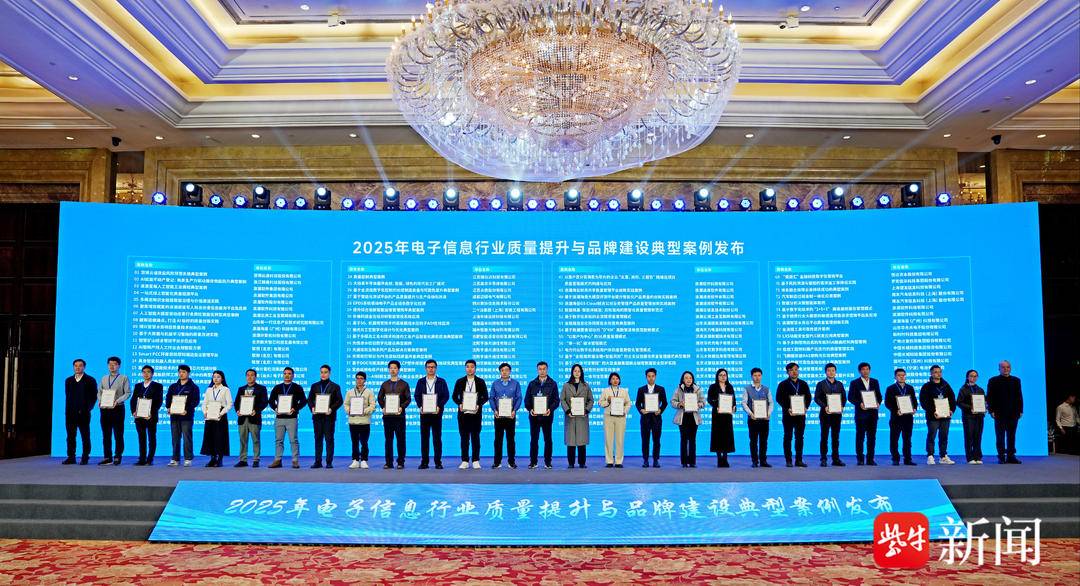
Core Insights - The 2025 Electronic Information Industry Development Conference was held in Yancheng, focusing on "Innovation-Driven High-Quality Development" and aimed at discussing new opportunities for the electronic information industry [1][3]. Group 1: Conference Overview - The conference was co-hosted by the China Electronic Information Industry Association and the Yancheng Municipal Government, with significant participation from industry leaders and government officials [3][5]. - Nearly 300 representatives from the Ministry of Industry and Information Technology, provincial authorities, and key enterprises attended the event, emphasizing the conference's broad influence and high profile [3][5]. Group 2: Key Themes and Discussions - Leaders highlighted the importance of collaboration and innovation in driving industry upgrades and establishing a robust industrial ecosystem [5][6]. - The conference featured discussions on critical topics such as the development of China's electronic information manufacturing during the 14th Five-Year Plan and future considerations for the 15th Five-Year Plan [10]. Group 3: Regional Focus and Development Goals - Yancheng aims to strengthen its electronic information industry, viewing the conference as a bridge for deeper cooperation with industry associations and talent [8][11]. - The region plans to focus on advanced fields such as smart terminals, flexible electronics, and third-generation semiconductors to enhance its industrial scale and core competitiveness [11].




中央经济工作会议定调后 这些中部省份锚定了哪些重点任务?
2 1 Shi Ji Jing Ji Bao Dao· 2025-12-14 14:50
Core Points - The Central Economic Work Conference outlined eight key tasks for economic work in 2026, emphasizing domestic demand and innovation-driven growth [1] - Central provinces like Hubei, Henan, Hunan, Jiangxi, and Shanxi are focusing on stimulating domestic demand and integrating technological and industrial innovation [1][2] Group 1: Domestic Demand Expansion - The conference highlighted the importance of domestic demand as the primary driver for economic growth in 2026, with a strong focus on building a robust domestic market [1] - Provinces are making specific plans to expand consumption and investment, with Hubei aiming to lead new supply through new demand, while Henan focuses on leveraging local advantages to stimulate consumption [2] - Jiangxi is prioritizing the expansion of effective investment and consumption through targeted project planning and actions to boost consumer confidence [2] Group 2: Innovation and Industry Development - The conference emphasized the need for innovation-driven growth, with provinces like Hubei, Henan, and Hunan focusing on integrating technological advancements with industrial development [4][5] - Hubei plans to enhance the integration of technology and industry, while Henan aims to build a modern industrial system and develop new pillar industries [5][7] - Jiangxi is set to leverage its resource advantages to create a modern industrial system and a technology innovation center, focusing on key sectors like rare earth materials and traditional medicine [8] Group 3: Urban-Rural Integration and Regional Coordination - The conference called for coordinated development and urban-rural integration, with Hubei promoting a regional economic layout that emphasizes complementarity and high-quality development [9] - Hubei's strategy includes supporting key cities like Wuhan and Xiangyang to become regional centers, while also enhancing urban agglomeration and infrastructure connectivity [9][10] - Shanxi is focusing on high-quality county-level economic development and rural revitalization, aiming to improve urbanization and agricultural productivity [11][12]
新华全媒头条|新起点、新动能、新机遇——国际人士瞩目中央经济工作会议为世界注入确定性
Xin Hua She· 2025-12-14 14:38
Core Insights - The Central Economic Work Conference in Beijing has set a clear direction for China's economy, aiming to provide stability and growth opportunities for both domestic and global markets [1][2][3] Group 1: Economic Outlook - The conference highlighted that China's economic goals for 2025 are on track, with a successful conclusion to the "14th Five-Year Plan" and a promising start to the "15th Five-Year Plan" [2] - International organizations have raised China's economic growth forecasts for 2025 by 0.4, 0.2, 0.1, and 0.1 percentage points, reflecting growing confidence in China's economic resilience [3] - The emphasis on expanding domestic demand is seen as a key strategy to stabilize the economy amid external uncertainties [3][7] Group 2: Innovation and New Growth Drivers - The conference underscored the importance of innovation and talent development, with specific plans to establish international technology innovation centers in major regions [5] - New growth drivers are expected to emerge from high-tech and green industries, with a focus on sustainable development and enhanced international competitiveness [5][6] - The commitment to a green transition is evident, with initiatives aimed at energy efficiency and carbon reduction, positioning China as a leader in global climate action [6] Group 3: Global Cooperation and Market Expansion - The upcoming launch of the Hainan Free Trade Port is a significant step in China's commitment to high-level opening up and global economic cooperation [8] - The conference outlined eight key tasks for the coming year, with a strong focus on expanding foreign cooperation and optimizing trade agreements [9] - China's growing domestic market and digital infrastructure are creating new opportunities for international businesses, enhancing access to Chinese consumers [10]
新起点、新动能、新机遇
Xin Hua She· 2025-12-14 14:35
新华社北京12月14日电 题:新起点、新动能、新机遇——国际人士瞩目中央经济工作会议为世界 注入确定性 新华社记者杜静 邓茜 岁暮天寒,暖意东来。 新起点:为新的征程布局谋篇 从年初深度求索(DeepSeek)横空出世引发全球人工智能热潮,到年末国际机构密集上调中国经 济增速预期,中国经济经历了充满挑战又顽强奋进的2025年。站在新的起点上,中国经济即将开启新篇 章。 "2025年是中国'十四五'规划收官之年,2026年是'十五五'规划开局之年,这次中央经济工作会议承 担着承前启后、锚定航向的重任。"马来西亚智库区域策略研究所署理主席陈家兴说。 这次中央经济工作会议总结了2025年经济工作,指出"经济社会发展主要目标将顺利完成""'十四 五'即将圆满收官,第二个百年奋斗目标新征程实现良好开局"。 这次会议指出,中国经济顶压前行、向新向优发展,现代化产业体系建设持续推进,改革开放迈出 新步伐,重点领域风险化解取得积极进展,民生保障更加有力。 国际社会对于中国经济的强大韧性和巨大潜能,有了越来越清晰的认知。 近日,世界银行、国际货币基金组织、经合组织、亚洲开发银行分别将2025年中国经济增速预期上 调0.4、0. ...
焦点访谈|明年经济工作政策取向确立了这八个字!
Yang Shi Wang· 2025-12-14 13:33
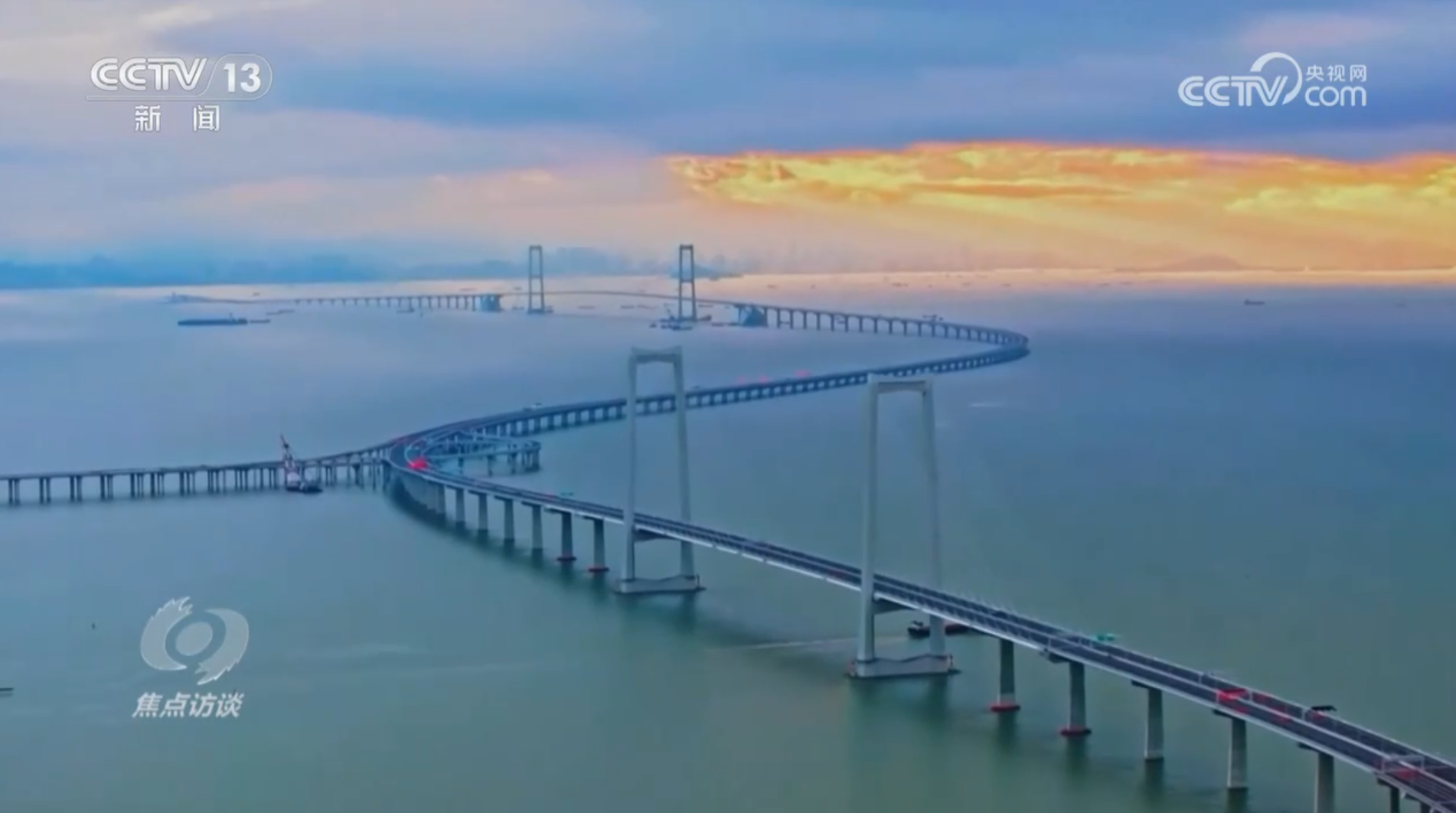
央视网消息(焦点访谈):刚刚闭幕的中央经济工作会议,对2026年经济工作进行了部署,明确了明年我国经济工作的方向和重点。良好的开局是成功的一 半。作为"十五五"规划的开局之年,明年的经济工作成色如何,意义重大。在我国经济发展中老问题、新挑战不少,外部环境变化影响加深的当下,明年的 经济工作具体要怎么干,又有哪些重点任务?今天继续聚焦解读。 做好经济工作,要突出重点,把握关键。这次中央经济工作会议为2026年经济工作定下了"稳中求进、提质增效"的总基调,从坚持内需主导、坚持创新驱 动、改革攻坚、对外开放、协调发展、"双碳"引领、民生为大和化解重点领域风险八个方面进行部署,确定了明年经济工作要抓好的八项重点任务。 中国社会科学院经济研究所研究员黄群慧:"稳中求进、提质增效,提质增效核心体现的是我们的高质量发展,我们的各项重点任务围绕高质量发展全面展 开。" 清华大学中国发展规划研究院常务副院长董煜:"今年'八个坚持'的任务,既是对'十五五'规划建议中经济发展任务的细化落实,也是针对年度工作特点所提 出来的,充分考虑了开局之年经济部署的需要。" 八项重点任务中,坚持内需主导,建设强大国内市场被放在了首位。强大国内市 ...