未来产业

Search documents
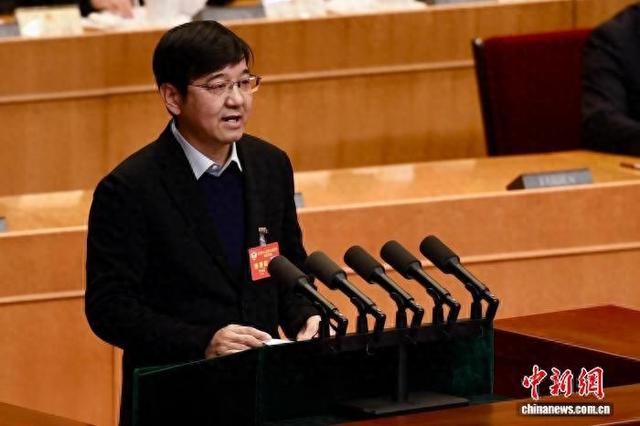
浙江省政协委员建言:引全球资源“润苗”未来产业
Xin Lang Cai Jing· 2026-01-14 12:27
Core Viewpoint - The article emphasizes the need for Zhejiang Province to accelerate the development of future industries, such as bionic robots and quantum information, to create a new engine for high-quality growth [1][3]. Group 1: Future Industry Development - Zhejiang has prioritized the development of nine future industries and is exploring six additional ones, but these industries face high technological intensity and long validation cycles, leading to uncertainties during the incubation phase [1][3]. - The rise of future industries is a global trend, and competition in this sector is fundamentally about competing in global innovation networks [3][4]. Group 2: Recommendations for Support Mechanisms - It is suggested that support for future industries should come from three aspects: capital, mechanisms, and openness, to create an innovative ecosystem conducive to incubating and nurturing future industry projects [3]. - A specific example is the establishment of the "Runmiao Fund" in Hangzhou, with an initial scale of 2 billion yuan and a duration of 20 years, aimed at addressing early-stage financing challenges for technology startups [3]. Group 3: Collaborative Innovation - There is a need for deep collaboration among industry, academia, research, finance, and government to build a synergistic innovation body that aggregates resources and shares risks and rewards [3]. - The proposal includes forming tightly-knit innovation alliances led by companies, which would involve joint investment, research, and transformation efforts [3]. Group 4: Attracting Foreign Investment - High-level openness is recommended to attract quality foreign capital and enterprises, including the introduction of robust QFLP policies to draw European asset management institutions to establish funds in Zhejiang [4]. - Leveraging the "Hangzhou Six Little Dragons" effect is suggested to enhance European awareness of Zhejiang's legal and business environment, thereby attracting more high-tech projects [4].

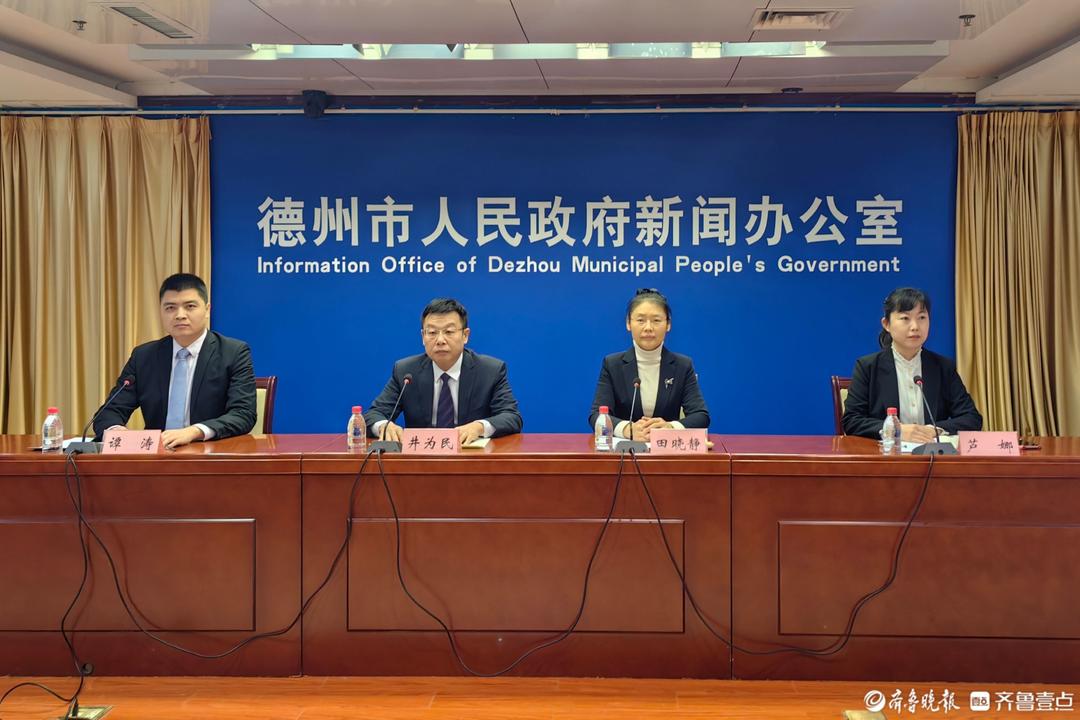
2025年,德州市科技局新布局市级科技创新平台144家
Qi Lu Wan Bao· 2026-01-14 10:11
Core Viewpoint - Dezhou City is focusing on enhancing its technological capabilities and innovation platforms to support traditional industries' transformation and the growth of emerging sectors, aiming for a significant leap from manufacturing to intelligent manufacturing by 2025 [3][4]. Group 1: Traditional Industry Transformation - The city is encouraging the application of new technologies and processes in traditional industries such as food processing and light textile to boost efficiency and innovation [3]. - A total of 144 new city-level technology innovation platforms have been established, including 72 key laboratories and 60 enterprise technology innovation workstations, to support the transformation of traditional industries [3]. Group 2: Emerging Industry Support - Dezhou is accelerating its layout in emerging industries like new-generation information technology, new energy, and new materials, focusing on areas such as carbon fiber composites and graphene [3][4]. - The city is also supporting critical components in integrated circuits and intelligent network security, aligning platform distribution with the needs of industrial transformation [4]. Group 3: Future Industry Layout - The city is proactively establishing platforms for future industries such as biomanufacturing and hydrogen energy, which are expected to drive disruptive innovation [4]. - Notable initiatives include the establishment of the "Dezhou City Bile Acid Synthesis Biomanufacturing Technology Innovation Center" to build a competitive edge in synthetic biology [4]. Group 4: Platform Functionality and Management - The platforms are categorized into basic research and technology development, focusing on long-term scientific support and addressing key industry challenges [4]. - Future efforts will include enhancing existing platforms, managing performance dynamically, and ensuring alignment with industry needs to stimulate innovation [5].
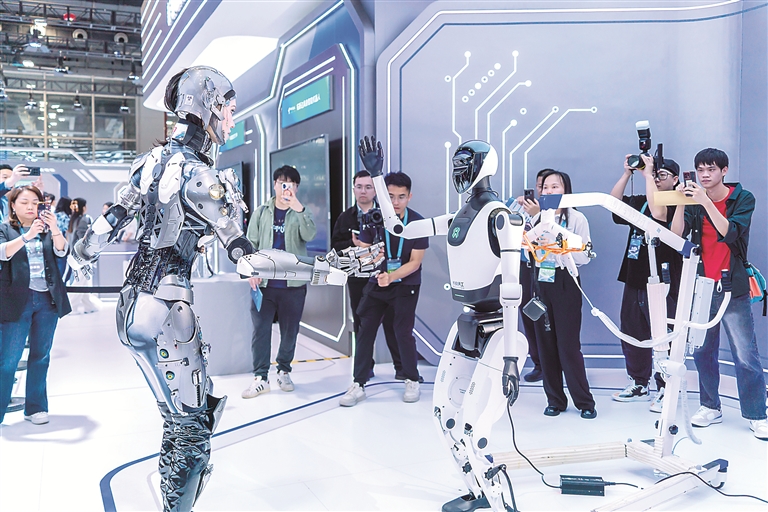
厚植沃土让民间资本敢投愿投
Jing Ji Ri Bao· 2026-01-13 22:09
近期召开的国务院常务会议,围绕支持民间投资,提出实施中小微企业贷款贴息政策,设立民间投资专 项担保计划,建立支持民营企业债券风险分担机制,优化实施设备更新贷款财政贴息政策,进一步降低 企业融资门槛和成本。这释放出鼓励民间资本深度参与国家经济建设的信号。 民间投资是推动我国经济社会发展不可或缺的力量,激发民间投资潜力,不仅有利于发挥其对稳定投资 增速、创造就业机会、提振市场信心、促进经济增长的积极作用,而且对于推动创新发展和产业转型升 级、加快构建高水平社会主义市场经济体制、增强经济高质量发展动力均有重要意义。"十五五"规划建 议提出,"完善民营企业参与重大项目建设长效机制""激发民间投资活力、提高民间投资比重",明确了 今后一段时期促进民间投资发展的政策方向。当前,随着民间投资市场准入持续放宽,要素保障不断加 强,民营企业参与国家重大项目、重点领域建设的积极性显著提高,并且加速布局高新技术产业、战略 性新兴产业和未来产业,人工智能、商业航天、低空经济、绿色能源、生物医药等成为投资热点。民间 投资"向实""向新""向高"态势凸显。 也要看到,充分释放我国民间投资潜力,仍面临一些亟待破解的问题。比如,部分领域隐性 ...
信长星刘小涛会见中国诚通控股集团董事长奚正平一行
Xin Hua Ri Bao· 2026-01-13 21:18
本报讯(记者黄伟王拓)1月12日,省委书记信长星、省长刘小涛在南京会见中国诚通控股集团董事长奚 正平一行。 信长星、刘小涛对奚正平一行来江苏考察交流、对接合作表示欢迎。信长星说,党的二十届四中全会对 加快高水平科技自立自强、建设现代化产业体系等作出战略部署。江苏产业门类齐全、科教资源丰富, 设立科创投资基金,有利于进一步贯通创新链产业链资金链人才链,促进科技创新和产业创新深度融 合。希望与中国诚通控股集团不断深化务实合作,共同做好科技金融大文章,培育壮大新兴产业和未来 产业,更好服务全国发展大局。 奚正平表示,中国诚通控股集团与江苏有着良好合作基础,未来将充分发挥集团优势,联合基金合作企 业,加大在江苏的投资力度,助力江苏集聚更多优质资源,加快打造发展新质生产力的重要阵地。 当天,诚通科创江苏基金正式揭牌。 省和南京市领导储永宏、沈剑荣、李忠军,中核集团总会计师王学军、中国电气装备集团副总经理朱安 珂、中国诚通控股集团副总经理童来明等分别参加有关活动。 ...
瑞达期货沪锌产业日报-20260113
Rui Da Qi Huo· 2026-01-13 09:43
沪锌产业日报 2026-01-13 强,上行通道上沿阻力。观点参考:预计沪锌偏强调整,关注MA10支撑,区间2.4-2.5。 免责声明 本报告中的信息均来源于公开可获得资料,瑞达期货股份有限公司力求准确可靠,但对这些信息的准确性及完整性不做任 何保证,据此投资,责任自负。本报告不构成个人投资建议,客户应考虑本报告中的任何意见或建议是否符合其特定状况。本 报告版权仅为我公司所有,未经书面许可,任何机构和个人不得以任何形式翻版、复制和发布。如引用、刊发,需注明出处为 瑞达期货股份有限公司研究院,且不得对本报告进行有悖原意的引用、删节和修改。 | 项目类别 | 数据指标 | 最新 | 环比 数据指标 | 最新 | 环比 | | --- | --- | --- | --- | --- | --- | | 期货市场 | 沪锌主力合约收盘价(日,元/吨) | 24235 | 110 02-03月合约价差:沪锌(日,元/吨) | -45 | 5 | | | LME三个月锌报价(日,美元/吨) | 3216 | 62.5 沪锌总持仓量(日,手) | 229686 | 7326 | | | 沪锌前20名净持仓(日,手) | 4 ...
今年工业经济发展形势如何?将采取哪些措施保增长?访工信部部长
Xin Lang Cai Jing· 2026-01-13 06:22
Core Viewpoint - The construction of a modern industrial system in China is being accelerated, focusing on the integration of technological and industrial innovation to enhance international competitiveness [1] Group 1: Industrial Economic Development - The industrial economy in China is expected to maintain stability and growth, with a focus on four key areas: stability, expansion, innovation, and enhancement [2] - Stability involves supporting key industries and regions that account for 80% of industrial output, implementing growth plans, and ensuring policy support [2] - Expansion focuses on increasing effective demand through flexible manufacturing and promoting new technologies, while also initiating major engineering projects [2] - Innovation aims to enhance value creation by upgrading traditional industries and developing emerging sectors, such as integrated circuits and aerospace [3] - Enhancement emphasizes improving the vitality of enterprises, particularly small and medium-sized ones, by reducing burdens and ensuring timely payments [3] Group 2: Manufacturing Development - The focus during the "14th Five-Year Plan" period will be on intelligent, green, and integrated development of manufacturing, ensuring supply chain security and stability [4] - Traditional industries will undergo renewal through the implementation of targeted upgrade plans and the adoption of smart and green technologies [4] - Emerging industries will be promoted through the establishment of demonstration bases and large-scale application of new technologies [5] - Future industries will be strategically developed, focusing on areas like quantum technology and 6G, with an emphasis on innovation and ecosystem building [5] Group 3: Technological Innovation - The integration of technological and industrial innovation is prioritized to enhance productivity and secure a competitive edge in global markets [6] - High-quality technological supply will be increased through national projects and collaboration between enterprises and research institutions [6] - The role of enterprises in technological innovation will be strengthened, with policies to support R&D investments and enhance participation in major projects [7] Group 4: Digital Transformation - The promotion of digital transformation in manufacturing will be driven by the large-scale application of industrial internet and artificial intelligence [8] - A strong digital foundation will be established by focusing on high-quality data collection and usage, particularly in key manufacturing sectors [8] - The development of industrial internet platforms and smart solutions will be prioritized to enhance connectivity and application in various industries [9]
推动工业经济稳增长,工信部点名这些未来产业
Di Yi Cai Jing· 2026-01-13 02:40
实施传统产业焕新行动和发展壮大新兴产业打造新动能行动。 工业是国民经济的"压舱石",工业稳则经济稳。 李乐成表示,将进一步加强前瞻布局和统筹谋划,加快建立未来产业投入增长和风险分担机制,推动未 来制造、未来信息、未来材料等取得新突破。聚焦量子科技、人形机器人、脑机接口、深海极地、6G 等领域,加强技术攻关、产品开发、企业培育、生态建设。 推动产业升级向新布局 过去一年,工业经济展现强大韧性和活力。 数据显示,2025年前11个月,规模以上工业增加值同比增长6%,规模以上高技术制造业、装备制造业 增加值同比分别增长9.2%、9.3%,产业提质升级步伐明显加快,新动能不断壮大。 李乐成谈到,2026年我国工业经济发展韧性强、潜力大、活力足的优势条件没有改变,当然也面临一些 风险挑战,只要坚定信心、迎难而上,用创新的思路、改革的办法,用足用好优势条件,完全能够推动 工业经济行稳致远。 近日召开的全国工业和信息化工作会议,将"全力巩固工业经济稳中向好态势"列为2026年首要任务。李 乐成表示,今年将着重抓好四方面工作,包括稳定重点行业和重点地区增长,挖潜扩大有效需求,促进 价值创造、以质取胜,进一步增强经营主体动力活 ...
新视野丨坚持创新驱动 加紧培育壮大新动能
Zhong Yang Ji Wei Guo Jia Jian Wei Wang Zhan· 2026-01-13 00:33
Group 1 - The core viewpoint emphasizes the importance of innovation-driven development as a strategic decision by the Chinese government to achieve high-quality economic growth and to foster new driving forces for modernization [3][4]. - The focus on cultivating new driving forces through technological innovation, institutional innovation, and model innovation is essential for transforming the economy from resource consumption to technological advancement [3][4][5]. - The current global technological competition necessitates a strong emphasis on self-innovation to maintain competitiveness in key core technologies [4][5]. Group 2 - Significant historical achievements in innovation have been made since the 18th National Congress, positioning China as an innovative nation with notable advancements in various high-tech fields [6][7]. - Breakthroughs in key core technologies, such as artificial intelligence and big data, have accelerated the application of emerging technologies, providing a robust engine for high-quality economic development [7][8]. - The establishment of a comprehensive innovation system has strengthened the foundation for development, with increased R&D investment and enhanced roles for enterprises in innovation [8][9]. Group 3 - The practical path to cultivating new driving forces involves a systematic approach to enhance technological self-reliance and support for foundational research [9][10]. - Developing a modern industrial system is crucial, focusing on strategic emerging industries and future industries to seize new opportunities in global industrial restructuring [10][11]. - Deepening reforms in key areas and creating a conducive environment for new driving forces is necessary to eliminate barriers to innovation and development [11][12].
每日债市速递 | 银行间市场资金面出现收敛
Sou Hu Cai Jing· 2026-01-13 00:31
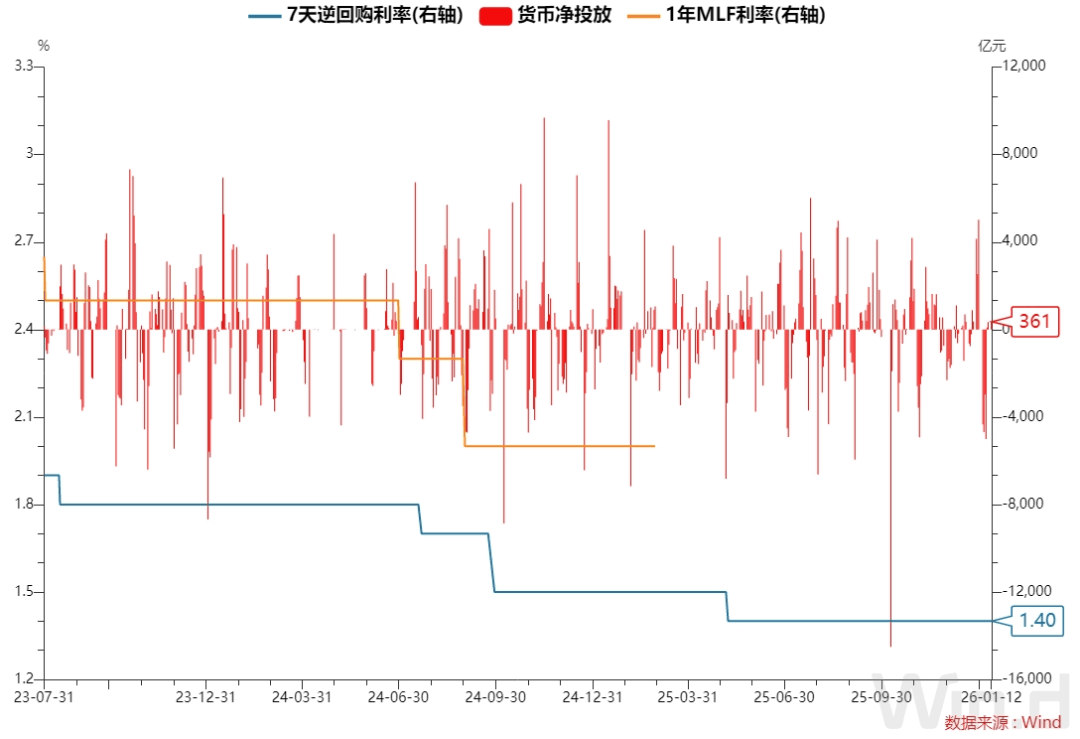
Monetary Policy Operations - The central bank announced a 7-day reverse repurchase operation of 861 billion yuan at a fixed rate of 1.40% on January 12, with a net injection of 361 billion yuan after accounting for 500 billion yuan in maturing repos [1][4]. Market Liquidity - The interbank market liquidity has tightened, with the weighted average rate of DR001 rising over 5 basis points to 1.32%. Overnight rates in the anonymous click (X-repo) system increased by 10 basis points to 1.35%, with supply reduced to several hundred billion [2][4]. - The latest overnight financing rate in the U.S. stands at 3.64% [2]. Interbank Certificates of Deposit - The latest transaction rate for one-year interbank certificates of deposit among major banks is at 1.64%, showing a slight increase from the previous day [6][7]. Government Investment Funds - Four departments jointly issued guidelines to strengthen the planning and direction of government investment funds, introducing 14 policy measures focusing on investment in emerging and future industries, including new-generation information technology, renewable energy, and artificial intelligence [10][11]. Bond Market Developments - The yields on major interbank bonds have generally declined, with the 30-year government bond futures contract rising by 0.30%, the 10-year by 0.06%, and the 5-year by 0.05% [8][10]. - Recent negative events in the bond market include disciplinary actions against executives of Sunac Real Estate Group for failing to disclose overdue debts and considerations by China Overseas Hongyang Group to issue dim sum bonds [12]. Non-Standard Assets Risks - Recent disclosures indicate various non-standard asset risks, including defaults and risk warnings related to trust plans and private equity funds [14].
每日债市速递 | 银行间市场资金面出现收敛
Wind万得· 2026-01-12 22:39
Open Market Operations - The central bank announced a 7-day reverse repurchase operation of 861 billion yuan at a fixed rate of 1.40% on January 12, with a net injection of 361 billion yuan after accounting for 500 billion yuan in maturing repos [1]. Funding Conditions - The interbank market saw a convergence in funding, with the D R001 weighted average rate rising over 5 basis points to 1.32%. Overnight rates in the anonymous click (X-repo) system increased by 10 basis points to 1.35%, with supply reduced to several hundred billion [3]. Interbank Certificates of Deposit - The latest transaction for one-year interbank certificates of deposit among major banks was at 1.64%, showing a slight increase from the previous day [6]. Bond Market Overview - Major interest rates for interbank bonds generally declined, with specific yields for government bonds showing various decreases, such as the 1-year yield at 1.2350 (-3.50) and the 10-year yield at 1.7410 (-0.40) [10]. Government Investment Funds - Four departments jointly issued guidelines to strengthen the planning and direction of government investment funds, focusing on emerging and future industries, including new generation information technology, renewable energy, and artificial intelligence [14]. Global Macro Developments - The U.S. Federal Reserve Chairman Jerome Powell is under criminal investigation regarding renovations at the Fed's headquarters, which he claims is unprecedented and politically motivated [16]. Bond Market Events - Notable events include disciplinary actions against executives of Sunac Real Estate Group for failing to disclose overdue debts, and China Overseas Hong Kong Group considering issuing dim sum bonds [18].