
社会融资规模

Search documents
国务院关于金融工作情况的报告:货币政策的执行和传导进一步强化
Bei Jing Shang Bao· 2025-10-28 12:00
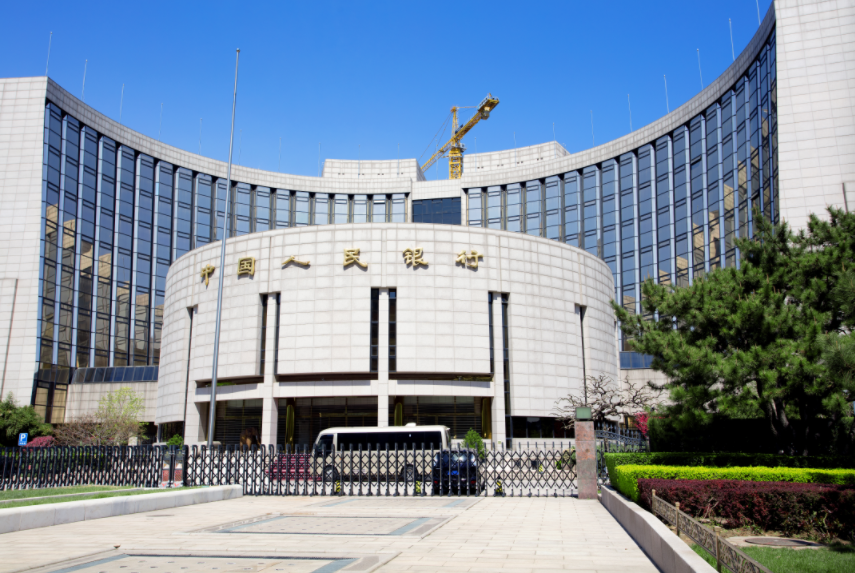
Core Viewpoint - The People's Bank of China (PBOC) has implemented a series of significant monetary policy measures to support economic recovery and enhance financial market confidence, as reported during the 18th meeting of the Standing Committee of the 14th National People's Congress [1] Monetary Policy Execution - Following the Central Political Bureau's directives on September 26, 2024, the PBOC introduced a comprehensive set of monetary policy measures aimed at maintaining an appropriately accommodative monetary stance starting in 2025 [1] - In May, new monetary policy measures were launched, including further reductions in reserve requirement ratios (RRR) and interest rates, alongside increased structural support for technological innovation, consumption, small and micro enterprises, and stabilizing foreign trade [1] - As of the end of September, the year-on-year growth rates for the total social financing scale and broad money supply were 8.7% and 8.4%, respectively [1] - The weighted average interest rate for newly issued corporate loans was reported at 3.14% in September [1] - The execution and transmission of monetary policy have been strengthened, resulting in ample liquidity, reasonable growth in financial aggregates, and historically low social financing costs, which collectively contribute to boosting market confidence and improving social expectations [1]
9月末山东社会融资规模达25.6万亿元
Da Zhong Ri Bao· 2025-10-28 01:01
Core Insights - As of the end of September, Shandong's total social financing reached 25.6 trillion yuan, with significant year-on-year growth in financing volume and a historical low in financing costs [1][3][4] Financing Volume and Structure - In the first three quarters, Shandong's financing volume showed reasonable growth, with social financing, loans, and deposits increasing by 1.8 trillion yuan, 1.1 trillion yuan, and 1.3 trillion yuan respectively, compared to the previous year [2][3] - The balance of corporate loans reached 10.1 trillion yuan, marking a year-on-year increase of 12.2%, with manufacturing sector long-term loans growing by 11.6% [3] Financing Costs - The average interest rate for newly issued corporate loans in September dropped to 3.61%, a decrease of 0.31 percentage points year-on-year, indicating a trend of declining financing costs [4] - The People's Bank of China Shandong Branch has implemented measures to reduce the financial burden on enterprises and residents, including a reduction in personal housing loan rates, saving borrowers approximately 1.2 billion yuan annually [4] Cross-Border Trade and Investment - Cross-border trade and investment facilitation have improved, with a 36% increase in the number of trade facilitation transactions and a 44% increase in transaction amounts year-on-year [5] - By the end of September, cross-border RMB transactions reached 1.3 trillion yuan, a year-on-year growth of 17.6%, accounting for 40.8% of total cross-border transactions [5] Sectoral Loan Growth - Loans in key sectors such as technology, green finance, inclusive finance, elderly care, and digital economy reached 6.6 trillion yuan, with a year-on-year growth of 16.9% [5] - The growth rates for loans in these sectors significantly outpaced the overall loan growth, with technology and green finance sectors growing by 17.3% and 29.4% respectively [5]
前三季度广东社会融资规模实现增量2.4万亿元
Zhong Guo Xin Wen Wang· 2025-10-24 10:49
编辑:张澍楠 广告等商务合作,请点击这里 本文为转载内容,授权事宜请联系原著作权人 从融资渠道和工具结构看,直接融资规模持续扩大,占比进一步提高。1—9月,广东非金融企业债券、 股票和地方政府债券等市场化直接融资增加7622亿元,同比多增1702亿元,占广东社会融资规模增量的 31.9%,同比提升3.1个百分点。 从资金流向结构看,金融资源进一步聚焦重大战略、重点领域和薄弱环节。其中,科技贷款同比增长 9%,养老产业贷款同比增长103.3%,数字经济产业贷款同比增长6.5%,普惠贷款同比增长8%,绿色贷 款同比增长24.5%。 社会综合融资成本低位持续下行。9月,广东辖内(不含深圳)银行业机构新发放一般贷款加权平均利率 2.94%,同比下降57个基点;其中,新发放企业贷款加权平均利率2.68%,同比下降47个基点;个人住 房贷款加权平均利率3.01%,同比下降13个基点。(完) 来源:中国新闻网 前三季度广东社会融资规模实现增量2.4万亿元 中新社广州10月24日电 (记者 许青青)据中国人民银行广东省分行24日举行的2025年度三季度广东省金 融运行形势新闻发布会消息,今年1—9月,广东社会融资规模实现增量 ...
创刊75周年|盛松成:《中国金融》为我铺筑了创新研究之路
Sou Hu Cai Jing· 2025-10-21 05:32
Core Insights - The article celebrates the 75th anniversary of "China Finance" magazine, highlighting its role in documenting and participating in the evolution of China's financial sector [1] - The concept of social financing scale (社融) is introduced as a unique financial macro-monitoring and regulatory indicator in China, established through collaborative efforts over five years [2][3] - The article discusses the regional disparities in social financing, noting that the share of social financing increment in central and western regions has increased significantly from 38.6% in 2015 to 43.6% in 2024, indicating a shift in financial resource allocation [4] Social Financing Scale - Social financing scale is recognized as a significant indicator for macroeconomic monitoring and has been included in central economic work reports for 15 consecutive years [2] - The theoretical foundation and international experiences related to social financing are explored, emphasizing its relevance to China's financial policy innovations [3] Regional Development - The article emphasizes the regional structural characteristics of social financing, reflecting economic disparities and development trends across China [4] - The increase in social financing in central and western regions suggests enhanced financial support for these areas, while the northeastern region has seen a decline in its share [4] Financial Reform - The article discusses the need for coordinated reforms in interest rates, exchange rates, and capital account openness as essential conditions for the internationalization of the Renminbi [5][6] - It highlights that capital account openness in China is a managed process rather than a free flow of capital, with a focus on optimizing the path to reduce risks [6] Currency and Virtual Currency - The article argues that virtual currencies, such as Bitcoin, lack the essential characteristics of money, primarily due to the absence of state credit support [8][9] - It points out the volatility of virtual currencies, which undermines their function as a stable medium of exchange, contrasting them with state-backed currencies [10]
多元化视角看社会融资规模
Sou Hu Cai Jing· 2025-10-20 22:53
Group 1 - The social financing scale increment in China for the first three quarters of this year reached 30.09 trillion yuan, an increase of 4.42 trillion yuan compared to the same period last year, indicating strong support for economic recovery and a moderately loose monetary policy [1] - The financing structure has improved, with government and corporate bond financing accounting for 43% of the social financing scale increment, while the proportion of RMB loans to the real economy has decreased to 48%, showing a shift towards more diversified financing channels [1] - Banks play a crucial role in credit issuance and are also major participants in bond investments, holding about 25% of their assets in bonds, with approximately 70% of government bonds and 20% of corporate credit bonds held by banks [1] Group 2 - The total social financing scale in China exceeds 430 trillion yuan, with broad money (M2) at over 330 trillion yuan, indicating a substantial funding capacity to meet the financing needs of the real economy [2] - The current macroeconomic environment is characterized by insufficient demand, low inflation, and low interest rates, suggesting that future financial impacts on the real economy will primarily occur through interest rate pathways [2] - There is a need to address structural imbalances in demand, particularly the over-investment and under-consumption issues, which require a shift in fiscal spending from investment-focused to improving livelihoods [2] Group 3 - The redistribution system needs further improvement, with a focus on coordinating initial distribution, redistribution, and third distribution systems, enhancing the regulatory effects of taxes, social security, and transfer payments [3] - The macro policy direction has shifted towards benefiting people's livelihoods and promoting consumption, with future fiscal spending expected to prioritize social welfare issues such as elderly care, healthcare, education, and housing security [3] - These measures aim to promote social equity while improving economic circulation, which is beneficial for balancing demand and supply [3]
【策略周报】关注重磅会议信号,风格切换或持续
华宝财富魔方· 2025-10-19 14:49
Key Points Summary Core Viewpoint - The article discusses recent economic indicators and government measures, highlighting the stability of the consumer market and the implications of China's export control on rare earths, as well as the overall financing scale in the economy. Group 1: Important Events Review - The Ministry of Commerce announced that the recent rare earth export control measures are a normal action to improve China's export control system, not targeting specific countries or regions, and compliant export applications for civilian use will be approved [2]. - As of September 2025, the total social financing scale was 437.08 trillion yuan, showing a year-on-year growth of 8.7%. The balance of RMB loans to the real economy was 267.03 trillion yuan, with a year-on-year increase of 6.4% [2]. - In September, the consumer market remained stable, with the Consumer Price Index (CPI) rising 0.1% month-on-month and falling 0.3% year-on-year. The core CPI, excluding food and energy, increased by 1.0% year-on-year, marking the first return to a 1% increase in nearly 19 months [2]. Group 2: Weekly Market Review - The central bank conducted a 600 billion yuan six-month reverse repurchase operation, providing liquidity support and maintaining a loose overall funding environment, with funding prices remaining low [4]. - The A-share market experienced an overall pullback, indicating a "bond-stock" effect where sentiment in the bond market fluctuated alongside stock market movements [5].


今年前三季度我国社会融资规模达30万亿元
Huan Qiu Wang· 2025-10-19 02:01
Core Insights - The People's Bank of China reported robust financial support for the real economy in the first three quarters of the year, with significant growth in social financing and credit, creating a favorable monetary environment for economic recovery [1] Group 1: Social Financing and Credit Growth - The cumulative increase in social financing for the first three quarters reached 30.09 trillion yuan, an increase of 4.42 trillion yuan year-on-year [3] - As of the end of September, the total social financing stock was 437.08 trillion yuan, reflecting a year-on-year growth of 8.7%, which is 0.7 percentage points higher than the same period last year [3] Group 2: Direct Financing and Government Bonds - The steady growth in social financing is attributed to the improved direct financing channels, with government bonds playing a crucial role [4] - In the first three quarters, net financing from government bonds reached 11.46 trillion yuan, an increase of 4.28 trillion yuan year-on-year, supporting domestic demand and risk prevention [4] Group 3: Credit Structure Optimization - Total RMB loans increased by 14.75 trillion yuan in the first three quarters, with corporate loans being the main contributor, increasing by 13.44 trillion yuan [5] - The demand for long-term funding is strong, as evidenced by an increase of 8.29 trillion yuan in medium to long-term loans, indicating corporate investment confidence [5] Group 4: Financing Costs and Policy Support - The average interest rate for newly issued corporate loans in September was approximately 3.1%, down about 40 basis points year-on-year, indicating ample credit supply [6] - Policies such as interest subsidies for consumer and business loans have effectively reduced interest costs, stimulating demand for personal loans [6][7] Group 5: Future Outlook - Analysts believe that with stabilizing internal and external environments and the gradual effectiveness of growth-stabilizing policies, there is a solid foundation for achieving annual economic and social development goals [7]
盛松成:《中国金融》为我铺筑了创新研究之路
Sou Hu Cai Jing· 2025-10-19 01:18
Core Insights - The social financing scale (社融) is a unique financial macro-monitoring and regulation indicator developed in China, which has been included in central economic work meetings and government work reports for 15 consecutive times since its introduction in December 2010 [1][13][15] Summary by Sections Social Financing Scale Development - The establishment of the social financing scale was a significant innovation in China's financial theory and policy, taking five years to develop from concept to nationwide data publication [1][13] - The social financing scale reflects the financial support provided to different regions, indicating a shift in financial resources towards the central and western regions of China [3][15] Regional Analysis - The share of social financing increment in central and western regions increased from 38.6% in 2015 to 43.6% in 2024, while the northeastern region's share decreased from 7.0% to 1.2% during the same period, highlighting regional economic disparities [3][15] Financial Reform and Internationalization - The coordination of interest rate, exchange rate marketization reforms, and capital account opening is crucial for the internationalization of the Renminbi and is a major task in China's financial system reform [4][16] - Reports indicate that capital account opening in China is a managed process rather than a free flow of capital, with a focus on optimizing the path to reduce risks [4][17] Currency and Virtual Currency - The essence of currency is its role as a medium of exchange, which is supported by national credit; virtual currencies like Bitcoin lack this support and cannot fulfill the functions of true currency [20][21] - Bitcoin's price volatility exemplifies the instability of virtual currencies, which are more akin to speculative assets rather than genuine currencies [22][23]

前三季度新增社会融资规模超30万亿元 金融支持实体力度保持稳固
Jing Ji Ri Bao· 2025-10-19 01:10
Core Insights - The financial statistics released by the People's Bank of China indicate a robust growth in social financing and a stable increase in M2 money supply, reflecting the ongoing support for the real economy through a moderately loose monetary policy [1][2] Group 1: Social Financing and M2 Growth - As of the end of September, the M2 balance reached 335.38 trillion yuan, with a year-on-year growth of 8.4%, maintaining a high growth rate despite last year's high base [2] - The total social financing stock was 437.08 trillion yuan, showing a year-on-year increase of 8.7%, which is 0.7 percentage points higher than the same period last year [2] - In the first three quarters, the incremental social financing totaled 30.09 trillion yuan, which is 4.42 trillion yuan more than the previous year [2] Group 2: Direct Financing - The acceleration in government bond issuance and the improved channels for corporate bond and equity financing have significantly contributed to direct financing, which has played a notable role in the social financing scale [2] - In the first three quarters, net financing from government bonds reached 11.46 trillion yuan, an increase of 4.28 trillion yuan year-on-year, supporting domestic demand and risk prevention [2] Group 3: Credit Structure Optimization - By the end of September, the balance of RMB loans was 270.39 trillion yuan, with a year-on-year growth of 6.6%, indicating a reasonable growth in loan scale and an optimized credit structure [3] - In the first three quarters, RMB loans increased by 14.75 trillion yuan, with household loans rising by 1.1 trillion yuan and corporate loans increasing by 13.44 trillion yuan [3] Group 4: Policy Support and Financing Costs - The comprehensive financing costs for enterprises have shown a steady decline, with the weighted average interest rate for newly issued loans around 3.1%, approximately 40 basis points lower than the same period last year [5] - The implementation of interest subsidies for personal consumption loans and service industry loans has further stimulated demand for consumer loans [5] Group 5: Economic Outlook - The internal and external environments are stabilizing, with positive changes in corporate operations, consumer spending, and trade, providing a foundation for achieving annual economic and social development goals [6] - The moderately loose monetary policy is expected to continue supporting the real economy, while fiscal policies are actively promoting consumption and improving livelihoods [6]
前三季度,新增社会融资规模超30万亿元——金融支持实体力度保持稳固
Xin Hua Wang· 2025-10-18 23:23
Core Insights - The financial statistics released by the People's Bank of China indicate a robust financial support for the real economy, driven by a moderately loose monetary policy [1] Monetary Supply and Financing - As of the end of September, the M2 balance reached 335.38 trillion yuan, with a year-on-year growth of 8.4%, maintaining a high growth rate despite last year's high base [2] - The total social financing stock was 437.08 trillion yuan, showing a year-on-year increase of 8.7%, which is 0.7 percentage points higher than the same period last year [2] - In the first three quarters, the cumulative increase in social financing amounted to 30.09 trillion yuan, which is 4.42 trillion yuan more than the previous year [2] Credit Structure and Loan Growth - By the end of September, the balance of RMB loans was 270.39 trillion yuan, reflecting a year-on-year growth of 6.6% [3] - In the first three quarters, RMB loans increased by 14.75 trillion yuan, with household loans rising by 1.1 trillion yuan and corporate loans increasing by 13.44 trillion yuan [3] - The loan structure is improving, with significant growth in medium to long-term loans for both households and enterprises, particularly in key industries like equipment manufacturing and high-tech manufacturing [3][4] Policy Support and Cost of Financing - The average interest rate for newly issued corporate loans was approximately 3.1% in September, which is about 40 basis points lower than the same period last year, indicating a stable decline in financing costs [5] - Recent policies aimed at reducing interest costs for personal consumption loans and service industry loans have further stimulated demand [5] - Adjustments in housing purchase policies in major cities have led to a rebound in personal housing loan demand, with the average interest rate for new personal housing loans also at approximately 3.1%, down about 25 basis points year-on-year [5] Economic Outlook - The internal and external environments are showing signs of stabilization and improvement, with positive changes in corporate operations, consumer spending, and trade [6] - The monetary policy is expected to continue supporting the real economy in the fourth quarter, alongside active fiscal policies and the gradual realization of previously introduced measures [6] - Long-term structural transformation and industrial upgrades in the Chinese economy are anticipated to progress steadily, leading to a more balanced supply-demand relationship in the real economy [6]