
绿色转型

Search documents
在全球风浪中,读懂中国的确定性
Ren Min Ri Bao· 2026-01-22 23:42
冬日的瑞士达沃斯小镇,白雪皑皑。1月19日至23日,主题为"对话的精神"的世界经济论坛2026年年会 在这里举行,来自全球130多个国家和地区近3000名不同领域的代表就经济、地缘政治、科技等领域重 要议题展开交流对话。与会嘉宾认为,2025年中国经济取得亮眼成绩,展现出强大韧性和活力。中国坚 持高质量发展,扩大高水平对外开放,为世界经济发展注入宝贵信心和稀缺的确定性。 "技术创新为中国经济增长赢得先机" 走在达沃斯小镇,全球知名企业、政府机构、国际组织的展示推荐活动丰富多彩,中国元素也随处可 见。中国研制的人形机器人甫一亮相,立刻引起围观(见图,本报记者尚凯元摄)。年会期间,世界经 济论坛发布最新报告,评选出新一批在全球具有高影响力的"人工智能应用之星"名单,加上首批于2025 年夏季达沃斯论坛期间公布的名单,有近半数案例来自中国。 法国仓储机器人企业埃克苏特创始人罗曼·穆兰对本报记者表示,中国在世界经济格局中占据重要地 位,影响着世界经济的发展方向,"在这一进程中,技术创新和进步功不可没"。 来自荷兰医疗行业的企业家加布里埃尔·奥尔谢夫斯基表示,当前全球并不缺乏创新理念,真正稀缺的 是实现技术应用并将之大 ...


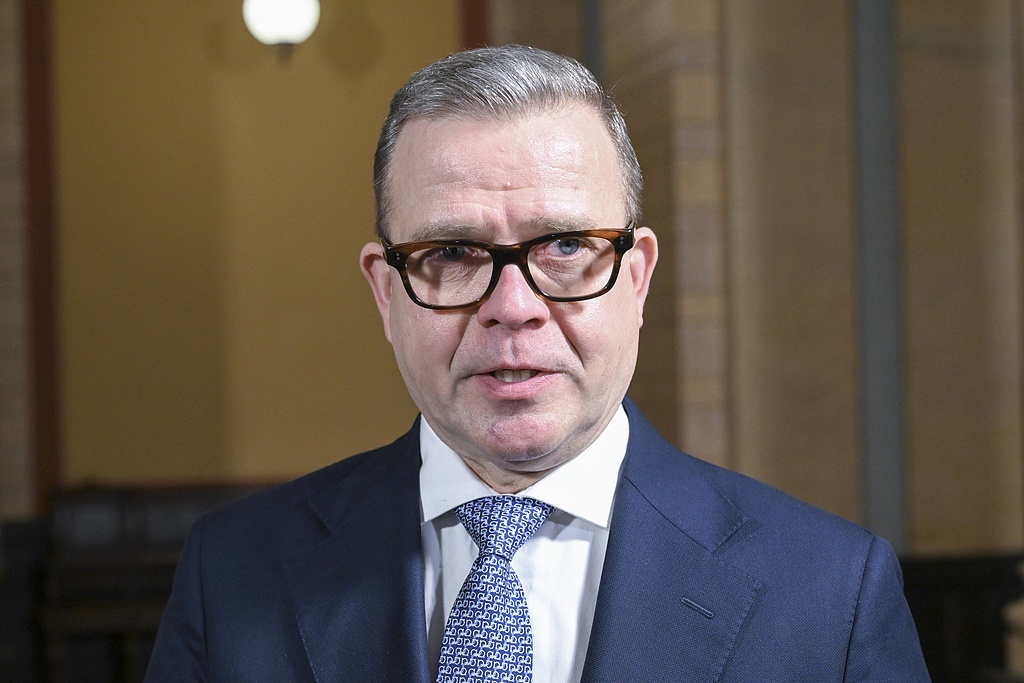
官宣:芬兰总理,将率20余家企业高管访华
Nan Fang Du Shi Bao· 2026-01-22 23:23
Group 1 - The Finnish Prime Minister Orpo will officially visit China from January 25 to 28, 2024, at the invitation of Chinese Premier Li Qiang [1] - During the visit, high-level meetings will take place between President Xi Jinping, Premier Li Qiang, and Chairman Zhao Leji with Prime Minister Orpo to discuss bilateral relations and mutual concerns [1] - China values the development of Sino-Finnish relations and aims to enhance political trust, strengthen economic and trade cooperation, and promote cultural exchanges [1] Group 2 - Finland is an important economic and trade partner for China in Europe and was the first European country to sign a government trade agreement with China [2] - By 2025, bilateral trade between China and Finland is expected to exceed $8 billion, with mutual investment stock surpassing $23 billion [2] - Prime Minister Orpo will be accompanied by over 20 business executives from various sectors, indicating Finland's strong willingness to deepen bilateral economic relations [2] Group 3 - During the visit, a Memorandum of Understanding on strengthening the work of the Sino-Finnish Innovation Enterprise Cooperation Committee will be signed, along with multiple commercial cooperation agreements [3] - There is significant potential for cooperation in green and innovative sectors, with an emphasis on opportunities arising from China's commitment to high-level opening-up [3] - The Ministry of Commerce is committed to facilitating communication on economic policies and providing support for enterprises to deepen Sino-Finnish economic cooperation [3]
中国银河证券马宗明:绿色规则重塑资本逻辑 ESG尽责管理驱动价值发现
Zhong Guo Zheng Quan Bao· 2026-01-22 23:07
2026年伊始,全球低碳治理格局迎来标志性节点。欧盟碳边境调节机制(CBAM)正式全面实施,海南 自贸港同步启动全岛封关运作。国内外绿色规则的双向演进,正深刻重塑产业竞争格局与资本流动方 向。与此同时,中国ESG投资生态走向成熟,如何从被动筛选走向主动进行价值发现与创造,成为市场 参与各方共同关注的议题。 中国证券报记者日前专访了中国银河证券国际ESG中心主任、首席ESG分析师马宗明,围绕CBAM落地 影响、自贸港机遇、ESG尽责管理中的痛点以及新规则下的投资策略等热点,进行了深入解读。 规则演进加速产业与估值重构 欧盟CBAM的落地,被视为影响全球贸易流动的"绿色阀门"。马宗明认为,该机制覆盖了水泥、钢铁、 铝等六大行业,对这些行业的"走出去"中国企业而言,短期内增加了合规成本与负担。尽管允许用本国 已缴纳的碳价进行抵扣,但中欧碳价存在显著差距,将对企业构成实质性成本压力。更重要的是, CBAM规则倒逼出口企业建立自身碳核算体系,并加速供应链的绿色重构。 此外,在马宗明看来,近期市场上出现的"ESG增强型指数"等工具,标志着国内ESG投资正从被动的风 险规避转向主动的价值影响。"这向企业发出了明确信号:良好 ...

“最复杂”之年 中国呼吁善用对话解决问题
Zhong Guo Qing Nian Bao· 2026-01-22 22:58
Group 1 - The World Economic Forum 2026 annual meeting emphasizes the theme of "the spirit of dialogue" amidst complex geopolitical challenges and economic uncertainties [3][4] - The meeting gathered nearly 3,000 representatives from over 130 countries, including 400 high-level political leaders, marking a historical high in attendance [3][4] - The agenda focuses on five urgent global challenges: cooperation in a competitive world, releasing new growth drivers, investing in people, responsibly promoting innovation, and maintaining ecological limits while achieving prosperity [6] Group 2 - China's economy has achieved an average annual growth rate of approximately 5.4% over the past five years, contributing about 30% to global economic growth [9] - China is recognized as the world's largest renewable energy system and has the most complete new energy industry chain, showcasing its significant role in global economic stability [9] - The participation of China in the forum is expected to enhance the quality of discussions and contribute to constructive solutions for global challenges [9][10] Group 3 - The current geopolitical landscape is characterized by increasing fragmentation and rapid technological changes, necessitating a fair platform for diverse voices [3][4] - The World Economic Forum's 2026 Global Risk Report identifies geopolitical economic confrontation as the primary global risk, with economic risks rising sharply in the short term [3][4] - The need for collaboration is emphasized, as no single country can address the interconnected challenges of innovation, climate change, and economic growth alone [6][8] Group 4 - The dialogue between China and the U.S. is highlighted as crucial for global technological innovation and green transformation, with both countries being essential players in resolving international disputes [11] - The forum aims to foster a spirit of dialogue to counter unilateral actions and protectionist policies from certain countries, particularly the U.S. [4][10] - The call for a unified framework for sustainability and carbon footprint accounting in the solar energy sector is made to avoid green trade barriers [8]


本周启程!芬兰总理将率20余家企业高管访华
Huan Qiu Shi Bao· 2026-01-22 22:48
Group 1 - The Finnish Prime Minister Orpo will visit China from January 25 to 28, 2024, at the invitation of Chinese Premier Li Qiang, with discussions on bilateral relations and international issues [1][3] - The visit aims to enhance dialogue between Finland and China, focusing on bilateral cooperation, EU-China relations, and international hotspots like the Ukraine conflict [3] - Orpo emphasized the importance of dialogue with China on cooperation and challenges in trade, highlighting China as a significant export market for Finnish companies and the EU's second-largest trading partner [3] Group 2 - Over 20 executives from Finnish companies in sectors such as machinery, forestry, innovation, clean energy, and food will accompany Orpo during the visit [4] - The Chinese Ministry of Commerce is preparing for the sixth meeting of the China-Finland Innovation Enterprise Cooperation Committee, with around 50 companies registered to participate [4] - A memorandum of understanding will be signed to strengthen the cooperation committee, and multiple business cooperation agreements are expected to be signed during the visit [4]
中国市场“磁力”依旧
Jing Ji Ri Bao· 2026-01-22 21:58
中国将长期成为包括美企在内的外国企业投资兴业的沃土。近期,包括国际货币基金组织、世界银行、 英国渣打银行、荷兰国际集团等在内的众多国际组织和金融机构,纷纷表示看好中国经济增长潜力。这 些机构普遍认为,尽管面临外部不确定性和挑战,中国经济始终展现韧性。中国持续在科技创新、绿色 转型、先进制造、数字经济等领域发力,将为世界经济增长注入强劲动能。中国扩大内需战略的实施、 制造业升级红利的不断释放以及高水平对外开放政策的持续推进,正进一步增强其作为全球投资热土的 吸引力。 当前,中国正按照"十五五"规划建议部署,纵深推进全国统一大市场建设,坚定不移扩大高水平对外开 放,推动经济高质量发展。欢迎包括美企在内的外资企业和长期资本继续扩大在华投资,深化对华互利 合作。中美两国作为全球前两大经济体,在经贸、科技、气候等诸多领域存在广泛共同利益,加强对话 合作造福两国、惠及世界。双方应坚持相互尊重、和平共处、合作共赢三大原则,通过平等对话妥善处 理分歧,避免误解误判,为两国企业合作创造稳定、可预期的政策环境,共同维护全球产业链供应链稳 定,为世界经济复苏贡献更多正能量。 (文章来源:经济日报) 中国将长期成为包括美企在内的外国 ...
世界经济论坛2026年年会与会嘉宾看好中国经济前景—— 在全球风浪中,读懂中国的确定性
Ren Min Ri Bao· 2026-01-22 21:57
2025年诺贝尔经济学奖获得者之一、加拿大经济学家彼得·豪伊特表示,过去几十年间,中国不仅成功 实现经济快速发展,而且在多个关键技术和产业领域跻身全球领先行列,"技术创新为中国经济增长赢 得先机"。 人工智能技术公司"AI71"首席技术官迈赫迪·吉萨西表示:"中国在人工智能、绿色技术等研发领域处于 世界前沿。中国经济发展速度令人瞩目,是全球经济的主要贡献者之一。" "中国企业在基础设施、清洁能源和数字经济等领域的投资实践,正成为可持续投资的新范式。"联合国 贸发会议投资与企业司司长李楠表示,这与贸发会议倡导的"投资促进可持续发展"理念高度契合,将为 全球经济复苏和长期稳定发展增添更多信心与动力。 "实现绿色转型不可或缺的合作伙伴" 在论坛年会展厅,硕大的展示屏上有一组不断上升的数字,实时记录着全球森林正在遭遇的破坏,凸显 各国绿色发展之路依然充满诸多挑战。近年来,中国在推动和引领全球绿色转型中发挥的重要作用,引 发与会人士热议和好评。 冬日的瑞士达沃斯小镇,白雪皑皑。1月19日至23日,主题为"对话的精神"的世界经济论坛2026年年会 在这里举行,来自全球130多个国家和地区近3000名不同领域的代表就经济、 ...
以旧换新撬动发展新动能
Ren Min Ri Bao· 2026-01-22 21:57
Group 1 - The "new national subsidy" policy has rapidly taken effect, with significant consumer engagement, such as 16,324 transactions in Chongqing and nearly 16 million yuan in trade-ins in Fuzhou during the New Year holiday, showcasing the policy's impact on consumption upgrade and industrial transformation [1] - By 2025, the sales volume of related goods under the trade-in policy is expected to exceed 2.6 trillion yuan, benefiting over 360 million people, playing a crucial role in expanding domestic demand [1] - The recent notification on implementing large-scale equipment updates and consumer goods trade-in policies for 2026 aims to optimize support scope, subsidy standards, and implementation mechanisms [1] Group 2 - The urgent need for upgrading old residential areas and facilities in elderly care institutions is highlighted, with approximately 22,000 old communities built between 1980 and 2000, and a projected shortage of 46 million nursing beds for the elderly by 2035 [2] - The new policy includes support for installing elevators in old residential buildings and updating facilities in elderly care institutions, linking improvements in people's livelihoods with the expansion of domestic demand [2] - The policy encourages green transformation by linking subsidies to energy efficiency ratings and promoting the electrification of old vehicles, thereby fostering new consumption patterns and driving the development of green applications [2] Group 3 - The combination of optimizing supply and expanding demand is emphasized, with new consumption driving new supply and meeting new demands, facilitating industrial transformation [3] - The trade-in policy has expanded to include digital and smart products, as well as elderly-friendly home products, aligning with the trend of intelligent consumption and addressing health monitoring needs for the elderly [3] - The effective implementation of the trade-in policy is expected to create positive feedback across the economic system, enhancing domestic demand, fostering new growth drivers, and promoting industrial upgrades [3]
生态向美 产业向绿 绘就绿色转型广西新图景
Xin Lang Cai Jing· 2026-01-22 21:16
Core Viewpoint - Guangxi Zhuang Autonomous Region is focusing on ecological protection and green development, achieving significant economic and environmental benefits through innovative reforms and sustainable practices [4][5][11]. Ecological Protection - Guangxi has a forest coverage rate of 62.5% and maintains high air and water quality, with 98.1% of days having good air quality and 100% of surface water meeting quality standards [5]. - The region emphasizes ecological conservation as a foundation for improving living standards, integrating high-quality development with environmental protection [5][6]. - Guangxi has implemented comprehensive environmental protection measures, achieving 100% coverage in heavy metal risk assessments [5][6]. Economic Development through Ecology - The "Ecology+" model promotes sustainable agriculture and aquaculture, integrating solar energy with ecological practices, leading to a 20% increase in aquaculture output [6]. - By 2025, Guangxi aims to complete afforestation of 4.34 million acres and restore 17,700 acres of mangroves, with an estimated ecological value exceeding 8 trillion yuan [6][8]. - The region has created 19 national ecological civilization demonstration zones, benefiting over 5 million farmers through ecological industrialization [6][8]. Forest Economy - Guangxi's forest resources are being utilized to develop a sustainable forest economy, with a total forest stock of 930 million cubic meters [7][8]. - The region has successfully implemented a forest reform mechanism that has led to over 15 million acres of collective forest land being managed at scale, providing jobs for nearly 70,000 farmers [8]. - The total output value of the forestry industry in Guangxi has surpassed 1 trillion yuan, making it the first province in China to achieve this milestone [8]. Green Industry Transformation - Guangxi is enhancing the "green" aspect of its industries to achieve high-quality development, with a focus on carbon neutrality and pollution reduction [9][10]. - The region's renewable energy capacity has seen an annual increase of 40%, with total installed capacity reaching 113 million kilowatts by October 2025 [9]. - Guangxi has established 105 national-level green factories and 11 green parks, significantly improving resource utilization efficiency [10]. Future Outlook - Guangxi plans to strengthen its circular economy initiatives and expand green electricity trading, aiming for over 50% of energy from non-fossil sources by 2030 [11].

绿色规则重塑资本逻辑 ESG尽责管理驱动价值发现
Zhong Guo Zheng Quan Bao· 2026-01-22 20:56
Core Insights - The implementation of the EU Carbon Border Adjustment Mechanism (CBAM) marks a significant shift in global low-carbon governance, impacting trade flows and reshaping industry competition and capital movement [1][2] - China's ESG investment ecosystem is maturing, with a focus on transitioning from passive screening to active value discovery and creation [1] Group 1: Impact of CBAM and Hainan Free Trade Port - The CBAM is seen as a "green valve" affecting global trade, particularly for industries like cement, steel, and aluminum, increasing compliance costs for Chinese exporters [1][2] - The Hainan Free Trade Port is positioned as a testing ground for innovative carbon management practices, potentially leading to cross-border carbon asset trading and green financing [2][6] Group 2: Industry Transformation and Valuation Reconstruction - The introduction of CBAM is accelerating the restructuring of valuation systems in China's capital markets, with companies that adopt energy-saving measures and carbon management systems likely to receive a "green premium" [2][3] - The Chinese carbon market is rapidly developing, with major energy-intensive industries included, and efforts are needed to optimize carbon pricing mechanisms to align with international standards [3] Group 3: ESG Management Challenges - Despite the growing popularity of ESG investment, asset management institutions still exhibit a tendency to focus on screening rather than deep engagement, hindered by insufficient research capabilities and short-term performance incentives [4] - The quality of ESG data remains a challenge, particularly in high-energy sectors and among smaller enterprises, necessitating collaborative efforts to enhance data disclosure and verification [4] Group 4: ESG Practices and Investment Strategies - China Galaxy Securities has developed an ESG rating system that integrates international frameworks with local characteristics, aiding investment decisions and responsible management [5] - The emergence of ESG-enhanced indices indicates a shift towards proactive value influence in ESG investments, signaling to companies that strong ESG performance can enhance valuation and attract capital [5][6] Group 5: Focus on Green Premium and High Certainty Sectors - In high-carbon industries covered by CBAM, green transformation is becoming essential for survival, with technology innovations expected to create economic and environmental benefits [6] - Investment strategies should prioritize sectors like banking, steel, non-bank finance, transportation, and power equipment, which align well with green transformation and compliance requirements [6][7] Group 6: Market Outlook and ESG Integration - The anticipated improvement in market conditions and the advantages of ESG integration strategies are expected to resonate deeply, providing a clear investment rationale for 2026 and beyond [7] - Companies with strong ESG performance are likely to demonstrate robust operational structures and risk resilience, aligning with long-term trends in green transformation and economic restructuring [7]