
车路云一体化

Search documents
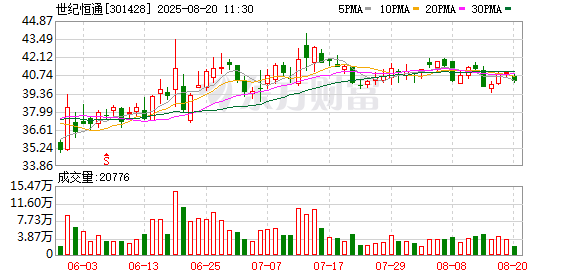
世纪恒通:公司当前暂未开展车路云一体化相关业务
Mei Ri Jing Ji Xin Wen· 2025-08-20 03:32
世纪恒通(301428.SZ)8月20日在投资者互动平台表示,公司当前暂未开展车路云一体化相关业务。公 司会持续关注该领域的技术发展和市场机会,未来如涉及相关业务布局,将严格按照信息披露要求及时 公告。 (文章来源:每日经济新闻) 每经AI快讯,有投资者在投资者互动平台提问:在车路云一体化领域的战略布局是什么? ...


高新兴(300098):1H25经营扭亏,车载终端显著放量
HTSC· 2025-08-19 07:54
Investment Rating - The report maintains an "Overweight" rating for the company with a target price of 5.73 RMB [7][5]. Core Insights - The company reported a revenue of 8.97 million RMB and a net profit of 0.26 million RMB for 1H25, marking a year-on-year increase of 36% and a return to profitability, primarily driven by the successful expansion of its vehicle terminal business and an increase in the proportion of high-quality B-end business, leading to a significant improvement in gross margin [1][2]. - The vehicle terminal business achieved a record revenue of 5.19 million RMB in 1H25, up 47.3% year-on-year, with automotive terminal and rail transit terminal products generating revenues of 3.23 million RMB and 1.96 million RMB, respectively [2][3]. - The company has a comprehensive C-V2X product matrix and is well-positioned to benefit from the integration of vehicle-road-cloud construction, with significant growth potential in the vehicle-road-cloud market projected to reach 417.4 billion RMB by 2030 [4][5]. Summary by Sections Financial Performance - In 1H25, the company achieved a gross margin of 37.25%, an increase of 3.69 percentage points year-on-year, attributed to an improved product mix and a higher proportion of quality B-end business [3]. - The company’s sales expense ratio, management expense ratio, and R&D expense ratio decreased significantly, reflecting a substantial dilution of expense ratios due to revenue growth [3]. Business Segments - The vehicle terminal business revenue reached 5.19 million RMB, with automotive terminals growing by 79.1% year-on-year and rail transit terminals by 14.0% [2]. - The electronic license plate and vehicle-road-cloud business generated 0.23 million RMB, up 14.3% year-on-year, while the smart justice and video cloud business achieved 2.43 million RMB, a 19.2% increase [2]. Market Outlook - The company has been actively involved in smart connected vehicle demonstration zones and pilot projects since 2019, positioning itself favorably for future local tenders related to vehicle-road-cloud integration [4]. - The report forecasts a compound annual growth rate (CAGR) of 80% for the vehicle-road-cloud market from 2025 to 2030, indicating substantial growth opportunities for the company [4]. Profitability Forecast - The company’s net profit forecasts for 2025-2027 are 0.63 million RMB, 1.38 million RMB, and 1.74 million RMB, respectively, with a projected price-to-earnings (PE) ratio of 72x for 2026 [5][11].

车路云一体化功能场景路线图年内发布
Huan Qiu Wang· 2025-08-15 11:32
Core Insights - The "Vehicle-Road-Cloud Integration" initiative has made significant progress in pilot cities over the past year, indicating a promising direction for the industry [2] - Recent industry conferences have highlighted the latest developments in "Vehicle-Road-Cloud Integration," providing guidance for future advancements [3] Group 1: Industry Developments - The "Vehicle-Road-Cloud Integration" initiative is seen as a crucial practice for advancing China's intelligent connected vehicle industry, promoting innovation across the supply chain [3] - The goal is to leverage intelligent connected vehicles to enhance applications in driving, traffic management, and urban governance, thereby fostering the development of smart city infrastructure [3] - The integration of C-V2X technology has established a complete standard system in China, addressing challenges such as heterogeneous recognition of traffic signals [4][5] Group 2: Challenges and Solutions - Despite the progress, challenges remain in cross-industry collaboration and resource sharing, which are essential for the successful implementation of "Vehicle-Road-Cloud Integration" [4][6] - The industry faces obstacles such as uneven distribution of computing resources, insufficient data availability, and high construction costs [6] - A layered algorithm service system has been proposed to enhance traffic perception capabilities for autonomous driving [6] Group 3: Future Goals and Roadmap - By the end of 2026, the goal is to achieve over 50% of new vehicles equipped with 5G/LTE-V2X technology and to cover over 90% of traffic signal facilities in three cities [7] - The "Vehicle-Road-Cloud Integration" functional scene roadmap has been initiated to guide the next steps in the industry, focusing on scalable implementation [8][9] - The roadmap outlines a three-phase approach for scene implementation from 2026 to 2035, addressing the need for unified standards and collaborative efforts across different sectors [9][10]
香蜜湖金融+系列活动之“星耀鹏城”20+8产业沙龙——智能网联汽车投融资并购对接活动成功举办
Quan Jing Wang· 2025-08-13 05:51
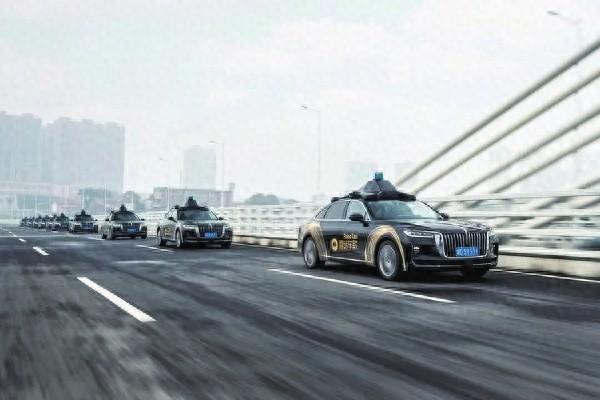
Core Insights - The event held on July 24 in Shenzhen gathered over 120 representatives from various sectors including listed companies, venture capital institutions, and research institutes to discuss opportunities in intelligent driving technology and industry investment mergers and acquisitions [1] - The focus of the event was on the implementation of international standards for autonomous driving in China and the integrated development of vehicle-road-cloud systems [1] - The event featured the release of the "Global Intelligent Connected Vehicle Industry Chain Technology Map and Innovation 50 Enterprises List" by Liu Lingjing [1] - The Shenzhen Stock Exchange shared investment and financing data related to the industry and introduced a special service area for mergers and acquisitions in the Shenzhen market [1] - Leading companies such as Huawei, BYD, and Shenzhen Urban Transport engaged in in-depth discussions with investment institutions and tech companies on topics like intelligent driving computing power, technological breakthroughs, and the construction of commercial ecosystems [1] - The Shenzhen Listed Companies Association has successfully held seven sessions of the "20+8 Industry Salon" to promote collaboration among industry, technology, capital, and new productive forces [1] - Future plans include integrating more professional resources to enhance the multi-level capital market's role in supporting the fusion of technological and industrial innovation [1]
决胜“十四五” 打好收官战丨更智能 更国际 更规范——新能源汽车产业迈入发展新阶段
Xin Hua Wang· 2025-08-12 06:05
Core Insights - The Chinese new energy vehicle (NEV) industry has experienced rapid growth during the 14th Five-Year Plan period, with strong performance continuing into the first half of 2025 [1][2] - The industry is expected to maintain momentum, with a focus on market regulation and further advancements in intelligence and internationalization [1][2] Industry Growth - NEV sales are projected to grow from 3.521 million units in 2021 to 12.866 million units by 2024, achieving a compound annual growth rate of 38.2% [2] - In the first half of 2025, production and sales reached 6.968 million and 6.937 million units, respectively, marking year-on-year increases of 41.4% and 40.3% [2] - NEV sales accounted for 44.3% of total new car sales in the first half of 2025 [2] - Exports of NEVs reached 1.06 million units in the first half of 2025, reflecting a year-on-year growth of 75.2% [2] Technological Advancements - Significant progress has been made in technological innovation, with average vehicle range nearing 500 kilometers and fast-charging technology enabling 80% charge in 15 minutes [3] - Over half of new passenger cars now feature L2-level combined driver assistance capabilities [3] - The industry is transitioning from catching up to synchronizing and achieving partial leadership in technology innovation [3] Smart Integration - The integration of smart technology is becoming a core competitive advantage in the NEV sector [4] - The future of the automotive industry will see a more pronounced convergence of electrification, intelligence, and connectivity, reshaping technology, product forms, and the global industry landscape [4] - BYD plans to invest 100 billion yuan in developing smart technologies that integrate artificial intelligence with automotive applications [4] - The competition in the automotive sector is shifting towards smart technology, with "vehicle-road-cloud integration" seen as a key to breaking through [4] Market Regulation - The competitive landscape is evolving from product-based competition to ecosystem competition [6] - Companies are encouraged to enhance their comprehensive competitiveness, while the government aims to guide the industry towards technology, quality, and service competition [6] - Recent government meetings emphasized the need for a unified national market and the regulation of chaotic competition within the industry [6] Future Outlook - The NEV industry is expected to achieve sales of 16 million units in 2025, with new car sales potentially exceeding 50% of the total market [7]
自动驾驶已至商业化前夕 华为、腾讯等跨界“逐鹿”
Xin Hua Wang· 2025-08-12 05:48
Core Viewpoint - The commercialization of "driverless" autonomous driving technology is approaching, with companies like Baidu and Pony.ai actively testing and preparing for operations in designated areas like Beijing's Yizhuang [1][8]. Group 1: Autonomous Driving Technology - The "driverless" autonomous driving technology is transitioning from laboratory experiments to real-life applications, supported by government encouragement and increasing user acceptance [1][8]. - Baidu's autonomous driving system treats all orders equally, avoiding the "order picking" phenomenon common in traditional ride-hailing services [3][8]. - The safety of autonomous vehicles is emphasized, with Baidu adhering strictly to traffic regulations, as nearly 96% of traffic accidents are attributed to speeding or non-compliance with speed limits [3][8]. Group 2: User Experience and Acceptance - Users report a better experience with driverless Robotaxis compared to traditional ride-hailing services, citing comfort and simplicity in the booking process [2][3]. - The frequency of use among early adopters is high, with some users taking rides multiple times a week for commuting purposes [2][3]. Group 3: Industry Competition and Investment - Major tech companies like Huawei and Tencent are increasing their investments in autonomous driving, with Huawei's automotive business unit employing over 7,000 personnel, 70-80% of whom are focused on autonomous driving research [5][6]. - Tencent is developing cloud-based solutions tailored for the smart automotive industry, enhancing the infrastructure needed for autonomous driving [7][8]. Group 4: Regulatory Environment - The Chinese government is actively promoting the development of autonomous driving through various policies and regulations, with nearly 30 related policies announced in the first half of 2023 [8][9]. - New regulations are being established to manage data security and operational standards for autonomous vehicles, indicating a structured approach to integrating these technologies into urban environments [8][9]. Group 5: Future Outlook - The industry is nearing a tipping point for the commercialization of autonomous driving, with ongoing improvements addressing pain points and enhancing user experience [8][9]. - The potential for autonomous driving to transform urban mobility is recognized, with expectations for significant changes in how people travel in the future [8][10].


智能驾驶技术百花齐放 规模化商用再提速
Xin Hua Wang· 2025-08-12 05:48
Core Viewpoint - The 2023 World Intelligent Connected Vehicle Conference highlights the rapid advancement and commercialization of intelligent driving technologies in China, driven by policy support and technological improvements [1][4]. Industry Developments - The conference showcased a variety of exhibitors, including vehicle manufacturers and suppliers of automotive chips, software, and intelligent networking systems, indicating a flourishing ecosystem for intelligent driving technologies [1]. - The integration of vehicle, road, and cloud technologies is a key focus, with companies like Mogu Car Link presenting comprehensive solutions for intelligent connected vehicles [2]. Technological Innovations - Companies are demonstrating advanced technologies, such as high-integration single-chip controllers for intelligent driving systems, which enhance functionalities like lane-keeping and automatic overtaking [3]. - The emergence of L4-level autonomous delivery vehicles is noted, with companies like Meituan already implementing these technologies in urban delivery services [4][5]. Market Trends - The industry is witnessing a significant shift towards the commercialization of autonomous delivery services, with multiple cities enacting supportive legislation and policies to facilitate the development of intelligent connected vehicles [5]. - Major companies are launching or upgrading urban Navigation on Autopilot (NOA) solutions, making intelligent driving more accessible to consumers [5]. Challenges Ahead - Despite the advancements, the industry faces challenges such as technical hurdles related to high-precision mapping and sensor technology, safety standards, and the need for improved infrastructure [6].
宁德时代旗下锂矿停产!锂矿、锂电池“大爆发”,天齐锂业涨停,智能电动车ETF(516380)盘中拉升2%
Xin Lang Ji Jin· 2025-08-11 05:50
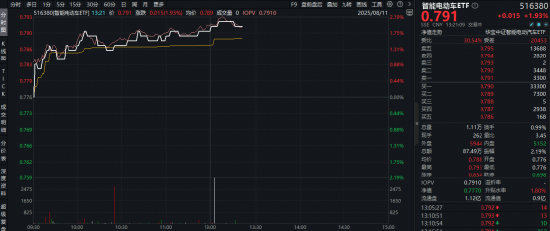
Group 1 - The core viewpoint of the news highlights a strong surge in lithium mining and battery stocks, influenced by the suspension of operations at CATL's Jiangxiawo lithium mine, with notable stock performances including Tianqi Lithium reaching the daily limit and other companies like Ganfeng Lithium and Hunan Youneng seeing significant gains [1][3] - CATL announced that its mining license for the Jiangxiawo mine expired on August 9, leading to a temporary halt in operations, but the company stated that the overall impact on its business is limited as it is expediting the renewal process for the mining license [3] - Analysts from Huayuan Securities noted that the expiration of CATL's mining rights has caused a surge in futures prices due to supply-side disruptions, while the upcoming peak demand season in September and October is expected to support lithium prices [3] Group 2 - The automotive parts sector is anticipated to experience a valuation uplift due to the expansion of smart technology in vehicles, with expectations for advanced driving features to penetrate mid-to-low-end markets by 2025 [4] - The smart electric vehicle ETF (516380) is positioned to capture investment opportunities in the electric and smart vehicle sectors, focusing on leading companies in electric vehicle electrification and smart technology [4] - The solid-state battery technology is expected to see breakthroughs, with several automakers planning to adopt this technology around 2027, indicating a potential acceleration in the industry's commercialization process [3][4]


通讯:沙漠之城向“绿”而生记
Zhong Guo Xin Wen Wang· 2025-08-08 14:35
Core Viewpoint - The transformation of Ordos City, particularly the Kangbashi District, from a desert to a green city has made it a notable tourist destination, showcasing successful environmental and urban development efforts [1][3][6]. Group 1: Urban Transformation - Kangbashi District was once a barren land, described as "wind blowing, sand everywhere," but has now evolved into a "garden city" and a national 4A-level tourist attraction [3][6]. - The district has achieved a green coverage rate of 42.65% over its total area of 372.55 square kilometers, highlighting significant advancements in urban greening [6]. Group 2: Tourism and Lifestyle - The district is praised by both locals and foreigners for its beautiful environment and comfortable summer air, attracting tourists and creating a positive image [6][7]. - Local resident David from Jamaica emphasizes the city's transformation as a "typical case" of desert to oasis, sharing its beauty with friends and family back home [6][7]. Group 3: Sustainable Development Initiatives - Kangbashi District is implementing low-carbon transportation solutions, including the introduction of autonomous buses, delivery vehicles, and vending machines, enhancing urban mobility [8]. - As of 2023, the district has deployed 9 autonomous buses serving 45,000 passengers, 3 autonomous taxis for 18,000 passengers, and 15 delivery vehicles completing 450,000 orders, showcasing a robust smart transportation system [8]. - Ordos City is recognized as the only city in Northwest China approved for both national intelligent transportation and "vehicle-road-cloud integration" pilot projects, aiming to establish a comprehensive smart transportation ecosystem [8].

汽车行业双周报(2025/07/25-2025/08/07):第三批“以旧换新”国补已陆续下发金九银十旺季即将到来-20250808
Dongguan Securities· 2025-08-08 10:57
Investment Rating - The report maintains an "Overweight" rating for the automotive industry, expecting the industry index to outperform the market index by more than 10% in the next six months [43]. Core Insights - The third batch of the "old-for-new" national subsidies has been gradually issued, and the peak season of September and October is approaching, which is expected to boost market performance [3][38]. - The automotive sector has shown resilience, with the Shenyuan Automotive Index rising 0.57% over the past two weeks, outperforming the CSI 300 Index by 1.40 percentage points [10][11]. - The report highlights a significant increase in the wholesale sales of new energy vehicles, with July figures showing a 25% year-on-year growth [24]. Industry Data Tracking - As of August 7, 2025, the prices of raw materials have shown mixed trends: steel prices decreased by 0.38%, while aluminum, copper, and lithium carbonate prices increased by 0.78%, 0.22%, and decreased by 0.35% respectively [16][21]. - The retail sales of passenger vehicles in July reached 1.834 million units, a 7% increase year-on-year, while wholesale sales were 2.192 million units, also up 12% year-on-year [22][39]. Industry News - The China Passenger Car Association slightly raised its annual forecast for passenger vehicle retail growth to 6% for 2025, with total retail expected to reach 24.35 million units [23]. - The establishment of the China Changan Automobile Group in Chongqing aims to enhance competitiveness in the automotive sector [27]. - The report notes that the market is expected to recover in late August due to the issuance of subsidies and the upcoming peak sales season [38]. Company News - Li Auto, China Automotive Research, and Dongfeng Liuzhou Automobile released a joint statement regarding the Li Auto i8 crash test, emphasizing the importance of maintaining market order and fair competition [30]. - Xpeng Motors completed the debut of its new P7 model in China, featuring advanced battery technology and AI capabilities [32]. - Changan Automobile reported a 74.05% year-on-year increase in new energy vehicle sales in July, totaling 80,006 units [35].

