
软件定义汽车

Search documents
IT思维的新鲜感消退,汽车回归原有的本质
Zhong Guo Qi Che Bao Wang· 2025-05-21 09:30
Core Insights - The automotive industry is reflecting on the impact of IT companies entering the sector, leading to new ideas and marketing strategies, with only a few new players emerging as leaders [1] - IT car manufacturers are leveraging big data to analyze user behavior, which has become a foundation for the success of companies like Li Auto and NIO [2] - The introduction of concepts like "software-defined vehicles" and hardware preset strategies has transformed traditional automotive practices, enhancing efficiency and innovation [3] IT Car Manufacturing New Concepts - Traditional automotive development processes are lengthy and ineffective in meeting modern consumer demands, prompting IT companies to adopt data-driven approaches [2] - NIO's focus on battery swapping is based on extensive data analysis, resulting in significant user engagement and feature iterations [2] - The rapid decision-making and iterative processes from IT environments have been integrated into automotive practices, exemplified by Leap Motor's frequent OTA updates and improvements [3] Challenges from IT Thinking - The influx of IT professionals has introduced new ideas but also highlighted a lack of deep understanding of automotive fundamentals, leading to issues such as overhyped intelligent driving technologies [5] - Misleading marketing of L2-level driving assistance as "full-scene autonomous driving" has created consumer confusion and safety concerns [5][7] - The design of features like hidden door handles, while aesthetically appealing, has raised significant safety issues, particularly in extreme weather conditions [6][7] Return to Automotive Essence - Recent regulatory actions by the Ministry of Industry and Information Technology (MIIT) aim to refocus the automotive industry on safety, mandating clearer labeling and stricter testing for intelligent driving systems [8] - The MIIT's requirements for mechanical backup systems in designs like hidden door handles reflect a shift towards prioritizing safety over technological novelty [8][9] - The industry's evolution is moving from a technology-driven approach to a user-centered focus, emphasizing practical applications of innovations [10]

意法半导体推车规级MCU革新存储技术,破解软件定义汽车开发与升级难题
Zhong Guo Qi Che Bao Wang· 2025-05-20 06:50
在技术快速迭代的过程中,确保车辆安全性能始终是重中之重。并且,行业还面临着以更低成本集成更多丰富功能的挑战,这将成为未来汽车市场竞争 的关键着力点。 值得关注的是,传统车企在汽车概念开发及后期生产环节,普遍存在周期漫长的问题。通常,仅产品概念生成就需耗费一年时间,研发阶段更是长达三 年,而汽车生产所需时间可能更久。然而,当下亚洲尤其是中国市场,众多新兴车企展现出惊人的平台开发效率。相较传统车企,新车企的平台开发进程大 幅缩短了40%。若基于现有的成熟平台开发车辆,上市时间甚至能缩短60%,部分车型从开发到上市不到18个月。 面对这一快速变化的行业节奏,为确保与汽车行业的上市速度保持同步,半导体行业亟需采取行动,以适应并助力汽车行业的高效发展。在车规级的微 控制器应用方面,意法半导体更加关注于电子控制单元,包括多合一的电驱系统、ECU、I/O、区控制,因为电子控制单元进一步聚合,以及包括它的控制 能力,能够为车辆未来的功能的迭代和功能的发展创造新的可能性。 x th x 0 € 33 e and 2-6 Page 201 8 00 - - - - - - - : 日前,半导体公司意法半导体(STMicroele ...


车企智能化:从自研到合作的嬗变
Zhong Guo Qi Che Bao Wang· 2025-05-19 00:52
Core Viewpoint - The automotive industry is undergoing a significant transformation from "software-defined vehicles" to "AI-defined vehicles," with a notable shift in smart technology development from independent research to collaborative partnerships with technology suppliers like Huawei, DJI, Horizon, and Momenta [2][3][5] Group 1: Shift in Development Models - Automotive manufacturers are increasingly moving from self-research to collaborative development in smart technology, reflecting a broader industry trend [3][5] - Companies like Lantu and BYD are implementing smart driving systems through partnerships, with Lantu aiming to equip all its vehicles with Huawei's QianKun smart driving system by 2025 [3][4] - The collaboration between automakers and technology suppliers is seen as a way to complement each other's strengths and accelerate the development of automotive intelligence [3][4] Group 2: Importance of Core Technology - Despite the shift towards collaboration, maintaining core technology and independent control is crucial for automakers to avoid product homogenization and ensure competitive differentiation [8][9] - Automakers are encouraged to build their own technology frameworks while collaborating with suppliers to safeguard data sovereignty and user privacy [8][9] Group 3: Enhanced Competitive Position - Collaborations have led to significant advancements in smart technology, enhancing the market competitiveness of automakers [11][12] - The partnership between Great Wall Motors and Huawei has resulted in improved smart solutions, showcasing the value added to new models through such collaborations [11][12] Group 4: Ecosystem Development - The transition from "closed-door development" to "open collaboration" signifies a paradigm shift in the automotive industry, with companies forming diverse partnerships to create integrated smart vehicle platforms [15][16] - The collaboration model is expected to enhance the efficiency of data loops and accelerate technological iterations, leading to improved user experiences and competitive advantages [16][17] Group 5: Future Trends - The automotive industry is moving towards a new era of "ecological competition," where the focus will be on the integration of technologies and the establishment of comprehensive ecosystems involving various stakeholders [18] - The anticipated growth in global exports of Chinese smart automotive technology indicates a shift from local innovation to global collaboration [18]





罗兰贝格:停滞转型期,中国零部件企业利润率全球最高
Jing Ji Guan Cha Wang· 2025-05-16 11:38
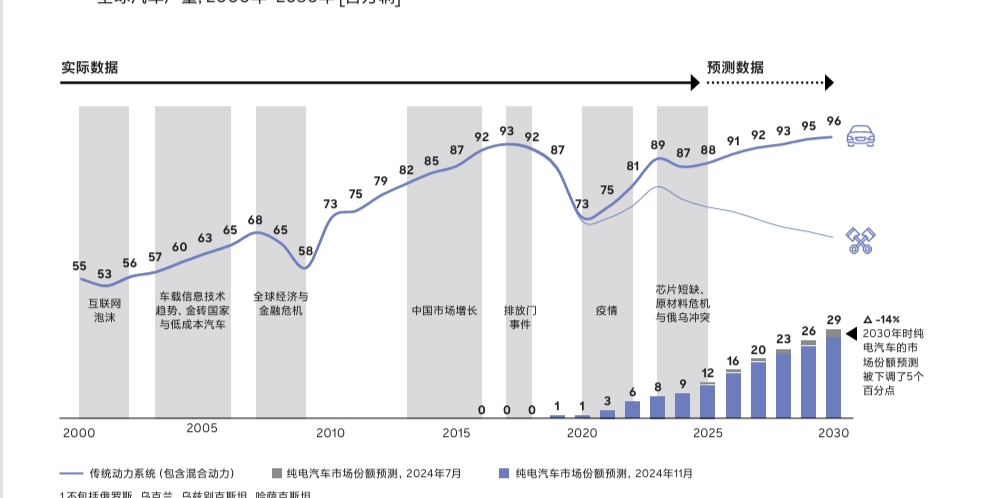
Core Insights - The global automotive parts industry is in a "stagnation transformation period," with traditional growth engines fading and a new order still in chaos [2] - Chinese automotive parts suppliers show a notable EBIT margin of 5.7%, significantly higher than Europe at 3.6% and South Korea at 3.4% [2] - The rapid growth of software-defined vehicles (SDVs) contrasts with the declining market penetration rate of pure electric vehicles, which dropped from 60% to 25% [3] Industry Dynamics - The Chinese market benefits from three driving forces: policy-driven growth in the new energy vehicle sector, demand expansion from consumption upgrades, and export opportunities from global supply chain restructuring [2] - In contrast, the European market struggles with the sunk costs of traditional fuel vehicle systems and mismatched transition rhythms to new energy [2] - The acceleration of SDVs and the slowdown in pure electric growth necessitate a balance between traditional and new business models for parts suppliers [3] Technological and Strategic Shifts - The report highlights the need for parts suppliers to develop "technology modularization" capabilities to adapt to different regional standards due to geopolitical shifts and technological divergence [4] - Companies are urged to enhance product development speed, create new R&D ecosystems, and improve operational efficiency to better integrate into regional industrial ecosystems [4] - Leading companies are adopting a dual-track evolution in product portfolios, balancing cash flow businesses with strategic growth areas [4] Operational Innovations - Industry leaders are leveraging digital twin technology to reduce R&D cycles by 30% and using AI quality inspection to lower defect rates to 0.2% [5] - The digital transformation is evolving from efficiency tools to core competitive advantages for companies [5]
对话未来出行 | 商汤绝影CEO王晓刚:汽车是人工智能最好的载体,以世界模型和仿真学习突破特斯拉式数据壁垒
Mei Ri Jing Ji Xin Wen· 2025-05-16 04:00
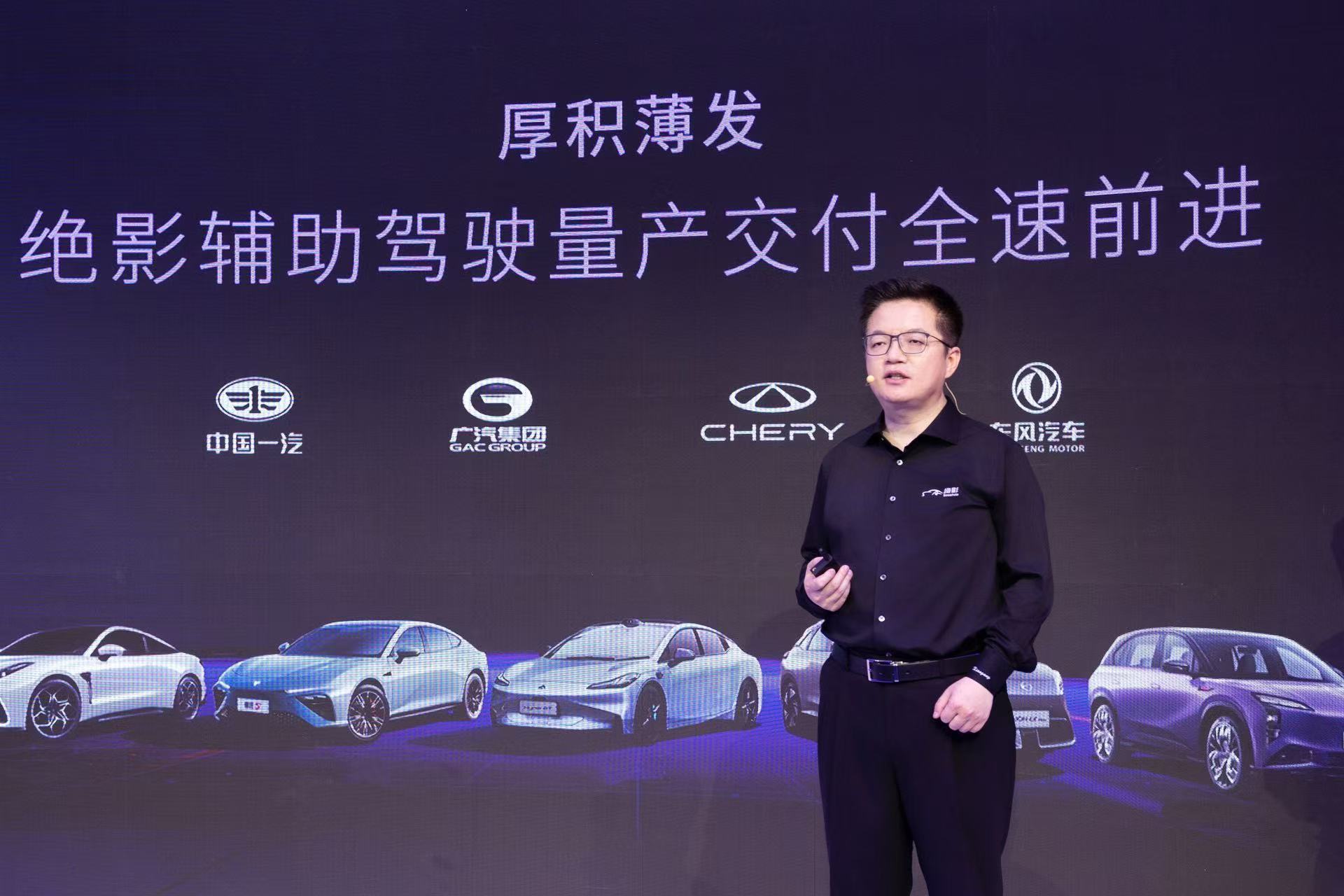
Core Insights - The automotive industry is transitioning from hardware-focused competition to cognitive capabilities, with a shift towards "software-defined vehicles" and "cognitive reshaping of mobility" [1] - The evolution of smart cockpits is described in three stages: from a "Q&A tool" to an "all-around assistant," and finally to a "family member" with memory and empathy [1][8] - The penetration rate of L2-level assisted driving new cars in China reached 65% in Q1 2025, but challenges such as price wars and self-research trends among car manufacturers are emerging [1] Company Strategy - The company positions itself as an AI infrastructure and cloud service provider, deeply integrating with car manufacturers' data and R&D systems [3][19] - The focus is on the automotive sector as the strongest driver for AI development, leveraging multi-modal large models and world models to enhance capabilities [4][5] - The company aims to provide cloud services and foundational infrastructure for autonomous driving, shifting the R&D focus from vehicle-based to cloud-based solutions [22] Technology and Innovation - The company utilizes a combination of "world models + reinforcement learning" to overcome data limitations and reduce hardware dependency while ensuring system safety [1][10] - The approach to autonomous driving emphasizes simulation and reconstruction of failure scenarios to improve safety and model generalization [16] - The company believes that laser radar is a temporary requirement and can be replaced as model algorithms and data iterations improve [12][13] Collaboration with Automakers - The relationship with automakers is described as a "Tai Chi" model, emphasizing mutual dependence and collaboration rather than a clear-cut supplier-client dynamic [3][18] - The company has already integrated its products into seven vehicle models and plans to expand its offerings with more affordable solutions [17] - Data ownership remains with car manufacturers, and the company ensures data privacy through desensitization techniques [21] Future Outlook - The company aims to lead in the rapidly evolving field of general artificial intelligence, enhancing user experiences in the automotive sector over the next 3 to 5 years [24] - The focus will be on developing a platform that supports the AI ecosystem, ensuring that advanced technologies find suitable applications and feedback loops [24]
深度|特斯拉最强竞对Rivian对话英伟达:中国电动汽车的领先在于从零构建软件架构,传统车企需转型为“科技企业”
Z Potentials· 2025-05-16 03:46
Core Viewpoint - The discussion highlights the transformative role of AI in the electric vehicle (EV) industry, emphasizing the importance of vertical integration and software-defined vehicles for achieving competitive advantages in the market [3][5][10]. Group 1: Company Insights - Rivian has recently achieved its first positive gross margin and is expanding production, marking a significant milestone for the company [4][5]. - The company believes that products must establish an emotional connection with users, which is why vertical integration in key areas like electronic systems and automotive software is crucial [5][6]. - Rivian's second-generation vehicles have begun to implement autonomous driving features, with approximately 20% of their driving mileage completed in autonomous mode, expected to rise to 60-70% in the coming years [6][9]. Group 2: AI and Technology Integration - The integration of AI is not limited to autonomous driving; it also encompasses the entire service infrastructure, designed from the ground up with AI at its core [7][8]. - Rivian and Tesla are among the few companies in the West that have built their vehicle computing platforms from scratch, contrasting with traditional automakers who rely on numerous suppliers [9][14]. - The shift from rule-based systems to end-to-end learning methods in AI is expected to enhance the efficiency of autonomous driving systems [23][24]. Group 3: Market Comparison - In the U.S., only about 8% of new car sales are electric vehicles, compared to 45% in China, highlighting a significant disparity in market penetration [10][11]. - The limited product choices in the U.S. EV market hinder growth, necessitating a broader range of affordable options to increase adoption [11][12]. - Chinese EV companies have adopted a native, vertically integrated software architecture from the start, allowing them to innovate rapidly compared to traditional Western automakers [12][15]. Group 4: Manufacturing and Supply Chain Challenges - Rivian faces significant challenges in scaling production, particularly in managing a complex supply chain with nearly 30,000 discrete parts [20][21]. - The company has learned to navigate supply chain crises, emphasizing the importance of a strong, cohesive team to overcome obstacles [19][20]. - Rivian's approach to reducing the number of electronic control units (ECUs) in vehicles has led to cost savings and efficiency improvements [29]. Group 5: Future Outlook - Rivian aims to achieve 100% electrification in the next five to ten years, focusing on offering a diverse range of products at various price points [27][28]. - The collaboration with Volkswagen is seen as a significant step towards integrating Rivian's technology across multiple brands within the group [28][30]. - The company envisions a future where vehicles are not just modes of transport but also intelligent systems capable of adapting to complex environments [25][26].



美股科技股逆势狂飙:英伟达沙特百亿订单引爆算力军备赛,特斯拉五月累涨18%背后的技术估值重构
Sou Hu Cai Jing· 2025-05-14 11:10
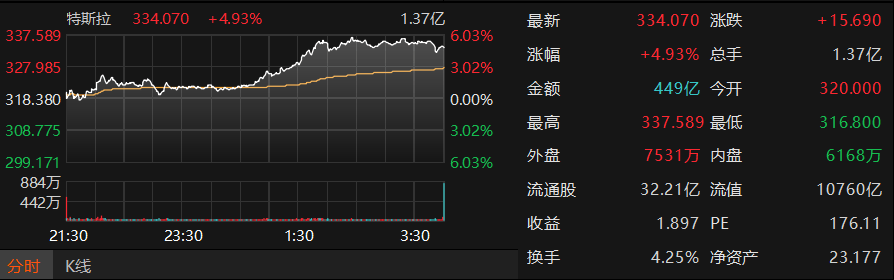
Core Viewpoint - The U.S. stock market is experiencing structural differentiation, with the Dow Jones Industrial Average declining due to traditional industrial sectors, while the Nasdaq Composite Index rises on strong technology stock performance, indicating a continued market preference for high-growth sectors [1] Group 1: Technology Sector Performance - Major technology stocks, particularly Nvidia, saw significant gains, with Nvidia's stock price surging 5.63% on May 13, raising its cumulative increase for May to 19.7% and pushing its market capitalization above $3 trillion [1][2] - Tesla's stock also continued its strong performance, rising 4.93% and surpassing an $800 billion market cap, despite a 9.2% year-over-year revenue decline and a 70% drop in net profit reported for Q1 2025 [4] Group 2: Strategic Partnerships and Investments - Nvidia's stock surge is linked to a major strategic partnership with Saudi Arabia's Public Investment Fund (PIF), where Nvidia will supply advanced chips for a 500 MW data center, involving a multi-billion dollar investment aimed at supporting Saudi Arabia's AI strategy [2][6] - The establishment of the AI company Humain in Saudi Arabia aims to create a comprehensive ecosystem for AI model development, data center operations, and industry applications, with plans to deploy hundreds of thousands of Nvidia GPUs over five years [2][6] Group 3: Market Dynamics and Future Outlook - The strong performance of technology stocks is closely tied to macroeconomic policies, with expectations of a shift in Federal Reserve monetary policy and recent adjustments to AI chip export regulations opening new market opportunities for companies like Nvidia [5][6] - The ongoing AI strategy in the Middle East is reshaping the global technology supply chain, with Saudi Arabia collaborating with companies like AMD and Qualcomm to form a trillion-dollar regional AI ecosystem [5][6] Group 4: Investment Sentiment and Valuation Concerns - Despite the optimism surrounding technology stocks, there are concerns about high valuations, with the S&P 500 technology sector's price-to-earnings ratio reaching 32, close to 2021 peak levels, while earnings growth expectations have been revised down from 15% to 9% [7] - The potential for a market correction exists if U.S. 10-year Treasury yields exceed 4.5%, which could pressure technology stock valuations by 10%-15% [7] Group 5: Sustainability and Technological Integration - The integration of technology and sustainability is emerging as a new investment narrative, exemplified by Nvidia's collaboration on a data center that utilizes liquid cooling and renewable energy, achieving a Power Usage Effectiveness (PUE) of below 1.05, a 40% improvement over traditional data centers [8]

东软方案加速“人车共智慧”时代到来
Zhong Guo Qi Che Bao Wang· 2025-05-13 04:14
Core Insights - The automotive industry is undergoing significant transformation driven by software-defined vehicles and AI integration, focusing on user experience rather than just functionality [2][3][4] Group 1: Eastsoft's Innovations - Eastsoft Group launched three major product matrices at the Shanghai Auto Show, including the A³ cabin parking product platform, NeuMind empowerment body, and OneCoreGo® global in-car intelligent travel solution 6.0, marking a key step in promoting smart travel and aligning with the AI development trend [3][4] - The A³ cabin parking product platform integrates multiple functions into a single chip, reducing hardware costs and enhancing software iteration efficiency, thus addressing the fragmentation issues in traditional automotive electronic architectures [4][5] - The NeuMind empowerment body serves as an AI brain, enabling rapid deployment of intelligent applications and seamless upgrades, thus providing a full-stack intelligent solution for automakers [7][8] Group 2: Market Impact and Trends - The A³ cabin parking platform resolves two major contradictions in the automotive industry's smart transformation: high development costs and the need for rapid feature iteration, as well as the challenge of upgrading user experience while ensuring technology accessibility [5][6] - The OneCoreGo® 6.0 solution enhances the in-car ecosystem by integrating navigation, payment, and interaction capabilities, facilitating the globalization of Chinese automotive brands [9][10] - Eastsoft has established a global product R&D and delivery network centered in China, Germany, the USA, Japan, and Malaysia, serving over 50 well-known automotive manufacturers and applying its products in more than 100 countries [10]


博世2024财年:市场承压下的战略坚守与创新探索
Zhong Guo Qi Che Bao Wang· 2025-05-12 09:42
Core Insights - Bosch Group reported a sales revenue of €90.3 billion for the fiscal year 2024, a decline of 1.4% compared to the previous year, with an adjusted decline of 0.5% after currency effects [3] - The EBIT was €3.1 billion, with an EBIT margin of 3.5%, down from €4.8 billion and 5.3% in the previous year, primarily due to weak core markets and lower-than-expected adoption of future technologies [3] - Bosch's smart mobility business generated sales of €55.8 billion, a slight decline of 0.7%, but showed a 0.2% increase after adjusting for currency effects [3] Financial Performance - Bosch achieved a positive free cash flow of €0.9 billion, meeting the target of 1% of sales, with an equity ratio of 44.3%, a slight increase of 0.1% year-on-year [4] - The company’s working capital stood at €8.2 billion, up from €7.4 billion in 2023, indicating a solid financial position despite market challenges [4] - Bosch's R&D expenditure for 2024 was €7.8 billion, representing 8.6% of sales, while capital expenditure was €5.1 billion, reflecting ongoing investment in innovation [4] Strategic Focus - Bosch's 2030 strategy aims for an average annual sales growth of at least 6% and a profit margin of at least 7%, with a focus on becoming a top-three supplier in key markets [5] - The company established a €250 million venture capital fund to invest in startups focusing on energy efficiency and artificial intelligence, recognizing the importance of innovation in driving growth [5] - In the smart mobility sector, Bosch anticipates that electric mobility, hydrogen, and software-defined vehicles will be significant growth drivers, with 50 new projects expected to go into production by 2025 [5] Regional Insights - Bosch's sales in China reached ¥142.7 billion, a year-on-year increase of 2.7%, highlighting the importance of the Chinese market as a key growth area [4][6] - The Chinese market accounts for approximately 20% of Bosch's total sales, making it the largest market outside Germany, and serves as a critical base for innovation [6] - Bosch has developed numerous innovative solutions in electrification and intelligence in China, with plans to leverage these developments for global markets [6]

博世集团2024年在华营收1427亿元 中国市场成为重要创新基地
Xin Hua Cai Jing· 2025-05-08 15:47
Group 1 - Bosch Group announced a sales target of €90.3 billion for the fiscal year 2024, with an EBIT of €3.1 billion and an EBIT margin of 3.5% [1] - In the Chinese market, Bosch's sales reached ¥142.7 billion in 2024, representing a year-on-year growth of 2.7% [1] - The company aims for an annual sales growth of 6% to 8% by 2030 and plans to achieve a target profit margin of 7% by 2026 [1][2] Group 2 - Bosch's CFO Markus Forschner emphasized the need to maintain cost advantages and pursue growth through investment, innovation, and acquisitions [2] - The company expects electric mobility, hydrogen, and software-defined vehicles to drive significant business growth in the smart mobility sector [2] - Bosch plans to launch approximately 90 new cordless power tool products this year, focusing on expanding its product range in the consumer goods sector [2] Group 3 - Bosch announced plans to acquire Johnson Controls' global residential and light commercial HVAC business for $8 billion, marking its largest acquisition to date [3] - The acquisition is expected to contribute an additional 1% to 2% sales growth if completed by mid-year [3] - Bosch's R&D investment in China reached ¥11.9 billion in 2024, highlighting the country's role as an innovation hub for the company [3]