价格战

Search documents
奶粉悄悄涨价?乳企否认
Shen Zhen Shang Bao· 2025-08-11 00:22
记者调查发现确有个别品类价格上调,但并非普遍现象 近日,部分社交平台上有网友称,多家国内外婴幼儿奶粉品牌产品价格出现30元到50元/罐的上涨。这 一消息引发众多网友热议,并于8月6日冲上热搜。 被消费者提到的品牌涵盖了多家国内外知名厂商,包括飞鹤、贝因美(002570)、伊利、佳贝艾特、爱 他美、惠氏以及帮宝适、喜舒安等品牌。 针对涨价传闻,伊利、飞鹤、贝因美等公司均回应,未在官方渠道上调婴幼儿奶粉售价。贝因美董秘在 投资者互动平台回应称,公司所有产品未涨价,呼吁"勿信谣、不传谣",并强调企业的责任是让政策红 利真正惠及家庭。 飞鹤客服表示,线上官方售价未涨,若因促销活动结束导致价格回调属正常现象,但无法确认经销商或 线下门店是否存在调价行为。爱他美客服同样表示价格稳定,贝因美客服则称旗下所有品类均维持原 价。 一位母婴行业分析人士补充,线上渠道往往通过平台补贴和大促活动来吸引消费者,价格相对透明;而 线下门店除了承担更高租金和人力成本,还会根据区域消费水平进行差异化定价,这也是为何部分家长 在实体店购买时感到涨价更明显的原因。 原料成本变化也是影响价格的重要因素。伊利方面在投资者互动平台透露,2025年上半 ...

董明珠怒怼的这个宁波人,卖空调赚了300亿
盐财经· 2025-08-10 10:53
Core Viewpoint - The air conditioning industry is experiencing a surge in sales due to high temperatures, but the average price is declining, indicating a price war among competitors [2][3]. Group 1: Industry Dynamics - The air conditioning market has a long history of price wars, with companies competing to offer lower prices while maintaining quality [2]. - Major brands like Gree, Haier, and Midea are actively engaging in the market, with Gree's leader, Dong Mingzhu, fighting against industry issues, while Haier and Midea are also responding to competition [3][4]. - Aux, known for its low-price strategy, is re-entering the capital market, aiming to enhance its brand image and expand financing channels [4][5]. Group 2: Aux's Performance and Strategy - Aux has submitted a second prospectus to the Hong Kong Stock Exchange, marking a decade-long pursuit of an IPO, previously attempting to list on A-shares and New Third Board without success [5][6]. - From 2022 to 2024, Aux's revenue is projected to grow from 19.5 billion to 29.8 billion RMB, a 52.8% increase, with net profit doubling from 1.44 billion to 2.91 billion RMB [7][8]. - Aux's overseas revenue is a significant contributor, expected to account for 57% of total revenue in Q1 2025, highlighting the importance of international markets [8]. Group 3: Market Position and Competition - According to Frost & Sullivan, Aux ranks fourth in China's air conditioning market with a 7.3% market share, trailing behind Gree, Midea, and Haier [9][10]. - Aux's R&D investment in 2024 is 710 million RMB, representing 2.4% of revenue, which is lower compared to Midea and Gree's R&D expenditures [11]. - The competitive landscape is intensifying, with major players like Xiaomi also entering the market, challenging Aux's previous pricing advantages [18][26].


餐饮加盟战争:超级玩家的收割游戏
3 6 Ke· 2025-08-08 10:45
Core Insights - The rise of "super franchisees" in the Chinese restaurant industry reflects a shift from individual operators to professional investors with multiple outlets and sophisticated management teams [8][9][26] - The rapid turnover of restaurant brands, with an average lifecycle of 18 months, creates a high-stakes environment for franchisees who must continuously adapt to market changes [24][25] - Information sharing among franchisees through platforms like "Pengyouhui" helps mitigate risks and identify profitable opportunities, fostering a community of support [10][11][12] Group 1: Super Franchisees - Super franchisees are characterized by their ability to manage multiple outlets and leverage market intelligence, distinguishing them from traditional small-scale operators [8][9] - The emergence of super franchisees is a key driver in the maturation of the restaurant franchise industry in China, allowing for collective strength against market challenges [9][21] - The community formed by super franchisees enables them to share experiences and insights, which is crucial for navigating the fast-paced market [10][11] Group 2: Market Dynamics - The restaurant industry is marked by intense competition, with many brands experiencing rapid growth followed by swift decline, necessitating quick decision-making from franchisees [24][25] - Franchisees often face challenges such as supply chain issues and price wars, which can significantly impact profitability [15][16] - The relationship between franchisees and brands is often adversarial, with franchisees feeling the pressure of brand decisions that affect their bottom line [13][14] Group 3: Brand Selection and Strategy - Franchisees prioritize brands with strong market potential and quick return on investment, often seeking to recoup costs within 18 months [23][25] - The choice of location and brand is critical, as poor decisions can lead to significant financial losses [19][21] - Franchisees are increasingly cautious about new brand opportunities, often relying on community insights to avoid pitfalls associated with less established brands [10][11][12] Group 4: Operational Challenges - Franchisees must navigate stringent operational requirements imposed by brands, which can lead to increased costs and reduced flexibility [16][17] - Negative publicity surrounding a brand can have widespread repercussions for all franchisees, highlighting the interconnected nature of the franchise ecosystem [30][31] - Franchisees are exploring innovative strategies, such as targeting niche markets or leveraging seasonal trends, to enhance profitability and reduce competition [32][33]
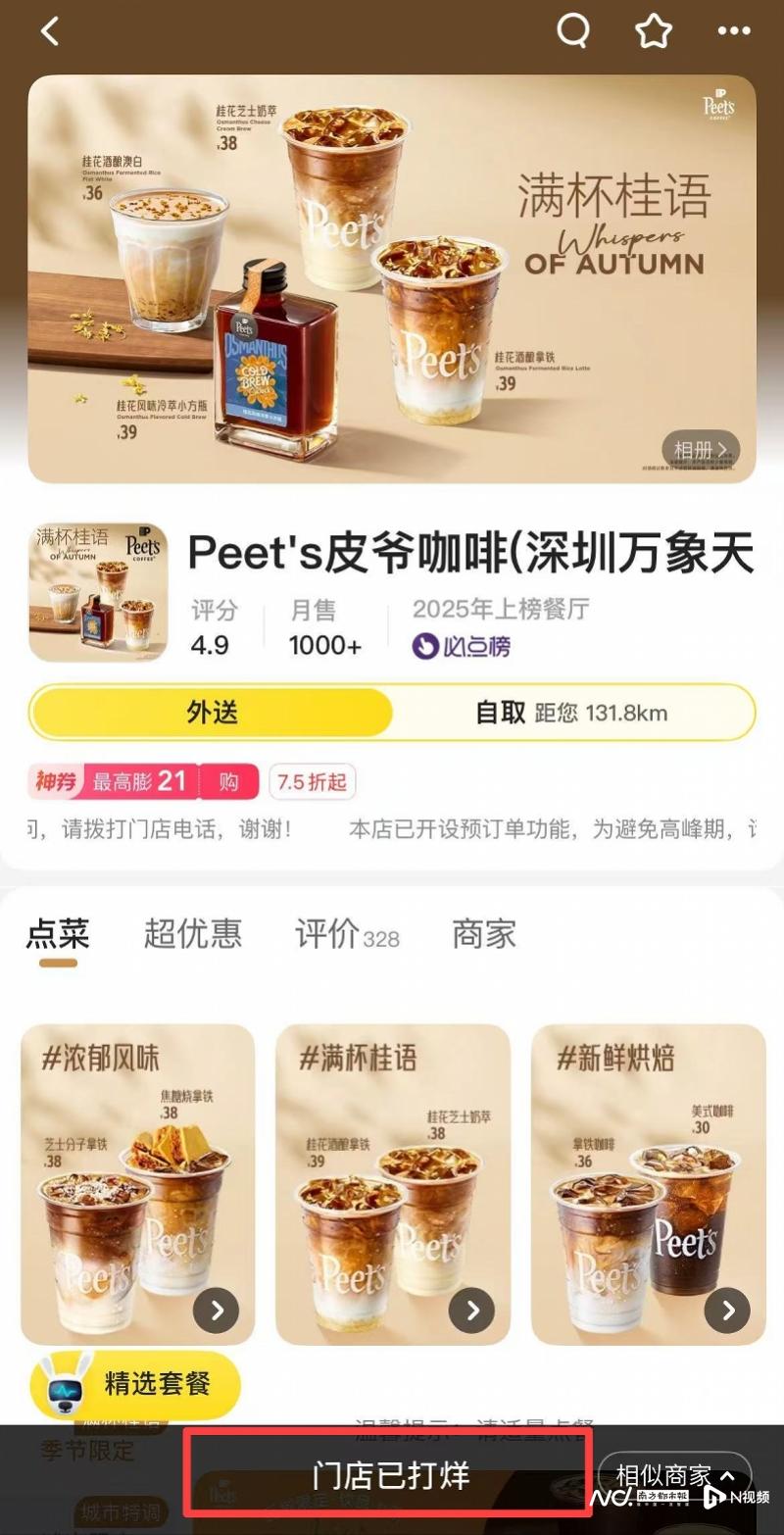
9块9价格战、新茶饮跨界入局,皮爷咖啡们如何走出关店困境
Nan Fang Du Shi Bao· 2025-08-08 08:53
Core Viewpoint - The premium coffee market in China is facing significant challenges, with several international brands like Peets Coffee closing stores and local brands gaining market share through competitive pricing strategies [1][10][12]. Group 1: Store Closures and Market Exit - Peets Coffee has closed its first store in South China after four years, indicating a retreat from the market [1][5]. - Seesaw Coffee has reportedly closed nearly half of its stores nationwide and faced employee wage disputes [8][9]. - M Stand has significantly reduced its store opening pace, dropping from 248 new stores in 2023 to just 66 by November 2024 [9]. Group 2: Local Brands' Expansion - Local coffee chains like Luckin Coffee and Kudi Coffee are rapidly expanding, leveraging a "quality-price ratio" to capture market share [10][12]. - Luckin Coffee's store count reached 26,206, with a quarterly revenue of 12.359 billion yuan, significantly outpacing Starbucks' revenue of approximately 5.7 billion yuan [12]. - Kudi Coffee has maintained a strong expansion strategy, aiming for 50,000 stores by the end of 2025 [11]. Group 3: Price Wars and Consumer Behavior - The introduction of a "9.9 yuan" price point by Kudi Coffee and Luckin Coffee has reshaped consumer perceptions of coffee, making it a more accessible daily beverage rather than a luxury item [10][11][14]. - Starbucks has acknowledged the impact of these price wars on its sales, leading to adjustments in its pricing strategy [11]. - The shift in consumer mindset has resulted in a focus on "quality-price ratio," which is now a critical factor for coffee brands to retain customers [15]. Group 4: New Entrants from Tea Brands - Tea brands like Mixue and Guming are entering the coffee market, with Mixue's coffee brand aiming to open over 10,000 stores and offering competitive pricing [13][15]. - Guming has also expanded its coffee offerings, with prices for coffee products typically ranging from 9.9 to 19 yuan [15]. - The entry of these tea brands into the coffee sector reflects a broader trend of diversification and competition in the beverage market [14][15].

外卖大战 瑞幸翻盘
3 6 Ke· 2025-08-08 00:36
Core Viewpoint - The intensifying competition in the food delivery market has unexpectedly benefited the ready-to-drink tea and coffee sector, particularly Luckin Coffee, which reported strong financial performance in Q2 2025, exceeding expectations in revenue and operating profit growth [1][4]. Financial Performance - In Q2 2025, Luckin Coffee achieved a revenue of 12.359 billion yuan, a year-on-year increase of 47.08%, and an operating profit of 1.7 billion yuan, up over 60% [4]. - Same-store revenue growth returned to a positive trajectory, with Q1 2025 showing an 8.1% increase and Q2 2025 accelerating to 13.4% [4]. - The number of monthly active customers reached 91.7 million, a 32% year-on-year increase, with over 28.7 million new customers added in Q2 [8]. Market Dynamics - The entry of competitors like Kudi has intensified price competition in the domestic coffee market, prompting Luckin to accelerate store expansion and implement a low-price strategy [3]. - The impact of the price war began to reflect in Luckin's financials starting in 2024, with a decline in same-store revenue in Q1, but recovery was noted in Q2 due to strategic adjustments [3][4]. Cost and Profitability - The operating profit margin improved to 13.8% in Q2 2025, up from 12.5% in Q2 2024, driven by an increase in gross margin and a decrease in the proportion of rental and operational expenses [5]. - Transportation costs surged to 1.67 billion yuan in Q2, a significant increase of 175% year-on-year, impacting profit margins due to the higher costs associated with delivery orders [10]. Future Outlook - The ongoing food delivery competition is expected to provide a favorable environment for Luckin's growth, with potential for increased market penetration in the ready-to-drink coffee sector [11]. - However, the rising delivery costs associated with the increased share of delivery orders remain a concern for future profitability [11][14]. - Long-term growth prospects for Luckin are strong, supported by the expanding domestic coffee market, which is projected to grow from 151.5 billion yuan in 2023 to 331.4 billion yuan by 2027 [15].
对话北大薛军:治理平台内卷式竞争,应注重平衡多方主体利益
Sou Hu Cai Jing· 2025-08-07 09:40
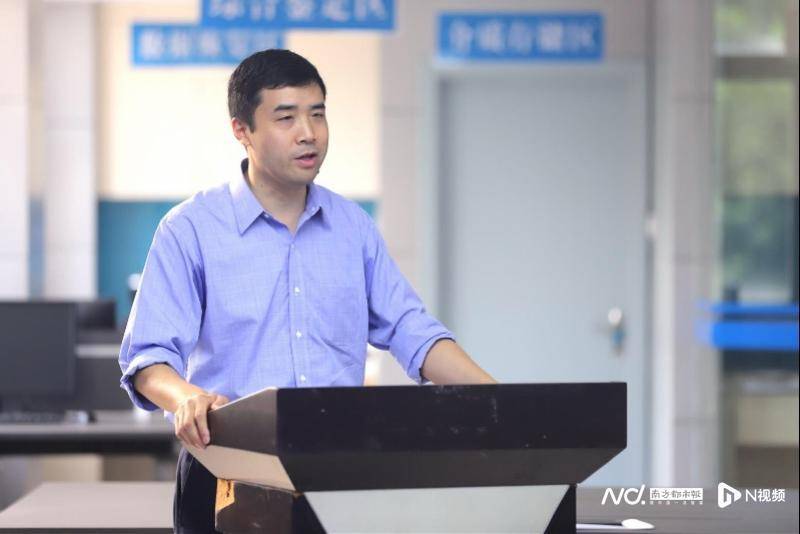
图为北京大学教授薛军(受访者供图) 在接受南都采访时,薛军强调,应避免将"内卷式"竞争这一概念予以标签化,不能将企业的所有的竞争行为都视 为"内卷",而是要具体问题具体分析。对于平台"慷他人之慨",转嫁补贴成本,强制或变相强制商家参与补贴活 动,监管部门应及时介入纠正,甚至立案调查;但如果不触及法律,则应当尊重企业在价格竞争方面的自主经营 权。薛军还认为,在推进平台生态治理中,应注重平衡保护以及兼顾平台、平台内经营者、消费者等多方主体的 利益。 治理 "内卷式"竞争不应标签化 近两年来,治理"内卷式"竞争引发高度关注。从光伏、汽车、水泥、钢铁再到电商、金融等领域,"反内卷"浪潮 席卷多个行业。 7月30日召开的中央政治局会议明确,依法依规治理企业无序竞争,推进重点行业产能治理,规范地方招商引资行 为。在纵深推进全国统一大市场建设的背景下,反"内卷式"竞争进一步落实落细。 破除"内卷式"竞争,如何规范地方政府和企业行为?平台告别"内卷"竞争的出路在哪里?日前,南都·反垄断前沿 专访多位业内专家,策划推出反"内卷式"竞争系列对话。北京大学法学院教授、北大电子商务法研究中心主任薛 军长期关注电商领域,是《电商法》起 ...
国泰航空打响“中场战事”
Hua Er Jie Jian Wen· 2025-08-07 06:34
作者 | 周智宇 编辑 | 张晓玲 如果说疫情后的强劲复苏是航空业的"上半场",那么国泰航空于8月6日交出的2025年中期成绩单,无疑 吹响了"中场战事"的哨声。 财报显示,国泰上半年录得股东应占溢利36.51亿港元,与去年同期基本持平,并宣布派发13亿港元中 期股息,对于一家刚走出历史性困境的企业而言,这是一份稳健的答卷。 然而,在营收543.09亿港元,同比增长9.5%之时,国泰航空净利增速来到1.1%。这是个清晰的信号,宣 告着那个依靠供需失衡便能轻松获取高利润的"顺风局"已经结束。 所谓"中场战事",核心已不再是关于"复苏"的速度,而是关于"博弈"的深度。当高票价成为过去,当全 球运力涌入导致竞争白热化,当宏观环境充满不确定性,如何守住盈利、争夺份额、布局未来,成为了 摆在国泰乃至整个行业面前的硬仗。这份财报,正是这场"硬仗"的开篇。 正如国泰集团主席贺以礼所言:"过去几年建立的强大基础,让我们比以往更有韧性……但影响整个航 空业的这些波动,也会影响到我们公司。" 如果说收益率下滑是"共性难题",那么子公司和货运业务的表现则反映了区域市场的特殊挑战。 子公司香港快运由盈转亏,亏损约5亿港元。国泰集团行 ...

广东快递“反内卷” 底价上调0.4元/票
Nan Fang Du Shi Bao· 2025-08-07 02:22
在各行业"反内卷"的背景下,快递行业的新一轮涨价正在到来。8月4日起,广东省快递底价整体上调 0.4元/票,均价涨至1.4元以上。各家均不得低于1.4元成本价揽收,否则将遭受重罚。多位快递企业人 士对南都记者证实了该消息,"确实是涨价了,0.1kg不能低于1.4元。" 不过有加盟商担忧,如果同行不遵守调价规则,将会给网点带来影响,造成客户流失,还是白费功夫。 还有从业者直言,与其调整底价,更关注派送端网点的派费是否上调。 今年上半年,A股快递企业单票价格持续下滑,二季度部分企业月度单价已跌破2元。7月29日,国家邮 政局召开快递企业座谈会强调,积极推动解决"内卷式"竞争和农村地区领取快件违规收费等突出问题, 维护好行业良好发展业态。 目前各大快递已开始落实相关政策,"通达系"于8月5日起开始涨价,尤其0.1kg的特价件,各家提升幅 度在0.4元~0.5元区间,每增加0.1kg价格提高0.1元;并设置15天锁盘期,避免互抢客户。 内卷 快递行业长期低价内卷 快递底价(也称为"发货价")是指快递公司或物流服务商为寄送包裹所收取的费用,主要影响电商卖家。 每年临近年底电商大促旺季,快递行业都会提前进入新一轮涨价期, ...
从价格战到价值博弈:基金经理如何应对汽车、新能源和外卖等行业的内卷?
Morningstar晨星· 2025-08-07 01:05
Core Viewpoint - The automotive and new energy industries are facing intense competition and price wars, leading to significant price reductions and potential oversupply issues, while the food delivery sector is also experiencing aggressive pricing strategies from major players [2][3][11]. Group 1: Automotive Industry - The total market capitalization of the A-share automotive industry index is approximately 5 trillion, accounting for 5% of the total A-share market [1]. - In May 2023, BYD initiated a "100 billion subsidy" campaign, resulting in collective price reductions across 22 smart driving models, with other major players like Chery and Geely following suit [2]. - The average price reduction for new passenger cars in the first half of 2025 is projected to be around 21,000 yuan, with a reduction rate of 11.4% [2]. - The automotive parts industry is seen as having significant entry barriers and competitive advantages, which may provide long-term growth opportunities despite short-term price pressures [6][7]. Group 2: New Energy Industry - The new energy sector is experiencing an imbalance between supply and demand, with production capacity expected to exceed 1100 GW by the end of 2024, while global demand is projected at only 600 GW in 2025 [2]. - Prices for silicon materials, silicon wafers, battery cells, and components are expected to decline year-on-year in the first half of 2025 due to oversupply [2][7]. - Fund managers are cautious about the new energy sector, with some reducing their exposure in anticipation of regulatory changes aimed at curbing excessive competition [7][8]. Group 3: Food Delivery Industry - The food delivery market is witnessing intensified price wars, with major players like JD.com entering the market and offering zero commission for merchants [2]. - Ele.me has announced significant platform subsidies, indicating a competitive landscape where companies are vying for market share through aggressive pricing strategies [2]. - Fund managers recognize the competitive pressures in the food delivery sector, leading to adjustments in their investment strategies, particularly concerning Meituan [6][8]. Group 4: Regulatory Response - Regulatory bodies have begun addressing the issue of excessive competition, with discussions held among industry leaders in the automotive, new energy, and food delivery sectors [3]. - A draft amendment to the Price Law aims to regulate low-price dumping and restore order in market pricing, indicating a shift towards more rational competition [3][11]. - Fund managers are closely monitoring these regulatory developments, as they may significantly impact industry dynamics and investment strategies moving forward [7][11].






【保值率】2025年7月中国汽车保值率报告
乘联分会· 2025-08-06 08:44
Core Viewpoint - The article discusses the findings of the "July 2025 China Car Retention Rate Research Report," highlighting the importance of retention rates in assessing brand strength and guiding various automotive business strategies [2][4]. Policy Direction - The recent consumption tax reform targets ultra-luxury vehicles, expanding the tax range to include cars priced over 900,000 yuan, which is a significant reduction from previous thresholds. This reform aims to improve fiscal revenue and stimulate domestic demand [5][6]. Market Trends - The automotive market has seen a price war in the first half of the year, prompting government and industry responses to curb chaotic competition. Although price wars have lessened, a stable market norm has yet to be established [9]. Supply and Demand - There has been a slight decrease in car supply, indicating reduced new car replacements. The second-hand car market benefits from car loans, with a reported loan balance of 78.381 billion yuan, reflecting a year-on-year increase of 26.06% [12]. Valuation Insights - In the second-hand market dominated by fuel vehicles, new car prices significantly influence second-hand prices. Notably, small sedans and mid-to-large SUVs have shown strong performance in retention rates due to limited new car supply [16]. New Energy Vehicle Developments - The construction of high-power charging facilities is gaining support, addressing previous compatibility issues with the power grid. This shift towards organized development is expected to enhance the promotion of new energy vehicles and charging infrastructure [19]. Market Activity - New car replacement transactions are crucial for stimulating the second-hand market. However, with a slight increase in new car prices and the suspension of subsidies, replacement transactions have not seen sustained growth. The second-hand market remains stable, with plug-in hybrid models facing consumer hesitation [22][23].