
设备更新

Search documents
宏观专题报告:地方国补,缘何“暂停”?
Shenwan Hongyuan Securities· 2025-06-16 07:45
Group 1: Policy Changes and Funding - The 2025 "old-for-new" policy has significantly increased funding support to 300 billion yuan, up from 150 billion yuan in 2024[15] - The subsidy scope has expanded to include more products, such as microwaves, water purifiers, dishwashers, rice cookers, and digital products like smartphones[15] - The distribution of funds will favor regions that performed well in 2024, with adjustments based on local demand and spending progress[16] Group 2: Implementation and Progress - By the end of May, 162 billion yuan in central government subsidies had been allocated, with a rapid redemption rate in some regions, such as Chongqing at 82.3%[20] - National sales under the "old-for-new" program reached 1.1 trillion yuan by May 31, with approximately 175 million subsidies issued[20] - In April, the retail sales growth of consumer goods was 5.1%, with significant variances in categories; home appliances saw a 38.8% increase, while automotive and communication equipment sales declined[23] Group 3: Regional Variations and Challenges - The "old-for-new" policy has shown better results in central and western regions, with some areas like Liaoning and Gansu reporting appliance sales growth of 97% and 88% respectively[25] - Some regions have faced subsidy exhaustion, leading to the suspension of online applications and adjustments in subsidy mechanisms, such as in Chongqing and Guangdong[41] - Approximately 138 billion yuan in "old-for-new" funds remain to be allocated, with potential for additional funding if current allocations are exhausted[5]
各地加力扩围推动消费品以旧换新,可选消费焕发新机
Mei Ri Jing Ji Xin Wen· 2025-06-10 02:41
Group 1 - Hebei has expanded its "old for new" program to include four new categories of home appliances, such as microwaves and water purifiers, along with eight new small appliances like coffee machines and floor washers, encouraging merchants to implement promotional policies [1] - In 2023, Hebei's "old for new" program has utilized over 20 billion yuan in subsidies, achieving sales exceeding 10 billion yuan [1] - Jiangxi and Hainan are promoting seasonal sales for refrigerators and air conditioners, encouraging merchants to offer linked promotions and "old for new" services to benefit consumers [1] Group 2 - Guangdong is enhancing the market for new energy vehicles and automotive products through a combination of government and enterprise subsidies [1] - Qinghai has increased the number of categories eligible for agricultural machinery scrapping subsidies from 14 to 25, focusing on improving subsidy standards for scrapping hand tractors and updating seeders and combine harvesters [1] - In 2023, Qinghai has provided subsidies for over 2,600 new agricultural machines, with a year-on-year increase of 30% in purchase quantity [1] Group 3 - Various regions are intensifying the implementation of "two new" policies to optimize processes and enhance services, stimulating market vitality and releasing consumer potential [2] - The optional consumption ETF closely tracks the CSI All-Share Consumer Index, with top five constituent stocks including Midea Group, BYD, Gree Electric, and Haier Smart Home, with automotive and home appliances accounting for over 78% [2] - As the national economy continues to improve, consumer disposable income is rising, leading to a shift in spending from food and clothing to transportation, healthcare, and consumer electronics, highlighting the investment value of the optional consumption sector [2]
东亚机械(301028) - 301028东亚机械投资者关系管理信息20250609
2025-06-09 05:34
Group 1: Company Overview and Market Context - The company is actively responding to national policies promoting equipment upgrades, which are expected to drive compressor demand in 2025 [2] - The company is increasing R&D investments to enhance product iterations and upgrades, particularly in compressors and vacuum pumps [2] Group 2: Product Development and Sales Performance - The sales of oil-free screw compressors and screw vacuum pumps are expected to maintain a steady upward trend in 2024, with significant sales to semiconductor and new energy sectors [2] - Centrifugal compressors have completed phase application tests, with new models expected to generate orders and shipments in 2025 [3] Group 3: Domestic Market and Competitive Position - The company has made significant progress in domestic substitution, achieving better market penetration in medical, electronics, and semiconductor industries [3] - The acceleration of domestic substitution is anticipated to further boost demand for compressors and vacuum pumps [3] Group 4: International Expansion and Revenue Growth - The company’s overseas business primarily targets Southeast Asian countries, with a reported 18.22% year-on-year growth in foreign revenue for 2024 [3] - Future plans include expanding sales channels in Southeast Asia and leveraging the "Belt and Road" initiative for better overseas market positioning [3] Group 5: Financial Stability and Profitability - The company maintains stable gross margins due to a strong R&D team, enhanced product competitiveness, and a growing number of large clients [3] - Cost control measures include improved internal management, strategic partnerships with suppliers, and increased automation in production [3] Group 6: Future Outlook and Strategic Initiatives - The company plans to continue its focus on high-end product development and expanding its product line in 2025 [3] - A new factory is set to be completed in 2025, with operations expected to begin in 2026, allowing for strategic adjustments based on market conditions [3]
设备“上新”再提速 产业焕新促升级
Nan Jing Ri Bao· 2025-06-03 23:42
1—4月,全市设备工器具购置投资同比增长18.2% 设备"上新"再提速 产业焕新促升级 □ 南京日报/紫金山新闻记者 徐宁 通讯员 陈伟伟 郑瑞 陶炎 今年以来,金陵石化持续紧抓设备更新政策机遇,在去年实施设备更新230余项、投资金额超1.5亿元的 基础上,持续更新腐蚀严重的管道、阀门和反应器,并对防爆仪表、冗余控制系统、设备状态监测系统 更新升级,取得了安全、经济、环保与技术升级的多重突破,为企业高质量发展注入了新动能。 实施新一轮大规模设备更新,是扩大有效投资、提升发展质效、促进技术进步的重要举措。最新统计数 据显示,我市大规模设备更新扎实推进,今年1—4月,全市设备工器具购置投资同比增长18.2%。 创新技术"提速"转型升级,"更"出新动能 "该系统依托公司科研项目与华东理工大学联合开发,采用聚结分离技术和多层波纹折板强化沉降技 术,可有效分离酸性硝基苯中夹带的游离酸,减少高盐废水排放和处理成本。"一谈起创新成果,南化 公司苯化工科技创新团队成员于品华便滔滔不绝。 在设备更新过程中,南化公司注重技术创新,联合高校和科研机构开发新技术,加快推动产业转型升级 的步伐。上月,该公司在3号苯胺硝化装置成功投用微 ...
工业母机ETF(159667)涨超1.6%,工程机械内需回暖叠加人形机器人技术突破
Mei Ri Jing Ji Xin Wen· 2025-05-29 08:34
Group 1 - The Ministry of Industry and Information Technology is implementing major technological upgrades and large-scale equipment renewal projects in the manufacturing sector, expected to unlock a market exceeding 5 trillion yuan [1] - In Q1, the national enterprise procurement of machinery and equipment increased by 11% year-on-year, continuing a rapid growth trend [1] - The machinery and equipment industry is showing a structural recovery, with excavator sales in April 2025 increasing by 17.6% year-on-year, driven by domestic sales growth of 16.4% and export growth of 19.3% [1] Group 2 - The demand for domestic machinery is benefiting from a concentrated renewal cycle, relaxed real estate policies, and national renewal policies [1] - In the automation equipment sector, industrial robot production surged by 51.5% year-on-year in April, primarily due to the "old-for-new" policy stimulating equipment renewal demand [1] - Despite a decline in the manufacturing PMI to 49%, government support for "two new" and "two heavy" projects is expected to create incremental demand for general equipment such as machine tools [1] Group 3 - The machinery industry is driven by policy support, technological iteration, and globalization, with a focus on self-control and domestic demand in engineering machinery and general equipment [1]

2025年中国数字化X射线诊断系统(DR)行业发展全景分析及未来前景研判:国产化率持续提升,未来三年国产化率有望突破80%[图]
Chan Ye Xin Xi Wang· 2025-05-28 01:38
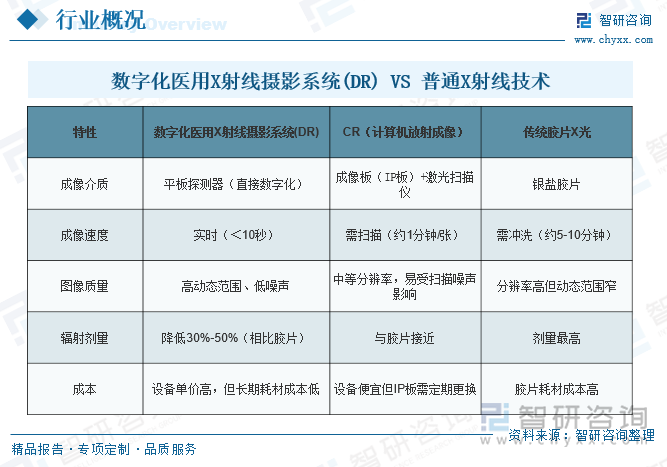
Core Viewpoint - The digital X-ray diagnostic system (DR) market in China is experiencing rapid growth, with domestic brands increasing their competitive strength and achieving a record high localization rate of 68.78% in 2024. The upcoming "equipment update" projects are expected to drive significant demand for upgrading old systems, creating new growth opportunities in the mid-to-high-end DR market by 2025 [1][5][19]. Industry Definition - Digital X-ray diagnostic systems (DR) utilize X-ray and computer technology for image acquisition and processing, becoming essential equipment in modern radiology. DR systems typically consist of an X-ray imaging system, digital image acquisition plates, and image control workstations, favored for their speed, accuracy, and lower radiation doses [2][5]. Current Industry Status - The medical imaging equipment market in China has historically been dominated by foreign brands like GE, Siemens, and Philips, which held over 90% market share in high-end products. However, domestic brands are increasingly replacing imports, with the DR market showing significant growth and a localization rate reaching 68.78% in 2024 [5][19]. Regional Distribution - In 2024, the procurement of digital X-ray diagnostic systems (DR) in China's eastern regions increased compared to 2023, while the central, western, and northeastern regions saw declines, particularly in the central region [7]. Industry Chain - The upstream of the DR industry includes core components such as X-ray generators, digital detectors, image processing systems, and AI-assisted diagnosis. The midstream involves the manufacturing and system integration of DR equipment, while the downstream applications are primarily in clinical diagnostics, health check centers, and emergency departments [9]. Development Environment - Related Policies - The digital X-ray diagnostic system (DR) is gradually replacing traditional film X-ray photography due to its efficiency and low radiation. Recent government policies have been introduced to support the development of medical imaging equipment, emphasizing the need for equipment updates in rural healthcare settings [11][12]. Competitive Landscape - Major players in the Chinese DR market include United Imaging, Wandong Medical, Siemens Healthineers, and Mindray. Domestic manufacturers like Mindray and Wandong Medical are expanding their market share, with United Imaging and Wandong Medical leading the market in 2024 [13][15]. Development Trends - The maturity of DR technology and decreasing costs are leading to widespread adoption in tertiary hospitals, with gradual expansion into primary hospitals and grassroots medical institutions. The "equipment update" trend is expected to drive the replacement of outdated systems, creating new growth opportunities in the mid-to-high-end DR market by 2025. The industry is transitioning from assembly manufacturing to core component autonomy and intelligent value-added services, with localization rates projected to exceed 80% in the next three years [19].




2025年ASCO年会临近,国产创新药出海热潮不减。港股创新药ETF(159567)备受关注
Sou Hu Cai Jing· 2025-05-27 03:22
Group 1 - The core viewpoint is that the innovative drug sector is experiencing a positive market response, with significant gains in related indices and ETFs, driven by optimism surrounding upcoming international conferences and research outcomes [1][2][3] - The 国证港股通创新药指数 saw a peak increase of 4.24%, while the 港股创新药ETF reached a peak increase of 3.89%, indicating strong investor interest [1] - Major domestic innovative drug companies, including 恒瑞医药, 信立泰, and 中国生物制药, have multiple research results selected for presentation at the upcoming ASCO annual meeting, highlighting the sector's growth potential [1][2] Group 2 - The optimization of centralized procurement policies is expected to benefit the supply and market competition of generic drugs, enhancing industry efficiency [2] - The upcoming 2025 medical insurance negotiations and adjustments to the Class B catalog are anticipated to shorten the R&D return cycle for companies, supporting the development of innovative drugs [2] - The innovative drug sector is receiving policy support, with an expected increase in success rates for medical insurance negotiations and potential for commercial insurance payment expansion [2][3] Group 3 - The pharmaceutical sector is seeing strong performance in innovative drugs, medical infrastructure, and pharmacies, with a focus on market pricing power and funding changes [3] - Domestic biotech companies are leading globally in areas such as dual-antibody ADCs, indicating a competitive edge in the innovative drug space [3] - The raw material drug industry is benefiting from patent expirations and improved demand, with a focus on companies expanding into formulations and CDMO [3]



“两新”政策加力扩围:多地“以旧换新”补贴激发市场活力 释放消费潜力
Yang Shi Wang· 2025-05-27 03:05
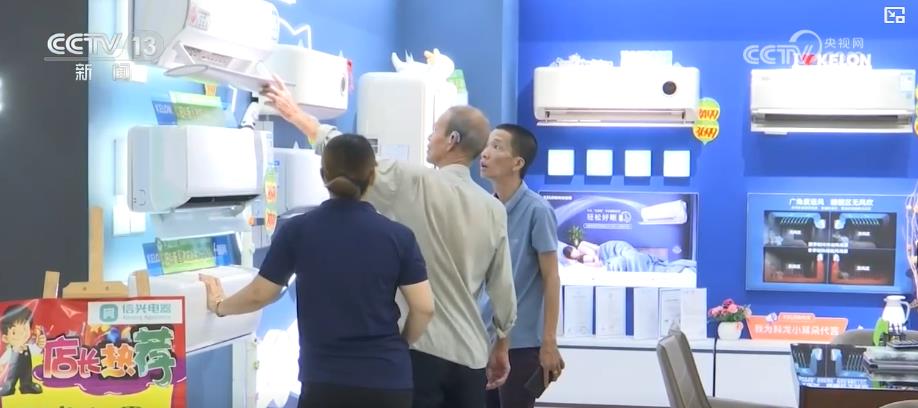
Group 1 - The "Two New" policy is being actively promoted across various regions to optimize processes and enhance services [1] - Regions like Jiangxi, Hainan, and Guangdong are offering subsidies for "trade-in" programs for home appliances and new energy vehicles to stimulate market activity and consumer spending [1][5] - In Guangdong, the combination of government and enterprise subsidies is driving the growth of the new energy vehicle and automotive accessories market [5] Group 2 - Hebei's "trade-in" policy has expanded to cover a wide range of consumer goods, leading to over 10 billion yuan in sales this year [5] - In a recent shopping experience in Tangshan, a consumer benefited from a 20% national subsidy on a new air conditioner, along with additional discounts from manufacturers and retailers [7] - Qinghai has increased the number of categories eligible for agricultural machinery scrapping subsidies from 14 to 25, focusing on enhancing the standards for scrapping hand tractors and updating seeders and combine harvesters [9] Group 3 - Qinghai is implementing a "one-stop service" for the collection and scrapping of old agricultural machinery, resulting in over 2,600 new agricultural machines purchased this year, a 30% increase year-on-year [9]
焦点访谈|政策组合拳助力设备更新 中国制造业迈向新阶段
Yang Shi Wang· 2025-05-24 13:52
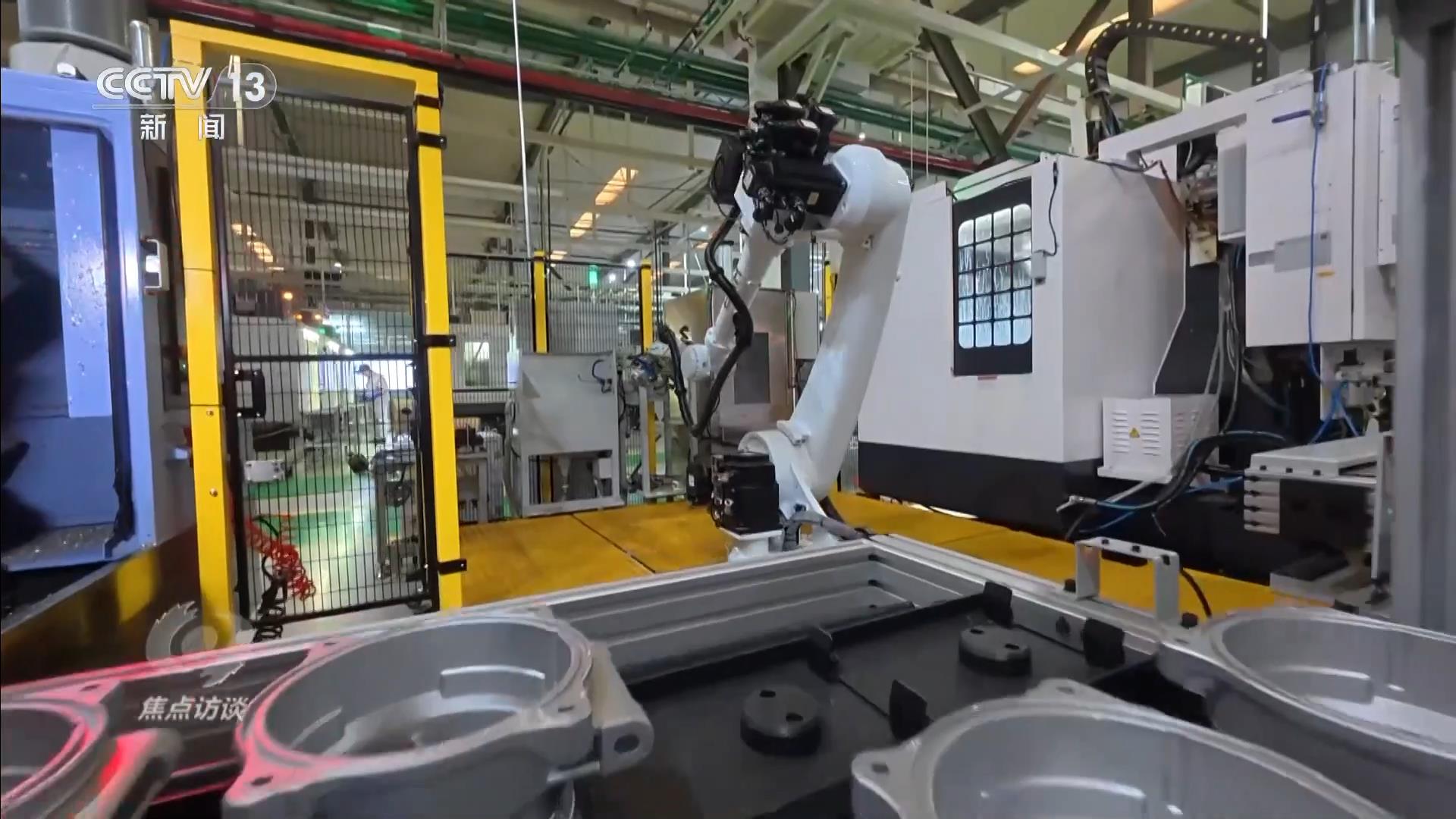
Core Viewpoint - The article discusses the significant wave of equipment upgrades in China's industrial sector driven by government policies, particularly the "Two New" policy, which includes replacing old consumer goods and large-scale equipment updates [1][9]. Group 1: Equipment Upgrades and Economic Impact - The Chongqing company plans to upgrade all production line equipment within two years, investing 150 million yuan [1][3]. - The company has seen production efficiency increase from 200 to 480 parts per day after replacing manual operations with fully automated equipment, resulting in a production capacity increase of 1 million sets and a revenue increase of 200 million yuan [3][5]. - Equipment upgrades are expected to stimulate industrial investment and create new demands in the supply chain, benefiting upstream manufacturing sectors [5][19]. Group 2: Challenges in Implementation - Despite the apparent success of equipment upgrades, companies face challenges such as funding shortages and the need for skilled personnel who understand both technology and production processes [7][11]. - The investment return period for equipment upgrades is relatively long, which can deter companies from making such decisions, especially in a complex economic environment [7][11]. - Many small and medium-sized enterprises struggle to meet the financial requirements for equipment upgrades, with significant upfront costs posing a barrier [11][15]. Group 3: Government Support and Policies - The Chinese government has introduced various financial policies, including special long-term bonds and interest subsidies, to support equipment upgrades, with the total funding for such initiatives increasing from 150 billion to 200 billion yuan [19][17]. - The eligibility criteria for government support have been adjusted to lower thresholds, encouraging more companies to participate in equipment upgrades [19][13]. - Local governments are also implementing policies to assist companies in overcoming barriers to equipment upgrades, such as providing financial incentives and facilitating access to loans [9][11]. Group 4: Case Studies and Examples - The Chongqing company successfully utilized a combination of self-funding, government subsidies, and bank loans to finance its 150 million yuan equipment upgrade, significantly reducing financing costs [11][19]. - Another small enterprise, West Sai Power, faced challenges in securing funding for new equipment but successfully leveraged financing leasing options supported by government subsidies to enhance production capabilities [15][17]. Group 5: Future Outlook - The ongoing push for equipment upgrades is seen as a critical step for China's manufacturing sector to enhance competitiveness in the global market, with expectations for more companies to benefit from supportive policies [19][17]. - The article emphasizes the need for collaboration between government and enterprises to address existing challenges and fully realize the potential of equipment upgrades [19].
经济复苏成色
SINOLINK SECURITIES· 2025-05-23 05:27
Economic Growth Forecast - The GDP growth rate for Q2 is expected to be around 5.2%, with the first half of the year projected at approximately 5.3%[2] - Monthly GDP growth rates for April and May are estimated at 5.4% and 5.3%, respectively, aligning with demand-side predictions[2] Export and Trade Dynamics - Exports are anticipated to achieve a growth rate of 3%-5% in Q2, driven by "grabbing exports" and "grabbing trans-exports" despite high base effects[2][23] - The easing of trade frictions is expected to enhance export performance, making the real economic fundamentals more noteworthy in Q2[4] Consumer Spending Insights - Retail sales growth for the first four months of the year is at 4.7%, with "trade-in" consumption categories showing a 7.2% increase, contributing approximately 1.1 percentage points to overall retail growth[5] - The impact of "trade-in" policies is projected to support retail sales growth at around 4.5%-5% in Q2, with final consumption growth estimated at about 4.3%[20] Real Estate Market Trends - Real estate sales are facing downward pressure as the effects of the 924 policy diminish, with a 1-4 month cumulative decline in new housing sales area of -2.8% compared to -17.1% in the previous year[14] - The second-hand housing market showed a significant increase of 21.1% in transaction area from October 2024 to March 2025, but recent data indicates a cooling trend[14] Investment and Policy Implications - Fixed asset investment growth is expected to stabilize around 4%, supported by equipment updates and infrastructure projects, with manufacturing and infrastructure investment showing year-on-year increases of 8.8% and 10.9% respectively[23] - The overall economic stability in the first half of the year provides ample room for policy responses to external uncertainties, with sufficient flexibility for incremental policy adjustments in Q3[2][20]