
下沉市场

Search documents
5个湖南人,撑起中国零售创新半边天
阿尔法工场研究院· 2025-05-28 14:28
Core Viewpoint - Changsha has emerged as a dense incubator for new consumption in China, showcasing a vibrant ecosystem of innovation across various retail sectors, including tea drinks, snacks, and community group buying [1][3]. Group 1: Investment and Market Dynamics - In 2023, Changsha's consumer enterprises accounted for 8.4% of national financing, with a projected retail sales total of 579.77 billion yuan in 2024 [3]. - The city has a night economy that ranks second nationally, with the number of new consumption brands per ten thousand people exceeding that of first-tier cities by twofold [3]. - The snack sector alone has produced six listed companies, indicating a robust and innovative market landscape [3]. Group 2: Key Players and Innovations - **Xingsheng Youxuan**: Founded by Yue Lihua, it pioneered community group buying with a "pre-sale + self-pickup" model, leveraging a three-tier logistics system for efficient delivery [5][6]. - **Zero Snacks**: Founded by Yan Zhou, it has rapidly expanded to over 7,000 stores by focusing on low-cost, high-quality snacks, achieving a valuation of 25 billion yuan after a 240 million yuan Series A funding round [9][10]. - **Tea Yan Yue Se**: Founded by Lü Liang, it emphasizes cultural value and direct sales, achieving a valuation exceeding 20 billion yuan by 2021 and planning to expand to over 1,000 stores by 2025 [14][16]. - **Le Er Le**: Founded by Chen Zhenguo, it introduced a hard discount model, achieving significant sales growth and establishing a unique supply chain strategy that minimizes costs [21][22]. - **Wen He You**: Founded by Wen Bin, it combines dining with cultural experiences, creating a unique consumer environment that has attracted significant investment and attention [23][24]. Group 3: Market Trends and Future Outlook - The snack market is experiencing a compound annual growth rate of 114.6%, driven by innovative retail strategies that target lower-tier cities [10]. - The integration of local culture into retail experiences is becoming a key differentiator, as seen in the success of brands like Wen He You, which merges dining with cultural nostalgia [24]. - The entrepreneurial spirit in Changsha, characterized by resilience and local market understanding, is expected to continue driving innovation and growth in the retail sector [26][27].

2025年下沉市场消费业态与商业机会深度剖析
Sou Hu Cai Jing· 2025-05-27 15:56
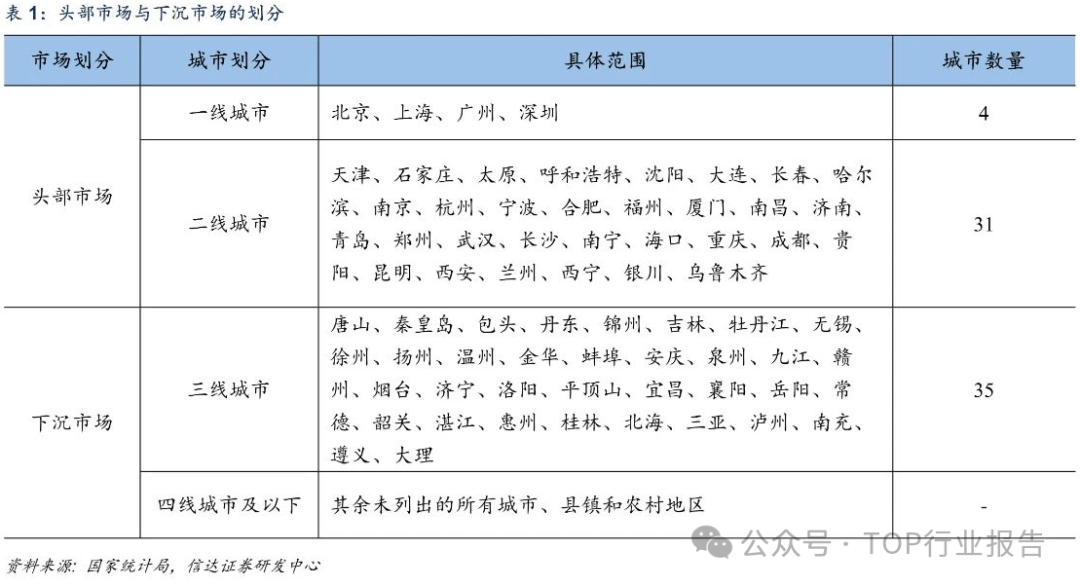
Market Overview and Core Characteristics - The sinking market includes third-tier cities, towns, and rural areas, with a population exceeding 900 million, accounting for over 65% of the national population. By 2025, the GDP of the sinking market is expected to reach 109.9 trillion yuan, with retail sales of social consumer goods likely to exceed 35 trillion yuan. The sinking market contributes approximately 48% to national consumption, with more than two-thirds of future consumption growth expected to come from this market [1][2][4]. Core Drivers - Income levels in the sinking market have been rising, with the median disposable income of urban residents projected to reach 49,000 yuan in 2024, a 48% increase from 2017. This increase allows residents to spend more on upgraded and quality consumption [4]. - The improvement of logistics and supply chain systems has significantly lowered consumption thresholds in the sinking market. By 2025, the online retail scale in this market is expected to reach 8.1 trillion yuan, providing consumers with more diverse and convenient shopping channels [6]. - Consumer attitudes are shifting from basic material needs to a focus on quality and variety. There is a steady increase in the consumption of durable goods, such as smart home appliances, and various service sectors, including dining and entertainment [6]. Core Consumption Formats and Growth Areas - Service consumption is accelerating, with coffee brands like Starbucks and Luckin Coffee seeing membership growth rates in the sinking market surpassing those in first-tier cities. Fast food and snack brands are successfully capturing market share through differentiated strategies [7]. - The tourism and leisure sectors are evolving, with "reverse tourism" gaining traction in the sinking market, leading to increased interest in lesser-known attractions and rural tourism projects [9]. - The demand for education and life services is robust, with community commercial chains expanding to meet daily service needs, enhancing residents' quality of life [9]. Emerging Formats and Channel Innovations - Digital integration is becoming a key trend, with companies like Huitongda Network achieving online and offline synergy, enhancing consumer shopping experiences [13]. - Community convenience formats are proliferating, driven by policies promoting a "15-minute living circle," which meets residents' immediate consumption needs [14]. - Reverse innovation is evident as high-end brands adapt to the sinking market, while local brands expand into higher-tier cities after establishing a strong presence [14]. Business Opportunities and Strategic Directions - High-cost performance chain brands in the food and beverage sector have significant growth potential, with standardized operations allowing for rapid expansion in the sinking market [15]. - Durable goods companies can optimize supply chains to lower costs and offer competitive pricing, stimulating demand in the sinking market [16]. - The county-level commercial real estate market presents substantial opportunities, with the potential to develop integrated commercial complexes that enhance local economic vitality [16]. Differentiated Competitive Strategies - Local adaptation is crucial, with companies needing to understand local consumption habits and cultural characteristics to avoid simply replicating urban business models [17]. - Supply chain optimization is essential for reducing operational costs, particularly in logistics, to meet the price-sensitive demands of the sinking market [17]. - Consumer finance solutions can empower the large consumer base in the sinking market, facilitating access to high-value goods and services [17]. Policy and Capital Dividends - Government policies are supporting rural revitalization and county commercial system development, enhancing infrastructure and encouraging investment in the sinking market [18]. - Increasing capital interest in the sinking market is evident, with sectors like consumer finance and digital services attracting significant investment [20]. Challenges and Recommendations - The sinking market faces challenges such as insufficient supply quality and heightened competition between traditional and emerging retail formats [21]. - Companies should leverage local resources to develop unique industries, enhancing brand value and driving consumer engagement [22]. - Digital transformation is vital for retail competitiveness, utilizing technology to optimize operations and improve consumer experiences [22]. Summary - By 2025, the sinking market is expected to exhibit a favorable development trend characterized by consumption upgrades and structural opportunities. Key growth points include service consumption, durable goods upgrades, digital integration, and policy support. Companies must focus on local demand, optimize supply chains, and leverage policy and capital advantages to succeed in this emerging market [24].
县城的万达广场,王健林才舍不得卖
36氪· 2025-05-27 08:56
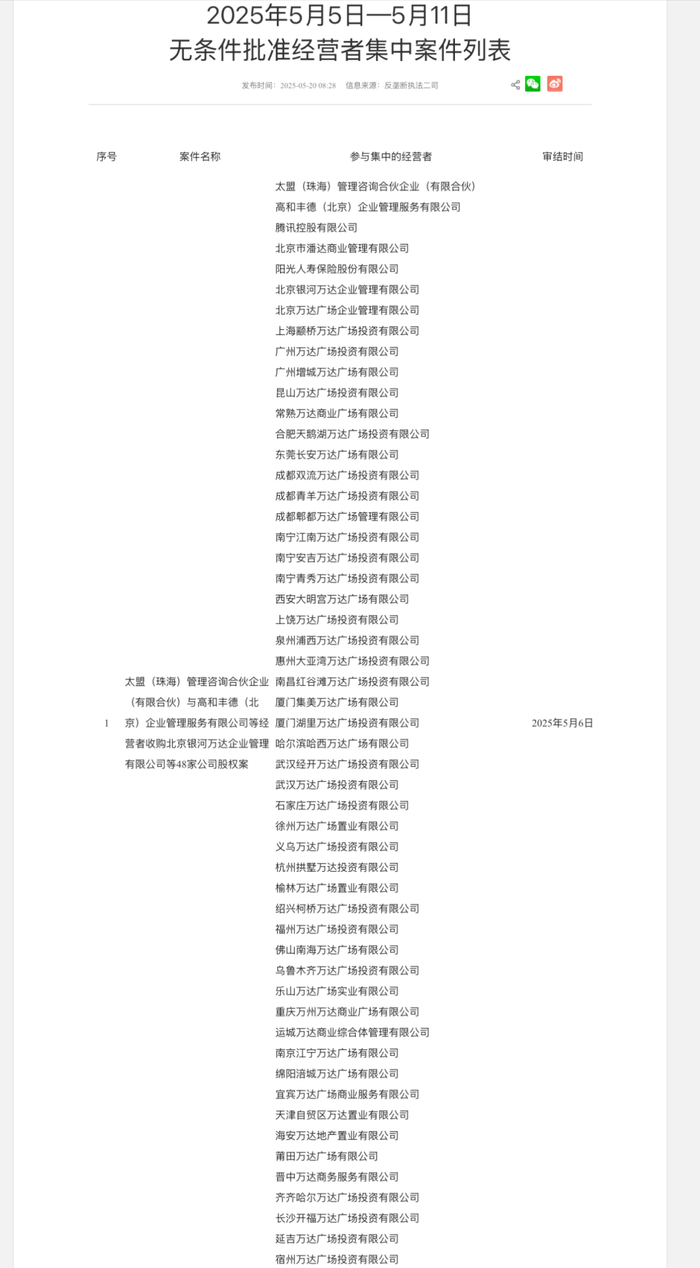
Core Viewpoint - The article discusses the strategic asset sales of Wanda Group, particularly focusing on the sale of 48 Wanda Plaza locations to various investors, including Tencent, amid liquidity challenges faced by the company. This move aligns with Wanda's shift towards a lighter asset management model and highlights the differing commercial values of its properties across various city tiers [4][5][10]. Summary by Sections Asset Sales and Financial Strategy - Wanda Group is selling 48 Wanda Plaza locations, with a reported transaction value of approximately 50 billion yuan [5]. - The company has been divesting assets over the past two years, having sold over 30 Wanda Plazas, with a focus on reducing heavy asset burdens and concentrating on commercial management services [5][10]. - The sales are primarily concentrated in first-tier, new first-tier, and second- to third-tier cities, reflecting a strategic decision to maximize cash flow from high-value assets [7][10]. Market Position and Competition - In first- and second-tier cities, Wanda Plazas face intense competition from brands like SKP and MixC, often being labeled as outdated [9]. - Conversely, in lower-tier cities, Wanda Plazas maintain a strong market presence, with nearly 30 projects in the top 100 counties, outperforming competitors like Wuyue Plaza [10][12]. Consumer Trends and Economic Context - Recent consumer trends indicate a slowdown in demand in first- and second-tier cities, while lower-tier markets are experiencing growth and upgrading consumer needs [14][15]. - The entry of Wanda Plazas into these markets has significantly impacted local economies, with examples of high foot traffic and sales figures shortly after openings [14][15]. Long-term Strategic Outlook - The company’s strategy of retaining assets in lower-tier markets while selling off higher-value properties in major cities is seen as a way to balance immediate liquidity needs with long-term growth potential [12][20]. - The competitive landscape in lower-tier markets is intensifying, with other players like Wuyue and Huazhu also targeting these areas, posing a challenge for Wanda to maintain its market leadership [18][20].

县城的万达广场,王健林才舍不得卖
创业邦· 2025-05-27 03:36
Core Viewpoint - Wang Jianlin is determined to sell off assets amid liquidity crisis, with Wanda Plaza being a core focus of these sales [3][4] Group 1: Asset Sales and Financial Strategy - Wanda Commercial Management Group is selling 48 Wanda Plaza locations to a consortium including Tencent and other firms, with the transaction reportedly valued at 50 billion yuan [3][4] - Over the past two years, Wang Jianlin has sold more than 30 Wanda Plazas, with a strategy to shift from heavy asset burdens to a focus on commercial management services [4][12] - The sales are primarily concentrated in first-tier and new first-tier cities, where the asset values are higher, allowing for quicker cash recovery to alleviate debt pressure [11][12] Group 2: Market Positioning and Consumer Trends - Despite the competitive landscape in first-tier cities, Wanda Plazas maintain a strong presence in lower-tier cities, where they are considered top-tier commercial entities [8][11] - The operational costs in lower-tier cities are lower, making them potentially more profitable despite lower rental yields [11][12] - Recent openings in lower-tier cities have seen significant consumer engagement, indicating a growing demand for commercial spaces in these markets [14][15] Group 3: Competitive Landscape - Other competitors like Wuyue Plaza and Huazhu's Vanke are also targeting the lower-tier market, intensifying competition for consumer attention [20][22] - Wuyue Plaza has a similar market strategy to Wanda, often opening in proximity to Wanda Plazas, while also appealing to younger demographics with trendy brands [21][22] - The challenge for Wanda is to maintain its competitive edge in the lower-tier market as more players enter the space [22]

县城的万达广场,王健林才舍不得卖
Xin Lang Cai Jing· 2025-05-27 02:54
Core Insights - The National Market Regulation Administration disclosed the acquisition of 100% equity in 48 Wanda Plaza companies by a consortium including Tencent and other firms, with a reported transaction value of 50 billion yuan [1][2] - Wang Jianlin has been selling assets, particularly Wanda Plazas, to alleviate liquidity issues, having sold over 30 plazas in 2023-2024 [1][4] - The strategy aligns with Wanda's focus on light asset operations and commercial management services, moving away from heavy asset burdens [1][4] Group 1: Transaction Details - The acquisition involves a consortium of companies including Taima (Zhuhai) Management Consulting and Tencent, which will establish a joint venture to acquire the equity [1] - The transaction has been unconditionally approved, although the specific amount was not disclosed, with media reports estimating it at 50 billion yuan [1][2] Group 2: Market Dynamics - The 48 Wanda Plazas being sold are primarily located in first-tier, new first-tier, and second to third-tier cities, reflecting a trend of selling core city assets [2][4] - Competition in first and second-tier cities has intensified, leading to a perception of Wanda Plazas as outdated compared to competitors like SKP and MixC [4][12] Group 3: Downstream Market Potential - Despite challenges in major cities, Wanda Plazas remain popular in lower-tier markets, with a significant presence in nearly 30 projects in top 100 counties [7][11] - The operational costs in lower-tier cities are lower, making them potentially stable profit centers despite lower rental yields [7][10] Group 4: Consumer Trends - Consumer demand in lower-tier markets is on the rise, with increased disposable income and diverse consumption needs [9][10] - Wanda's early entry into these markets has allowed it to capitalize on the first-mover advantage, becoming a key player in local economies [9][10] Group 5: Competitive Landscape - Other competitors like Wuyue Plaza and China Resources Mixc are also targeting lower-tier markets, intensifying competition for local consumers [12][14] - Wuyue Plaza has a similar market strategy, often opening in proximity to Wanda Plazas, and has successfully attracted younger consumers [13][14]
茶咖日报|挪瓦咖啡被加盟商投诉欺诈;瑞幸接入DeepSeek及豆包大模型
Guan Cha Zhe Wang· 2025-05-26 12:33
Group 1: Nova Coffee Franchise Issues - Nova Coffee is facing complaints from franchisees alleging fraud, specifically regarding the opening of new stores within a promised 2-kilometer protection zone [1] - The franchisee claims that the company’s representatives assured them of this protection during the recruitment process, but the contract does not reflect such a commitment [1] - Nova Coffee's management stated that there is no such promise in their franchise policy and that they are initiating legal processes to verify the claims [1] Group 2: Luckin Coffee's AI Innovations - Luckin Coffee has launched its first AI agent (version 1.0) on its official app and WeChat mini-program, allowing customers to order coffee using voice commands [2] - The AI agent integrates DeepSeek and Doubao models, aiming to enhance customer interaction through personalized recommendations based on past orders [2] - The company plans to further explore upgrades for the AI agent to expand the integration of technology in the coffee experience [2] Group 3: Tea Industry Insights - Changjiang Securities reports that the new tea beverage industry is evolving from basic functional demands to more complex consumer needs, including product, experience, social, and brand demands [3] - The competition among tea brands has shifted from mere store expansion to a focus on profitability and operational efficiency, with leading brands enhancing support for franchisees and optimizing supply chains [3] - The report highlights that the expansion of the tea market is primarily driven by lower-tier markets domestically, while opportunities in Southeast Asia are abundant [3] Group 4: HiTea's Seasonal Product Launch - HiTea has reintroduced its popular Yangmei series, featuring three new products that cater to seasonal demand [4] - The Yangmei series has been a consumer favorite since its initial launch in 2020, and this year's offerings utilize the renowned "Dongkui" variety of Yangmei [4] - HiTea continues to explore diverse new ingredients to enhance its product offerings and provide unique tea experiences [4] Group 5: China International Tea Expo Success - The 7th China International Tea Expo concluded with over 6 billion yuan in total transaction value, marking a record high for the event [5] - The expo attracted nearly 200,000 attendees and featured 6,736 professional buyers from 25 countries, indicating strong international interest [5] - During the event, significant tea transactions were recorded, with 258.215 tons sold on-site and an intention to transact an additional 7,365.098 tons [5] Group 6: International Coffee Bean Flight - The first international coffee bean flight landed at Hubei Ezhou Huahu Airport, carrying 66 tons of Ethiopian specialty coffee beans [6] - Ethiopia is a key player in the coffee market and a significant exporter, with coffee being a major source of foreign exchange for the country [6] - The airport serves as a crucial hub for high-quality products entering the Chinese market, significantly reducing delivery times compared to traditional shipping methods [6]



安徽悦己臻选完成2000万元天使融资,无人零售赛道再添创新力量!
Sou Hu Cai Jing· 2025-05-26 09:42
Core Insights - Anhui YUEJI Zhenxuan successfully completed a 20 million yuan angel round financing, led by a domestic investment institution focused on new retail, with multiple industry-related capital participating [1] - The funding will be primarily allocated to technology iteration, expansion of unmanned terminal networks, and regional market operations to strengthen its competitiveness in the emerging smart retail sector [1] Group 1: Company Overview - Founded in 2019, Anhui YUEJI Zhenxuan focuses on "smart terminals + data operations" to target the "self-indulgent consumption" trend, offering a new generation of unmanned vending solutions [3] - Key innovations include an AIoT intelligent system for a seamless shopping experience, a dynamic product selection engine based on regional consumption data, and a low-barrier expansion model that allows for rapid deployment of stores [3] - The company has established over 100 pilot stores nationwide, with daily foot traffic in community stores averaging 300-500 visitors, over 70% of whom are young users, and an average transaction value of 45-120 yuan [3] Group 2: Market Strategy - As the penetration rate of unmanned retail in first- and second-tier cities approaches saturation, third- and fourth-tier cities and county markets are emerging as new growth points [6] - The company employs strategies such as precise scene positioning in industrial parks, university towns, and residential areas, a light-asset cooperation model with property and brand partners, and localized supply chain collaboration with regional distributors [6] - The investment firm noted that the company's "technology + localized operation" model can reduce product loss rates and quickly respond to regional demand changes, indicating strong replication potential in lower-tier markets [8] Group 3: Future Plans - Anhui YUEJI Zhenxuan plans to launch a "Hundred Cities, Thousand Stores" initiative in 2025, aiming to deploy 500 smart terminals primarily in the Yangtze River Delta, Central China, and Southwest regions [8] - The company intends to open its technology platform to collaborate with fast-moving consumer goods brands and logistics companies to build a "unmanned retail ecosystem," exploring new profit models such as advertising partnerships and customized products [8] - Future initiatives may include "AI interactive marketing," such as virtual try-on features in beauty cabinets and nutritional advice in health cabinets, to enhance user experience and engagement [9] Group 4: Industry Context - The unmanned retail industry is transitioning from early-stage speculation to rational development, with Anhui YUEJI Zhenxuan's approach of "lightweight, intelligent, and scenario-based" potentially offering a new paradigm for the industry [9] - Balancing cost and experience during the next phase of scaling will be a critical challenge for the company [9]

同程旅行(00780):利润率持续改善,关注国际扩张表现
Guohai Securities· 2025-05-26 04:04
Investment Rating - The report maintains a "Buy" rating for the company [1][9]. Core Insights - The company has shown continuous improvement in profit margins, with a focus on international expansion performance [3][6]. - In Q1 2025, the company achieved revenue of 4.4 billion yuan, representing a year-over-year increase of 13%, and an adjusted net profit of 790 million yuan, up 41% year-over-year, with an adjusted net profit margin of 18%, an increase of 3.6 percentage points year-over-year [5][6]. Financial Performance - The core online travel platform generated revenue of 3.8 billion yuan in Q1 2025, a year-over-year increase of 18%, with an operating profit margin of 29.2%, up 6.6 percentage points year-over-year [6]. - Revenue from transportation ticketing reached 2 billion yuan, up 15% year-over-year, benefiting from increased demand and enhanced value-added services [6]. - Accommodation bookings generated 1.2 billion yuan in revenue, a 23% year-over-year increase, with international hotel night volume growing over 50% [6]. - The vacation business faced short-term revenue pressure, generating 590 million yuan, down 11.8% year-over-year, due to safety issues in Southeast Asia [6]. User Metrics - The average monthly paying user count reached 46.5 million, a 9.2% year-over-year increase, with annual paying users totaling 247 million, up 7.8% year-over-year [6]. - Over 87% of registered users reside in non-first-tier cities in China, with 68% of new paying users from these areas, reinforcing the platform's position in the mass market [6]. Future Projections - Revenue forecasts for 2025-2027 are adjusted to 19.3 billion, 22.1 billion, and 24.9 billion yuan respectively, with net profits projected at 2.7 billion, 3.0 billion, and 3.5 billion yuan [8]. - The target market capitalization for 2025 is set at 51.4 billion yuan, with a target price of 24 HKD per share [8].
连锁酒店的下沉战火,已经蔓延至县城咖啡
3 6 Ke· 2025-05-26 02:22
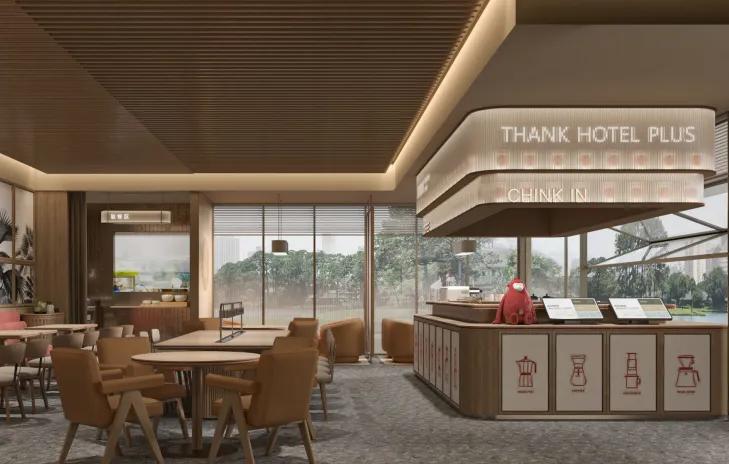
Core Insights - The article discusses the emergence of the "hotel + coffee" model, particularly through the launch of the 尚客优悦 2.0 brand by 尚美数智酒店集团, which aims to capture the growing coffee market among younger travelers and the downward market trend [1][6]. Group 1: Product Concept and Design - 尚客优悦 2.0 integrates a coffee shop experience within the hotel environment, transforming traditional hotel lobbies into immersive coffee spaces that serve as social hubs [2][4]. - The design includes a multifunctional space that combines hotel, café, rest area, and business meeting zones, addressing the low utilization of traditional hotel public areas [4][19]. - The brand offers a 24-hour coffee service, enhancing guest experience and operational efficiency through smart technology [4][5]. Group 2: Market Trends and Consumer Behavior - The coffee market is shifting from elite consumption to mass appeal, with younger consumers bringing urban lifestyles back to smaller towns, thus expanding the coffee market into lower-tier cities [6][9]. - Data indicates that 67.5% of consumers drink coffee for energy, while 35.8% do so for social reasons, highlighting the growing necessity for coffee in various social contexts [8][9]. - The trend of integrating coffee services into hotels is not new, but it is gaining traction as hotels seek to diversify revenue streams and enhance guest experiences [9][10]. Group 3: Competitive Landscape - Major hotel chains are increasingly entering the coffee market, with various strategies such as partnerships with coffee brands, incorporating coffee into their brand identity, or launching proprietary coffee brands [9][10]. - The cost structure of coffee production indicates that leveraging existing hotel infrastructure can significantly reduce operational costs, making the "hotel + coffee" model financially attractive [13]. - The competition for the downward market is intensifying, with both coffee and hotel industries recognizing the potential in lower-tier cities [10][20]. Group 4: Future Directions - The evolution of hotels into "third spaces" reflects changing consumer preferences, particularly among Gen Z, who seek personalized and social experiences beyond traditional accommodations [14][15]. - The success of the "hotel + coffee" model will depend on the ability to create immersive experiences that resonate with younger consumers, rather than merely selling coffee [20][21].


浦银国际:下沉与细分赛道驱动OTA行业持续增长
智通财经网· 2025-05-23 08:11
Group 1 - The core viewpoint is that Chinese companies have a clear insight into consumer trends and market dynamics, which drives their continuous expansion in the stable lodging and ticket booking sectors [1] - The domestic tourism market is experiencing rapid recovery post-pandemic, with four key factors expected to drive growth: lower-tier market consumers, the affluent elderly demographic, the enthusiastic Z generation, and the recovery of inbound and outbound tourism [1] - The current competitive landscape among OTA platforms is stable, and there is optimism regarding the diversification of domestic OTA platforms to enhance business growth [5] Group 2 - Despite the pressure on travel prices due to the rapid recovery of flights and hotel availability, it is anticipated that the decline in travel prices will stabilize by 2025, aided by structural changes in the travel demographic [2] - The OTA platform industry has become an integral part of daily life for Chinese consumers, with increasing penetration rates leading to rapid market growth [3] - Chinese OTA platforms are expanding their business scope through acquisitions and self-built initiatives, particularly in overseas markets, while also launching vacation services to capitalize on the recovery of inbound tourism and the popularity of customized travel [4]
