人工智能(AI)

Search documents
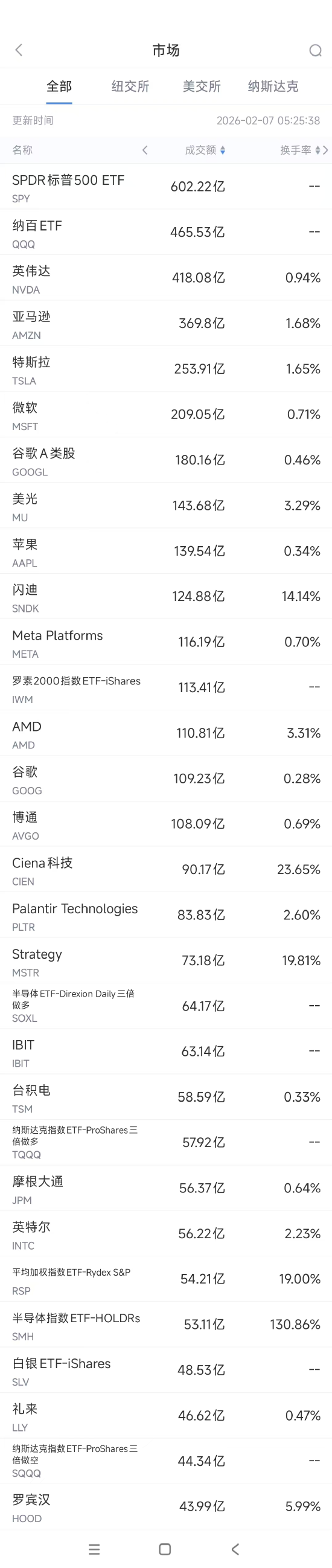
2月7日美股成交额前20:英伟达结束五连跌,黄仁勋称AI资本支出可持续
Xin Lang Cai Jing· 2026-02-06 21:49
Group 1: Nvidia - Nvidia's stock rose by 7.78% with a trading volume of $41.808 billion, despite a cumulative decline of 10.72% over the previous five trading days [1][9] - CEO Jensen Huang stated that the $660 billion capital expenditure for AI infrastructure is sustainable, driven by increasing cash flows from companies investing in AI [9] - Major clients like Meta, Amazon, Google, and Microsoft have announced significant increases in their AI infrastructure investments, contributing to the projected $660 billion in capital expenditures this year, much of which will be spent on Nvidia's chips [9] Group 2: Amazon - Amazon's stock fell by 5.55% with a trading volume of $36.98 billion, experiencing a drop of up to 10% during early trading [1][10] - The company projected its first-quarter operating profit to be between $16.5 billion and $21.5 billion, below analysts' expectations of $22 billion [10] - Amazon announced a significant increase in its 2026 capital expenditure, raising it to over $200 billion from the previously planned $125 billion for 2025 [10] Group 3: Tesla - Tesla's stock increased by 3.50% with a trading volume of $25.391 billion, as the company is evaluating multiple sites in the U.S. to expand its solar battery manufacturing [10] - CEO Elon Musk mentioned at the World Economic Forum that Tesla aims to achieve an annual solar manufacturing capacity of 100 gigawatts within three years [10] - Plans include expanding the capacity of the Buffalo, New York factory to 10 gigawatts, with potential for a second factory in New York and additional sites in Arizona and Idaho [10] Group 4: Semiconductor and AI Infrastructure Stocks - Micron's stock rose by 3.08% with a trading volume of $14.368 billion, as AI infrastructure stocks rebounded [11] - SanDisk's stock increased by 3.77% with a trading volume of $12.488 billion, while AMD's stock rose by 8.28% with a trading volume of $11.081 billion [12] - Intel and AMD have informed Chinese clients about CPU supply shortages, with Intel warning of delivery times extending up to six months, leading to a price increase of over 10% for certain server products in China [12] Group 5: Other Notable Stocks - Broadcom's stock rose by 7.22% with a trading volume of $10.809 billion, contributing to the overall rebound in AI infrastructure stocks [12] - TSMC announced plans to mass-produce 3nm chips in Kumamoto, Japan, with an estimated investment of $17 billion to meet the surging demand for AI [12]


美企大裁员转型路漫漫
Sou Hu Cai Jing· 2026-02-06 20:25
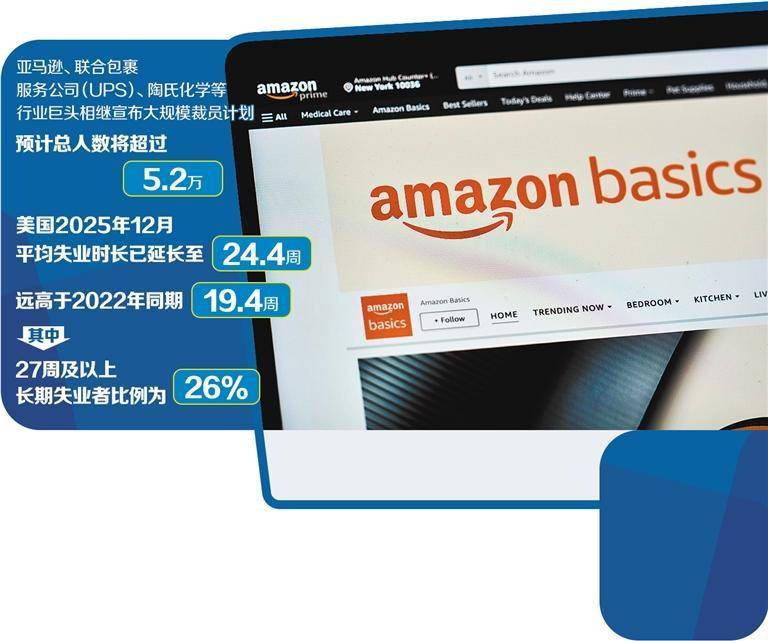
Group 1 - Major companies such as Amazon, UPS, and Dow Chemical have announced large-scale layoffs, with total job losses expected to exceed 52,000, adding uncertainty to the U.S. economy [2] - The layoffs are a necessary correction to the "overexpansion" during the pandemic, as companies adjust to a return to normal consumer behavior and a slowdown in online growth [2][3] - UPS's CFO stated that layoffs are directly related to a decrease in package volume for Amazon, indicating a need to adjust scale [2] Group 2 - Companies are strategically responding to the pressures of technological revolution, particularly through the adoption of AI to reduce labor costs [3] - There is a clear trend of reallocating resources from traditional roles to future-oriented technology sectors, as seen in companies like Amazon, Microsoft, and Nike [3] - The macroeconomic environment, characterized by high interest rates and trade policy uncertainties, is prompting companies to streamline operations and focus on high-margin core businesses [4] Group 3 - Despite the layoffs, the overall scale of job cuts is not unusually high compared to pre-pandemic levels, with the U.S. unemployment rate remaining relatively low at 4.4% [4] - Long-term unemployment is becoming a significant issue, with the average duration of unemployment extending to 24.4 weeks as of December 2025, compared to 19.4 weeks in 2022 [4] - The current layoffs reflect the U.S. economy's attempt to balance inflation control with growth, highlighting the need for companies to successfully navigate this transition and create competitive new jobs [4]


科技股回调之际 交易员追逐“抗AI”股票
Xin Lang Cai Jing· 2026-02-06 17:57
Group 1 - The core viewpoint of the article highlights a shift in investor sentiment towards companies that cannot be easily replicated by artificial intelligence (AI), as technology stocks face declines [1] - The S&P 500 index has dropped by 0.9% this week, primarily due to concerns over AI disrupting business models, particularly in the software sector [1] - In contrast, sectors such as residential construction, transportation, and heavy machinery manufacturing have seen strong gains, with the consumer staples sector rising by 5.2%, marking its best weekly performance since 2022 [1] Group 2 - The Dow Jones Industrial Average has outperformed both the S&P 500 and the tech-heavy Nasdaq 100, indicating a preference for traditional economic giants over tech stocks [1] - This trend contradicts the logic that has driven the U.S. stock market bull run over the past three years, where tech stocks were seen as the main market drivers due to expectations of economic transformation through AI [1] - Investors are rotating towards "anti-AI" sectors, which possess tangible, real-world attributes, as noted by JonesTrading's chief market strategist Michael O'Rourke, suggesting that dull industries may now hold unprecedented appeal [1]
马斯克预言:最快30个月内,太空将成AI部署最便宜的地方丨封面智+
Sou Hu Cai Jing· 2026-02-06 13:24
未来,在哪里部署AI更便宜?世界首富埃隆马斯克认为是"太空"!当地时间2月5日,马斯克作客科技访 谈播客,对于近期引发热议的"太空数据中心"话题,马斯克给出了一个时间表,36个月内甚至30个月 内,太空会是部署AI最便宜的地方。封面新闻记者 曹铭轩 黄益辉 ...
美股前瞻 | 三大股指期货齐涨,软件股反弹
智通财经网· 2026-02-06 12:54
1. 2月6日(周五)美股盘前,美股三大股指期货均转涨。截至发稿,纳指期货现涨0.51%,标普500指数期货涨0.52%,道指期货涨0.60%,此 前纳指期货一度跌超1.6%。 3. 截至发稿,WTI原油涨1.39%,报71.99美元/桶。布伦特原油涨1.34%,报75.66美元/桶。 | ■ WTI原油 | 2026年3月 | 63.02 | 64.58 | 62.32 | -0.27 | -0.43% | | --- | --- | --- | --- | --- | --- | --- | | 謡 伦敦布伦特原油 | 2026年4月 | 67.37 | 68.82 | 66.87 | -0.18 | -0.27% | 市场消息 今夜无非农,下周"双炸弹"。受此前美国政府停摆影响,美国1月非农报告推迟至2月11日(下周三)21:30公布,1月CPI报告推迟至2月13日 (下周五)21:30公布。双重重磅数据或将引发新一轮市场动荡。 美股常胜策略突然失效!动量交易遭遇历史性回撤:资金从科技撤离,价值股成新宠。多年来,在股市中追涨动量一直是常胜策略,然而 这一策略在过去一周却突然失效。此次动量策略的崩塌,是美 ...



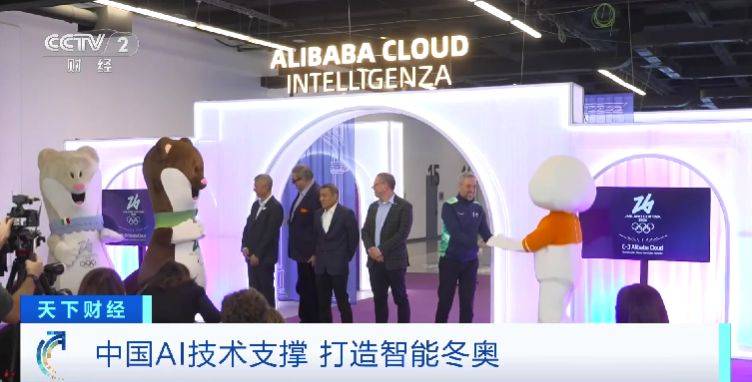
中国AI助力冬奥会智能化:官方大模型、“子弹时间”提升赛事体验
Sou Hu Cai Jing· 2026-02-06 12:18
国际奥委会主席 考文垂:国际奥委会打造了奥运史上首个官方大模型。感谢来自中国的技术,让米兰冬奥 会成为史上最智能的一届奥运会之一。为奥林匹克运动带来新的可能性。 在服务公众的同时,中国AI技术也深度介入本届冬奥会的转播报道中。AI赋能的"子弹时间"等技术,已部 署于米兰冬奥会的10个核心场馆,覆盖高山滑雪、单板滑雪、跳台滑雪等超2/3的比赛项目,为全球观众带 来更好的视听观赛体验。 (央视财经《天下财经》)第25届冬奥会开幕式将于北京时间明天(7日)凌晨3点举行。国际奥委会日前 在一场技术展示中表示,奥运史上首个官方大模型正式投入使用,将让这届冰雪盛会"智能"感十足。 国际奥委会介绍,由中国厂商技术支持的奥运官方大模型已经在专业赛务与公众服务双端同步落地。在赛 务端,通过"国家奥委会AI助手",代表团成员只需用母语提问,即可获取各项官方信息,大幅提升备赛协 同效率。而在公众端,"奥运AI助手"面向全球观众,实时、精准地解答关于赛事规则与奥运历史等相关问 题。 编辑:董健雄 奥林匹克广播服务公司首席技术官 索提里斯·萨拉穆里斯:冬季奥林匹克运动项目极具动态性,它们速度极 快,爆发力极强。因此,借助技术手段定格运 ...
【国际资讯】英飞凌追加5亿欧元扩产
Xin Lang Cai Jing· 2026-02-06 11:25
Group 1 - Infineon plans to invest an additional €500 million (approximately $591.65 million) in capacity expansion this fiscal year, anticipating a two-thirds revenue growth in its AI data center business by 2027 [1][2] - The investment plan for fiscal year 2026 (starting October 1, 2025) has been increased to €2.7 billion, primarily focusing on data center chips [1][2] - The company expects its AI business revenue to reach €1.5 billion this fiscal year and €2.5 billion in the next fiscal year [1][3] Group 2 - Infineon reported first-quarter revenue of €3.66 billion, slightly above analyst expectations of €3.62 billion, with a segment profit margin of 17.9% [3] - Revenue from the power and sensor systems business decreased by 3% quarter-over-quarter to €1.17 billion, but is expected to grow at a rate significantly higher than the group average due to increased demand from data centers [3] Group 3 - On February 3, Infineon announced the acquisition of ams OSRAM's non-optical analog/mixed-signal sensor business for €570 million (approximately ¥4.68 billion), reflecting a trend of resource restructuring among European semiconductor firms [4] - The acquired sensor business primarily serves automotive, industrial, and medical sectors, including applications in medical imaging, sensor interface technology, and high-precision positioning [4]

AMD财报解读:下跌就是机会
美股研究社· 2026-02-06 10:55
作者 Michael Del Monte ,内容为转载编译,仅为呈现不同市场观点与研究视角,并不意味 着本公众号对文中观点结论认可。 超威半导体(AMD)2025 财年收官业绩表现强劲,营收实现乐观增长,同时利润率大幅改善 。公司规划雄心勃勃,计划在 2026 年下半年推出 MI400 系列 GPU,2027 财年发布 MI500 系列 GPU。随着 AI 开发者与企业开始扩充 AI 推理专用算力,AMD 有望迈入全新增 长轨道。凭借 2026 财年稳健的业绩展望,叠加 2025 年第四季度财报发布后的股价大幅回 调,分析师将 AMD 评级上调至 强力买入。 【如需和我们交流可扫码添加进社群】 A M D 业 务 运 营 情 况 2025 年第四季度,AMD 凭借 MI350 系列 GPU 与 霄龙(EPYC)CPU 实现亮眼销售业 绩,净营收同比大增 37.58% 。2025 财年霄龙实例部署量增长尤为突出,云服务提供商 (CSP)部署量增幅超 50%,企业端部署量翻番以上。 2025 年 Q4 的核心看点在于 AMD 下一代 Instinct 系列 AI 加速专用 GPU 矩阵: · MI455X 与 H ...

清华姚班20年,毕业生撑起全球AI半边天
Sou Hu Cai Jing· 2026-02-06 09:31
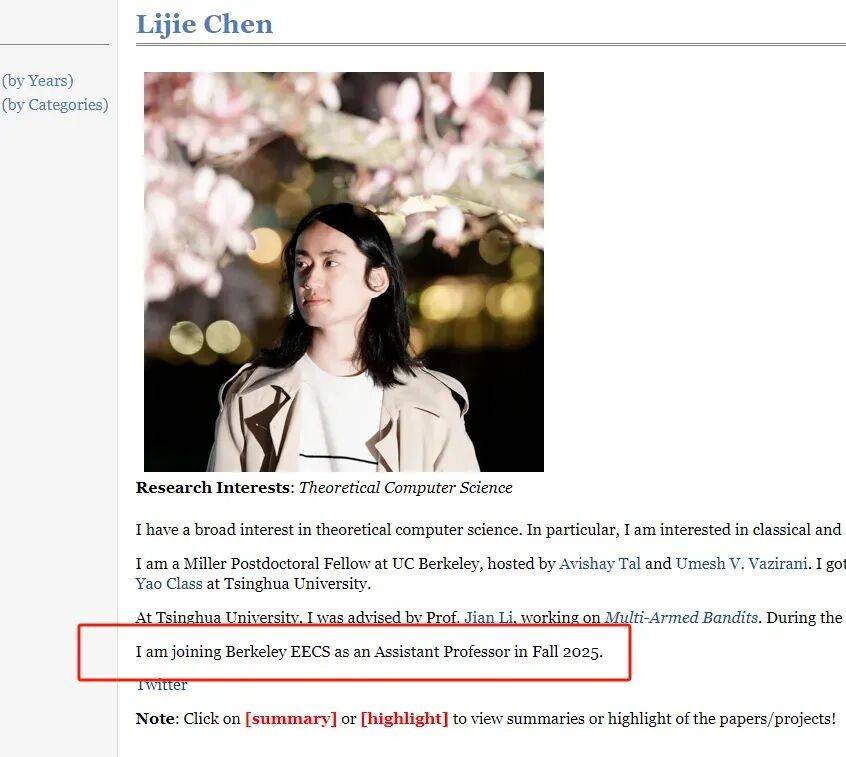
前段时间,OpenAI官宣清华姚班出身的陈立杰正式加盟,又一次把一位华人天才收入麾下。 不久前,腾讯也放出重磅消息,同样是清华姚班出身的27岁姚顺雨出任首席科学家。 清华姚班走过20年风雨,如今走出的毕业生遍布全球AI产业和学术界的关键位置。 天才的经历对于很多家庭来说不可复制,真正值得借鉴的是,这些顶级人才在成长过程中都展现了什么样的能力和思维方式? 从网瘾少年到UCB教授, 陈立杰的开挂人生 陈立杰本科毕业于清华姚班,博士毕业于麻省理工学院,目前是加州大学伯克利分校助理教授。 作为理论计算机科学领域的顶尖青年学者,他在计算复杂性理论等领域拥有卓越的学术成就。 不过,扒了一下他的经历,才发现这样高质量人类竟然也曾是令家长头痛的"网瘾少年"。 1995年,陈立杰出生于浙江湖州,小时候他的成绩并不亮眼,除了数学稍微好一点,其余科目都算不上突出。 小学的时候家里买了第一台电脑,原本是为了让他更好地学习,结果却让他陷入了电脑游戏中,成为家长口中的网瘾少年,网传最夸张的时 候,他三天两夜都没有出房门。 不过初中的一次电脑课,他了解到了"计算机编程",这让他深深着迷,他开始熬夜自学编程。 图源:MIT 从初三开始他就尝 ...
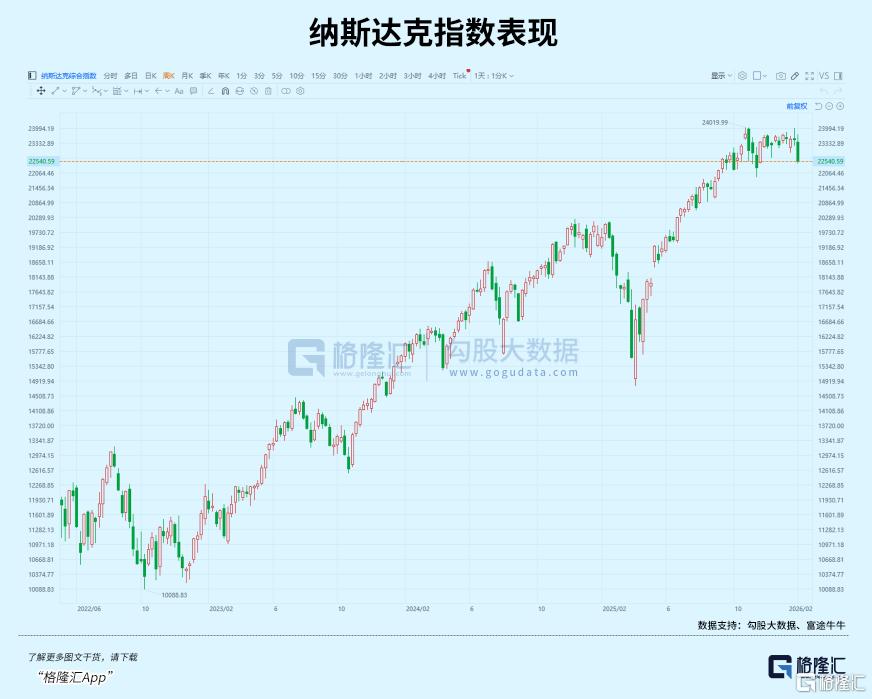
跌崩!黑天鹅重演?
Ge Long Hui· 2026-02-06 09:22
Market Overview - The U.S. stock market, precious metals, and cryptocurrency markets experienced significant declines [1] - Spot silver fell over 20%, while spot gold dropped more than 4%, and international oil prices also saw substantial decreases [2] - All three major U.S. stock indices closed down over 1%, with the Nasdaq facing its worst three-day sell-off since April of the previous year [3] Company Performance - Major tech stocks like Google and Amazon reported "better-than-expected" earnings but still saw declines, which is considered unusual [4] - Google reported a remarkable 48% growth in its cloud business for Q4, yet its pre-market drop reached 6% [8] - Amazon's Q4 revenue and net profit were solid, with AWS cloud business growth at 24%, but it also faced a 10% drop in after-hours trading [11] Capital Expenditure Trends - Over the next few years, major tech companies including Amazon, Google, Microsoft, and Meta plan to invest a total of $660 billion in AI infrastructure, a 60% increase year-on-year [16] - The shift in market sentiment reflects a growing skepticism about the efficiency of massive capital expenditures, as investors question whether the returns justify the costs [15] AI and Software Industry Challenges - The AI investment landscape is transitioning from a "honeymoon phase" to a more challenging environment, with concerns about the effectiveness of capital spending [15] - The rise of autonomous AI applications is disrupting traditional SaaS business models, leading to a potential decline in demand for entry-level positions and related software subscriptions [18] - The software sector has seen significant stock price adjustments, with the iShares Software ETF (IGV) down 25% year-to-date, underperforming the broader market [18] Macroeconomic Factors - The market is reacting to potential changes in monetary policy under Kevin Warsh, who is perceived as hawkish, raising concerns about liquidity and future interest rates [25][26] - The anticipated tightening of liquidity could lead to higher long-term interest rates, negatively impacting tech stock valuations that rely on future cash flow [28] - The current macroeconomic environment, combined with the challenges faced by AI companies, suggests a potential for significant market corrections in the near future [34][35]