
企业出海

Search documents
下一站出海,中国企业如何从“走出去”到“扎下去”?
Feng Huang Wang Cai Jing· 2025-10-15 07:39
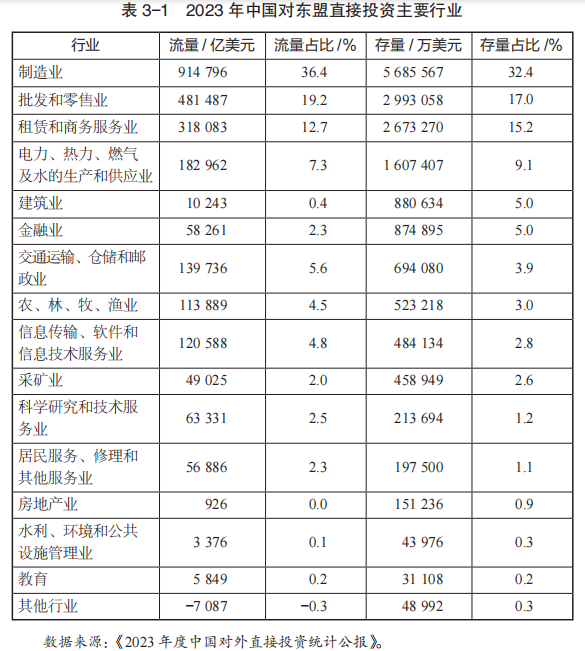
Group 1 - The core viewpoint of the articles highlights the significant acceleration of Chinese enterprises' globalization since the "Belt and Road" initiative was proposed in 2013, with a continuous increase in the number of companies and investment amounts in foreign markets [1][2][3] - By the end of 2023, there were 31,000 domestic enterprises in China establishing 48,000 foreign direct investment enterprises across 189 countries, with total overseas assets nearing $9 trillion [2] - The diversification of investment methods has become prominent, with greenfield investments and overseas mergers and acquisitions being the primary strategies, accounting for 46.4% and 32.3% respectively [4] Group 2 - The structure of foreign direct investment has shifted from being dominated by state-owned enterprises to a significant presence of private enterprises, which now account for 34.7% of the total [5] - A survey indicated that 48.6% of enterprises hold an optimistic view towards foreign investment, with 66.9% choosing "Belt and Road" countries as their preferred investment destinations [6][9] - Challenges faced by Chinese enterprises in overseas markets include political risks, legal compliance complexities, cultural differences, and talent shortages, which are critical for their international operations [12][15][16][17][19][21] Group 3 - The investment landscape shows that manufacturing remains the primary sector for Chinese investments in ASEAN countries, accounting for 32.4% of total investments, followed by wholesale and retail at 17% [3] - The increasing competition among Chinese enterprises in international markets has led to a compression of profit margins, with many relying on price competition due to a lack of differentiation [22] - There is a growing awareness of ESG (Environmental, Social, and Governance) issues among Chinese enterprises, although many still prioritize rapid expansion and profitability over sustainable practices [23]

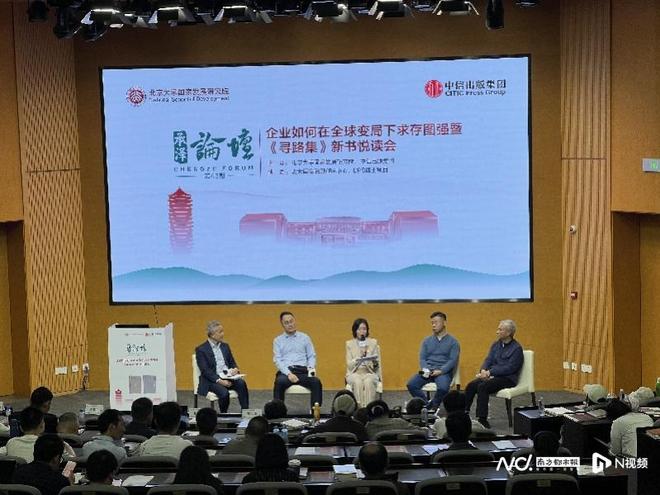
全球变局下企业如何走出内卷?周其仁:多把注意力放在客户上
Nan Fang Du Shi Bao· 2025-10-15 04:01
Core Insights - The forum discussed how companies can survive and thrive amid global changes, emphasizing the need for precision, strategic layout, and uniqueness in their operations [1][3]. Group 1: Precision in Operations - Companies should focus on lean management to reduce waste, improve efficiency, and optimize processes for continuous improvement and superior performance [3]. - Significant waste exists in industries, often masked during periods of rapid economic growth, highlighting the need for cost reduction and quality enhancement through rationalized processes and compact layouts [3]. Group 2: Strategic Layout - The trend of companies going global was highlighted, with Midea Group as a case study, which began overseas investments in 2006 to promote its own brand [3]. - Companies must adopt an internet mindset and avoid self-imposed limitations, as international expansion can open new pathways, albeit with associated risks [3]. Group 3: Uniqueness and Market Focus - Companies in developing countries often follow a path of import substitution, which may become increasingly narrow over time [4]. - There is a need for companies to generate unique ideas, transform them into technology, and then into marketable products to meet demand [4]. - Chinese companies have historically focused on production while neglecting market importance, leading to a mismatch between market and production capabilities [5]. Group 4: Customer-Centric Approach - The issue of "involution" in companies arises from misplaced focus on competitors rather than customers, suggesting a shift in attention from rival products to customer needs [5]. - Companies should derive their ideas fundamentally from customer requirements rather than merely replicating competitors' offerings [5]. Group 5: External Variables - The unpredictability of external factors, such as tariffs imposed by the U.S., should lead companies to concentrate on controllable variables in their operations [5].

为增长而出海:我们决定为出海企业做一件“笨事情”
吴晓波频道· 2025-10-15 03:37
Core Viewpoint - The Huashang Overseas Industry Alliance has rapidly developed since its establishment in 2024, gathering over 2,000 member companies and 200 professional service institutions, aiming to support Chinese enterprises in their overseas expansion through targeted strategies and community engagement [2][4][6]. Group 1: Overview of the Alliance - The alliance has published seven research reports and over 600 articles related to overseas expansion, and has organized nearly 50 offline events and over 50 live sessions to facilitate knowledge sharing among entrepreneurs [2][3]. - The alliance aims to assist Chinese companies in navigating the complexities of international markets, emphasizing the importance of adapting to diverse economic environments and cultural backgrounds [5][9]. Group 2: Strategic Initiatives - Starting in October, the alliance will launch a series of closed-door meetings titled "Going Overseas for Growth," focusing on specific countries, industries, and current trends to provide actionable insights for member companies [7][34]. - The meetings will be limited to 40 participants to foster intimate discussions and encourage sharing of experiences and challenges among attendees [10][11]. Group 3: Market Focus - The alliance recognizes that each international market presents unique challenges and opportunities, and emphasizes the need for companies to identify their niche within these markets [9]. - For instance, in Indonesia, successful companies like BYD have adopted a focused strategy in the electric vehicle sector, leveraging local resources to reduce costs significantly [9][21]. Group 4: Meeting Themes and Topics - Upcoming meetings will cover various themes, including: - Middle East market opportunities under the "2030 Vision" [19][20] - Navigating the complexities of the Indonesian market [21] - Strategies for entering the U.S. market amidst trade tensions [22] - Exploring the manufacturing advantages in Mexico [22] - The alliance plans to adjust the themes and locations of these meetings based on current events and member needs, ensuring relevance and responsiveness to market dynamics [22][34].
透视“中国跨国100大”:制造和基建领风骚
Zheng Quan Shi Bao· 2025-10-13 18:19
Core Insights - The "Top 100 Chinese Multinational Companies" list represents China's integration into the global economy and highlights the achievements of Chinese multinational enterprises across various industries [1] - Analyzing the development and characteristics of these companies can provide valuable insights and benchmarks for other Chinese enterprises looking to expand internationally [1] Group 1: Technology Manufacturing - Technology manufacturing companies constitute over one-third of the "Top 100 Chinese Multinational Companies" list, primarily driven by private enterprises such as Huawei, Lenovo, Haier, TCL, and Midea [2] - These companies aim to capture larger markets by leveraging product technology and after-sales service, with a notable increase in solar and renewable energy firms like Sungrow and JinkoSolar recently joining the ranks [2] - State-owned enterprises in this category focus on heavy machinery and power manufacturing, with companies like China National Machinery, Weichai Power, and Shanghai Electric leading the way [2] - The internationalization strategies of these firms are diverse, including direct sales, cross-border mergers, and local production, allowing for flexible market entry [2] Group 2: Resource Production - Resource production companies also make up over one-third of the list, predominantly consisting of large state-owned enterprises, with few private firms [3] - These companies focus on energy and mineral resources, with significant investments in oil, electricity, steel, and non-ferrous metals, as well as agricultural firms like COFCO and Bright Food [3] - Their overseas operations are often limited to specific resource locations, resulting in a point-based distribution of investments, which are substantial but operate independently [3] Group 3: Infrastructure - Infrastructure companies account for just over ten percent of the list, primarily consisting of state-owned enterprises involved in transportation, power engineering, petrochemicals, and urban construction [3] - These firms support the internationalization of other Chinese companies by providing essential infrastructure projects [3] Group 4: Service Industry - The service industry is represented by traditional and emerging internet services, currently making up less than ten percent of the list [4] - Traditional service firms include the three major telecom operators and China Eastern Airlines, with limited international market expansion [4] - The internet service sector is rapidly growing, with companies like Tencent, Ant Group, and Didi joining the list, indicating a shift towards more internationalized operations [4] Group 5: International Logistics - The international logistics category includes two state-owned enterprises: China COSCO Shipping and China International Marine Containers, which are essential for supporting global supply chains [5] - These companies are recognized as "naturally internationalized" entities within traditional industries [5] Group 6: Comprehensive Holdings - Comprehensive holding companies exhibit unstable rankings on the list, influenced by the addition or removal of overseas subsidiaries [5] - The collective representation of Chinese multinational enterprises on the global stage emphasizes China's identity as a manufacturing powerhouse and infrastructure expert [5] - While traditional service industries lag in internationalization, emerging internet service firms are rapidly catching up [5]
法国克莱蒙商学院DBA(高级工商管理金融学者项目复旦大学模块)开学典礼圆满落幕
Sou Hu Cai Jing· 2025-10-13 10:32
2025年9月27日,法国克莱蒙商学院DBA(高级工商管理金融学者项目复旦大学模块)开学典礼在复旦大学国际金融学院隆重举行。 复旦大学国际金融学院副院长张纯信教授、法国克莱蒙商学院校长Richard SOPARNOT教授、法国克莱蒙商学院上海分校陈京展校长、复旦大学国际金融 学院产融中心汪瑜主任,以及全体博士新生齐聚一堂,共同见证这一融合中法学术智慧的庄重时刻。 法国克莱蒙商学院校长Richard SOPARNOT教授在致辞中表示:"当克莱蒙与复旦的校徽并肩而立,自己深感自豪。这一合作不仅是两校学术实力的交 融,更是培养全球商业领袖的里程碑。" 他寄语新生,通过DBA学习同学们将获得锤炼分析问题、提炼问题、解决问题的能力,成为兼具学术素养与实践智慧的跨界人才。 并详细介绍了法国克莱蒙商学院高级工商管理项目(复旦大学模块),课程融合金融科技、企业出海、全球科创等前沿领域研究。确保"学术理论"与"落 地实践"深度结合,为学生赋能企业转型与战略升级 复旦大学国际金融学院副院长致辞 复旦大学国际金融学院副院长张纯信教授,代表复旦大学国际金融学院向新生致以热烈欢迎。他强调,学院以"一流科研智库、一流人才培养、一流社会 ...

午评:沪指跌1.3%,汽车、石油等板块走低,稀土概念逆市活跃
Zheng Quan Shi Bao Wang· 2025-10-13 05:23
Market Overview - Major stock indices in the two markets declined, with the Shanghai Composite Index dropping over 1% and the ChiNext Index falling by 3%, resulting in over 4500 stocks in the market showing losses [1] - As of the midday close, the Shanghai Composite Index fell by 1.3% to 3846.25 points, the Shenzhen Component Index decreased by 2.56%, and the ChiNext Index dropped by 3%, with a total transaction volume of 15.909 billion yuan in the Shanghai and Shenzhen markets [1] Sector Performance - Sectors such as automobiles, home appliances, oil, pharmaceuticals, securities, and insurance experienced declines, while the banking sector rose against the trend [1] - Active sectors included rare earths, seed industry stocks, military trade concepts, photolithography machines, and industrial software concepts [1] Investment Strategy - Current investment strategies focus on three structural themes: resource security, corporate globalization, and technological competition [2] - Opportunities are expected to increase in traditional cyclical sectors due to a slowdown in global capital expenditure and China's efforts to reduce internal competition, with leading companies maintaining profitability despite a sluggish industrial demand environment [2] - The emphasis is on upstream resource sectors, particularly non-ferrous metals, while attention should also be given to the midstream chemical sector [2]
2025企业出海数字化白皮书-思科
Sou Hu Cai Jing· 2025-10-13 02:31
Group 1 - The core viewpoint of the article emphasizes the strong support from national policies for Chinese enterprises going global, highlighting strategies like the "Belt and Road" initiative and "dual circulation" to lower barriers for international expansion [1][20][22] - The article outlines the evolution of outbound strategies from traditional product exports to a multi-dimensional approach including capacity, capital, services, and intellectual property, reflecting China's industrial upgrade [1][30] - Popular industries for outbound expansion include entertainment, e-commerce, pharmaceuticals, and new manufacturing, with companies like Tencent and Alibaba actively pursuing international markets [1][34][38] Group 2 - The article identifies Southeast Asia as a key destination for Chinese enterprises due to its geographical proximity and rapid economic growth, alongside other regions like the Middle East, Europe, North America, and Latin America, each with unique market characteristics [1][55] - Challenges faced by enterprises include significant differences in legal systems and trade policies, strict data security compliance requirements, cultural differences, high logistics costs, and difficulties in talent recruitment [1][3][16] Group 3 - Cisco proposes a phased approach to digital platform construction for enterprises, starting with a "light asset" model in the initial phase, moving to a cloud-network integration architecture in the growth phase, and advancing to IT standardization in the mature phase [2][3] - The four key elements for digital construction highlighted by Cisco are connectivity, international standards, security, and data intelligence, which are essential for supporting enterprises in their global expansion [2][9] - Cisco offers comprehensive services including 24/7 global support, network architecture planning, operational compliance audits, and digital maturity assessments to assist enterprises in overcoming outbound challenges [2][4]


从南昌卖鞋仔到“埃塞俄比亚工业之父”丨卓立出海谈
吴晓波频道· 2025-10-13 00:30
Core Insights - The article highlights the entrepreneurial journey of Zhang Huarong, a prominent figure in the Chinese footwear industry, who has successfully expanded his business internationally, particularly in Africa [2][5]. Group 1: Early Life and Entrepreneurial Spirit - Zhang Huarong's early life was marked by poverty and hardship, which instilled in him a strong work ethic and resilience [7][10]. - His military service contributed to his management skills and cultural understanding, which he later applied in his business ventures [9][12]. - He began his entrepreneurial journey in 1983, facing significant challenges but eventually finding success in the shoe industry [10][12]. Group 2: Business Expansion and Industry Leadership - Zhang transitioned from domestic sales to international markets, particularly after facing challenges in the local market due to anti-dumping policies [14][15]. - He built a comprehensive supply chain by establishing various factories, which allowed his company to become a leader in the industry [16][17]. - The company successfully relocated to Jiangxi and later to Gansu, where it continued to thrive due to strong government support and a solid operational model [18][19]. Group 3: Investment in Africa - In 2011, Zhang decided to invest in Ethiopia after being encouraged by the Ethiopian Prime Minister, viewing it as a patriotic duty [21][22]. - The establishment of a shoe factory in Ethiopia marked a significant milestone, as it was one of the first modern manufacturing facilities in the country [24][25]. - The factory's success led to the creation of nearly 2000 shoe factories in Ethiopia, significantly contributing to the local economy [26][28]. Group 4: Challenges and Future Outlook - Zhang faced numerous challenges, including political instability, labor issues, and the impact of the COVID-19 pandemic, but remains optimistic about future growth [28][29]. - Plans for further development include creating a comprehensive industrial city that integrates various sectors beyond manufacturing [30][31].

中国公司全球化周报|德邦快递开通中东6国物流专线/Temu与电商服务平台Base达成合作
3 6 Ke· 2025-10-12 04:21
Company Developments - Deppon Express has launched a logistics line connecting China to six Middle Eastern countries, including the UAE and Saudi Arabia, with Dubai as the hub, offering tailored customs and delivery solutions for various product categories [2] - TEMU has partnered with Base.com to enhance operational efficiency for cross-border sellers in markets like the UK and the US, providing support for product listing, order processing, and inventory management [2] - TikTok is testing a new shopping feature called "Trendy Beat" in the UK, allowing the platform to directly sell products it procures, marking a shift from relying on third-party sellers [3] - SHEIN plans to open its first physical stores in France in November, collaborating with a major department store, marking its first foray into physical retail [3] - Didi Chuxing reported a 14% year-on-year increase in daily ride-hailing demand during the recent holiday, with overseas travel demand more than doubling compared to the summer [3] Investment and Financing - Naturando has completed a new financing round with an investment of 300 million RMB, achieving a valuation of over 7 billion RMB, and plans to go public in Hong Kong [6] - Anlan Power has secured several million RMB in angel funding to develop electric smart jet skis, targeting markets in North America, Europe, and emerging markets [6] - Dapu Bio has completed a Series B2 financing round to accelerate the global commercialization of its high-end life science instruments [6] Policy and Market Trends - Saudi Arabia will implement new freight regulations requiring cargo data to be submitted via the FASAH platform ahead of arrival, effective October 29, 2025, to enhance logistics efficiency [7] - The trend of Chinese innovative drugs entering global markets continues, with notable partnerships and licensing agreements, reflecting the recognition of China's R&D capabilities [7] - The Hong Kong government has launched initiatives to support mainland enterprises in expanding overseas, including tax incentives and promoting regional banking headquarters [8]

《黑神话:悟空》海外出圈,上海公证服务如何助企“走出去”
Nan Fang Du Shi Bao· 2025-10-11 07:12
Core Insights - The article discusses the increasing risks faced by Chinese companies going overseas under the "Belt and Road" initiative, including contract disputes, intellectual property disputes, and labor disputes [1][2] - The successful launch of the 3A game "Black Myth: Wukong" highlights the importance of the "Changning Notarization" platform in protecting intellectual property through the "hash value notarization model" [2][4] - A recent patent dispute in the solar energy sector illustrates how a Chinese company overcame a patent infringement lawsuit from a U.S. energy firm, breaking the monopoly of international giants [4][5] Group 1: Intellectual Property Protection - The "Changning Notarization" platform allows real-time notarization of electronic data, protecting business secrets and providing evidence for potential infringement lawsuits [2][3] - The introduction of customized notarization service packages in Shanghai aims to meet the growing demand for public legal services, expanding into areas like intellectual property consultation and protection [2][3] Group 2: Legal Services for Overseas Expansion - The establishment of the "China Enterprises Going Global Headquarters Service Center" in Changning aims to provide legal support for local companies expanding internationally [3][4] - The successful invalidation of a U.S. energy company's patent by a Chinese firm demonstrates the effectiveness of legal services in supporting domestic companies against international patent challenges [5][6] Group 3: Innovative Service Models - The "accompanying overseas" service model allows notaries to assist companies in navigating legal requirements, ensuring compliance with foreign regulations [7] - The "housekeeper service" model streamlines the notarization process by allowing notaries to prepare necessary materials based on the company's needs, reducing the burden of evidence collection [7]