
即时零售

Search documents
石家庄元旦朋友圈被这家超市刷屏!春节前京东七鲜京沪再连开两店
Guan Cha Zhe Wang· 2026-01-04 09:59
Core Insights - The article highlights the strong performance of JD's Qixian Supermarket during the New Year holiday, marking a successful start to 2026 [1][3]. Group 1: Store Performance - The first Qixian store in Shijiazhuang attracted over 100,000 customers in three days due to a free tasting event, with daily foot traffic exceeding 30,000 [3][5]. - The nationwide online order volume doubled year-on-year, with online orders increasing by 180% [3][5]. Group 2: Strategic Expansion - Qixian plans to open two new stores in Beijing and Shanghai before the Spring Festival, continuing its national expansion strategy [3][6]. - The successful operation of the Shijiazhuang store serves as a replicable model for future store expansions, focusing on a dual strategy of "fresh large stores + NB discount stores" [8]. Group 3: Sales Growth - Qixian has seen significant sales growth across all categories, with vegetable online sales up 190% and meat, poultry, and egg products increasing by 150% [5]. - The bakery category also performed well, with online sales rising over 200%, showcasing the strength of Qixian's supply chain and cross-category growth potential [5]. Group 4: Strategic Initiatives - Since 2021, Qixian has focused on "efficiency, quality, and service," enhancing its supply chain and integrating store and warehouse operations to improve delivery times [5]. - The integration with JD's grocery business in 2023 has further refined its operational model, achieving delivery times of under 30 minutes [5].



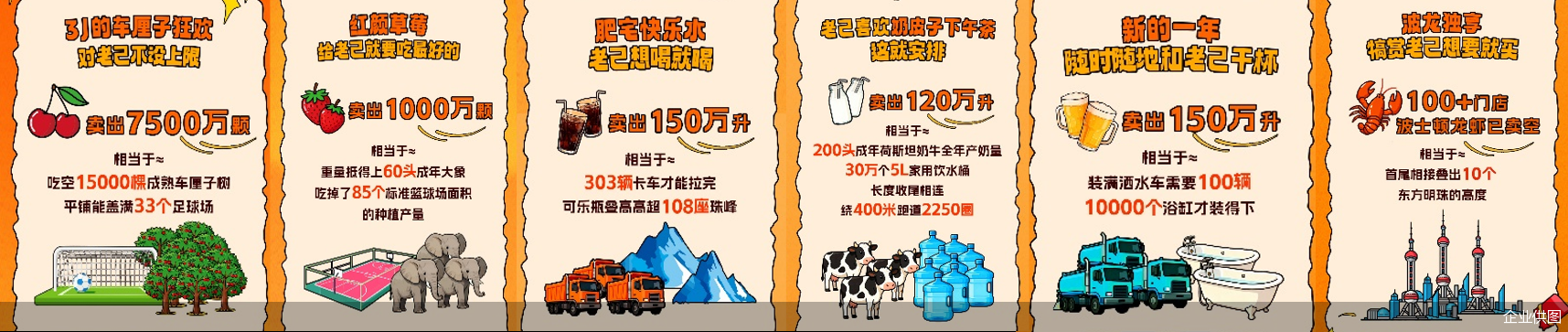
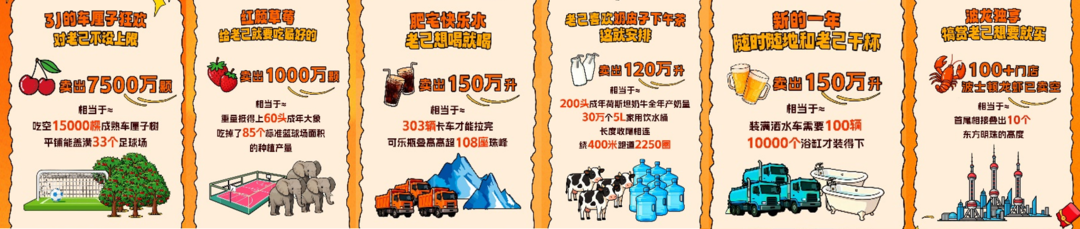
7500万颗车厘子、千万颗草莓被“老己”抢购一空,淘宝闪购年货节引爆“即时满足”消费潮
Bei Jing Shang Bao· 2026-01-04 09:03
Core Insights - The New Year consumption market has seen a significant boost during the New Year's Day holiday, driven by a focus on instant gratification and self-rewarding consumption patterns [1][3] - The sales data from Taobao Flash Sale indicates that several popular New Year products have achieved record-breaking sales, with over 75 million cherries sold and more than 10 million strawberries sold [1][3] Group 1: Consumption Trends - The consumption of New Year goods has shifted from a focus on material accumulation to an emphasis on emotional satisfaction and social investment, reflecting a change in consumer behavior [3] - The sales patterns during the holiday show distinct time-based consumption characteristics, with seafood and hot pot ingredients being popular in the morning, gifts and snacks in the afternoon and evening, and beer and fruits during late-night hours [3] Group 2: Sales Data and Impact - The sales of cherries alone could cover 33 standard football fields, equivalent to the yield of over 15,000 cherry trees, while the weight of sold strawberries is comparable to that of over 60 adult elephants [1] - The total volume of sold cola, if transported by truck, would require 303 trucks, stacked to a height equivalent to 108 Mount Everests, indicating the scale of consumption during this period [1] Group 3: Future Outlook - The Taobao Flash Sale New Year Festival is set to continue throughout the Spring Festival, with enhanced logistics and supply chain capabilities to ensure continuous availability of goods [4] - Consumers can access significant discounts and a wide range of products, including fresh produce and beverages, from New Year's Day to the Spring Festival, promoting personalized shopping experiences [4]

盒马双业态加速扩张,非一线市场成为新增长极
Sou Hu Cai Jing· 2026-01-04 07:34
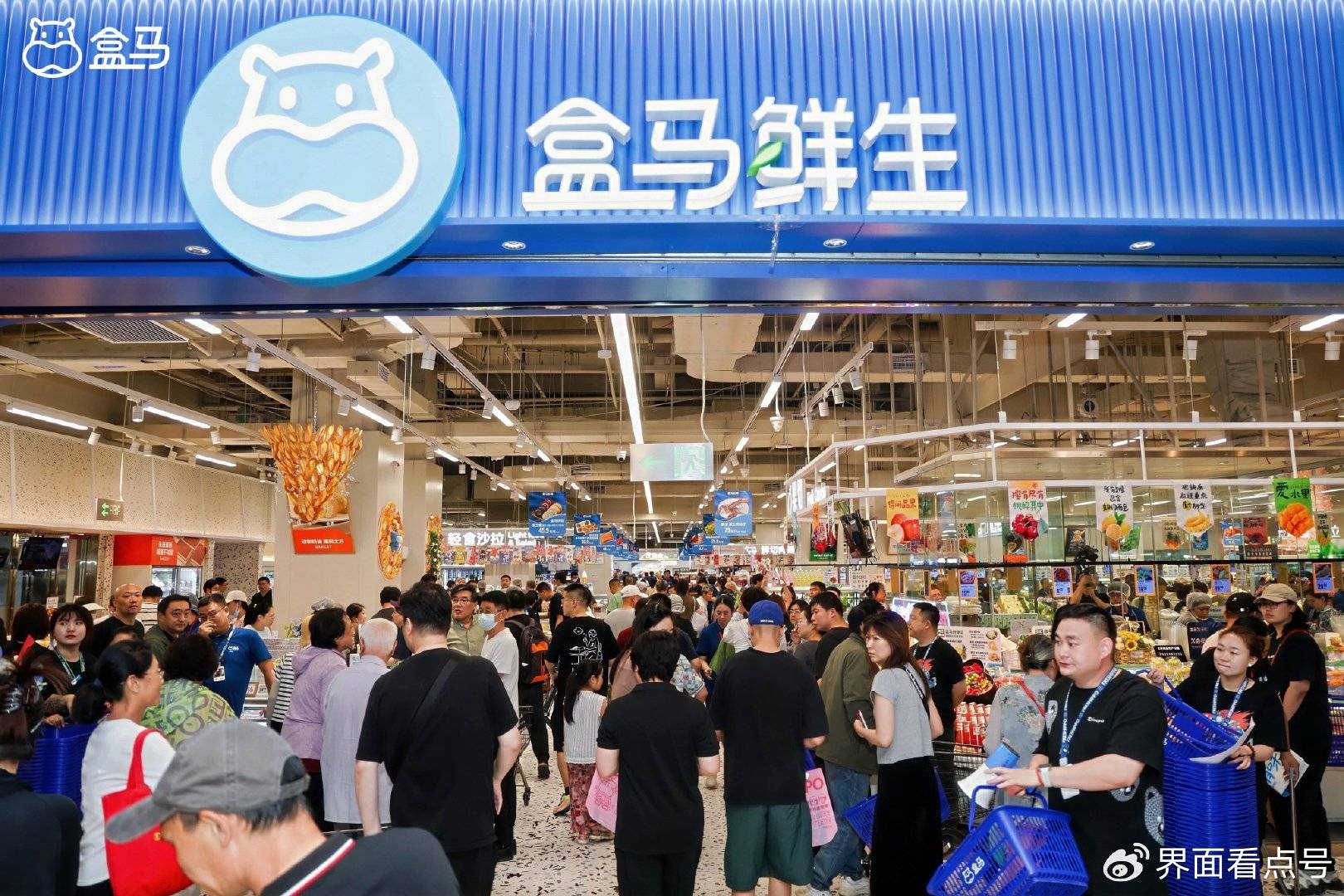
Core Insights - Hema has chosen a different path from traditional retailers by expanding against the trend, achieving both operational efficiency and scale effects in its two business formats: Hema Fresh and Super Hema [1][2] - In 2025, Hema's overall revenue growth exceeded 40% year-on-year, serving over 100 million consumers through its dual business formats [1][2] - Hema's strategy focuses on meeting core consumer needs, with 80% of new product development centered around health foods and innovative fresh solutions [1] Business Expansion - Hema Fresh opened in 40 new cities in 2025, while Super Hema added over 200 new stores [1] - The opening of Hema Fresh in emerging cities like Taiyuan and Nanyang demonstrates the brand's ability to resonate with local consumer demands [2] - Hema's bakery products have seen significant sales, with a single store in Dongying selling 400,000 yuan worth of baked goods on its opening day [2] Market Dynamics - Emerging markets, particularly in third and fourth-tier cities, are showing strong consumer spending capabilities, challenging previous assumptions about their purchasing power [3] - The rise of cities like Zhuhai and Yichang reflects a shift from resource-based economies to new industrial hubs, driving consumer demand [3] - The "emotional economy" in China is expected to exceed 2 trillion yuan by 2025, indicating a structural change in consumer demand [3] Operational Efficiency - Hema's supply chain and delivery systems are highly coordinated, allowing for rapid inventory turnover and reduced waste [10][11] - The company employs a high-frequency replenishment model, significantly shortening the inventory cycle for perishable goods [10] - Hema's ability to deliver within 30 minutes has transformed delivery from an emergency service to a daily consumer infrastructure [10] Strategic Focus - Hema's dual business strategy targets different consumer segments, enhancing its market penetration from first-tier to all-tier cities [6] - The company aims to deepen supply chain resilience and enhance user experience to meet evolving consumer demands [7] - Super Hema's pricing strategy offers products 20%-30% cheaper than competitors, appealing to cost-sensitive consumers [7] Industry Implications - Hema's practices provide valuable insights for retail companies, emphasizing the importance of user-centric strategies and supply chain upgrades in a competitive market [13] - The ongoing application of AI technology and the rise of instant retail are expected to drive further transformation in the Chinese retail sector [13]
2025即时零售东风依旧,顺丰同城护航万亿大盘
Zhong Jin Zai Xian· 2026-01-04 07:26
Core Insights - The instant retail market is projected to approach 1 trillion yuan by 2026, with both food and non-food categories experiencing record-breaking order volumes, indicating that the ceiling for instant retail has not yet been reached [3][12] - The ongoing "takeout war" has intensified competition in the instant delivery sector, emphasizing the need for platforms to effectively connect merchants and consumers to achieve a win-win balance [1][12] Group 1: Market Trends - The simultaneous growth of food and non-food categories is driving new consumer upgrades, with food serving as a key driver in the takeout war, leading to increased demand and testing the resilience of instant delivery infrastructure [3][8] - During peak periods like the Spring Festival and May Day, SF Same City reported over 170% growth in supermarket and department store orders, and over 100% growth in beverage orders, showcasing the impact of seasonal demand [5][6] Group 2: Company Performance - SF Same City has established itself as a rare all-scenario third-party delivery platform, focusing on logistics infrastructure and enhancing its service capabilities to support the "everything to home" model [1][11] - The company has seen significant growth in its "exclusive delivery" service, with revenue tripling year-on-year in the first half of 2025, indicating strong demand for high-value, time-sensitive deliveries [9][21] Group 3: Technological Integration - The integration of AI technologies is becoming a key driver for efficiency in the instant delivery sector, with SF Same City deploying AI tools for various operational aspects, enhancing communication and operational analysis [18][19] - The company has also expanded its fleet of over 800 unmanned vehicles across 105 cities, significantly improving delivery efficiency and reducing labor costs [18][19] Group 4: Strategic Partnerships - SF Same City has formed deep partnerships with major brands and retailers, providing integrated supply chain solutions that enhance last-mile delivery capabilities and support the growth of both food and non-food sectors [9][14] - The company is actively collaborating with various platforms to facilitate multi-channel order integration, addressing the challenges posed by the takeout war and enhancing its service offerings [12][16] Group 5: Future Outlook - As the instant retail market continues to evolve, SF Same City is positioned to leverage its independent third-party status to address the challenges of a multi-polar flow of traffic, potentially leading to new business models and sustainable growth in the sector [12][23] - The company is expected to maintain its momentum, with a projected revenue of 10.236 billion yuan in the first half of 2025, marking a significant milestone in its financial performance [21][23]
骑手成抢手资源?美团、淘宝闪购真金白银急挖人
Xi Niu Cai Jing· 2026-01-04 06:45
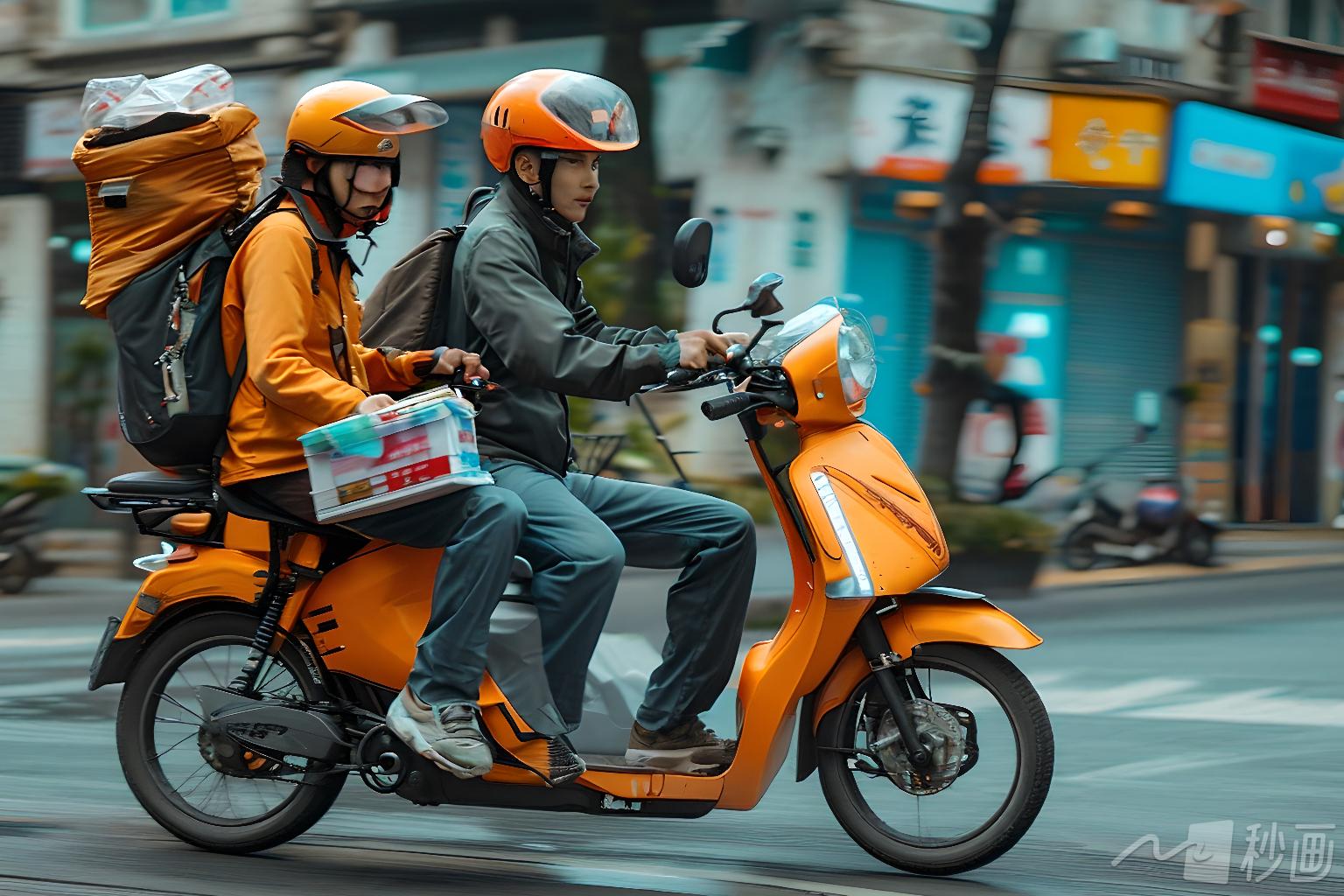
Core Insights - The competition in the food delivery industry is intensifying as major platforms like Meituan and Taobao Flash are offering high "transfer" bonuses to attract quality delivery riders, particularly in key regions like Beijing [2][3] - The battle for riders is a response to the escalating competition in the instant retail sector, with platforms shifting focus from price subsidies to securing human resources for delivery [3][4] Group 1: Rider Incentives - Meituan is offering a recruitment bonus of 2,888 yuan for riders who have completed over 720 orders in November on competing platforms, provided they join Meituan and serve for six weeks [2] - Taobao Flash is providing a 3,000 yuan reward for riders who have completed over 140 orders on other platforms and join Taobao Flash for four consecutive weeks, along with a 1,000 yuan referral bonus for existing riders [2] - These incentives are not nationwide policies and are limited in availability, raising questions about their potential expansion to other cities [2] Group 2: Market Dynamics - The competition among Meituan, Taobao Flash, and JD.com has led to over 10 billion yuan in subsidies since 2025, impacting user, merchant, and fulfillment segments [3][4] - The industry is experiencing a significant shift as platforms prioritize experienced riders who can adapt to diverse delivery scenarios, as training new riders takes at least two weeks [3] Group 3: Financial Performance - Meituan reported its largest loss since going public in Q3 2025, with an adjusted net loss of 16 billion yuan, compared to a profit of 12.83 billion yuan in the same period last year [4] - JD.com's net profit fell by 55% year-on-year, with substantial losses in its food delivery segment contributing to an overall negative operating profit [4] - Alibaba's operating profit decreased by 85% year-on-year, primarily due to significant investments in the instant retail business [4] Group 4: Regulatory Response - The irrational competition in the industry has drawn regulatory attention, leading to the release of national standards aimed at addressing issues like "ghost deliveries" and rider rights [5] - Following the new regulations, major platforms have committed to implementing these standards and are shifting focus from short-term rider acquisition to long-term retention strategies [5] - This transition indicates a potential move away from aggressive cash-burning competition towards a model centered on service quality and compliance, with rider rights and industry ecosystem optimization becoming key competitive factors [5]

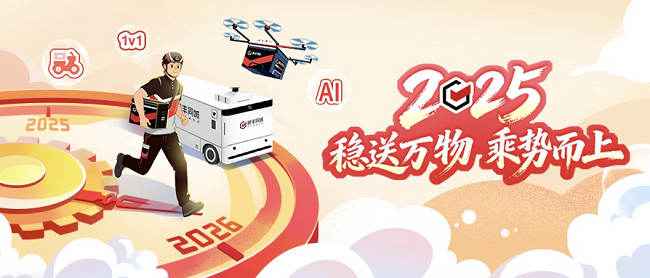
稳送万物 乘势而上:顺丰同城交出2025年度答卷
Xin Hua Ri Bao· 2026-01-04 06:10
Core Insights - The instant retail market is projected to approach a scale of 1 trillion yuan by 2026, with both food and non-food categories experiencing record-breaking order volumes, indicating that the ceiling for instant retail has not yet been reached [1][2] - The ongoing transformation in retail supply chains has sparked a new round of competition in the delivery sector, emphasizing the need for platforms, merchants, and consumers to find a mutually beneficial balance [1] - SF Express's local delivery service has established itself as a rare all-scenario third-party delivery platform, focusing on logistics infrastructure and enhancing its multi-channel integration capabilities to provide high-quality fulfillment services [1][6] Market Trends - The simultaneous growth of food and non-food sectors in instant retail is evident, with food delivery driving significant order increases, particularly during peak holiday seasons [2][4] - The competition in the delivery market has intensified, with platforms shifting focus to the vast instant retail market as traditional e-commerce growth plateaus [2][6] Company Performance - SF Express's local delivery service reported over 170% growth in supermarket and department store orders during key holiday periods, with beverage orders also exceeding 100% growth [4] - The company has seen a threefold increase in revenue from its "exclusive delivery" service in the first half of 2025, catering to high-value and time-sensitive deliveries [12][15] - The number of active merchants on the platform grew by 55% year-on-year, reaching 850,000, with significant revenue growth from tea beverage deliveries [12] Technological Advancements - The integration of AI technologies has become a key focus for the industry, with SF Express adopting AI tools to enhance operational efficiency and customer service [13][14] - The company has deployed over 800 unmanned vehicles across 105 cities, significantly improving last-mile delivery efficiency [14] Strategic Partnerships - SF Express has formed deep collaborations with major brands and retailers, providing integrated supply chain solutions that enhance local fulfillment capabilities [7][10] - The company has also supported various platforms in optimizing their logistics during peak periods, effectively alleviating capacity pressures [12] Future Outlook - The company is positioned to benefit from the ongoing consumer shift towards instant retail, with expectations of continued revenue growth and market expansion in 2026 [15]
元旦小长假年货消费力图鉴:“老己”经济驱动,7500万颗车厘子、千万颗草莓被抢空
Yang Zi Wan Bao Wang· 2026-01-04 03:28
Group 1 - The core viewpoint of the articles highlights the surge in consumer spending during the New Year holiday, particularly driven by the "instant gratification" and self-reward consumption patterns [1][2] - During the New Year holiday, significant sales were recorded for various products, including over 75 million cherries and more than 10 million strawberries, indicating a strong demand for festive items [1][2] - The sales data reflects a shift in consumer behavior, where traditional New Year purchases are evolving from mere stockpiling to immediate emotional satisfaction and social investment [2] Group 2 - The consumption patterns during the holiday show distinct time-based trends, with seafood and hot pot ingredients being popular in the morning, gifts and snacks in the afternoon and evening, and beer and fruits late at night [2] - The success of the instant retail platform during the holiday season underscores its adaptability to festive scenarios, suggesting a transformation in traditional New Year consumption models [2] - The New Year consumption trend is expected to continue, with plans for ongoing promotions throughout the Spring Festival, ensuring that supply chains are prepared to meet demand [2]
新消费2025:十大关键词,一个新江湖
3 6 Ke· 2026-01-04 02:36
Core Insights - The article highlights significant changes in the consumer market in 2025, emphasizing the emergence of new consumption patterns and the evolution of various sectors within the industry [2]. Instant Retail - Instant retail is recognized as the "explosion year" in 2025, expanding beyond food delivery to encompass a wide range of products [3]. - Major players like JD.com and Alibaba have entered the market, leading to intense competition and a subsidy war among platforms [4]. - The industry is shifting towards a more sustainable model, focusing on long-term ecological coexistence rather than short-term gains [4]. Emotional Consumption - Emotional consumption has become a key trend, driven by the desire for psychological comfort and social recognition among consumers [5]. - The market for emotional consumption in China reached 2.3 trillion yuan in 2024, with projections to exceed 4.5 trillion yuan by 2029 [5]. - Various segments, including healing products and immersive experiences, are gaining popularity, reflecting a shift in consumer preferences [6]. Reverse Tourism - There is a notable increase in tourism orders in county-level areas, with local entrepreneurs capitalizing on unique cultural experiences [7]. - The focus has shifted from traditional sightseeing to immersive local experiences, appealing to younger demographics [7]. Consumption Downward - Lower-tier cities are experiencing a surge in consumer activity, with significant growth in orders during events like Double 11 [8]. - Brands are increasingly targeting these markets, with local players gaining traction through culturally resonant products [8]. Hard Discounts - The hard discount retail sector is expanding, challenging the perception that low prices equate to low quality [11]. - Major internet companies are driving this trend, with new store formats and streamlined supply chains enhancing efficiency [11]. Light Health - Health-conscious products are becoming popular among younger consumers, with a focus on convenience and effectiveness [13]. - The market is evolving to include innovative health products that cater to the busy lifestyles of young professionals [14]. Circular Economy - The circular economy is gaining traction, with a shift in consumer attitudes towards second-hand goods and sustainability [16]. - Platforms like Xianyu and Zhuanzhuan are adapting their strategies to enhance trust and user experience in the second-hand market [17]. Pet Economy - The pet economy is experiencing rapid growth, with a market size exceeding 811.4 billion yuan and a 25.4% annual growth rate [18]. - There is a diversification of products and services catering to pet owners, reflecting a shift towards more personalized and premium offerings [18]. Value Export - Chinese brands are increasingly focusing on global markets, leveraging cultural resonance and operational efficiency to build brand loyalty [19]. - The strategy of value export is reshaping perceptions of "Made in China" and driving foreign trade growth [19]. Prepared Dishes - The prepared dishes industry is moving towards standardization and innovation, addressing consumer trust issues through transparency [20]. - Technological advancements in preservation and quality control are enhancing product offerings in this sector [20].
即时零售大会战:谁失血 谁生长?
Zhong Guo Jing Ying Bao· 2026-01-02 19:35
文 李立 吴清 2025年,中国互联网商业舞台的中心,被一场前所未有、代价高昂的战役——"即时零售"大战牢 牢占据。 以阿里巴巴、美团、京东为代表的三大巨头,从年初的外卖补贴燃起战火,迅速蔓延至覆盖餐饮、生 鲜、商超、数码乃至美妆服饰的全品类展开近场零售争夺。 这场战争规模之大、卷入之深,几乎重新定义了电商与本地生活的边界,也向市场抛出了一系列尖锐问 题:天量投入换来了什么?这是一个真实可持续的新大陆,还是资本催生的海市蜃楼?血流不止的战 局,2026年又将走向何方? 账单:战损严重 当三大巨头相继交出2025年第三季度(自然年Q3)的财务成绩单时,市场预期被冰冷的数字证实:这 是一场代价惨烈的消耗战,目前看"没有赢家"。 阿里巴巴以利润换规模,生态协同初显效。阿里2026财年第二季度(对应自然年2025年Q3)营收 2477.95亿元,同比增长5%,但净利润同比下滑53%,经营利润更是同比暴跌85%。核心原因直指对"淘 宝闪购"(即时零售业务)的巨额投入。该季度阿里销售和市场费用高达665亿元,同比激增104.8%。 高投入带来了高增长:即时零售收入达229亿元,同比暴涨60%;淘宝闪购日订单峰值在8月曾达 ...
顺丰同城(09699.HK):“外卖大战”点燃即时零售“万物到家”新征程-内外双飞轮看顺丰同城
Ge Long Hui· 2026-01-02 05:02
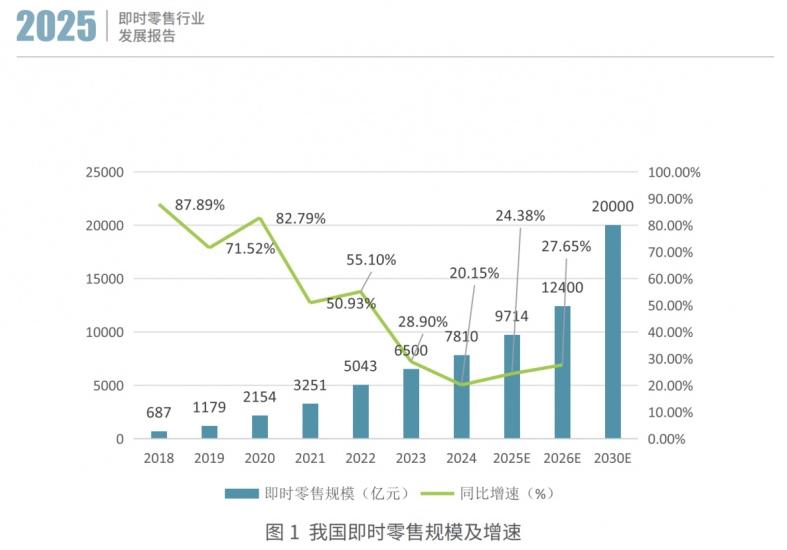
Core Viewpoint - The "battle of the giants" in the food delivery sector has sparked interest, but it essentially ignites a new journey for instant retail, termed "everything to home" [1] Group 1: Instant Retail Development - Instant retail is seen as a new blue ocean with significant growth potential, characterized by intense competition for market share and the activation of traffic through near and far-field collaboration [2] - The narrow instant retail market in China is projected to reach 781 billion yuan in 2024, reflecting a year-on-year growth of 20.15%, with a compound annual growth rate (CAGR) of 50% from 2018 to 2024 [2] - The online food delivery market in China is also expected to grow, with a CAGR of 24% from 2018 to 2024 [2] Group 2: Instant Delivery Demand - The demand for instant delivery is rapidly increasing, with the order volume in China's instant delivery sector expected to reach approximately 48.28 billion orders in 2024, a year-on-year increase of 17.6% and a CAGR of 20.3% from 2019 to 2024 [2] - By 2030, the nationwide instant delivery order volume is anticipated to reach 100.84 billion orders, with an estimated annual growth rate of 13.1% from 2024 to 2030 [2] Group 3: SF Express's Position - SF Express is the largest third-party instant delivery service platform in China, aiming to become the "first brand in new consumption delivery" by covering four major scenarios: food delivery, local retail, near-field e-commerce, and near-field services [3] - The company has shown continuous improvement in profitability, with gross margin increasing from -23.3% in 2018 to 6.8% in 2024, and adjusted net profit margin rising from -36.4% to 0.93% during the same period [3] Group 4: Financial Performance and Projections - The revenue and profit growth of SF Express is driven by revenue expansion and cost efficiency through scale and refined management [3] - The company is projected to achieve a net profit of 230 million yuan, 460 million yuan, and 710 million yuan for the years 2025 to 2027, representing year-on-year growth rates of 73%, 100%, and 55% respectively [4] - The target price for SF Express is set at 18.1 HKD, reflecting a potential upside of 64% based on a 25x price-to-earnings ratio for the adjusted net profit in 2026 [4]