价格战

Search documents
如何看待企业在“内卷”浪潮中的主动与被动
2 1 Shi Ji Jing Ji Bao Dao· 2025-07-30 02:00
Core Insights - The article discusses the phenomenon of "involution" in enterprises, highlighting both proactive and reactive strategies companies are adopting to navigate this challenge [2] Group 1 - The "anti-involution" campaign has been initiated, focusing on breaking free from the price war dilemma [2] - The discussion emphasizes the need for companies to innovate and differentiate themselves rather than engage in destructive competition [2]
东鹏饮料,毛利率下滑
2 1 Shi Ji Jing Ji Bao Dao· 2025-07-30 01:15
Core Viewpoint - Dongpeng Beverage maintains growth amidst the cost-performance wave, with significant revenue and profit increases reported for the first half of 2025 [1][2]. Financial Performance - In the first half of 2025, Dongpeng Beverage's revenue grew by 36.37% year-on-year to 10.737 billion yuan, while net profit attributable to shareholders increased by 37.22% to 2.375 billion yuan [1]. - For Q2, the company reported revenue of 5.889 billion yuan, a 34.10% year-on-year increase, and a net profit of 1.395 billion yuan, up 30.75% [1]. Product Sales - New product sales, particularly "Bup Shui La," contributed significantly to revenue growth, with Q2 revenues from Dongpeng Special Drink, Bup Shui La, and other beverages reaching 4.46 billion, 0.92 billion, and 0.50 billion yuan respectively, reflecting year-on-year growth of 18.8%, 190.1%, and 61.2% [1]. - The proportion of revenue from Dongpeng Special Drink decreased by 9.3 percentage points to 77.9% [1]. Regional Performance - In Q2, revenue from Guangdong, other regions, and online + direct sales reached 1.42 billion, 3.55 billion, and 0.91 billion yuan respectively, with year-on-year growth of 19.5%, 39.0%, and 42.8% [1]. Margin and Costs - The gross margin for Dongpeng Beverage in Q2 was 45.7%, down 0.4 percentage points year-on-year [1]. - Sales, management, R&D, and financial expenses increased by 0.5%, 0.3%, decreased by 0.2%, and increased by 0.6% respectively during the same period [1]. Competitive Landscape - The beverage industry is experiencing a price war, which has led to increased promotional discounts affecting gross margins [2]. - Dongpeng Beverage is increasing its investments, including a 26.06% year-on-year rise in employee compensation and a 61.20% increase in channel promotion expenses due to higher icebox investments [2]. - Advertising expenses also rose by 34.3% year-on-year, reflecting ongoing investments in brand promotion [2]. Market Position - Despite the challenges posed by the price war, Dongpeng Beverage has established certain advantages in the competitive landscape [3].

东鹏饮料,毛利率下滑丨消费参考
2 1 Shi Ji Jing Ji Bao Dao· 2025-07-30 00:48
Core Viewpoint - Dongpeng Beverage maintains growth amidst a wave of cost-effectiveness, with significant revenue and profit increases reported for the first half of 2025 [1][2]. Financial Performance - In the first half of 2025, Dongpeng Beverage's revenue grew by 36.37% year-on-year to 10.737 billion yuan, while net profit attributable to shareholders increased by 37.22% to 2.375 billion yuan [1]. - For Q2 2025, the company reported revenue of 5.889 billion yuan, a 34.10% increase year-on-year, and a net profit of 1.395 billion yuan, up 30.75% [1]. Product Sales - New product sales, particularly "Bup Shui La" and other beverages, contributed significantly to revenue growth, with Q2 revenues of 4.46 billion yuan from Dongpeng Special Drink, 0.92 billion yuan from Bup Shui La (up 190.1%), and 0.50 billion yuan from other drinks (up 61.2%) [1]. - The proportion of revenue from Dongpeng Special Drink decreased by 9.3 percentage points to 77.9% [1]. Regional Performance - In Q2, Dongpeng Beverage generated 1.42 billion yuan in Guangdong, 3.55 billion yuan in other regions, and 0.91 billion yuan from online and direct sales, with year-on-year growth rates of 19.5%, 39.0%, and 42.8%, respectively [1]. Margin and Cost Structure - The gross margin for Dongpeng Beverage in Q2 was 45.7%, down 0.4 percentage points year-on-year [2]. - Sales, management, R&D, and financial expenses increased by 0.5%, 0.3%, decreased by 0.2%, and increased by 0.6% respectively during the same period [2]. Competitive Landscape - The company is facing pressure from a price war in the industry, which has led to increased promotional discounts affecting gross margins [3]. - Dongpeng Beverage is investing heavily in sales personnel, with employee compensation rising by 26.06% year-on-year, and channel promotion expenses increasing by 61.20% due to accelerated investment in freezers [3][4]. Strategic Positioning - Despite the challenges posed by the competitive environment, Dongpeng Beverage has established certain advantages that may help it navigate the intensified competition [5].
“反内卷”的光伏行业,负债究竟有多可怕?
3 6 Ke· 2025-07-29 10:41
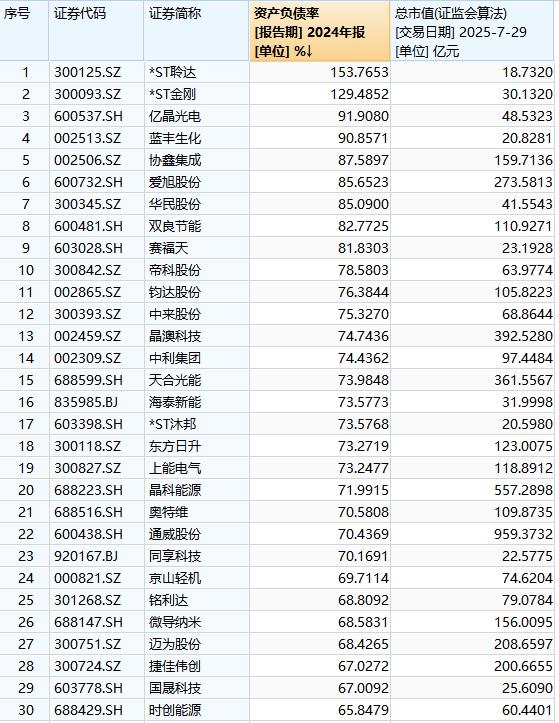
很多人都知道,光伏是全国最卷的产业,但却没人知道,这个产业已经卷到什么极端的程度。 据有关报道统计,截至2024年末,光伏与储能行业累计负债超过65000亿元,已有超过150家知名企业面临破产,很多光伏企业已从亏现金转到完 全"失血"状态。 进入2025年,情况并未好转, 上半年,光伏上市企业继续大面积亏损,17家光伏企业预计亏损超147至173亿元! 据统计,21家光伏主产业链企业2025年一季度末资产负债率中位数值达73.27%,同比、环比分别上升4.61个百分点、0.52个百分点;13家企业资产负 债率超70%,比去年同期多出4家。 具体企业来看,通威股份一季度末负债率为72.25%,同比增长12.98个百分点;TCL中环负债率达64.32%,同比上升11.8个百分点。部分中等规模光 伏企业负债水平更是超过八成,协鑫集成连续七个季度资产负债率超80%,一季度末达88.88%;爱旭股份一季度末资产负债率攀升至85.97%,同比 增长近11个百分点。 这可怕的结果,到底是怎么导致的? 疯狂产能扩建的恶果 2020-2023年,全球光伏产能翻倍,但需求增速仅50%。 企业为抢占市场份额,盲目扩张产能,这种扩张 ...





稳住下半年,沃尔沃选择彻底中国化
3 6 Ke· 2025-07-29 01:06
Core Viewpoint - The automotive market in China is undergoing intense competition and transformation, with traditional car manufacturers facing significant challenges and needing to adapt quickly to survive by implementing comprehensive solutions rather than short-term fixes [1][4]. Group 1: Market Dynamics - The automotive consumption environment has become less vibrant, leading to a fierce price war among manufacturers [1]. - Major global car brands, including Volkswagen, Toyota, and luxury brands like BMW, are feeling the pressure to adapt to the changing market landscape [1][4]. - The shift towards electric vehicles is critical, as companies that do not embrace this transition risk being marginalized in the Chinese market [4]. Group 2: Volvo's Strategy - Volvo has positioned itself as a "luxury new energy leader" and plans to launch seven key models covering various powertrains, including fuel, pure electric, and hybrid [6]. - The company has accelerated its new product launches in response to market pressures, with several models already introduced [6][8]. - Volvo's sales in China reached 70,298 units by June, with the XC60 being the primary contributor to its SUV market performance [14]. Group 3: Product Development and Challenges - The XC70 is highlighted as a crucial upcoming model for Volvo, aimed at revitalizing its product lineup and addressing market demands [9][11]. - The company is focusing on pricing strategies to compete effectively against local Chinese brands that have gained traction in the new energy vehicle sector [8][12]. - Volvo's ability to innovate and adapt its product offerings to meet local consumer preferences is essential for its success in the competitive landscape [11][14].

董明珠“仇敌”,要IPO了
Sou Hu Cai Jing· 2025-07-26 12:24
Core Viewpoint - The news highlights the upcoming IPO of AUX Electric Co., a major player in the air conditioning market, which is seeking to capitalize on the current hot IPO environment in Hong Kong after a previous unsuccessful attempt in January 2025 [1][11]. Company Overview - AUX Electric Co. is recognized as the "fifth largest air conditioning supplier globally" and has a history dating back to the 1990s when it entered the burgeoning Chinese air conditioning market [1][11]. - The company was founded by Zheng Jianjiang, who aimed to disrupt the market dominated by high-priced competitors by initiating aggressive price wars, earning the nickname "air conditioning butcher" [1][6]. Market Position and Strategy - AUX has achieved significant revenue growth, with projected revenues of 195.28 billion yuan, 248.32 billion yuan, and 297.59 billion yuan for the years 2022, 2023, and 2024 respectively, alongside adjusted net profits of 14.49 billion yuan, 25.11 billion yuan, and 29.35 billion yuan [11]. - The company has successfully expanded its market presence internationally, operating in over 150 countries and regions, while focusing on lower-tier domestic markets to avoid competition with major players like Gree and Midea [2][9]. Competitive Landscape - The air conditioning market has seen a shift from a single dominant player to a more fragmented competitive landscape, with AUX's aggressive pricing strategy significantly impacting competitors like Spring Lan [1][8]. - Despite its growth, AUX still lags behind major competitors, with Midea's revenue reaching 407.2 billion yuan and Gree's at 190 billion yuan, indicating a substantial gap in market share and financial performance [2][11]. IPO Context - The recent surge in IPO activity in Hong Kong presents a strategic opportunity for AUX to secure funding and enhance its market position, especially after a significant pre-IPO dividend payout of 3.794 billion yuan [11]. - The company aims to leverage its global market share of 7.1% to attract investors and establish a stronger foothold in the competitive air conditioning industry [11].
美团召开外卖行业恳谈会 商家:被迫参与价格战收入锐减,生存堪忧
Xin Lang Ke Ji· 2025-07-24 10:36
Core Viewpoint - Meituan is actively engaging in discussions regarding the challenges and impacts of price wars in the food delivery industry, emphasizing the need for fair competition and sustainable practices among businesses [1][5]. Group 1: Industry Challenges - The influx of new platforms has led to a significant market investment of 800 billion in subsidies, resulting in aggressive price wars that have decreased average order values by 7 to 10 yuan and reduced merchant income by 15% [1][2]. - Many merchants express concerns that the reliance on high subsidies creates a "false prosperity," as customer retention diminishes once subsidies are removed, leading to a decline in both order volume and average order value [1][2]. - The pressure from price wars disproportionately affects small and medium-sized businesses, which struggle to compete against larger brands that can absorb the costs of subsidies [3][4]. Group 2: Operational Impacts - The fluctuation in order volumes due to subsidies increases operational stress on frontline staff, as businesses must hire additional employees to manage peak orders, leading to higher labor costs and potential declines in service quality [2][3]. - The price sensitivity of consumers has shifted, with many opting for lower-priced items, which has further compressed profit margins for businesses that rely on higher-quality offerings [3][4]. Group 3: Recommendations and Future Directions - Experts suggest that platforms should allocate resources more effectively to create a fair competitive environment, allowing for diverse market development and reducing the negative impacts of price wars on smaller businesses [4][5]. - Meituan has announced plans to invest in infrastructure, including the establishment of 1,200 "Raccoon Canteens" and the expansion of satellite stores, to support the growth of various restaurant brands and enhance operational efficiency [6].

被外卖大战折磨的商家,不想干了
商业洞察· 2025-07-23 09:26
Core Viewpoint - The ongoing price war in the food delivery industry is unsustainable and detrimental to all parties involved, including consumers, merchants, and platforms [4][90][102]. Group 1: Industry Dynamics - The State Administration for Market Regulation has urged major food delivery platforms to engage in rational competition, indicating that the current aggressive pricing strategies are harmful to the industry [5][6]. - Meituan's CEO expressed concerns that the majority of orders in the current price war are "bubble" orders that do not contribute to actual revenue or profit [10][11]. - The influx of nearly 800 billion in subsidies from various platforms has created a competitive atmosphere where companies feel pressured to participate in irrational pricing wars [13][14]. Group 2: Impact on Merchants - Many small and medium-sized businesses are suffering due to the price war, as consumer demand is being redirected towards larger brands benefiting from subsidies [30][34]. - Merchants are finding it increasingly difficult to compete, with some resorting to self-subsidizing to attract customers, which further erodes their profit margins [41][42]. - The rising costs of raw materials, exacerbated by increased order volumes, are putting additional financial strain on merchants [45][46]. Group 3: Consumer Behavior - Consumers may initially benefit from lower prices, but the long-term implications include potential declines in food quality and service as merchants cut costs to survive [100][101]. - The perception of low prices due to subsidies may lead consumers to believe that such prices are sustainable, which is misleading and could result in higher prices once subsidies are removed [98][99]. Group 4: Calls for Change - Industry leaders and restaurant associations are calling for an end to the irrational competition, emphasizing the need for platforms to allow merchants to set their own prices [68][71]. - The consensus among industry stakeholders is that the current model is unsustainable and that a return to rational pricing is necessary for the health of the industry [89][105].

被外卖大战折磨的商家,不想干了
Hu Xiu· 2025-07-23 07:43
Core Viewpoint - The intense competition in the food delivery industry is being called to a halt due to irrational pricing strategies that harm the overall market and businesses involved [1][2][3][4]. Group 1: Industry Competition - The State Administration for Market Regulation has warned major food delivery platforms to engage in rational competition [2]. - The CEO of Meituan expressed that the ongoing price war is meaningless and detrimental to the industry, stating that most orders are "bubbles" [5][6]. - A significant influx of nearly 800 billion in subsidies from various platforms has created a festive atmosphere around low prices, leading to unsustainable competition [9][10]. Group 2: Impact on Small Businesses - The price war has severely affected the operational structure of many small businesses, with some reporting a drastic drop in customer traffic as consumers flock to subsidized delivery options [22][24]. - Small businesses are caught in a dilemma where they either participate in subsidy wars, which erodes their profit margins, or risk losing visibility and sales [32][33]. - Many small businesses are now forced to subsidize their own prices to remain competitive, which is not a sustainable solution [34][35]. Group 3: Consumer Behavior - Consumer demand for food is limited, and the influx of subsidies has shifted orders towards larger brands, leaving smaller businesses struggling [28][29]. - The perception of low prices due to subsidies may lead consumers to believe that normal prices are too high, further harming small businesses when subsidies end [87][90]. - The competition has created a scenario where consumers may enjoy short-term benefits, but the long-term implications could lead to reduced quality and fewer choices [89][90]. Group 4: Calls for Change - Various restaurant associations across multiple provinces have called for an end to irrational competition, highlighting the survival crisis faced by businesses due to excessive subsidies [58][59]. - Industry leaders have voiced concerns about the negative impact of the price war on profitability and the overall health of the restaurant sector [56][57]. - The need for rational pricing strategies and a focus on sustainable growth has been emphasized, as the current approach is deemed harmful to all parties involved [94][95].