
央行购金

Search documents
金价“起飞”!直逼3700美元/盎司
Guo Ji Jin Rong Bao· 2025-09-16 15:51
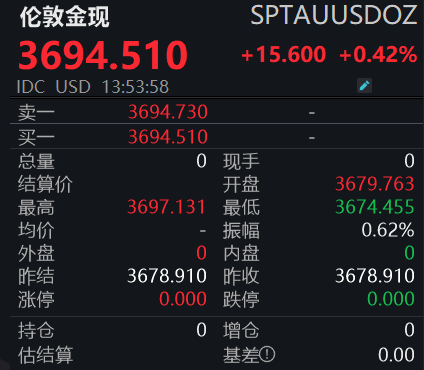
Core Viewpoint - Gold prices have reached new historical highs, with London gold touching $3697.131 per ounce and COMEX gold hitting $3734.8 per ounce, driven by various factors including monetary policy shifts, geopolitical risks, and central bank purchases [1][3][9]. Price Movements - As of September 10, London gold was reported at $3694.51 per ounce, up 0.42%, with a year-to-date increase of over $1000 per ounce [3][4]. - COMEX gold also saw an increase, reported at $3733.2 per ounce, up 0.38%, with a peak of $3734.8 per ounce [5][9]. - In the domestic market, Shanghai Gold Exchange's gold T+D rose by 1.14% to 838.1 yuan per gram, while the main futures contract increased by 1.16% to 844.58 yuan per gram, both reaching new highs [6]. Factors Driving Gold Prices - The primary factors contributing to the surge in gold prices include: - A shift in monetary policy, with a 100% probability of a Federal Reserve rate cut due to weak U.S. economic data, leading to lower opportunity costs for holding gold [8][9]. - Escalating geopolitical risks, including tensions in the Middle East and the ongoing Russia-Ukraine conflict, which have increased the geopolitical risk index [8][9]. - Continuous net purchases of gold by global central banks, supporting strategic demand for gold amid a trend of de-dollarization [9]. Market Outlook - Analysts suggest that while gold prices are currently high and may experience short-term fluctuations, the long-term outlook remains bullish due to persistent demand driven by risk aversion, policy uncertainty, and central bank support [10]. - Investment strategies should focus on monitoring Federal Reserve policies, inflation data, and geopolitical developments to adjust positions accordingly [10].

百利好丨黄金年内30次创新高,央行购金与降息预期共推涨势
Sou Hu Cai Jing· 2025-09-16 15:16
Core Viewpoint - The price of gold has surged significantly, reaching $3674.27 per ounce in September 2025, with an annual increase of nearly 40%, outperforming most global asset classes, including major U.S. stock indices. This surge is primarily driven by a new generation of investors rather than traditional gold buyers [1][3]. Group 1: Price Performance - As of September 2025, gold prices have exceeded 30 nominal high records, surpassing the historical peak of $850 per ounce set in January 1980 (approximately $3590 adjusted for inflation) [3]. - The total value of gold in the London vaults has surpassed $1 trillion for the first time [3]. Group 2: Supporting Factors - Central banks globally have continued to increase their gold holdings, with purchases reaching 1045 tons in 2024, maintaining over 1000 tons for three consecutive years. The proportion of gold in central bank foreign exchange reserves has exceeded that of U.S. Treasuries for the first time since 1996 [4]. - Expectations for interest rate cuts by the Federal Reserve have risen, with historical data indicating that gold and silver typically see average increases of 6% and 4%, respectively, within 60 days following the start of rate cuts [4]. - Ongoing geopolitical conflicts and economic uncertainties have reinforced gold's status as a safe-haven asset [5]. Group 3: Constraining Factors - Demand for gold jewelry has weakened, with the second quarter of 2025 showing the lowest demand since the third quarter of 2020, as high prices have suppressed consumer willingness to purchase. Jewelry demand constitutes a significant portion of total demand, accounting for approximately 40% of gold and 34% of silver [6]. Group 4: Market Outlook - Current gold prices are at historical highs, and while there is a consensus for bullish expectations, caution regarding potential price corrections is advised [7]. - The strength of the U.S. dollar remains uncertain; if the U.S. economy remains robust, the dollar may strengthen, putting pressure on gold prices [8]. - Several institutions maintain an optimistic outlook for gold prices, with forecasts suggesting potential prices of $3700 by the end of 2025 and possibly exceeding $4000 by mid-2026 [8].

突破3700美元!金价,又新高
Sou Hu Cai Jing· 2025-09-16 15:03
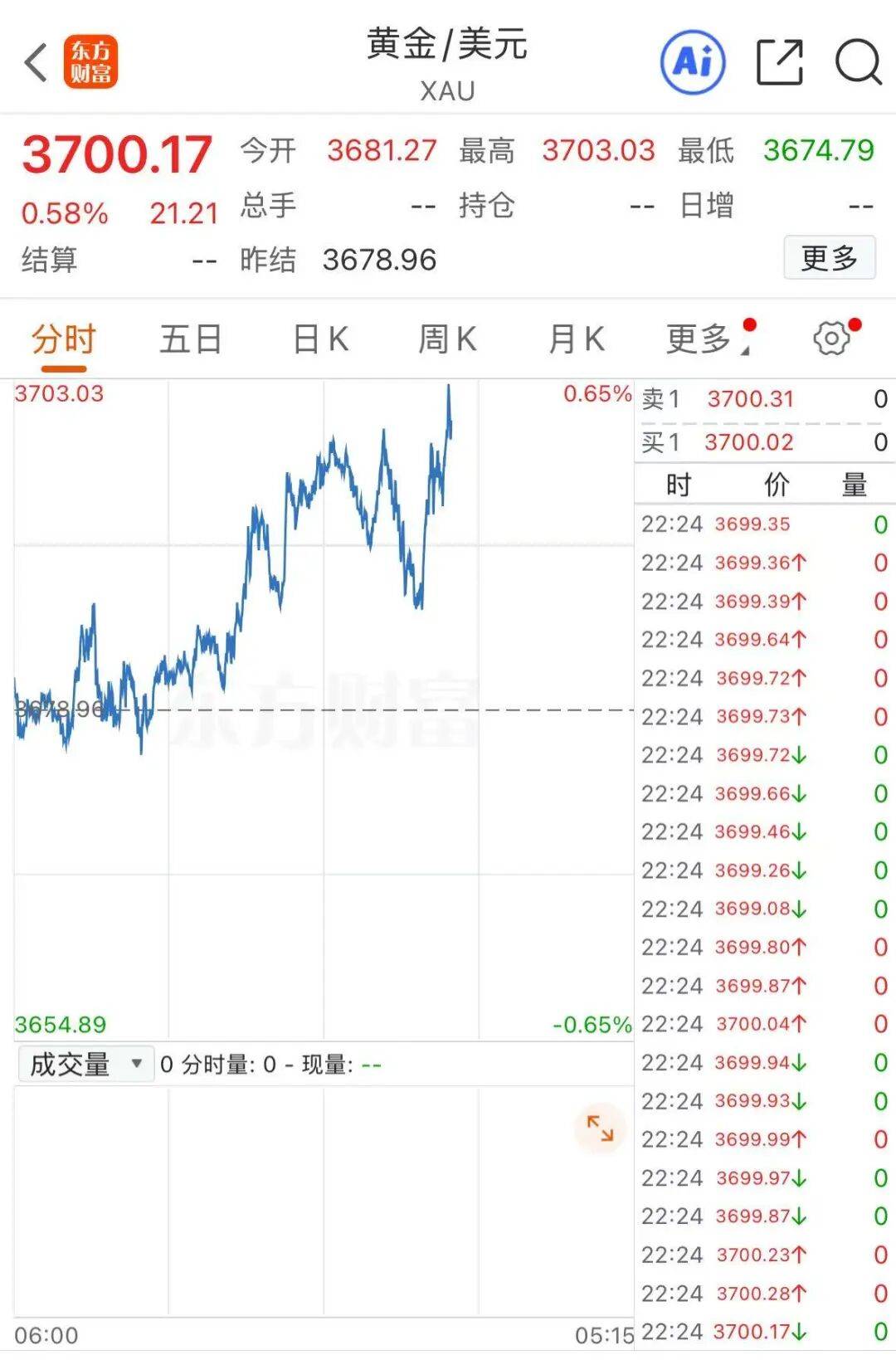
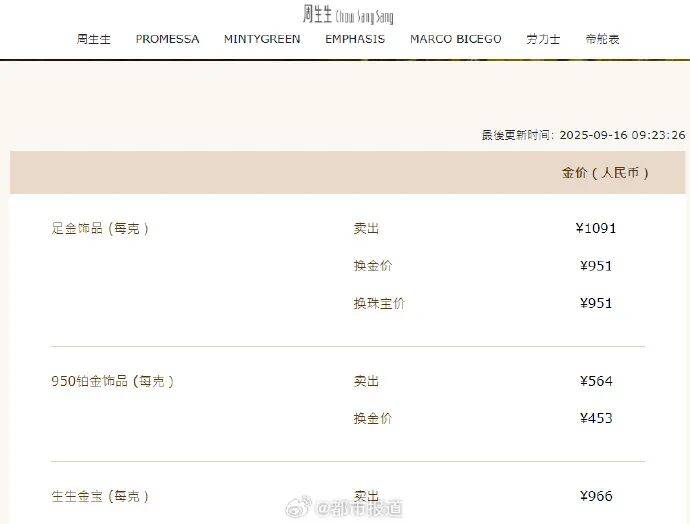
Group 1: Gold Price Trends - As of the latest report, COMEX gold has seen a significant increase of over 10% in the past month, reaching a new historical high of $3739.3 per ounce [2] - The price of gold jewelry has also risen, with the price of 24K gold jewelry reaching 1091 RMB per gram, while other brands like Chow Sang Sang and Luk Fook have prices at 1087 RMB per gram [4] Group 2: Market Outlook - The market outlook suggests that the Federal Reserve is likely to restart interest rate cuts in September, which could be beneficial for gold prices [5] - The current economic conditions of "high interest rates + high debt" are leading to increased costs for U.S. government debt interest, contributing to ongoing concerns about U.S. Treasury and dollar credit risks, while central bank gold purchases continue [5]
刚刚,金价彻底爆了!
Sou Hu Cai Jing· 2025-09-16 03:32
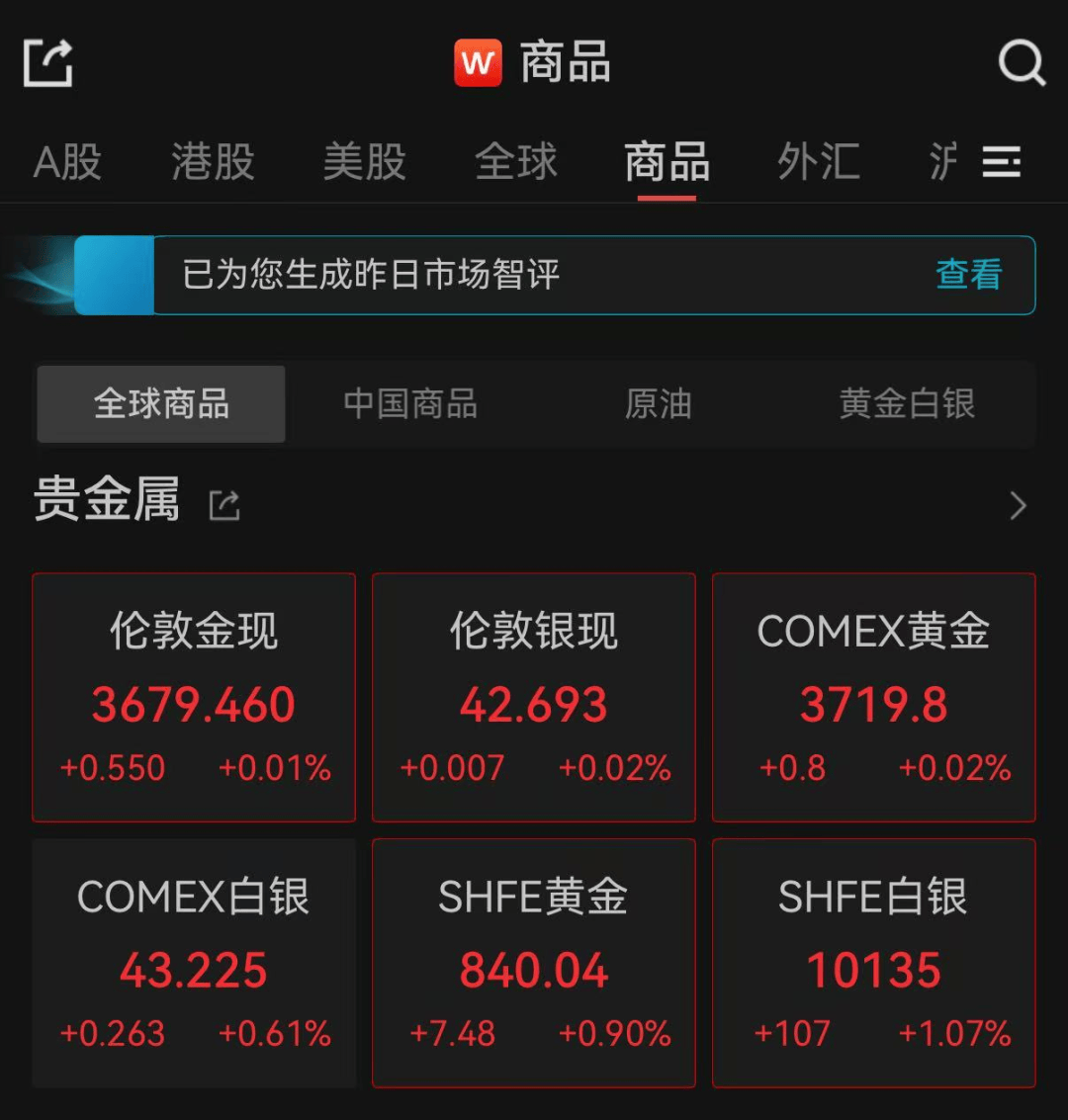
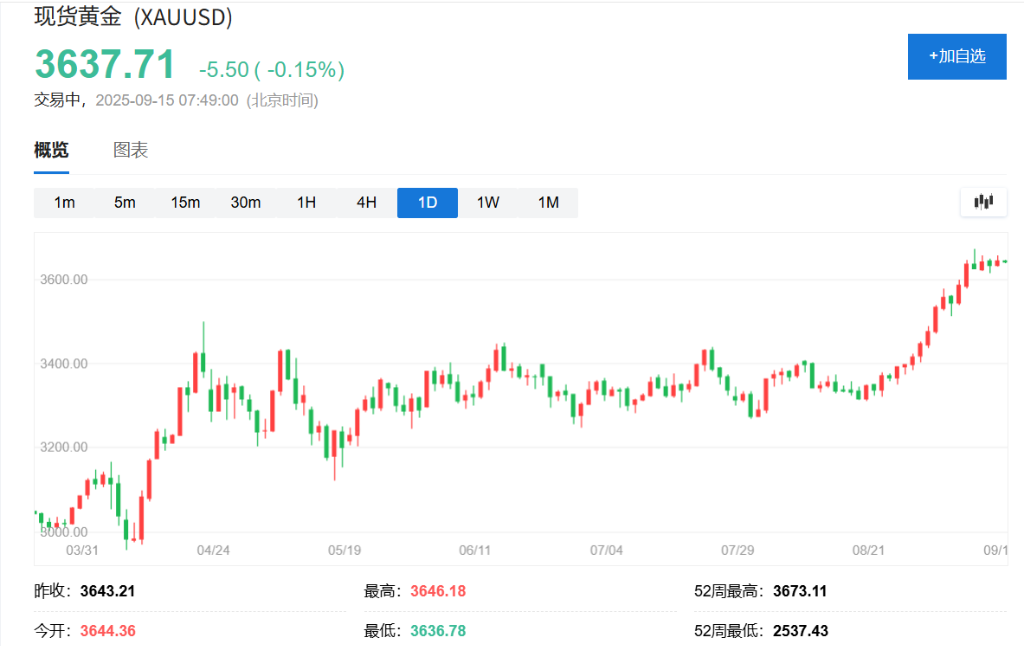
Group 1 - International gold prices continue to rise, with spot gold nearing $3690 and COMEX gold futures reaching a historical high of $3728 [1] - As of the latest report, spot gold is priced at $3679.460 per ounce, up 0.01%, while COMEX gold futures are at $3719.8 per ounce, up 0.02% [1] Group 2 - Domestic gold jewelry brands have also seen price increases, with some reaching their highest levels of the year [3] - On September 16, the price of Chow Sang Sang gold jewelry reached 1091 RMB per gram, an increase of 17 RMB from the previous day, marking a yearly high [3] - Other brands such as Lao Miao, Lao Feng Xiang, and Chow Tai Fook also reported their highest prices of the year, with increases of 13 RMB, 12 RMB, and 9 RMB respectively [3] Group 3 - The rapid increase in gold prices is driven by multiple factors, including market expectations of an upcoming Federal Reserve interest rate cut, rising global geopolitical uncertainties, continued central bank gold purchases, and expanded inflows into gold ETFs [8] - Several institutions have recently raised their gold price forecasts, with Goldman Sachs predicting gold could reach $4000 per ounce by mid-2026 under baseline scenarios [8] - In a "tail risk scenario," gold prices could potentially reach $4500 per ounce, and if just 1% of funds from the U.S. private treasury market flow into gold, prices could approach $5000 per ounce [8]
一夜猛涨17元,金饰克价涨到1091元
Sou Hu Cai Jing· 2025-09-16 02:40
Group 1 - The core point of the news is the significant increase in gold prices, both in the jewelry market and international futures, driven by various economic factors [1][2][3] Group 2 - On September 9, the price per gram of gold jewelry from major brands rose, with Chow Sang Sang at 1091 RMB (up 17 RMB), Lao Miao at 1087 RMB (up 11 RMB), and Chow Tai Fook at 1087 RMB (up 13 RMB) [1] - As of September 15, the COMEX gold futures price reached a record high of 3724.9 USD/ounce, closing at 3719.5 USD/ounce, marking a 1.05% increase [2] - The international gold price has surged over 40% this year, influenced by expectations of an upcoming interest rate cut by the Federal Reserve, rising global geopolitical uncertainties, continued central bank gold purchases, and increased inflows into gold ETFs [2]


摩根大通:2026年初金价将破4000美元大关
Hua Er Jie Jian Wen· 2025-09-16 02:25
Core Viewpoint - Morgan Stanley has raised its gold price forecast, expecting spot gold prices to exceed $4,000 per ounce by Q1 2026, driven by strong investor demand and anticipated Federal Reserve rate cuts [1][7] Group 1: Price Predictions - The report predicts an average gold price of $3,800 per ounce by Q4 2025 and a breakthrough of $4,000 per ounce in Q1 2026, which is a quarter earlier than previous estimates [7] - Gold prices have already reacted, rising approximately 6% in September, trading near historical highs of $3,680 per ounce [2] Group 2: Market Dynamics - The primary driver of the current gold price increase has shifted from central bank purchases to investor demand, with significant inflows into gold ETFs observed [1][3] - Historical data indicates that gold typically performs well during Federal Reserve rate cut cycles, with double-digit returns often seen within nine months of rate cuts [3][7] Group 3: Investor Behavior - The report highlights a significant inflow of nearly 72 tons of gold into global ETFs, valued at approximately $8 billion, in the two weeks leading up to September 5, 2025 [3] - Non-commercial net long positions in COMEX gold futures have reached new highs, indicating strong investor sentiment [3] Group 4: Tail Risks and Scenarios - A potential risk identified is the erosion of Federal Reserve independence, which could lead to a significant shift of funds from U.S. Treasuries to gold, potentially pushing gold prices to $5,000 per ounce within two quarters [9][11] - The analysis suggests that even a small rotation of funds from the $29 trillion U.S. Treasury market to gold could result in substantial price increases [10][11] Group 5: Central Bank Demand - Despite the positive outlook for gold, there are concerns regarding a potential sharp decline in central bank gold purchases, which could impact the sustainability of the price increase [13] - The report notes that central bank purchases in Q2 2025 were at their lowest level since Q2 2022, although average annual purchases are expected to remain high [13]
继续看好金价“明年中到4000美元”!高盛预测:央行“购金”将持续三年
Hua Er Jie Jian Wen· 2025-09-15 00:18
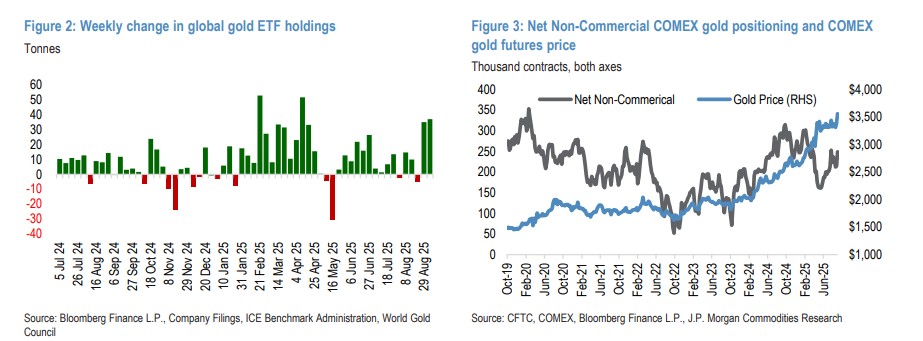
Core Viewpoint - Goldman Sachs maintains a bullish outlook on gold, predicting a target price of $4,000 per ounce by mid-2026, driven by structural increases in central bank gold purchases and ETF inflows [1][4]. Group 1: Gold Price Movement - Gold prices have risen 6% since August 26, breaking out of a trading range of $3,200 to $3,450, currently trading around $3,650 [1]. - The recent price increase is attributed to increased ETF holdings, enhanced speculative positions, and expectations of a resurgence in central bank demand after the summer lull [1][3]. Group 2: Central Bank Demand - Goldman Sachs expects central bank gold purchases to continue for three years, driven by emerging market central banks' gold allocation being significantly lower than that of developed markets [5]. - In July, global central bank and institutional demand for gold in the London over-the-counter market was 48 tons, below Goldman Sachs' forecast of an average of 80 tons per month for 2025, aligning with seasonal trends [4]. Group 3: ETF and Speculative Positions - The increase in ETF holdings contributed approximately 1.5 percentage points to the recent 6% price rise, while speculative positions added about 1.2 percentage points [3]. - The report highlights that the anticipated easing of U.S. monetary policy and a 30% risk of recession in the next 12 months will support ETF inflows [4]. Group 4: Emerging Market Central Banks - The structural shift in global central bank gold purchases has increased nearly fivefold since 2022, with emerging market central banks actively diversifying their reserve assets [5]. - For instance, China's official gold reserves account for about 8% of its total reserves, significantly lower than the approximately 70% held by the U.S. and Germany, indicating room for growth [5].
世界黄金协会:7月全球央行购金步伐放缓但势头稳健
智通财经网· 2025-09-12 06:26
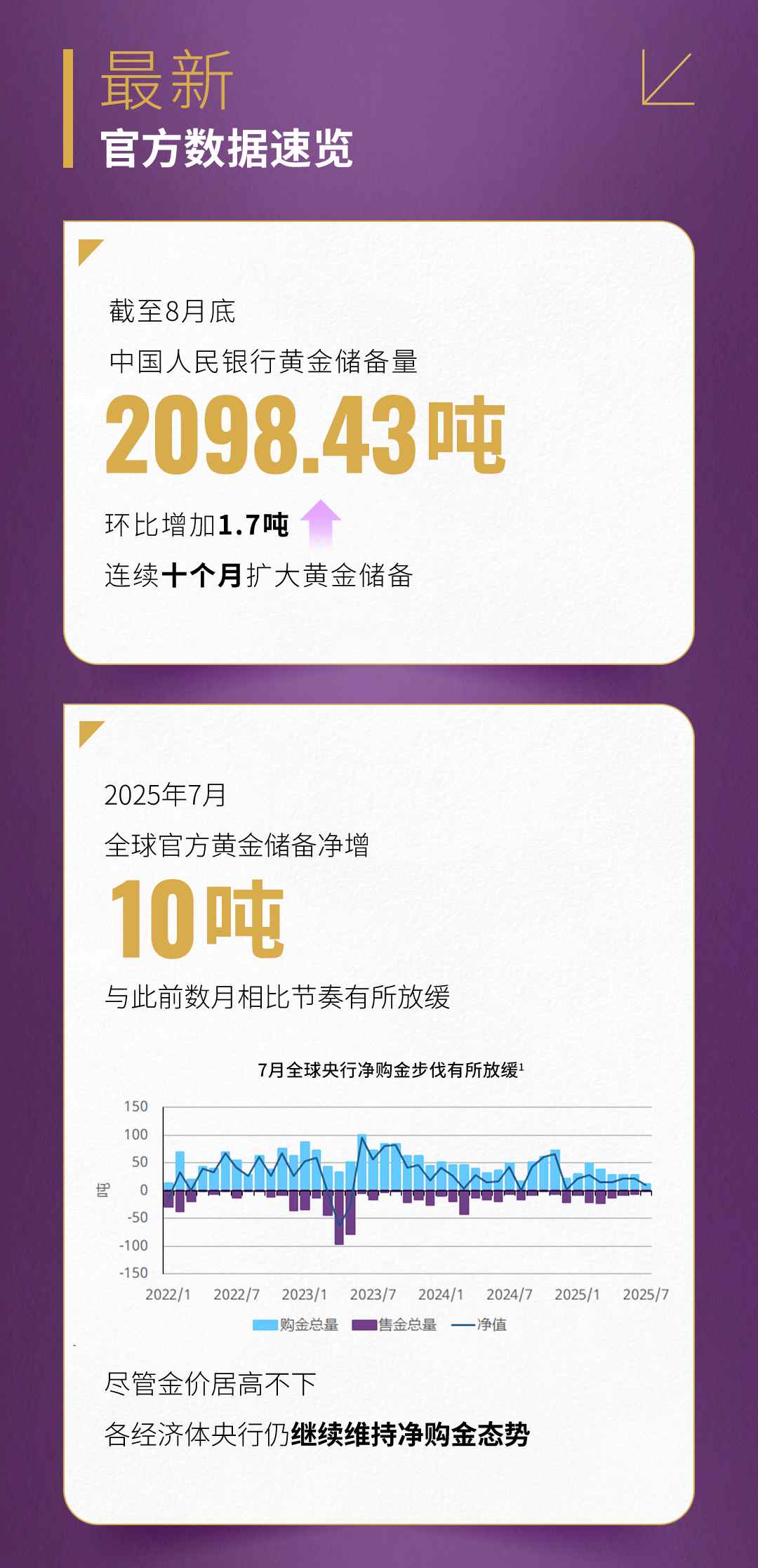
Core Insights - The World Gold Council reported a net increase of 10 tons in global official gold reserves by July 2025, indicating a slowdown in the pace of gold purchases compared to previous months [1] - Despite high gold prices, central banks across various economies continue to maintain a net buying stance on gold [3] Group 1: Central Bank Gold Purchases - Kazakhstan led the central bank gold purchases in July, with significant activity noted [3] - The People's Bank of China has increased its gold holdings for nine consecutive months, accumulating a total of 36 tons [6] - The National Bank of Poland is the largest net buyer of gold in 2025 so far, with net purchases totaling 67 tons [6] Group 2: Global Trends in Gold Reserves - The global central bank net gold purchases have slowed down as of July 2023, with a notable decrease in the pace of buying [5] - The National Bank of Kazakhstan has become the third-largest central bank in terms of gold purchases, adding 25 tons since the beginning of the year [6] - Uganda's central bank has initiated a domestic gold purchasing pilot program, indicating a strategic move towards enhancing gold reserves [7]
黄金超越美债!全球央行储备格局迎来里程碑式巨变
Huan Qiu Wang· 2025-09-12 01:15
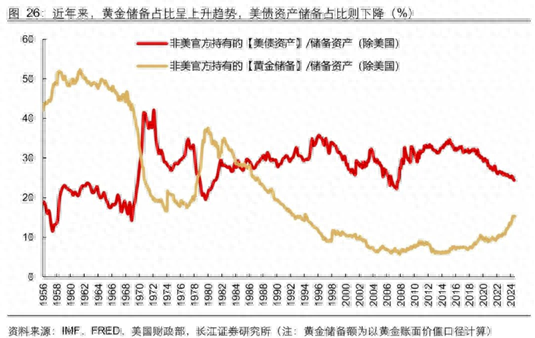
来源:环球网 【环球网财经综合报道】北京时间9月12日凌晨,国际贵金属期货收盘涨跌不一,COMEX黄金期货跌 0.23%报3673.40美元/盎司,COMEX白银期货涨1.12%报42.07美元/盎司。市场普遍预期美国财政部将调 整货币政策框架,美联储也将降息。 消息面上,美国资管机构Crescat Capital宏观策略师塔维·科斯塔近日发布一组数据显示,除美联储外, 全球央行储备中黄金占比自1996年以来首次超越美国国债。这宣告了黄金正式登顶全球央行储备资产。 长江证券近日撰文认为,央行增持黄金反映的是国际社会对美元的信任度正在下降,根本原因是美国自 身债务高企透支美元信用,叠加全球秩序面临重构推动央行购金以规避地缘政治风险,特别是新兴经济 体出于发展、安全等因素考虑,多会选择减持美元资产、增持黄金。 展望后市,长江证券判断,长期来看地缘政治风险和政治极化仍在加剧,央行购金已从短期避险行为演 变为长期战略选择;同时,当前全球主要国家军费占 GDP 比重均处于历史低位,表明各国在国防投入 上相对克制,为金价下行风险设置了"安全垫"。 ...
秩序重构下的新旧资产系列2:黄金:如何定价,走向何方?
Changjiang Securities· 2025-09-11 03:13
Group 1: Gold Pricing Dynamics - Gold exhibits three attributes: commodity, currency, and financial asset, with prices positively correlated to inflation and negatively correlated to the US dollar and real interest rates[3] - Since 2022, the negative correlation between gold prices and real interest rates has weakened due to central banks increasing gold reserves, reflecting declining trust in the US dollar[3] - The supply of gold is relatively stable due to resource scarcity and long exploration and extraction cycles, while demand has shifted from investment to strategic allocation, changing the pricing anchor from "real interest rates" to "central bank purchases"[7] Group 2: Central Bank Gold Purchases - The trend of central banks increasing gold reserves reflects a loss of confidence in the US dollar as the world’s reserve currency, particularly after the freezing of Russian assets due to the Ukraine conflict[8] - As of 2024, the US federal government debt-to-GDP ratio is projected to reach 124.3%, indicating a growing risk to the dollar's credibility and prompting countries to reduce dollar assets in favor of gold[8] - A survey by the World Gold Council indicates that 81% of central banks expect to increase their gold reserves in the next 12 months, suggesting a strong and growing demand for gold[10] Group 3: Future Gold Price Outlook - Geopolitical risks and political polarization are expected to continue, enhancing gold's appeal as a safe-haven asset and increasing central bank demand for gold[9] - The military expenditure of major countries is at historical lows as a percentage of GDP, providing a safety net against potential declines in gold prices[9] - The average annual net gold purchases by central banks from 2022 to 2024 reached 1,059 tons, accounting for 23% of global gold demand, indicating a structural shift in demand dynamics[34]