
适度宽松的货币政策

Search documents
央行:把促进经济高质量发展、物价合理回升作为货币政策的重要考量 灵活高效运用降准降息等多种货币政策工具
Mei Ri Jing Ji Xin Wen· 2026-01-06 10:13
每经AI快讯,2026年中国人民银行工作会议1月5日-6日召开。会议强调,2026年重点抓好以下工作:继 续实施好适度宽松的货币政策。把促进经济高质量发展、物价合理回升作为货币政策的重要考量,灵活 高效运用降准降息等多种货币政策工具,保持流动性充裕,保持社会融资条件相对宽松,引导金融总量 合理增长、信贷投放均衡,使社会融资规模、货币供应量增长同经济增长和价格总水平预期目标相匹 配。畅通货币政策传导机制,发挥好政策利率引导作用,做好利率政策执行和监督,促进社会综合融资 成本低位运行。有序扩大明示企业贷款综合融资成本工作覆盖面,推动明示个人贷款综合融资成本。保 持人民币汇率在合理均衡水平上的基本稳定,防范汇率超调风险。 ...
着眼于2026年经济“开门红”,哪些政策可能靠前发力?
Xin Lang Cai Jing· 2026-01-06 02:07
Core Viewpoint - The Chinese government is set to implement a more proactive fiscal policy and moderately loose monetary policy in 2026, with a focus on early fiscal actions compared to a cautious approach to further monetary easing [1][7]. Fiscal Policy - The National Fiscal Work Conference outlined five key areas for a more proactive fiscal policy, including expanding fiscal expenditure, optimizing government bond tools, improving transfer payment efficiency, continuously optimizing expenditure structure, and enhancing fiscal-financial collaboration [1][7]. - The Ministry of Finance announced a new policy regarding the value-added tax on personal housing sales, which stipulates a 3% tax for properties sold within two years and exemption for those sold after two years [1][7]. Monetary Policy - The People's Bank of China (PBOC) held a meeting indicating a continuation of the central economic work meeting's stance on monetary policy, without explicitly mentioning flexible use of reserve requirement ratio (RRR) cuts or interest rate reductions [1][7]. - Analysts suggest that the PBOC will rely more on structural tools, with a possibility of RRR cuts and interest rate reductions in the first quarter of 2026 [2][9]. Equipment Update and Consumption Policies - The State Development and Reform Commission and the Ministry of Finance announced a large-scale equipment update and consumption "trade-in" policy for 2026, optimizing the previous year's policies [2][9]. - The subsidy for household appliances has been narrowed from 12 categories to 6, focusing on energy-efficient products, while the automotive subsidies will shift from fixed amounts to a percentage of the vehicle price [3][10]. Special Bonds and Investment - The issuance of special bonds is expected to be expedited, with applications for 2026 being submitted two months earlier than in 2025, aiming for early effectiveness in infrastructure investment [4][10]. - Analysts noted that approximately 1.4 trillion yuan of bond funds issued in the first 11 months of 2025 had not yet resulted in actual expenditures, indicating ample fiscal resources for the upcoming year [4][10]. Economic Outlook - The proactive fiscal measures are expected to support economic growth, with early issuance of special bonds likely to create a peak in funding in the first quarter of 2026 [4][10]. - The PBOC is anticipated to adopt a cautious approach to traditional monetary easing, focusing instead on flexible liquidity management tools to maintain financial stability while supporting growth [5][11].
财政赤字率4%够吗?|请回答,2026
经济观察报· 2026-01-05 09:36
Core Viewpoint - The article emphasizes the necessity of a more proactive fiscal policy in 2026, particularly in the context of insufficient domestic demand and the need for economic growth support as the "14th Five-Year Plan" begins [1][6]. Fiscal Policy Overview - The fiscal deficit rate for 2026 is expected to be no lower than 4%, with some scholars suggesting it could rise to between 4.5% and 5% [2][5]. - The central economic work conference highlighted the need for a more active fiscal policy, maintaining necessary levels of fiscal deficit, total debt, and expenditure [2][6]. - The fiscal deficit for 2025 is set at approximately 56,600 billion yuan, with expectations that the 2026 deficit will exceed this amount due to GDP growth [3][4]. Government Debt and Expenditure - The broad central fiscal expenditure for 2025 includes an additional local government special bond limit of 44,000 billion yuan and a special long-term national bond issuance of 13,000 billion yuan [3][4]. - For 2026, the government is expected to continue issuing special bonds and increase the scale of new government debt to between 15.5 trillion and 16.3 trillion yuan, which will support economic stability and domestic demand [5][6]. Economic Challenges and Responses - The article notes ongoing economic challenges, including weak domestic demand and employment issues, which necessitate a robust fiscal response [6][7]. - The central government aims to address these challenges through increased fiscal spending, particularly in major projects and public services, to stimulate economic growth [6][7]. Monetary Policy Direction - The monetary policy for 2026 will remain moderately loose, with potential interest rate cuts of up to 0.3 percentage points to lower financing costs and stimulate investment and consumption [7][8]. - Structural monetary policies will focus on directing financial resources towards innovation, manufacturing upgrades, and small enterprises, enhancing support for key economic sectors [8].

财政赤字率4%打的住吗?
Sou Hu Cai Jing· 2026-01-04 09:21
Group 1 - The core viewpoint of the article emphasizes the necessity of maintaining a fiscal deficit rate of no less than 4% for 2026, as proposed in the Central Economic Work Conference [2][7] - The Central Economic Work Conference and the National Financial Work Conference both advocate for a more proactive fiscal policy, which includes maintaining necessary fiscal deficits, total debt scale, and expenditure volume [2][3] - The fiscal deficit for 2025 is set at approximately 4%, amounting to 56,600 billion yuan, with a projected increase for 2026 [3][4] Group 2 - Scholars suggest that the fiscal deficit rate for 2026 could rise to between 4.5% and 5%, leading to a broad deficit scale exceeding 16 trillion yuan [5] - The narrow deficit rate, if reaching 4.5% to 5%, would correspond to a deficit scale of approximately 6.6 trillion to 7.4 trillion yuan [5] - The fiscal expenditure is expected to play a crucial role in addressing economic challenges, particularly in enhancing domestic demand and employment [6] Group 3 - The article highlights that the 2026 fiscal policy will need to be more aggressive to support the economic growth targets, especially in light of the ongoing challenges in domestic demand and local government finances [6][7] - The monetary policy for 2026 is expected to remain moderately loose, with anticipated interest rate cuts to stimulate economic growth and stabilize prices [8] - Structural monetary policies will focus on directing financial resources towards key sectors such as technology innovation, manufacturing upgrades, and small enterprises [8]
货币政策延续适度宽松基调 发力更重精准与协同
Xin Lang Cai Jing· 2026-01-02 19:32
Core Viewpoint - The People's Bank of China (PBOC) is committed to maintaining a moderately accommodative monetary policy in 2025, aiming to support economic recovery and stability in the financial market as it prepares for the 14th Five-Year Plan's conclusion and the 15th Five-Year Plan's initiation [1][2]. Group 1: Monetary Policy Implementation - In 2025, the PBOC implemented a 0.5 percentage point reserve requirement ratio (RRR) cut, injecting approximately 1 trillion yuan of long-term liquidity into the financial market [2]. - The one-year Loan Prime Rate (LPR) and the five-year LPR both decreased by 10 basis points, aimed at reducing financing costs for the real economy [2]. - The average interest rate for new corporate loans was about 3.1% in November 2025, down approximately 30 basis points year-on-year, indicating the effectiveness of the monetary policy measures [2]. Group 2: Focus on Economic Growth - Experts believe that the monetary policy in 2025 effectively targeted stable growth and recovery, laying a solid financial foundation for high-quality development [1][3]. - The central economic work conference emphasized the need for continued implementation of a moderately accommodative monetary policy in 2026, focusing on stabilizing economic growth and ensuring reasonable price recovery [3][4]. Group 3: Structural Policy Tools - The PBOC enhanced existing tools and created new ones to guide financial resources towards key sectors and weak links in the economy, such as increasing the quota for agricultural and small business loans by 300 billion yuan [6]. - The introduction of a 500 billion yuan "service consumption and elderly care re-loan" aims to boost credit support for service consumption and elderly care [6]. - The focus for 2026 will be on supporting domestic demand, technological innovation, and small and micro enterprises, aligning with the goals of the 15th Five-Year Plan [6][7]. Group 4: Policy Coordination and Innovation - The integration of incremental and stock policies reflects a mature monetary policy framework, shifting from reliance on single policy measures to a comprehensive approach [5]. - The PBOC is expected to continue innovating tools and possibly lower operational rates to enhance financial institutions' willingness and capacity to support key sectors [7]. - The emphasis on policy coordination and precision is crucial for addressing complex economic conditions and ensuring effective monetary policy transmission [4][5].
光大期货:12月31日金融日报
Xin Lang Cai Jing· 2025-12-31 01:16
Market Overview - The A-share market experienced a slight increase, with sectors such as oil and petrochemicals, automobiles, and non-ferrous metals leading the gains, while the consumer sector saw a pullback. The Wind All A index rose by 0.13% with a trading volume of 2.16 trillion yuan [2][9] - The A500 ETF saw significant subscriptions in December, with net subscriptions reaching 110 billion yuan, of which nearly 102 billion yuan was for the A500 ETF. The A500 index has a high correlation with the CSI 300 index, exceeding 0.98, with a slight difference in growth-oriented stocks [2][10] Bond Market - On Tuesday, the bond futures market showed mixed results, with the 30-year main contract rising by 0.17% while the 10-year and 5-year contracts fell slightly. The People's Bank of China conducted a 3.125 billion yuan reverse repurchase operation with a bid rate of 1.4% [3][11] - The central economic work conference indicated a continuation of moderately loose monetary policy for the next year, emphasizing the importance of promoting stable economic growth and reasonable price recovery [3][11] Precious Metals - Overnight, London spot gold rose by 0.13% to $4,337 per ounce, while silver increased by 5.58% to $76.18 per ounce. Platinum rose by 3.79%, and palladium saw a slight decline of 0.59%. The gold-silver ratio fell to around 57.7 [5][12] - The Federal Reserve's meeting minutes indicated that most participants believe further rate cuts may be appropriate if inflation decreases as expected, with a majority supporting a rate cut in December [5][12]

1天可赚5天息!元旦“捡钱”,机会来了!
Sou Hu Cai Jing· 2025-12-30 05:09
Group 1 - The A-share market will have a short holiday from January 1 to January 3, 2026, and will resume trading on January 5 [1] - The best trading day for a one-day treasury reverse repurchase operation to earn multiple days of interest is December 30, allowing investors to earn five days of interest [3] - The annualized yield of treasury reverse repos has seen spikes during key periods, with rates exceeding 2.5% before the 2025 New Year holiday and even surpassing 5% before the 2024 holiday [3] Group 2 - The central bank has initiated 14-day reverse repurchase operations to stabilize year-end funding market expectations, with overnight pledged repo rates remaining around 1.26% despite year-end disturbances [4] - The popularity of treasury reverse repos as a mainstream investment choice during holidays has led brokerages to promote various combination strategies, such as "treasury reverse repo + short-term bonds/short-term bond ETFs" [4] - The bond market in 2026 is expected to exhibit a "low interest rate" and "high volatility" pattern, with the ten-year treasury yield projected to fluctuate between 1.6% and 1.9% [6][7] Group 3 - The overall market interest rate is expected to remain low, but there will still be opportunities for fluctuations in reverse repo yields due to seasonal funding pressures [7] - Utilizing special timing around holidays for treasury reverse repo operations is a practical strategy for investors to enhance cash management efficiency in a low-interest environment [8]
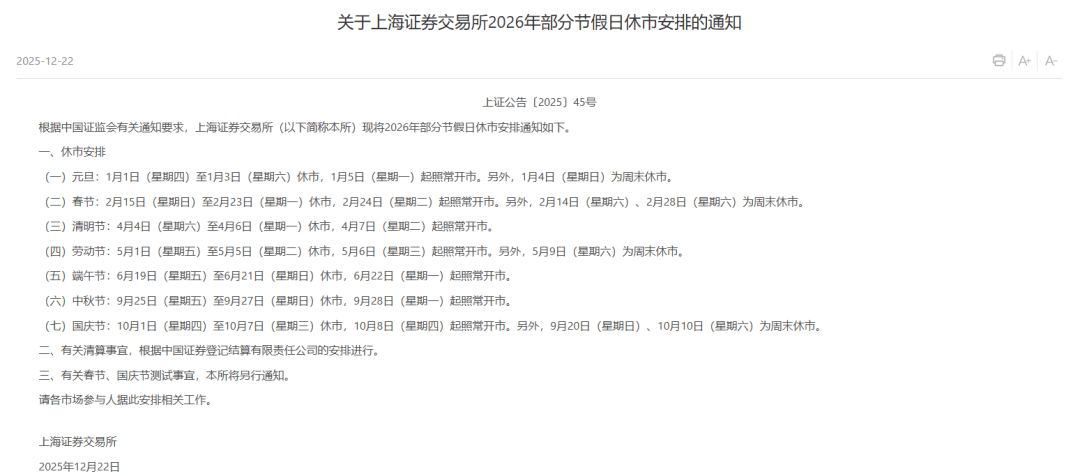
延续适度宽松基调 护航经济高质量发展
Jin Rong Shi Bao· 2025-12-29 02:22
12月18日,中国人民银行货币政策委员会召开2025年第四季度例会。 会议认为,今年以来,宏观调控力度加大,货币政策适度宽松,持续发力、适时加力,强化逆周期调 节,综合运用多种货币政策工具,服务实体经济高质量发展,为经济稳中向好创造适宜的货币金融环 境。 对于下一阶段货币政策主要思路,会议认为,要继续实施适度宽松的货币政策,加大逆周期和跨周期调 节力度,更好发挥货币政策工具的总量和结构双重功能,加强货币财政政策协同配合,促进经济稳定增 长和物价合理回升。"这与中央经济工作会议确定的货币政策基调保持高度一致,显示2026年货币政策 会延续支持性立场,在稳增长方向上进一步发力。"东方金诚首席宏观分析师王青如是分析。 更好发挥货币政策工具的总量 和结构双重功能 畅通货币政策传导机制 本次会议提到,强化央行政策利率引导,完善市场化利率形成传导机制,发挥市场利率定价自律机制作 用,加强利率政策执行和监督,并提出要"畅通货币政策传导机制,提高资金使用效率"。 此前,央行在三季度货币政策执行报告中也详细介绍了央行政策利率通过金融体系传导至不同细分市场 的利率传导机制。在业内专家看来,保持合理的利率关系,正是未来畅通利率传导 ...
管涛:“灵活高效”的货币政策意味着什么 | 立方大家谈
Sou Hu Cai Jing· 2025-12-29 01:45
Core Viewpoint - The central economic work conference reiterated the implementation of a moderately loose monetary policy, emphasizing the flexible and efficient use of various policy tools such as reserve requirement ratio (RRR) cuts and interest rate reductions, indicating a proactive approach to economic stabilization and growth [1][12]. Summary by Sections Review of Monetary Policy Operations This Year - The shift in monetary policy from "prudent" to "moderately loose" was signaled during the Central Political Bureau meeting in December last year, leading to a significant decline in the 10-year government bond yield, which fell by 88 basis points over the year, marking the largest drop in a decade [2][6]. - The 10-year government bond yield reached a record low of below 1.6% after the New Year and Spring Festival [2]. Key Aspects of Monetary Policy - The People's Bank of China (PBOC) has confirmed that "moderately loose" reflects the supportive nature of recent monetary policy actions, with a focus on maintaining liquidity and optimizing the structure of monetary policy tools [5][14]. - In 2023, the PBOC implemented only one RRR cut of 50 basis points, compared to two cuts totaling 100 basis points in the previous year, and reduced the policy interest rate for the 7-day reverse repurchase agreement by 10 basis points [6][8]. Outlook for Next Year's Monetary Policy - The continuation of a moderately loose monetary policy is expected, with the central economic work conference acknowledging ongoing challenges such as external economic pressures and domestic supply-demand imbalances [9][10]. - The emphasis will be on enhancing policy coordination, integrating various economic policies to support stable growth, employment, and market expectations [11][12]. Implementation Strategies - The PBOC aims to maintain a supportive monetary policy stance while avoiding excessive liquidity injections, focusing on precise measures and leaving room for adjustments based on economic conditions [12][14]. - The integration of fiscal and monetary policies will be crucial, with examples such as the fiscal subsidy policy for personal consumption loans highlighting the collaboration between these sectors [11][12]. Risk Management and Financial Stability - The central economic work conference stressed the importance of balancing economic growth with risk prevention, enhancing the monitoring and assessment of financial risks, and maintaining stability in financial markets [17][18]. - The PBOC is tasked with building a robust monetary policy framework and improving the transparency of policy communication to bolster public confidence [18].
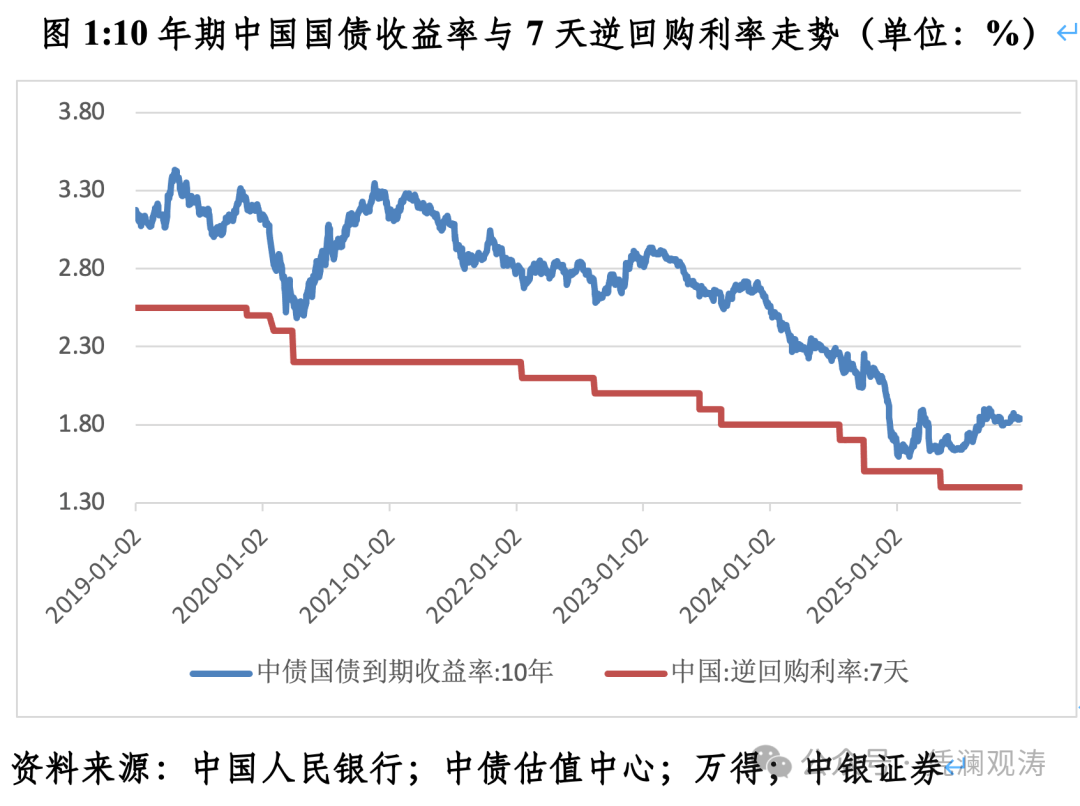
“灵活高效”的货币政策 意味着什么
Sou Hu Cai Jing· 2025-12-28 16:26
Monetary Policy Overview - The central economic work conference reiterated the implementation of a moderately loose monetary policy, emphasizing the flexible and efficient use of various policy tools such as reserve requirement ratio (RRR) cuts and interest rate reductions [1][6][10] - The shift in monetary policy tone from "prudent" to "moderately loose" was signaled during the Central Political Bureau meeting in December last year, leading to expectations of larger RRR cuts and interest rate reductions in 2025 [2][3] Market Reactions and Trends - The 10-year government bond yield fell by 88 basis points over the past year, marking the largest decline in a decade, with a record low of below 1.6% reached after the New Year and Spring Festival [2][5] - Despite the shift to a moderately loose policy, the 10-year bond yield increased by 16 basis points as of December 26, primarily due to the market's anticipation of monetary easing being priced in [5] Policy Implementation and Tools - In 2023, the People's Bank of China (PBOC) implemented a series of financial measures, including a single RRR cut of 50 basis points and a 10 basis point reduction in the 7-day reverse repurchase rate, which was less aggressive than the previous year's actions [3][4] - The PBOC utilized various tools such as open market operations, medium-term lending facilities (MLF), and structural monetary policy tools to maintain ample liquidity in the market [4][10] Economic Indicators - As of November, the broad money supply (M2) grew by 8.0% year-on-year, with a 0.9 percentage point increase compared to the previous year, while the social financing scale increased by 8.5% [4] - The macro leverage ratio, measured by M2 and social financing stock relative to annual GDP, increased by 9.1 and 11.5 percentage points respectively, indicating a more relaxed monetary environment [4] Future Policy Directions - The central economic work conference highlighted the need for enhanced policy "synergy," focusing on the integration of existing and new monetary policies to support economic stability and growth [8][9] - The PBOC aims to balance short-term and long-term goals, ensuring that monetary policy supports economic growth while managing risks effectively [9][12]