
具身智能

Search documents
从新能源车到具身机器人,卧龙电驱再遇老对手汇川技术
晚点LatePost· 2026-03-20 08:16
Core Viewpoint - The article discusses the growth logic and investment value of Wolong Electric Drive, emphasizing its challenges in entering the new energy vehicle (NEV) market and its strategic shift towards emerging applications like embodied robotics and low-altitude economy [4][6][11]. Industry Overview - Electric drive systems convert electrical energy into mechanical energy and are widely used in traditional industries, NEVs, and emerging applications [4]. - The electric drive system industry is characterized by low barriers to entry and moderate profit margins, with significant growth potential in high-tech applications [6][14]. Company Performance - Wolong Electric Drive derives approximately 90% of its revenue from traditional sectors, with less than 5% from the NEV market, leading to stagnant market value [7][19]. - From 2019 to 2024, Wolong's revenue is projected to grow at a CAGR of 6.5%, while net profit is expected to decline at a CAGR of -3%, indicating a deteriorating profit structure [7][21]. Strategic Shifts - Following its failure to penetrate the NEV market, Wolong is now focusing on emerging applications, particularly embodied robotics, to secure future growth [11][24]. - The company has initiated partnerships with leading firms in the robotics sector, such as Yushutech and Zhiyuan Robotics, to enhance its position in the market [25][27]. Competitive Landscape - Wolong faces competition from companies like Inovance Technology, which is also targeting the embodied robotics market and has a more favorable profit structure [32][33]. - The industry is still in its early stages, allowing for multiple players to coexist, but Wolong must continue to invest in R&D to maintain its competitive edge [33][34]. Financial Strategy - Wolong has submitted an IPO application in Hong Kong to raise funds for its strategic initiatives in emerging markets, aiming to leverage its current high valuation [11][31].




穿越热潮:2025具身智能机器人场景应用白皮书重磅发布
创业邦· 2026-03-20 07:25
Core Insights - The article discusses the transformative potential of embodied intelligent robots, suggesting that they may reshape how humans interact with the physical world, potentially more profoundly than the mobile internet did [3][4] - It highlights the dual nature of the industry, where advanced robots are celebrated in high-profile events but struggle to integrate into real-world business processes, leading to a stark contrast in market perception [3][4] Industry Trends - The embodied intelligence sector is experiencing a surge driven by technology, capital, and policy support, with a projected user spending in China expected to reach $77 billion by 2030, reflecting a compound annual growth rate (CAGR) of 94% [6][9] - Hardware advancements are redefining the capabilities of embodied intelligent robots, moving from single product forms to diverse structures like humanoid robots and robotic arms, with a focus on modular and lightweight designs [9] - The capital market has seen a significant rebound, with 522 financing events in 2025 totaling 55.83 billion RMB, marking a new high in recent years [10][12] Investment Landscape - Key investment areas include foundational algorithms, AI engines, and versatile humanoid robots, with substantial funding directed towards these sectors [12][14] - Major cities like Beijing, Shenzhen, and Shanghai dominate the investment landscape, accounting for 80% of the total financing in the top ten cities [18] Policy Support - Embodied intelligence has received national strategic support, being included in government work reports and various local development plans, indicating a shift from encouragement to regulatory guidance [19][20] - Policies are increasingly focused on fostering healthy industry growth, with new standards being established to guide the sector [20] Application in Industry - In industrial applications, embodied intelligent robots are moving from merely replacing repetitive tasks to creating new value through flexible production and quality enhancement [21][22] - Specific use cases include automated logistics, precision assembly, and inspection processes, demonstrating the robots' ability to improve efficiency and reduce operational risks [21][23] Service Sector Exploration - The service sector is witnessing early commercialization of embodied intelligent robots, with applications in hospitality, cleaning, and retail, showcasing their potential to enhance service efficiency and customer experience [24][26] - Robots are being utilized in various scenarios, from hotel services to automated drug dispensing, indicating a trend towards multifunctional capabilities [24][25] Challenges and Solutions - Data scarcity is identified as a critical barrier to the advancement and scaling of embodied intelligent robots, with both manufacturers and application providers facing challenges in data integration [28] - Bridging the gap between physical AI and business intelligence is essential for maximizing the return on investment in human-robot collaboration [28][29] Future Outlook - The SAP Embodied AI solution exemplifies how integrating AI with physical robots can enhance their operational capabilities, enabling them to respond dynamically to business needs [29][30] - The future of the industry is expected to focus on data assetization, hardware modularization, and software platformization, aiming to create a collaborative ecosystem that benefits all participants [32]

国家级基金开始招人了
投资界· 2026-03-20 06:40
Core Viewpoint - The National Venture Capital Guidance Fund has initiated its second batch of public recruitment for 2026, signaling a significant development in the venture capital landscape in China [2][3]. Recruitment Details - The recruitment involves three departments and five positions, with a total of six hires, including roles in fund management, risk control, information technology, human resources, and administration [3][6]. - The fund management position is particularly noteworthy, requiring candidates to have a master's degree and at least six years of experience in venture capital or government guidance funds [3][4]. Fund Structure and Operations - The National Venture Capital Guidance Fund operates on a three-tier structure, consisting of a guiding fund company, regional funds, and sub-funds, with a total lifespan of 20 years [7]. - The fund has already signed contracts with 49 sub-funds and 27 direct investment projects, indicating a robust start to its investment activities [8][9]. Market Trends - There is a noticeable increase in recruitment across various state-owned capital investment institutions, reflecting a recovery in the venture capital market [11]. - The demand for talent is shifting towards individuals with technical backgrounds, particularly in AI and other high-tech sectors, as the focus of investments evolves [12]. Recent Developments - The Beijing-Tianjin-Hebei Venture Capital Guidance Fund has completed its first investment, marking a significant milestone in the fund's operational timeline [9]. - The total scale of the regional funds has exceeded 1,050 billion, highlighting the substantial financial backing for venture capital initiatives [9].

登顶全球权威榜单!浙大创业团队百卡打造开源实时世界模型,视频秒变可交互4D世界
机器之心· 2026-03-20 05:21
Core Viewpoint - The article discusses the emergence of "world models" in AI, highlighting the significant advancements made by the Chinese startup InSpatio, which has developed a groundbreaking model called InSpatio-World that surpasses existing models in efficiency and performance [1][2][30]. Group 1: World Model Development - The global tech industry is heavily investing in world models, which are essential for AI to understand and reconstruct the physical world [1]. - InSpatio has released InSpatio-World, which outperforms other real-time interactive models in the authoritative WorldScore-Dynamic ranking, demonstrating superior performance with a significantly lower training cost of only a few million yuan [2][18]. - The model achieves a real-time inference speed of 24 FPS on a single professional-grade graphics card, showcasing a major leap in efficiency compared to traditional 2D video paths [2][10]. Group 2: Technical Innovations - InSpatio-World utilizes a 3D spatial architecture, moving away from the inefficient 2D video approach, thus enabling real-time interaction and dynamic world modeling [2][13]. - The model's architecture allows it to achieve high performance with a minimal parameter size, proving that innovative modeling paradigms are more crucial than sheer scale [19][26]. - InSpatio's approach includes state-anchored world modeling, which allows for a more accurate representation of the physical world by decoupling observation perspectives from physical entities [20][23]. Group 3: Industry Impact - The advancements in world models are expected to redefine multiple industries, including autonomous driving, virtual reality, and embodied intelligence, by enabling AI to observe, remember, predict, and plan in a manner closer to real-world interactions [30][31]. - InSpatio aims to create a self-evolving digital world that empowers intelligent agents to transition from mere interaction to proactive world modification [31][32]. - The company has received significant interest from global leaders in robotics, autonomous driving, and content creation, indicating a strong demand for its world model technology [32].

没有真实数据,何谈具身智能?帕西尼用十万平工厂集群给出终极答案
机器人大讲堂· 2026-03-20 04:07
Core Viewpoint - Embodied AI is seen as a crucial leap towards general artificial intelligence, yet it faces the fundamental dilemma of why "top students" in simulated environments often "collapse" in the real world [1] Group 1: Importance of Data in Embodied AI - The recent "14th Five-Year Plan" emphasizes the need to accelerate the construction of AI corpora and high-quality datasets, indicating that data control equates to industry definition power [4] - The consensus within the robotics industry is that real-world data collection is key to enhancing the generalization capabilities of embodied AI, but few are willing to invest significantly [4] Group 2: Pioneering Data Collection Initiatives - Pashini has established a "human-centered" multimodal real data collection system, with the world's first multimodal super data collection factory, Super EID Factory, launched in Tianjin [5] - Pashini plans to build four additional super data collection factories in Jiangsu, Hubei, Sichuan, and Jiangxi, creating the largest and most comprehensive data collection factory cluster globally [7] - The five factories will collectively produce nearly 10 billion high-quality multimodal data annually, significantly enhancing data collection efficiency by 3 to 6 times compared to industry standards [7][8] Group 3: Quality of Data Collection - Pashini's "human-centered" high-precision data collection system addresses the fundamental question of data quality, moving beyond traditional simulation and remote operation methods [10] - The new system integrates thousands of multidimensional tactile sensing units, allowing for real-time analysis of various tactile information, thus incorporating tactile feedback into large-scale industrial data production [12] Group 4: Economic and Competitive Advantages - Pashini's approach reduces the cost of high-end tactile sensors from tens of thousands to hundreds, while improving data collection efficiency [13] - The company has created a closed-loop system from perception hardware to decision-making models, significantly accelerating the model iteration process and reducing data collection costs to one-tenth of the industry average [14] Group 5: Strategic Positioning and Future Outlook - Pashini's data collection and model optimization create a self-reinforcing cycle, establishing significant barriers to entry for competitors [17] - The company is positioned as a provider of data infrastructure in the embodied AI sector, with substantial capital backing confirming its market value and potential for future growth [18][19] - The establishment of five data factories is likened to building a "granary" for the industry, ensuring a steady supply of multimodal data essential for advancing embodied intelligence [21][22]

赋能赛力斯动力!40余台珞石机器人落地,共创柔性智造新标杆
机器人大讲堂· 2026-03-20 04:07
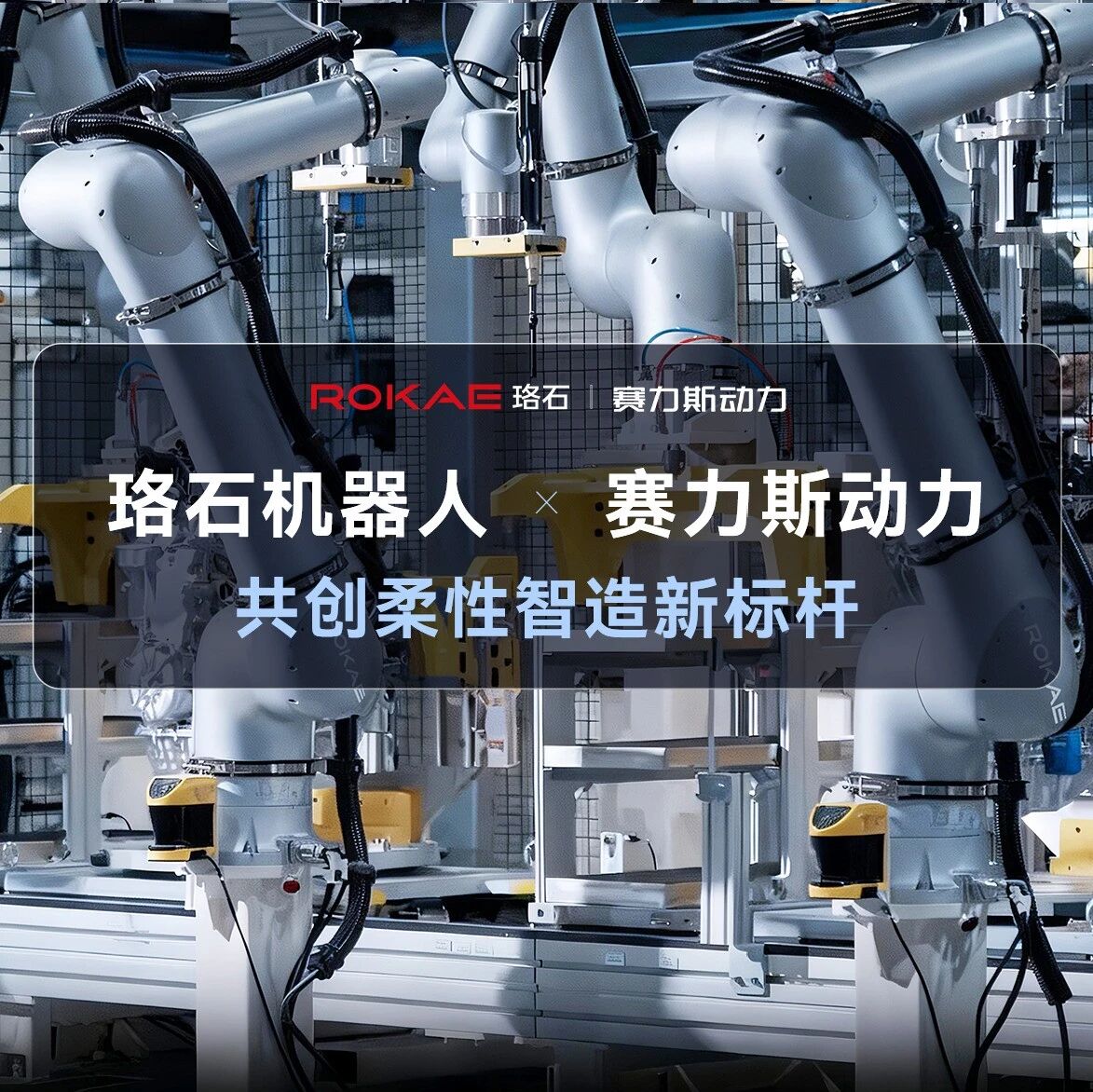
Group 1 - The article highlights the accelerated progress of intelligent upgrades in the new energy vehicle industry, with Luoshi Robotics providing advanced product technology and scenario-based solutions to empower the transformation of automotive manufacturing [2][10] - Luoshi Robotics has deployed over 40 CR series flexible collaborative robots at the Seres Power Longevity Factory, achieving 100% automation in key processes of the intelligent assembly line [3][5] - The flexible collaborative robots utilize top-tier all-joint force control technology, achieving a 99% assembly qualification rate and significantly enhancing production line layout flexibility [5][11] Group 2 - The robots are equipped with high-precision vision systems that enable AI-driven quality inspection, achieving a 99% defect detection accuracy and reducing quality issues by 40% [8] - The collaboration between Luoshi Robotics and Seres has deepened, with previous deployments in welding and assembly workshops, contributing to the efficient production of high-end models like the Wenjie series [9] - Luoshi Robotics aims to continue enhancing its partnership with Seres by providing advanced technology, efficient services, and comprehensive scenario solutions to support the intelligent upgrade of the entire new energy vehicle industry chain [11]
当机器人比博尔特跑得更快之后,王兴兴真正想说的是……
聪明投资者· 2026-03-20 03:37
Core Viewpoint - The evolution of humanoid robots is advancing rapidly, with expectations that they will soon outperform humans in speed and functionality, emphasizing the importance of stability, cost-effectiveness, and practical applications in real-world scenarios [2][3][4]. Group 1: Technological Advancements - Humanoid robots are expected to run faster than humans, potentially achieving 100 meters in under 10 seconds by mid-2024 [2]. - The focus is not just on speed but on the overall evolution of robots in terms of stability, motion control, software upgrades, and practical applications [2][3]. - The development of humanoid robots is seen as a significant step towards integrating them into productive roles within society [4]. Group 2: Commercialization and Market Strategy - The key to widespread adoption of robots lies in addressing real market needs and ensuring high stability at appropriate price points [3][8]. - The pricing strategy is developed collaboratively with consumers, recognizing that higher prices can sometimes be perceived as better value [8][17]. - The company aims to make robots more affordable, targeting a price point that could be a few thousand RMB, which would encourage broader market acceptance [17][18]. Group 3: Product Development and Quality - Emphasis is placed on creating high-quality products that meet core customer needs while managing costs effectively [14][16]. - The company believes that product excellence, including better functionality and customer experience, is fundamental to its success [14][16]. - Continuous improvement in product details and features is essential for maintaining competitiveness in both domestic and global markets [14][16]. Group 4: Industry Integration and Challenges - The development of humanoid robots is a complex system engineering challenge that requires optimization across hardware, manufacturing, AI, and sales [21][22]. - The industry faces significant challenges in achieving breakthroughs in embodied intelligence AI models, which are crucial for the future of robotics [25][26]. - The company is committed to a dual focus on hardware and software excellence, akin to the approach of leading tech firms like Apple [22][23]. Group 5: Future Outlook and Strategic Vision - The company aims to maintain a forward-looking perspective, anticipating future trends in AI, technology, and global market dynamics [36][41]. - Continuous learning and adaptation to new technologies are emphasized as critical for long-term success [28][36]. - The belief is that the first company to develop a truly adaptable AI model for robots will lead the industry, potentially achieving groundbreaking advancements [27][40].

理想本轮战略与组织调整接近尾声,将迎战新产品周期
晚点Auto· 2026-03-20 02:59
Core Viewpoint - The article discusses Li Auto's strategic adjustments in response to a challenging market environment, focusing on organizational restructuring and sales channel management to enhance competitiveness and achieve a conservative sales growth target for 2026 [3][4]. Group 1: Market Environment and Sales Goals - Li Auto faces intense competition in the mid-to-high-end new energy vehicle market, with a decline in market share for range-extended models and a nascent position for pure electric products [3][4]. - The management has set a conservative sales target for 2026, aiming for over 20% year-on-year growth, while competitors like Leap Motor target a 76% increase [4]. - The year 2026 is significant as it marks the delivery of Li Auto's third-generation platform products and serves as a validation period for the organizational adjustments [4]. Group 2: Sales Channel Management - Li Auto is restructuring its sales channels by focusing on quality over quantity, concentrating sales personnel in high-traffic areas rather than spreading them thin across less frequented locations [5]. - The company has initiated a "store partner" program, empowering store managers with decision-making authority to enhance customer acquisition and team management, aiming to cultivate high-performing store managers with annual incomes exceeding one million yuan [5]. - Li Auto plans to improve its sales operations by the third quarter of this year, reflecting the effectiveness of these channel adjustments [5]. Group 3: R&D Organizational Restructuring - In January, Li Auto redefined its R&D structure based on the logic of embodied intelligence, marking a significant organizational upgrade [6]. - The new R&D framework is divided into four systems: organ system (chips, data sets, operating systems), brain system (perception, training), software body (system-level agents), and hardware body (energy, drive, control) [6]. - This restructuring aims to enhance departmental focus and efficiency, with improvements already noted in model training efficiency [6]. Group 4: Talent Management and Leadership Changes - Li Auto is experiencing a generational shift in management, with younger executives taking on key roles, supported by a foundation built by previous generations [7]. - CEO Li Xiang has returned to frontline responsibilities, directly overseeing talent management and strategic decisions [7]. Group 5: R&D Investment and Product Development - Despite revenue and profit declines, Li Auto plans to maintain R&D expenditures at around 12 billion yuan for 2026, with half allocated to AI-related projects [8]. - The company is preparing for a new product cycle with a "3+2 strategy" aimed at achieving over 20% sales growth, focusing on sales management, successful model transitions, and increasing pure electric vehicle sales [9]. - The new Li Auto L9 is positioned as a flagship model, featuring advanced technologies in perception and control systems, with a price point reflecting confidence in its competitive capabilities [10][11]. Group 6: Future Prospects and Challenges - The success of the new L9 and the ability to maintain growth in a competitive market will be critical indicators of the effectiveness of Li Auto's organizational changes [12].


章鱼动力成立不足2月即完成近5000万美元首轮融资,下一轮融资同步推进
IPO早知道· 2026-03-20 02:52
Core Viewpoint - The article discusses the recent $50 million Series A funding round for SynapX, a cutting-edge technology company focused on physical AGI, highlighting its innovative technology and strong backing from prominent investors [2][5]. Group 1: Company Overview - SynapX was founded in January 2026 with a mission to create sustainable self-evolving embodied intelligence [3]. - The team consists of experts from leading tech companies such as Horizon Robotics, Baidu, Microsoft, Alibaba, ByteDance, NIO, XPeng, and Li Auto, showcasing world-class AI research capabilities [3]. Group 2: Funding and Investor Support - The company completed its first funding round in less than two months since its establishment, indicating strong investor interest [5]. - SynapX has attracted attention and support from international industrial capital, family capital, and top-tier dollar capital [5]. Group 3: Technology Architecture - SynapX proposes the SYNTH deep thinking architecture, which is a core technology system aimed at physical AGI [6][8]. - The architecture is not a single technology but a system that evolves around operational intelligence, physical world modeling, and data system integration [8]. Group 4: Key Components of SYNTH Architecture - **SYNAction**: A model architecture focused on operational intelligence, utilizing a rhythmic end-to-end manipulation architecture (REMA) for efficient task execution [8][9]. - **SYNWorld**: A foundational model for understanding the physical world, integrating vision, force, and tactile feedback into a unified framework [10]. - **SYNData**: An omni-modal physical data system that enables high-precision collection and generation of multi-modal physical signals, supporting the continuous evolution of foundational models [12][13]. Group 5: Investor Insights - Investors express confidence in SynapX's potential, highlighting the team's unique combination of technical foresight, engineering capability, and strategic vision [14][16]. - The company is seen as a key player in the next generation of intelligent robotics, with a strong emphasis on operational capabilities and innovative approaches to AI [14][16].

国泰海通晨报-20260320
GUOTAI HAITONG SECURITIES· 2026-03-20 02:49
Macro Research - The report indicates that tariffs and geopolitical risks continue to disrupt US inflation expectations, with the Federal Reserve's short-term concerns about inflation outweighing worries about stagnation, leading to suppressed rate cut expectations and increased volatility in US stocks and bonds [2][4] - It is anticipated that the rate cut expectations may rise again in the second half of the year, contingent on the stabilization of tariffs and geopolitical risks, as well as the weakening job market [4][5] Overseas Technology Research - Google - Google's search advertising remains strong, with AI enhancing advertising space; the Gemini 3 series is currently leading the market, and the Flash model aids in price competition for consumer-facing products [2][7] - Revenue forecasts for FY2026E-FY2028E have been adjusted to $464.2 billion, $526.6 billion, and $587.4 billion respectively, with GAAP net profits projected at $146.4 billion, $172.2 billion, and $194.0 billion [7] - The report assigns a target price of $383 based on a 32X PE valuation for 2026, maintaining a "buy" rating [7] Real Estate Research - Beike-W - Beike is actively developing non-housing businesses to mitigate cyclical risks, focusing on cost reduction and efficiency improvements while increasing shareholder returns [2][9] - The adjusted net profit forecasts for 2026-2028 are estimated at 5.216 billion, 5.735 billion, and 7.423 billion yuan, with a corresponding reasonable value of 54.08 yuan per share [9][10] - The report highlights the importance of the 3P model in Beike's business, with its share of net income increasing from 11.3% in 2021 to 20.0% in 2025 [10]