循环经济

Search documents
DeepAlpha:穿透AI喧嚣,共话全球多元配置
2 1 Shi Ji Jing Ji Bao Dao· 2025-12-26 08:08
当人工智能的浪潮席卷千行百业,全球科技巨头加速算力布局,资本市场关于AI的热度亦如燎原之火 蔓延。在一片喧嚣之中,华夏基金举办的"年度对话|DeepAlpha:科技引领下的全球多元配置",正试图 以冷静分析帮助投资者穿透市场噪音,捕捉价值赛道。 本次年度对话汇聚知名经济学家刘煜辉以及华夏基金祝青、顾鑫峰、施知序、郭琨研、孙蒙以及华龙等 主被动、策略、量化等多位嘉宾,围绕市场新格局、新动能与新机遇,从宏观到科技、从全球到配置进 行多维度解读,旨在为投资者在AI浪潮与宏观大势中提供追踪Beta、发现Alpha的思考锚点。 他认为,本轮AI科创革命成功的关键,是AI后端能否形成强大的产业生态,形成经济闭环。我国凭借 强大的落地能力和完备的产业生态,有望实现这一闭环。面对宏观不确定性,他主张以"哑铃策略"进行 有效风控,一端聚焦高股息资产,另一端布局长期结构性增长机会,如循环经济、新能源产业、深空航 天产业等方向。 华夏基金宏观策略研究员祝青则从更具操作性的年度视角出发,将宏观线索映射为具体的策略方向。她 认为,2026年的宏观主线或是"行业结构性景气格局延续"与"资金向权益资产的再配置",一方面,AI是 景气高增的 ...
人民锐评:斩断旧衣回收的灰色利益链
Xin Lang Cai Jing· 2025-12-26 06:43
Core Viewpoint - The article highlights the emergence of a gray market in second-hand clothing, where unscrupulous sellers disguise used garments as "new" or "high-quality" items, posing health risks to consumers and undermining the integrity of the recycling and charity sectors [1][3]. Group 1: Industry Practices - Some businesses are exploiting the concept of "old clothing recycling" to engage in unethical practices, using donation boxes labeled for "charity" as sources for second-hand clothes [3]. - High-quality second-hand clothes are being refurbished and sold as new, while lower-quality items are marketed as "micro-defective" or "sample garments" in online and physical stores [3]. Group 2: Consumer Risks - The sale of second-hand clothing under the guise of "tail goods" or "unique items" infringes on consumer rights and poses health risks, as many of these garments are not properly cleaned and may carry harmful substances [3]. - Wearing these unregulated second-hand clothes can lead to skin diseases and respiratory issues, particularly affecting children who are more vulnerable to health risks [3]. Group 3: Regulatory Recommendations - There is an urgent need for regulatory bodies to enhance laws governing the circulation of second-hand clothing, including establishing hygiene standards and traceability mechanisms [4]. - E-commerce platforms are urged to take responsibility by prohibiting sellers from concealing the second-hand nature of their products and ensuring consumer protection channels are accessible [4]. Group 4: Social Responsibility - The article emphasizes that old clothing recycling should be a mutually beneficial initiative that promotes resource conservation and goodwill, rather than a means for a few to profit at the expense of public trust [4]. - It calls for transparency in the flow of second-hand clothing, ensuring that the recycling process aligns with environmental and charitable goals [4].


阿尔及利亚采用循环经济模式以实现采矿废料的资源化利用
Shang Wu Bu Wang Zhan· 2025-12-26 02:32
Group 1 - The Ministry of Oil and Mining in Algeria is focusing on implementing the "urban mining" concept to enhance the recycling of solid mineral waste [1] - The ministry aims to establish a circular economy model through solid waste recycling, particularly targeting the recovery and recycling of scrap metals, especially iron residues [1] - Algeria's oil and mining sector is increasing efforts to expand waste oil recovery projects and biofuel production, transforming environmental challenges into opportunities for improving quality of life [1] Group 2 - The ministry is collaborating with domestic and international partners to implement emission monitoring and supervision measures, aiming to reduce natural gas flaring to below 1% [1] - A specialized committee will be established to gather all stakeholders responsible for researching and developing a national methane emission detection, assessment, and reduction mechanism roadmap [1] - Algeria has successfully eliminated lead from vehicles by promoting a single type of gasoline, significantly improving fuel quality and reducing emissions [2] Group 3 - The ministry is investing in modern technologies to reduce dust and particulate matter emissions from mining operations, aiming to transform mines into eco-friendly sites [2] - Investments include smart spraying systems and real-time air quality monitoring devices to protect the health of residents in mining areas [2] - Despite a rapid increase in domestic consumption of natural gas, oil products, and fertilizers, the ministry's efforts have met the domestic demand for these resources [2] Group 4 - The importance of seawater desalination projects is emphasized, with desalination currently meeting 42% of Algeria's drinking water needs [2] - Algeria plans to construct six new seawater desalination plants with a total capacity of 1.8 million cubic meters per day to enhance national water security [2]
50万亿元关口,消费市场经历系统性“重塑”
Zhong Guo Jin Rong Xin Xi Wang· 2025-12-25 23:14
Core Insights - The Chinese consumer market is undergoing a systemic transformation driven by technological advancements, value shifts, and innovative models, with AI playing a pivotal role in reshaping the consumption chain [1][2] Group 1: AI's Role in Consumer Decision-Making - AI is redefining the connection between consumers, products, and platforms, fundamentally altering the decision-making process in shopping [2] - The 2023 "Double Eleven" shopping festival showcased AI's impact, with features like "AI shopping assistants" and "one-click optimal shopping lists" gaining popularity among consumers [2] - E-commerce platforms are rapidly integrating AI to enhance consumer engagement and streamline the shopping experience, with companies like Tmall and JD.com leading the charge [2][3] Group 2: Evolving Consumer Values - The rise of cultural confidence and self-oriented consumption is driving significant changes in consumer values, with emotional and social attributes becoming increasingly important [4] - The market for "Guochao" (national trend) products is expected to exceed 20 trillion yuan by 2024, reflecting a growing preference for domestic brands [4][5] - Consumers are also demanding higher functionality and durability from products, pushing the market towards a "quality over price" structure [5] Group 3: Instant Retail and Market Dynamics - The instant retail market in China is projected to reach 971.4 billion yuan by 2025, indicating a significant shift in consumer habits towards immediate fulfillment [7][8] - Major e-commerce players are competing aggressively in the instant retail space, leading to a surge in daily order volumes from approximately 100 million to over 200 million [7][8] - The integration of online and offline experiences is becoming crucial, with platforms expanding into physical locations to enhance service and fulfillment capabilities [8] Group 4: Future Market Landscape - The evolution of the Chinese consumer market is characterized by technological innovation, cultural confidence, and the integration of online and offline experiences, necessitating a comprehensive transformation across the entire supply chain [9] - Future competition in the consumer sector will hinge on a combination of product quality, brand strength, and emotional connections with consumers [9]
电子产品数字产品护照(DPP)产业调研:全球市场规模增长趋势
Sou Hu Cai Jing· 2025-12-25 13:18
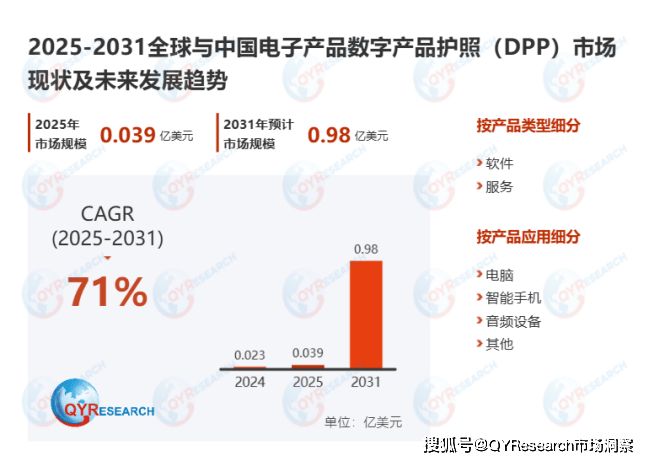
Group 1: Market Overview - The global market for Digital Product Passports (DPP) is projected to reach $160 million by 2031, with a compound annual growth rate (CAGR) of 71% over the next few years [2] - DPP is a digital identity system that records the entire lifecycle of electronic products, enhancing supply chain transparency and promoting circular economy and sustainability [2] Group 2: Key Players - Major manufacturers in the DPP space include Piconext, Protokol, and Circularise, with the top five companies holding approximately 38% of the market share in 2024 [4] - Piconext focuses on creating unique digital identities for physical products using NFC and QR codes, enhancing brand protection and supply chain transparency [5] - Protokol specializes in Web3 and blockchain technologies, providing solutions for digital assets and identity systems [6] - Circularise offers a proprietary blockchain and smart questioning technology to ensure material traceability and environmental impact data sharing [6][7] Group 3: Industry Chain Analysis - The upstream segment involves data standards, technical protocols, and core data sources, which are essential for establishing a common language for DPP [8] - The midstream consists of DPP solution integration, deployment, and operation, primarily by digital passport platform service providers [8] - The downstream includes compliance applications and value realization, with electronic product brands and manufacturers as the main users of DPP [9][10] Group 4: Industry Trends and Opportunities - DPP is evolving from a compliance tool to a core digital platform that drives value creation throughout the product lifecycle [11] - Regulatory frameworks, such as the EU Battery Regulation, are creating a robust market demand for DPP solutions [13] - DPP enables manufacturers to optimize supply chains and enhance brand value through increased transparency and sustainability [13] - The technology integration and standard interoperability are becoming critical for the successful implementation of DPP [11] Group 5: Challenges and Barriers - High collaboration costs and data acquisition challenges hinder the establishment of DPP across the supply chain [14] - The risk of technology and standard fragmentation poses a significant obstacle to achieving scale and value realization in DPP [14] - Concerns regarding data security, privacy, and the protection of commercial secrets are major barriers to participation in DPP initiatives [15] - The complexity of building an ecosystem that includes various stakeholders creates high entry barriers for new players [16]
财经聚焦|新赛道!“二手经济”撑起万亿级大市场
Xin Lang Cai Jing· 2025-12-25 13:17
Core Insights - The second-hand goods market in China has become a trillion-yuan industry, with the Ministry of Commerce launching pilot programs in 10 cities and 28 enterprises to promote second-hand goods circulation [1][3]. Group 1: Market Growth and Trends - The second-hand goods market in China reached a transaction volume of 1.69 trillion yuan in 2024, marking a 28% year-on-year increase and a compound annual growth rate of 12% over the past six years [3]. - Pilot cities are focusing on second-hand items such as mobile phones, clothing, and furniture, with initial positive outcomes observed [3]. - The Wuhan market for second-hand kitchen equipment is expected to exceed 100 million yuan in sales, while a new second-hand car market has become the largest in Central China [3]. Group 2: Consumer Behavior and Demographics - The consumer demographic for second-hand goods is diverse, with a notable increase in young consumers and even international visitors at markets [2][4]. - The average monthly consignment volume at a second-hand store in Nanjing has reached 5,000 items, with 70% sold within the same month [2]. - The age range of consumers spans from middle-aged individuals focusing on home goods to younger consumers interested in collectibles and digital products [7]. Group 3: Innovations and Future Directions - The second-hand market is experiencing innovative transformations, with new business models such as rental, auction, and after-sales buyback being developed [11]. - Technologies like AI, big data, and cloud computing are being integrated into the second-hand goods sector, with AI-driven transactions exceeding 10 billion yuan [11]. - The industry is moving towards a more regulated and quality-focused phase, supported by government policies and standards [10][11].

二手旧衣成“尾货”,不能打着循环经济的旗号做“黑心生意”
Ren Min Ri Bao· 2025-12-25 13:05
Core Viewpoint - The article highlights the emergence of a gray market in second-hand clothing, where unscrupulous sellers disguise used garments as "new" or "high-quality" items, undermining consumer trust and public health [1][2]. Group 1: Industry Concerns - The recycling of old clothing is an essential part of the circular economy, providing both environmental and social benefits. However, some individuals exploit this system for profit, creating a gray market that damages public trust in charitable donations and second-hand recycling [2]. - The practice of selling second-hand clothing as "tail goods" or "unique items" not only violates consumer rights but also poses health risks, as many of these garments are not properly cleaned and may carry harmful substances [1][2]. Group 2: Regulatory Recommendations - There is an urgent need for regulatory bodies to enhance laws governing the circulation of second-hand clothing, including establishing hygiene standards, quality grading systems, and traceability mechanisms [2]. - E-commerce platforms are urged to take responsibility by prohibiting sellers from concealing the second-hand nature of their products and ensuring consumer protection channels are accessible [2]. - Charitable organizations should manage donation boxes more effectively, providing clear information about their operations to allow donors to track the fate of their contributions [2].
金属锡工艺品摆件创意有哪些?金属锡工业原料有哪些?
Xin Lang Cai Jing· 2025-12-25 11:10
Group 1 - The metal tin is experiencing a unique "dual life" in 2025, serving both as a cultural product in the consumer market and as a critical industrial material in the global supply chain [1] - The transformation of tin crafts has shifted from mere decoration to a blend of "practical aesthetics" and "emotional interaction," appealing to modern consumers [1][2] - Innovative designs such as "mortise and tenon tin art" have emerged, allowing for customizable and interactive products that resonate with traditional craftsmanship [2] Group 2 - The demand for tin, particularly solder tin, has surged due to the rapid growth in global photovoltaic installations and electric vehicle production, highlighting its essential role in the energy transition [3] - The industrial sector is increasingly focusing on high-value custom orders, driven by the unexpected popularity of cultural products, while also adapting to stricter environmental regulations [3] - Recycling technologies for tin are gaining attention as a means to address resource and environmental pressures, enabling efficient extraction from electronic waste and industrial residues [3][5] Group 3 - The tin industry encompasses a complete value chain from resource acquisition to refined products, with the primary raw material being tin ore, which is processed into refined tin with a purity of over 99.9% [4] - Most refined tin is alloyed to create functional materials tailored for various industrial applications, such as lead-free solder alloys for electronics and bronze for wear-resistant parts [4] - Recycled tin is becoming increasingly important in green manufacturing, sourced from electronic waste and achieving electronic-grade quality, thus supporting supply chain resilience and circular economy practices [5] Conclusion - The resilience of tin as a metal is evident in its ability to adapt to modern demands, merging cultural significance with industrial necessity, and showcasing a potential for similar transformations in other traditional materials [5]

福恩股份推进深主板IPO:再生面料业务夯实基础,扩产与研发支撑长期发展
Zheng Quan Shi Bao Wang· 2025-12-25 03:56
Core Viewpoint - The textile industry is accelerating its transition towards green manufacturing and a circular economy, with recycled fabrics becoming a crucial part of the apparel supply chain. Hangzhou Fu'en Co., Ltd. is set to launch its initial public offering (IPO) on the Shenzhen Stock Exchange, aiming to leverage capital markets for capacity expansion and capability upgrades [1][4]. Group 1: Business Performance - Fu'en Co. has established a mature business model and stable customer base, with a consistent focus on recycled fabrics. The revenue from recycled fabrics has been increasing year by year, reflecting the alignment of the company's product offerings with the sustainable procurement trends of downstream brands [1][2]. - The company reported revenues of 1.764 billion yuan, 1.517 billion yuan, and 1.813 billion yuan for the years 2022, 2023, and 2024, respectively, with a revenue of 938 million yuan in the first half of 2025. The net profits attributable to shareholders were 277 million yuan, 229 million yuan, and 275 million yuan during the same period, indicating a strong profitability level within the industry [2]. Group 2: Business Structure - Recycled fabrics have become the core revenue source for Fu'en Co., with their contribution to main business income rising to 86.63% by 2024. This increase is linked to global apparel brands raising their usage of recycled materials, showcasing the company's competitive edge and customer loyalty in this niche market [2]. - The company has built a vertically integrated manufacturing system encompassing design, research and development, spinning, weaving, dyeing, and finishing, with production bases in Hangzhou, Nantong, and Vietnam. This setup enhances synergy in delivery control, quality stability, and cost management [2]. Group 3: Fundraising and Future Development - The IPO will primarily fund projects focused on expanding production capacity and enhancing research and development capabilities, with approximately 1.25 billion yuan allocated for integrated projects related to recycled eco-friendly fabrics and a high-end recycled materials research institute [3]. - The implementation of these projects is expected to further increase the production capacity of recycled fabrics and reduce reliance on external sourcing by enhancing in-house raw material production. The R&D initiatives will provide a platform for continuous investment in new material applications, process improvements, and functional fabric development, thereby increasing product value and technical barriers [3]. Group 4: Industry Environment - The textile industry's green transformation trend is clear, with international markets pushing for circular economy development through policies and brand strategies. The application ratio of recycled fabrics in the apparel sector is continuously increasing [3]. - The industry still has room for consolidation, and companies with scalable supply capabilities, stable customer resources, and compliant production systems are more likely to expand market share during industry adjustments. Fu'en Co. is recognized for its market share and representation in the recycled fabric sector [3].
闲鱼玩转全攻略:从捡漏到变现,精准匹配多元兴趣需求
Sou Hu Cai Jing· 2025-12-25 03:19
Core Insights - The article emphasizes the rise of "circular economy" and "minimalist living," positioning Xianyu as a leading platform for second-hand transactions in China, serving both as a treasure trove for bargain hunters and a side hustle for monetizing idle items [1] Group 1: Getting Started - The foundation of using Xianyu effectively is to avoid overpaying and making poor decisions, with the ability to assess market conditions and filter reliable sellers reducing decision-making costs by 80% [2] Group 2: Market Assessment - Two dimensions for price assessment include checking merchant buyback prices through apps like Aihuishou and Qupingce, and analyzing the average transaction price on Xianyu over the past week, filtering out items priced more than 15% above the average [3] Group 3: Seller Filtering - Reliable sellers can be identified by four characteristics: prioritizing sellers with high Sesame Credit scores, avoiding new or zero-rated accounts, favoring individual sellers for better value, and examining seller transaction history for positive feedback [4][5][6] Group 4: Product Recommendations - The article provides specific product recommendations across various interests, including travel gear, gaming accessories, pet supplies, kitchen appliances, and audio equipment, with detailed pricing and purchasing tips [8][9][10][13][14][15] Group 5: Monetizing Idle Items - Xianyu is highlighted as an excellent platform for monetizing idle items, particularly for individuals looking to start a light side business, with strategies for pricing, crafting appealing listings, and utilizing a consignment model [17][18][19] Group 6: Safety Tips - Key safety tips include conducting all transactions within the Xianyu platform, being cautious of prices significantly below market value, clarifying shipping responsibilities, and verifying product authenticity through detailed checks [21][22]