空间智能

Search documents
特斯联冲刺港交所IPO:三年营收三连跳,业绩增长受瞩目
Sou Hu Cai Jing· 2025-05-21 09:43
亮眼的财报数据,令特斯联受到了资本市场的青睐。在2025年年初,特斯联完成D++轮6.485亿元融资,引入国有资本与产业基金的战略注资,为IPO征程储 备充足弹药。强大的资金加持与硬核的业绩表现,正为特斯联港交所IPO铺就坚实道路。 日前,AIoT行业头部企业特斯联更新港交所招股书,数据显示,特斯联近三年营收年复合增长率58%、2024年单年业绩增长83.2%,增长速度领跑AI行业。 同时,特斯联深度挖掘空间智能应用场景,更新了三大战略板块,客户结构进一步优化,目前在手订单已高达23亿元。 值得一提的是,特斯联还在招股书中首次系统披露其空间智能战略框架,以AIoT领域模型、AIoT基础设施及AIoT智能体三位一体的技术矩阵,发力空间智 能领域。目前,特斯联全球布局已覆盖中东、东南亚等新兴市场,积累合作800多个客户,总客户数达342家,并拥有23亿元在手订单,印证了其技术方案的 国际化适配能力。 招股书显示,特斯联在2022-2024年间实现营收三连跳:2022-2024年,营收年复合增长率达58%,其中2024年同比增速达83.2%。这一增长速度远超行业平 均水平,印证了公司在AI产业数智化转型浪潮中的核心 ...


引入导航智能体,智能眼镜或成下一个“入口级”终端
Bei Jing Ri Bao Ke Hu Duan· 2025-05-16 12:34
市场消息称,华为将在本月下旬举办的发布会上发布集成AR导航、健康监测等功能的智能眼镜新品,苹果智能眼镜的发布时间或提前至2026年末。Rokid创 始人祝铭明则透露,过去三个月Rokid旗下带显示功能的AI眼镜在全球已交定金订单已超25万台。信达证券分析指出,智能眼镜产品正从基础硬件叠加阶 段,逐步向智能辅助与智能助理方向发展,未来有望成为智能协同与计算终端。 大模型时代,智能体正加速从手机APP里走出,走进更多的创新硬件载体中。5月16日,高德地图与国内智能眼镜厂商Rokid宣布达成合作,将推出基于全场 景智能眼镜的导航智能体(NaviAgent)应用。 来源:北京日报客户端 以骑行模式为例,如今借助Rokid Glasses智能眼镜,骑行者能够以"手不离车"、更适配动态场景的方式获取核心信息,体验"秒懂式"导航。例如,用户能提 前知晓红绿灯信息,还能实时监测后方来车情况,保障骑行安全;若骑行途中想顺路买奶茶,只需语音添加途径点,还能询问剩余到达时间;系统还能贴心 推荐周围适合骑行的公园,并提供公园的阴凉覆盖情况以及不同高度坡度的路线信息,满足人们骑行中的多样化需求。 除了导航服务外,双方还计划将生活服务、 ...
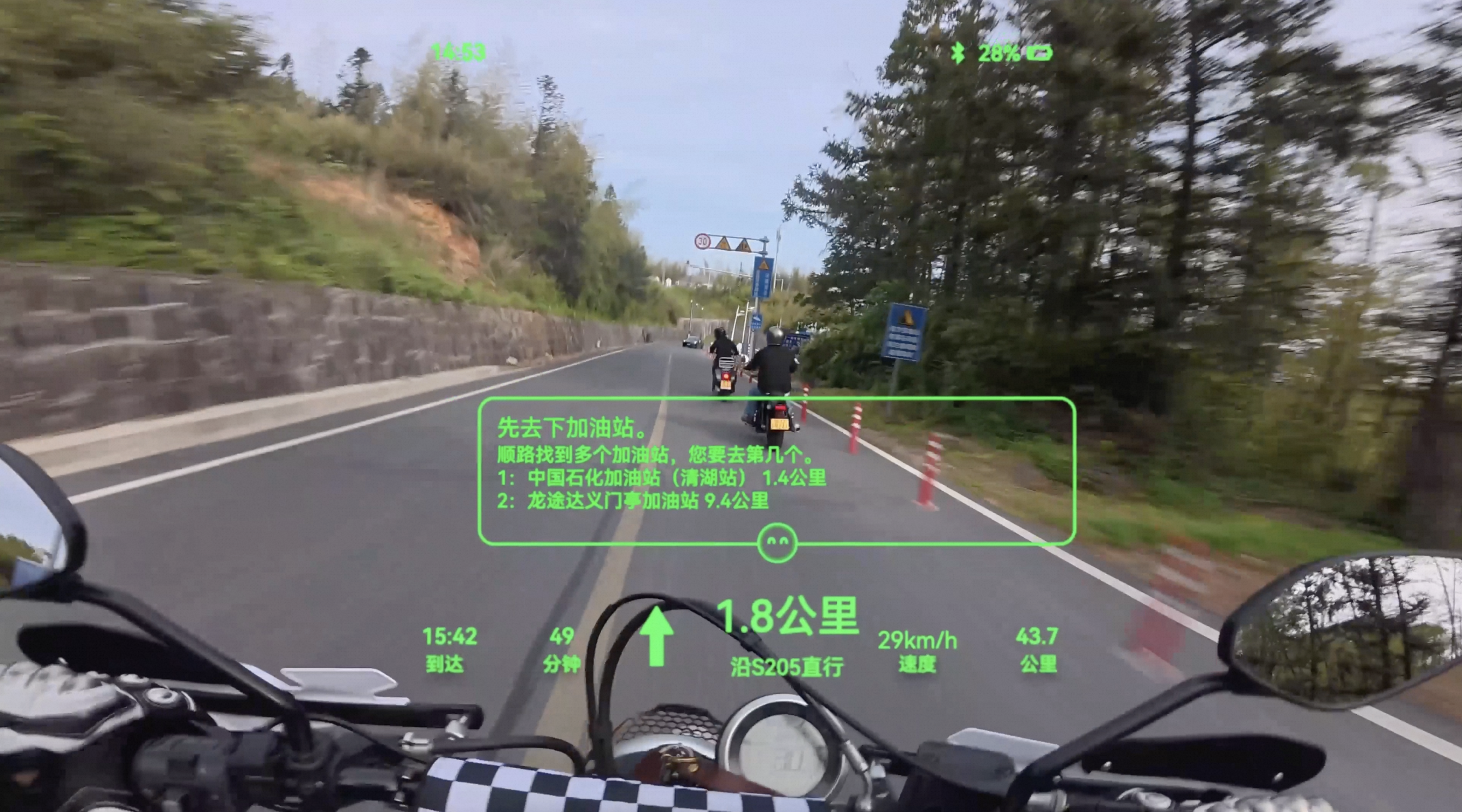
高德地图与Rokid宣布达成合作 将推出基于智能眼镜的导航智能体应用
Xin Lang Ke Ji· 2025-05-16 11:45
Core Insights - The collaboration between Gaode Map and Rokid aims to launch the world's first navigation intelligent agent (NaviAgent) application based on Rokid Glasses, marking the beginning of cross-terminal cooperation in building a spatial intelligent ecosystem around travel and location services [1][2] Group 1: Partnership Details - Gaode Map and Rokid will integrate AI navigation capabilities into Rokid Glasses, enabling a three-dimensional interaction mode of "voice + vision + environmental perception" and seamless switching between walking, cycling, and driving navigation modes [1] - This navigation solution is just the starting point for the partnership, with plans to expand into other areas such as lifestyle services and cultural tourism [1] Group 2: Executive Statements - Rokid's CEO expressed excitement about the strategic partnership, highlighting the combination of Rokid's technological advantages with Gaode Map's navigation capabilities to provide an unprecedented smart glasses navigation experience [2] - Gaode Map's CEO noted that the navigation intelligent agent represents a structural leap from software-driven to spatial intelligence-driven travel services, emphasizing the potential for creating more value through deep collaboration with innovative platforms [2]
亿道信息(001314) - 2025年5月15日投资者关系活动记录表
2025-05-15 11:02
Group 1: Financial Performance - In Q1 2025, the company achieved a revenue of 548 million CNY, representing a year-on-year growth of 14.41%, and a net profit growth of 80.85% [2] - Since its listing on February 14, 2023, the company has distributed a total cash dividend of 59.5862 million CNY, with a proposed cash dividend of 0.9 CNY per 10 shares for 2024, totaling 12.7302 million CNY [3] Group 2: Business Strategy and Market Position - The company focuses on a customer-centric strategy, increasing R&D investment and enhancing product design capabilities to meet diverse customer needs [2] - The company actively expands its market presence by onboarding quality clients and improving technical support and after-sales service [2] Group 3: Product Offerings - The company’s smart hardware products include rugged smart terminals (rugged laptops, tablets, handheld devices) and consumer smart terminals (PCs, tablets, AIoT, XR products), serving various sectors such as smart manufacturing and public utilities [4] - The company has launched several breakthrough R&D products, including AI industry terminals and AI edge computing models, enhancing its service capabilities for medium and large brand clients [5][6] Group 4: R&D and Innovation - The company has increased its R&D investment, resulting in a rise in the number of R&D projects and new patent applications [5] - In 2024, the company established the Yidao Research Institute to collaborate with universities and research institutions on cutting-edge technologies like AI and cloud computing [6] - The company maintains partnerships with major tech firms (Intel, Qualcomm, etc.) to enhance its product development and market competitiveness [6]
英伟达豪赌“物理AI”:下一个风口,还是又一个GE Predix?
3 6 Ke· 2025-05-14 09:45
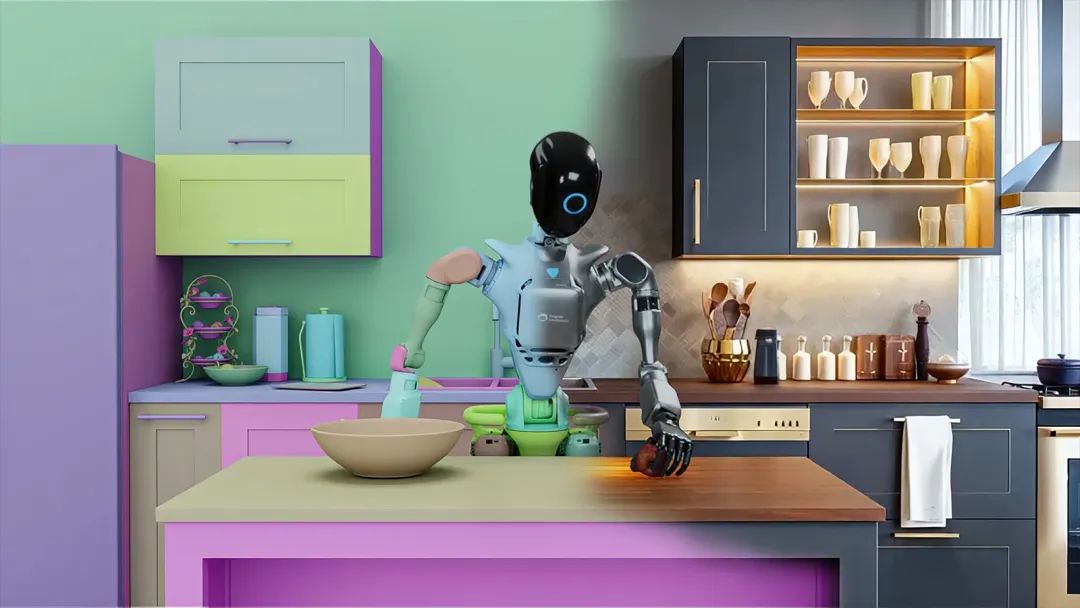
Core Insights - The article discusses the rapid advancement of "Physical AI," particularly through NVIDIA's ambitious strategy to create a platform-level infrastructure that integrates training, simulation, and deployment in physical systems [1][2][11] - It highlights the collaboration between NVIDIA and leading industrial giants like Siemens, BMW, and General Motors to incorporate AI into complex physical systems such as manufacturing and autonomous driving [1][11] Summary by Categories Definition and Differentiation - Physical AI, embodied intelligence, and spatial intelligence represent different pathways for AI to perceive, integrate, and alter the physical world [2][6] - Spatial intelligence focuses on AI's understanding of three-dimensional structures and relationships, while embodied intelligence emphasizes interaction with the environment through physical actions [3][4][9] - Physical AI serves as the central nervous system connecting perception and action, enabling AI to truly enter the physical realm [5][6] Technological Framework - The core of Physical AI is NVIDIA's "three computers" architecture, which includes training with real and synthetic data, creating high-fidelity virtual environments, and deploying trained models in real-world applications [14][16] - Key technologies supporting Physical AI include synthetic data generation, virtual simulation platforms, and model generalization capabilities [9][10][11] Historical Context and Comparison - The article draws parallels between NVIDIA's Physical AI strategy and GE's earlier industrial internet platform, Predix, which ultimately failed due to its closed ecosystem approach [15][19][21] - Unlike GE, NVIDIA's strategy emphasizes an open, developer-first approach, providing a comprehensive toolkit rather than a singular solution [23][24][27] Future Trends and Industry Implications - The integration of AI into physical systems is seen as a long-term evolution rather than a short-term trend, requiring patience and strategic investment in foundational capabilities [37][39] - Companies in the industry are advised to focus on building internal capabilities and understanding the underlying logic of the tools they use, rather than merely adopting them superficially [33][35][36]

特斯联港交所IPO招股书:国产替代战略驱动订单突破23亿
Sou Hu Cai Jing· 2025-05-13 09:24
Core Insights - The article emphasizes that domestic substitution is a crucial path for China to break through technological blockades and achieve high-quality development, particularly in the AI industry, which must adapt to local needs and lower technical barriers [1] Financial Performance - According to the updated prospectus, the company expects a revenue of 1.843 billion yuan in 2024, representing a year-on-year growth of 83.2%, with the AI industry digitalization business segment reaching 1.64 billion yuan, up 162.9% [3] - The company has over 2.3 billion yuan in hand orders and a total of 342 customers [3] - The expense ratio has significantly decreased from 76.9% to 45%, and accounts receivable turnover days have been reduced from 238 days to 104 days, indicating a sustainable development trend focusing on both scale and efficiency [3] Strategic Developments - The company is focusing on a combination of AIoT intelligent computing infrastructure and domain models, driven by multimodal large models, to promote spatial intelligence development [3] - The newly released core product, the "Green Intelligent Computing Body," is fully compatible with various leading models and domestic computing power, aiming for 100% domestically developed solutions from chips to platforms [3] Technological Advancements - The company has upgraded several platforms, including the X-Stack Intelligent Computing Cloud Platform and the Bit Large Model Platform, to lower the application barriers for intelligent computing and leading models, enabling customizable large model services [4] - A notable application case in the motorcycle industry has been completed, showcasing the integration of DeepSeek to enhance user interaction and complex reasoning tasks [4] Future Outlook - The company is expected to continue transforming its domestic substitution strategy into product competitiveness, building a "spatial intelligence era" for Chinese technology enterprises [5]

AI无限生成《我的世界》,玩家动动键盘鼠标自主控制!国产交互式世界模型来了
量子位· 2025-05-13 03:01
Core Viewpoint - The article discusses the launch of Matrix-Game, an interactive world modeling tool developed by Kunlun Wanwei, which allows users to create and explore virtual environments in a highly realistic manner using simple mouse and keyboard commands. This tool leverages AI to generate content in real-time, significantly lowering the barriers to entry for users and enhancing creative freedom while adhering to physical realism. Group 1: Matrix-Game Overview - Matrix-Game enables users to interact with and create detailed virtual content that aligns with real-world physics, offering a low operational threshold for users [10][41]. - The tool supports various environments, including forests, beaches, deserts, glaciers, rivers, and plains, and allows for basic and complex movements, perspective shifts, and actions like jumping and attacking [5][6][10]. - The Matrix-Game-MC dataset is a large-scale dataset that includes unlabelled Minecraft game videos and controllable video data, facilitating the model's learning of complex environmental dynamics and interaction patterns [14][15]. Group 2: Technical Implementation - The main model framework is based on diffusion models, which include image-to-world modeling, autoregressive video generation, and controllable interaction design [18][20]. - The image-to-world modeling process generates interactive video content from a single image, integrating user actions without relying on language prompts [21]. - The autoregressive video generation ensures temporal consistency by generating video segments based on previous frames, while controllable interaction design enhances the model's responsiveness to user inputs [23][27]. Group 3: Evaluation and Performance - The GameWorld Score evaluation system assesses the performance of interactive world generation models across four dimensions: visual quality, temporal quality, action controllability, and physical rule understanding [29][30]. - Matrix-Game outperforms existing models like Decart's Oasis and Microsoft's MineWorld in all evaluated dimensions, achieving a user preference rate of 96.3% in blind tests [36][39]. - In specific actions such as movement and attack, Matrix-Game maintains over 90% accuracy, demonstrating high precision in fine-grained control [39]. Group 4: Industry Implications - Matrix-Game has potential applications in rapidly building virtual game worlds, producing content for film and the metaverse, training embodied agents, and generating data [41][42]. - The trend towards 3D AI-generated content (AIGC) is gaining traction, with major companies investing in this area, indicating a shift from 2D to 3D technologies [43][46]. - The advancements in 3D AIGC and world modeling are expected to provide new interactive experiences, making it a focal point for future AI developments [48][49].

生成视频好看还不够,还要能自由探索!昆仑万维开源Matrix-Game,单图打造游戏世界
机器之心· 2025-05-13 02:37
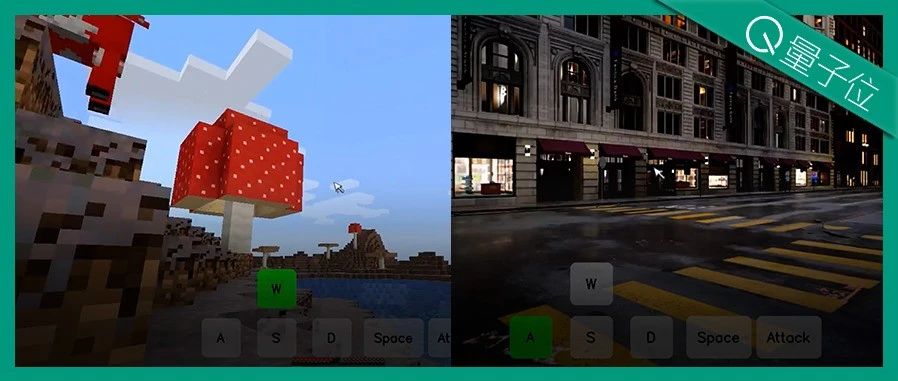
Core Viewpoint - The rapid advancement of world models, particularly with the introduction of interactive world models like Matrix-Game, signifies a pivotal moment in AI development, enabling more immersive and controllable virtual environments [4][50]. Group 1: Development of World Models - The Oasis project marked the first real-time, interactive open-source world model, showcasing a significant leap in understanding physical and game rules [1]. - Microsoft's MineWorld further enhanced visual effects and action generation consistency in interactive world models [2]. - The recent launch of Matrix-Game by Kunlun Wanwei represents a major milestone in interactive world generation, being the first open-source model in the industry with over 10 billion parameters [10][50]. Group 2: Features of Matrix-Game - Matrix-Game allows for fine-grained user interaction control, enabling players to experience seamless movement and environmental feedback in a game world [17]. - The model demonstrates high fidelity in visual and physical consistency, generating realistic interactions and maintaining visual coherence during gameplay [19][20]. - It exhibits multi-scene generalization capabilities, allowing for the generation of diverse environments beyond just Minecraft, including cities and historical buildings [25][26]. Group 3: Evaluation and Performance - Kunlun Wanwei introduced a comprehensive evaluation framework called GameWorld Score, assessing visual quality, temporal consistency, controllability, and understanding of physical rules [29]. - In comparative assessments, Matrix-Game outperformed other models like Oasis and MineWorld across all evaluation dimensions [31]. - The model achieved over 90% accuracy in action control, demonstrating its robustness in responding to user inputs [35]. Group 4: Technological Innovations - Matrix-Game's success is attributed to its innovative data collection and model architecture, utilizing a large dataset for training that includes both unlabelled and labelled data [41][42]. - The architecture focuses on image-to-world modeling, allowing the model to generate interactive video content based solely on visual inputs without relying on language prompts [44][45]. - The model's ability to maintain temporal coherence during video generation is a significant advancement, addressing previous challenges in long-sequence content generation [45]. Group 5: Broader Implications - Matrix-Game's capabilities extend beyond gaming, impacting content production in various fields such as film, advertising, and XR [51]. - The development of spatial intelligence through models like Matrix-Game is crucial for advancing embodied intelligence and enhancing machine understanding of the three-dimensional world [49][50]. - Kunlun Wanwei aims to create a comprehensive AI creative ecosystem, facilitating innovation and expression in a new dimension of interaction [52].

虞晶怡教授:大模型的潜力在空间智能,但我们对此还远没有共识
3 6 Ke· 2025-05-09 09:34
Group 1 - The emergence of generative AI is driving a significant transformation in technology, business, and society, transitioning humanity from an information society to an intelligent society [2] - A diverse panel of experts, including AI technologists, investors, and sociologists, is engaged in discussions to explore the opportunities and challenges presented by AI [2] - The development of spatial intelligence is being propelled by advancements in large language models, aiming for a deeper understanding of space akin to language comprehension [3][12] Group 2 - The biggest challenge in 3D intelligence development is the lack of sufficient data, particularly real-world 3D data [4] - A perception-first approach is being emphasized, suggesting that perception can address problems without relying on complex cognition [5] - The theoretical dilemma in spatial intelligence lies in the diverse expressions of 3D data, which have yet to reach a consensus [5] Group 3 - Revolutionary breakthroughs in sensor technology are anticipated, with future perception systems capable of observing both sides of objects simultaneously [6] - Redefining robot design focuses on robustness and safety rather than precision, necessitating new mathematical metrics [7] - The industry acknowledges the inevitability of bubbles in the AI sector, with OpenAI being cited as an example of this phenomenon [8] Group 4 - Short-term applications of spatial intelligence are expected in film production, while mid-term applications will focus on embodied intelligence and low-altitude economy scenarios [9] - The educational model is predicted to evolve, with shorter courses and a stronger alignment with industry needs, particularly in regions like the US West Coast [9] Group 5 - Current technology development is not at its limit, especially in cross-modal integration, with significant potential still to be explored [10][11] - The discussion around scaling laws in AI is considered premature, as the focus remains on deeply mining the capabilities of language models and their integration with other modalities [11] Group 6 - The evolution of spatial intelligence is viewed as a gradual process, starting from digital twins and simulation platforms to the current advancements in virtual reality and the metaverse [12] - Generative AI is transforming spatial intelligence from mere digital reconstruction to intelligent understanding and application, impacting various sectors like gaming and industrial production [13] Group 7 - The current challenges in spatial intelligence include the need for a unified expression of 3D data and the complexities involved in data collection [26][27] - The integration of perception, cognition, and behavior is essential for advancing spatial intelligence, with a holistic approach being advocated [35][37] Group 8 - The collaboration between industry and academia is becoming increasingly vital for advancing spatial intelligence research, with companies like Meta and OpenAI leading the way [31][32] - The potential for AI in the arts and entertainment sectors is highlighted, with spatial intelligence expected to enhance creative processes significantly [41] Group 9 - The future of spatial intelligence applications is anticipated to focus on specific scenarios, such as low-altitude economy and robotics, while the broader goal of achieving AGI remains a long-term aspiration [42][43] - The ethical implications of AI companionship and the need for open discussions on these challenges are emphasized [48][49] Group 10 - The educational landscape is set to change, with programming and AI courses becoming foundational elements of the curriculum, reflecting the growing importance of these skills in various fields [50]



虞晶怡教授:大模型的潜力在空间智能,但我们对此还远没有共识|Al&Society百人百问
腾讯研究院· 2025-05-09 08:20
Core Viewpoint - The article discusses the transformative impact of generative AI on technology, business, and society, emphasizing the shift from an information society to an intelligent society, and the need to explore new opportunities and challenges brought by AI [1]. Group 1: Insights from Experts - The article features insights from Yu Jingyi, a prominent professor in computer science, who highlights the current bottlenecks in large model technology and the potential of generative AI in spatial intelligence [5][6]. - Yu emphasizes that the understanding of spatial intelligence is evolving, moving from simple digital reconstructions to more complex intelligent interpretations of space, aided by advancements in generative AI [12][13]. Group 2: Technological Breakthroughs - The development of generative AI technologies, such as DALL-E 3 and GPT-4o, showcases the potential for significant advancements in image and video generation, indicating that the capabilities of language models in visual generation are far from being fully realized [10][11]. - The introduction of the CAST project, which incorporates actor-network theory and physical rules, aims to enhance the understanding of spatial relationships among objects, marking a significant step in the evolution of spatial intelligence [16][18]. Group 3: Challenges and Opportunities - A major challenge in the field is the lack of sufficient 3D scene data, particularly real-world data, which hampers the development of robust AI models for spatial understanding [18][19]. - The article discusses the potential of cross-modal methods to address data scarcity in 3D environments, leveraging advancements in text-to-image technologies to infer spatial relationships [19][20]. Group 4: Future Applications - The short-term applications of spatial intelligence are expected to be in the fields of art creation, gaming, and film production, where generative AI can significantly enhance efficiency and creativity [42][43]. - In the medium to long term, spatial intelligence is anticipated to become a core component of embodied intelligence, potentially transforming industries such as smart devices and robotics [43][44]. Group 5: Ethical Considerations - The rise of AI companionship raises ethical questions regarding emotional dependency and the implications of human-robot interactions, necessitating ongoing discussions about ethical frameworks in technology development [50][51].