粮食安全

Search documents
粮食安全看山东”之滨州:全产业链发力“保粮安
Zhong Guo Fa Zhan Wang· 2025-11-10 08:26
Core Viewpoint - The article emphasizes the importance of food security as a foundation for national security, highlighting the successful transformation of Binzhou City in Shandong Province into a national model for grain industry economic development through comprehensive efforts across the entire industry chain [1] Group 1: Agricultural Production and Innovation - Binzhou City achieved a historical high grain yield of 435.52 kg per mu in 2024, with per capita grain production nearly double the national average [1] - The city has cultivated 201 large-scale grain and oil processing enterprises, with an annual processing capacity exceeding 15 million tons, which is more than four times the total grain production [1] - The city has implemented advanced agricultural practices, achieving a 99% coverage rate of quality seeds and introducing high-yield wheat varieties with yields reaching 647.5 kg per mu [2][3] Group 2: Industry Chain Development - Binzhou has developed a clustered approach to grain processing, focusing on corn, wheat, soybeans, and sesame, with over 600 products derived from a single grain [3] - The city has established a comprehensive wheat industry chain, from seed breeding to deep processing, creating the longest and most complete chain in the country [3] - The integration of primary, secondary, and tertiary industries has strengthened the resilience of the grain industry, with significant contributions from leading enterprises [8] Group 3: Value Chain Optimization - The city has focused on high-value utilization, with several products leading the national market in terms of production capacity and market share [4] - A circular economy model has been adopted, enhancing the comprehensive utilization rate of raw materials and increasing efficiency [4] - Binzhou has developed a public brand for grain and oil products, significantly boosting brand value and market presence [4] Group 4: Supply Chain Efficiency - Infrastructure investments have improved storage and transportation capabilities, with the establishment of key logistics hubs and a grain emergency supply system [6] - The city has created a robust supply network to ensure food security, with emergency supply points established in every town and community [6] Group 5: Innovation and Collaboration - Binzhou has partnered with national research institutions to drive innovation in grain processing, achieving a comprehensive utilization rate of 98% [7] - The city promotes standardization and quality control in grain supply, with a low grain storage loss rate of approximately 0.4% [7] - The expansion of sales networks and e-commerce has enhanced product accessibility and market reach [7]
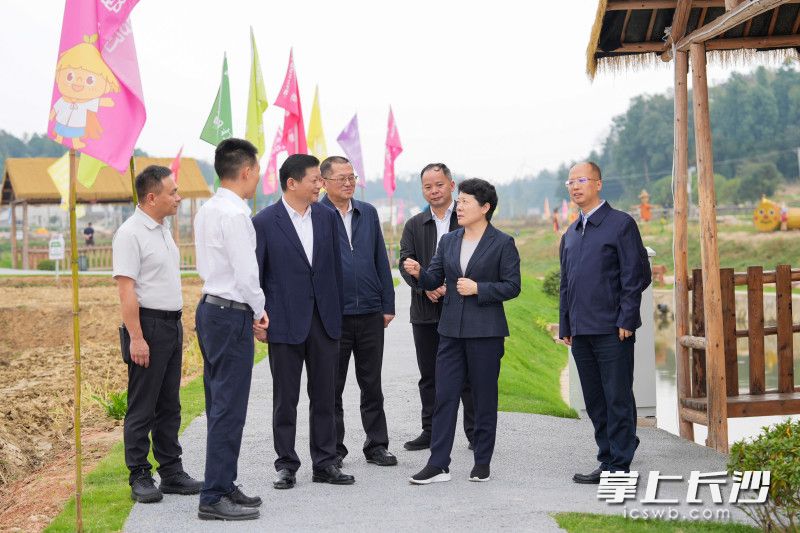
吴桂英在长沙县调研粮食安全、乡村振兴工作
Chang Sha Wan Bao· 2025-11-08 02:23
Group 1 - The core message emphasizes the importance of food security and rural revitalization, urging the implementation of effective measures to enhance agricultural efficiency, increase farmers' income, and invigorate rural areas [1][3] - The "I have hills in Kaihui" project in Kaihui Town is highlighted as an innovative model combining collective economic development and rural operation, which has generated over 680,000 yuan in dividends for 10 villages this year [3] - The establishment of a comprehensive agricultural service center in Changsha County aims to provide mechanized services to small farmers and grain producers, enhancing their productivity and engagement in modern agriculture [8] Group 2 - The Tianhua Grain Purchase and Sale Company is responsible for the entire process of policy grain acquisition, storage, and sales, emphasizing the need for effective management of reserve grains to ensure national food security [8] - The focus on grassroots governance and community services is reinforced, with an emphasis on improving medical facilities and ensuring accessible healthcare for rural residents [13] - Continuous efforts are required to prevent poverty and ensure the sustainability of poverty alleviation achievements, with a call for precise implementation of support measures [13]

运用大数据信息化技术提升监督穿透力 推动筑牢粮食安全根基
Zhong Yang Ji Wei Guo Jia Jian Wei Wang Zhan· 2025-11-08 00:47
Core Viewpoint - The article emphasizes the importance of food security in China, highlighting the implementation of digital monitoring systems to enhance the supervision of grain storage and management processes, thereby preventing corruption and ensuring the integrity of grain procurement and storage [2][3][4]. Group 1: Digital Monitoring and Supervision - The "Digital Long Grain" regulatory service platform in Heilongjiang Province allows real-time monitoring of grain logistics, including registration, sampling, inspection, weighing, unloading, and storage [2]. - The platform aims to prevent issues such as evasion of supervision and fraudulent transactions, ensuring strict control over the entry of new grain into storage [2]. - The Zhengzhou Agricultural Development Group's "Smart Grain Warehouse Information Management System" has identified and tracked 16 issues this year, enhancing the protection of farmers' rights and ensuring orderly procurement [3]. Group 2: Management of Surplus Grain - The management of surplus grain, defined as the excess quantity of grain out of storage compared to the original quantity, is crucial for food security [3]. - Recent investigations in Ma'anshan City revealed violations in the management of surplus grain, leading to disciplinary actions against responsible individuals [3][4]. - The Ma'anshan City Discipline Inspection Commission is conducting a comprehensive review of surplus grain management across all grain enterprises, focusing on compliance and data accuracy [4]. Group 3: Educational Initiatives and Regulatory Improvements - The Guangxi Zhuang Autonomous Region has organized educational sessions for over 2,500 participants to raise awareness about food security issues and promote compliance [5]. - The Shanghai Discipline Inspection Commission is actively monitoring high-standard farmland projects, addressing issues related to project quality and farmer feedback [6]. - Collaborative mechanisms have been established to enhance information sharing and case cooperation among various district commissions, ensuring thorough oversight of agricultural projects [6].
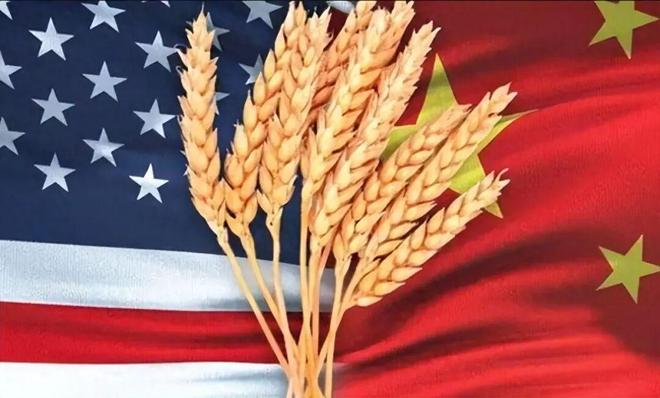
中美刚签大豆订单,不到72小时,再送川普大礼,背后战略耐人寻味
Xin Lang Cai Jing· 2025-11-07 15:27
Core Insights - The recent trade truce between China and the U.S. has led to a normalization of trade relations, with the U.S. reducing tariffs on China and China resuming soybean imports from the U.S. [3][5] - China has made a rare inquiry about purchasing U.S. wheat, marking its first interest in U.S. wheat in nearly a year, which is seen as a goodwill gesture towards the U.S. [3][5] - The inquiry has caused a significant impact on U.S. futures markets, with Chicago wheat futures rising by 1.8%, reaching a new high since July [5] Trade Dynamics - The inquiry for U.S. wheat follows China's recent soybean orders, indicating a strategic approach to gauge U.S. responses and potentially create a trade surplus for the U.S. [5][7] - The U.S. benefits politically from increased agricultural imports from China, which could enhance Trump's domestic standing amid political struggles [7][9] - China's diversified grain import strategy aims to ensure food security and stability, reducing reliance on any single country, including the U.S. [11][12] Global Context - The global agricultural landscape is affected by climate change and geopolitical tensions, necessitating China's imports to balance domestic supply and demand [12] - China's position as a major consumer market with significant purchasing power is crucial for U.S. economic interests [9][12] - Despite external pressures, China maintains a strategic focus on its trade relations with the U.S., emphasizing the importance of cooperation over conflict [14]
财政部:积极培育新兴产业和未来产业 持续推动制造业转型升级
智通财经网· 2025-11-07 10:56
Core Viewpoint - The report emphasizes the acceleration of new growth momentum in China's economy through enhanced fiscal policies, support for innovation, and investment in key industries, while ensuring the stability of employment and market expectations [1][3]. Group 1: Fiscal Policy and Economic Growth - The fiscal policy is increasingly proactive, focusing on stabilizing employment, businesses, and market expectations, while promoting economic recovery [3][4]. - A total of 300 billion yuan in special bonds is allocated to support the replacement of consumer goods, which is expected to stimulate significant retail sales [4][15]. - The central government plans to increase its technology funding to 398.12 billion yuan in 2025, a 10% increase from the previous year, focusing on core technology and strategic industries [5][21]. Group 2: Investment and Consumption - The government aims to enhance domestic demand by boosting consumption and effective investment, with a focus on key sectors and weak links [13][16]. - The issuance of special bonds has accelerated, with 5.55 billion yuan issued in the first half of the year, completing 42.7% of the annual target [16]. - The manufacturing sector is expected to see a 10.3% increase in industrial investment, driven by government support for technological upgrades [17]. Group 3: Employment and Social Welfare - The central government allocated 667.4 billion yuan for employment support, with 6.95 million new urban jobs created in the first half of the year [27][28]. - Education spending increased by 5.9% to 2.15 trillion yuan, with a focus on improving quality and access to education [29][30]. - Basic public health service funding reached 804.35 billion yuan, enhancing health management and disease prevention efforts [32][33]. Group 4: Risk Management and Financial Stability - The government is implementing measures to mitigate financial risks, including the management of local government debt and the promotion of real estate market stability [7][9]. - A comprehensive approach to fiscal management is being adopted, including reforms in tax systems and budget execution to ensure effective use of resources [7][12]. Group 5: Innovation and Technology - The report highlights the importance of integrating technological innovation with industrial development, with a focus on enhancing research capabilities and supporting key technology projects [20][21]. - Funding for basic research is set to increase by 12.1%, emphasizing the need for original innovation and support for research institutions [21][22]. Group 6: Environmental and Social Development - The government is committed to ecological protection and sustainable development, with significant funding allocated for pollution control and ecosystem restoration [38][39]. - Social welfare programs are being expanded, with increased support for vulnerable populations and efforts to improve living standards [34][35].
磷化工板块观点更新
2025-11-07 01:28
Summary of Phosphate Chemical Sector Conference Call Industry Overview - The phosphate rock industry maintains a high level of prosperity, with companies possessing phosphate rock resources showing solid profitability [1][2][3] - China's phosphate fertilizer export quota policy and tight overseas supply have led to substantial export profits for domestic companies, despite a recent decline in international phosphate fertilizer prices [1][2][10] - The phosphate fertilizer industry faces both opportunities and challenges, with domestic sales profitability being weak and reliant on export price differentials [1][4] Key Insights - **Phosphate Rock Demand and Supply**: - The demand for phosphate rock is expected to remain high due to increasing needs for phosphate fertilizers and iron phosphate, with annual demand nearing 3 million tons [1][3][5] - The operating rate in the iron phosphate sector is gradually recovering, with expectations of significant demand growth driven by energy storage needs [5][11] - Global phosphate rock production is primarily led by China, which produces about 40% of the world's output, but new effective capacity is limited [6][7][9] - **Profitability and Investment Appeal**: - High dividend yields enhance the investment appeal of companies like Yuntianhua and China National Petroleum Chemical, with dividend yields ranging from 4% to 6% [1][8][12][13] - The phosphate rock price is expected to remain high, with premium-grade rock prices exceeding 1,000 RMB per ton [9][10] Opportunities and Challenges - **Opportunities**: - Export quota restrictions are leading to higher profits for domestic companies due to overseas supply shortages [4][10] - Strong domestic demand driven by food security concerns is enhancing China's influence in the international market [4][10] - **Challenges**: - Domestic sales profitability is weak, relying heavily on export price differentials [4] - Recent fluctuations in international prices introduce uncertainty [4][9] Future Outlook - The phosphate rock industry is expected to maintain a high level of prosperity over the next few years, with limited net increases in capacity projected at around 5-8 million tons annually until 2027 [6][7][9] - The iron phosphate sector is anticipated to see a significant increase in demand, particularly from the energy storage sector, which could lead to price increases and improved profitability for companies involved [5][11][14][16] - Overall, the phosphate and phosphate fertilizer markets are expected to remain robust, supported by strong demand and favorable dividend yields [18]

付伟:夯实粮食安全数智基础
Jing Ji Ri Bao· 2025-11-07 00:31
Group 1 - The core viewpoint of the articles emphasizes the transformation of China's agricultural sector towards a modernized, technology-driven model, with a comprehensive mechanization rate exceeding 75% by the end of 2024 [1] - The integration of IoT, AI, and big data in various agricultural processes such as planting, storage, and processing is enhancing the technical level of food production, leading to a shift from traditional labor-intensive methods to high-tech, market-oriented, and eco-friendly agriculture [1][2] - Mechanization and automation are effectively addressing the challenges posed by urbanization and labor shortages in agriculture, particularly the aging workforce, thereby improving production efficiency and reducing reliance on human labor [1][2] Group 2 - Intelligent agricultural technologies, such as smart sowing, water-saving techniques, and AI-based fertilization, are enhancing the value of existing agricultural resources and mitigating ecological risks like extreme weather and pest outbreaks [2] - The demand for diversified and quality food consumption is driving the need for a market-oriented agricultural supply system, which is being met through the optimization of the entire production, circulation, and consumption chain using digital technologies [2] - To ensure food security, it is crucial to establish a supportive agricultural technology application system that aligns with China's regional differences and operational realities, addressing the specific needs for small-scale mechanization in certain areas [3]
夯实粮食安全数智基础
Jing Ji Ri Bao· 2025-11-06 22:44
Group 1 - The core viewpoint of the articles emphasizes the transformation of China's agricultural sector towards a high-tech, market-oriented, and eco-friendly model, with a mechanization and automation rate exceeding 75% by the end of 2024 [1][2] - The integration of IoT, AI, and big data technologies in various agricultural processes, including planting, storage, and processing, is enhancing the technical level of food production and modernizing the agricultural management system [1][2] - Mechanization and automation are effectively addressing the challenges posed by urbanization and labor shortages in agriculture, particularly the aging workforce, by improving production efficiency and reducing reliance on human labor [1][2] Group 2 - Intelligent agricultural technologies, such as smart seeding, water-saving techniques, and AI-based fertilization, are enhancing the value of existing agricultural resources and mitigating ecological risks like extreme weather and pest outbreaks [2] - The demand for diversified and quality food consumption is driving the need for a market-oriented agricultural supply system, which is being met through the optimization of the entire production, circulation, and consumption chain using digital technologies [2] - The establishment of a comprehensive agricultural technology application support system is crucial to adapt to the diverse agricultural conditions across different regions in China, ensuring that mechanization and digitalization meet local needs [3]
“粮食安全看山东”之巨野:构建全链条、智慧化、高效能保障体系
Zhong Guo Fa Zhan Wang· 2025-11-06 07:22
Core Viewpoint - Food security is a top priority for the government, essential for national stability and economic development, with Shandong Province's Juye County implementing comprehensive measures to ensure food safety and support rural revitalization and high-quality development [1] Group 1: Legal Management of Grain - Juye County emphasizes political responsibility and implements a party-government accountability mechanism for food security, integrating it into overall economic and social development [2] - A multi-departmental joint supervision mechanism has been established to regulate grain circulation, ensuring compliance with purchasing guidelines and maintaining market order [2] Group 2: Storage Reform - Significant financial investment has been made to upgrade grain storage facilities, with over 31 million yuan allocated in the past five years for construction and renovation [3] - The county has increased its grain reserves by 20,000 tons to enhance food security, supported by a financial mechanism ensuring timely subsidies for grain storage [3] Group 3: Technological Empowerment - The county is advancing smart grain storage technologies, achieving 100% dynamic monitoring of policy grain and enhancing efficiency while reducing storage losses [4] - Green storage technologies are being widely adopted to improve grain quality and reduce chemical usage [4] Group 4: Grain Circulation Innovation - Juye County has introduced innovative purchasing services to address high moisture content in summer grain, including a "five services" model to assist farmers [5] - The county is focusing on extending the food processing industry chain, with local companies transitioning to high-tech operations to enhance profitability [5] Group 5: Project Construction - The county is actively promoting the construction of high-standard grain storage facilities, with plans for 17 new shallow round warehouses, representing a total investment of 117 million yuan [7] - Upon completion, the new facilities will add 90,000 tons of storage capacity, reinforcing the foundation for food security [8]
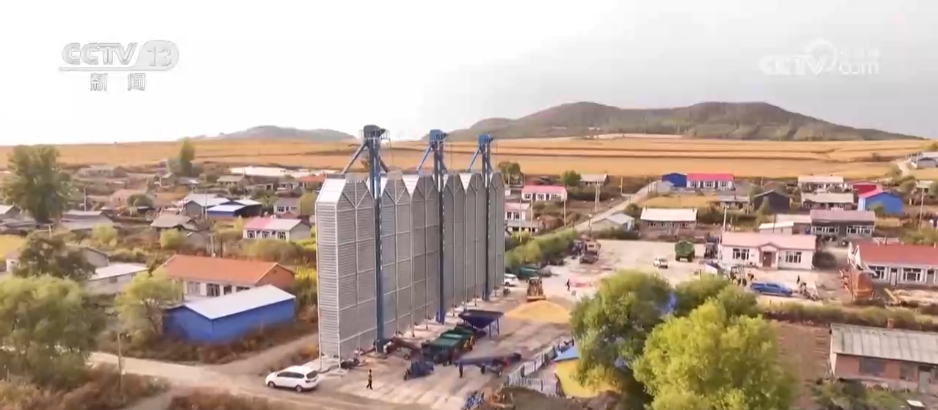
秋收一线观察 | 告别“地趴粮” 住进“好房子” 各地秋粮收储有“粮”方
Yang Shi Wang· 2025-11-06 04:06
Group 1: Grain Storage Innovations - The traditional method of storing harvested corn, known as "ground grain," has been replaced by modern "grain apartments" in Qitaihe, Heilongjiang, enhancing storage quality and reducing spoilage [1][6] - The new storage facilities, or "grain apartments," are designed with durable materials and efficient ventilation systems, allowing for rapid moisture reduction in corn from 17%-18% to below standard levels within 5-7 days [8][10] - Qitaihe has constructed 18 drying warehouses this year, with a total storage capacity of nearly 4,000 tons, aimed at safeguarding food security and reducing losses [10] Group 2: Alternative Storage Solutions - In Henan, farmers have adopted "sunshine rooms," which are ventilated storage cages that elevate corn off the ground, preventing moisture damage and improving storage efficiency [11][14] - These "sunshine rooms" can hold over three times the amount of corn compared to traditional methods, significantly enhancing space utilization [18] - The reduction of grain loss by even 1% can equate to billions of pounds of grain saved, highlighting the importance of these innovative storage solutions in the grain supply chain [20] Group 3: Drying Technologies - In Shaanxi, drying towers have become essential for managing wet corn, with temperatures reaching 120℃-140℃ to quickly reduce moisture content from over 35% to below 23% [21][23] - The drying process includes a two-step method, where corn is first rapidly dried and then subjected to a slower, lower-temperature drying to meet national standards [23][25] - The drying facilities operate continuously, capable of processing 400 tons of corn daily, ensuring that small farmers can also access timely drying services [25][26]