
绿色发展

Search documents
以发展“含绿量”提升增长“含金量” 看浙江三“变”|活力中国调研行
Ren Min Ri Bao· 2026-01-19 06:43
Group 1: Energy Transformation - The Zhoushan LHD marine tidal energy power station utilizes underwater "wind turbines" to convert tidal movements into green electricity [1] - The Meishan Port area has achieved a container throughput of 7.4782 million TEUs from January to July 2025, a year-on-year increase of 14.66% [2] - The Meishan Port's wind-solar-storage integrated project has generated over 40 million kilowatt-hours of electricity since its operation, reducing carbon emissions by approximately 24,000 tons [2] Group 2: Industrial Upgrading - The Huzhou "transformation financial loan" supports Hongchang Aluminum's production line upgrade, enhancing energy efficiency and productivity [1] - The Jiaxing Port area has deployed 100 hydrogen-powered trucks, saving approximately 3 million yuan annually compared to traditional fuel vehicles and reducing carbon emissions by about 5,000 tons [3] - The Shaoxing Shangyu District has transformed a traditional chemical park into a hub for strategic emerging industries, with the new materials industry expected to exceed 100 billion yuan in output value by 2024 [4] Group 3: Waste to Resource - Agricultural waste such as straw and citrus peels is being converted into bio-based fuels, contributing to carbon reduction efforts [7] - The "blue circular" model for marine plastic waste management has successfully recovered 58,000 tons of marine plastic waste, reducing carbon emissions by 52,200 tons [7] Group 4: Green Industry Development - Zhejiang is actively cultivating green low-carbon industries, with a focus on developing green technologies and products, leading to the emergence of several hundred billion yuan recycling resource industries [8] - The region emphasizes ecological priority and green low-carbon development, driving a transformation in production and economic structure [8]
全社会用电量首破10万亿千瓦时说明什么?
Bei Jing Qing Nian Bao· 2026-01-19 05:57
Group 1 - In 2025, China's total electricity consumption is projected to exceed 10 trillion kilowatt-hours for the first time, reaching 10.4 trillion kilowatt-hours, marking a 5% year-on-year increase, which is unprecedented for a single country globally [1][2] - The growth in electricity consumption reflects the active state of economic activities, with significant contributions from high-tech industries, digital economy, and green energy sectors, indicating a profound transformation in the structure of electricity consumption [2][3] - The electricity consumption in the manufacturing sector continues to rise, demonstrating the resilience and expansion of China's manufacturing capabilities, while the electricity demand from computing centers is expected to outpace overall electricity consumption growth [3] Group 2 - By the end of October 2025, China's renewable energy capacity is expected to reach 2.22 billion kilowatts, accounting for 59.2% of the total power generation capacity, with hydropower, wind, and solar power leading globally [4] - The increasing electricity consumption is supported by the rapid growth of high-tech and equipment manufacturing, as well as the deepening of green development concepts, showcasing China's commitment to economic transformation and sustainable growth [4]
市场监管总局:2025年发布国家计量技术规范213项
Yang Shi Xin Wen· 2026-01-19 03:29
Core Viewpoint - The State Administration for Market Regulation has reported that the number of national metrology technical standards will increase to 2,273 by 2025, representing a growth of 63.8% compared to 2024 [1] Group 1: Supporting Public Welfare - The release of national metrology technical standards for electronic weighing scales, optical lens boxes, digital electric energy meters, and weighing scales aims to ensure fair transactions and enhance public satisfaction [1] Group 2: Supporting Manufacturing Strength - New national metrology technical standards for satellite navigation interference simulation sources, metrology instrument software identification, and Bluetooth testing instruments are designed to support the development of high-end manufacturing [1] Group 3: Promoting Green Development - The introduction of national metrology technical standards for energy resource measurement reviews in key public institutions, zero-carbon building measurement evaluations, and vehicle emission gas testing instruments will facilitate the achievement of carbon neutrality goals [1]
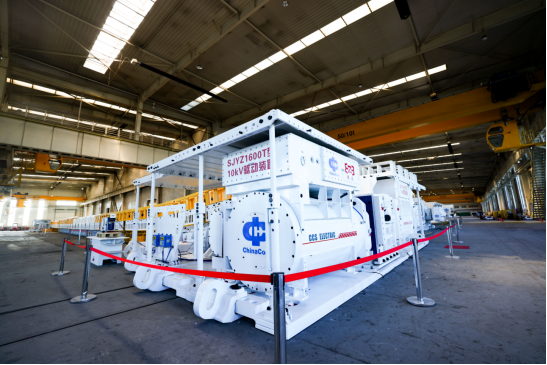
国内首套大采高10kV智能高效刮板输送成套装备在中煤张煤机公司下线
Zhong Guo Neng Yuan Wang· 2026-01-19 03:27
Core Viewpoint - The collaboration between Guoneng Shendong Coal Group and Zhongmei Zhang Coal Machine Company has led to the successful development of China's first set of high-efficiency scraper conveyor equipment with independent intellectual property rights, which meets international advanced standards and addresses the mining industry's needs for high-capacity and long-distance operations [1][5]. Group 1: Equipment Features - The newly developed equipment features an integrated 10kV high-voltage permanent magnet motor, inverter, reducer, and tight chain motor, forming a highly efficient transmission system that significantly reduces energy loss during operation [3]. - The equipment is designed to operate in harsh mining conditions, utilizing a modular high-pressure cabin design with customized insulation materials to enhance environmental performance and insulation reliability [4]. - A comprehensive intelligent monitoring system is integrated into the equipment, allowing for real-time detection of potential risks such as high-voltage insulation anomalies and component wear, thus enabling precise predictive maintenance [5]. Group 2: Industry Impact - This equipment aligns with the principles of "innovation leading, green development," breaking through voltage limitations to enhance power supply quality in mining operations, thereby supporting the high-quality development of the coal industry [5]. - The advancements in this technology are expected to significantly improve operational efficiency and reduce operational costs, contributing to the modernization of mining practices [3][5].

奋力推动美丽中国建设取得新的重大进展
Zhong Guo Huan Jing Bao· 2026-01-19 00:49
Core Insights - The 2026 National Ecological Environment Protection Work Conference summarized the progress and achievements of ecological environment protection in 2025 and the "14th Five-Year Plan," while planning for the "15th Five-Year Plan" and outlining key tasks for 2026 [1][2] - The conference emphasized the importance of the concept that "lucid waters and lush mountains are invaluable assets," aiming to enhance green development momentum and build a beautiful China [1][3] Summary by Sections Achievements and Progress - Major pollutants' emissions have continued to decline, and the ecological environment shows an improving trend [1] - Nine batches of central ecological and environmental inspections have been conducted, addressing several prominent issues [1] - A "1+1+N" implementation system for beautiful China construction has been established, with 23 sector-specific actions being advanced [1][2] Future Goals and Strategies - The "15th Five-Year Plan" period is crucial for achieving significant improvements in ecological environment and is a key phase for building a beautiful China [2][3] - The focus will be on achieving carbon peak and carbon neutrality, promoting a comprehensive green transformation of economic and social development [3][4] Environmental Quality Improvement - The main line of work will be to improve ecological environment quality, emphasizing the importance of a good ecological environment as a fundamental public welfare [4] - Continuous efforts will be made to combat pollution and enhance ecological protection and restoration [4] Institutional Reforms - Deepening ecological civilization reforms is essential to enhance the internal driving force for building a beautiful China [4] - The need for systematic thinking and top-level design in reform efforts to improve ecological environment governance and promote green low-carbon development mechanisms is highlighted [4]
陕西持续提升县域经济质效
Shan Xi Ri Bao· 2026-01-19 00:48
Group 1 - The core viewpoint of the articles highlights the rapid development and transformation of the county economy in Shaanxi, driven by strategic planning and policy support [1][2][7] - Shaanxi's county economy is projected to reach a total of 1.68 trillion yuan in 2024, with an average economic output exceeding 20 billion yuan, reflecting a year-on-year growth of 6.4% [1] - The "one county, one policy" strategy has been implemented to enhance industrial clusters and optimize development zones, with significant contributions from industrial parks in cities like Xianyang [2][3] Group 2 - The establishment of a modern industrial system in cities like Hancheng focuses on traditional industries such as steel and coking, while also expanding into emerging sectors like hydrogen energy and lithium-ion batteries [3] - Transportation infrastructure improvements, such as the opening of the Xiyan high-speed railway, facilitate urban-rural industrial collaboration and resource sharing [5] - The county's development is supported by over 6,300 construction projects, with an investment of 266.9 billion yuan, aimed at enhancing urban infrastructure and quality of life [5][6] Group 3 - The energy revolution in northern Shaanxi is driving the transformation of small towns, with Fugu County producing 47.54% of the global magnesium output in 2024, creating over 20,000 jobs [6] - The integration of agriculture and tourism in central Shaanxi is boosting local economies, with notable improvements in the quality and efficiency of specialty crops [6] - The provincial government emphasizes the importance of innovative mechanisms and multi-faceted economic development to stimulate consumption and enhance the vitality of the county economy [6]
做强产业硬支撑 擘画经济新图景
Xin Lang Cai Jing· 2026-01-18 23:36
Core Viewpoint - Guizhou province is focusing on high-quality industrial development, emphasizing the importance of industry, projects, investment attraction, and operational entities to strengthen the foundation for sustainable economic growth [2]. Group 1: Industrial Development - Guiyang's industrial sector has achieved a "double 30" contribution, accounting for over 30% of both the city's economic growth and the province's industrial growth [3]. - The total industrial output value of the city has surpassed 500 billion yuan, with leading industries such as new energy batteries and materials, new energy vehicles, and electronic information manufacturing expected to grow by 50.7% year-on-year [3]. - The city has established a gradient cultivation system for innovative enterprises, enhancing the innovation capacity and ranking 27th among 101 innovative cities nationwide [3][6]. Group 2: Innovation and Technology - Guiyang has developed a robust innovation ecosystem, with 8 national-level technology innovation platforms and 38 national-level specialized and innovative "little giant" enterprises [3]. - The city is promoting digital transformation in key industries, significantly increasing the rate of numerical control in critical processes and the adoption of digital R&D tools [6]. Group 3: Industrial Parks and Infrastructure - The city has implemented a "five optimizations" reform in development zones, enhancing the efficiency of industrial parks, which now include one 500 billion yuan and nine 100 billion yuan development zones [4]. - Development zones are becoming the core areas for industrial aggregation and major contributors to economic growth [4]. Group 4: Diverse Economic Growth - Guiyang is also promoting the coordinated development of tourism, agriculture, and modern services, contributing significantly to economic growth [7]. - The agricultural modernization efforts are ensuring stable economic performance, while the tourism sector is leveraging local resources to create new consumption scenarios, including a thriving coffee and craft beer industry [7].
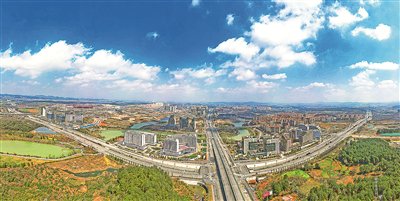
构建发展新矩阵 筑就品质高速路
Xin Lang Cai Jing· 2026-01-18 23:36
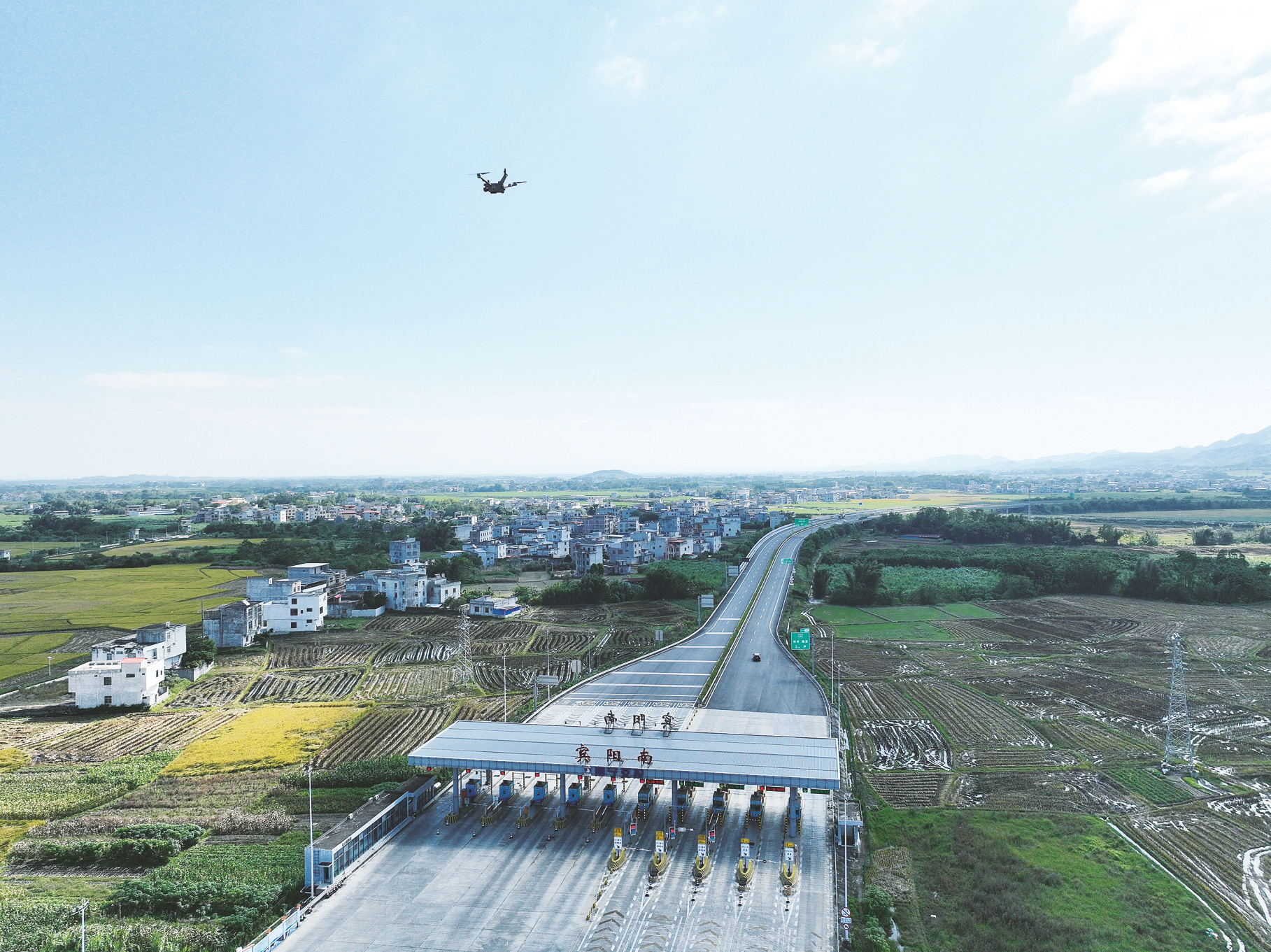
Core Viewpoint - Nanning Expressway Investment Group's subsidiary, Nanning Expressway Construction Development Co., aims for high-quality development by focusing on core responsibilities and innovative reforms, achieving significant results in project execution and operational improvements in 2025 [2][3]. Group 1: Project Achievements - The company successfully completed major engineering projects, including the full bridge connectivity of the Nanjin Highway Phase II and the construction of the Zhengyoujiang Grand Bridge on the Nanning Second Ring Expressway [2]. - The total profit for the year reached 173 million, exceeding the annual budget by 124.46%, with fixed asset investment tasks completed at 3.782 billion [2]. Group 2: Operational Enhancements - The company emphasizes improving operational management and service quality, extending services to every lane and window, and implementing a "reservation passage" model for large cargo transport [2]. - Initiatives such as the ETC green channel and volunteer services have been introduced to enhance the travel experience for drivers [3]. Group 3: Technological Integration - The company has embraced digital transformation, with the Six Bin Expressway becoming the first in Guangxi to implement automated drone inspections, creating a new paradigm for smart maintenance [3]. - Eight toll stations on the Six Bin and Linhong Expressways have transformed into "smart stations," achieving full coverage of cashless payment systems and improving traffic efficiency [3]. Group 4: Party Building and Community Engagement - The company promotes the "Red Party Flag on the Expressway" brand, integrating party building with construction, maintenance, and service, enhancing overall development [3]. - The company’s youth team received the "Guangxi May Fourth Red Flag Youth League Branch" title, reflecting its commitment to community and team engagement [3].
协同发力形成绿色生产生活方式
Xin Lang Cai Jing· 2026-01-18 22:33
Core Viewpoint - The article emphasizes the importance of accelerating the formation of green production and lifestyle as a means to enhance the quality of life and promote sustainable economic development in Heilongjiang Province [1][3]. Group 1: Green Production and Lifestyle - Green production is defined as a production model focused on technological innovation, energy conservation, and carbon reduction, aiming for efficient resource utilization and sustainable environmental development [1][2]. - Green lifestyle reflects a profound change in people's consumption behaviors and social participation, promoting a green and low-carbon attitude in daily life, such as waste sorting and choosing green products [1][2]. Group 2: Interrelationship Between Green Production and Lifestyle - Green production provides the material basis and technical support for green lifestyles, making green products and services possible [2]. - Conversely, green lifestyles exert market pressure on production, encouraging enterprises to accelerate their green transformation, creating a virtuous cycle that integrates production, circulation, and consumption systems [2]. Group 3: Significance of Green Production and Lifestyle - Green development is a crucial part of the new development concept, promoting harmony between humans and nature, which is a distinctive feature of Chinese modernization [3]. - The transformation towards green lifestyles is essential for ecological civilization and the construction of a beautiful Heilongjiang, requiring public participation to enhance ecological awareness [3]. Group 4: Comprehensive Promotion of Green Development - To promote green development in Heilongjiang, it is necessary to integrate green and low-carbon concepts into all aspects of economic and social development, with a focus on systematically constructing green production and lifestyle [4]. - Continuous education and public awareness campaigns are essential to transform macro policy guidance into individual and community recognition of green values [4]. Group 5: Encouraging Green Consumption - Promoting sustainable green consumption can effectively drive the green transformation of production, with initiatives such as advocating for energy-saving and environmentally friendly consumption behaviors [5]. - Collaboration between government and enterprises is crucial to expand the supply of green products and services, utilizing subsidies and tax incentives to stimulate green consumption [5]. Group 6: Institutional Support for Green Development - Strengthening the institutional framework for green production and lifestyle is vital, including implementing strict environmental protection responsibilities and developing a robust support system for green innovation [5]. - Optimizing industrial structure and accelerating the development of green industries will facilitate low-carbon circular development, supported by market mechanisms that reward green practices [5].
科技赋能精准治沙 长效管护筑牢屏障
Xin Lang Cai Jing· 2026-01-18 19:30
Group 1 - The core viewpoint of the article highlights the successful transformation of the Keshiketeng Banner from an area plagued by desertification to one that promotes ecological and economic benefits through effective sand control measures [1][2][3] - The Keshiketeng Banner has implemented a scientific approach to sand control, utilizing local tree species and advanced technologies, resulting in a 70% reduction in the movement rate of shifting sand dunes and an 85% survival rate for planted seedlings [2][3] - The local community has actively participated in ecological restoration projects, leading to an increase in income for residents, with over 2,500 individuals involved and an average income increase of 6,400 yuan per person [2][3] Group 2 - A comprehensive management system has been established for sand control, involving multiple stakeholders and the use of smart monitoring equipment, which has led to the resolution of over 15,000 cases of environmental damage during the "14th Five-Year Plan" period [3] - The area has successfully completed sand control tasks covering 2.39 million acres, with forest coverage increasing to 32.1% and grassland vegetation coverage reaching 53.2% [3][4] - The Keshiketeng Banner has developed a thriving forestry and grassland industry, with a production value of 1.27 billion yuan in the first three quarters of 2025, transforming previously barren land into a source of wealth for the community [4][5]