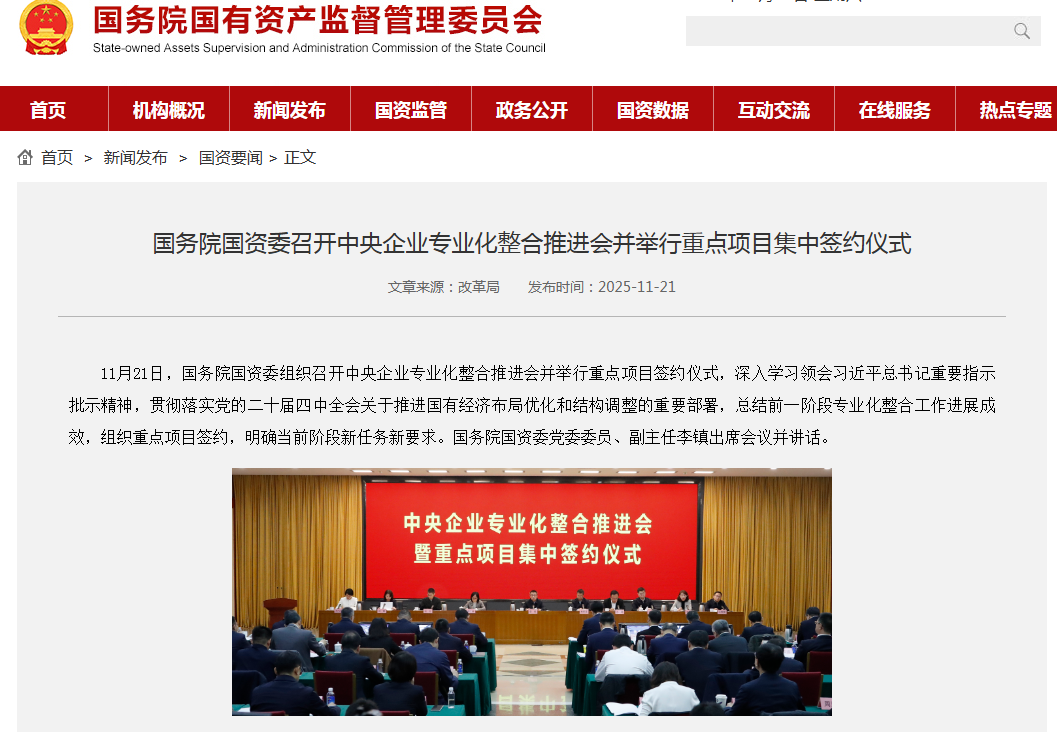
专业化整合

Search documents
【财经分析】从“大而全”到“新而强” 央企专业化整合或将开启“第二幕”
Zhong Guo Jin Rong Xin Xi Wang· 2025-11-26 03:52
Core Viewpoint - The recent signing of 8 key projects by 17 state-owned enterprises (SOEs) at the Central Enterprises Professional Integration Promotion Conference indicates a shift towards specialized integration in critical sectors such as new materials, artificial intelligence, and aviation logistics, aiming for a "specialized and strong" approach in state-owned enterprise restructuring [1][4]. Group 1: Specialized Integration Trends - Specialized restructuring has become an important method for improving the efficiency of state-owned capital allocation and operation [2][5]. - During the 14th Five-Year Plan period, SOEs have restructured 6 groups of 10 enterprises, establishing new entities like China Star Network and China Electrical Equipment Group [2][5]. - The focus of integration is shifting from large-scale mergers to more efficient and targeted asset restructuring, including asset swaps and strategic alliances [2][4]. Group 2: Focus on Emerging Industries - The integration projects are increasingly directed towards high-tech and high-potential sectors, reflecting a strategic shift in resource allocation [4][6]. - The establishment of China Salt Lake, formed by three companies, aims to ensure resource energy security with a registered capital of 10 billion yuan [2]. - The integration efforts are now targeting emerging industries rather than merely addressing traditional sectors or overcapacity issues [7][8]. Group 3: Future Directions - The upcoming 15th Five-Year Plan will emphasize enhancing the resilience and competitiveness of industrial chains through vertical resource integration [6][8]. - The focus on new industries is seen as a necessary response to structural challenges and aims to streamline operations while addressing issues like redundant construction [8]. - The integration strategy is expected to foster innovation and improve the overall functionality of state-owned enterprises [5][8].


央企新一轮重组启动:17家单位集中签约,涉及AI、新材料等多领域
第一财经· 2025-11-24 14:52
Core Viewpoint - The article discusses the recent signing of key projects in various sectors, including artificial intelligence and new materials, as part of a new round of central enterprise integration initiated by the State-owned Assets Supervision and Administration Commission (SASAC) [3][11]. Group 1: Central Enterprise Integration - The SASAC organized a meeting to promote the professional integration of central enterprises, resulting in the signing of key projects involving 17 units, including major companies like China National Petroleum Corporation and China Southern Airlines [3][12]. - The integration aims to enhance resource allocation efficiency, foster core competitive enterprises, and drive high-quality development through specialized integration [3][14]. - The integration process will focus on optimizing industry resource allocation, targeting high-end market segments, and consolidating similar business operations within groups [14]. Group 2: Cruise Industry Development - The China Tourism Group has successfully integrated several central enterprise cruise resources, establishing the largest cruise fleet in Asia, which includes vessels like "Aida·Magic City" and "Nanhai Dream" [6][9]. - The cruise industry is recognized for its significant economic impact, with a multiplier effect of 1:10 to 1:14, meaning every 1 yuan of revenue generated by the cruise industry can stimulate 10 to 14 yuan in related industries [7][9]. - The cruise economy is experiencing a resurgence, with the 2025 cruise economic index for China and Asia surpassing pre-pandemic levels, indicating a strong recovery and a new growth cycle [9][10]. Group 3: Future Outlook and Strategic Focus - The SASAC emphasizes the need for central enterprises to focus on core business areas and accelerate the integration of non-core assets into main enterprises to enhance overall efficiency [13][14]. - Future integration efforts will prioritize high-end resource acquisition and technology, aiming to extend into high-end market segments and optimize industry structures [14]. - The article highlights the importance of collaboration among government, enterprises, and ports to foster the cruise industry's growth and enhance market development through cultural promotion [10].

央企专业化整合再推进 8组17家单位重点项目集中签约
Chang Jiang Shang Bao· 2025-11-24 00:32
Core Points - The State-owned Assets Supervision and Administration Commission (SASAC) organized a meeting to promote the professional integration of central enterprises, resulting in the signing of key projects in various sectors including new materials, artificial intelligence, cruise operations, inspection and testing, and air logistics [2][3] Group 1: Professional Integration Projects - A total of 17 units participated in the signing of key projects, focusing on accelerating breakthroughs in core technologies and promoting the scale development of emerging industries [2][3] - Notable projects include collaborations between Sinopec and Dongfang Electric Group, FAW Group and Zhuoyue Technology in intelligent driving, and China Aluminum Group with Ansteel in the industrial internet and smart supply chain [3] Group 2: Importance of Professional Integration - Professional integration is a crucial task in the reform of state-owned enterprises, aimed at optimizing the layout of state-owned economies and enhancing core competitiveness [4] - Since 2024, over a thousand professional integration projects have been initiated to support national strategies and promote high-quality development [4] Group 3: Future Directions - The meeting emphasized the need for central enterprises to consolidate resources effectively, focusing on core business areas and avoiding unrelated diversification [5] - Future integration efforts will target unreasonable business layouts and aim to enhance scale effects and extend into high-end markets [5]
时报观察 以资本为钥 优化央企战新产业布局
Zheng Quan Shi Bao· 2025-11-23 21:46
Core Viewpoint - The State-owned Assets Supervision and Administration Commission (SASAC) emphasizes the need for state-owned enterprises (SOEs) to leverage capital markets to enhance the integration capabilities of strategic emerging industries [1] Group 1: Policy Direction - SOEs are encouraged to explore the injection of non-core but growth-potential strategic emerging businesses into listed platforms of other core SOEs [1] - This policy provides a new pathway for optimizing the layout of strategic emerging industries within state-owned enterprises [1] Group 2: Investment Trends - During the 14th Five-Year Plan period, SOEs have significantly increased their investment in strategic emerging industries, with an annual growth rate exceeding 20% [2] - In 2024, the investment in strategic emerging industries by SOEs is expected to surpass 40% of total investments, with revenue contribution nearing 30% [1][2] Group 3: Development Challenges - Strategic emerging industries cultivated by SOEs face challenges such as resource dispersion and insufficient collaboration [2] - The injection of these businesses into other core SOEs' listed platforms is seen as a viable solution to overcome these development bottlenecks [2] Group 4: Future Outlook - The integration of SOEs in sectors like new energy, new materials, and advanced manufacturing is anticipated to become increasingly active [2] - Successful integration will depend on not just asset recombination but also the release of synergistic effects, requiring careful design of integration models and paths [2]
新央企,开始组建!
中国能源报· 2025-11-23 07:13
Core Viewpoint - The State-owned Assets Supervision and Administration Commission (SASAC) of the State Council has organized a signing ceremony for eight specialized integration projects, aiming to promote professional integration among central enterprises, private enterprises, and local governments across various key sectors [1][3]. Group 1: Project Overview - The signed projects involve 17 entities, including central enterprises, private enterprises, and local governments, covering key areas such as new materials, artificial intelligence, cruise industry, and inspection and testing [3]. - The focus of these specialized integration projects is on accelerating breakthroughs in core technologies, strengthening strategic emerging industries, optimizing traditional industries, and promoting high-quality development of key industrial chains [5]. Group 2: Economic Impact - The cruise industry has a significant driving effect, with a ratio of economic benefit generated from the industry ranging from 10 to 14 times for every 1 yuan of revenue produced [7]. - The China Tourism Group is leading the establishment of a central enterprise cruise operation platform, which will result in the largest fleet in Asia following the integration [8]. Group 3: Strategic Direction - SASAC emphasizes the importance of focusing on core business operations, enhancing resource allocation efficiency, and promoting professional integration while avoiding disorderly expansion and low-level repeated construction [10]. - The integration efforts are aimed at consolidating similar businesses, improving overall efficiency, and ensuring alignment with future industry and technology development trends [10].
官宣,新央企组建!中国旅游集团牵头
Sou Hu Cai Jing· 2025-11-22 09:21
Group 1 - The State-owned Assets Supervision and Administration Commission (SASAC) organized a meeting to promote the professional integration of central enterprises, resulting in the signing of key projects in various sectors including new materials, artificial intelligence, cruise operations, inspection and testing, and air logistics [1][3] - Central enterprises are focusing on professional integration to align with national strategies, drive technological innovation, and promote high-quality development, optimizing resource allocation and enhancing core competitiveness [3][7] - The China Tourism Group is leading the establishment of a central enterprise cruise operation platform, which will have the largest fleet in Asia following this integration [3] Group 2 - The cruise industry has a significant economic impact, with a multiplier effect of 1:10 to 1:14, meaning that for every 1 yuan of revenue generated by the cruise industry, it can drive 10 to 14 yuan in related industries [5] - SASAC emphasizes that professional integration must align with future industry and technology trends, focusing on high-end development and eliminating low-level redundant construction to improve overall efficiency [7] - The China Tourism Group, a key state-owned enterprise, has total assets exceeding 200 billion yuan by the end of 2024, making it a leading player in the tourism sector with a comprehensive industry chain and high brand value [7]
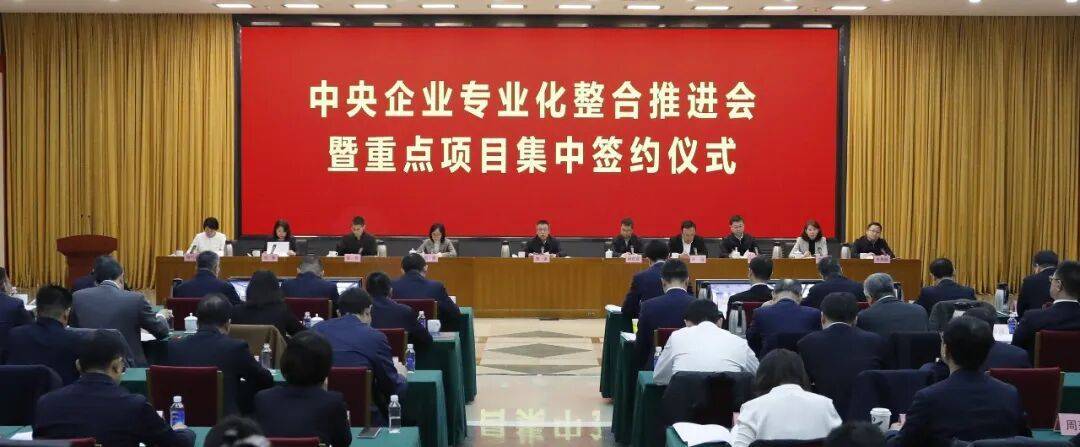
新央企,开始组建!
新华网财经· 2025-11-22 09:18
Core Viewpoint - The State-owned Assets Supervision and Administration Commission (SASAC) emphasizes the importance of specialized integration among central enterprises to enhance competitiveness and optimize resource allocation in alignment with national strategies and high-quality development [3][5]. Group 1: Specialized Integration - Central enterprises are focusing on specialized integration to support national strategies, promote technological innovation, and enhance high-quality development [3]. - The integration efforts aim to optimize industry layout, improve resource allocation efficiency, and strengthen core competitiveness [3]. Group 2: Key Project Signings - A total of 8 groups consisting of 17 units signed key projects in two batches, covering critical sectors such as new materials, artificial intelligence, cruise operations, inspection and testing, and aviation logistics [5]. - Notable central enterprises like Aviation Industry Corporation, Sinopec, FAW Group, China Minmetals, China Resources, and China National Building Material participated in discussions [5]. Group 3: Cruise Industry Development - China Tourism Group is leading the establishment of a central enterprise cruise operation platform, which will have the largest fleet in Asia post-integration [6]. - The cruise industry has a significant multiplier effect, with every 1 yuan of revenue generating 10 to 14 yuan in related economic benefits [6]. Group 4: Long-term Strategy - SASAC stresses that specialized integration must align with future industry and technology trends, advocating for a long-term approach and discouraging short-term, unrelated expansions [7]. - The focus is on integrating similar businesses to eliminate low-level redundant construction and enhance overall efficiency [7]. Group 5: China Tourism Group Overview - China Tourism Group, a key state-owned enterprise, has a rich history dating back to 1923 and operates a diverse portfolio including travel agencies, scenic spots, hotels, and cruise services [7]. - The group has over 42,000 employees and total assets exceeding 200 billion yuan, serving over 80 million tourists annually [7].
新央企组建!
Zheng Quan Shi Bao· 2025-11-22 08:38
Group 1 - The State-owned Assets Supervision and Administration Commission (SASAC) organized a meeting to promote the professional integration of central enterprises, resulting in the signing of 8 groups of projects involving 17 units in key areas such as new materials, artificial intelligence, cruise operations, inspection and testing, and aviation logistics [1][2] - The signed projects aim to accelerate breakthroughs in core technologies, strengthen strategic emerging industries, and optimize traditional industries for high-quality development [1][2] - China Tourism Group is leading the establishment of a central enterprise cruise operation platform, which will have the largest fleet in Asia post-integration, with a significant economic impact ratio of 1:10 to 1:14 for the cruise industry [1] Group 2 - SASAC emphasized that professional integration must align with future industry and technology trends, focusing on long-term goals and avoiding short-term scale pursuits [2] - The integration strategy includes deepening core business operations, enhancing resource allocation efficiency, and focusing on emerging sectors to strengthen the scale and capabilities of strategic emerging industries [2] Group 3 - China Tourism Group is a key state-owned enterprise directly managed by the central government, with a history dating back to 1923, and operates a diverse range of businesses including travel agencies, scenic spots, hotels, and cruise operations [3] - The group has a workforce of over 42,000 and total assets exceeding 200 billion, serving over 80 million tourists annually [3]
新央企组建!
证券时报· 2025-11-22 08:30
Group 1 - The core viewpoint of the article emphasizes the importance of specialized integration among central enterprises to enhance core technology breakthroughs and promote high-quality development in key industries such as new materials, artificial intelligence, and cruise operations [1][2] - A total of 8 groups consisting of 17 units signed key projects, focusing on optimizing traditional industries and promoting the development of strategic emerging industries [1][2] - The China Tourism Group is leading the establishment of a central enterprise cruise operation platform, which will position its fleet as the largest in Asia [1] Group 2 - The State-owned Assets Supervision and Administration Commission (SASAC) stresses that specialized integration must align with future industry and technology trends, advocating for a long-term approach and avoiding short-term, unrelated expansions [2] - SASAC's Deputy Director Li Zhen emphasizes the need to focus on core businesses, improve resource allocation efficiency, and integrate high-quality resources along the industrial chain to enhance the scale and strength of strategic emerging industries [2] Group 3 - The China Tourism Group, a significant state-owned enterprise directly managed by the central government, has a rich history dating back to 1923 and operates a diverse range of businesses including travel agencies, hotels, and cruise operations [3] - The group has over 42,000 employees and total assets exceeding 200 billion yuan, receiving more than 80 million tourists annually [3]
央企整合,大消息!涉17家单位
Zhong Guo Jing Ji Wang· 2025-11-22 07:55
Group 1 - The State-owned Assets Supervision and Administration Commission (SASAC) organized a meeting to promote the professional integration of central enterprises, resulting in the signing of key projects in various sectors including new materials, artificial intelligence, cruise operations, inspection and testing, and air logistics [1][3] - The focus of the signed projects is on accelerating breakthroughs in core technologies, strengthening strategic emerging industries, optimizing traditional industries, and promoting high-quality development of key industrial chains [3] - SASAC emphasized the importance of aligning professional integration with future industry and technology trends, advocating for long-term strategies and avoiding short-term scale pursuits that lead to unrelated diversification and disorderly expansion [3] Group 2 - The integration projects aim to enhance resource allocation efficiency, concentrate on core responsibilities, and promote the integration of quality resources along the industrial chain to strengthen the scale and strength of strategic emerging industries [3] - China Tourism Group is leading the establishment of a central enterprise cruise operation platform, which will result in the largest fleet in Asia following the professional integration [3] - The cruise industry has a significant multiplier effect, with a ratio of 1:10 to 1:14, meaning that for every 1 yuan of revenue generated by the cruise industry, it can drive 10 to 14 yuan of economic benefits in related upstream and downstream industries [5]