
两业融合

Search documents
两大央企成立新公司
Xin Jing Bao· 2026-02-10 07:29
Core Viewpoint - The establishment of China Logistics Group Equipment Logistics Co., Ltd. marks a significant collaboration between China Electric Equipment and China Logistics, aiming to enhance the integration of high-end equipment manufacturing and modern logistics, thereby contributing to national strategic goals and the modernization of the industrial system [2][3][4]. Group 1: Company Overview - China Logistics Group Equipment Logistics Co., Ltd. is a joint venture established by state-owned enterprises China Electric Equipment and China Logistics [2]. - China Electric Equipment Group is a major state-owned enterprise formed from the restructuring of several companies, including China West Electric Group and State Grid Corporation subsidiaries, and is responsible for managing domestic standards in the power distribution industry [4]. - China Logistics Group, established in December 2021, is a wholly state-owned enterprise with a registered capital of 30 billion yuan, operating a global network across five continents [4]. Group 2: Strategic Goals and Objectives - The new company aims to focus on energy equipment logistics and special oversized logistics, prioritizing the security of industrial and supply chains [4]. - It seeks to create a customized service system covering the entire lifecycle of power distribution equipment, leveraging technological innovation to enhance logistics productivity [4]. - The collaboration is positioned as a strategic move to lower logistics costs and improve efficiency, aligning with national policies to build a modern industrial system [3][4]. Group 3: Leadership and Vision - Key leaders from both companies attended the unveiling ceremony, emphasizing the importance of this partnership in driving high-quality development and innovation in logistics and manufacturing [2][3]. - The partnership is expected to set a benchmark for the integration of logistics and manufacturing services, contributing to the construction of a modern industrial and circulation system in China [3].

两大央企重磅成立新公司!
中国能源报· 2026-02-10 06:38
中国物流集团装备物流有限公司将锚定能源装备物流和特种大件物流领域"双一流"目标,以保障产业链供应链安全为首要职责,致力 于构建覆盖输配电设备全生命周期的定制化服务体系,通过科技创新打造装备物流新质生产力,为保障国家能源战略、服务现代化产业 体系贡献专业力量。 中国物流集团装备物流有限公司揭牌仪式在北京举行。 2月9日,中国物流集团装备物流有限公司揭牌仪式在北京举行。中国电气装备党委书记、董事长李洪凤,中国物流党委书记、董事长 刘敬桢,上海市静安区副区长胡勇,集团公司党委副书记、总经理闫华锋,中国物流党委副书记、总经理徐鸿,中国物流外部董事孙子 宇出席仪式并为中国物流集团装备物流有限公司揭牌,共同见证新公司启航。集团公司领导班子成员朱安珂、张帆,中国物流领导班子 成员钟吉昌、王虹、杜波、刘成、魏东参加座谈和仪式。中国物流党委常委、副总经理李向阳主持仪式。 闫华锋在致辞中表示,中国电气装备与中国物流同为各自领域的"国家队",新公司揭牌是双方深化战略协同的重要成果,更是我国高 端装备制造与现代物流深度融合的坚实一步。期待新公司发挥资源聚集优势,加快构建技术先进、安全可靠、运行高效的现代化装备物 流体系,探索物流业与 ...


“十五五”开好局起好步|广东力促服务业优质高效发展
Ren Min Ri Bao· 2026-02-07 08:48
人民日报记者 吴齐强 洪秋婷 一场针对严重慢性病的攻坚战,在广东东莞松山湖细胞制备中心紧锣密鼓地进行着。 实验室内,一个个零下196摄氏度液氮罐内储存着人体组织细胞,科研人员正在利用这些"种子"进 行药物研发。 从细胞层面研发药物,改变了传统的疾病治疗模式:从"对症管理"到"对因治疗"。这家中心的拥有 者广东先康达生物科技有限公司深耕研发一线,为研发企业开放实验室设计、提供工艺输出等。董事长 谢海涛介绍,依托广东产业链集群和人才优势,集团为全产业链提供支持,"2025年我们新增合作医院 近20家,营收同比增长10%以上。" 来到深圳技术大学后,李和言收获了"惊喜":学校同意5项专利技术许可的转化使用,而且10年内 无需支付使用费;专利应用后产生的收益,以一定比例回赠学校。 "这种模式让我们更灵活地对接社会资本,也大大缩短了技术落地周期。"李和言感慨道。 李和言的欣喜,是广东许多科研工作者共同的感受。2025年以来,广东省重点探索职务科技成 果"先用后转"改革,推广"先使用后付费"等科技成果转化新模式,配套发布了2100余项可转化科技成果 清单,让创新和应用更快"交上朋友"。 "对企业尤其是中小企业而言,'先用 ...
2025年广州经济的“稳”与“进”
Sou Hu Cai Jing· 2026-02-06 07:07
Core Insights - Guangzhou's economic performance in 2025 reflects resilience amid external challenges and internal structural adjustments, with a focus on consumption and industrial upgrades as dual engines of growth [1][6] Consumption Dynamics - The city's consumption market shows strong resilience, with daily retail sales for automobiles and communication devices reaching 375 million yuan and 132 million yuan respectively, and various goods maintaining an annual growth rate of over 6% [3] - Online retail sales of physical goods exceeded 350 billion yuan, marking a 13.1% year-on-year increase and accounting for 31.9% of total retail sales, indicating a transition from a traditional to a digital commerce hub [3] - Service consumption is becoming a new growth driver, with over 110,000 commercial performances held in a year, attracting 264 million tourists and boosting cultural and tourism consumption [3][4] Infrastructure and Investment - Baiyun Airport handled over 83 million passengers, ranking among the top ten globally, while the metro system recorded an annual ridership of 3.4 billion, showcasing robust transportation infrastructure [4] - New loans exceeded 510 billion yuan, ranking third nationally, with actual foreign investment growing by 9.1%, supporting the consumption infrastructure [4] Industrial Growth - The service sector's contribution to GDP surpassed 2.4 trillion yuan, accounting for over 80% of GDP growth, with the productive service industry making up 59% of this sector [4] - The digital economy is rapidly expanding, with core industry value-added growth at 6%, and digital product services growing by 15% [4][6] - Traditional industries are revitalizing through technological upgrades, with significant investments in industrial technology improvements during the 14th Five-Year Plan period [5][6] Emerging Industries - The "3+5" strategic emerging industries are projected to exceed 1 trillion yuan in value-added, growing by 4.2% and constituting 32.4% of GDP [6] - The automotive sector is transitioning towards new energy vehicles, with production increasing by 21.6%, and significant growth in charging stations and battery production [6] - The integration of innovation and industry is evident, with a notable increase in the number of specialized small and medium enterprises contributing significantly to industrial growth [6] Conclusion - Guangzhou's economic report illustrates a balanced approach to transitioning from old to new, with a solid foundation for current stability and a clear trajectory for future growth [6]
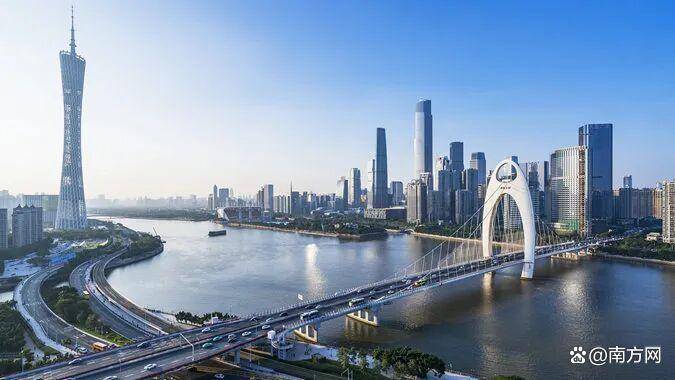
千亿之后怎么走?桂城余辉:做“广佛最高端、南海最焦点”
Nan Fang Du Shi Bao· 2026-02-03 08:20
Core Insights - The article highlights the determination and confidence of the Gui Cheng street in Foshan to enter a new development phase, having officially become the first "billion-yuan street" in Guangdong province, with a GDP of 1001.33 billion yuan projected for 2025, two years ahead of the target [2][4]. Economic Performance - Gui Cheng street has achieved a GDP of 1001.33 billion yuan, making it the seventh town in China to surpass the billion-yuan mark [4]. - The street's economy is supported by Foshan's overall economic strength, with a total economic output exceeding 1.3 trillion yuan and industrial output surpassing 3 trillion yuan [4]. - The tertiary sector contributes nearly 70% to the economic growth of Gui Cheng, indicating a strong service industry presence [4]. Development Strategy - Gui Cheng aims to establish itself as a modern vibrant city by focusing on five key areas: enterprise aggregation, financial activity, resident satisfaction, tourist influx, and information utilization [6]. - The street plans to enhance its industrial ecosystem through a "three-pronged" strategy, focusing on headquarters economy, innovation in strategic emerging industries, and the integration of modern finance with traditional manufacturing [7]. Talent Attraction - To attract and retain talent, Gui Cheng is developing projects aimed at creating a youthful urban environment, including international performance venues and recreational facilities [8]. - The street is also improving urban infrastructure, such as schools and hospitals, to enhance living conditions for residents [8]. Infrastructure Development - Gui Cheng will focus on constructing three key areas: the Qian Deng Lake cultural tourism area, the Ying Yue Lake integrated production and city area, and the Wen Han Lake innovation hub, to connect with resources from the Greater Bay Area [9]. - The development will emphasize the integration of culture, commerce, and tourism, as well as collaboration with neighboring regions [9]. Supportive Environment - The street plans to strengthen land, capital, and data support to facilitate development, including optimizing the business and legal environment to ensure efficient operations [10]. - Gui Cheng aims to create a transparent and fair business environment through legal reforms and improved governance [10].

2025年安徽省产业结构持续向新向优
Sou Hu Cai Jing· 2026-02-02 08:44
创新要素加速集聚,内生动能不断增强 增值税发票数据显示,2025年安徽省汽车制造、电子信息、电气器材三大先进制造业核心领域表现亮 眼。汽车行业延续高增长态势,同比增长19.5%;电子信息行业增速尤为突出,同比增长42.2%;电气 器材行业稳步发展,同比增长4.2%,三大行业销售占全省的比重较"十四五"初期提升5.6个百分点,反 映安徽省新兴产业发展集群成势,实现系统性跃升。 两业融合深度推进,新兴服务业蓬勃发展 增值税发票数据显示,2025年安徽省与先进制造业密切关联的新兴服务业销售收入同比增长8.1%,对 全省增长贡献率达47.7%,"制造+服务"协同发展效应凸显。其中,科研技术服务业、租赁商务服务 业、软件信息技术服务业销售收入同比分别增长13.2%、6.8%、4.2%,为先进制造业迭代升级提供有力 支撑。 税收数据显示,2025年安徽省产业结构持续向新向优,先进制造业担纲经济增长主引擎,并引领带动现 代服务业成为重要增长极,呈现位势向上、质效向好、动能向新的良好态势,为安徽省经济在2025年复 杂环境下实现平稳健康发展提供了坚实支撑。 先进制造业集群成势,规模跃升增速向好 创新驱动是经济高质量发展的核心 ...
12家人力资源机构“抱团”引才
Hang Zhou Ri Bao· 2026-01-30 03:35
Group 1 - The core viewpoint of the news is the establishment of a "Two-Industry Integration" service alliance by 12 human resource service agencies to support manufacturing enterprises in securing labor, cultivating skills, and matching talent [1][3] - The event highlighted the critical period for enterprises to plan their annual production and strive for a strong start, coinciding with the growth of the "296X" advanced manufacturing cluster in Hangzhou [1][3] - 50 key manufacturing enterprises released job demands covering various categories such as frontline workers, sales managers, and R&D engineers, engaging with human resource service agencies for direct matching [1][3] Group 2 - Manufacturing enterprises face challenges in recruitment, particularly for composite operators who understand both craftsmanship and smart equipment, as noted by industry leaders [2] - There is a talent shortage not only in frontline positions but also in management and sales, with a specific need for sales talents who are technically knowledgeable and can navigate international markets [2] - The mismatch between the skills of R&D talents and actual enterprise needs presents additional challenges, prompting HR professionals to seek external support from specialized human resource service agencies [2] Group 3 - The newly formed alliance aims to respond to the clear demands of enterprises by establishing a mechanism for regular and systematic talent matching [3] - The alliance members have created a rich online talent database to quickly respond to enterprise needs and provide detailed assessments of candidates' skills [3] - The integration of digital tools for attendance, electronic contracts, and payroll has helped many manufacturing enterprises optimize processes and reduce costs [3] Group 4 - The alliance's chairman outlined three key focus areas: regular specialized matching events, customized solutions for talent acquisition and skill enhancement, and promoting successful service models to foster a collaborative ecosystem of industry, talent, and innovation [4]
数字里看拼劲儿丨全省服务业增加值同比增长6.0% 拼出服务新生态
He Nan Ri Bao· 2026-01-28 23:15
文旅"融"出新体验。开封锚定宋文化,通过科技赋能与模式创新,推动万岁山武侠城等景区实现爆发式 增长,全年营收同比增长136.5%;洛阳以"汉服+沉浸式演艺+研学"的多元组合,持续释放"神都"魅力, 年接待游客1.58亿人次;焦作云台山则将冬季"冷资源"转化为市场"热效应",并带动周边形成全链条服 务业态,实现"景美、业兴、民富"。 微短剧"拼"出新产业。2025年,我省微短剧企业总数跃升至近1400家,全年新增319家;拍摄生态日趋 完善,日均近百个剧组活跃于中原片场,带动近7万人稳定就业。产业量级与影响力凸显,年制播量超 万部,稳居全国前三,各大热榜"榜上有名"成为常态;去年前11个月,全省影视节目制作行业营业收入 同比增长115.2%。为支撑产业从"爆红"走向"长红",我省针对性出台15条支持措施,以实打实的政策红 利推动产业提质升级,全力打造具有全国竞争力的微短剧产业高地。 在层出不穷、快速迭代的新技术、新业态、新场景中,"融合"是贯穿始终的关键词。优质的服务生态, 正来自现代服务业与先进制造业的深度互嵌与相互赋能。去年,我省持续实施服务业新供给培育工程, 深化国家级和省级两业融合试点建设,新培育48家 ...
人力资源服务业拥抱数字时代
Xin Lang Cai Jing· 2026-01-26 00:26
Core Insights - The human resources service industry in China is undergoing a critical transformation, leveraging digitalization and globalization to enhance employment services for over 300 million workers and support more than 50 million employers [1][2]. Group 1: Industry Transformation - The industry has evolved from traditional recruitment and dispatch services to include high-value areas such as human resource management consulting and cross-industry resource collaboration, significantly improving resource matching efficiency [2]. - As of the end of 2024, there are expected to be 74,000 human resource service institutions in China, with a majority being small firms with fewer than 50 employees or revenues below 5 million yuan [2]. Group 2: Digital Innovation - The introduction of AI-driven recruitment systems, such as the "Light Eye" AI digital recruitment interview system, allows for the generation of personalized interview questions, enhancing the recruitment process for small and medium-sized enterprises [3]. Group 3: Global Market Expansion - The human resources service industry is transitioning from an "import" to an "export" phase, with a focus on supporting Chinese enterprises in their overseas operations, which has become a significant growth area [4]. - Human resource service companies are establishing overseas branches and engaging in mergers and acquisitions to create a global service network, offering integrated solutions for Chinese companies venturing abroad [4]. Group 4: Policy Support - The implementation of social security agreements with 13 countries, including Germany and South Korea, aims to alleviate the issue of double social security payments for multinational companies, thereby reducing operational costs [5]. Group 5: Integration with Manufacturing - The integration of human resources services with the manufacturing sector is crucial, as nearly 40% of the industry's services are directed towards manufacturing, highlighting the need for skilled talent to support high-quality development [6]. - The Ministry of Human Resources and Social Security is promoting initiatives to enhance the development of human resources services in alignment with manufacturing needs, including pilot programs in 39 cities [6]. Group 6: Employment Initiatives - The Ministry of Human Resources and Social Security is launching initiatives like the "National Recruitment Action" to connect labor supply with demand, focusing on urgent and scarce occupations [7].
为“福气之城”配强服务底座
Su Zhou Ri Bao· 2026-01-23 00:26
Group 1 - The core viewpoint emphasizes that a city with a high happiness index is inherently service-oriented, as demonstrated by Suzhou's government work report highlighting the warmth of a service-oriented government [1] - Suzhou's ability to attract talent is significantly linked to its rich service resources, comfortable service experiences, and strong service dynamics [1] - Over the past five years, Suzhou has made its urban happiness more tangible, with over 80% of public budget expenditure allocated to people's livelihoods, and the income disparity between urban and rural residents reduced to a ratio of 1.76:1 [1] Group 2 - The historical and cultural depth of Suzhou enhances its comprehensive service capabilities, with a focus on optimizing urban functions and addressing public concerns in the government work report [2] - Suzhou is actively promoting the integration of industry and city, continuously upgrading services and improving efficiency, while recognizing the need for further enhancements in service precision, inclusivity, and sustainability [2] - The city aims to innovate urban services during the "14th Five-Year Plan" period, reinforcing its status as a "city of fortune" and painting a picture of happiness [2]