产业链升级

Search documents
延津花生生“花”铺就农民增收致富路
Zhong Guo Jing Ji Wang· 2025-12-12 06:30
Core Insights - The peanut industry in Yan Jin County, Henan Province, is being leveraged as a key driver for rural revitalization, focusing on deep processing and extending the industrial chain to enhance brand advantages [1][2]. Group 1: Industry Development - Yan Jin County is concentrating on high oleic peanut oil and high-quality edible peanuts as core product categories, aiming for a "five-upgrade" strategy that includes improving variety quality, scaling planting, standardizing production, regulating management, and industrializing operations [1]. - The peanut planting area has expanded to 600,000 acres, showcasing a significant scale effect in cultivation [1]. Group 2: Technological and Agricultural Support - The county is implementing various projects to enhance peanut production, including a green high-quality and efficient action project and a single yield improvement initiative, which focus on introducing and promoting high-yield, high-oil peanut varieties suitable for local conditions [1][2]. - Agricultural technology support is being strengthened through training and field guidance, promoting standardized planting techniques to increase peanut yields and farmers' incomes [1]. Group 3: Industrial Chain and Market Integration - Yan Jin County is promoting industrialization by encouraging processing enterprises to establish dedicated raw material production bases and engage in order agriculture with large-scale producers and cooperatives [2]. - The county is also focusing on the development of a modern high-quality peanut industry group, emphasizing high-end, intensive production and supporting technological upgrades in processing enterprises [2]. Group 4: Future Prospects - The peanut industry in Yan Jin County is expected to see significant growth, with ongoing projects aimed at enhancing initial and deep processing capabilities, projecting a processing conversion rate exceeding 90% [3]. - The county plans to continue refining the industrial chain, enhancing value chains, and solidifying supply chains to further boost the peanut industry's contribution to rural revitalization [3].
中国资产价值必将重估
雪球· 2025-12-11 08:02
Core Viewpoint - The article emphasizes that the true measure of asset value lies in productivity, which is essential for improving human life and is the foundation of a nation's strength [2][4]. Group 1: China's Economic Strength - The year 2025 is highlighted as a significant year for reassessing China's strength on a global scale [5]. - China's assets have been severely undervalued in the past, and a mean reversion is expected in the future [6]. - Unlike Japan, which has seen a decline in productivity since the 1990s, China continues to innovate and maintain strong productivity levels [8][14]. Group 2: Trade Dynamics - Despite predictions of a significant decline in exports due to the US-China trade war, China's trade surplus reached a record high, exceeding $1 trillion in the first 11 months of the year [17][20]. - The global market has become increasingly dependent on China, indicating that the US's trade war efforts are likely to fail [21][22]. - The article notes that European countries are becoming more reliant on Chinese products while struggling to sell their goods to China [30][31]. Group 3: Structural Issues and Global Demand - The article argues that deflation and overcapacity are merely structural issues and not indicative of a long-term economic decline [51]. - There is a vast unmet demand within China and globally, suggesting that production capacity is still insufficient [52]. - As China's manufacturing capabilities improve, more people worldwide will be able to afford industrial goods, leading to increased global productivity [47][48]. Group 4: Military Power and Asset Revaluation - China's military strength is presented as a crucial factor supporting the revaluation of its assets, providing a deterrent against external pressures [54][55]. - The article suggests that developed countries will need to adopt peaceful cooperation with China rather than confrontational approaches [55]. Group 5: Changing Perceptions - The year 2025 is identified as a pivotal moment for Western countries to change their perceptions of China, recognizing its advanced productivity and the necessity of engaging with its supply chains [56][57]. - The article concludes that as global perceptions of China shift, the value of Chinese assets will continue to appreciate, driven by strong productivity advancements [59][60].


【上海活动报名】医疗并购专场:从规模扩张到价值深耕,解锁产业链升级新机遇
Xin Lang Cai Jing· 2025-12-09 13:36
Core Insights - The article discusses the ongoing transformation in the medical industry, shifting from "scale expansion" to "value deepening," driven by policy incentives and industry demand [1][5] - A medical merger salon is scheduled for December 11, 2025, in Shanghai, aimed at exploring trends and opportunities in medical mergers and acquisitions [4][8] Group 1: Industry Trends - The medical industry is expected to maintain a high frequency of mergers and acquisitions in 2025, indicating a significant transition phase [1][5] - Policy support is being actively released, with large-scale pharmaceutical merger funds being established in cities like Shanghai and Beijing, creating a robust capital support network for industry integration [1][5] Group 2: Market Dynamics - The overall market is experiencing stable transaction volumes but declining prices, with clear acquisition logic in specific segments [2][6] - New opportunities are emerging from cross-industry layouts and the integration of digital healthcare [2][6] Group 3: Challenges - The industry faces challenges such as imbalances in value assessment and integration risks, highlighting the need for collaborative thinking within the industry [3][7]
亚钾国际产业园全面升级招商会圆满成功,新增投资10.88亿美元!
Quan Jing Wang· 2025-12-08 06:46
Core Insights - The core event is the "International Potash Industrial Park Comprehensive Upgrade Investment Promotion Conference" held in Shenzhen, China, marking the launch of the Laos "15th Five-Year Plan" and the introduction of the "Potash Industrial Park Decree" [1][4]. Investment and Economic Impact - The conference resulted in the signing of 16 industrial projects with an expected investment of $10.88 billion, projected to generate an annual output value of $18.28 billion [1]. - The projects include key sectors such as bromine chemical industry, chip-level metal materials, industrial silicon, potassium sulfate, and compound fertilizers, indicating a significant upgrade in the industrial ecosystem [1]. Strategic Partnerships - Strategic cooperation agreements were signed with Stanley Agricultural Group, Chengdu Yuntu Holdings, and Wenzhou Xifa Industrial Co., focusing on deep collaboration within the industrial chain [1]. Production Capacity Expansion - The successful commissioning of the main transportation system at the Xiaodongbu Mine and the trial operation of the third million-ton potash fertilizer project officially launched a new era of 3 million tons of potash fertilizer production capacity [2]. Value Chain Enhancement - The company aims to extend and enhance the industrial chain, driven by technology, to create a collaborative and symbiotic industrial ecosystem, thereby promoting value chain elevation [3]. Government Support and Policy Framework - The Lao government has established a competitive policy framework through the "Potash Industrial Park Decree," which includes special tax incentives and aims to create a strategic logistics hub [4]. - The government emphasizes the importance of potash as a key resource for industrial transformation and invites Chinese investors to participate in the development of the potash industrial park [4]. Regional Development Goals - The Governor of the Khammouane Province highlighted the role of the potash industrial park in generating revenue for the government and local development, aiming to transform the region into a modern industrial zone [5]. Collaborative Ecosystem - The increasing number and quality of enterprises in the potash industrial park are enhancing its collaborative ecosystem, allowing downstream companies to reduce raw material procurement costs and facilitating rapid project implementation [6]. - Financial institutions, including China Export & Credit Insurance Corporation, are actively supporting the industrial development through customized risk protection and financing solutions [6][7]. Long-term Vision - The company is committed to building a sustainable industrial ecosystem that integrates both potash and non-potash industries, aiming for long-term growth and value creation [7].

实探丨全面达产!这项关键技术“满血”运作
Zhong Guo Zheng Quan Bao· 2025-12-08 05:14
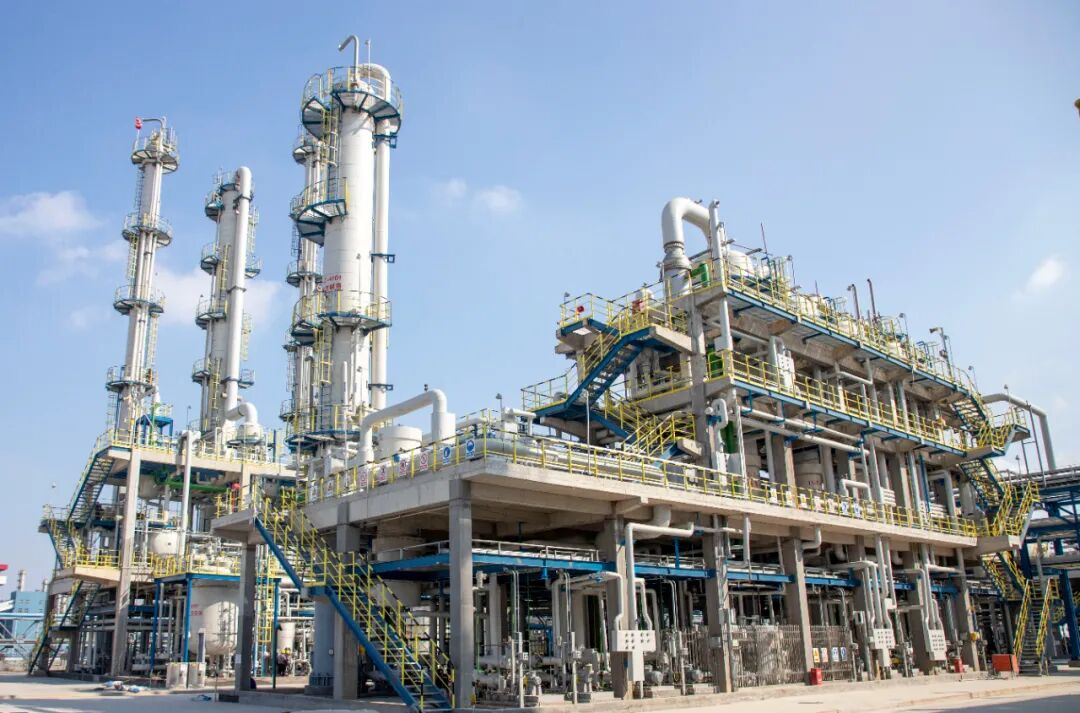
Core Insights - The production facility of Tianchen Qixiang New Materials Co., Ltd. in Zibo, Shandong, has successfully completed a 72-hour full-load performance test for its adiponitrile production, marking the full-scale industrialization of the first domestic butadiene-based adiponitrile project [1][10] - The large-scale production of adiponitrile, known as the "flour" of the nylon industry, will ensure a stable and high-quality supply of raw materials for the nylon industry, significantly benefiting high-end manufacturing sectors such as automotive, rail transportation, aerospace, and electronics [1][6] Industry Impact - Adiponitrile is a critical material for high-end manufacturing, serving as the core raw material for nylon 66, which is essential for various applications including automotive airbags and engine components [3][5] - The successful domestic production of adiponitrile will break the long-standing foreign monopoly on its production technology, thus promoting the development of China's high-end manufacturing industry [5][10] Technological Advancements - The adiponitrile production facility has a capacity of 200,000 tons per year and utilizes proprietary technology developed by China National Chemical Engineering, which has been in research and development since 2008 [10] - The production process has undergone over a hundred technical modifications to enhance reactor efficiency and distillation separation, achieving international competitiveness in quality and cost control [10] Supply Chain and Market Dynamics - The domestic production of adiponitrile will not only fill a technological gap but also reshape the nylon 66 industry chain ecosystem, allowing downstream companies to confidently expand their production capacity [11] - The availability of domestically produced adiponitrile will facilitate the upgrade of the entire industry chain, as companies can rely on a stable supply of raw materials [11] Future Directions - China National Chemical Engineering Group plans to focus on innovation-driven development in new materials, new energy, green ecology, and fine chemicals, emphasizing technological innovation and the integration of industry chains [13]
全面达产!这项关键技术“满血”运作
Zhong Guo Zheng Quan Bao· 2025-12-08 04:40
Core Viewpoint - The successful industrialization of adiponitrile production in China marks a significant advancement in the nylon industry, ensuring a stable supply of high-quality raw materials for various high-end manufacturing sectors [1][2]. Group 1: Production and Technology - The adiponitrile production facility in Shandong Zibo has recently passed a critical 72-hour full-load performance test, indicating that the first domestic industrial-scale production project using the butadiene method has reached full capacity [1][3]. - The production capacity of the facility is 200,000 tons per year, utilizing proprietary technology developed by China Chemical Engineering, which has been in research and development since 2008 [3]. - The technology has undergone over a decade of development, focusing on improving reactor efficiency and distillation separation, resulting in a product that is competitive in quality and cost on an international scale [3]. Group 2: Industry Impact - The mass production of adiponitrile is expected to provide sufficient and high-quality raw materials for the nylon industry, which is crucial for sectors such as automotive, rail transportation, aerospace, and electronics [2][4]. - The domestic production of adiponitrile not only fills a technological gap but also restructures the nylon 66 industry chain ecosystem, allowing downstream companies to confidently expand their production capacity [4]. - The China Chemical Engineering Group plans to continue focusing on innovation in new materials, new energy, green ecology, and fine chemicals, aiming to drive technological innovation and promote the transformation of scientific achievements into productivity [5].
《新华・河池蚕桑产业发展指数报告(2025)》亮相
Zhong Guo Jin Rong Xin Xi Wang· 2025-12-08 04:04
Core Insights - The report highlights the transformation of the silk industry in Hechi, Guangxi, from a raw material base to a fully integrated industry chain, providing a quantifiable model for agricultural development in central and western China [1] Group 1: Industry Development - Hechi has established a comprehensive industry chain covering germplasm cultivation, mulberry planting, silkworm rearing, silk processing, weaving, dyeing, and comprehensive resource recycling, occupying a significant position in China's silk industry [1] - By 2024, Hechi's mulberry garden area accounts for 34.5% of Guangxi, and raw silk production represents 40.32% of the province, indicating a solid industrial foundation [1] Group 2: Evaluation System - The silk index evaluates the industry across six dimensions: environment, scale, efficiency, innovation, influence, and integration, providing a comprehensive quantitative analysis of industry development [1] - The comprehensive index for Hechi's silk industry reached 147.61 in 2024, with an average annual growth rate exceeding 20% from 2022 to 2024, reflecting rapid development and increasing strength [1] Group 3: Policy Support - Policy precision is identified as a core guarantee for steady industry development, with the introduction of development plans and action schemes aimed at enhancing the silk industry [2] - In 2024, Hechi's silkworm cocoon production is projected to account for approximately 45% of Guangxi and 28% of the national total, with raw silk production maintaining the top position in the country for 15 consecutive years [2] Group 4: Innovation and Technology - Hechi has invented nearly 70 advanced tools, including automated cocooning equipment, and holds 64 applied patents, showcasing a strong focus on innovation [2] - The establishment of a data cloud platform for the silk industry enhances traditional silkworm rearing methods through digitalization and intelligence, significantly improving production efficiency [2] Group 5: Brand Development - Hechi is recognized as a premium cocoon and silk production base, with brand values exceeding 10 billion yuan, and high-grade raw silk being used by several international luxury brands [3] - The region is advancing multi-dimensional integration, creating new growth drivers through various economic cycles and cultural tourism initiatives [3] Group 6: Future Outlook - The report suggests targeted upgrade paths for the silk industry, including extending the industry chain, enhancing digital transformation, and deepening cultural tourism integration [4] - It emphasizes the need for a brand system that combines regional public brands with independent enterprise brands, and the establishment of an online and offline integrated sales network to improve consumer satisfaction [4]
连云港海州:两大重点产业项目落地 补链强链赋能高质量发展
Yang Zi Wan Bao Wang· 2025-12-06 10:54
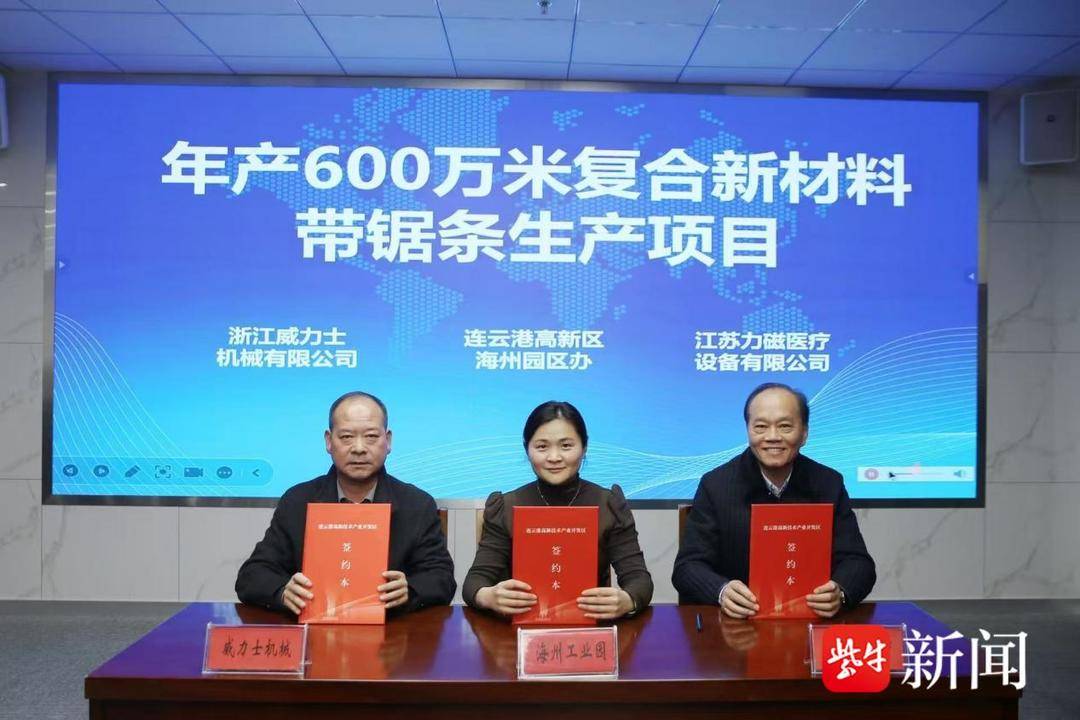
Core Insights - The signing of the high-performance membrane material project and the composite saw blade project in Lianyungang's Haizhou District marks a significant step towards upgrading the regional industrial chain and boosting economic development [1][3]. Group 1: High-Performance Membrane Material Project - The project focuses on the research, production, and sales of special functional membrane materials, which are widely used in new energy, environmental protection, and electronic information sectors [3]. - It aims to build modern production workshops and R&D centers, introducing advanced international production equipment and testing instruments to tackle core technologies such as high light transmittance, high barrier properties, and extreme environment resistance [3]. - Upon production, the project will provide critical support for industries related to new energy batteries and energy-saving environmental protection equipment, contributing to the establishment of a functional membrane material industrial cluster in Haizhou District [3]. Group 2: Composite Saw Blade Project - This project focuses on the manufacturing of high-end cutting tools, including saw blades for metal cutting, wood processing, and stone processing, characterized by high cutting precision, durability, and efficiency [3]. - Plans include the construction of an intelligent production line utilizing a digital production management system to optimize production processes and product performance, meeting the high precision demands of the high-end manufacturing sector [3]. - The establishment of this project will enhance the equipment manufacturing industry chain in Haizhou, improving local supply capabilities for mechanical processing and building materials production [3]. Group 3: Support and Development Strategy - The project leaders highlighted that Haizhou District's complete industrial support, efficient government services, and favorable market environment provide a solid foundation for project development [5]. - The district will adopt a "full lifecycle service" approach to continuously optimize the business environment, offering precise services in project approval, land guarantees, and talent introduction [5]. - The signing of these two projects exemplifies Haizhou District's commitment to the development strategy of "activating stock and breaking through increment," promising substantial economic benefits and job creation while enhancing the industrial chain and elevating industrial capabilities for high-quality regional economic growth [5].

倍杰特全资子公司拟收购文冶有色金属控股权
Bei Jing Shang Bao· 2025-12-04 10:25
Core Viewpoint - The company Beijiete (倍杰特) plans to acquire a controlling stake in Yunnan Wenye Nonferrous Metals Co., Ltd. through a share purchase agreement, aiming to enhance its position in the antimony industry and improve its overall operational efficiency and competitiveness [1][2]. Group 1: Acquisition Details - Beijiete's wholly-owned subsidiary, Beijiete (Beijing) New Materials Technology Co., Ltd., signed a share acquisition framework agreement on December 4 to gain control of Yunnan Wenye Nonferrous Metals [1]. - Yunnan Wenye Nonferrous Metals, established in 2001, focuses on antimony mining, processing, and sales, and also engages in hydropower development [1]. Group 2: Strategic Objectives - The acquisition is part of a strategy to extend the company's industrial chain from recycling to securing raw materials and refining, thereby enhancing the efficiency and risk resilience of the entire antimony supply chain [2]. - The deal includes in-production antimony resources, which will facilitate the rapid industrialization of the company's antimony recycling technology [2]. Group 3: Market Reaction - On December 4, Beijiete's stock fell by 3.87%, closing at 17.15 yuan per share, with a total market capitalization of 7.01 billion yuan [3].
快讯 | 申万宏源助力创石钼业在新三板挂牌
申万宏源证券上海北京西路营业部· 2025-12-04 02:11
Core Viewpoint - Liaoning Chuangshi Molybdenum Industry (Group) Co., Ltd. has successfully listed on the National Equities Exchange and Quotations (NEEQ), with Shenwan Hongyuan as the lead underwriter, indicating a significant milestone for the company and its growth strategy [1]. Company Overview - Established in 2006, Chuangshi Molybdenum specializes in the research, production, processing, and sales of molybdenum series products, including molybdenum iron alloy, molybdenum oxide, ammonium molybdate, high-purity molybdenum trioxide, molybdenum powder, and molybdenum metal [1]. - The company has developed into a large enterprise engaged in the entire line of research, production, and sales of molybdenum products, from rough processing to deep processing, after over a decade of technological accumulation [1]. Market Position - Chuangshi Molybdenum is positioned as a leading enterprise in the domestic molybdenum iron alloy industry, with its main product, molybdenum iron alloy, ranking among the top in domestic sales market share in 2024 [1]. Future Strategy - The company plans to extend its industrial chain by engaging in mineral mining through its subsidiary, Mongolian Molybdenum Metal Company, to ensure stable raw material supply, reduce procurement costs, enhance overall operational efficiency, and improve risk resistance [1]. - Shenwan Hongyuan's support aligns with the national innovation-driven development strategy, providing a solid foundation for Chuangshi Molybdenum's future industrial chain upgrades and the layout of rhenium series products [1].