制造业转型升级

Search documents
【宝鸡】推动制造业转型升级见实效
Shan Xi Ri Bao· 2025-12-18 22:57
Group 1 - The core viewpoint of the articles highlights the significant advancements made by Guokai Zirconium Industry Co., Ltd. in the production of nuclear-grade zirconium materials, which are crucial for the safety and stability of nuclear reactors [1][2] - Guokai Zirconium has established the first complete domestic industrial chain for nuclear-grade zirconium materials, achieving self-sufficiency and gaining a foothold in the international high-end market [2] - The company has a leading market share in the domestic nuclear-grade zirconium industry and ranks among the top five in the international market, contributing to national nuclear safety [2] Group 2 - Guokai Zirconium has collaborated with several prestigious universities and research institutions to overcome technical challenges and innovate in the field of zirconium alloy processing [2] - The company has been recognized as a national-level manufacturing champion, reflecting its commitment to technological innovation and excellence in a specialized field [5] - Guokai Zirconium has applied for over 200 patents, with several technological achievements filling gaps in domestic zirconium alloy processing technology [5] Group 3 - The city of Baoji is focusing on transforming its traditional industrial base by enhancing its manufacturing capabilities and fostering innovation [4][10] - Baoji has been recognized as a national pilot city for new technological transformation in manufacturing, showcasing its strength in advanced manufacturing [6][10] - The industrial output value of Baoji increased by 8.6% from January to October compared to the previous year, indicating robust growth in the manufacturing sector [10]

省工业设计发展大会在沈阳举行
Liao Ning Ri Bao· 2025-12-11 01:23
本届"强省杯"工业设计大赛共征集作品4877件,202件优秀作品最终获奖,覆盖产品设计、创意设 计、服装纺织及产教融合等领域。其中,大连船舶重工集团的全球首制7500立方米液态二氧化碳运输船 获特等奖,沈鼓集团的FL-62大型连续式跨声速风洞主驱动压缩机组等7项作品获金奖。 12月10日,辽宁省工业设计发展大会暨第二届"强省杯"工业设计大赛颁奖仪式在沈阳举行。大会 以"设计创新赋能 助力振兴突破"为主题,由省工业和信息化厅、省教育厅、省人力资源社会保障厅主 办,旨在加速工业设计产业升级,提升制造业核心竞争力。 会上,多位院士与行业专家围绕工业设计前沿趋势、绿色智能设计等议题作专题分享。现场还举行 了大赛产教融合成果转化与"通用航空器数字化工业设计中试基地"合作签约,并同步启动第三届大赛。 省工业和信息化厅相关负责人介绍,近年来,我省扎实推进工业设计高质量发展,已培育国家工业 设计研究院培育对象1家、国家级工业设计中心11家、省级工业设计中心106家。搭建共享协作平台,集 成设计资源10万余项。开展"工业设计进集群进园区进企业""百企义诊"等活动百余场,以"数字辽宁 智 造强省"专项资金支持,助力制造业转型升级 ...
人民币重估窗口开启:资本回流与资产博弈新局
Sou Hu Cai Jing· 2025-12-10 09:39
Group 1 - The core viewpoint is that the Chinese yuan is undervalued by 39.2% according to the Big Mac Index, and the current economic environment presents a critical opportunity for the revaluation of yuan assets, influenced by the Federal Reserve's interest rate cuts and the low valuation of A-shares [1][3] - The potential for yuan valuation recovery is widely recognized in the market, with estimates of undervaluation ranging from 10% to 40%, supported by China's strong trade relationships and expected capital inflows [3] - The current economic conditions, including the Federal Reserve's rate cuts and the low valuation of A-shares, create a favorable environment for the revaluation of yuan assets, suggesting a shift in asset pricing dynamics [3] Group 2 - The path for capital repatriation is complicated by the "dual-track" nature of US-China relations, with recent trade negotiations providing temporary optimism but underlying geopolitical tensions remaining a significant risk [4] - The internationalization of the yuan has established a safety buffer, as evidenced by the rise of CIPS and bilateral currency swap networks, which facilitate capital flows independent of traditional channels [6] - Investment strategies should balance opportunities and risks, focusing on currency-sensitive assets in the short term while aligning with the long-term goal of upgrading the manufacturing sector [6]

5.9%!11月我国出口增速超预期反弹
Zhong Guo Jing Ying Bao· 2025-12-09 09:15
12月8日,海关总署发布的数据显示,以美元计价,11月,我国出口额同比增长5.9%,比10月加快7.0个 百分点,超出市场预期;进口额同比增长1.9%,增速比10月加快0.9个百分点。 11月出口继续呈现"东方不亮西方亮"特征。东方金诚数据显示,11月中国对美国出口同比下降28.6%, 降幅较上月扩大3.4个百分点;但中国对发达经济体中的欧盟、日本、韩国出口同比分别增长14.8%、 4.3%、1.9%,增速分别较上月大幅加快13.9个、10.0个、15.0个百分点。 数据显示,当月集成电路和汽车出口额分别同比增长34.2%和53.0%,增速分别较上月加快18.9个和7.2 个百分点。"以上两类商品出口加快,是11月机电产品和高技术产品出口较快增长的主要原因,这有效 抵消了当月箱包、玩具、服装等传统劳动密集型商品出口下滑带来的影响。"冯琳表示,预计短期内芯 片及汽车出口有望继续保持高增势头。 另外,数据显示,11月我国对"一带一路"共建经济体整体出口同比增长10.5%,增速较上月加快7.8个百 分点。冯琳认为,这主要是在上年同期基数走低下,当月对非洲、拉丁美洲出口增速显著加快带动的结 果。 总体上看,冯琳表示: ...
41.21万亿元,同比增长3.6%!
Jin Rong Shi Bao· 2025-12-09 02:20
Core Viewpoint - China's goods trade import and export value reached 41.21 trillion yuan in the first 11 months of 2025, showing a year-on-year growth of 3.6% [1] Group 1: Export Performance - In November, China's exports grew by 5.9% year-on-year, rebounding significantly from a decline of 1.1% in October, indicating a recovery to normal levels in the second half of the year [1][2] - The increase in exports is attributed to three main factors: a lower base from the previous year, a rebound in global trade, and accelerated growth in exports of chips and automobiles driven by domestic manufacturing upgrades and global AI investment [2][3] - Private enterprises have shown strong growth in imports and exports, with a total of 23.52 trillion yuan in trade, representing a 7.1% increase and accounting for 57.1% of China's total foreign trade [2] Group 2: Import Trends - In November, imports increased by 1.9%, with the growth rate accelerating by 0.9 percentage points compared to the previous month, supported by a lower base from last year [4] - The rebound in exports has a direct positive impact on import growth, reflecting China's "large import and export" characteristics [4] - Future import growth may be supported by domestic policies aimed at boosting internal demand, including the introduction of new financial tools and local government bond limits for project construction [4] Group 3: Sector Contributions - Mechanical and electrical products, along with high-tech products, continue to play a crucial role in China's export stability, with mechanical and electrical product exports reaching $205.9 billion in November, growing by 9.65% [3] - High-tech product exports exceeded $88.1 billion in November, with a growth rate of 7.68%, indicating a significant contribution to overall export performance [3]
11月出口超预期反弹,同比增幅较上月回升7个百分点
第一财经· 2025-12-08 10:11
Core Viewpoint - Despite global demand contraction due to tariffs and economic fluctuations, China's foreign trade demonstrates resilience, supported by a robust supply chain and innovative responses [3]. Trade Performance - In November, China's exports increased by 5.9% year-on-year, rebounding by 7 percentage points compared to a 1.1% decline in the previous month, indicating a strong peak season [4]. - The overall trade performance showed a year-on-year increase in imports and exports of 4.3% and 1.9%, respectively, with month-on-month growth of 5.5% in total exports [3][4]. Factors Influencing Export Growth - The rebound in November's export growth is attributed to a lower base from the previous year, a global trade recovery, and significant increases in chip and automobile exports, which grew by 34.2% and 53.0% year-on-year, respectively [5][6]. - The increase in exports of high-tech products helped offset declines in traditional labor-intensive goods like bags and toys [6]. Export Trends by Region - Exports to the U.S. saw a year-on-year decline of 28.6%, widening from a 25.2% drop the previous month, while exports to the EU and Belt and Road economies surged, with EU exports increasing by approximately 14.8% [7][10]. - The diversification of export markets is evident, with non-U.S. exports showing a significant year-on-year growth of 12.1% [9]. Future Outlook - The overall resilience of China's exports is bolstered by the flexibility of private enterprises and the ongoing transformation of the manufacturing sector, with expectations of continued strong performance in chip and automobile exports [12]. - However, potential challenges include a forecasted decline in export growth due to high base effects and ongoing tariff impacts, particularly from the U.S. [12][14].
11月出口超预期反弹,同比增幅较上月回升7个百分点
Di Yi Cai Jing· 2025-12-08 08:35
Core Viewpoint - China's exports to the US continued to decline in November, with a significant increase in the rate of decline, while exports to Europe surged, indicating a shift in trade dynamics due to tariffs and economic fluctuations [1][4]. Export Performance - In November, China's exports showed a year-on-year increase of 5.9%, rebounding by 7 percentage points compared to a 1.1% decline in the previous month [2]. - The increase in exports was attributed to a lower base from the previous year, a global trade recovery, and significant growth in exports of chips and automobiles, which rose by 34.2% and 53.0% respectively [3][2]. Trade with the US - Exports to the US fell by 28.6% year-on-year in November, a decline that expanded from 25.2% the previous month, amounting to approximately $33.79 billion [4]. - The share of exports to the US in total exports decreased to 10.2%, down from 11.4% in the previous month [4]. - Despite a reduction in tariffs on certain goods, the overall export decline to the US is expected to continue, although the rate may narrow in the future [4][7]. Trade with Europe and Other Regions - Exports to Europe increased by approximately 14.8% year-on-year, a significant rise from 0.9% in the previous month, driven by increased investments in the European market by Chinese manufacturers [5][6]. - Exports to Japan and South Korea also saw increases of 4.3% and 1.9% respectively, while exports to ASEAN countries grew by 8.2% [6]. Overall Trade Resilience - Despite external economic pressures, China's export sector demonstrated resilience, primarily due to the flexibility of private enterprises and a shift towards markets outside the US [7]. - The export growth to "Belt and Road" economies accounted for over half of China's total exports, with a cumulative growth rate of 10.5% in the first eleven months of the year [7]. Future Outlook - The export growth rate is expected to slow down in December, potentially approaching zero, influenced by high base effects and global trade fluctuations [7][8]. - Domestic policies aimed at boosting internal demand may provide some support for import growth, although overall import momentum is anticipated to weaken [9].
2025年11月贸易数据解读:11月出口增速超预期反弹,进口增速小幅加快
Dong Fang Jin Cheng· 2025-12-08 06:45
Export Performance - In November 2025, China's export value increased by 5.9% year-on-year, accelerating by 7.0 percentage points compared to October[2] - The decline in exports to the US was 28.6%, widening by 3.4 percentage points from October[4] - Exports of integrated circuits and automobiles surged by 34.2% and 53.0% respectively, contributing significantly to the overall export growth[3] Import Trends - November 2025 saw a 1.9% year-on-year increase in import value, with a 0.9 percentage point acceleration from October[7] - Imports of crude oil decreased by 6.7% year-on-year, primarily due to a drop in import prices by 11.1%[8] - The decline in imports from the US was 19.1%, but this was a smaller drop compared to the previous month, indicating a potential stabilization[9] Market Dynamics - The overall export growth was supported by a shift towards diversified markets, with significant increases in exports to the EU and "Belt and Road" economies, which grew by 14.8% and 10.5% respectively[5] - The resilience of China's exports is attributed to the flexibility and strong pressure resistance of private enterprises, especially in the context of declining US market demand[6] - Future export growth may face challenges due to elevated year-on-year baselines and potential global trade slowdowns, with December exports possibly nearing zero growth[6]
多部委发文推动造纸、生物制造等消费品工业制造升级 浙江力诺为传统制造业提供“力诺解法”
Quan Jing Wang· 2025-11-28 09:55
Group 1 - The recent policy issued by six departments, including the Ministry of Industry and Information Technology, aims to enhance the adaptability of supply and demand in consumer goods, promoting industrial upgrades through consumption upgrades [1] - The policy emphasizes the transition of manufacturing from "producing more" to "producing better and more suitable," indicating a shift towards high-quality, intelligent, and green manufacturing [1][2] - The control valve industry is experiencing profound changes, with trends towards intelligence, high-end production, and green manufacturing driving companies to develop more environmentally friendly and energy-efficient products [2] Group 2 - Zhejiang Lino, a key player in the domestic control valve sector, leverages its technological accumulation and innovation to provide unique transformation paths for traditional manufacturing [1][2] - The company is aligning its technological advantages with policy directions to create comprehensive solutions that meet complex industry demands, enhancing precision, safety, and intelligence in operations [3] - The company has successfully passed the national-level "specialized, refined, and innovative" small giant enterprise review for 2025, highlighting its role in addressing critical issues in manufacturing and achieving domestic substitution [4] Group 3 - The company is actively expanding into high-end overseas markets and participating in industry events like the Abu Dhabi International Petroleum Exhibition (ADIPEC 2025), which fosters technological upgrades and service improvements [3] - The development of the "high-clean special three-eccentric butterfly valve" showcases the company's ability to break foreign technology monopolies and its potential applications in high-end industries such as aerospace and biopharmaceuticals [4] - As the manufacturing industry undergoes transformation, companies like Zhejiang Lino are expected to contribute unique value through their solid technological foundation and market insights, supporting the journey from a large manufacturing base to a strong one [4]
管涛:中国出口韧性从何而来|立方大家谈
Sou Hu Cai Jing· 2025-11-17 05:38
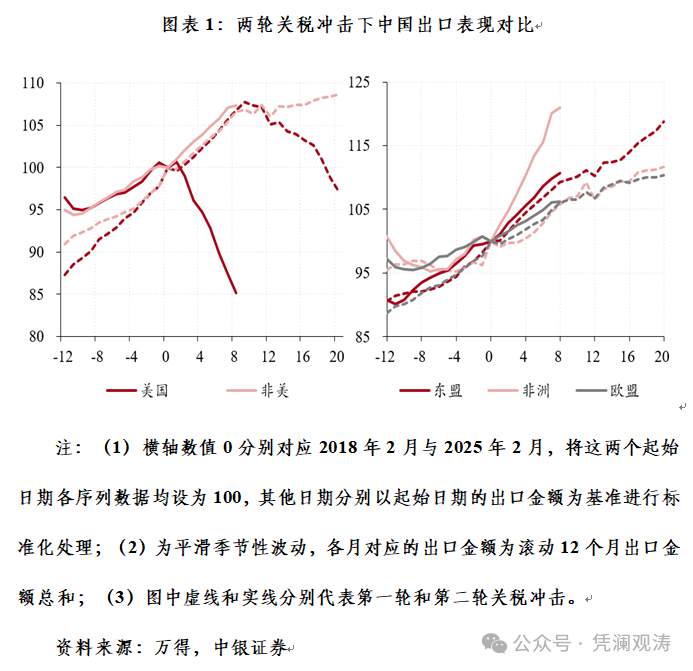
Core Viewpoint - Despite the challenges posed by Trump's tariff policies, China's export resilience has exceeded market expectations, with its global export share reaching a historical high of 14.2% in the first half of the year [1] Group 1: Export Market Diversification - The trade conflict initiated by Trump has led to a significant increase in tariffs on Chinese goods, with rates rising from 34% to as high as 125% [2][3] - China's reliance on the U.S. for exports has decreased, with its share of exports to the U.S. dropping from around 20% at the end of 2018 to approximately 10% [3] - In response to tariff pressures, China has diversified its export markets, with exports to ASEAN and Africa growing by 14.3% and 26.1% respectively in the first ten months of the year [4] Group 2: Export Product Structure Optimization - China's export product structure has improved, with high-tech industrial products accounting for 53.3% of exports in September, marking a historical high [5][7] - The export growth of high-tech products has contributed significantly to overall export growth, with a 9.0% increase in the first nine months of the year [5][7] - The competitiveness of Chinese products has been bolstered by a stable RCA index above 1 for various industrial products, indicating a strong comparative advantage [9][11] Group 3: Concerns Behind Export Resilience - A significant portion of China's exports consists of intermediate goods, which are often processed in other countries before reaching final markets, raising concerns about the sustainability of this export model [13][15] - The decline in export prices due to domestic demand issues and increased competition has led to a trend of "trading at lower prices for volume," impacting overall export value [15] - The IMF has highlighted that the long-term support for China's export resilience from diversifying markets may be uncertain, as demand from major economies remains crucial [15][17]